
Cellular respiration (7.3, 7.4, 7.5, 7.6, 7.7)
On this page
Respiration is a process carried out by cells to release energy for cellular processes such as active transport and muscle contraction.
Respiration produces ATP (adenosine triphosphate) from ADP (adenosine diphosphate) and a phosphate ion.
During respiration, glucose is broken down in multiple steps.
If glucose reacted directly with oxygen, all the energy would be released at once as heat, which could damage the cell. Instead, energy is released in small amounts and used to produce ATP.
More energy is released when forming the bonds in water and carbon dioxide than is required to break the bonds in oxygen and glucose.
Respiration involves multiple enzyme-controlled reactions that, in eukaryotes, mostly occur in mitochondria.
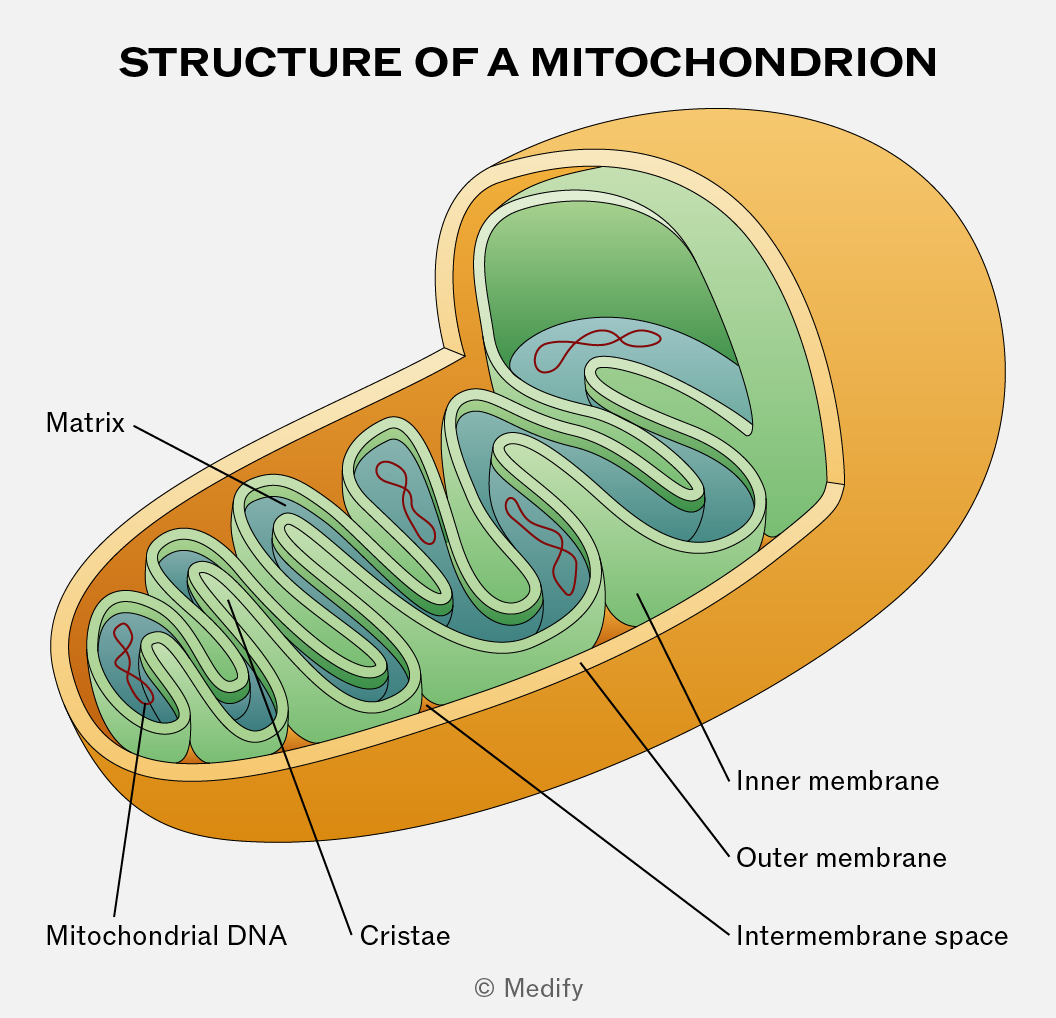
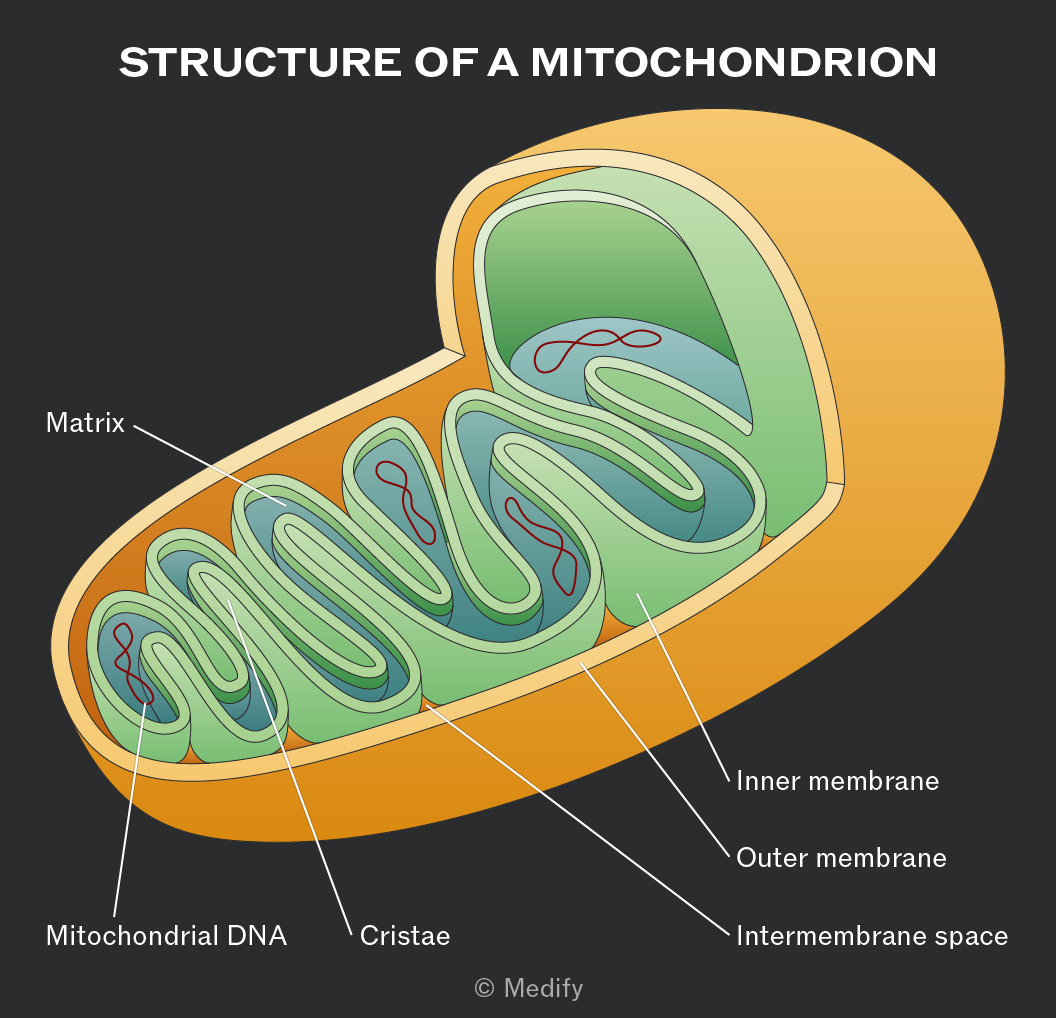
Mitochondria are membrane-bound organelles with an inner membrane and an outer membrane.
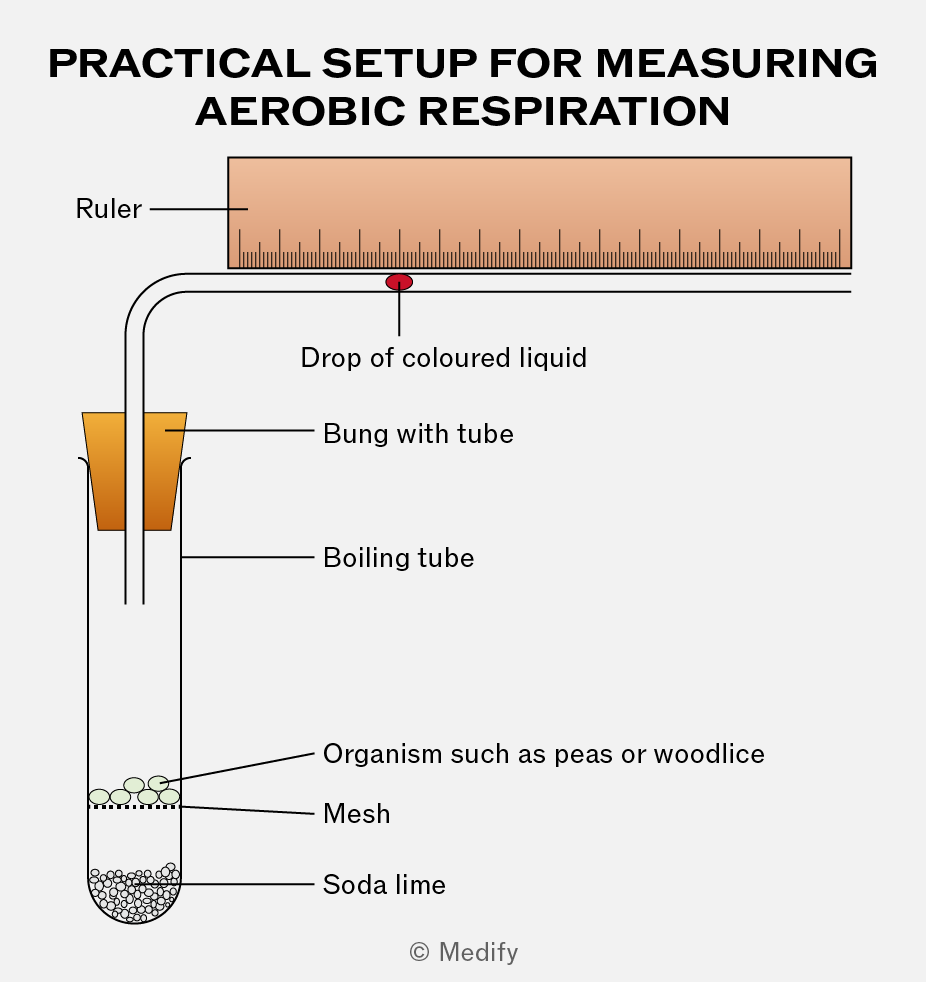
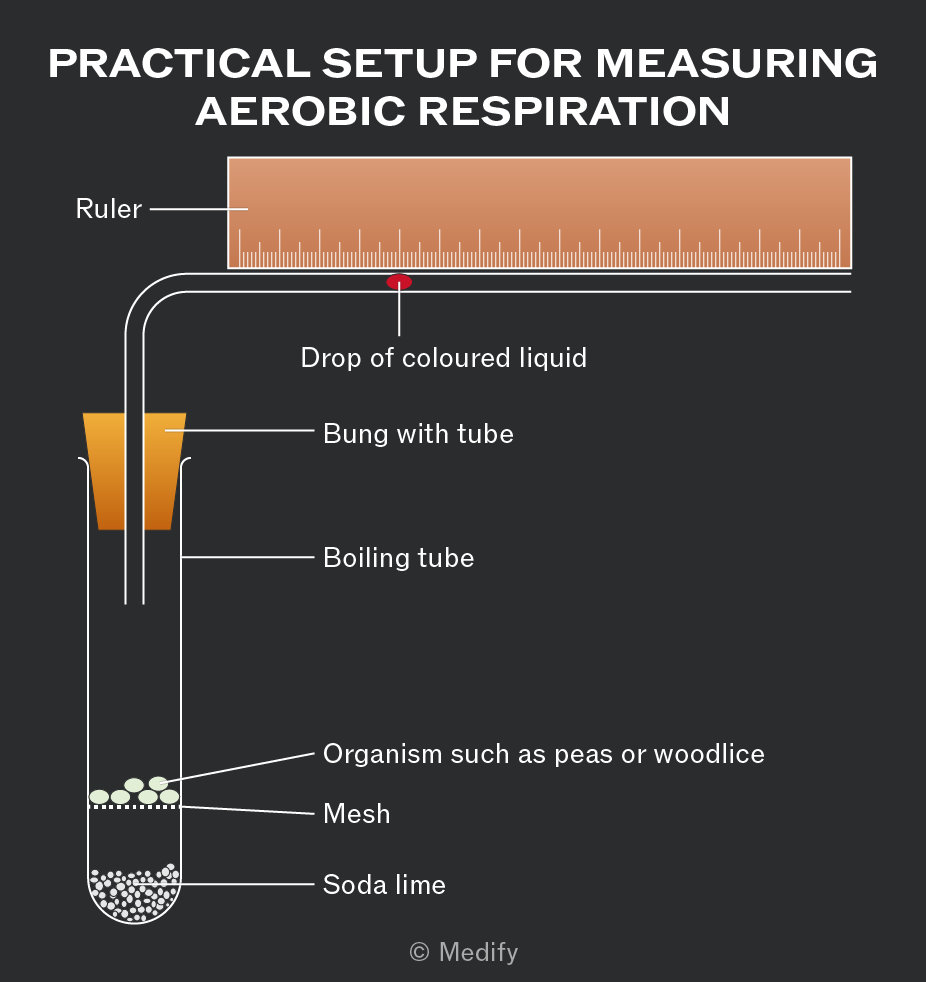
A respirometer can be used to investigate an organism’s rate of aerobic respiration by measuring the volume of oxygen used.
Soda lime absorbs carbon dioxide which means the only change in volume will be due to oxygen being consumed.
This set up can be used to investigate how different factors affect the rate of aerobic respiration, such as substrate concentration, respiratory substrate type or temperature.
Coenzymes NAD and FAD can be represented in different ways. For example, coenzyme NAD can also be written as NAD+, whilst reduced NAD can be shown as NADH or NADH+ + H+.
The coenzymes and their reduced forms in the following notes are shown in the same way as in the exam board specification.
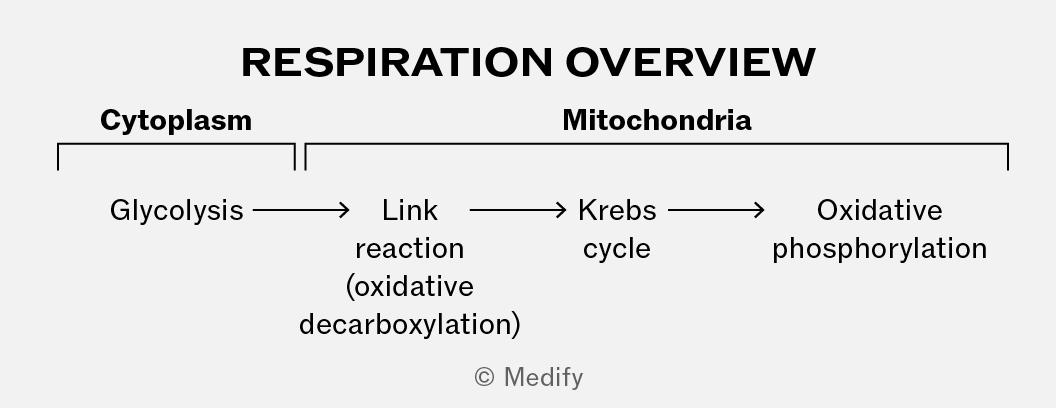
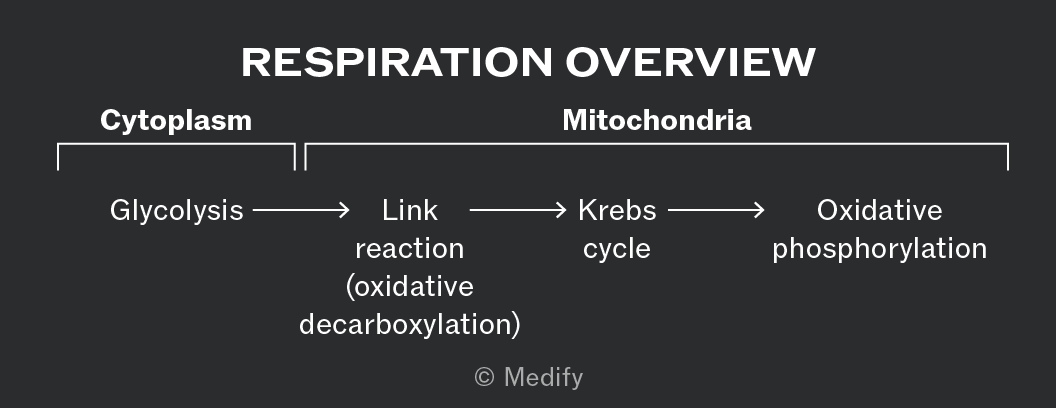
Glycolysis is the first step of respiration and is an anaerobic process that occurs in the cytoplasm of the cell.
- Glucose is first converted to 2 × phosphorylated 3C intermediates, which uses 2 × ATP and produces 2 × ADP.
- The 2 × 3C phosphorylated intermediates each are used to convert coenzyme NAD to reduced NAD. This stage also produces 4 × ATP by removing the phosphates from the intermediates and reacting 4 × ADP with 2 × additional phosphate groups.
- 2 × pyruvate molecules are produced.
Per molecule of glucose, glycolysis uses 2 × ATP in the first stage of phosphorylation, but later 4 × ATP are produced in the last step. So, overall, glycolysis produces 2 × ATP.
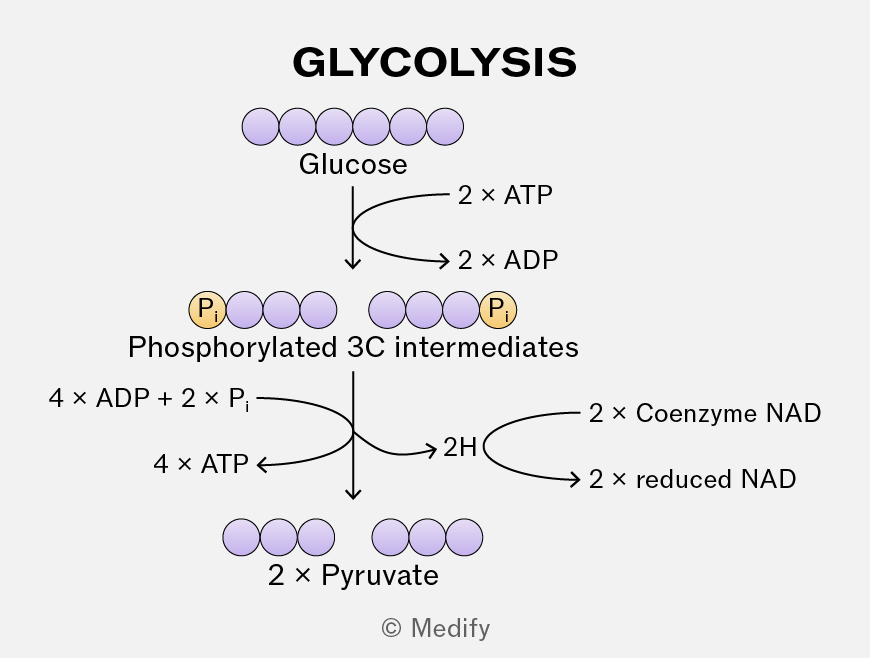
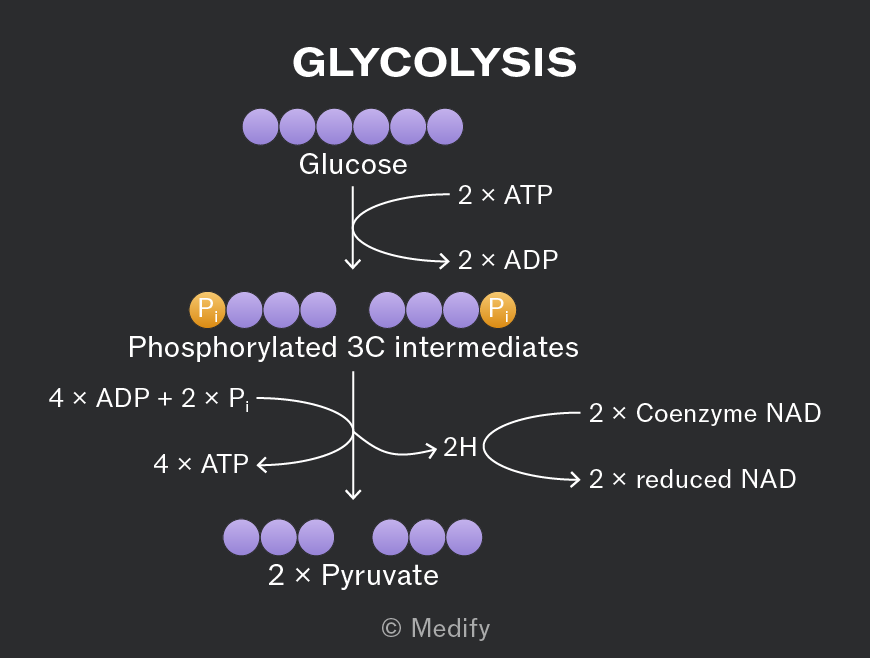
Overall, glycolysis yields: 2 × ATP, 2 × reduced NAD, 2 × pyruvate.
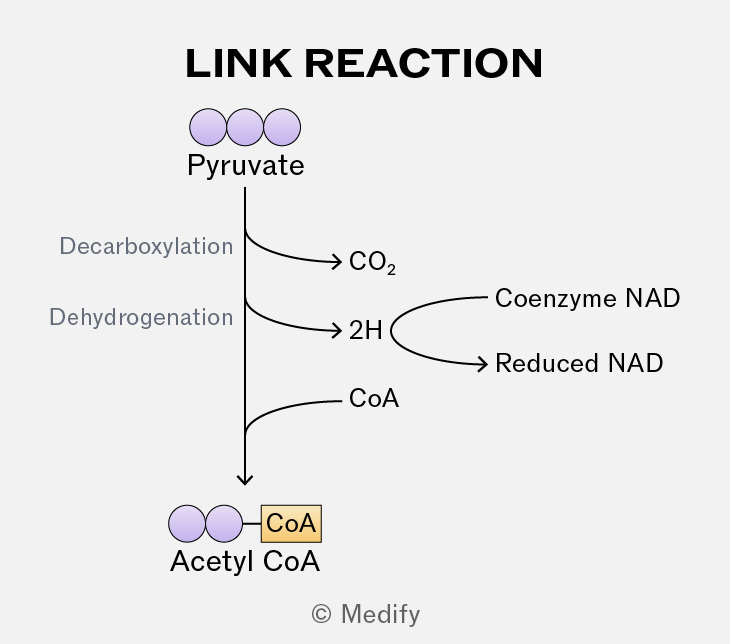
The link reaction occurs in the mitochondrial matrix.
Pyruvate is decarboxylated and carbon dioxide is released, producing a two carbon compound.
Dehydrogenation also occurs and two hydrogen atoms are removed, converting coenzyme NAD to reduced NAD. The two carbon compound is joined with coenzyme A to make acetyl coenzyme A (acetyl CoA).
Overall reaction:
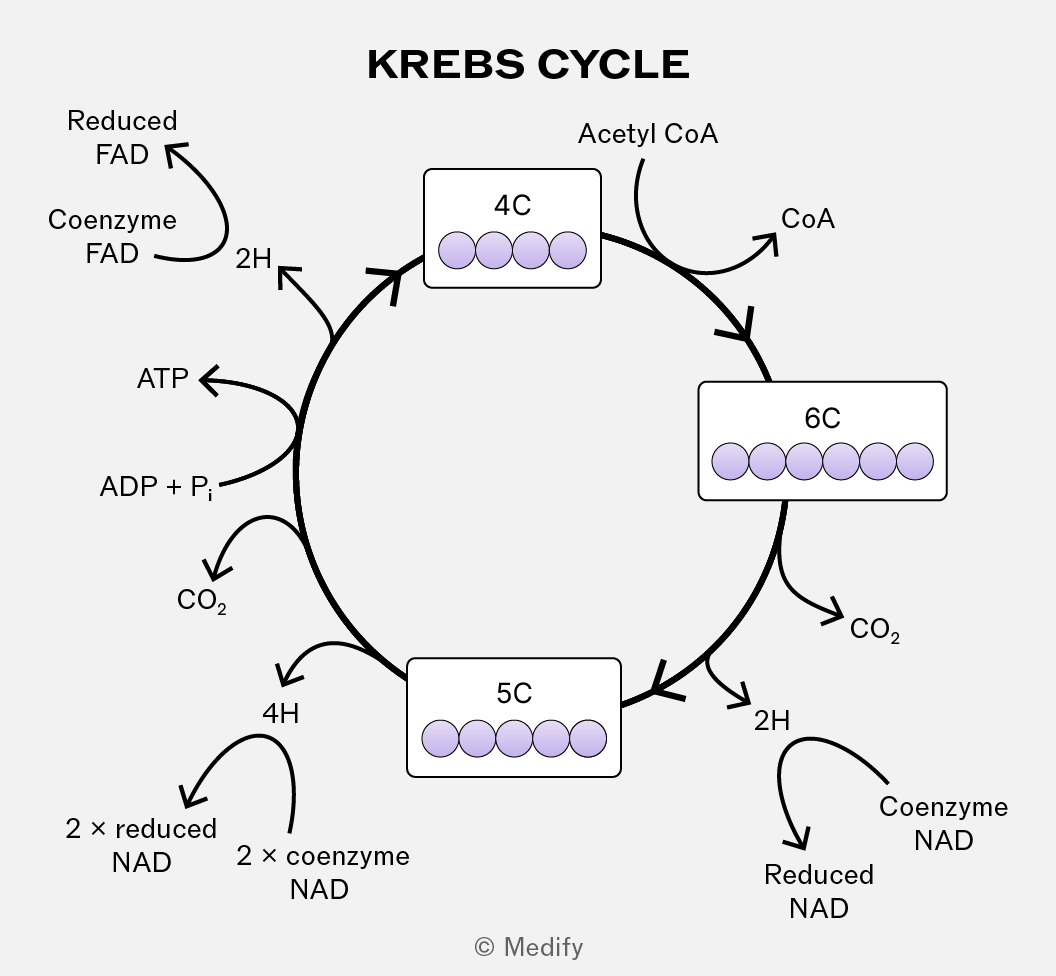
The Krebs cycle occurs in the mitochondrial matrix.
- Acetyl CoA transfers the acetyl group (2C) to a 4C compound, which makes a 6C compound.
- This 6C compound is decarboxylated, producing carbon dioxide and 2H which are used to produce reduced NAD. This makes a 5C intermediate compound.
- The 5C compound is decarboxylated and used to make 1 × ATP from ADP and Pi. 3 × 2H are removed from the 5C compound. These are used to make 2 × reduced NAD and 1 × reduced FAD. And is produced. The 4C compound is remade in this process.
Overall yield: 1 × ATP, 3 × reduced NAD, 1 × reduced FAD, 2 ×
The hydrogen ions and electrons from the reduced NAD and reduced FAD are delivered to the electron transport chain for oxidative phosphorylation.
The electrons flow along the four complexes which are embedded in the inner mitochondrial membrane. Each complex is reduced when the electrons are received, and then oxidised when the electrons are passed to the next complex.
The energy released during this process is used to create a hydrogen ion gradient within the mitochondria.
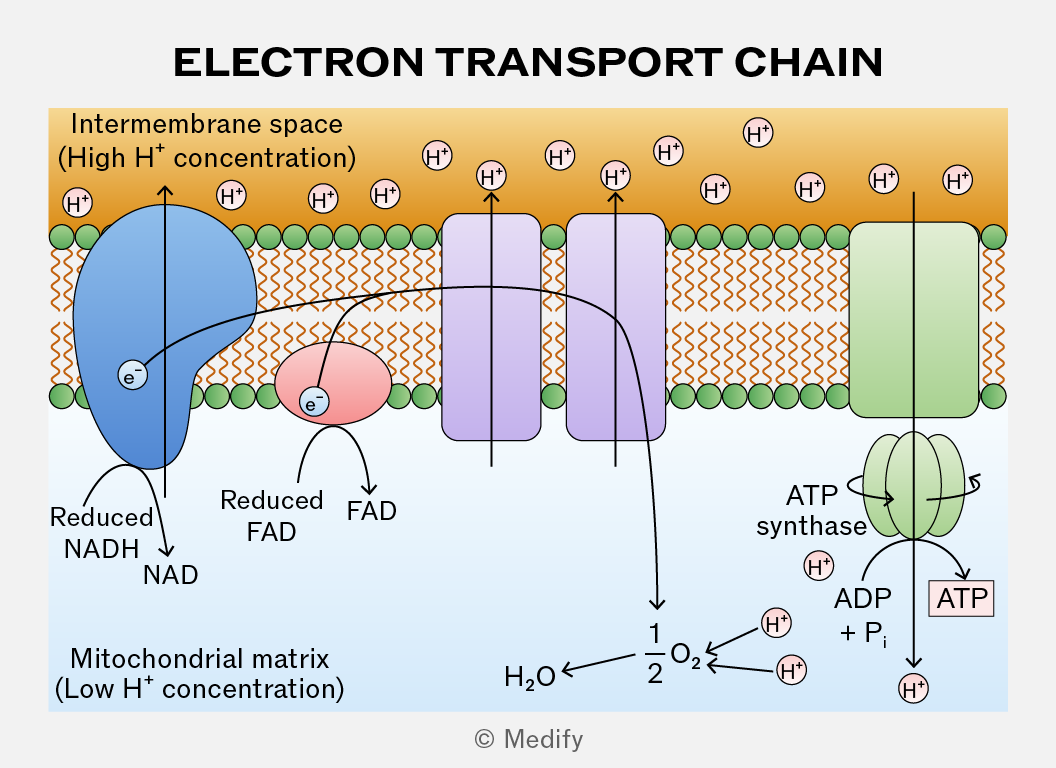
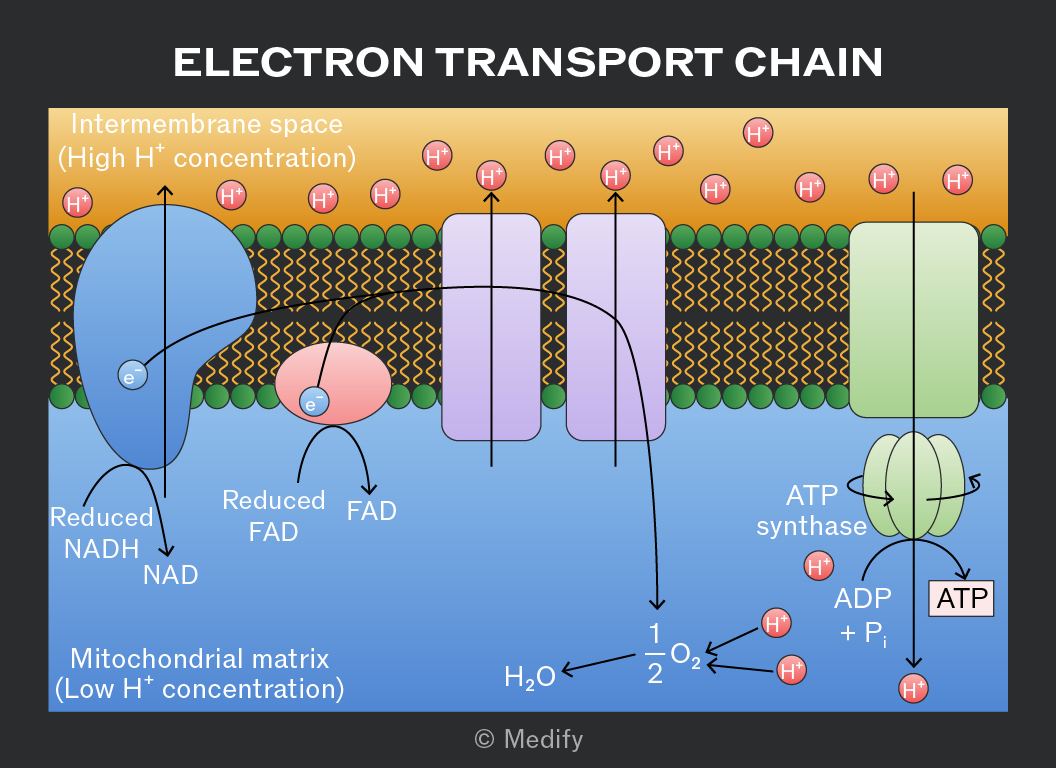
The hydrogen ions released from the reduced coenzymes are used to create a hydrogen ion gradient within the mitochondria.
The concentration of hydrogen ions is higher in the intermembrane space than in the mitochondrial matrix. This creates a steep electrochemical gradient within the mitochondria. The intermembrane space is more positively charged than the matrix.
Hydrogen ions flow down the electrochemical gradient into the mitochondrial matrix, through ATP synthase. As this happens the ATP synthase changes shape allowing for ATP synthesis from ADP and Pi. Oxygen is the final electron and hydrogen ion acceptor, producing water.
This process is sometimes referred to as the chemiosmotic theory.
In theory, 38 × ATP should be produced during aerobic respiration for every molecule of glucose. This assumes every step of respiration is efficient.
The electrochemical gradient created by the electron transport chain involves the transport of hydrogen ions and other charged ions. Owing to this, not all hydrogen ions will be used to make ATP.
For every molecule of glucose, approximately 30 × ATP are actually produced.
Cells are only able to store a small amount of ATP.
During intense exercise, creatine phosphate can be used to immediately regenerate ATP:
Creatine phosphate is then regenerated when the body is at rest.
Anaerobic respiration takes place in mammals when oxygen demand exceeds supply.
When oxygen is lacking, reduced NAD cannot be converted back to coenzyme NAD by the process of oxidative phosphorylation. When oxidative phosphorylation cannot occur, the link reaction and Krebs cycle also cannot take place.
Fermentation is used to convert reduced NAD back into coenzyme NAD during anaerobic respiration. This process allows the coenzyme NAD to be reused in glycolysis, releasing a small amount of ATP.
This process also converts pyruvate to lactic acid:
The production of lactate during anaerobic respiration in mammals leads to a reduced in the cell. This causes proteins within the cell to denature.
After anaerobic respiration, lactate can either be converted back into pyruvate, used in the Krebs cycle or converted to glycogen and stored in the liver and muscles.
Anaerobic respiration causes an oxygen debt, as these processes require oxygen.