
Force, energy and momentum (3.4.1)
On this page
Scalar quantities have magnitude but no direction.
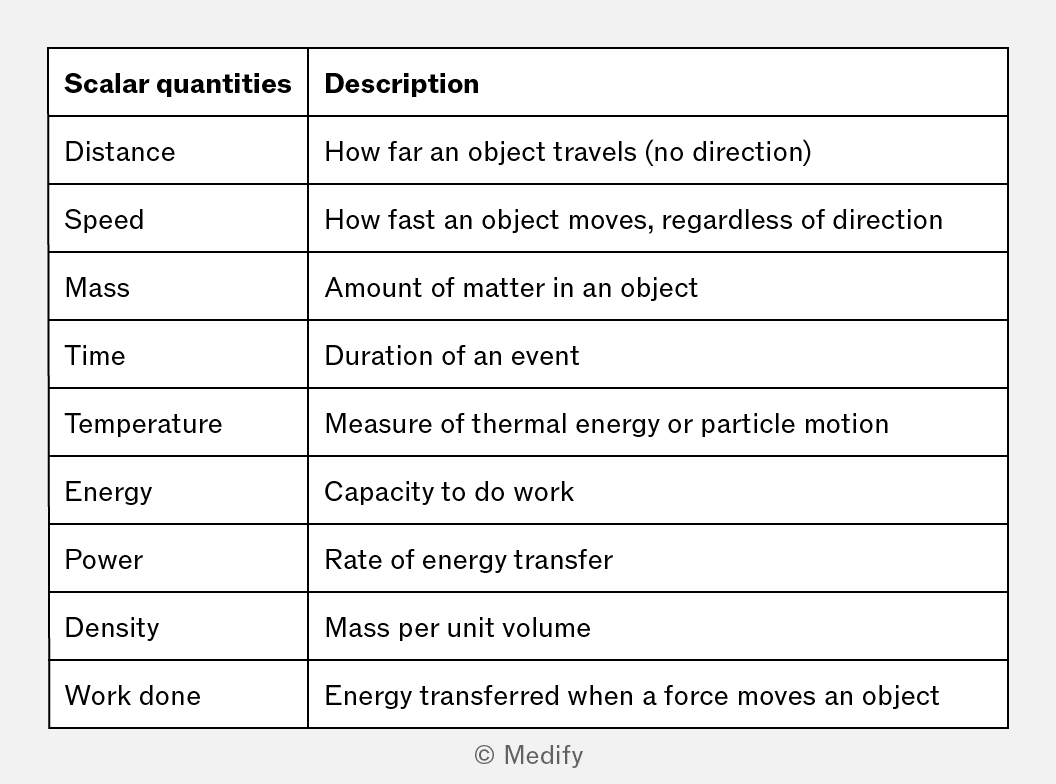
An example of a scalar quantity is mass. The average mass of a human is which is just a number and has no direction.
Vector quantities have both magnitude and direction.
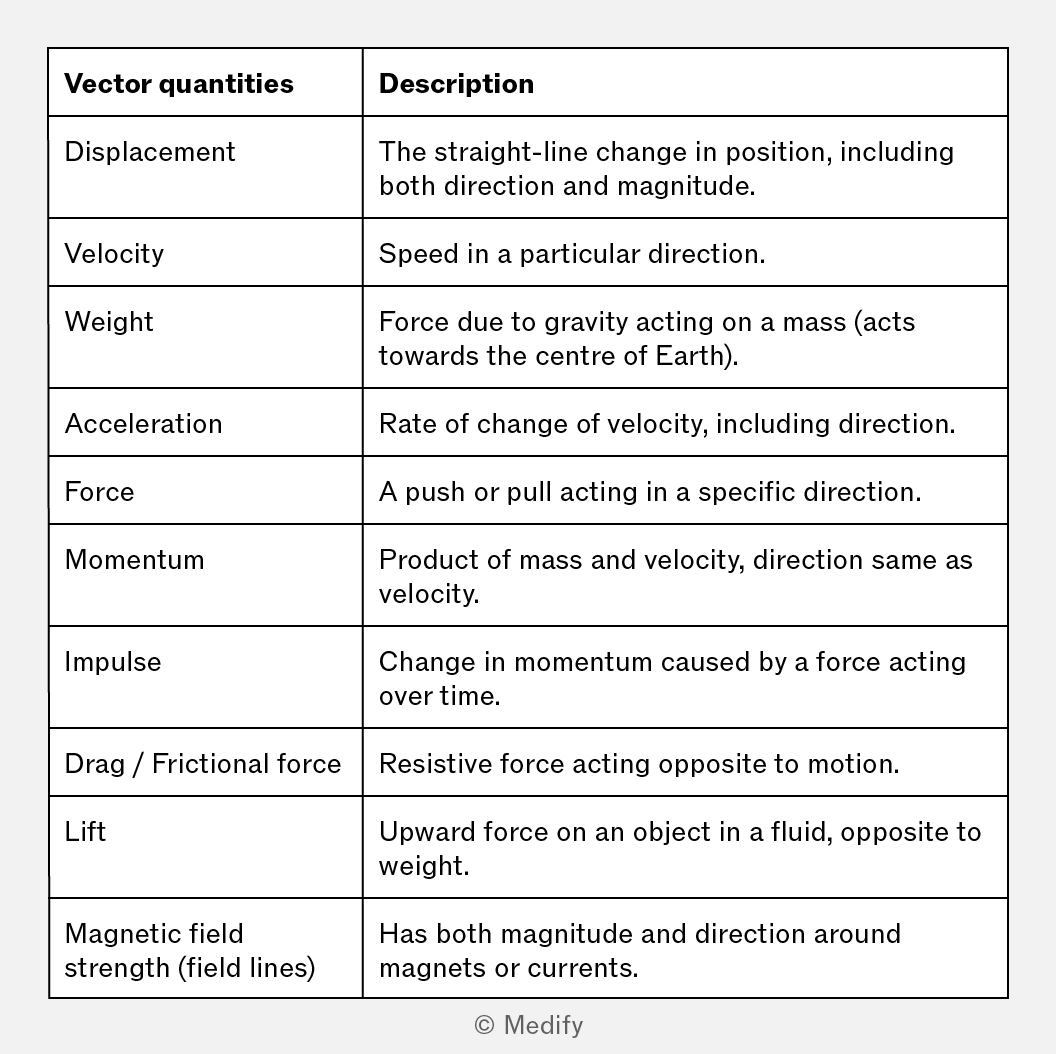
An example of a vector quantity is force. A person of mass standing on the surface of Earth feels a force due to their weight with magnitude (where is the gravitational field strength) and direction pointing towards the Earth’s centre.
Scalar quantities with the same units can be added or subtracted from each other.
For example, two rulers placed end to end have a total length:
A vector can be represented visually by an arrow:
- The length of the arrow is proportional to the vector magnitude.
- The arrow points in the direction of the vector.
- A vector is usually written with an arrow above the letter:
- A vector can also be represented by an underlined letter:
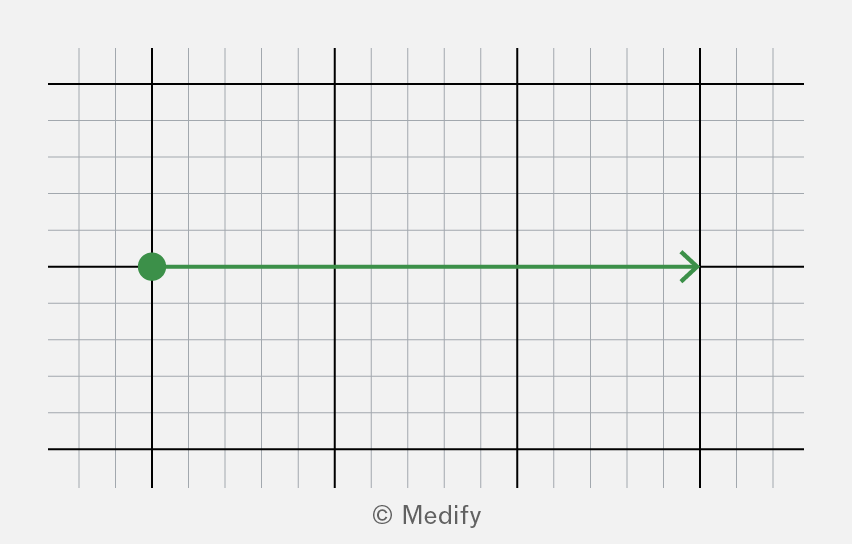
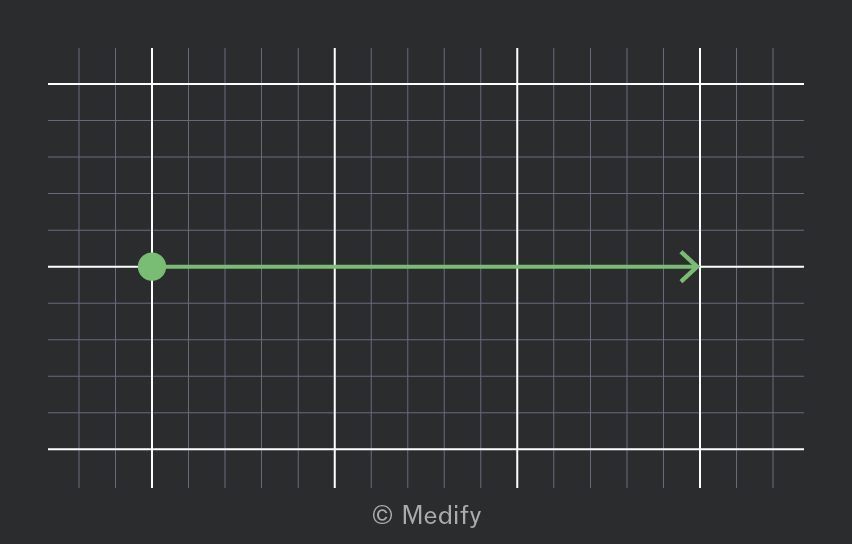
The diagram above shows a force vector drawn on paper with squares:
- If the scale is then the force has a magnitude
- The direction of the arrow indicates that the force is directed to the right.
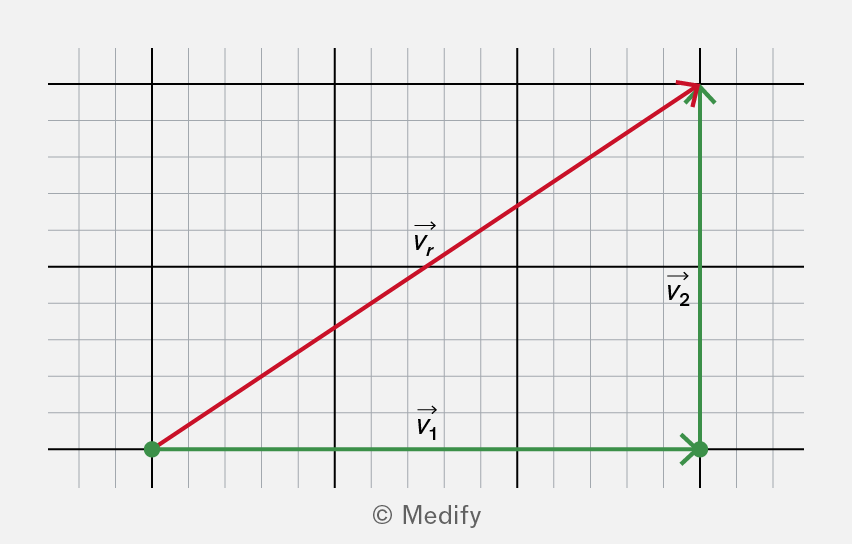
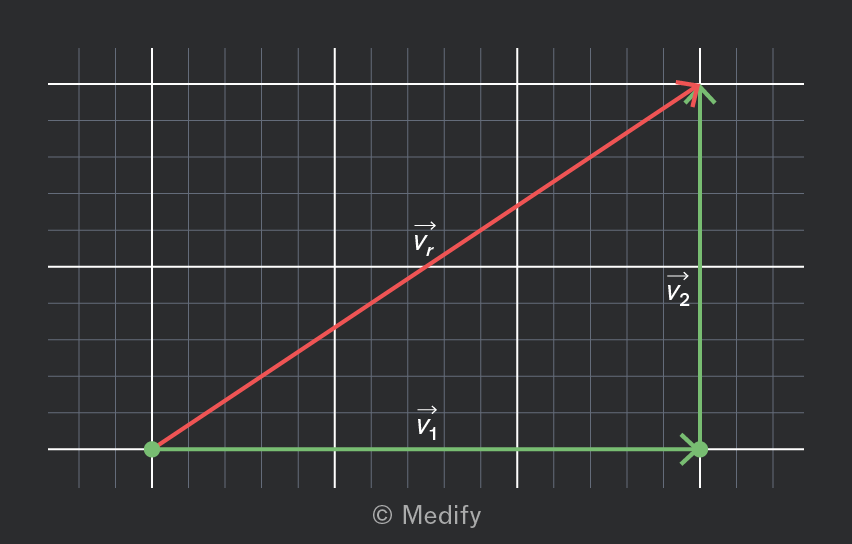
The diagram below shows the addition of two vectors and
- Vectors can be added by placing the arrows end to end, as shown below.
- The resultant vector can be found by drawing an arrow from the start of the first vector arrow to the end of the second arrow.
The diagram below shows the subtraction of two vectors from
- To subtract one vector from another, treat it as adding the negative: . This means reversing the direction of to get , then adding it to end-to-end.
- The resultant vector runs from the tail of the first vector to the tip of the reversed vector . It represents the difference between the two original vectors, both in magnitude and direction
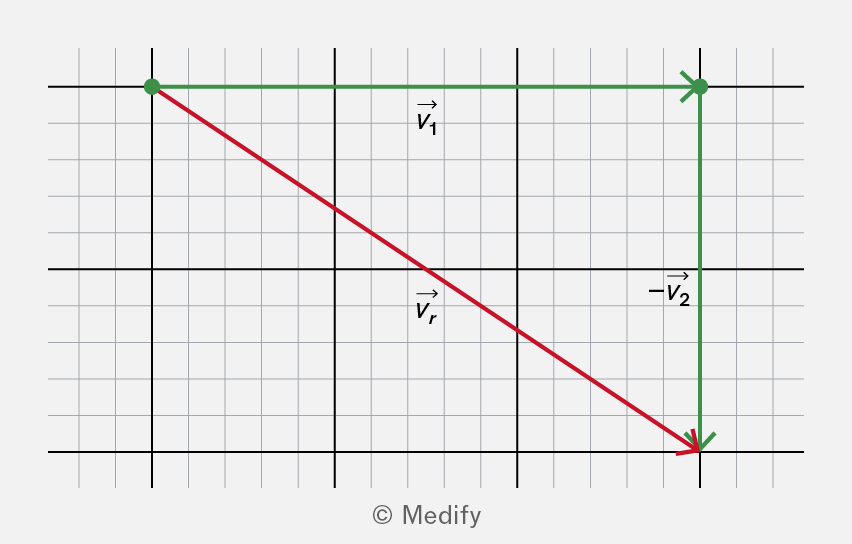
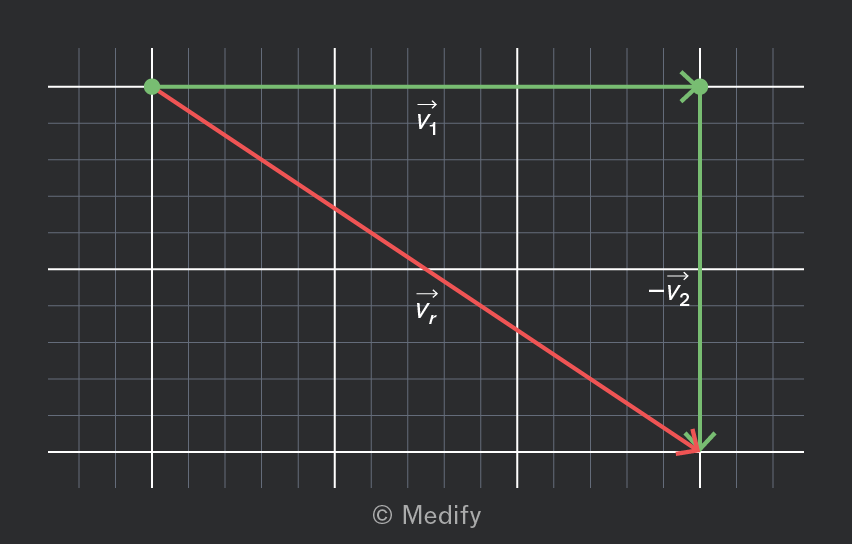
The resultant of any two coplanar vectors can be determined by a scale drawing.
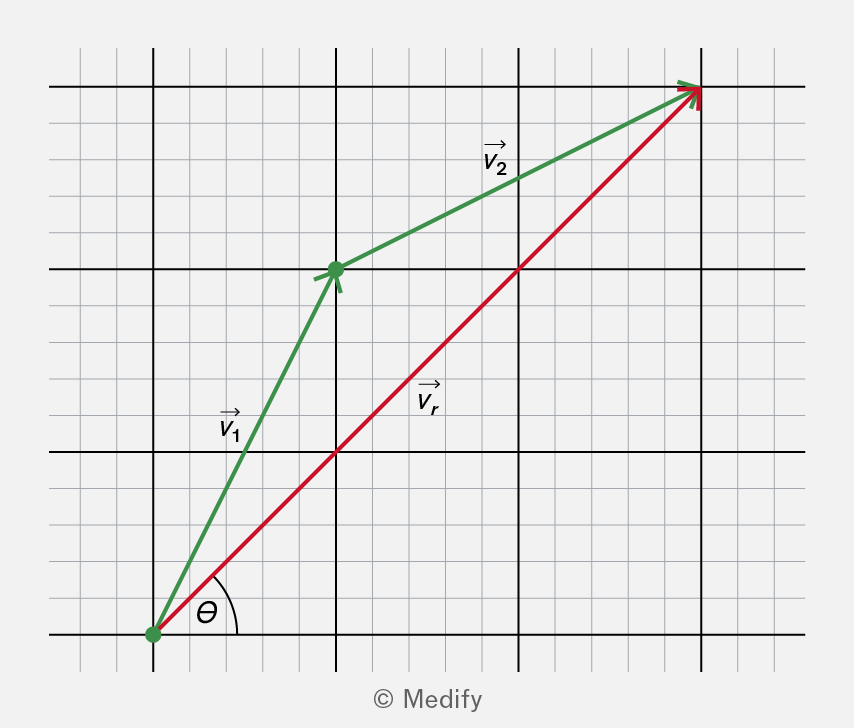
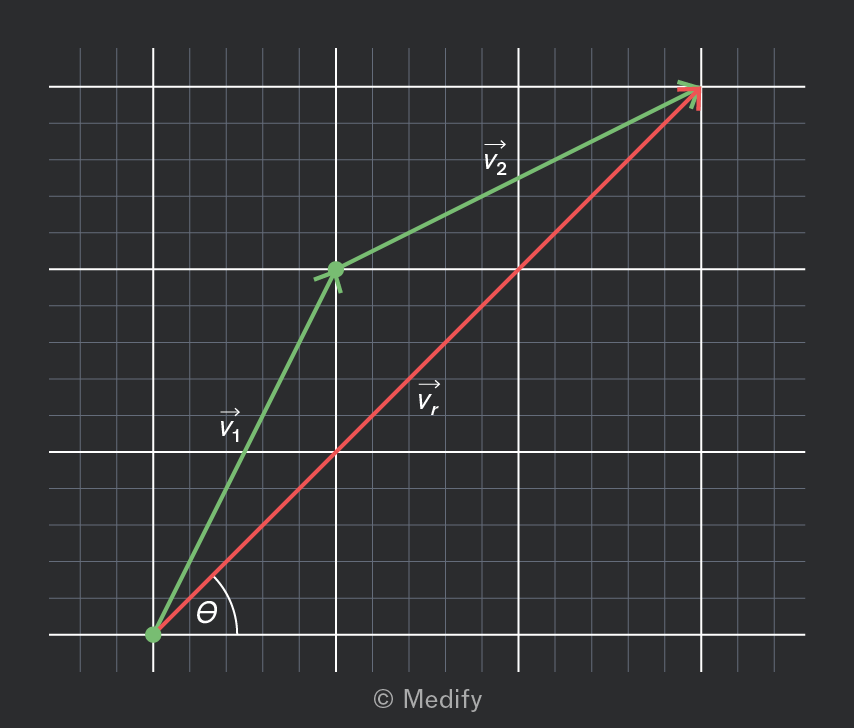
The addition of two coplanar displacement vectors is drawn in the example below:
- For a scale, the magnitude of the resultant vector can be measured by a ruler as
- The angle of the resultant vector to the horizontal is measured as
The magnitude of the resultant vector, can be found from Pythagoras’ theorem:
Where and are the magnitudes of the two perpendicular vectors.
The diagram below shows the vector addition of two perpendicular displacement vectors.
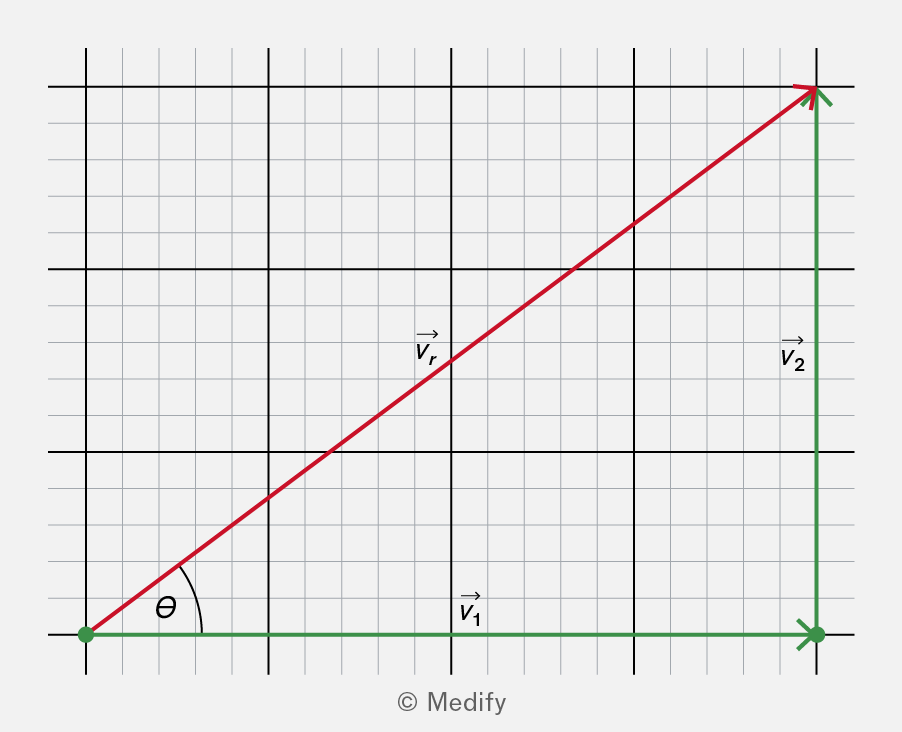
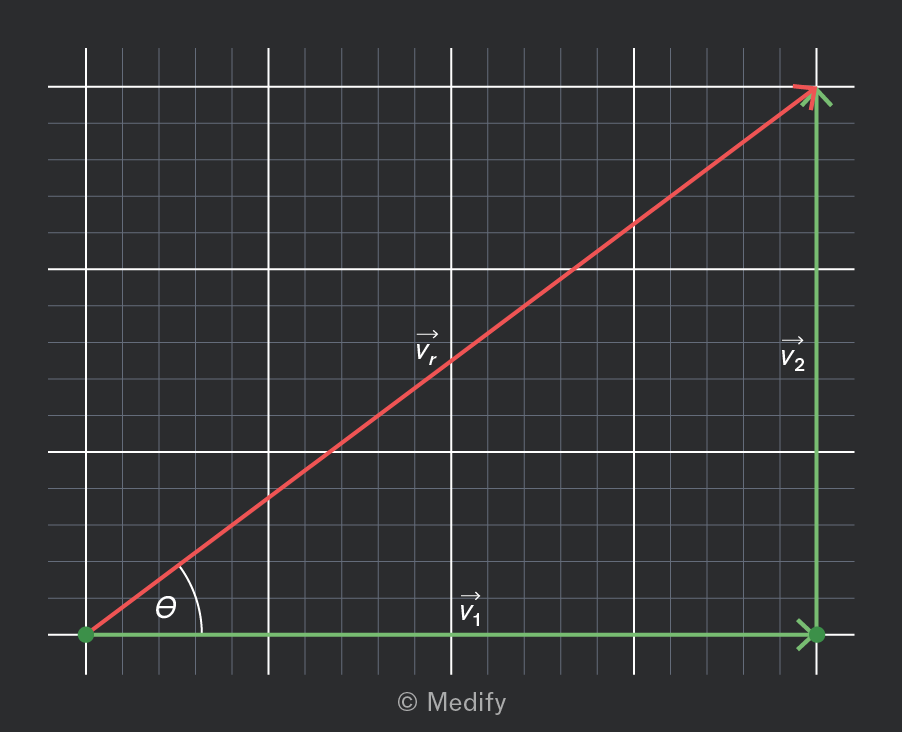
In the diagram above, and so:
Trigonometric relationships can be used to determine the direction of a resultant vector that is formed by two vectors and acting perpendicularly to one another.
For the diagram below, the angle, of the resultant vector to the horizontal can be found from:
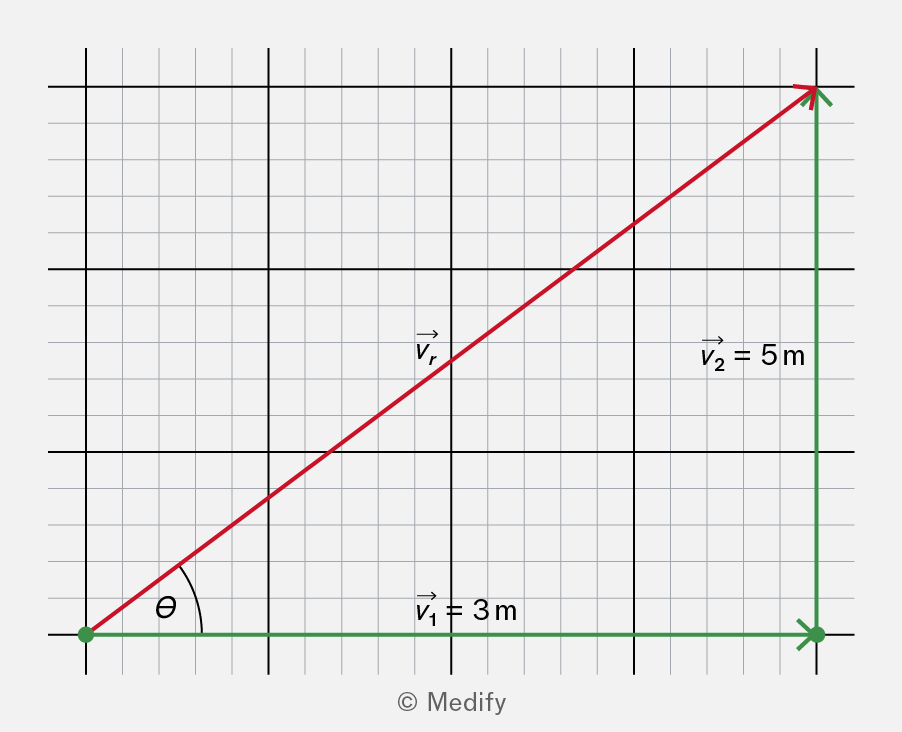
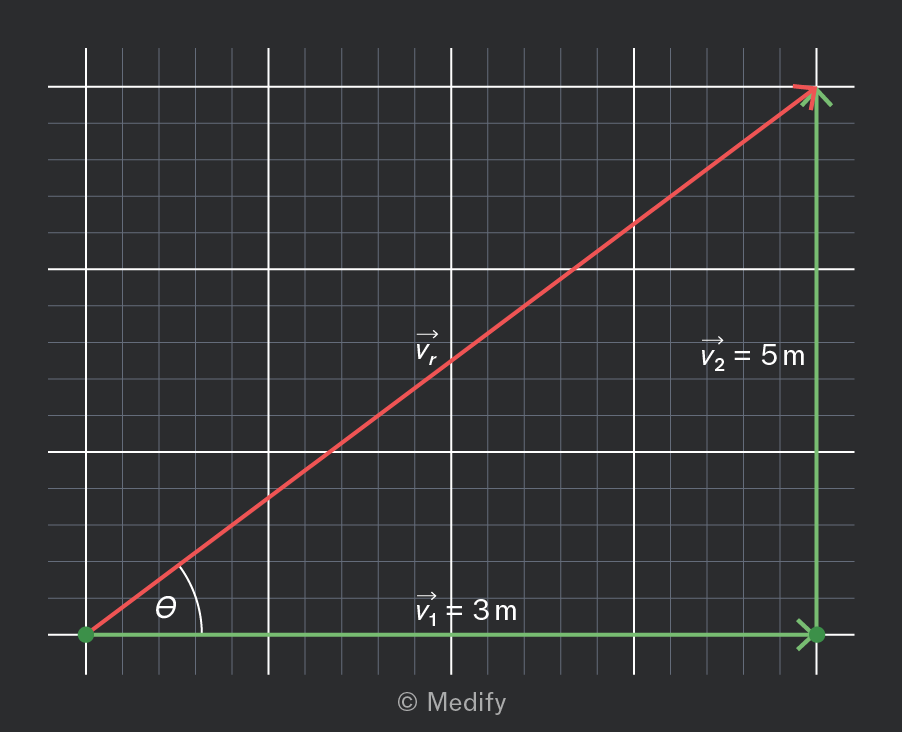
In the diagram above is opposite the angle while is adjacent. Therefore, the angle can be calculated as follows:
It is useful to note that the magnitude and direction of any resultant vector can also be calculated for any coplanar vector using the cosine rule and the sine rule.
A vector can be resolved into its perpendicular components.
A force acting in the plane may be resolved into its and components. For a force with magnitude pointing at an angle to the X axis:
- The horizontal component magnitude is