
Inheritance - AL only (3.7.1)
On this page
A gene is a sequence of DNA that codes for a polypeptide or functional RNA molecule. The specific position of a gene on a chromosome is called its locus.
A gene can exist in two or more forms at the same locus, on homologous chromosomes. These forms are known as alleles.
A diploid individual can only carry two alleles (one on each homologous chromosome).
Multiple alleles increase genetic variation and can lead to different phenotypes. Sexual reproduction further increases genetic variation by producing new combinations of alleles through meiosis and fertilisation.
An organism’s genotype is its genetic makeup, expressed as the set of alleles it possesses. It determines the potential for particular traits or characteristics.
A phenotype is the observable expression of the genotype. It can be influenced by environmental factors. Individuals with the same phenotype may have different genotypes.
A dominant allele is expressed in the phenotype even if only one copy is present (e.g., A in Aa).
A recessive allele is expressed only when two copies are present (e.g., aa).
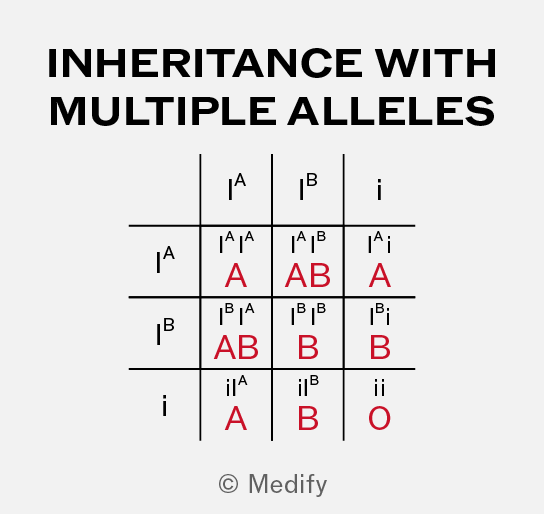
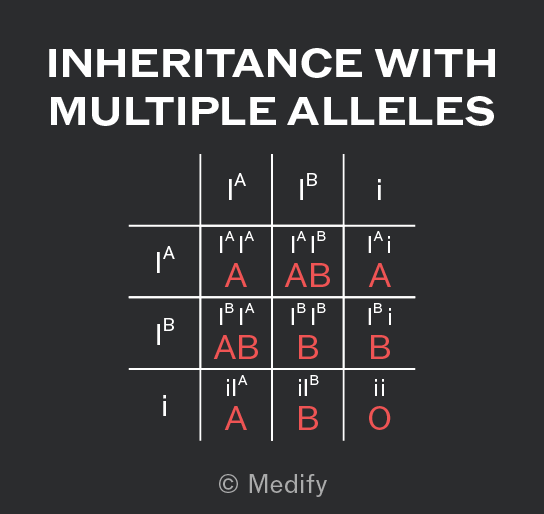
Codominant alleles are both expressed equally in the phenotype when present together (e.g., IᴬIᴮ result in the blood group AB).
The interaction between alleles contributes to an organism’s phenotype.
Diploid organisms have two copies of each gene – one on each homologous chromosome. The combination of alleles at a locus determines how a trait is expressed in the phenotype.
- Homozygous: Both alleles at a locus are the same (e.g., AA or aa).
- Heterozygous: The two alleles at a locus are different (e.g., Aa).
Phenotypic variation can be caused by genetic factors.
Genetic variation arises from differences in genotype, which are generated by:
- Mutation: creates new alleles.
- Independent assortment: the random distribution of chromosomes during meiosis.
- Crossing over: exchange of genetic material between homologous chromosomes during meiosis.
- Random fertilisation: any sperm can fertilise an egg, producing unique combinations of alleles.
Phenotypic variation can be caused by environmental factors.
Environmental factors influence phenotype through external conditions, for example:
- Diet: affects growth, development and other characteristics in animals.
- Light: lack of light can cause etiolation in plants, causing elongated stems and reduced leaf development as they try to grow towards a source of light.
Environmental factors can influence the expression of traits and, together with genetic factors, contribute to continuous variation.
Monogenic inheritance refers to the inheritance of a characteristic controlled by a single gene.
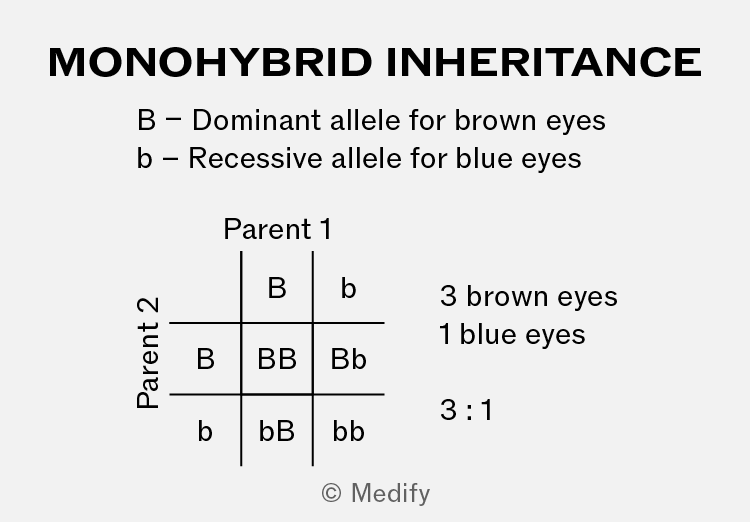
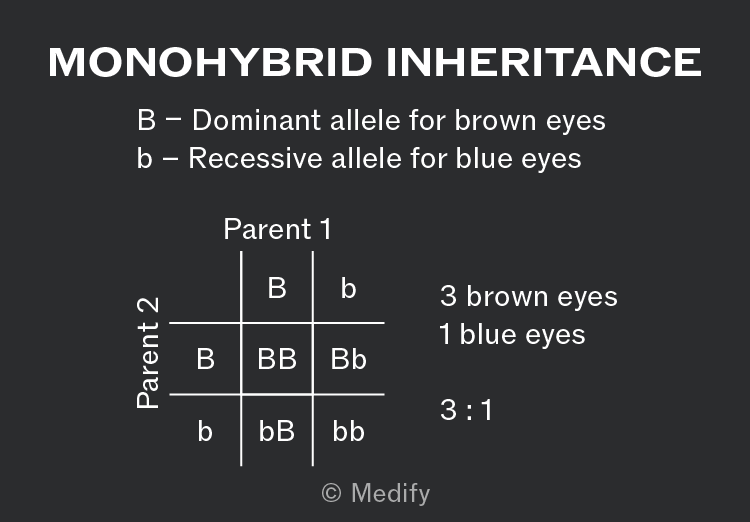
Monohybrid inheritance describes the inheritance pattern of a single gene in a genetic cross. It is often represented using Punnett squares or genetic diagrams to predict offspring genotypes and phenotypes.
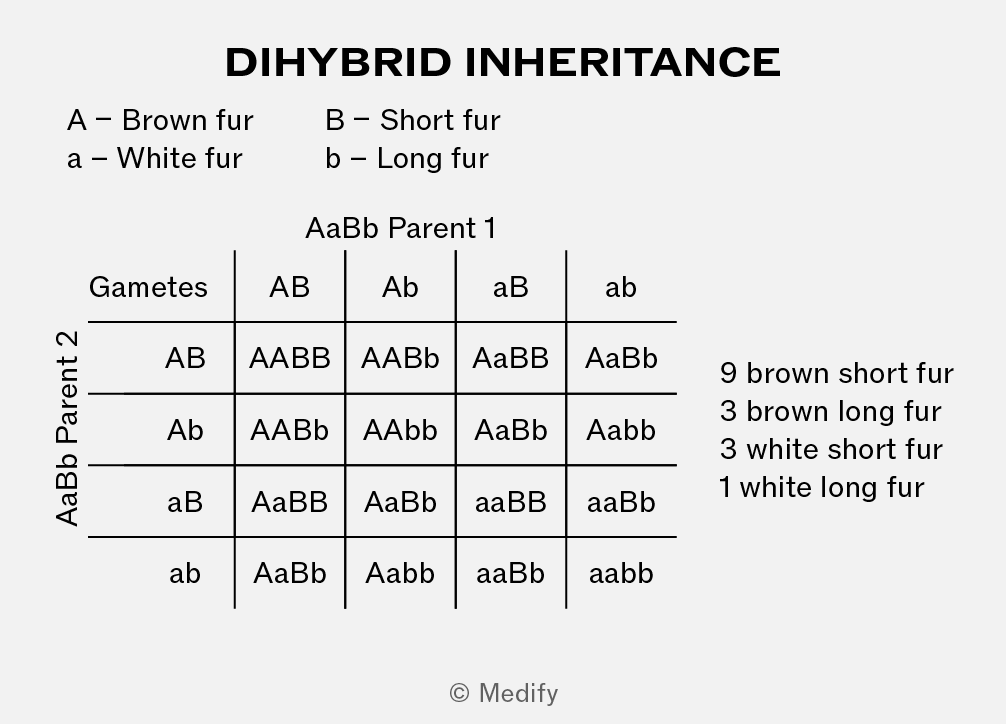
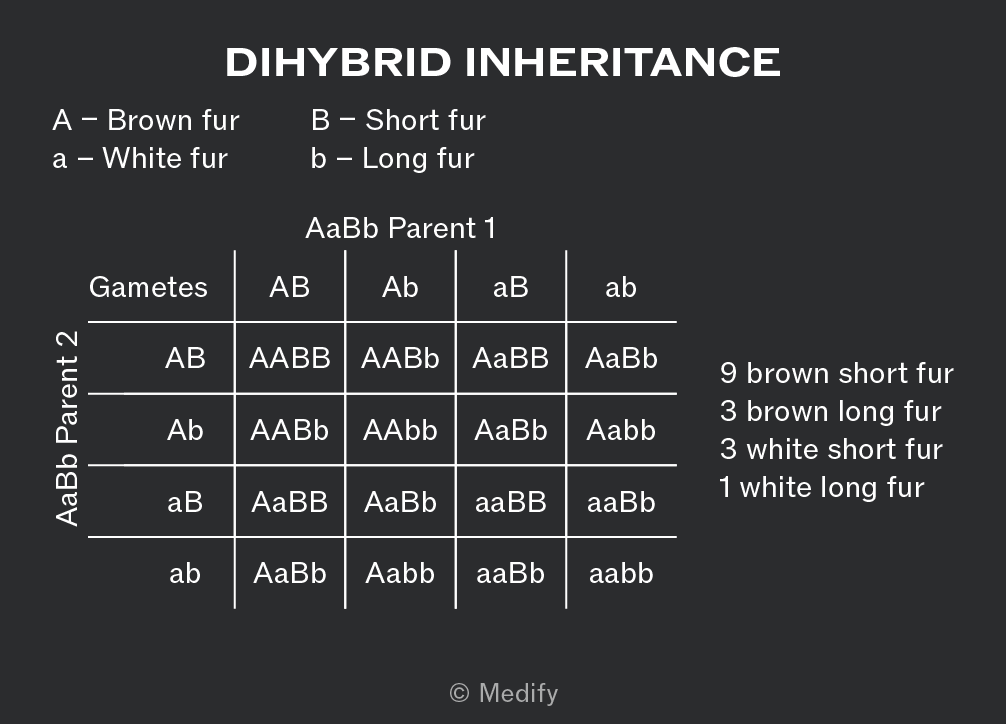
A dihybrid cross follows the inheritance of two genes simultaneously.
The 9:3:3:1 phenotypic ratio occurs only if:
- The genes are located on different chromosomes (or are sufficiently far apart on the same chromosome), so independent assortment can occur during meiosis.
- Both parents are heterozygous for both genes (AaBb × AaBb).
- Complete dominance at both loci.
Multiple alleles occur when a gene has more than two allele forms within a population, although each diploid individual can possess a maximum of two alleles for that gene.
An example is the ABO blood group system, which has three alleles: Iᴬ, Iᴮ and i.
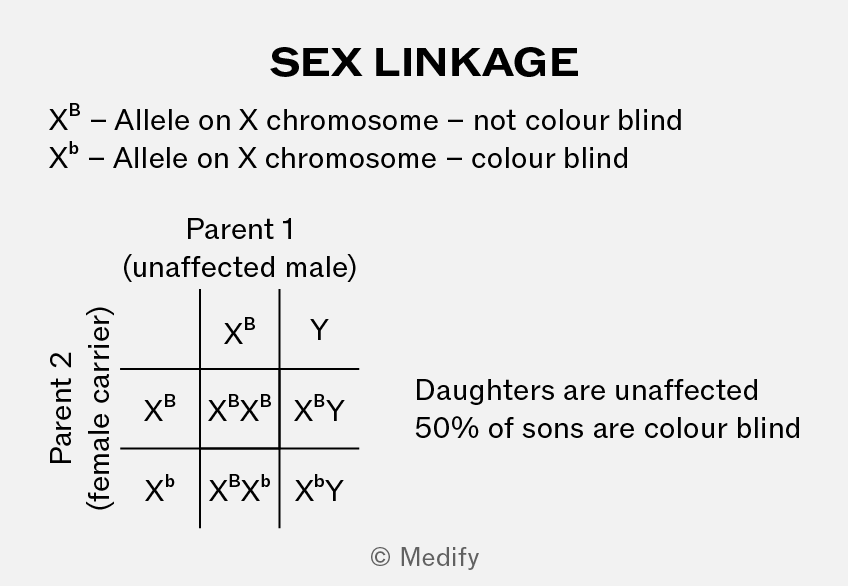
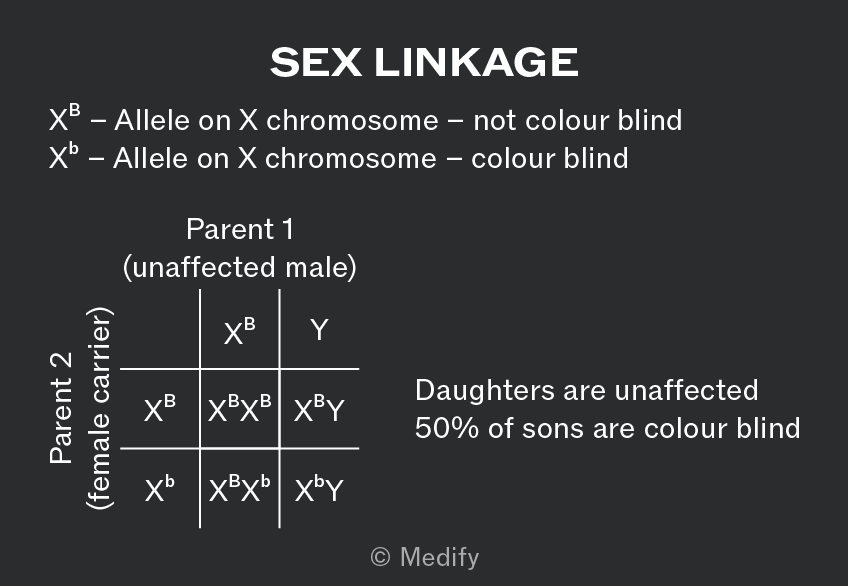
Sex linkage involves genes located on a sex chromosome (usually the X chromosome).
Males (XY) are more likely to express recessive X–linked alleles because they possess only one X chromosome. This means that they have no second allele to mask the recessive allele. Examples include red-green colour blindness and haemophilia.
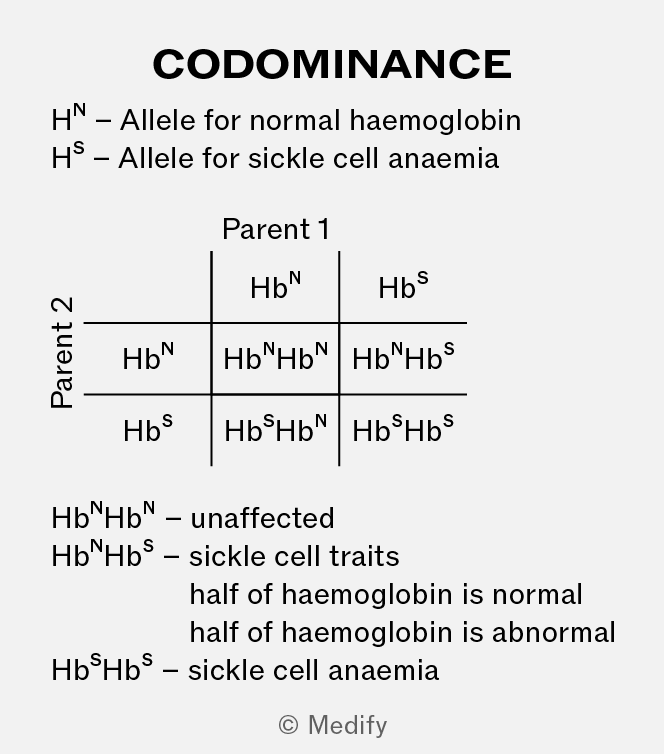
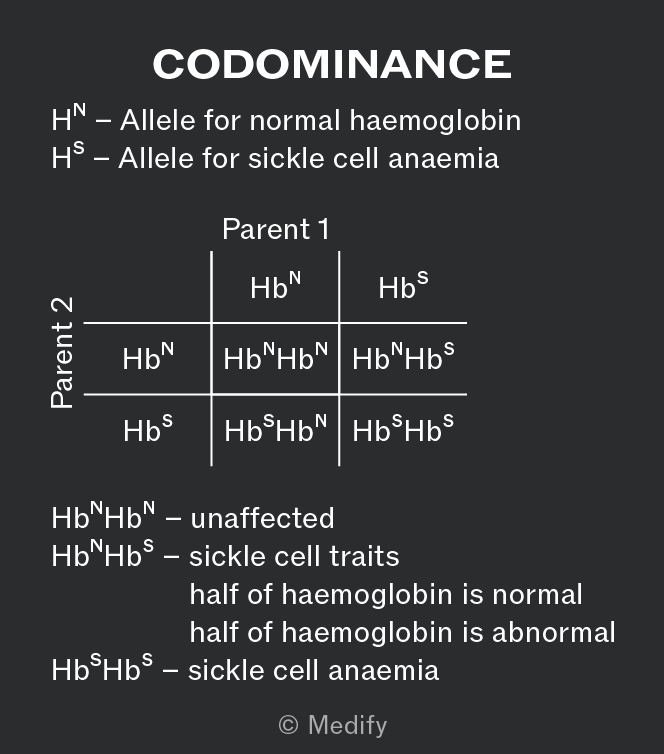
Codominance occurs when both alleles in a heterozygous individual are expressed equally in the phenotype.
Sickle cell anaemia is an example of codominance because heterozygotes produce both normal and sickle haemoglobin.
Autosomal linkage occurs when genes are located on the same (non-sex) chromosome and are therefore more likely to be inherited together.
As a result, parental allele combinations occur more frequently than recombinant combinations produced by crossing over. This results in a significant deviation from the 1:1:1:1 phenotypic ratio expected from a cross if the genes assort independently.
An example of recessive epistasis (9:3:4) is coat colour in rabbits. The C locus controls whether melanin (pigment) is produced and the A locus controls the type of pigment, determining coat colour.
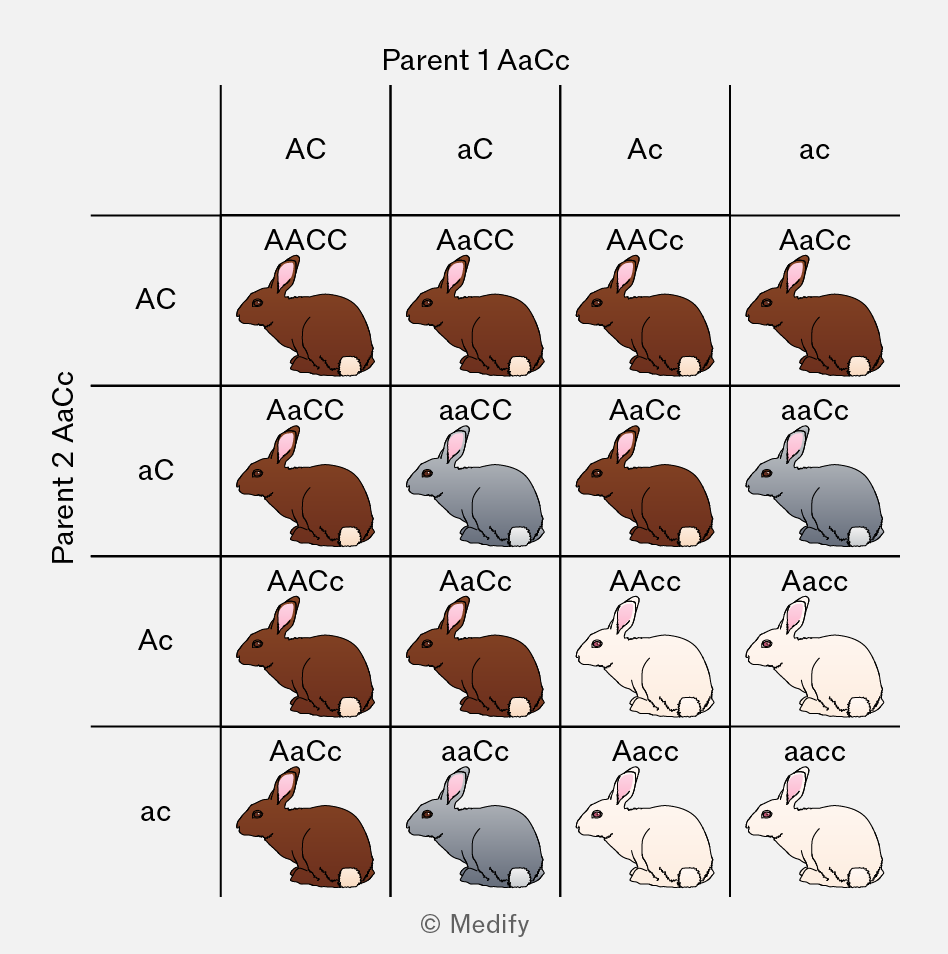
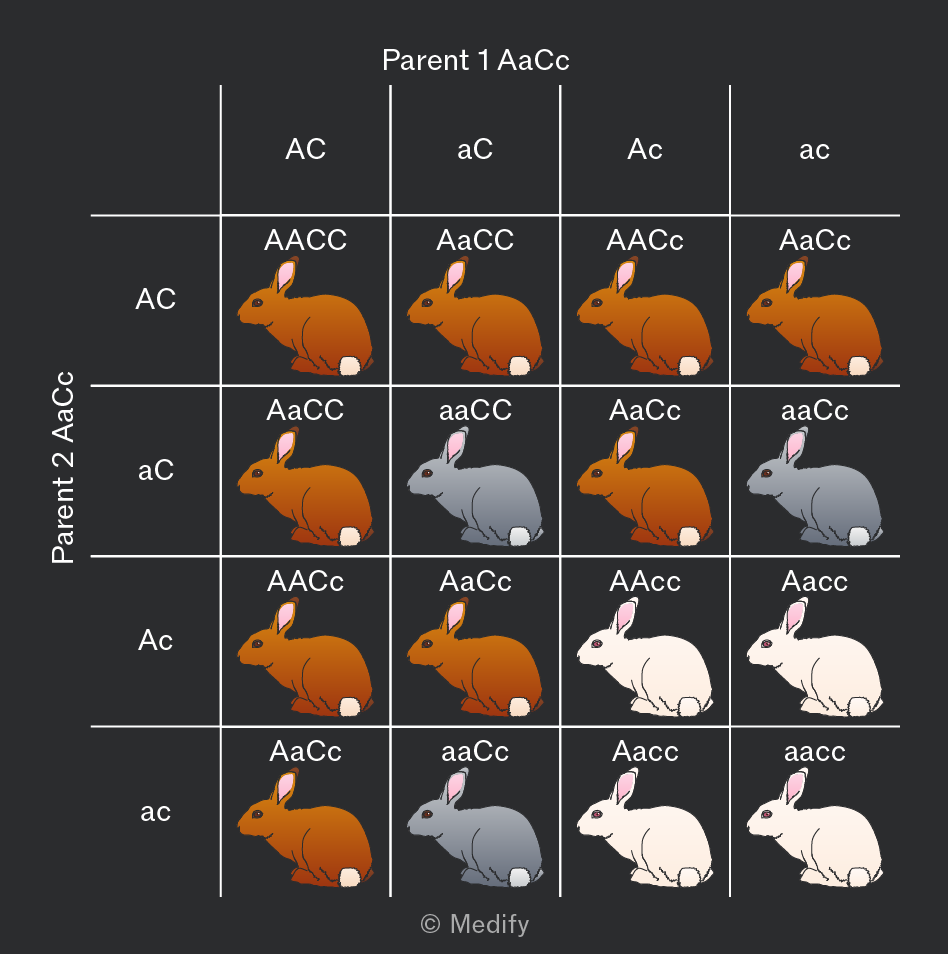
The dominant allele C is required for melanin production. If a rabbit is homozygous recessive (cc), no melanin is produced, regardless of the alleles present at the A locus, resulting in an albino phenotype.
The chi-squared () test is used to determine whether observed results differ significantly from those expected under a genetic hypothesis, such as an inheritance ratio, or whether the differences are by chance.
The formula for the chi-squared test is:
Where:
- = observed value
- = expected value
For the chi-squared () test, a null hypothesis (H₀) states that there is no significant difference between observed and expected results, and that any differences are due to chance.
The calculated chi-squared () is compared with a critical value from a statistical table using the appropriate degrees of freedom (number of outcome categories – 1).
- If is less than the critical value, accept H₀. The results are consistent with the expected ratio.
- If is greater then the critical value, reject H₀. The results differ significantly from the expected ratio.