Stem cells and cell differentiation (3.11, 3.12)
On this page
Stem cells are undifferentiated cells that can divide by mitosis to produce more stem cells. Alternatively, they can differentiate into specialised cell types that make up tissues and organs.
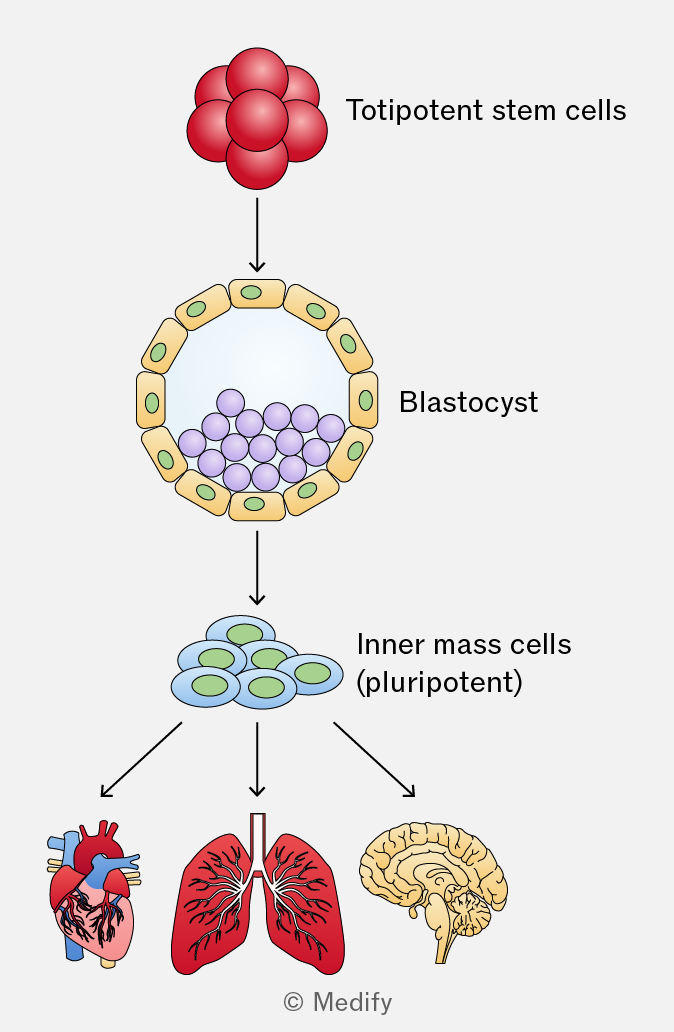
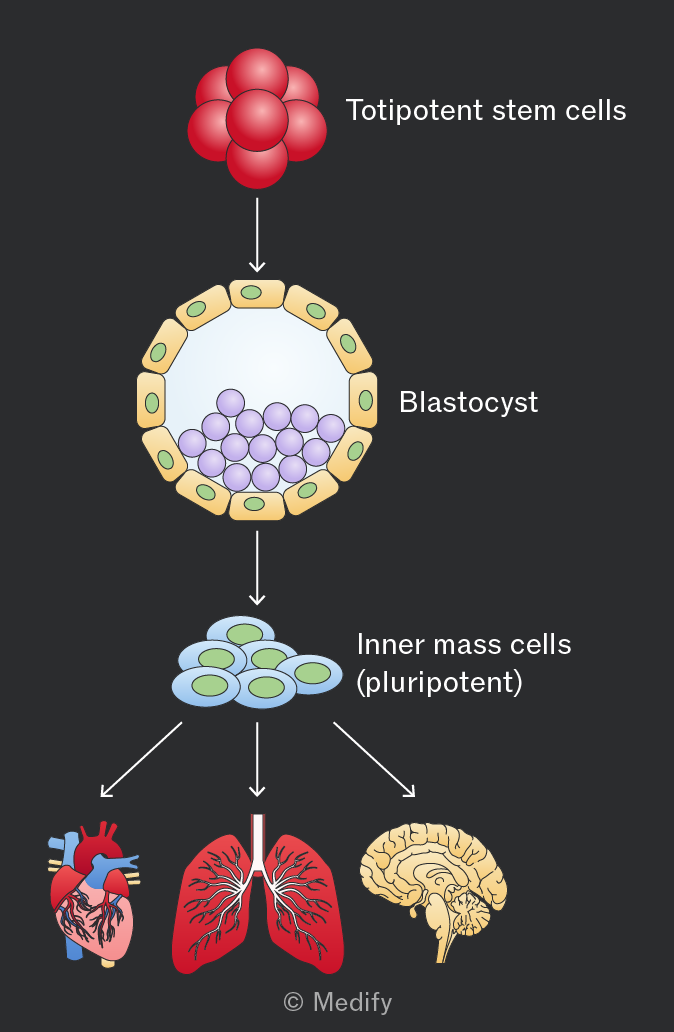
Totipotent stem cells have the greatest developmental potential and can develop into any cell type, including all body cells and extra-embryonic tissues (e.g., placenta). They are present in the zygote and early embryo (up to ~8-cell stage).
Pluripotent stem cells can develop into any body cell, but cannot form extra-embryonic tissues. They are found in embryonic stem cells from the inner cell mass of blastocysts.
Stem cells can be used to repair or replace damaged tissues. For example, stem cells from bone marrow can be transplanted to treat blood disorders such as leukaemia.
Stem cells also offer potential treatments for neurological conditions and have uses in developmental biology research.
The use of stem cells in medicine can raise ethical or societal concerns:
- Embryonic stem cells are harvested by destroying embryos, which some believe have a right to live.
- Adult stem cells raise fewer ethical concerns; however, they are more limited in the range of cell types they can produce.
Decisions on stem cell use are influenced by scientific evidence (effectiveness and safety), ethical and religious views, public opinion and government laws and regulations.
There is a balance between potential medical benefits and moral and ethical concerns
During differentiation, some genes are switched on while others are switched off.
Expressed genes are transcribed into mRNA and translated into proteins. These proteins determine cell structure and function.
Gene expression is vital for the production of specialised cells, and errors in gene expression can lead to diseases such as cystic fibrosis and FOP (Fibrodysplasia Ossificans Progressiva).
Differential gene expression leads to the formation of specialised cells.
RNA polymerase binds to a region of DNA called the promoter region, located adjacent to the gene to be transcribed. When a gene is transcribed, it is said to be switched on.
Repressor proteins can regulate gene expression by binding to DNA regulatory regions or interacting with regulatory proteins, preventing RNA polymerase from transcribing the gene. The gene is therefore switched off and no mRNA is produced.
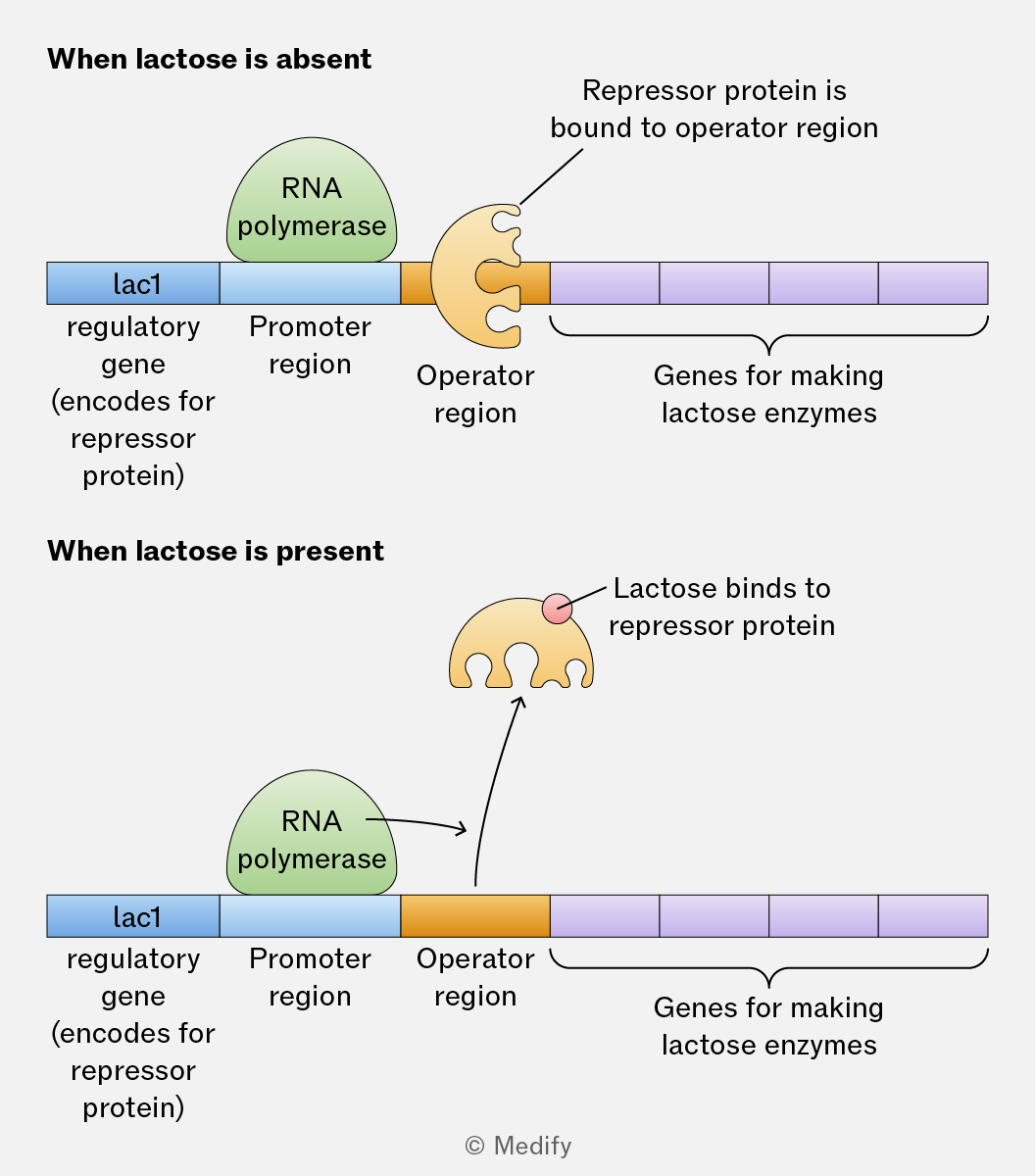
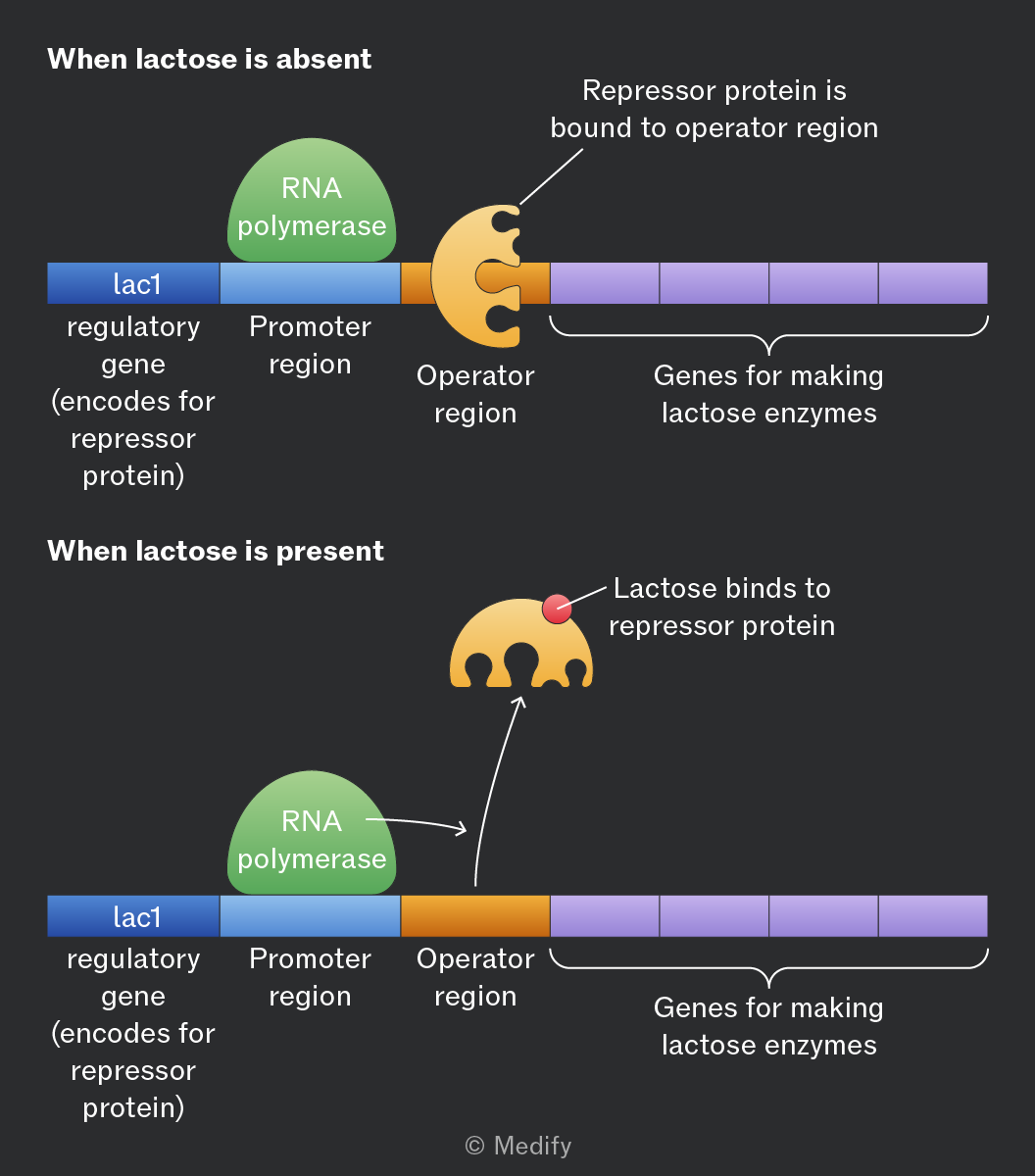
The lac operon is a group of genes in the bacterium E. coli, involved in bacterial lactose metabolism. It is an example of gene regulation in prokaryotes.
The enzyme -galactosidase breaks down lactose into glucose and galactose and is only produced when lactose is present:
- When lactose is absent, a repressor protein binds to the operator. This prevents RNA polymerase from binding to the promoter and transcribing the genes, so -galactosidase is not produced.
- When lactose is present, lactose binds to the repressor, causing a shape change. The repressor detaches from the operator, allowing RNA polymerase to bind to the promoter. The genes are transcribed into mRNA, and -galactosidase is produced.