Topic 5: On the wild side›Photosynthesis (5.5, 5.7, 5.6, 5.8, 5.9)

Photosynthesis (5.5, 5.7, 5.6, 5.8, 5.9)

An overview of photosynthesis (5.5, 5.7, 5.6, 5.8, 5.9) from Edexcel A level Biology A including: chloroplasts, the light-dependent stage and the light-independent stage
7 min

Respiration requires glucose and oxygen and releases carbon dioxide, water and energy in the form of ATP. Chemical energy is released during this process.

Overall equation:

Photosynthesis is an endothermic process which converts energy from sunlight into chemical energy. Energy from sunlight splits water molecules, which are then combined with carbon dioxide to form glucose. Oxygen is produced as a waste product.

Overall equation:

Add to favourites

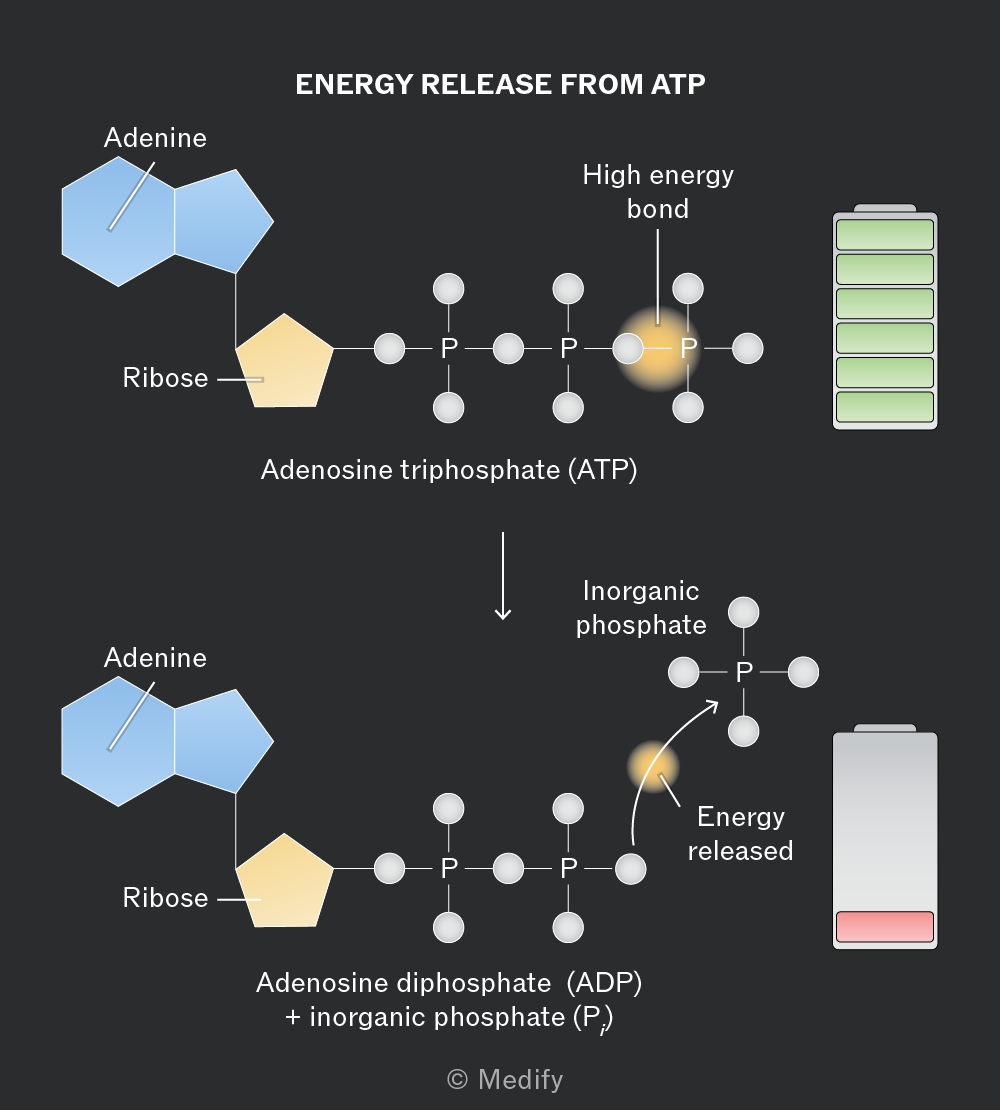
ATP provides an immediate energy source for biological processes. ATP is continuously hydrolysed (by ATP hydrolase) to form ADP + Pi and resynthesised within cells to support metabolic activities such as active transport, muscle contraction and protein synthesis.

The phosphate released from the hydrolysis of ATP can be used to phosphorylate other compounds.
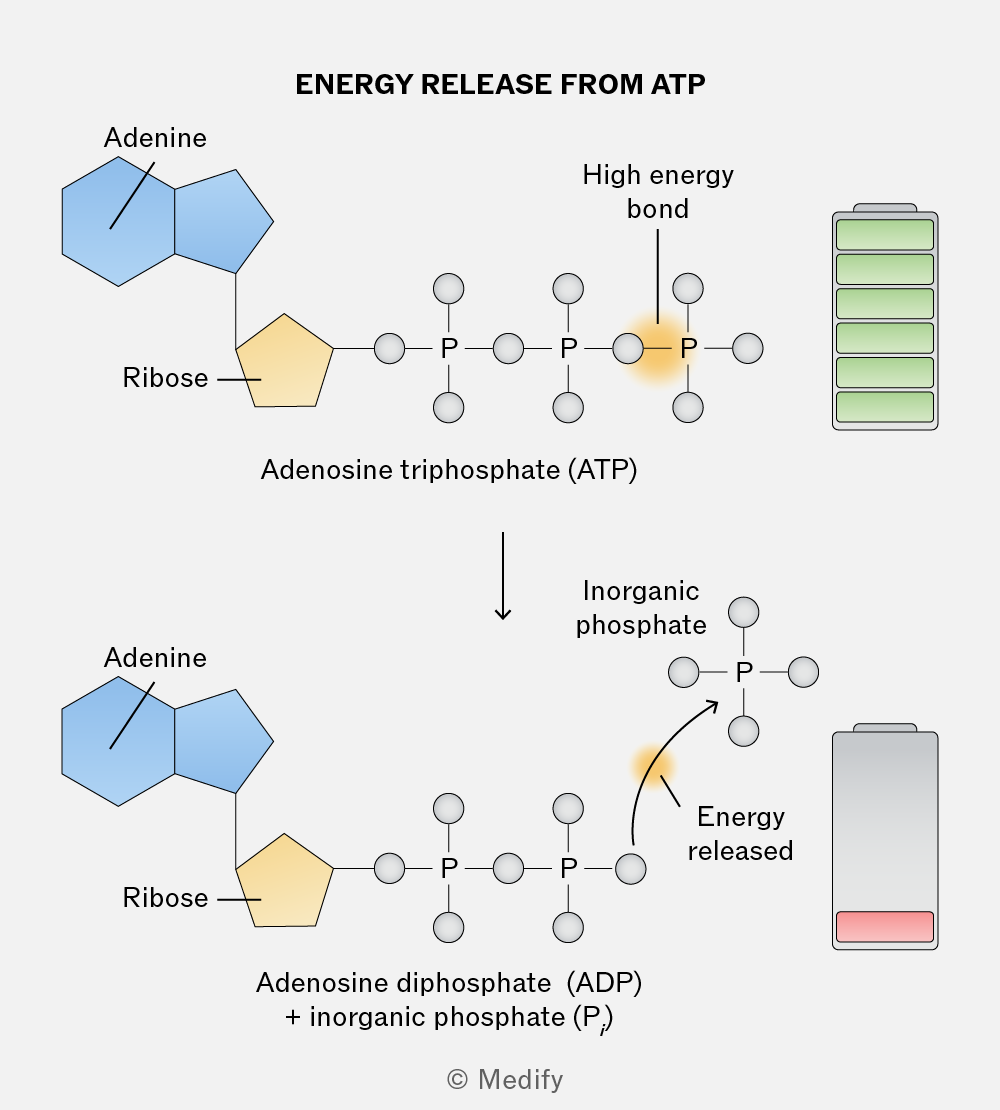
The diagram illustrates the process of energy release from ATP. At the top, Adenosine triphosphate (ATP) is shown with Adenine and Ribose structures on the left and three phosphate groups labeled 'P' connected in a chain. The third phosphate is highlighted as a 'High energy bond' with an adjacent full battery icon. Below, an arrow points downward to Adenosine diphosphate (ADP) with two phosphate groups and an inorganic phosphate (Pi) detached, labeled as 'Inorganic phosphate.' A curved arrow indicates 'Energy released,' pointing to the right where a depleted battery icon is displayed. Both ATP and ADP structures have Adenine and Ribose components. The diagram is labeled 'ENERGY RELEASE FROM ATP.'
Add to favourites

ATP can be (re)synthesised by the condensation of ADP via a phosphorylation reaction requiring energy.

Phosphorylation of ADP is catalysed by the enzyme ATP synthase and occurs in mitochondria, during aerobic respiration (electron transport chain) and in chloroplasts, during photosynthesis (light-dependent reactions).
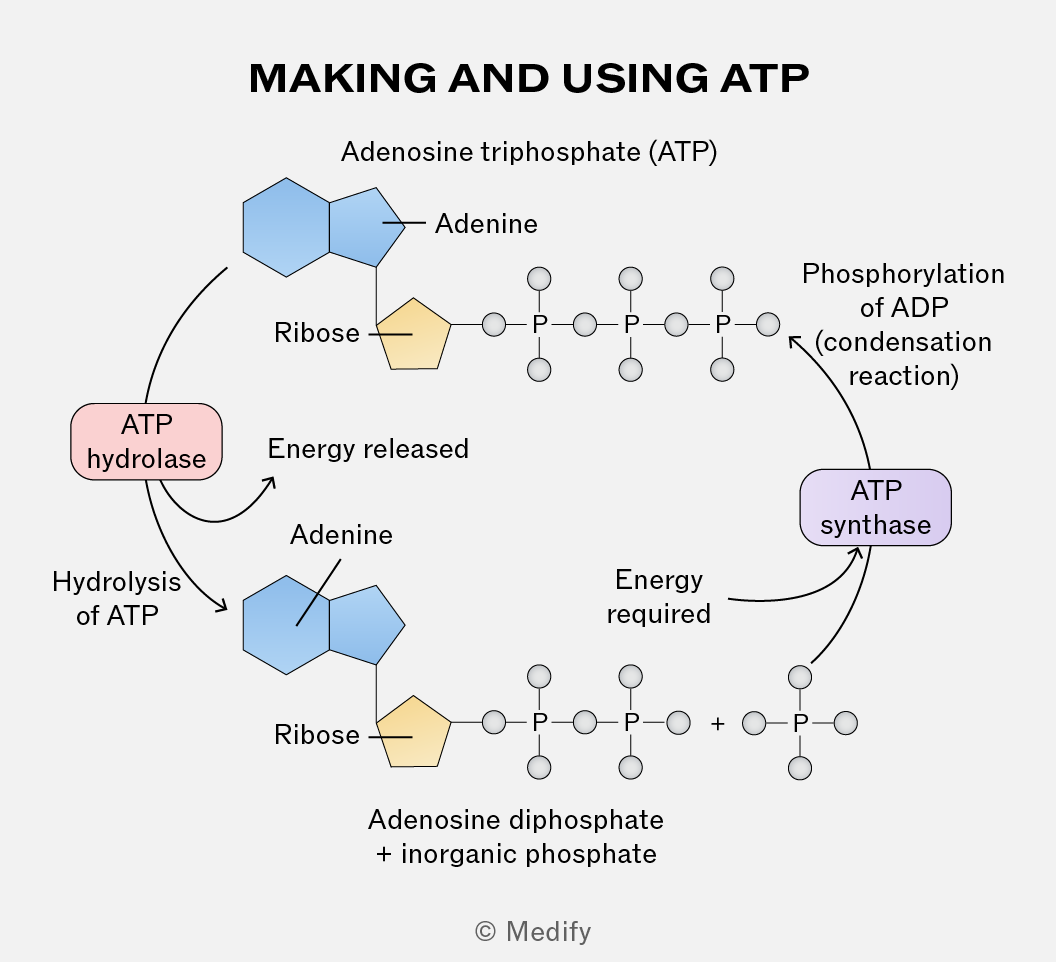
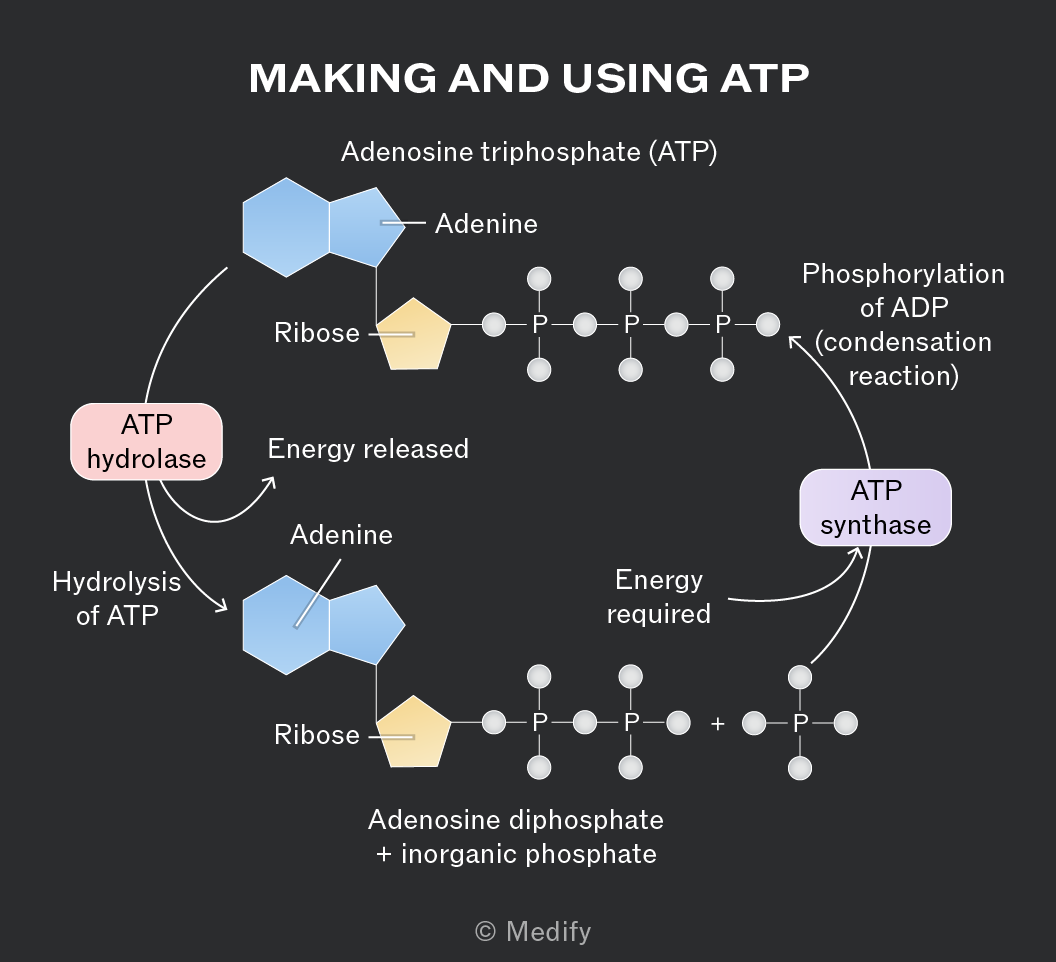
The diagram titled 'MAKING AND USING ATP' illustrates the cycle of ATP hydrolysis and synthesis. At the top, Adenosine triphosphate (ATP) is shown, consisting of adenine, ribose, and three phosphate groups. An arrow labeled 'Hydrolysis of ATP' points downward to a product labeled 'Adenosine diphosphate + inorganic phosphate', with a separate phosphate group shown. The process is facilitated by 'ATP hydrolase', with the release of energy noted. Below, the transition back to ATP is shown with an arrow labeled 'Phosphorylation of ADP (condensation reaction)', facilitated by 'ATP synthase', requiring energy. The cycle includes labels for adenine, ribose, and phosphate groups, and indicates the energy transitions involved.
Add to favourites

Coenzyme NADP can be represented in different ways. For example, coenzyme NADP can also be written as NADP+, whilst reduced NADP can be shown as NADPH or NADPH + H+.

The coenzymes and their reduced forms in the following notes are shown in the same way as in the exam board specification.

Add to favourites

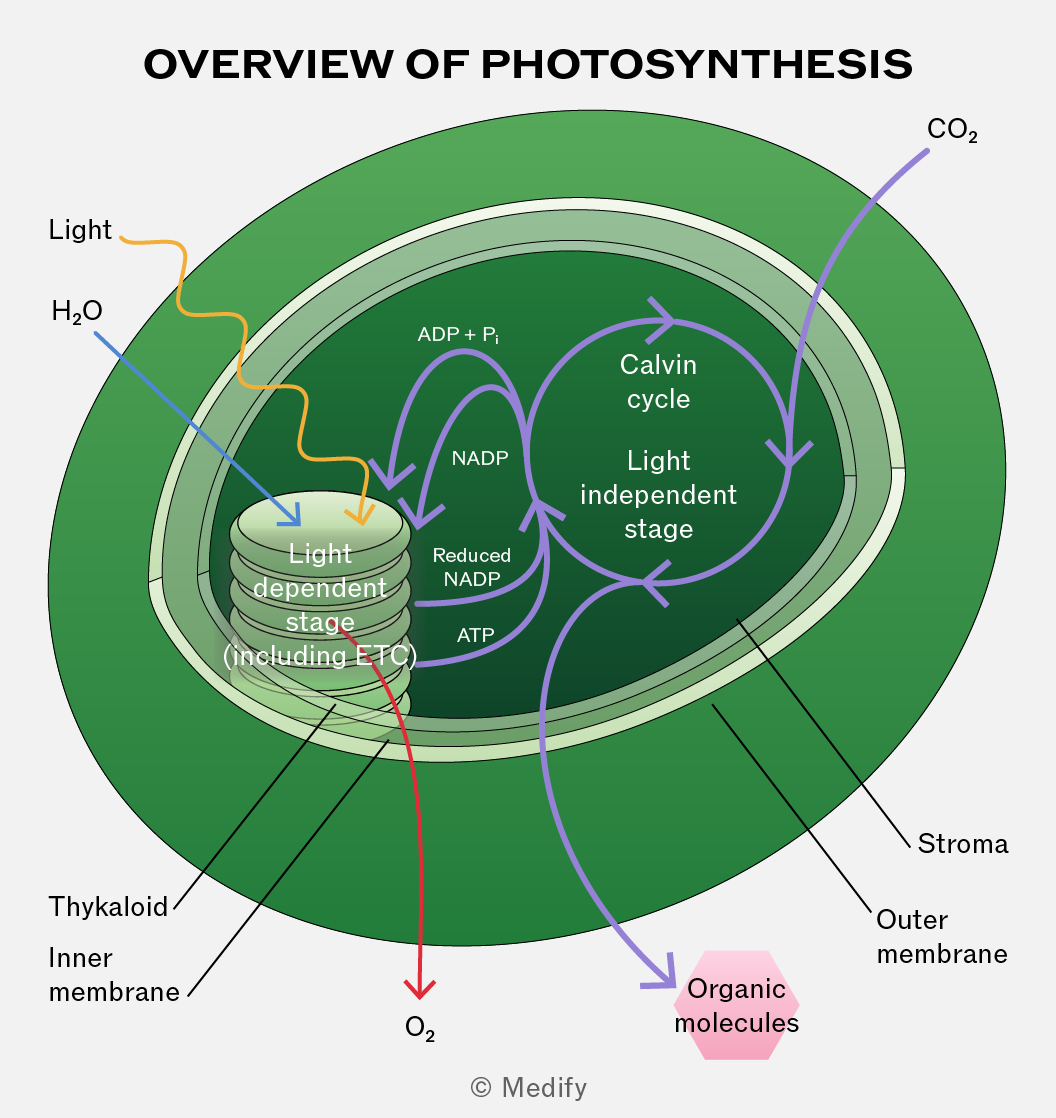
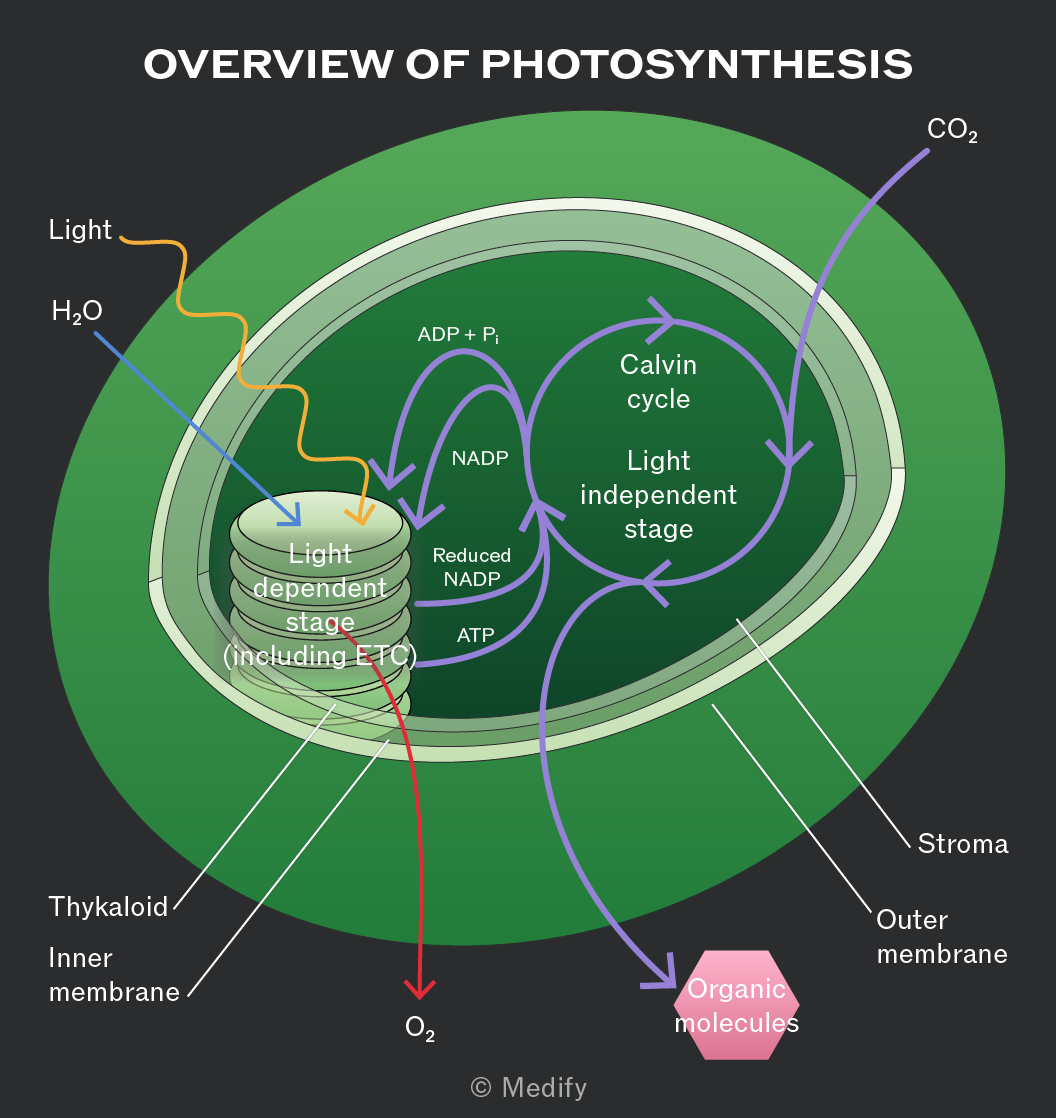
Photosynthesis occurs in two stages. The first is the light-dependent reaction where sunlight is used to split water molecules, producing ATP (and oxygen as a waste product). The coenzyme NADP is converted to reduced NADP by accepting hydrogen ions and electrons.

The second stage is the light-independent stage. This stage uses the ATP and reduced NADP made in the first stage. It also uses carbon dioxide, along with the hydrogen ions and electrons from reduced NADP, to build organic molecules such as glucose.

Add to favourites

Electron transport chains are used in cell processes such as photosynthesis and respiration.

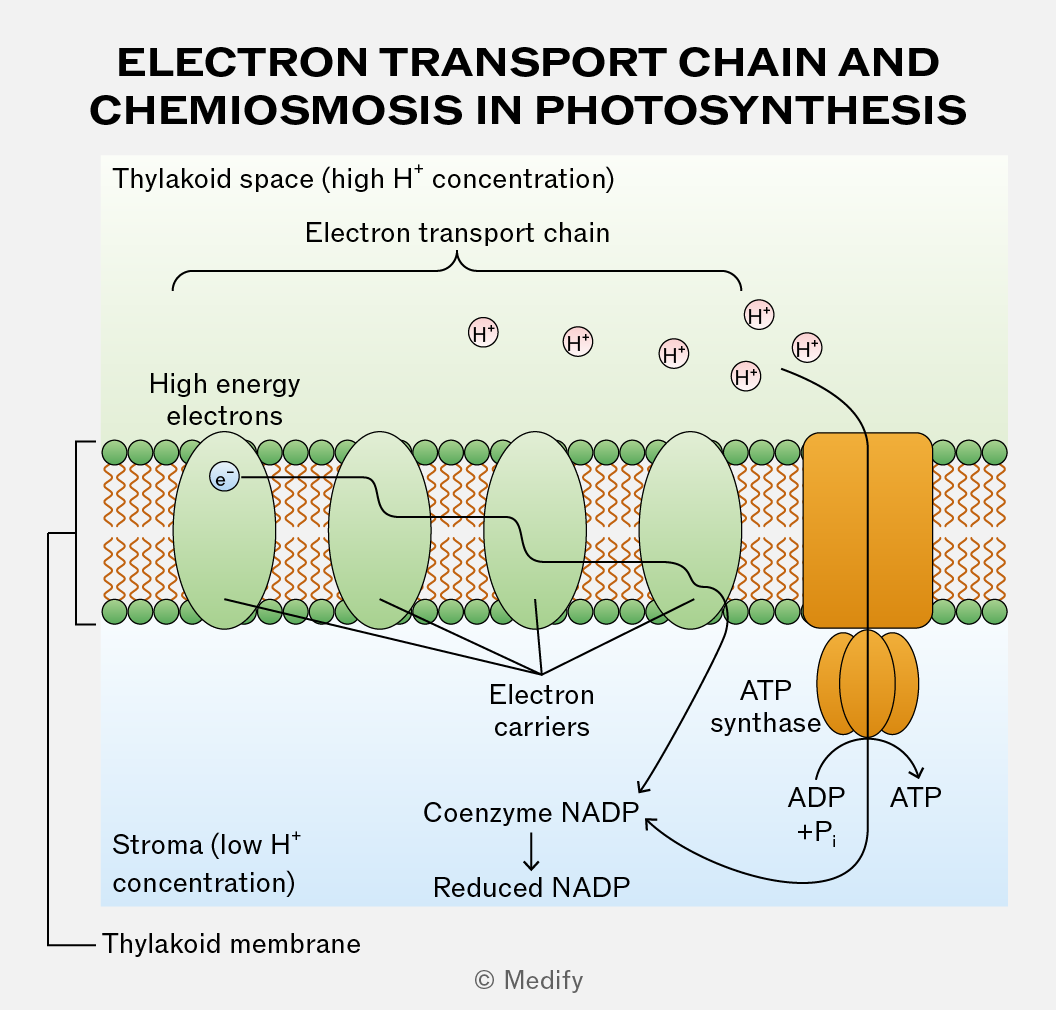
They transfer high-energy electrons through a series of four electron carriers (complexes) which are embedded in a membrane, such as the thylakoid membrane, in photosynthesis.

Each complex is reduced when it receives electrons and oxidised when it passes electrons to the next complex. The energy from the electrons is gradually transferred during the process and is used to create a hydrogen ion gradient.

Add to favourites

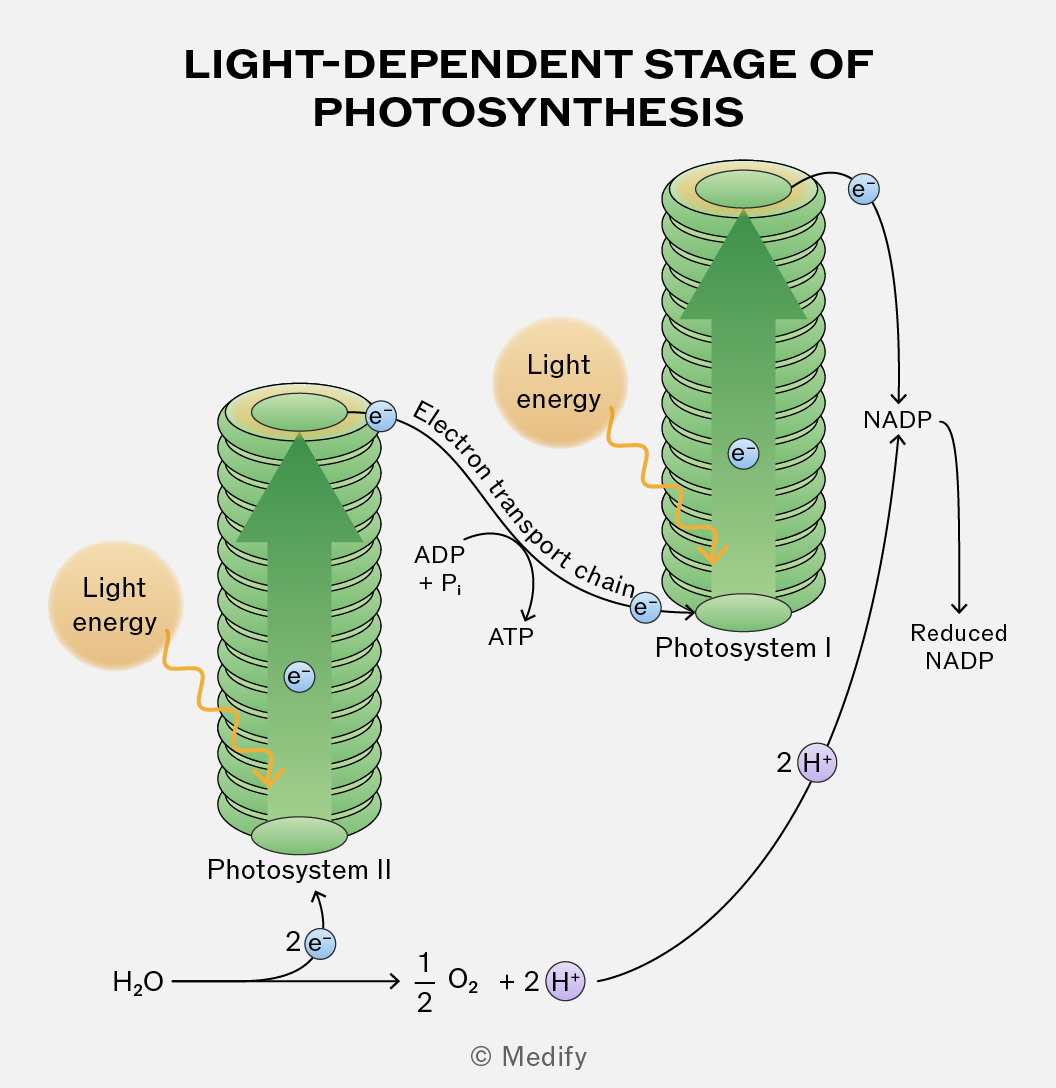
In the light-dependent stage of photosynthesis, light energy is used to move two electrons from photosystem II to a higher energy level.

The two electrons then move along a series of four electron carrier molecules which form the electron transport chain. As the electrons move along the chain, a series of reduction and oxidation reactions occur which release energy.

This energy is used to convert ADP and to ATP in a process called photophosphorylation.

Add to favourites

Photolysis occurs in the thylakoid space. An enzyme is used to split water into oxygen, hydrogen ions and electrons. These electrons are used to replace the electrons lost by photosystem II.

Overall yield:

The hydrogen ions stay within the thylakoid space, which produces a concentration gradient during photosynthesis, with the concentration of hydrogen ions higher in the thylakoid space than the stroma.

Add to favourites

After photophosphorylation, the electrons are then passed to photosystem I. The electrons are excited by light energy again. They pass along another electron transport chain where they are then joined with coenzyme NADP and two hydrogen ions to produce reduced NADP.
Add to favourites
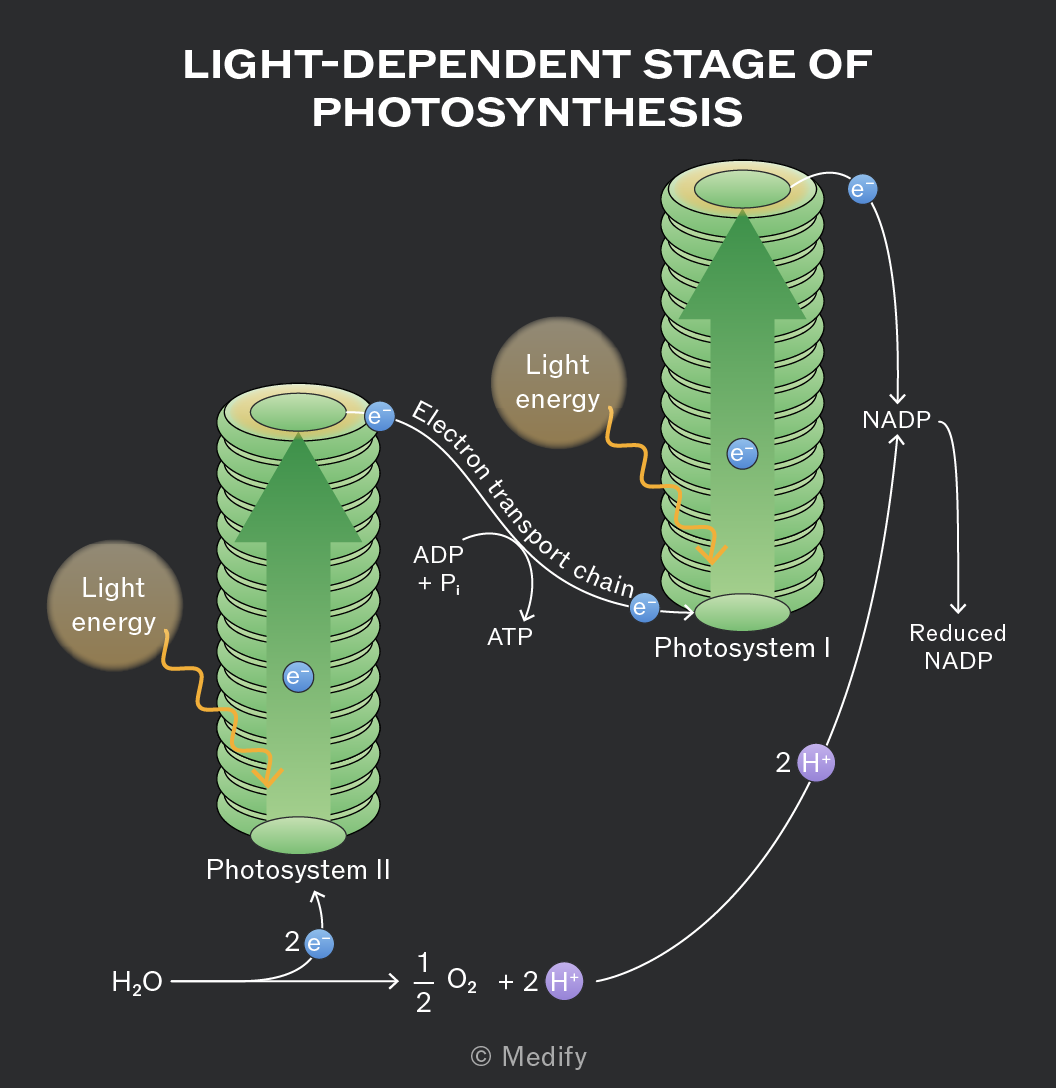
Diagram titled 'Light-Dependent Stage of Photosynthesis.' It shows two stacked green structures labeled Photosystem II and Photosystem I. Photosystem II receives 'Light energy' and releases two electrons (2e-) from H2O, producing 1/2 O2 and 2 H+ ions. An arrow labeled 'Electron transport chain' connects Photosystem II to Photosystem I, with 'ADP + Pi' converting to 'ATP' along this path. Photosystem I also receives 'Light energy' and releases an electron. NADP is reduced to Reduced NADP after Photosystem I, with 2 H+ ions involved in the process. The flow of electrons and energy is indicated by arrows, with annotations including 'e-' for electrons and 'H+' for protons.
Add to favourites
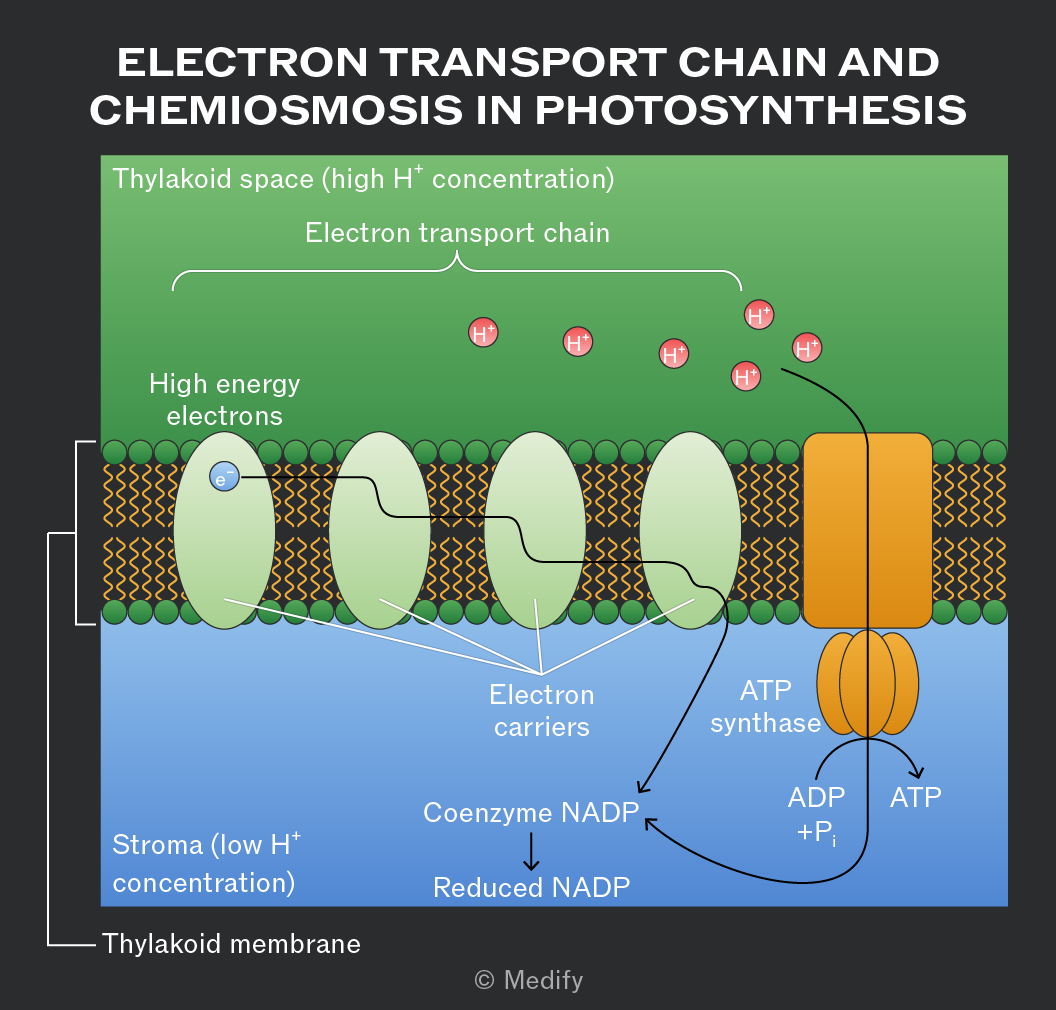
Diagram titled 'Electron Transport Chain and Chemiosmosis in Photosynthesis'. The top section labeled 'Thylakoid space (high H+ concentration)' shows an area with several H+ ions. Below is the 'Electron transport chain' with a bracket indicating its span across several green ovals representing 'Electron carriers' embedded in the 'Thylakoid membrane'. An electron, labeled 'e-', moves through these carriers. To the right, an orange structure labeled 'ATP synthase' is shown, with arrows indicating the conversion of ADP and inorganic phosphate (Pi) into ATP. The bottom section labeled 'Stroma (low H+ concentration)' shows labels for 'Coenzyme NADP' and 'Reduced NADP', with arrows depicting electron flow. The diagram depicts the flow of electrons and protons, illustrating processes in photosynthesis.
Add to favourites

The light-independent stage of photosynthesis occurs in the stroma of the chloroplast.

This stage reduces carbon dioxide in a cycle of reactions called the Calvin cycle. This stage also uses the ATP and reduced NADP from the light-dependent stage to produce organic molecules such as carbohydrates, lipids and proteins.

The light-independent stage remakes NADP which can then be used again in the light-dependent stage.

Add to favourites

Carbon dioxide diffuses into the stroma for the light-independent stage of photosynthesis. This involves a series of enzyme-controlled reactions called the Calvin cycle.

Add to favourites

In the Calvin cycle, carbon dioxide reacts with ribulose bisphosphate (RuBP), a 5C molecule. This reaction is catalysed by the enzyme ribulose bisphosphate carboxylase (RuBISCO). An unstable 6C intermediate is formed which immediately decays to form 2 × 3C glycerate 3-phosphate.

Each glycerate 3-phosphate is converted to 3C glyceraldehyde 3-phosphate. This reaction uses reduced NADP and ATP to produce coenzyme NADP, ADP and Pi.

Glyceraldehyde 3-phosphate can then either be recycled to RuBP or used to make organic molecules such as glucose, lipids and amino acids.
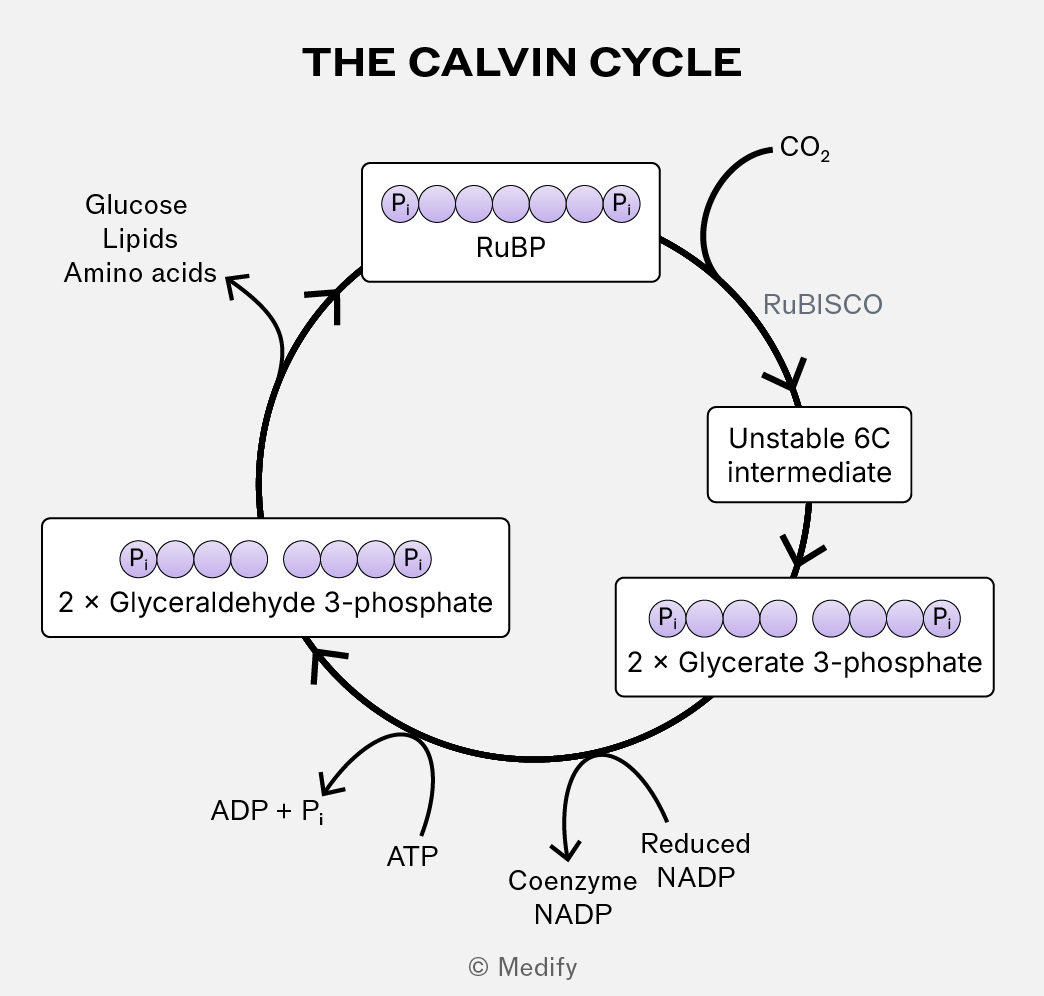
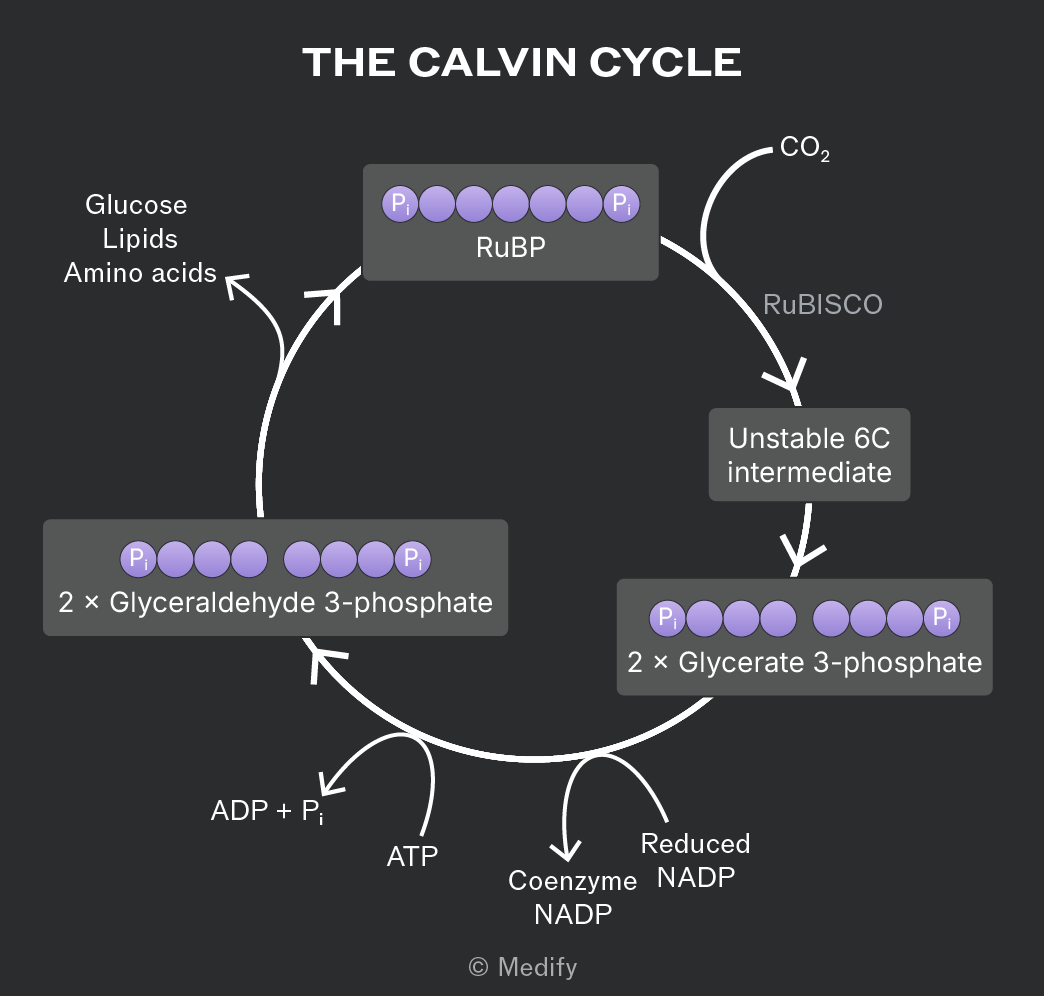
Diagram titled 'The Calvin Cycle' showing a circular process with several labeled components. At the top, CO2 enters the cycle and combines with RuBP, illustrated as a chain with circles labeled 'P_i.' This reaction is facilitated by RuBISCO, leading to an 'Unstable 6C intermediate.' The cycle continues to form '2 x Glycerate 3-phosphate,' also shown as a chain with circles labeled 'P_i.' This converts to '2 x Glyceraldehyde 3-phosphate,' depicted similarly. Arrows indicate the transformation of ATP to ADP + P_i and the reduction of Coenzyme NADP to Reduced NADP. Products such as Glucose, Lipids, and Amino acids are produced. The cycle is circular, with arrows showing the flow of reactions. The diagram is labeled with © Medify at the bottom.
Add to favourites
Diagram titled 'Overview of Photosynthesis' showing a chloroplast with labeled components and stages of photosynthesis. The outer green structure represents the chloroplast with labels for 'Outer membrane,' 'Inner membrane,' and 'Stroma.' Inside is a stack labeled 'Thylakoid,' where the 'Light dependent stage (including ETC)' occurs. Inputs include 'Light' and 'H2O' with arrows leading into the thylakoid. Outputs from this stage are 'O2,' 'ATP,' and 'Reduced NADP.' The 'Light independent stage,' featuring the 'Calvin cycle,' occurs in the stroma. Inputs to this stage include 'ATP,' 'Reduced NADP,' and 'CO2.' The output is 'Organic molecules.' The diagram includes several arrows indicating the flow of materials and energy between stages, with labels such as 'ADP + Pi,' 'NADP,' and pointing to various processes.
Add to favourites

Most of the glyceraldehyde 3-phosphate produced in the Calvin cycle is recycled to produce RuBP, which requires ATP and allows the Calvin cycle to continue. Some of the glyceraldehyde 3-phosphate is used to produce organic molecules.

Six Calvin cycles use 6 molecules of carbon dioxide and produce 12 glyceraldehyde 3-phosphate molecules. 10 of these molecules would be used to reproduce the original 6 molecules of RuBP. The remaining 2 glyceraldehyde 3-phosphate molecules can be used to make 1 hexose sugar.
Add to favourites
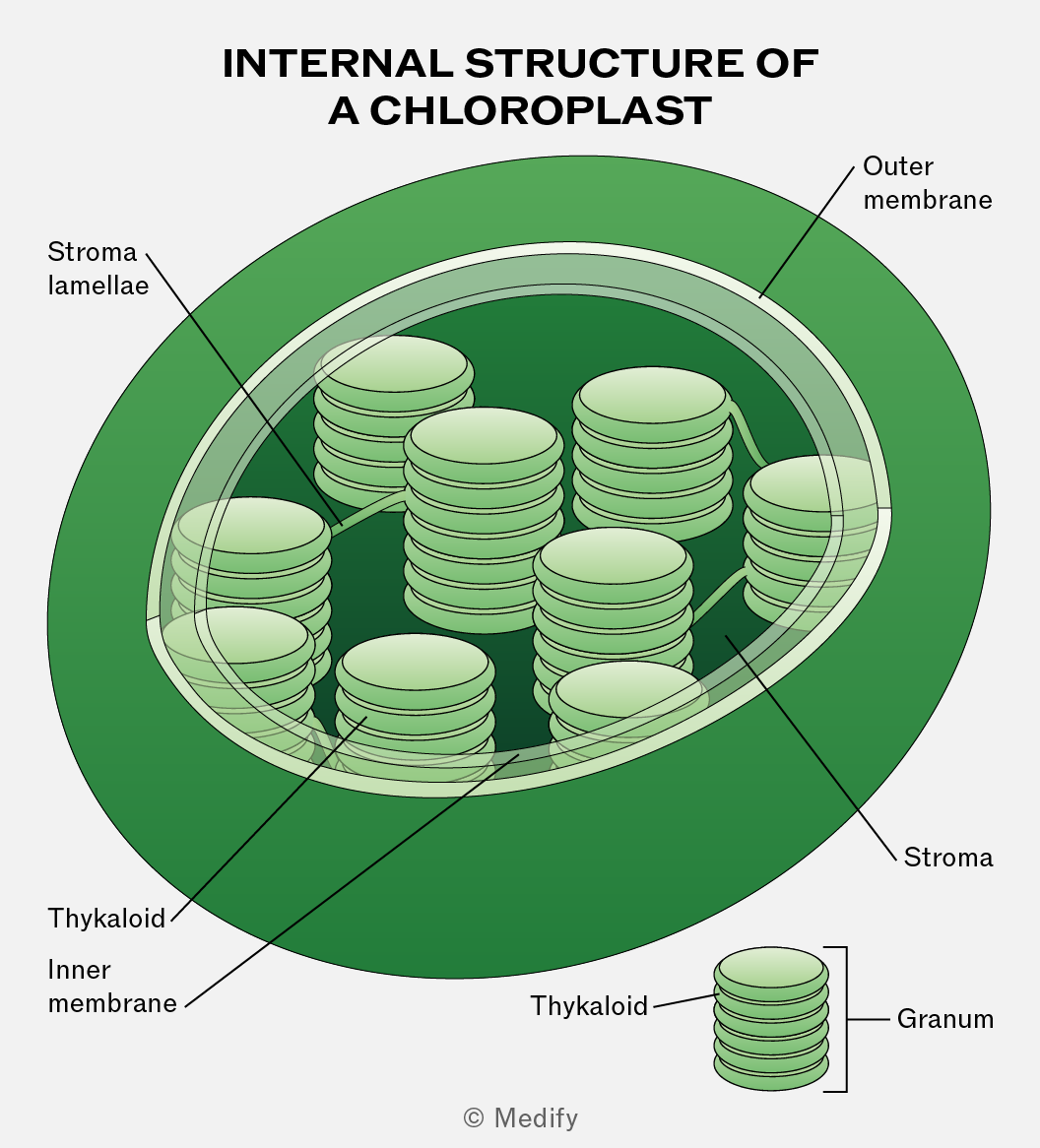
A diagram titled 'Internal Structure of a Chloroplast' showing the cross-section of a chloroplast. The outermost layer is labeled 'Outer membrane'. Inside it is the 'Inner membrane'. Within the inner membrane are multiple stacks of disk-like structures labeled 'Thylakoid', grouped into stacks labeled 'Granum'. The background space within the inner membrane is labeled 'Stroma'. Connecting the grana are structures labeled 'Stroma lamellae'. An inset on the bottom right shows a close-up of a granum with individual thylakoids labeled.
Add to favourites

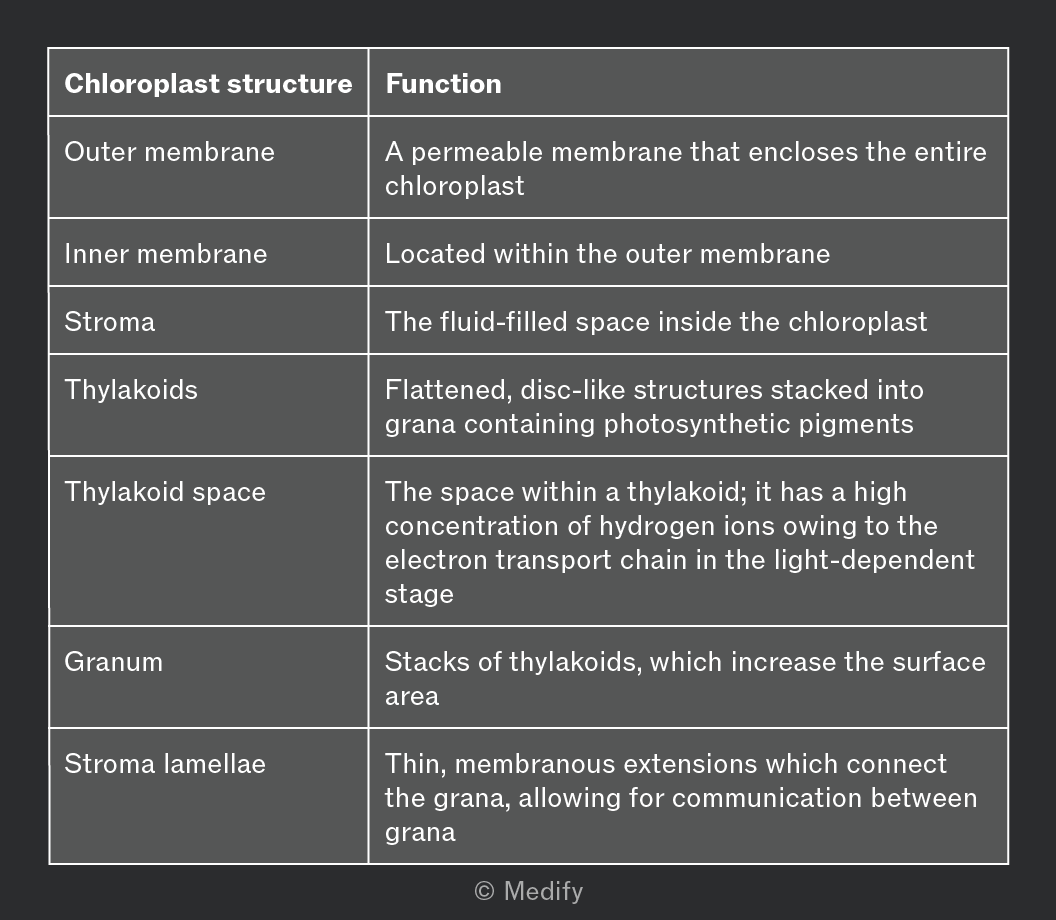
Chloroplasts are specialised organelles found in plants and algae where photosynthesis occurs.
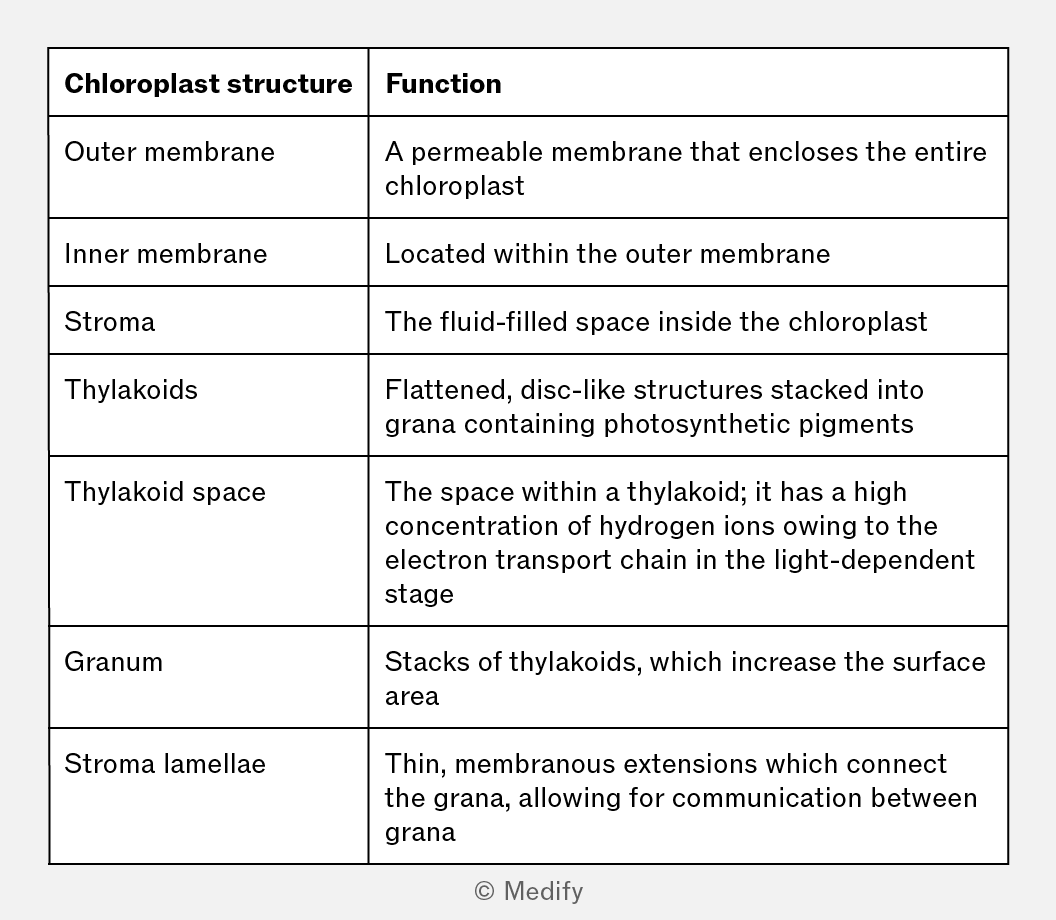
A table titled 'Chloroplast structure' and 'Function'. It lists: 1. Outer membrane: A permeable membrane that encloses the entire chloroplast. 2. Inner membrane: Located within the outer membrane. 3. Stroma: The fluid-filled space inside the chloroplast. 4. Thylakoids: Flattened, disc-like structures stacked into grana containing photosynthetic pigments. 5. Thylakoid space: The space within a thylakoid; it has a high concentration of hydrogen ions owing to the electron transport chain in the light-dependent stage. 6. Granum: Stacks of thylakoids, which increase the surface area. 7. Stroma lamellae: Thin, membranous extensions which connect the grana, allowing for communication between grana. © Medify.
Add to favourites

The light-dependent reactions occur in the thylakoid membrane. The thylakoids have a large surface area, increasing the membrane surface available for photosynthetic reactions. Chlorophyll, other photosynthetic pigments and enzymes involved in the light-dependent reaction are found within the thylakoid membrane.

The light-independent reaction occurs in the stroma. The stroma contains chloroplast DNA and ribosomes so is able to make some of its own proteins and enzymes. The stroma is where organic molecules are produced.

Add to favourites