Evolution in changing environments (5.17, 5.18, 5.19)
On this page
Evolution is a change in allele frequencies over time. The causes of changes to allele frequency include:
- Natural selection for alleles that confer an advantage which then increase in frequency because individuals with those alleles survive and reproduce more.
- Mutations in genetic sequences result in new alleles being introduced into the gene pool.
The scientific community plays an important role in validating evidence for evolution.
Research is submitted to scientific journals, where it is peer-reviewed to ensure that the work is accurate, unbiased, and meets scientific standards. After publication, other scientists can scrutinise the methods, repeat experiments, and check reliability.
Scientific conferences enable scientists to meet and present, discuss, and debate new findings. This helps to share ideas, get feedback, and develop collaborations and is important for building consensus in the scientific community.
Molecular evidence supports evolutionary theory through several techniques.
- DNA hybridisation involves combining single-stranded DNA from two species. When heated, a lower separation temperature means fewer complementary base pairs and therefore a more distant relationship.
- DNA profiling compares banding patterns between species to reveal genetic similarity.
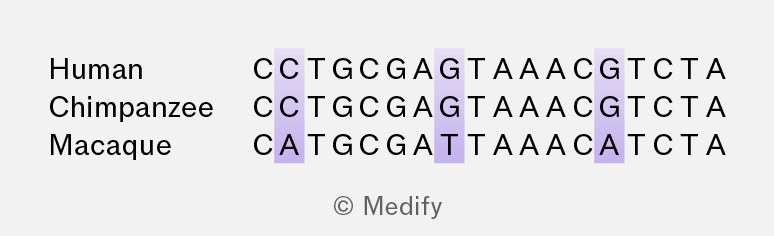
- DNA and protein sequencing allow direct comparison of base or amino acid sequences. More similar sequences indicate closer relationships.
- Neutral mutations accumulate at a roughly constant rate, so DNA differences can act as a molecular clock to estimate the time since two species diverged.

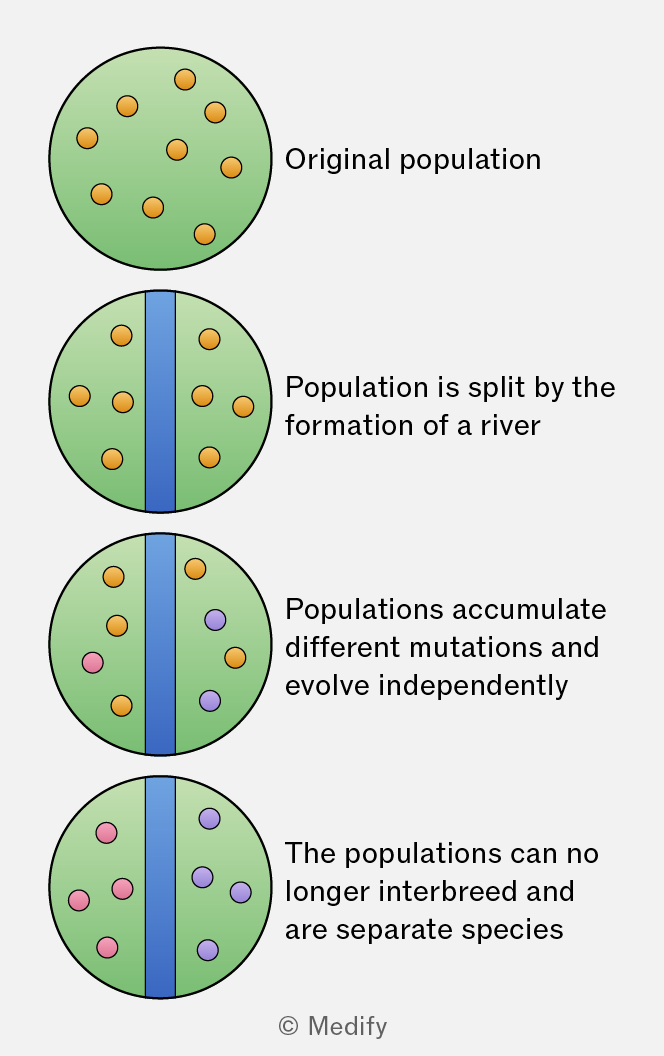
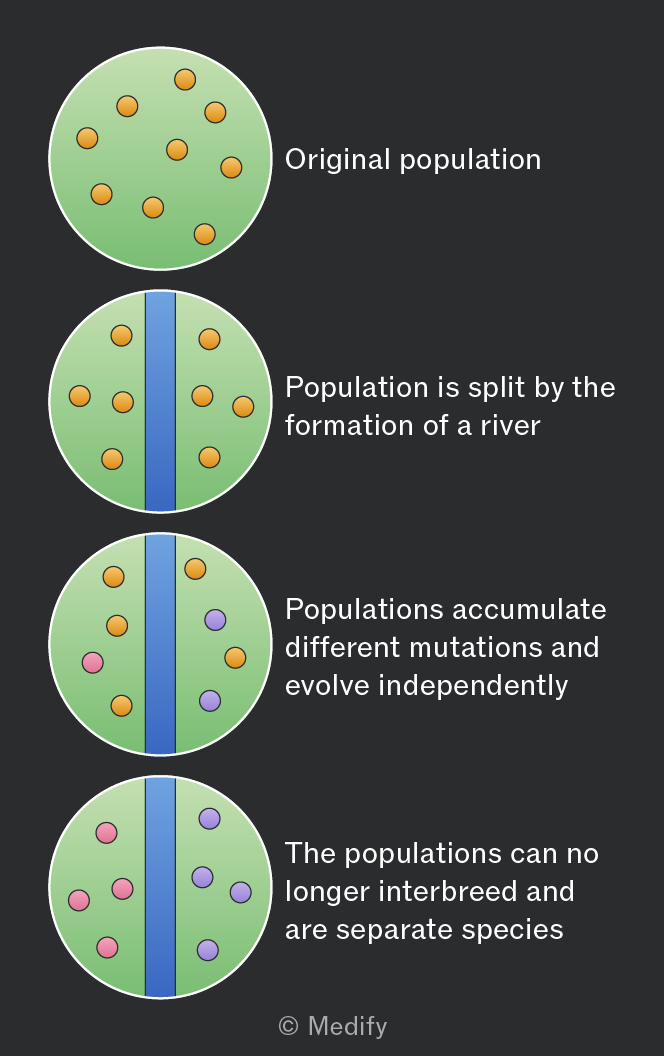
A geographical barrier (e.g., mountains, rivers, seas) separating populations is the most common cause of reproductive isolation, leading to the formation of a new species. This process is called allopatric speciation.
Either side of the barrier, each population experiences:
- Different selection pressures (e.g., climate, predators, food) which favour different alleles.
- Mutations introducing new alleles.
- Genetic drift (especially in small populations).
Over time, allele frequencies change independently in each population, and the gene pools diverge.
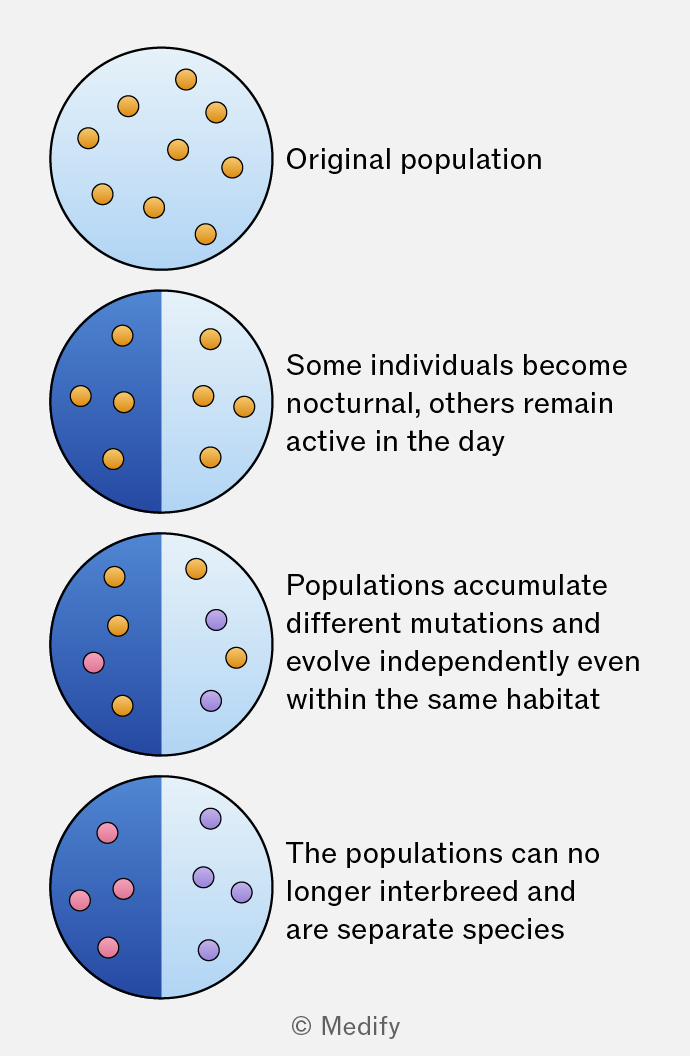
Less commonly, speciation can occur in populations that share a habitat. This is called sympatric speciation.
Reproductive isolation can be arise in many ways, including by:
- Behavioural differences (mating calls, courtship rituals).
- Ecological differences (feeding in different habitats).
- Temporal isolation (breeding at different times of year / day).
- Polyploidy differences (extra sets of chromosomes – common in plants).
Over time, a lack of interbreeding means there is no gene flow between the populations, and genetic differences build up.