
Plan your essay: Organising
On this page
After brainstorming, you must organise your notes into a clear structure.
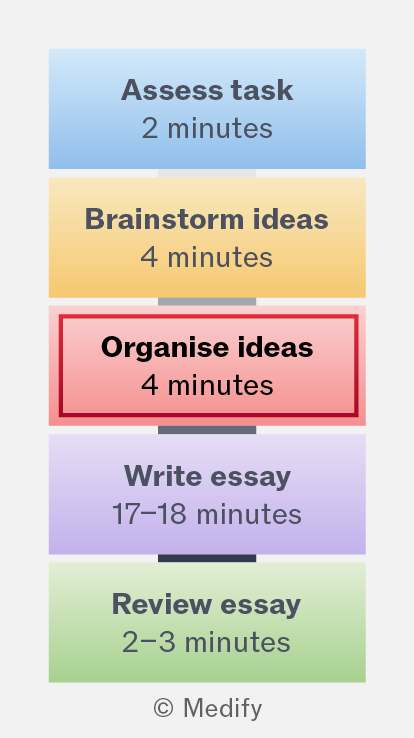
The best approach is usually to arrange your most relevant brainstorming notes into a four-paragraph structure.
This is not a hard-and-fast rule — depending on your specific ideas, you may need more or fewer body paragraphs. However, the four-paragraph structure is ideal if another structure does not naturally suggest itself.
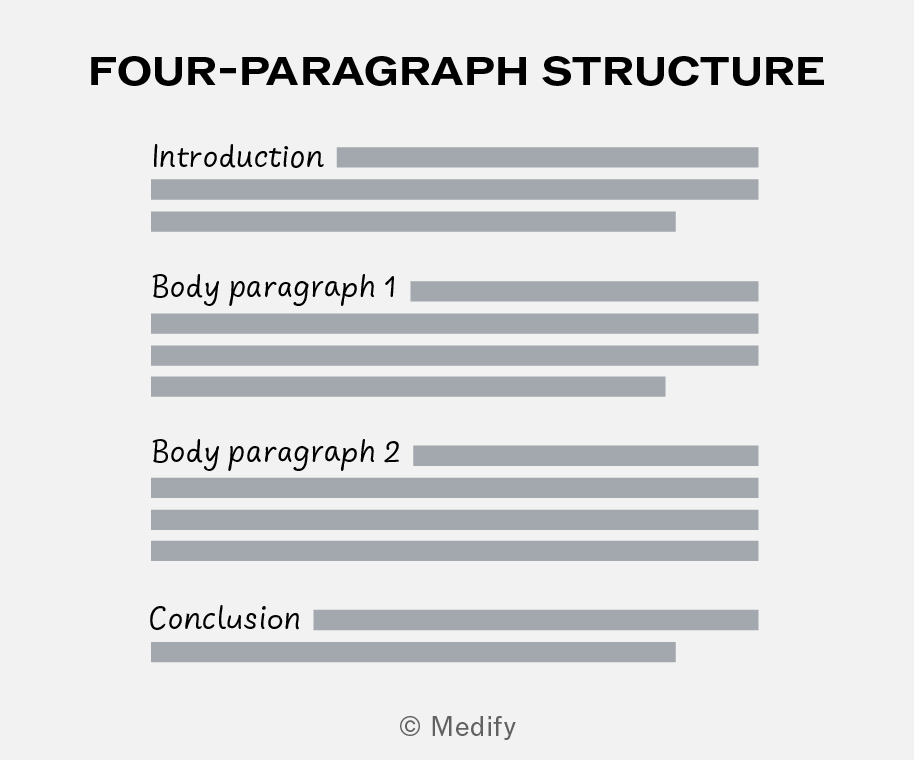
Your introductory paragraph is where you will identify the theme and define key concepts as necessary. Put all relevant brainstorming notes on these issues in this section of your plan.
This paragraph sets the stage for everything that follows, so it’s important to be clear and direct. Your reader should understand exactly what theme you’re addressing and how you’re defining the key terms.
Your body paragraphs explore the two sides of the issue. In your first body paragraph, you will explore one side of the issue. In your second body paragraph, you will explore the other side of the issue. Both paragraphs must provide examples.
You should arrange all your notes on your comments, on pros and cons, and on examples accordingly under these two paragraphs in your plan.
Remember that it’s best to discuss at least two of the comments in some detail in the body of your essay. Therefore, you must take care at this stage to ensure you will be making points related to at least two of the comments.
You do not need to discuss all of the comments in detail. You should be able to get a very high score discussing two or three of the comments effectively.
This is why it pays to be selective during planning. Focus on the comments that will let you write the best possible essay.
Your concluding paragraph is where you state your own opinion — it is the essential ‘payoff’ of your essay. A good conclusion accounts for everything that has gone before it and makes a logical deduction from that.
This does not mean your conclusion should be wishy-washy. It should be clear and to the point.
However, it does mean that your conclusion cannot ignore any of the points that have gone before — otherwise, there was no point in including those points in the first place. If you fall clearly on one side of the argument, you must account for why you have dismissed the other side.
Walkthrough
Four-paragraph structure
This exercise will improve your familiarity with the features of each paragraph.
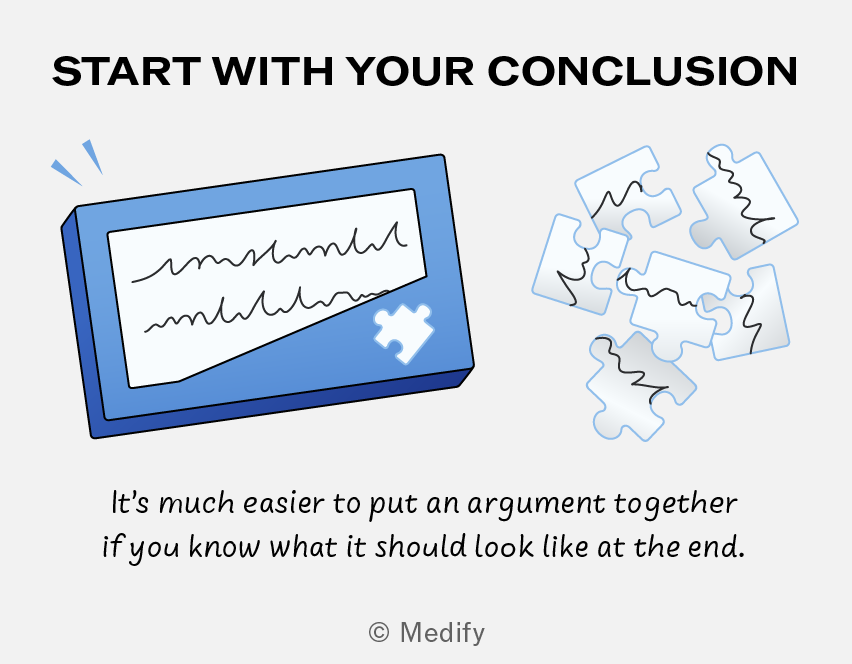
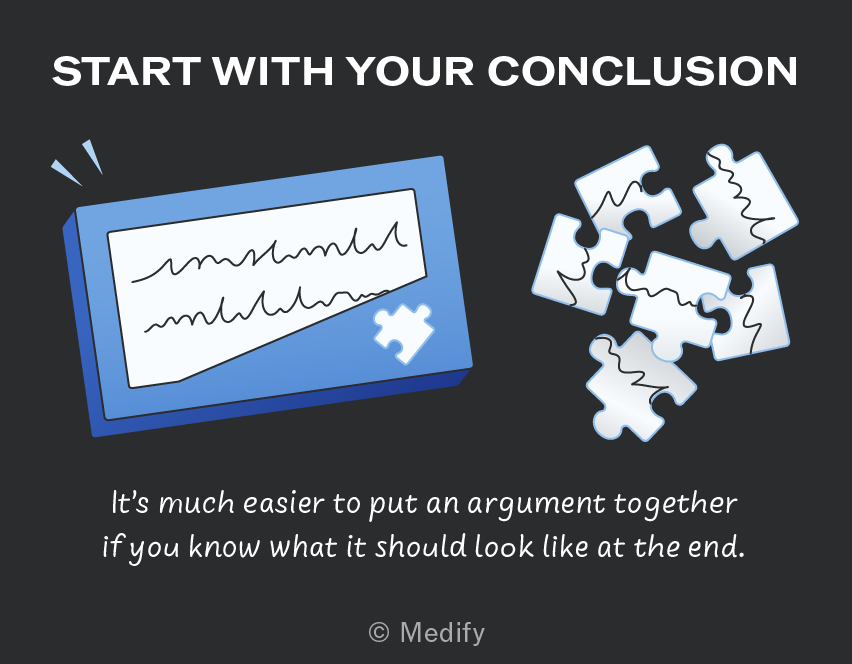
The best way to organise is to work backwards and first determine the overall conclusion you wish to draw. This means deciding what overall opinion you wish to convey.
Then, using your conclusion as your guide, go to your brainstorming notes and select:
- The most important points about the theme and key concepts
- The strongest pros and cons
- The strongest supporting examples for each
These will form the basis of your body paragraphs. Once you have a clear idea of your overall point and what you want to include in your body paragraphs, you will know what ideas you need to introduce in the introductory paragraph.
When everything is clear in your head and in your notes, you are ready to start writing. Your organised plan should provide a roadmap for your essay, with clear points to make in each paragraph and examples ready to deploy.
If you follow this structure, you are well on your way to writing an essay that is on task, thoughtful and clear.
Walkthrough
Organising
Let’s organise ideas and arrange them into a usable essay plan.