
Carbonyl compounds and their derivatives
On this page
Aldehydes and ketones are functional group structural isomers. Both have the carbonyl functional group, but differ in the location of this group.
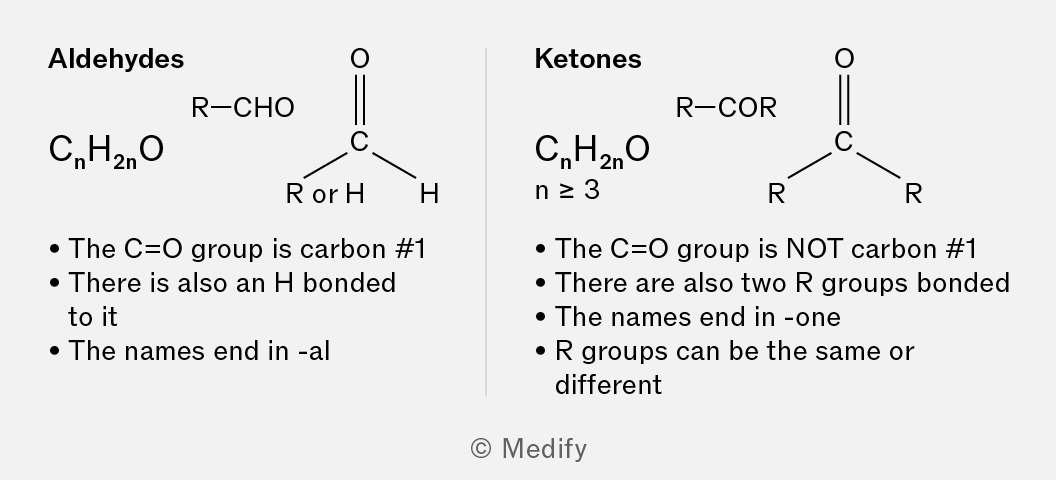
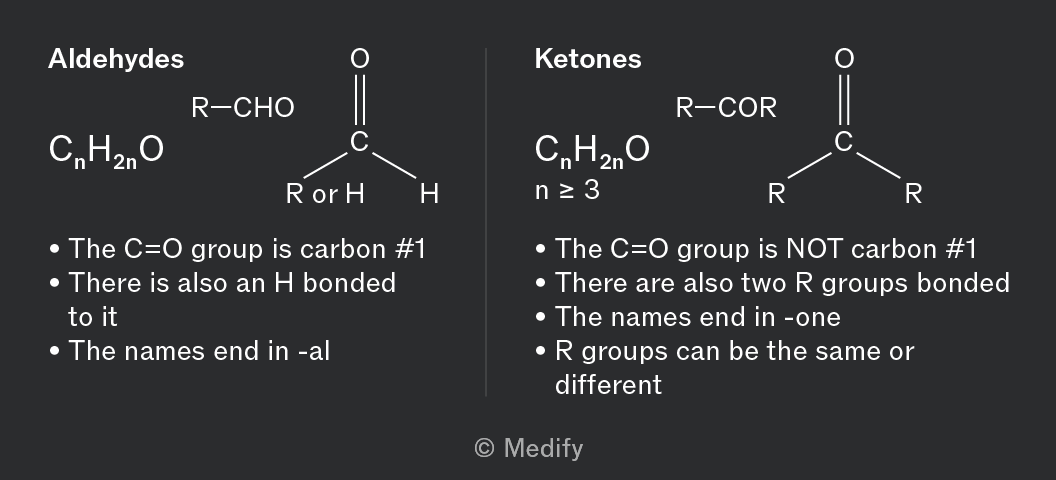
Aldehydes have the group carbon on the terminal carbon, but in ketone, the group carbon is within the carbon chain.
Pure samples of aldehydes or ketones do not exhibit hydrogen bonding – they do not possess . Their volatility is linked to the strength of their permanent dipole forces and London (induced dipole) forces, which increase with chain length.
Short chain aldehydes and ketones are more volatile.
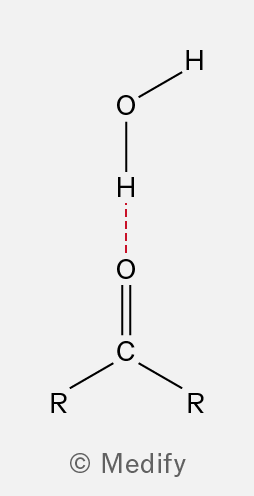
Aldehydes and ketones can, however, form hydrogen bonds through the lone pairs on the carbonyl oxygen, with hydrogens from solvents, such as water.
This makes the shorter chain carbonyl compounds water soluble.
Aldehydes are oxidised to carboxylic acids.
The oxidatising reagent is an acidified dichromate (VI) solution.
The mixture is boiled under reflux, using the apparatus below:
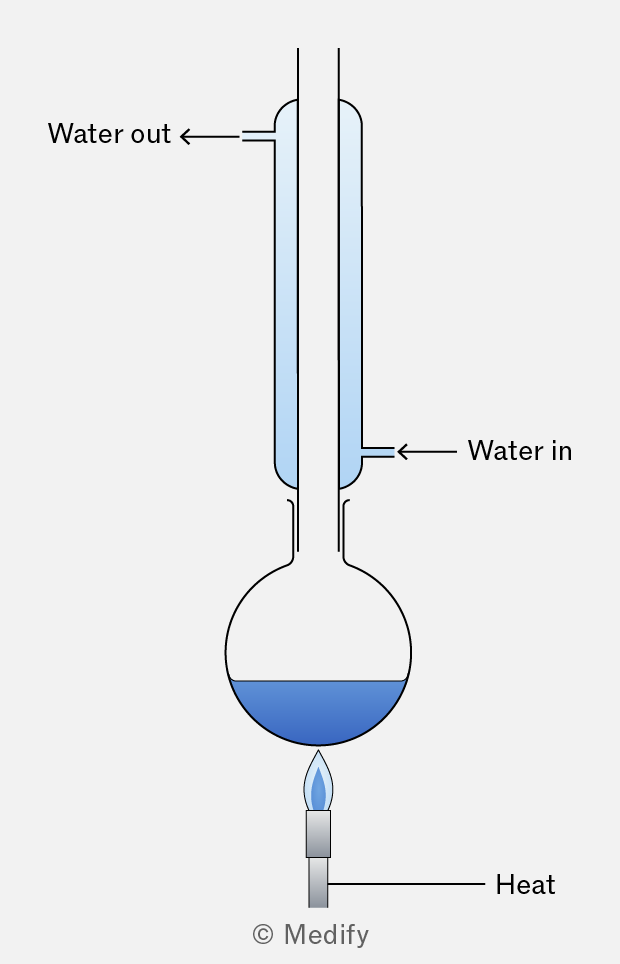
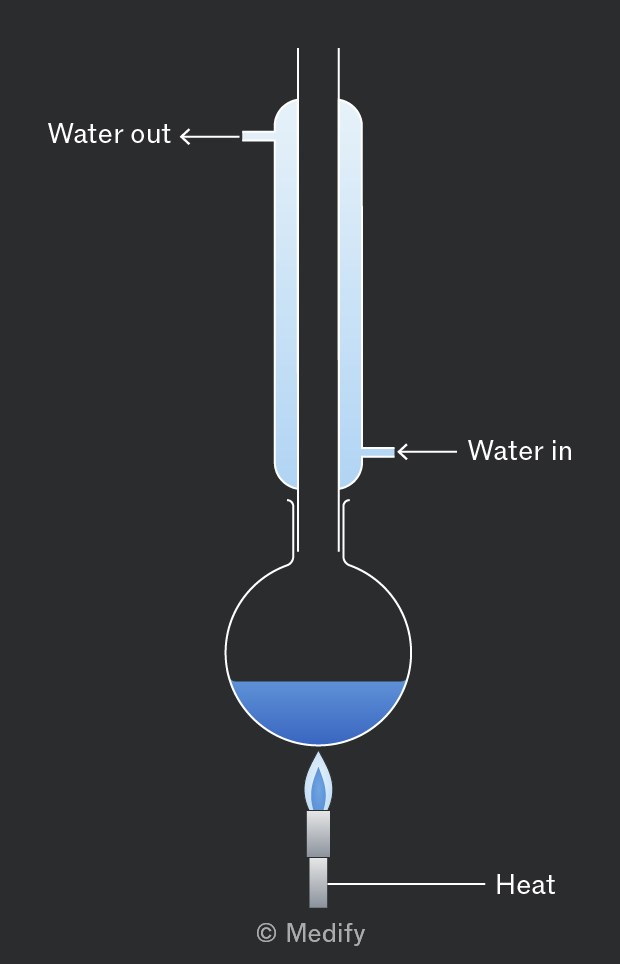
The volatile aldehyde is prevented from escaping the oxidation reaction as it is condensed and returned to the reaction flask. The product is a carboxylic acid.
The reaction is associated with the colour change from orange to green. This indicates oxidation has occurred, as the chromium species has been reduced from orange to green .
Using to represent the oxidising agent, the oxidation of ethanal to ethanoic acid would be:
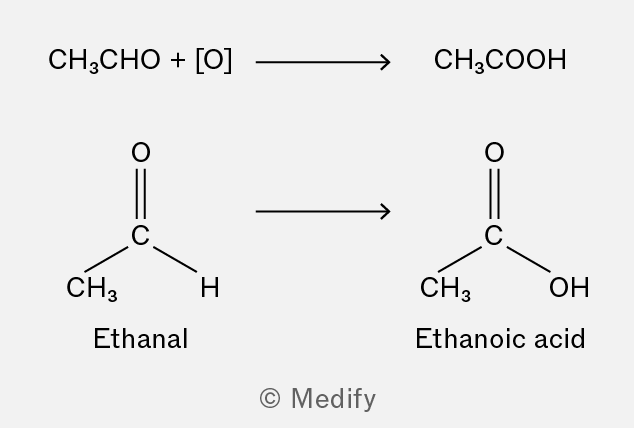
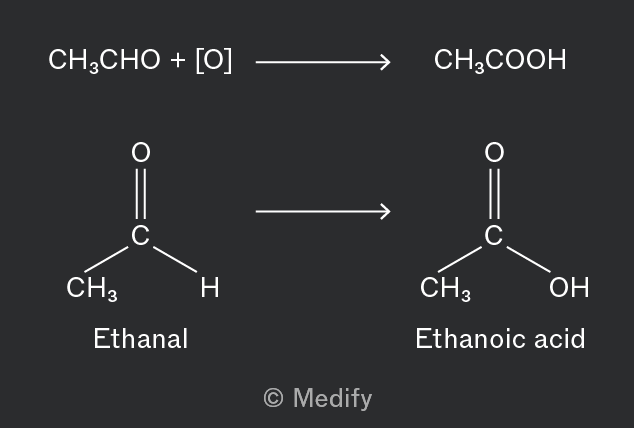
The oxidation number of the carbon increases by 1 therefore only 1 mole of is required per mole of ethanal.
Sodium borohydride, , in aqueous ethanolic solution, is a good reducing agent, and can reduce both aldehydes and ketones, but cannot reduce carboxylic acids.
or can both be used to reduce aldehydes and ketones.
The carbonyl group is reduced by two ions, forming the primary alcohol from the aldehyde, and the secondary alcohol from the ketone group.
It is common to use the symbol in equations to represent the hydrogen from the reducing agent in a reduction reaction.
Reduction of aldehydes and ketones is written as follows:
For an aldehyde:
For a ketone.
There is a 1:2 mole ratio of carbonyl : .
One hydrogen is from the nucleophilic attack of and the second is from a protic solvent.
Lithium aluminium hydride () is a very powerful reducing agent and, as well as reducing aldehydes and ketones to alcohols, it can reduce carboxylic acids to primary alcohols.
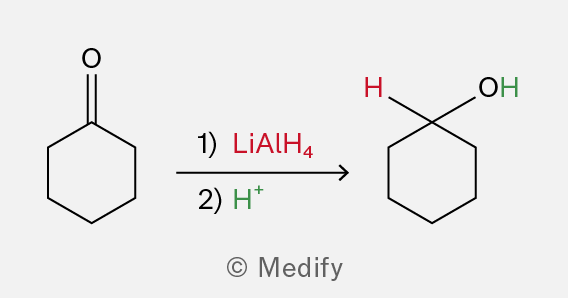
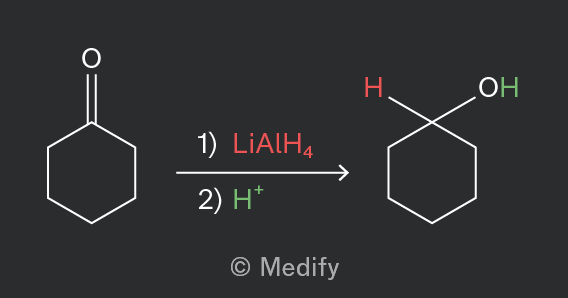
reacts violently with water, so it is used in a solution of dry ether (ethoxyethane). The reduction is a two stage process after reaction with the salt form of the product is hydrolysed to the alcohol by the addition of water or dilute acid.
The mechanism for carbonyl reduction is drawn in two key stages:
- Attack by the nucleophile, forming a new bond to the of the carbonyl group, alongside movement of pi bond electrons to the carbonyl oxygen.
- The electrons from of the intermediate ion attack a proton from a water molecule from the aqueous solution.
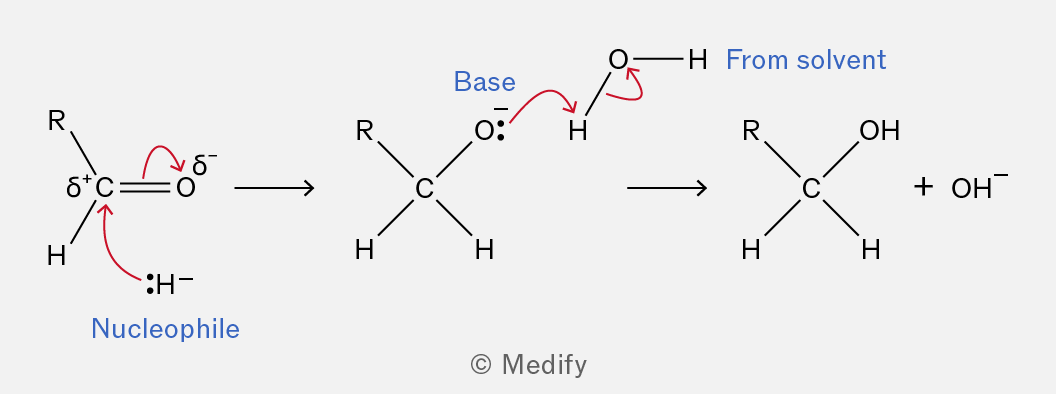
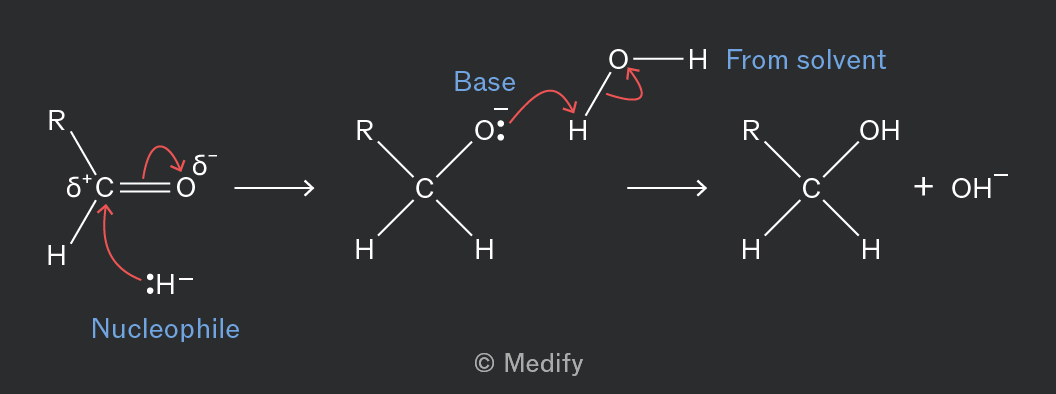
When drawing this mechanism, ensure the dipole is added to the carbonyl group and that all arrows clearly start from electrons (lone pairs or bonds) and go to atoms.
When heated under reflux with acidified solution, carbonyl compounds undergo nucleophilic addition reactions. This reaction is very useful in extending a carbon chain in organic synthesis reactions.
The lone pair of electrons on the carbon atom of the nitrile group, forms a new carbon-carbon bond with the carbonyl carbon. An ion then binds to the carbonyl oxygen forming an alcohol group. The reaction saturates the carbonyl bond. The product is a hydroxynitrile.
The product is 2-hydroxypropanenitrile.
The product is 2-hydroxy, 2-methylpropanenitrile.
(Note the nitrile group is a higher priority than the alcohol group, so is named in the suffix.)
is a highly toxic gas, so is not used directly.
The nucleophile is generated in situ by reacting or with a dilute acid, such as .
The reaction must be managed in a fume cupboard to avoid contact with the generated.
The mechanism for nucleophilic addition of to a carbonyl is drawn in two key stages:
1. Nucleophilic attack by the lone pair nitrile ion, , forming a new bond to the of the carbonyl group, resulting in movement of pi bond electrons to the carbonyl oxygen.
2. The of the intermediate ion gaining a proton from the solvent water, or from the .
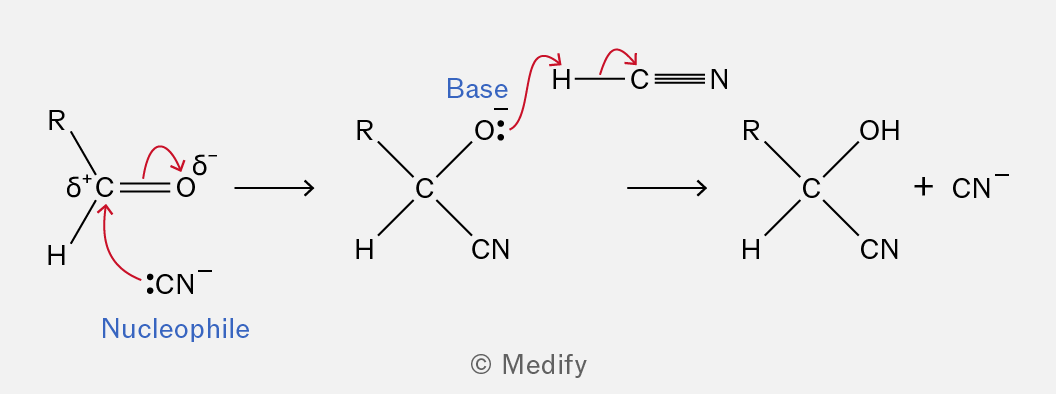
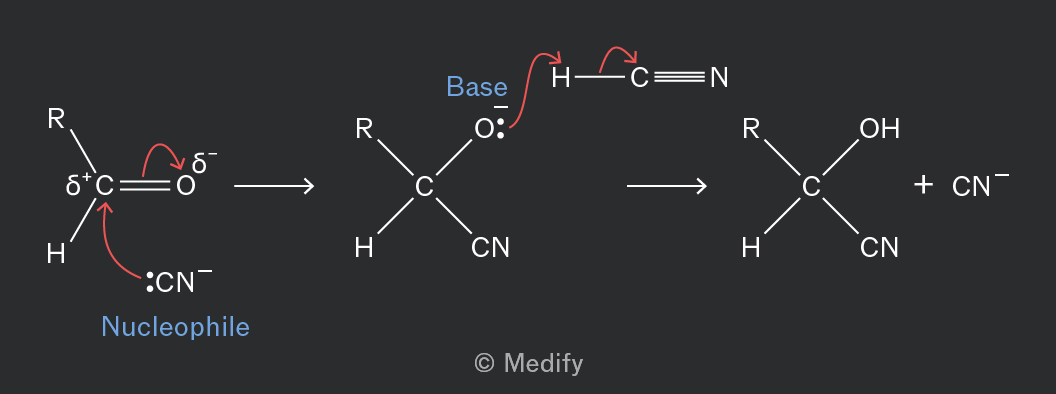
The organic products are hydroxynitriles which have both the group and the group now bonded to the same carbon.
The reaction of the nucleophile with an aldehyde, or an unsymmetrical ketone, will always produce a product with four different groups bonded to the same carbon atom; a chiral product.
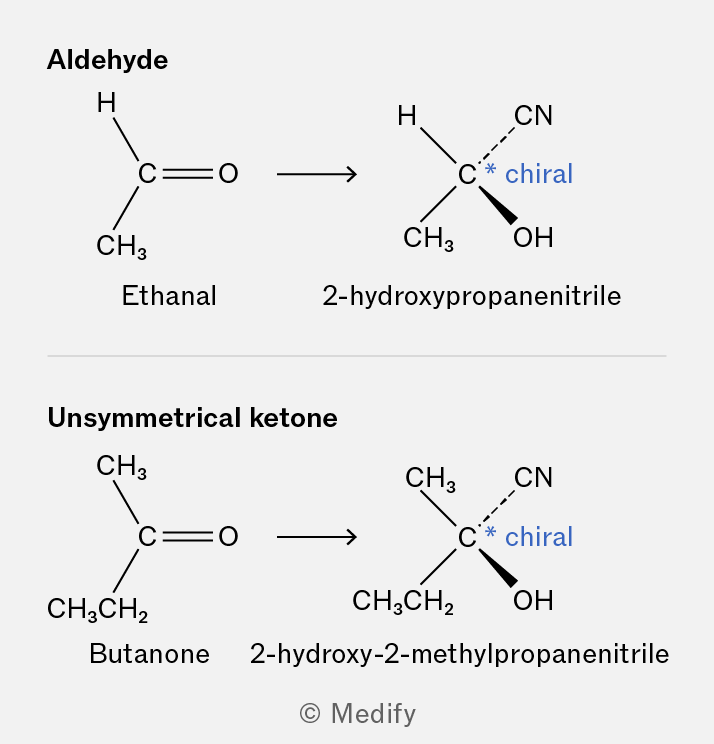
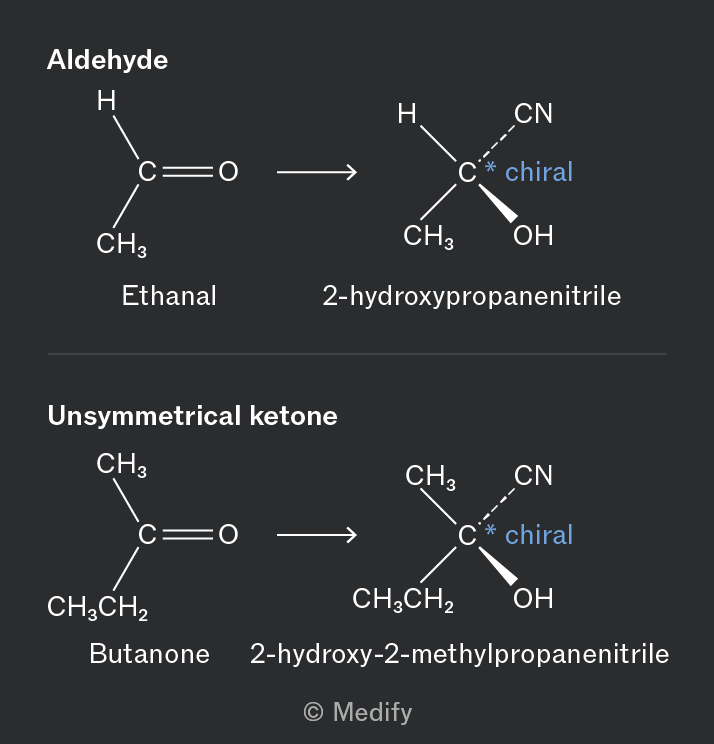
The trigonal planar functional group makes attack equally likely from above or below the group.
Where a chiral hydroxynitrile product is formed, it will always exist as a racemic mixture of two non-superimposable mirror images, known as optical isomers, or enantiomers.
During nucleophilic addition to a carbonyl, the nucleophile can approach the carbonyl carbon from above the plane, or below the plane with equal probability.
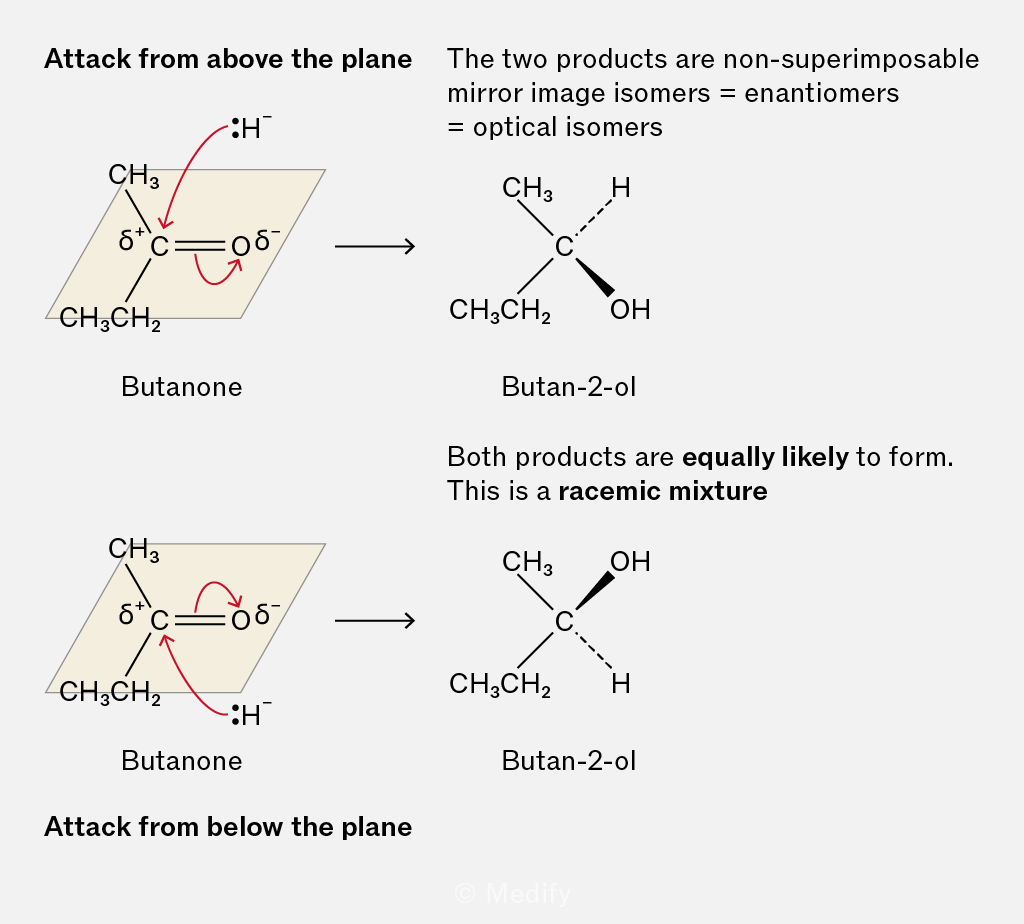
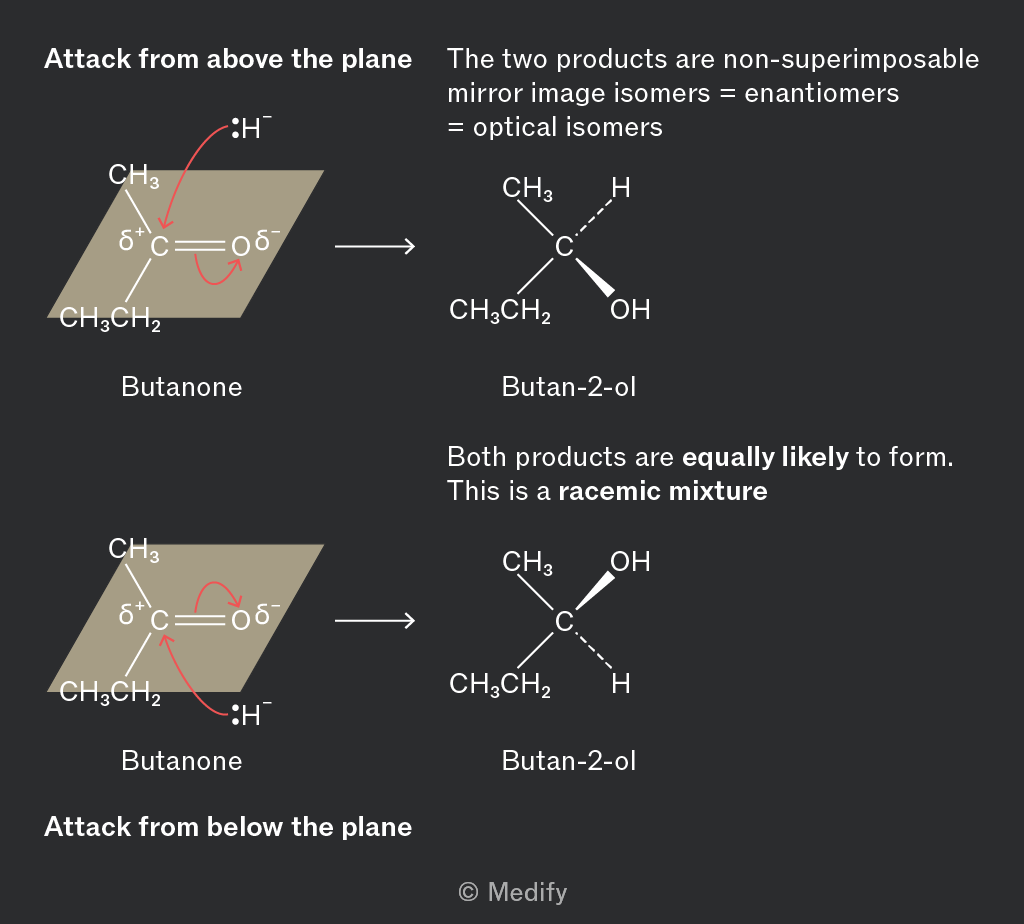
When the product is chiral, an equimolar mixture of both optical isomers (a racemic mixture) is produced.
When a carboxylic acid is deprotonated, a carboxylate anion is formed.
The pi bond electrons delocalise to include both oxygen atoms. This more delocalised system stabilises the charge making the loss of a proton in solution more thermodynamically feasible than in an alcohol’s .
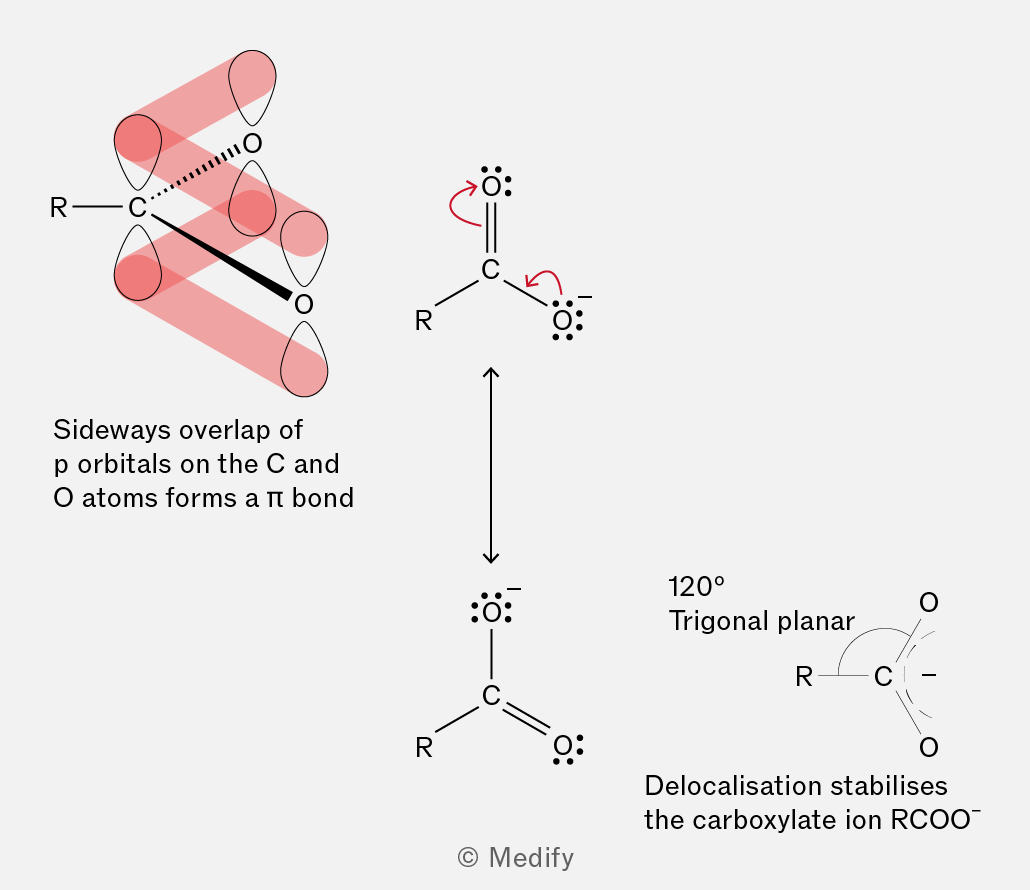
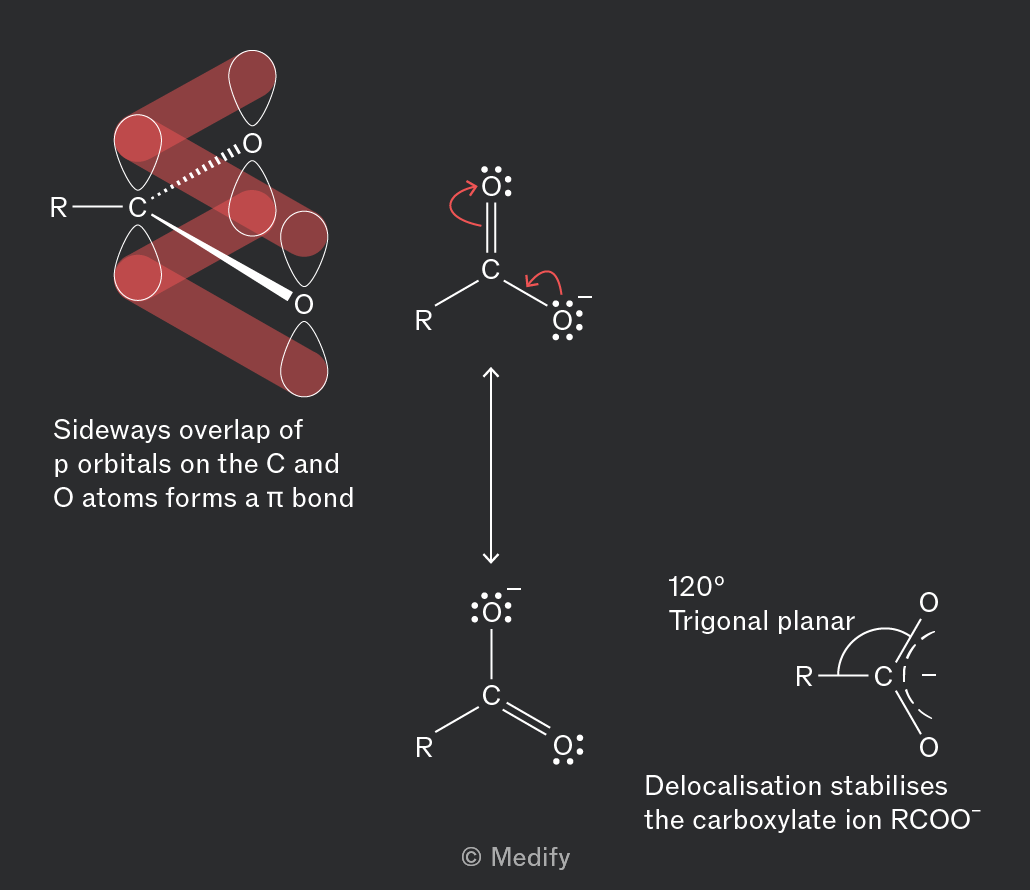
The carboxylic acid group is trigonal planar about the carbonyl carbon, with bond angles approximately 120°.
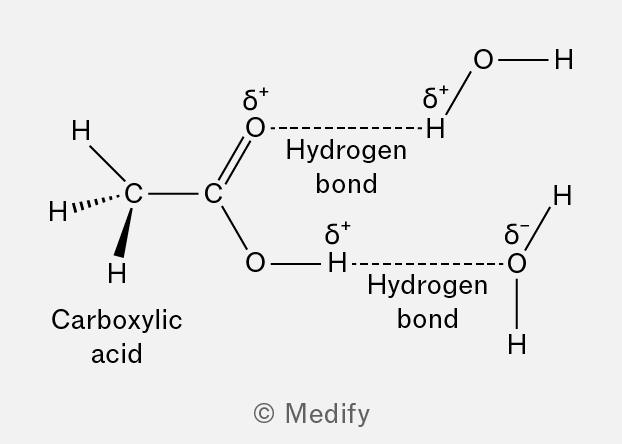
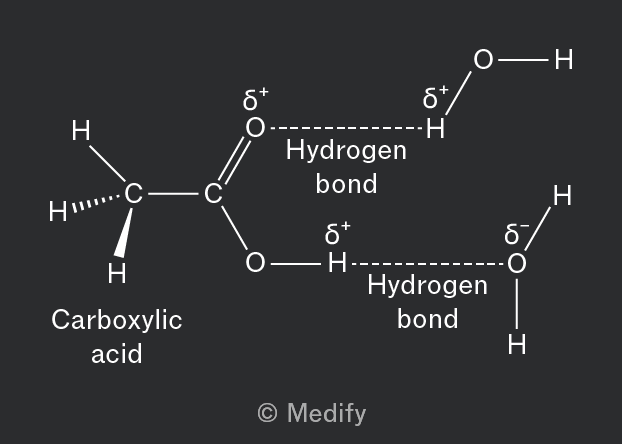
The shorter carboxylic acids, up to and including butanoic acid, are completely soluble in water due to the formation of hydrogen bonds between the carboxylic acid group and water molecules.
As the hydrocarbon chain increases and exerts a more nonpolar influence, the carboxylic acids become less soluble.
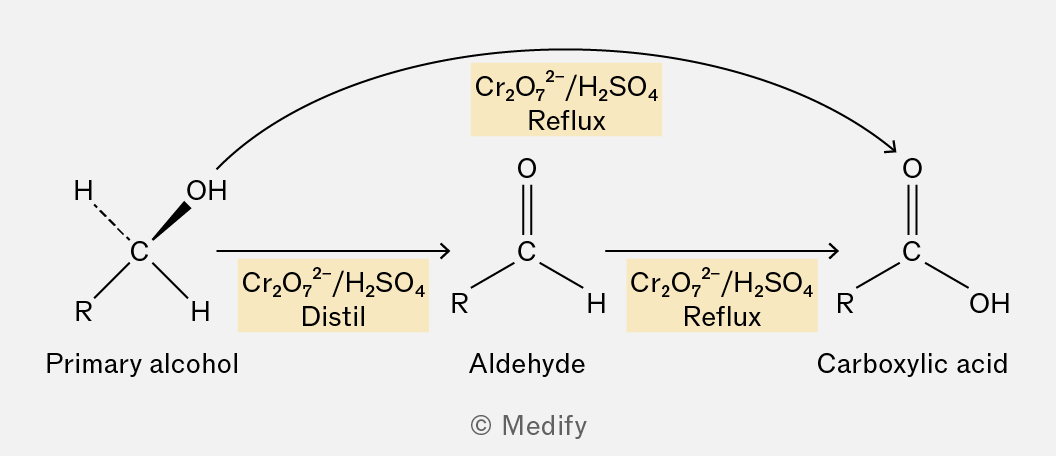
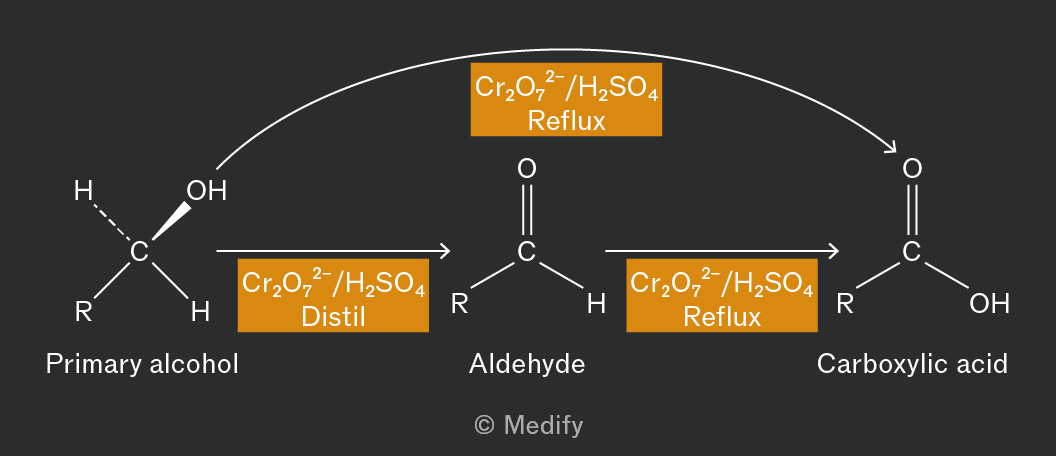
Carboxylic acids can be prepared by the oxidation of aldehydes and the oxidation of primary alcohols. The reaction must be completed under reflux with a suitable oxidising mixture such as .
Carboxylic acids can also be formed by the acidic hydrolysis of nitriles. The group reacts readily with warm dilute acid such as forming a carboxylic acid and ammonia.
Carboxylic acids can be reduced back to the primary alcohol, by the powerful reducing agent, lithium aluminium hydride (). The reaction is conducted in a solvent of dry ethoxyethane as the reacts violently with water.
The reaction takes place in two stages with the reduction first to the aldehyde, followed by further reduction to the primary alcohol.
A 1:4 ratio of carboxylic acid to reducing agent, , is required.
The alternative milder reducing agent does not reduce the carboxylic acid group.
Carboxylic acids react with the white solid phosphorus (V) chloride to form acyl chlorides.
Another liquid product, phosphorus trichloride oxide,, is formed alongside the acyl chloride, as well as steamy fumes of .
Ethanoic acid forming ethanoyl chloride is the most widely used reaction of this type.
The acyl chloride may be separated by distillation.
Acyl chlorides are much more reactive than carboxylic acids and so the conversion is important in chemical synthesis.
Esterification with acyl chlorides is not a reversible reaction and requires less energy to heat the reaction mixture than the carboxylic acid equivalent.
Carboxylic acids react with sulfur dichloride oxide () to form acyl chlorides.
The reaction also produces two other gaseous products, and , which makes the separation of the liquid acyl chloride product easy.
Acyl chlorides are much more reactive than carboxylic acids and so the conversion is important in chemical synthesis. Less energy is required to heat the reaction mixture than with the carboxylic acid equivalent.
Esterification with acyl chlorides is not a reversible reaction.
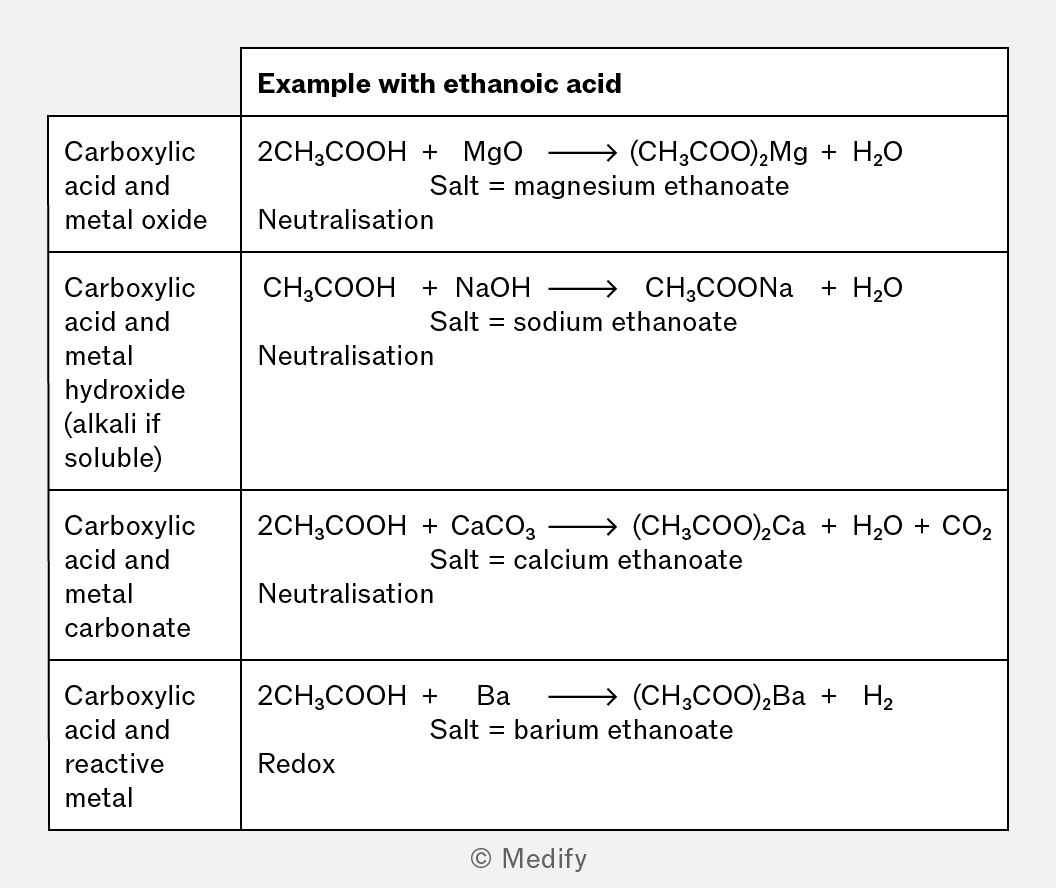
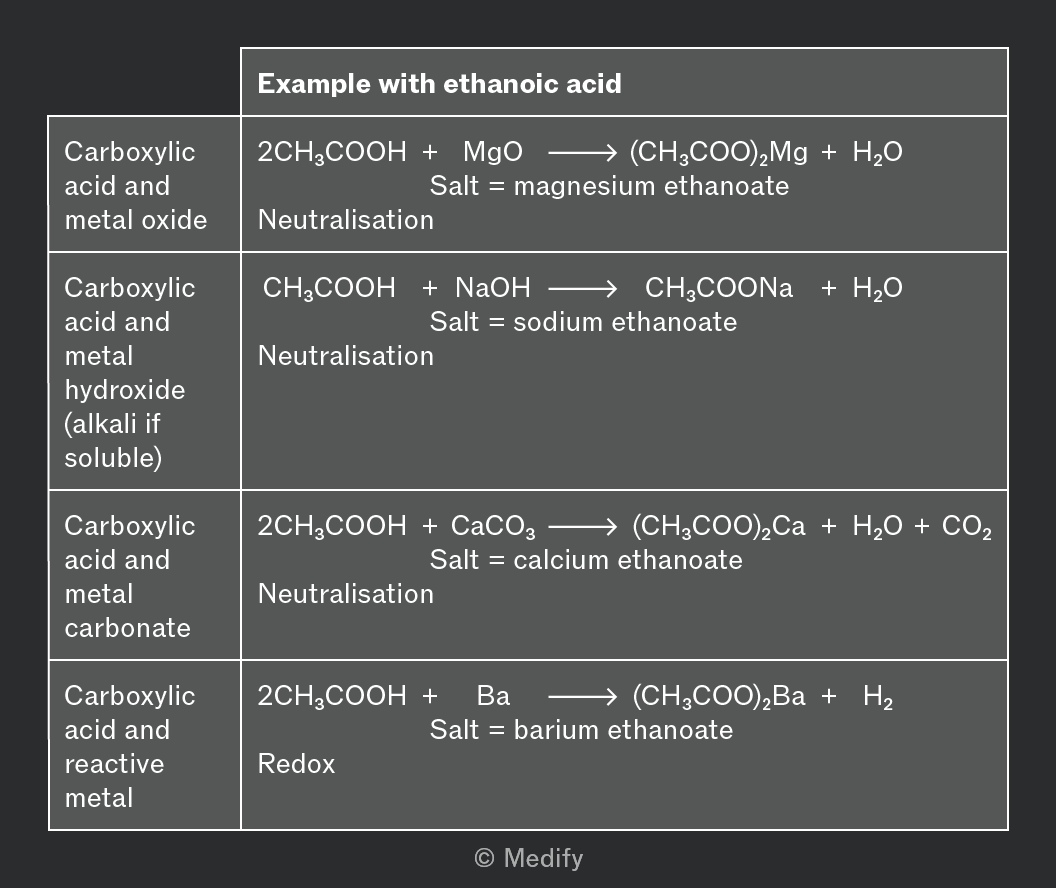
Carboxylic acids are weak acids and are able to donate protons to bases, such as metal oxides and hydroxides to form carboxylate salts and water in neutralisation reactions. These are analogous to the reactions of strong mineral acids.
The reaction of carboxylic acids with carbonates or hydrogen carbonates, with the observed effervescence of , is a test for the carboxylic acid functional group.
They can also react with metals such as and forming carboxylate salts and hydrogen gas. These are not neutralisations as water is not formed, but are redox reactions.
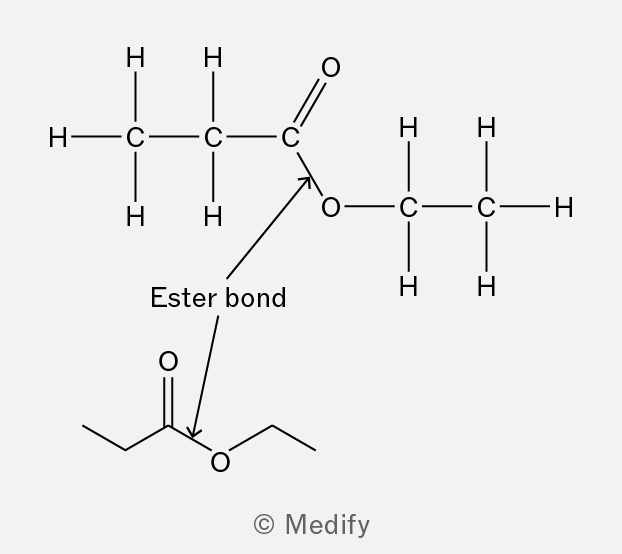
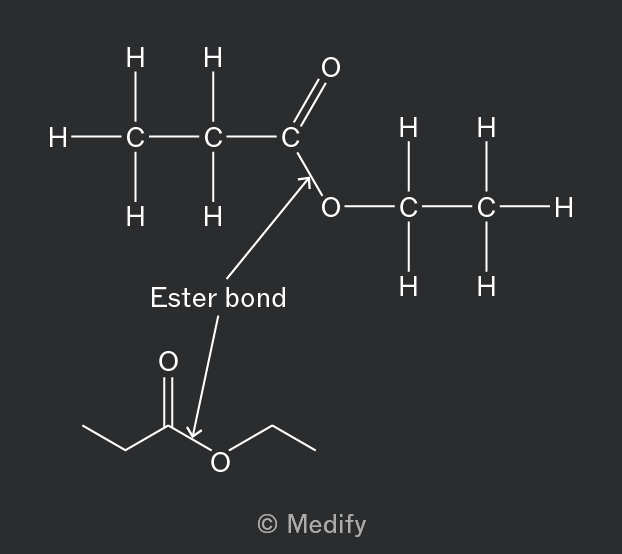
Esters, RCOOR’, can be formed by a carboxylic acid and an alcohol.
The structures of both reactant molecules are recognisable in the ester structure.
Carboxylic acids react slowly and reversibly with alcohols in the presence of a strong acid catalyst to form esters.
A water molecule is eliminated. It forms from the group of the carboxylic acid and the of the alcohol’s group.
This is a condensation reaction.
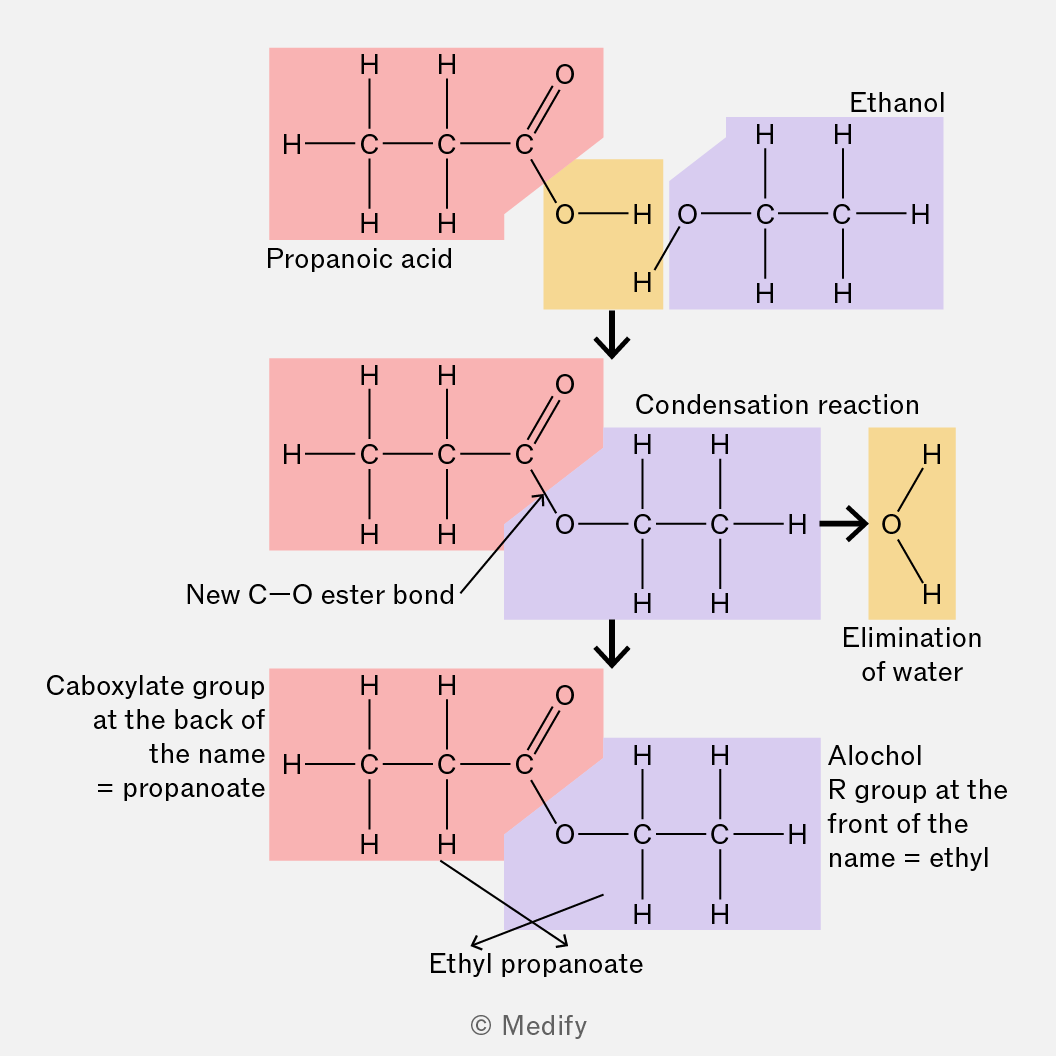
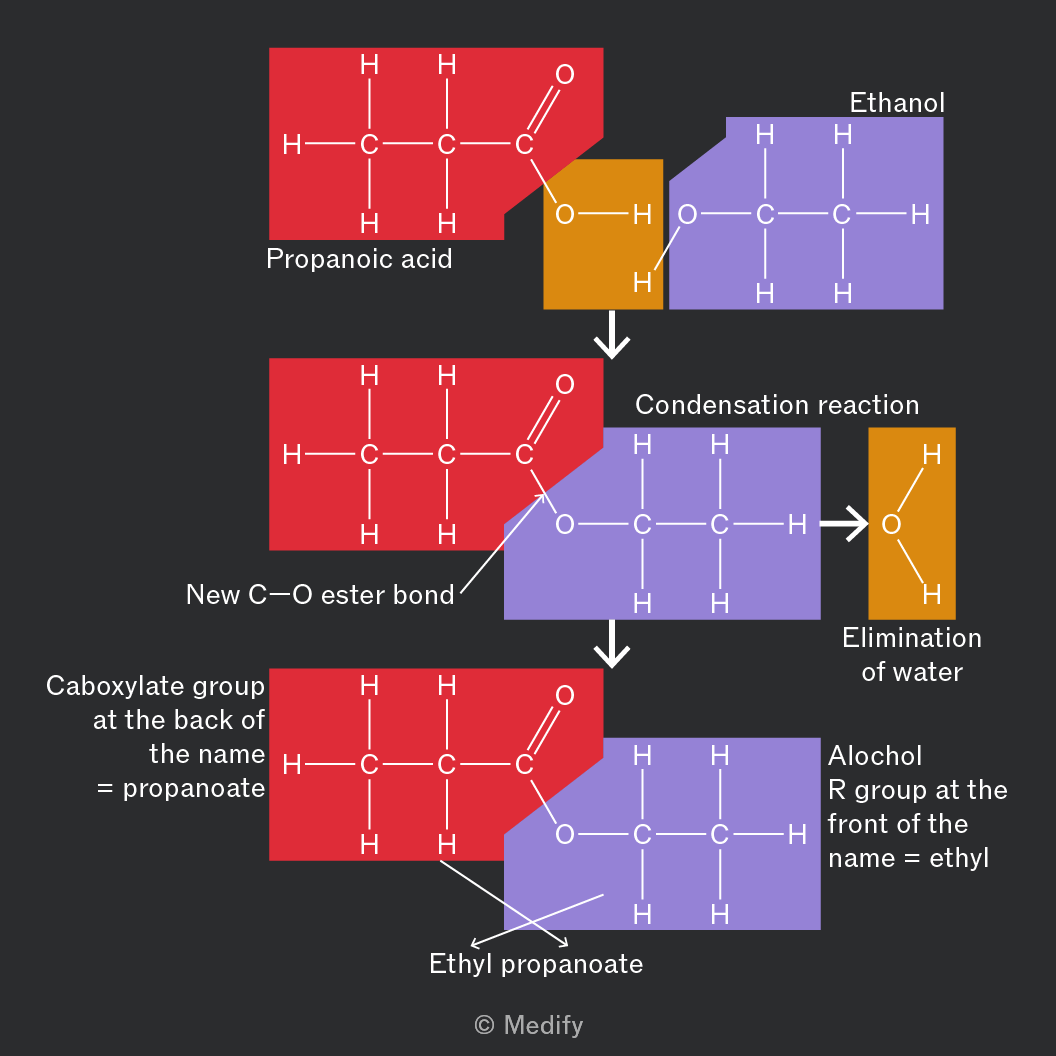
When naming the ester product, the prefix comes from the alcohol, and the suffix comes from the carboxylic acid.
Esters are generally volatile liquids with low boiling points; they do not form hydrogen bonds.
They often have pleasant, sweet or fruity odours. Many are used commercially in perfumes and flavourings.
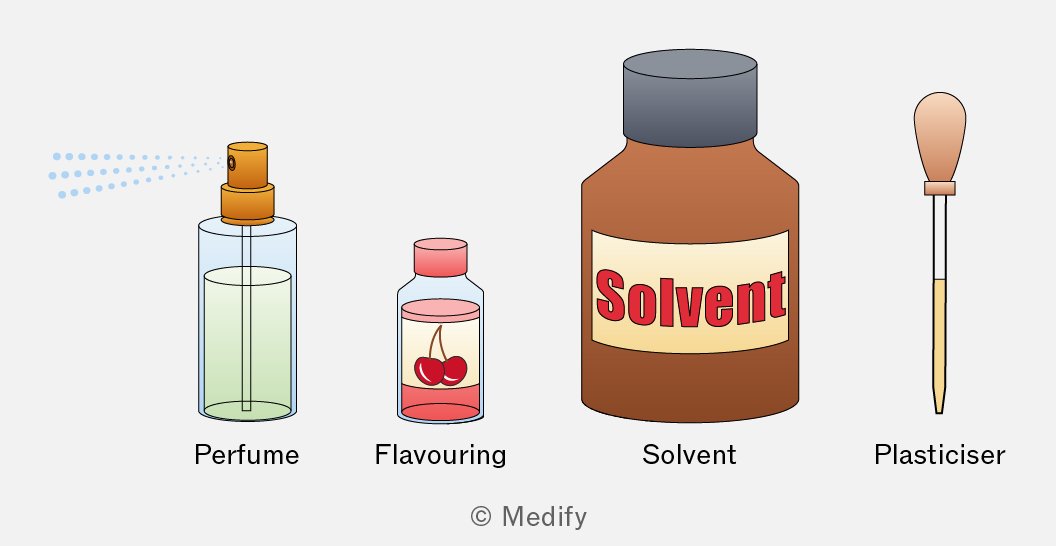
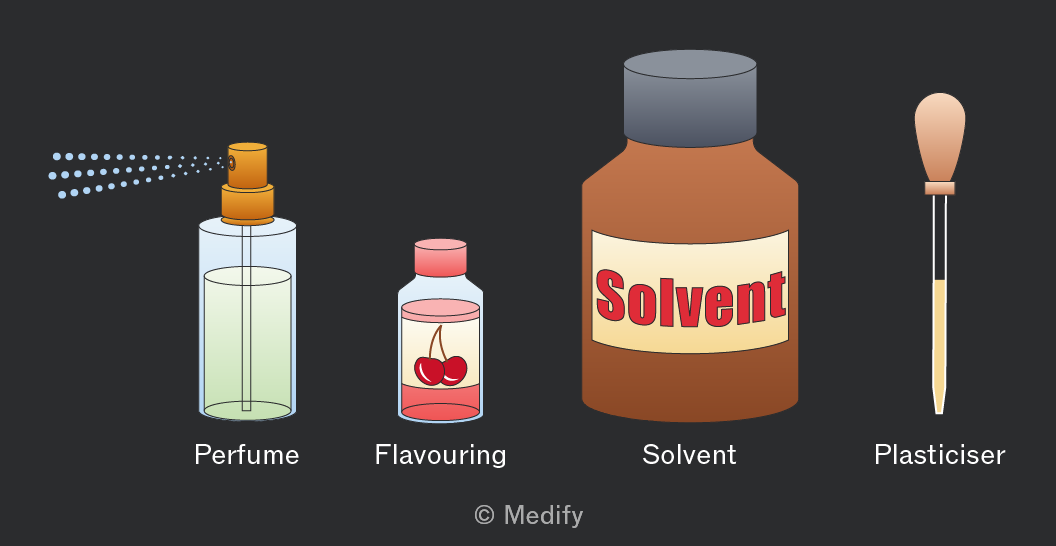
Esters are also used as solvents and as plasticisers, which are added to rigid polymers, such as PVC, to make more flexible and softer materials.
Glycerol (propane-1,2,3-triol) can be esterified with three long-chain carboxylic acids, 15–20 carbon atoms long, which may be saturated or unsaturated.
These ester products are known as triglycerides, and are found naturally in fats and oils.
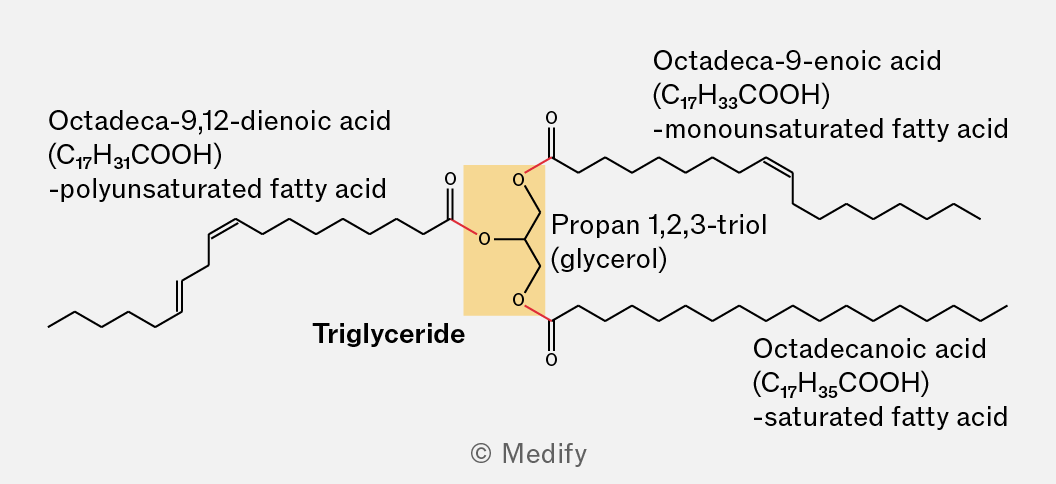
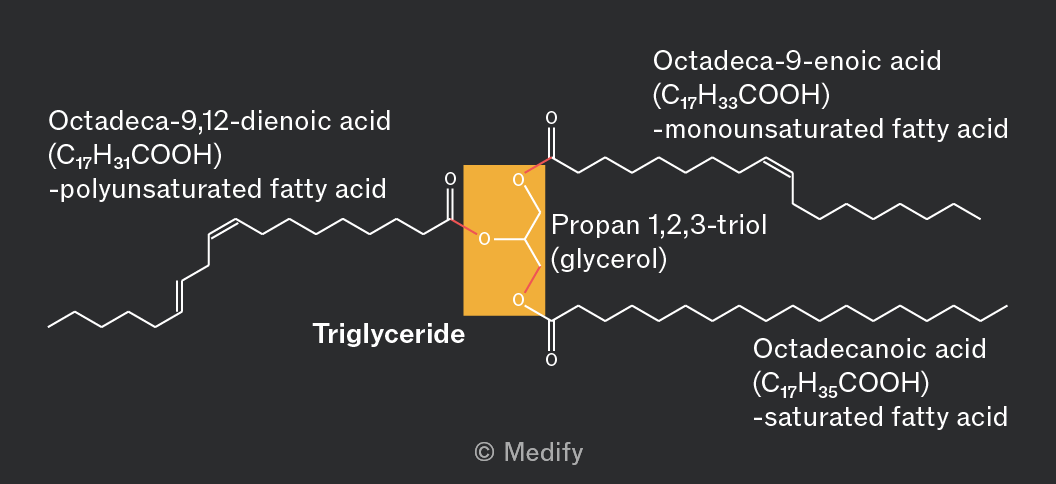
Triglycerides have three ester bonds linking the glycerol carbon skeleton to the three fatty acids.
Esters hydrolyse in aqueous solution to reform alcohols and carboxylic acids.
The hydrolysis reaction is very slow in neutral conditions, so we use acidic or alkaline conditions to accelerate the hydrolysis.
In hot aqueous acid, ester hydrolysis forms a carboxylic acid and an alcohol.
This is the reverse of the ester formation reaction. This means the products of acid hydrolysis can, in turn, regenerate the ester.
The acid-catalysed hydrolysis of methyl butanoate is shown below:
In hot aqueous alkali, hydrolysis of esters yields a carboxylate salt, and an alcohol.
Alkaline hydrolysis is not reversible, as the products do not react together to reform the ester. The carboxylate salt does not contain an leaving group and so cannot be attacked by the alcohol.
The alkaline-catalysed hydrolysis of methyl butanoate is shown below:
Alkaline hydrolysis is also called saponification; it is a reaction used in soap manufacture.
Acyl chlorides have a similar structure to a carboxylic acid but with a chlorine atom instead of the group.
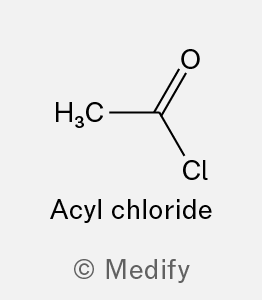
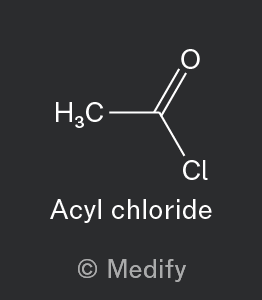
This highly electronegative forms a stable anion and is an excellent leaving group. This makes the acyl chloride very reactive, especially towards nucleophilic attack.
The acid anhydride molecule consists of two acyl groups both bonded to the same oxygen.
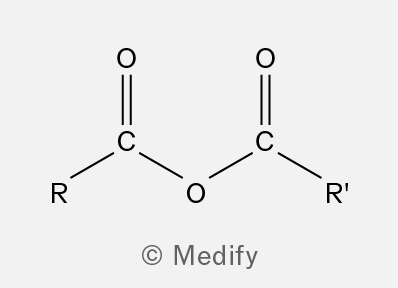
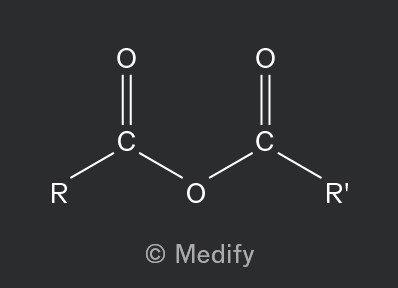
An acid anhydride is produced by the dehydration of a carboxylic acid. They are named after the original carboxylic acid followed by the suffix ‘anhydride’.
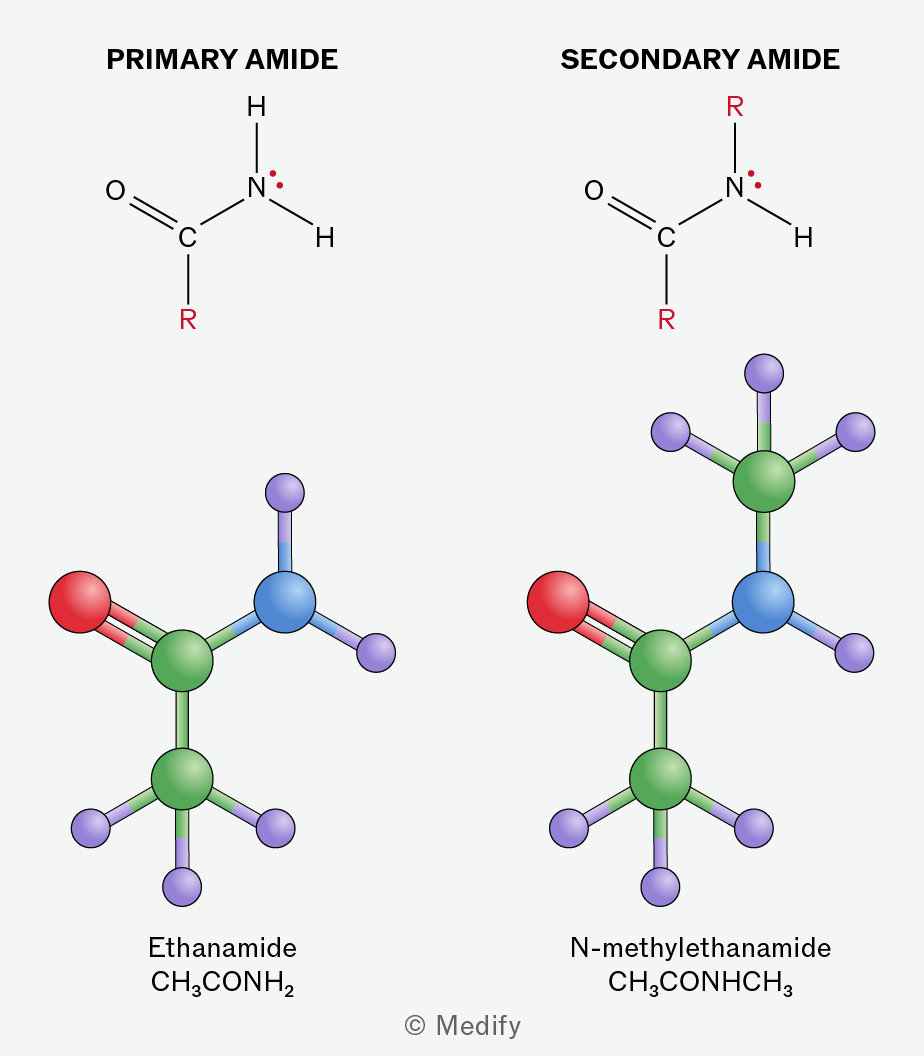
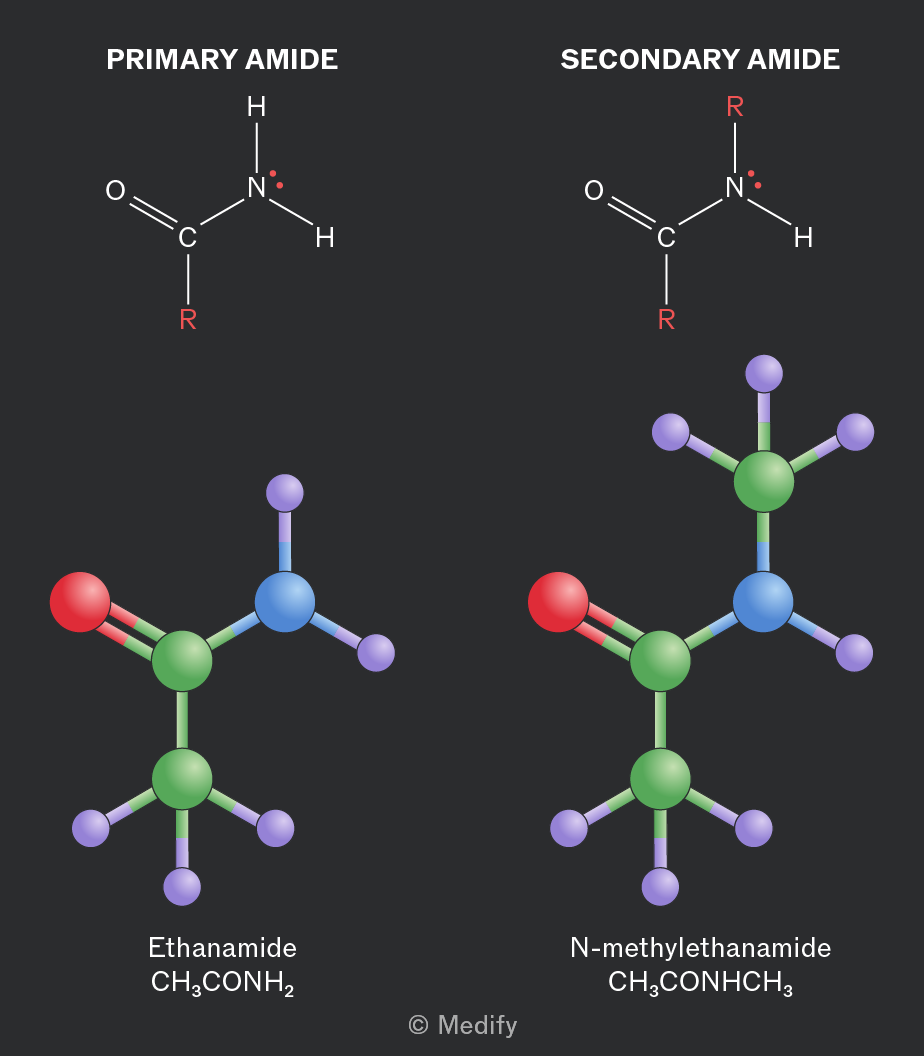
Amides have the general formula of .
A single hydrogen atom from the ammonia molecule is substituted by an acyl group, , forming a primary amide, .
If subsequent hydrogen atoms from a primary amine molecule are replaced by an alkyl group then a secondary amide or N-alkyl alkanamide is produced.
Secondary amides are also formed when a primary amine is acylated,
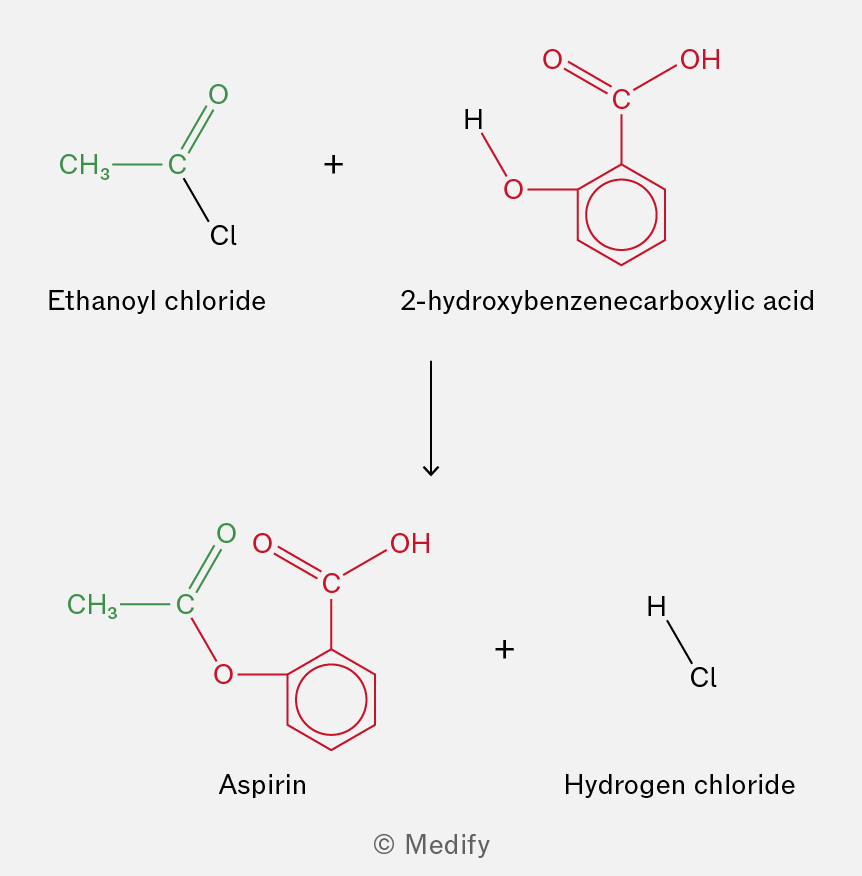
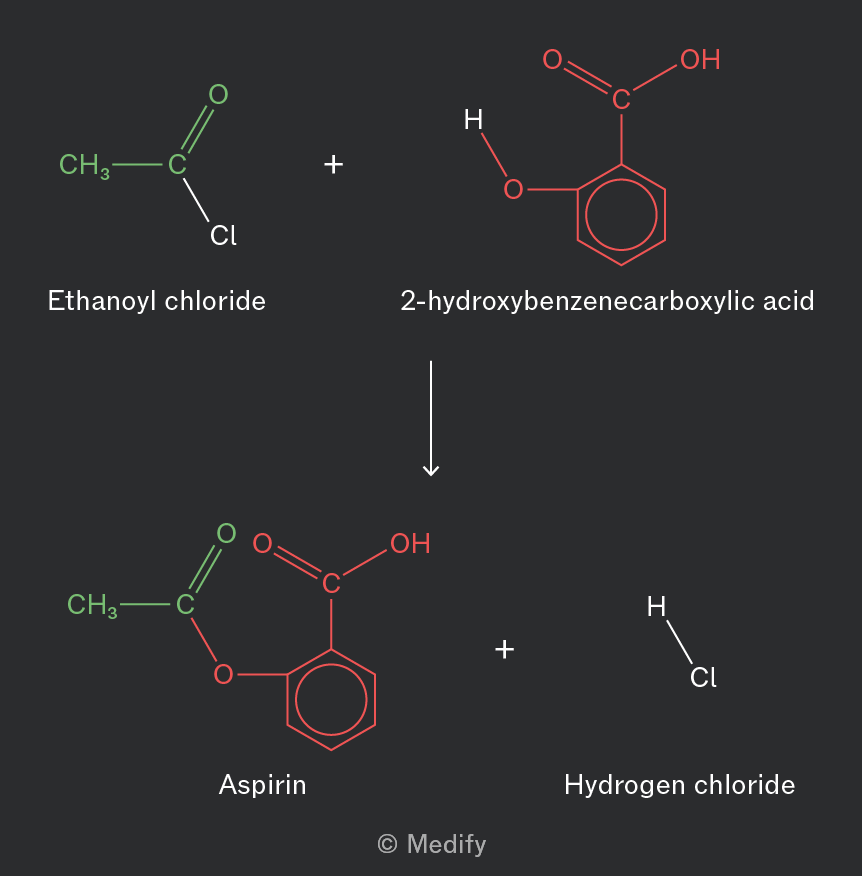
Acyl chlorides are significantly more reactive than carboxylic acids and are able to produce esters with phenols. The carboxylic acid reaction with phenol is very slow and is not used.
The esterification of 2-hydroxybenzenecarboxylic acid (salicylic acid) to form aspirin is a key example of the esterification of an acyl chloride and a phenol.
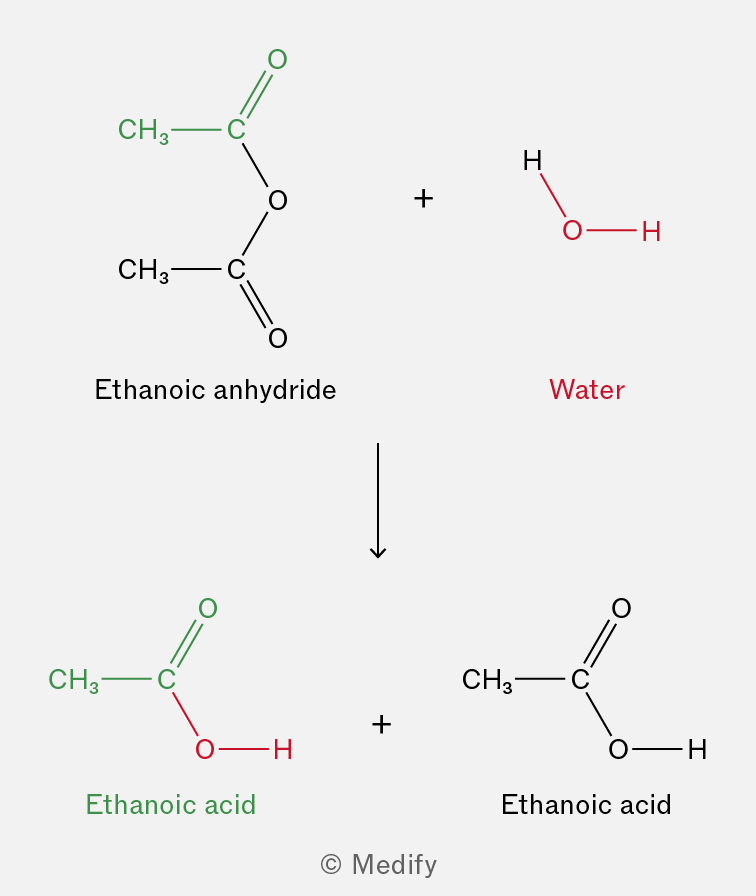
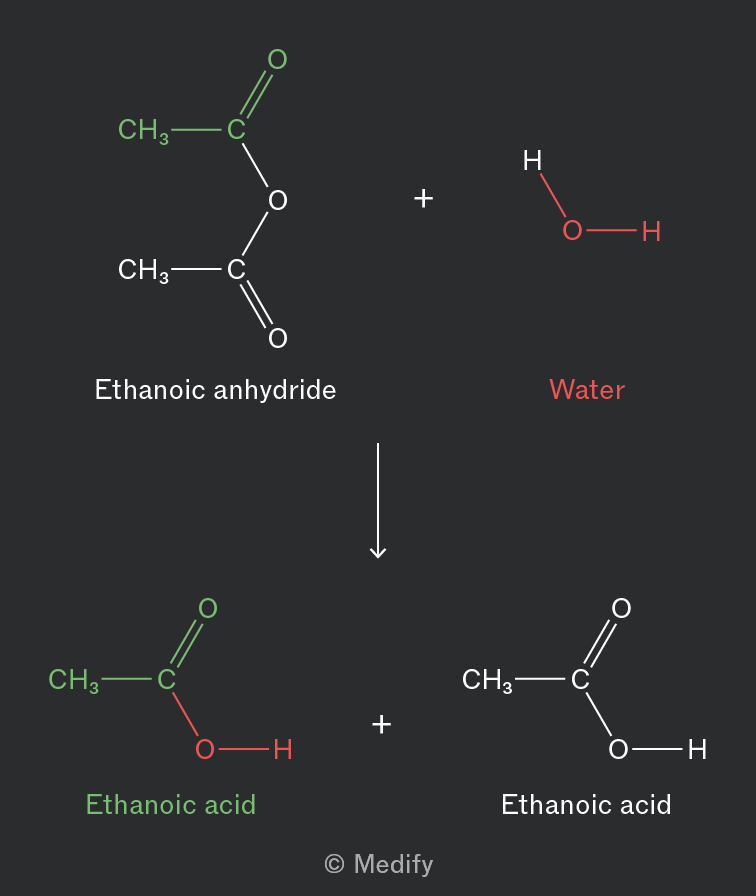
Acid anhydrides react with water to form carboxylic acids.
Ethanoic anhydride is hydrolysed in a nucleophilic addition–elimination reaction to form two molecules of ethanoic acid.
An acid anhydride reacts with an alcohol to form an ester and a molecule of free carboxylic acid in a nucleophilic addition–elimination reaction.
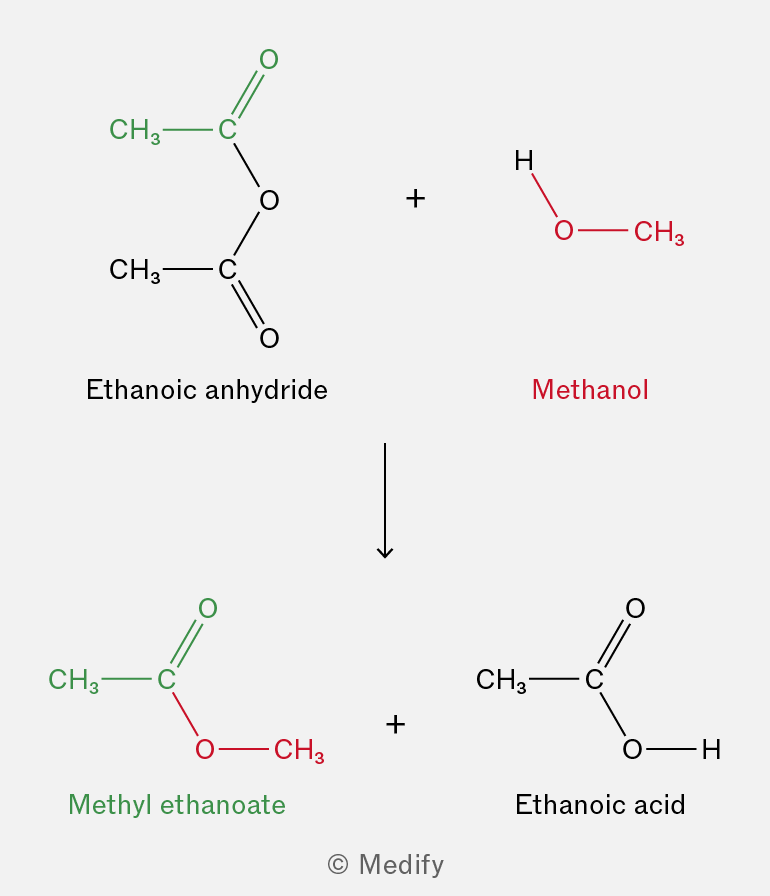
Acid anhydrides are more reactive than carboxylic acids so esterification takes place at room temperature in a non-reversible reaction. Heat is usually applied to increase the rate.
The carboxylic acid side product can be reused, or made into the anhydride again. This increases the reaction’s sustainability.
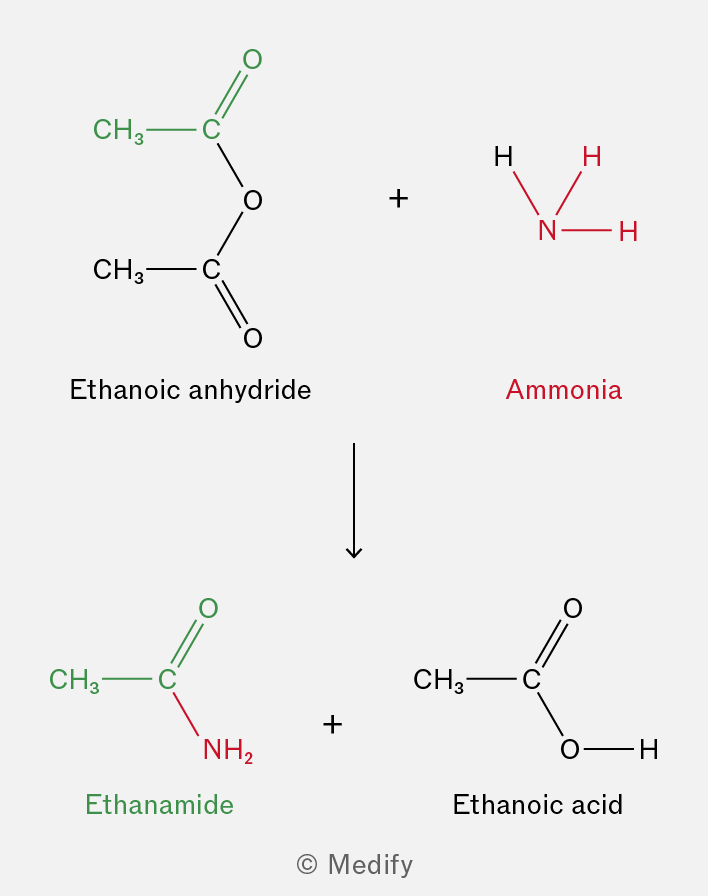
Acid anhydrides react readily with ammonia forming a primary amide.
The bond to nitrogen from ammonia replaces the bond on a carbonyl carbon. A molecule of carboxylic acid is also produced.
In the reaction of ethanoic anhydride with ammonia, the products are ethanamide, a primary amide, and ethanoic acid.
Acid anhydrides react with primary amines to form secondary amides and carboxylic acids.
In this nucleophilic addition–elimination reaction, the primary amine is the nucleophile.
Methylamine reacts with the acid anhydride, ethanoic anhydride, forming N-methyl ethanamide and ethanoic acid.
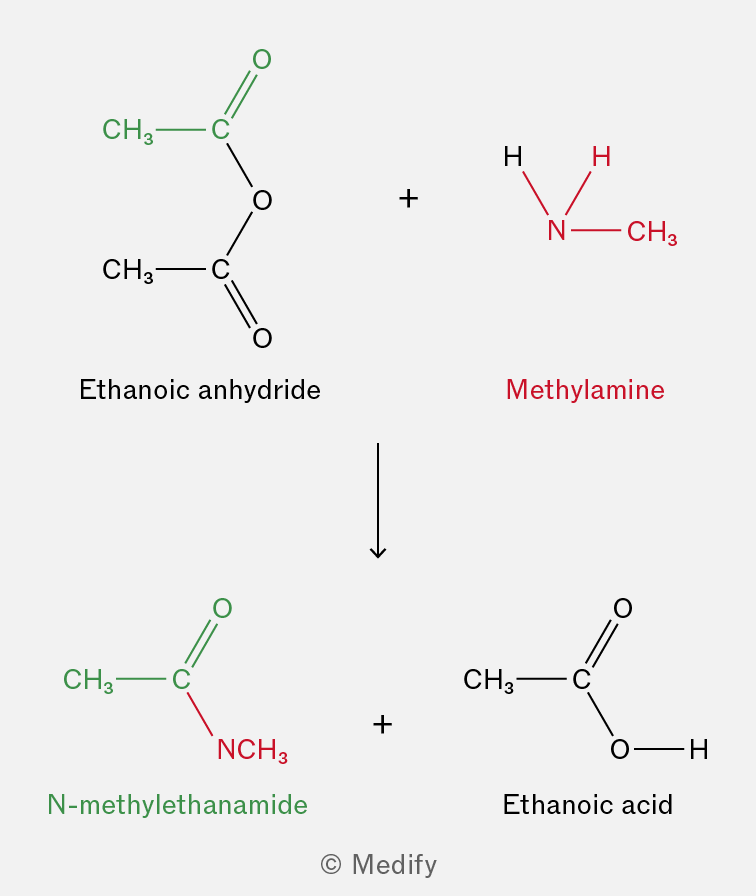
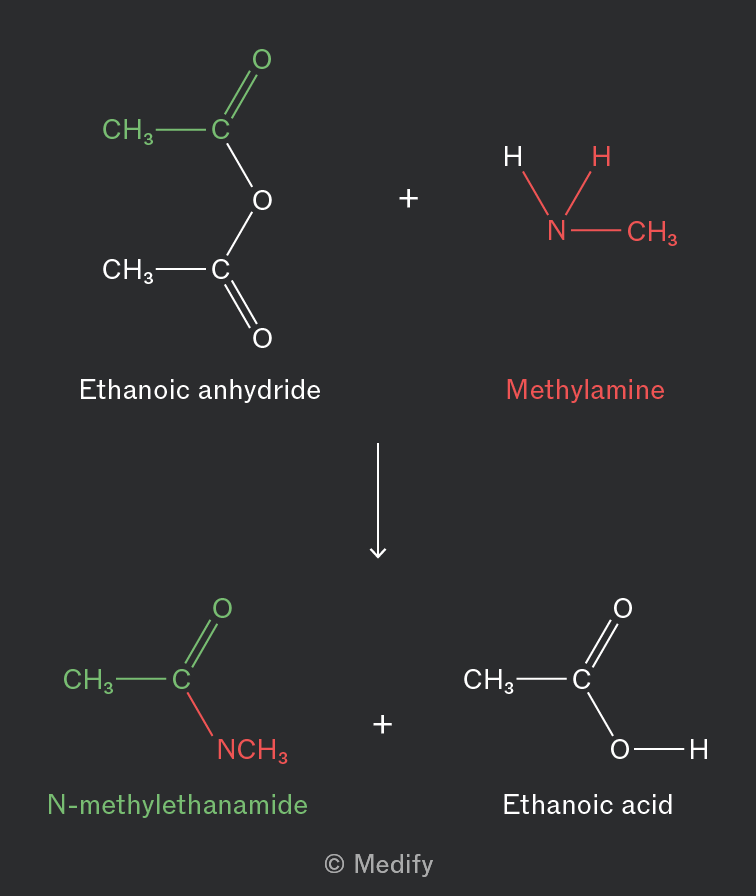
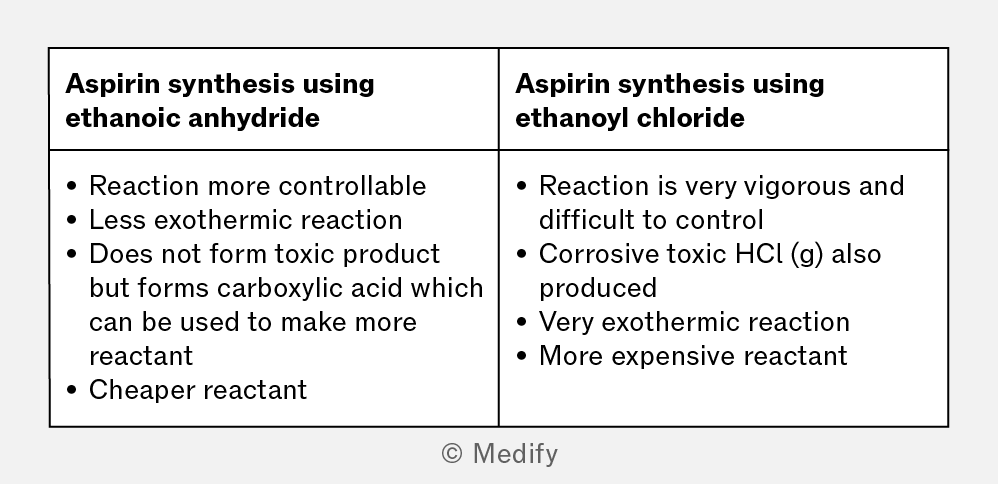
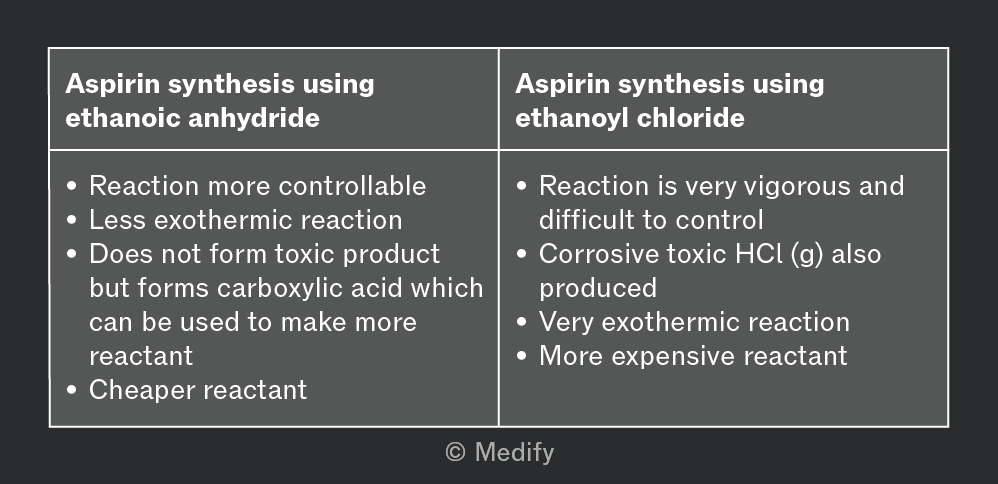
Both ethanoic anhydride and ethanoyl chloride are used industrially to prepare aspirin.
The starting material is salicylic acid, 2-hydroxybenzenecarboxylic acid. Compared to ethanoic acid, both ethanoic anhydride and ethanoyl chloride are more reactive and do not reach an equilibrium position with the ester produced.
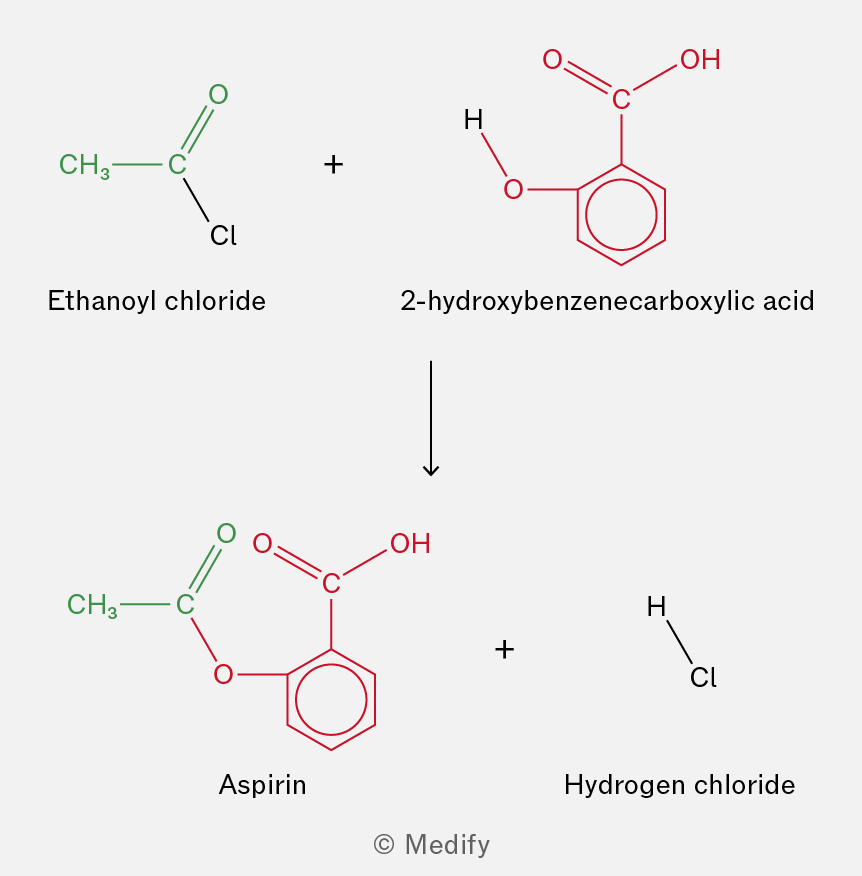
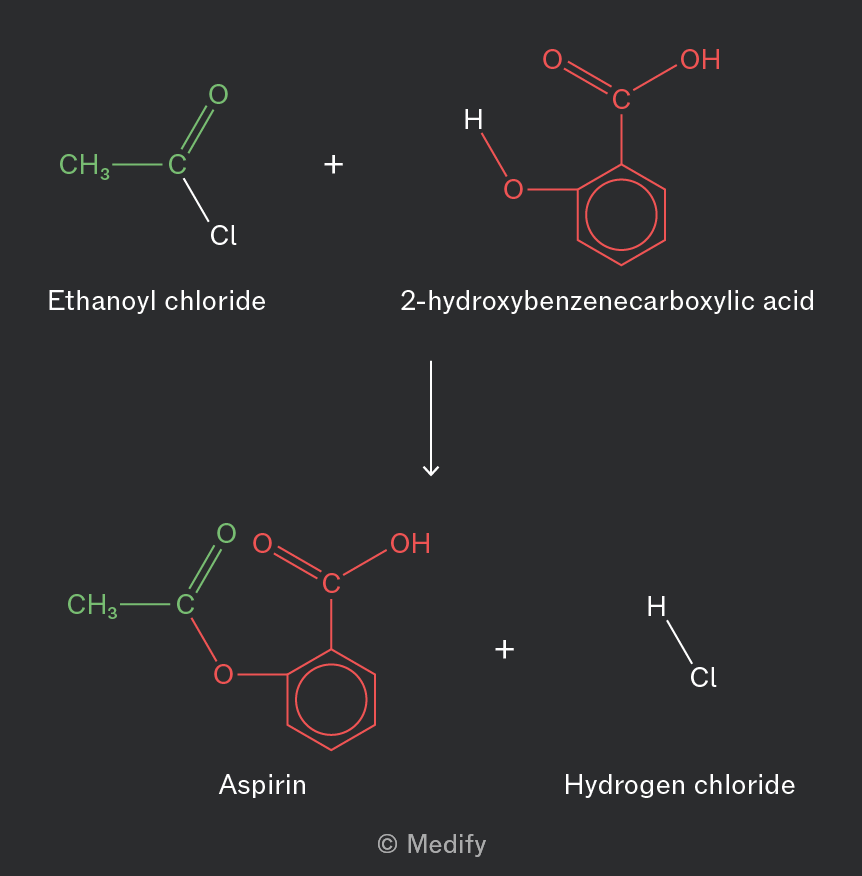
There are several advantages of using the acid anhydride rather than the acyl chloride in drug synthesis.
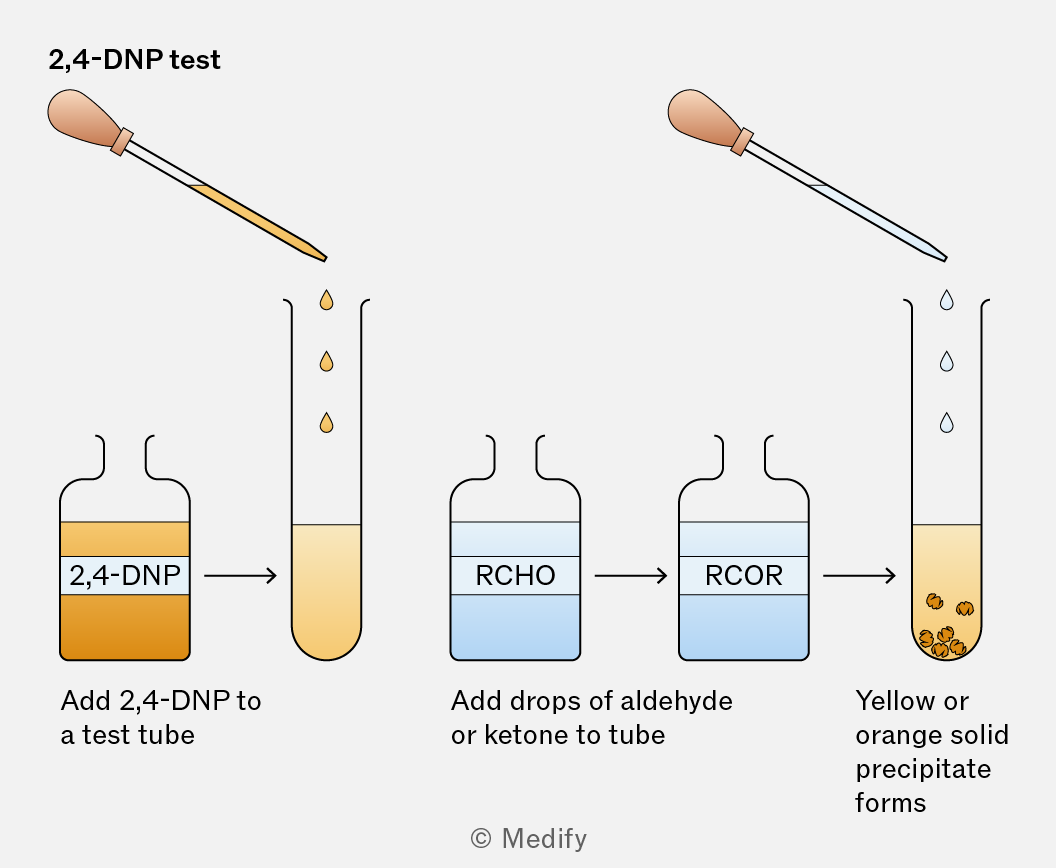
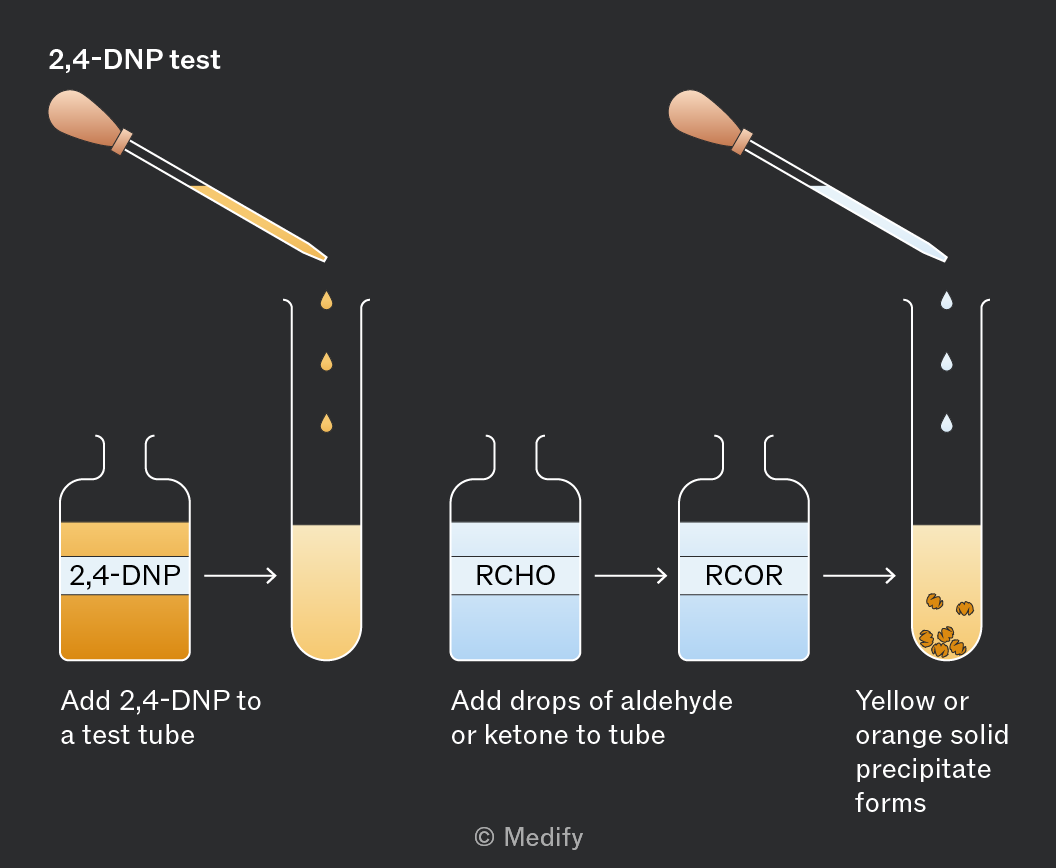
Aldehydes and ketones will react with a solution of 2,4-dinitrophenylhydrazine () in methanol and concentrated sulfuric acid, to give a yellow or orange precipitate.
Alcohols and carboxylic acids DO NOT give a positive result with 2,4-DNPH making the reagent useful in distinguishing compounds containing carbon, hydrogen, and oxygen.
Following the identification of an aldehyde or ketone, the 2,4-DNPH test can also be used to identify a specific aldehyde or ketone.
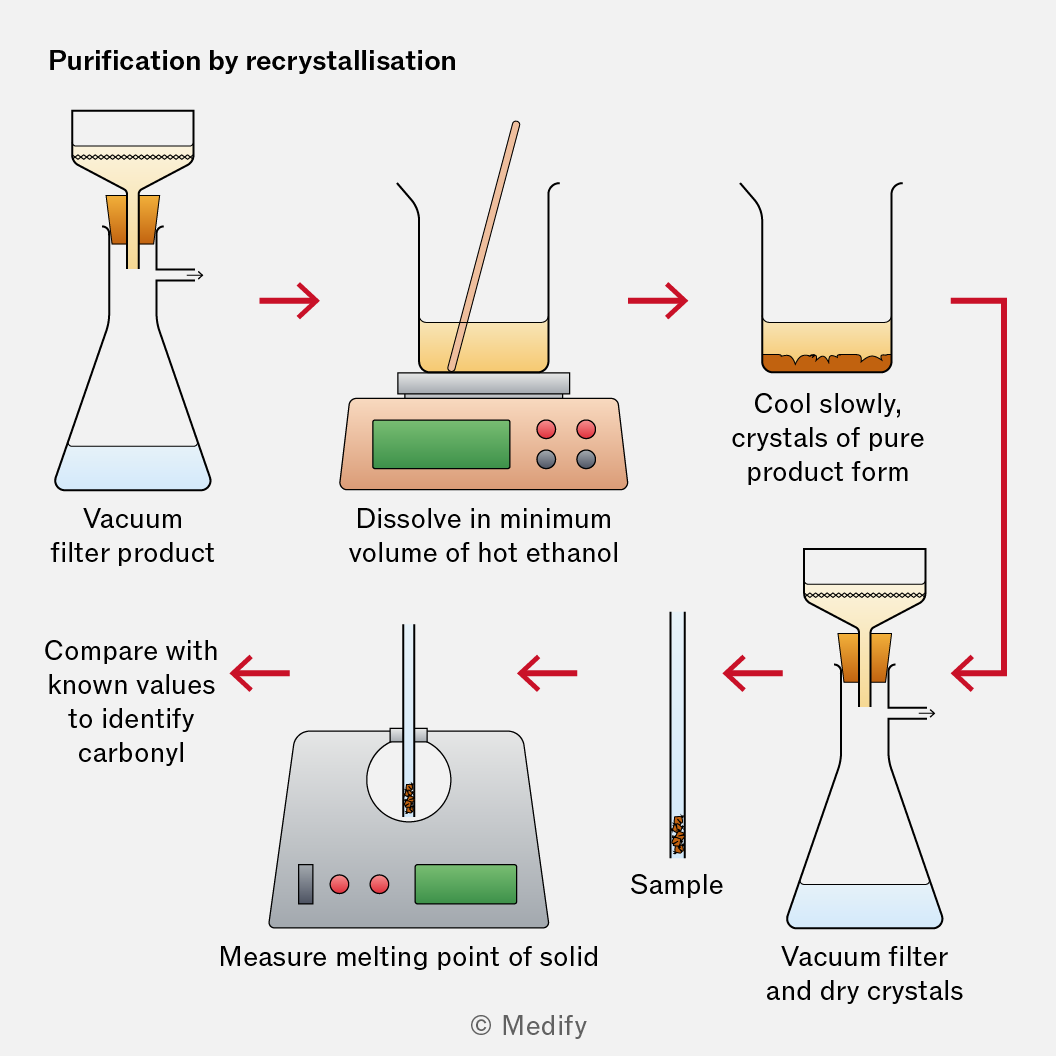
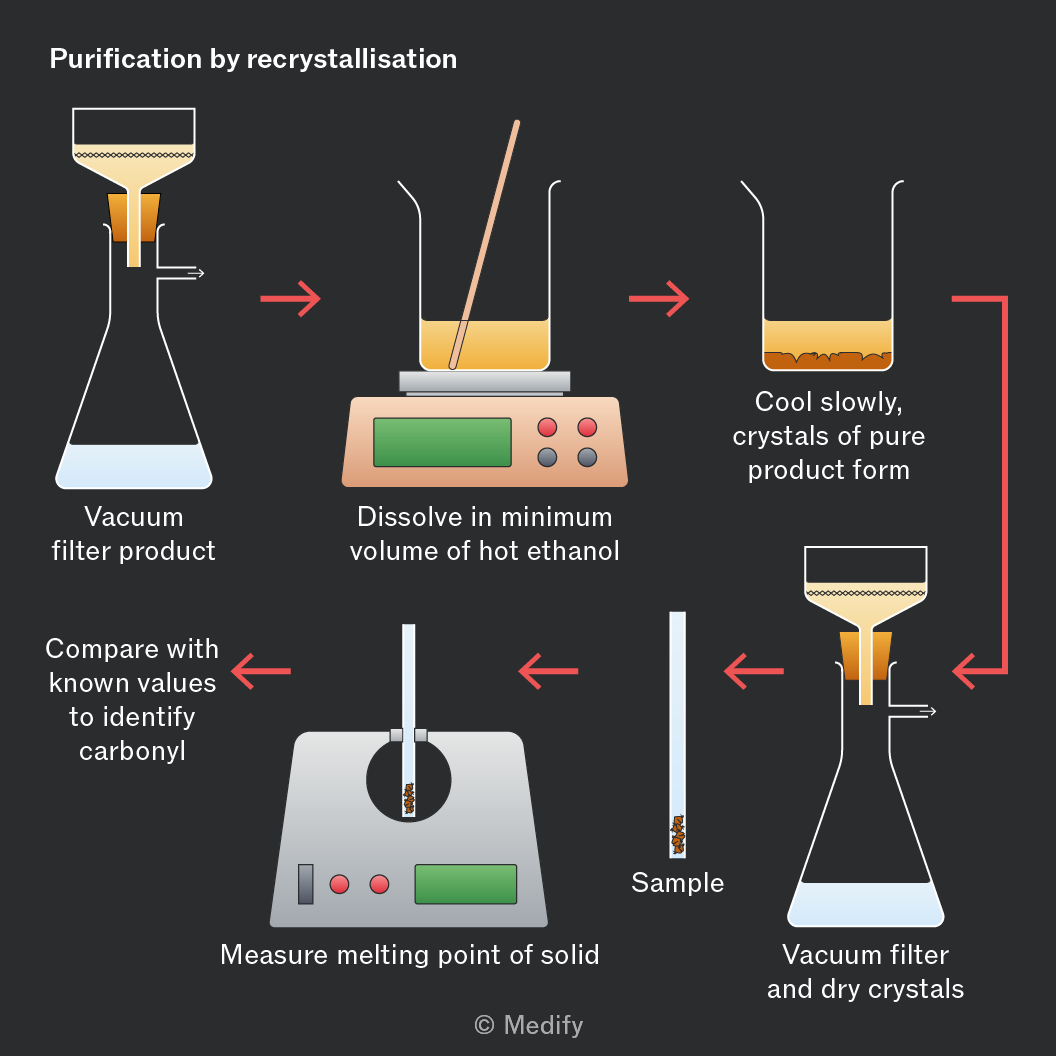
The solid product is purified and its melting point is determined.
The melting point will be a sharp specific value which is unique to each carbonyl compound. This enables positive identification of the carbonyl compound by comparing the melting point of the derivative to a database of values.
Stages in the purification of 2,4-DNPH derivative
Dissolve precipitate in a minimum volume of hot solvent e.g.ethanol
- Cool and allow it to crystallise
- Recover solid by vacuum filtration and dry solid
- Measure the melting point
- Compare with a database of known melting points.
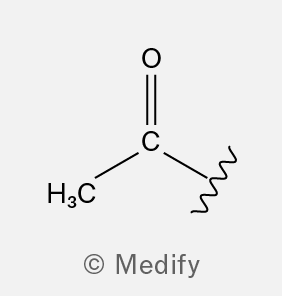
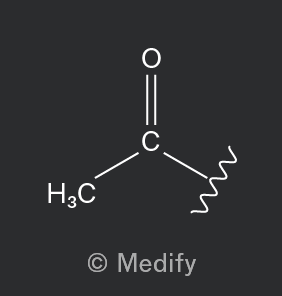
Where an acetyl group, , exists in a compound, reaction with a solution of iodine in sodium hydroxide forms a pale yellow precipitate, . This is triiodomethane (or iodoform) and has an antiseptic odour.
The reaction is known as the iodoform reaction.
The reagent used is an oxidising agent, so alcohols that can be oxidised to a product containing an acetyl group will also give a positive test result.
The Tollen’s reagent test can be used to distinguish aldehydes from ketones.
The reagent is prepared on the day of use, as it is unstable. It consists of a colourless solution of ammoniacal silver nitrate, which is made from an alkaline silver nitrate reacted with concentrated ammonia solution.
The observation for aldehydes is the formation of a ‘silver mirror’. Ketones DO NOT give a silver mirror – the solution remains colourless.
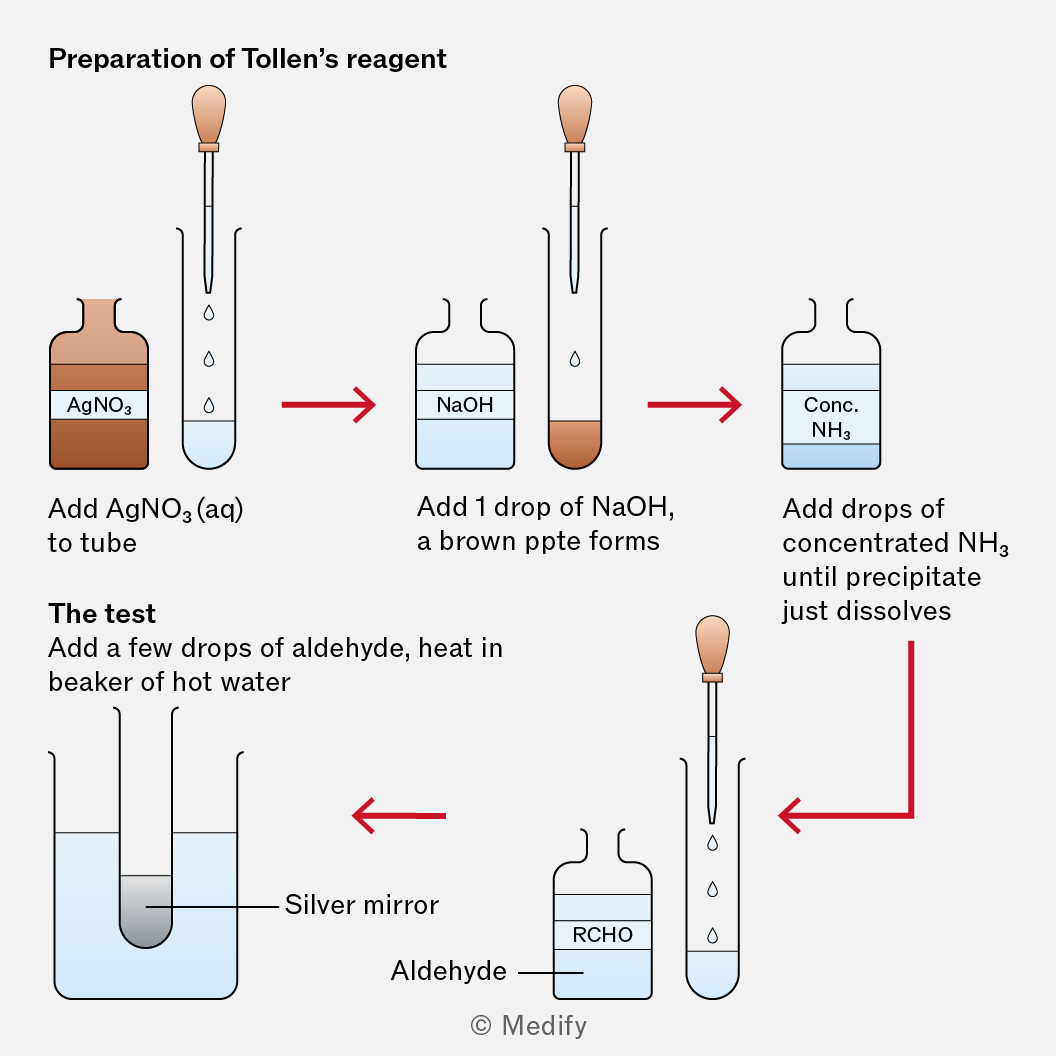
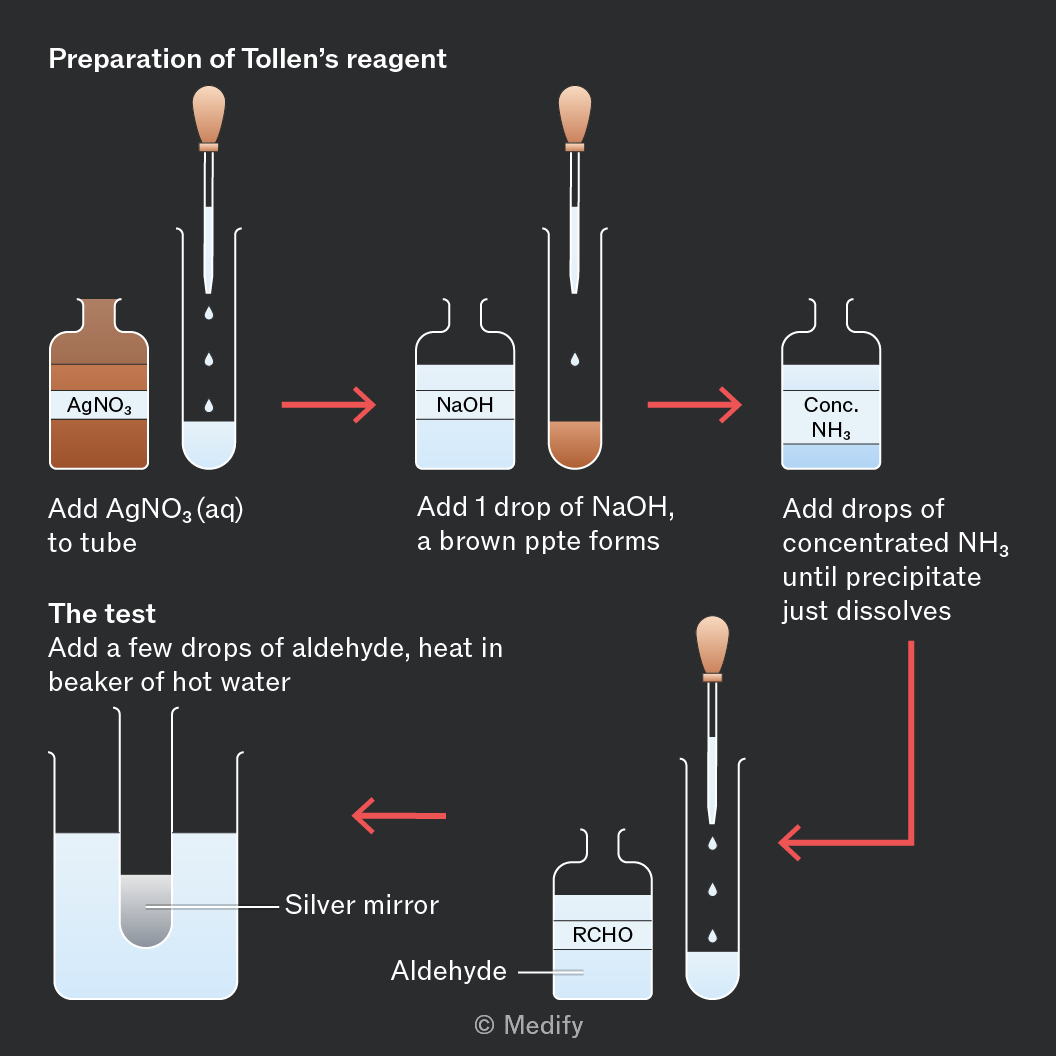
The silver mirror is formed as a redox reaction occurs with the silver ions reduced to silver metal, as the aldehyde is oxidised to a carboxylic acid salt.
Ketones cannot be further oxidised so do not support the reduction of Tollen’s reagent.
Fehling’s solution and Benedict’s solution are used to identify aldehydes.
Both solutions rely upon the oxidation of the aldehyde to a carboxylic acid salt, by a solution of a blue complex of copper(II) ions, which is subsequently reduced to a brick-red precipitate of copper(I) oxide in alkaline conditions.
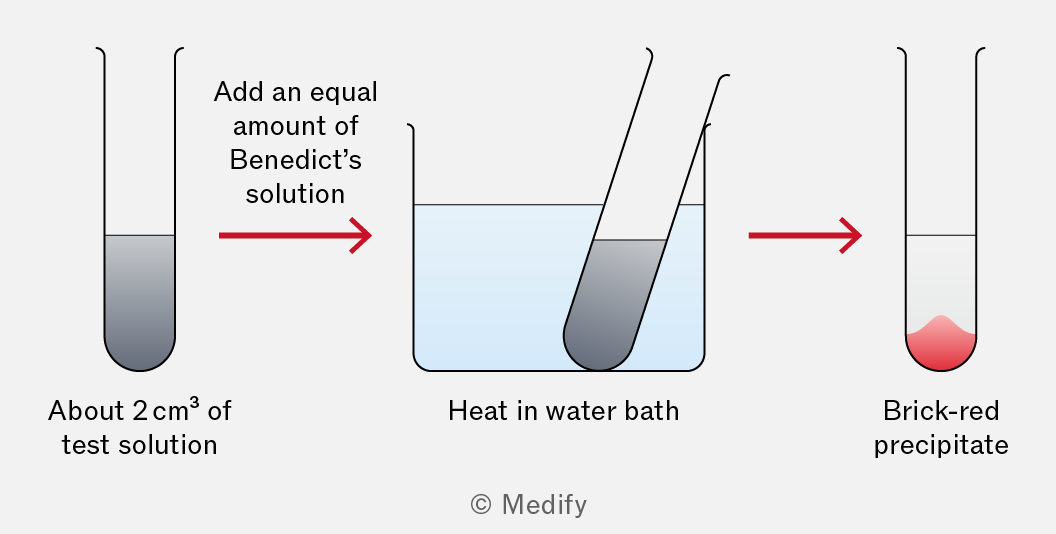
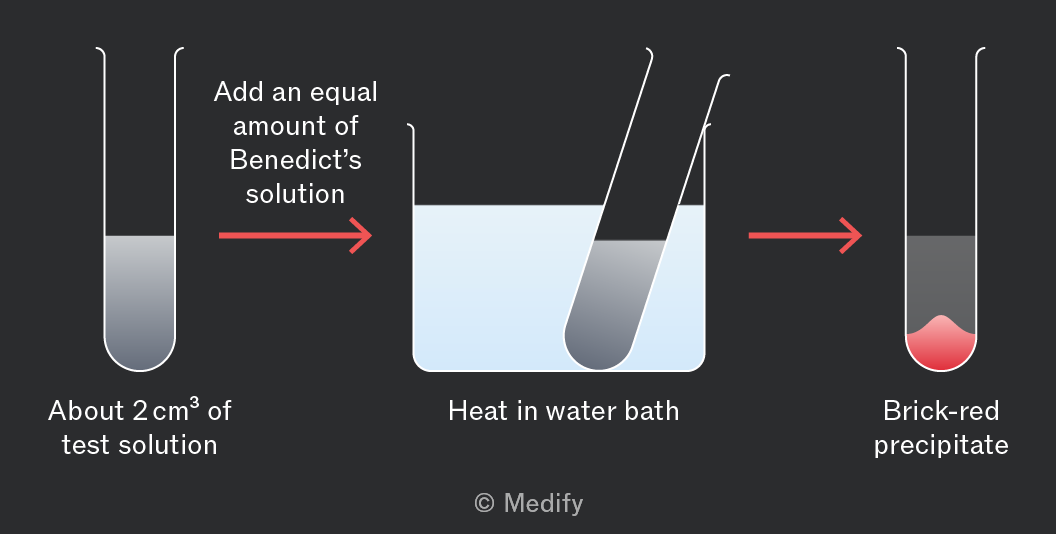
The ligands on the copper complex in Fehling’s and Benedict’s solutions are different but both exhibit a change from a blue solution to a brick-red precipitate on heating with a reducing agent (e.g. an aldehyde).
Carboxylic acids are weak acids and are able to donate protons to bases, such as metal oxides and hydroxides to form carboxylate salts and water in neutralisation reactions. These are analogous to the reactions of strong mineral acids.
The reaction of carboxylic acids with carbonates or hydrogen carbonates, with the observed effervescence of , is a test for the carboxylic acid functional group.
They can also react with metals such as and forming carboxylate salts and hydrogen gas. These are not neutralisations as water is not formed, but are redox reactions.