Aromatic chemistry
On this page
Aromatic compounds are often based on the structure of benzene; an unsaturated cyclic compound with the molecular formula .
Kekulé proposed an early model for the structure of benzene as a cyclic hydrocarbon containing alternating double and single bonds between carbon atoms.
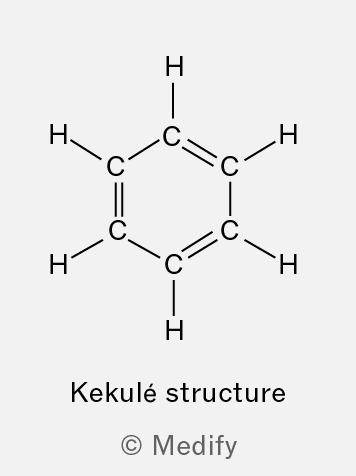
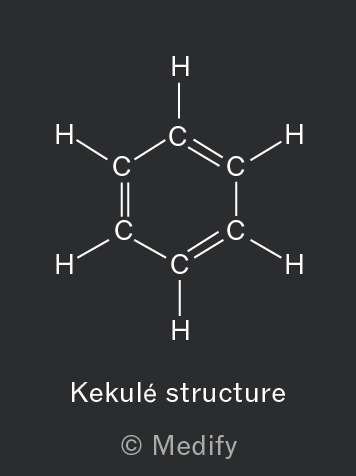
Kekulé’s model has been disproved over time in light of experimental evidence.
The current model of benzene is the delocalised model. It describes of a cyclic molecule, in which each carbon atom makes three -bonds.
The remaining electron, in each carbon atom’s p orbital becomes delocalised, giving rise to a π-system of six electrons that are shared equally between all carbon atoms in the ring.
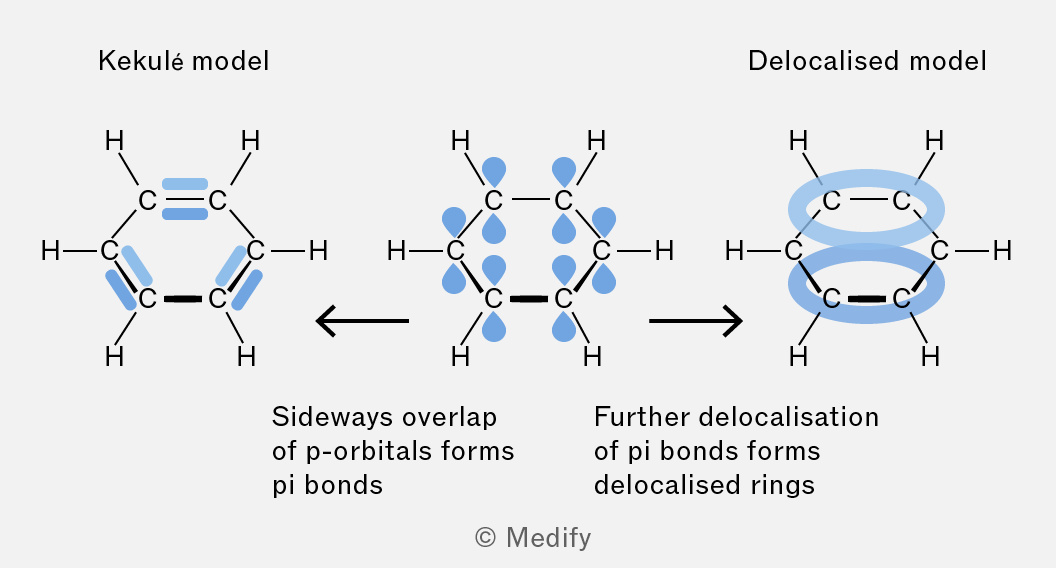
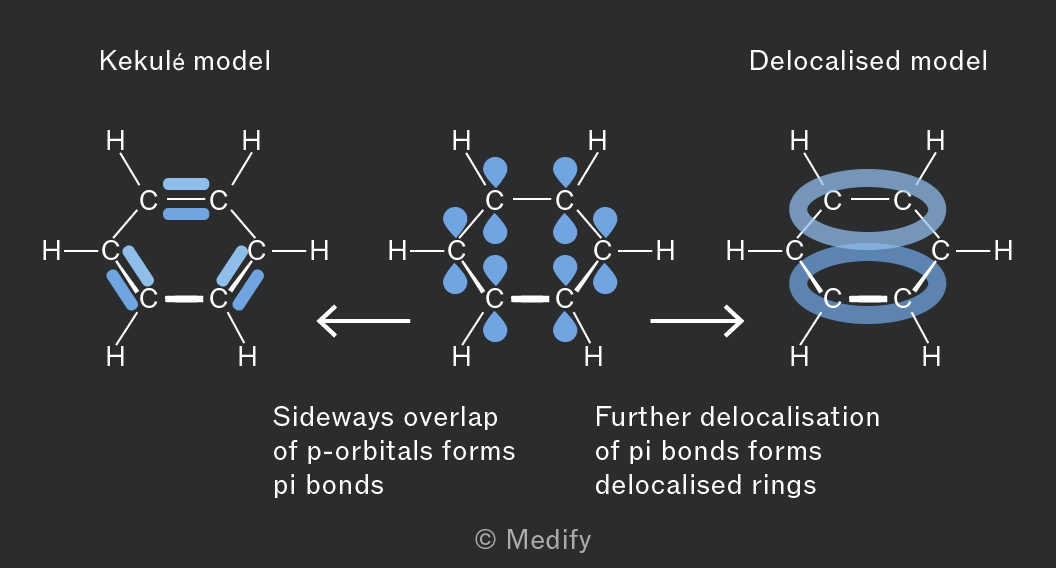
The six delocalised electrons being shared among all six carbon atoms gives the benzene ring great stability.
Benzene rings can be represented either by drawing alternating double bonds, or by including a ring inside the structure to denote electron delocalisation.
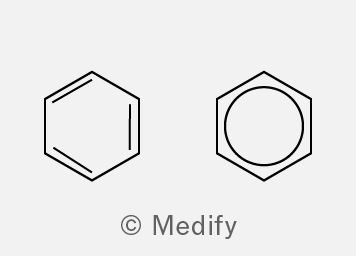
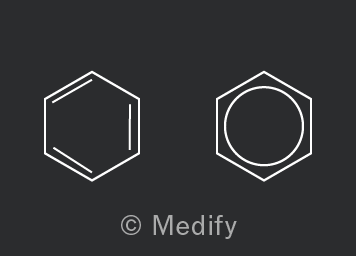
Either method is acceptable, but if drawing double bonds, it is important to remember that in reality all carbon-carbon bonds are equivalent.
Benzene is a planar molecule with six carbon atoms in a hexagonal ring, each with one bonded hydrogen atom.
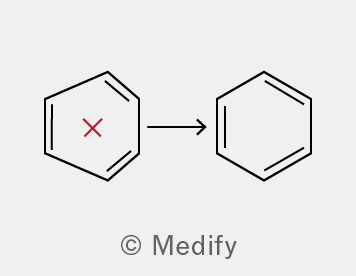
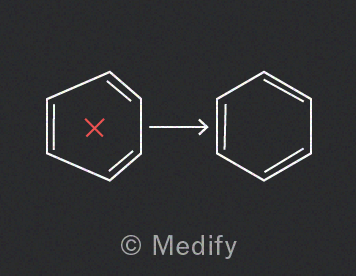
All the carbon to carbon bonds in benzene are equivalent; they are the same length and the same strength.
Experimental evidence led to the evolution of the delocalised model for the structure of benzene.
single bonds are longer than double bonds. If the Kekulé model was correct, with alternate single and double bonds, then benzene would show two different bond lengths and be an irregular hexagon.
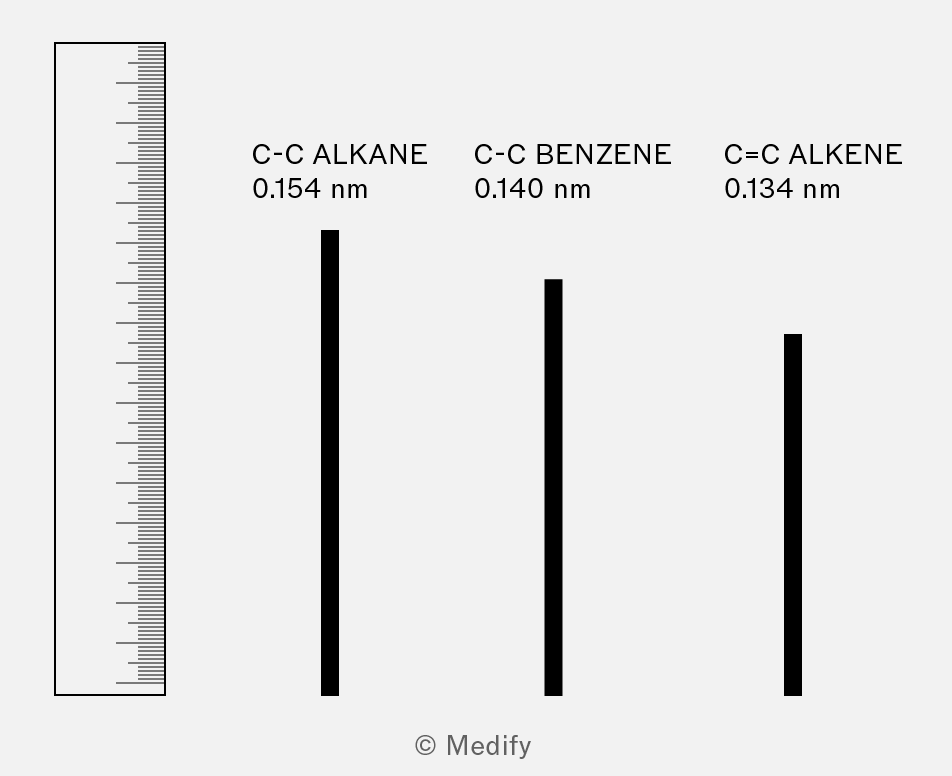
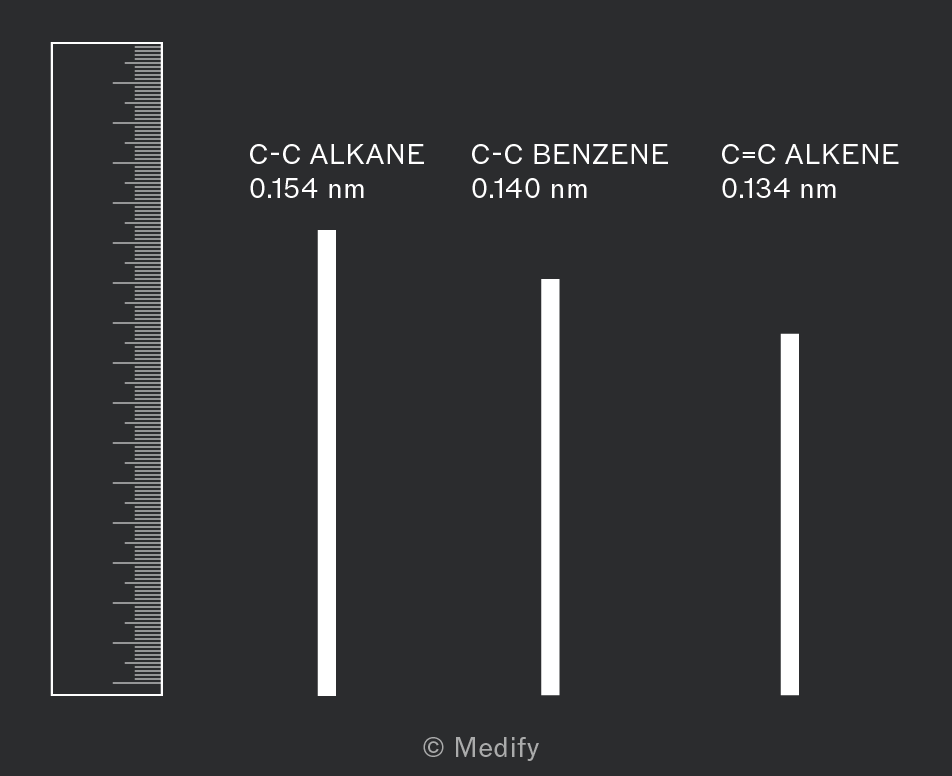
X-ray crystallography shows the measured bond length in benzene is between the bond lengths of carbon-carbon single, and carbon-carbon double bonds. This gives benzene a regular hexagonal shape.
The lower than predicted enthalpy of hydrogenation of benzene gives evidence of the delocalised model of benzene.
The enthalpy of hydrogenation for the conversion of cyclohexene to cyclohexane by saturating its one double bond is .
As the Kekulé model of benzene has three double bonds, then theoretically the hydrogenation of 1,3,5-cyclohexatriene () will produce
This is visualised in the enthalpy profile diagram below.
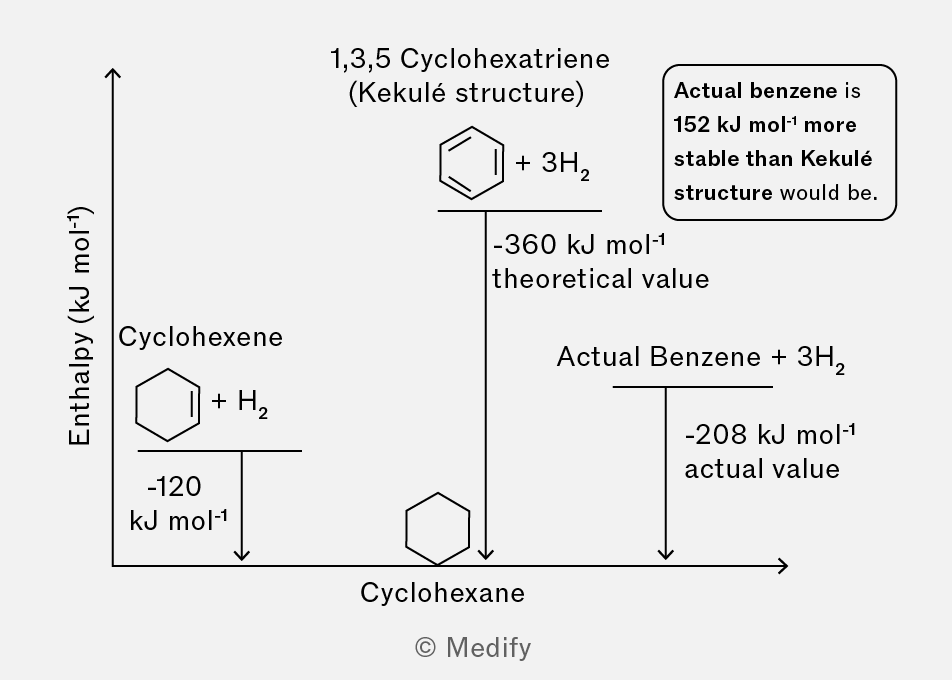
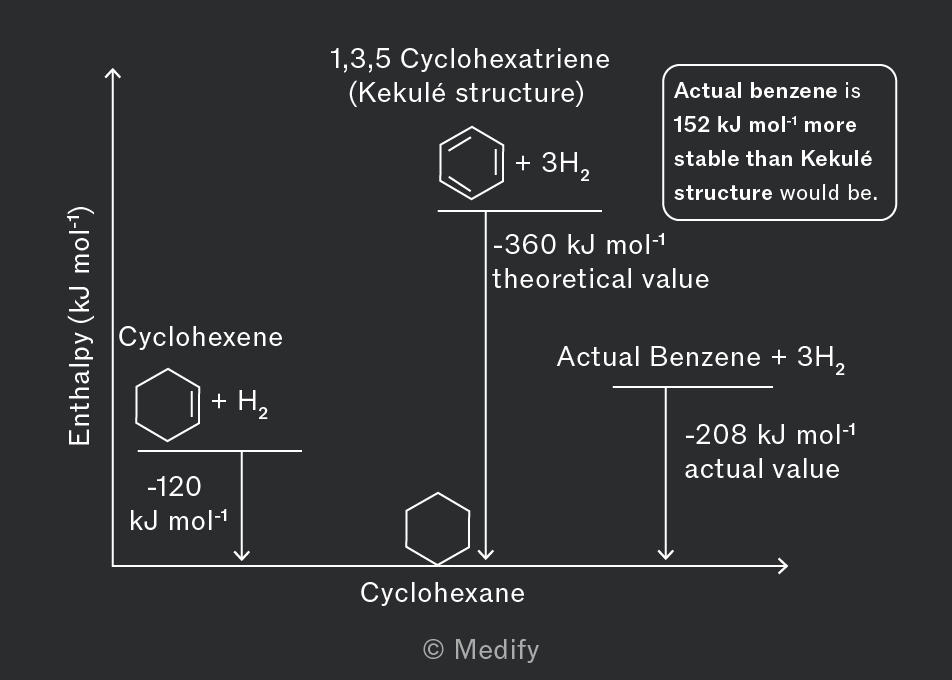
In experimental results, benzene shows an enthalpy of hydrogenation of
This means less energy is released than expected, making benzene more stable than the theoretical molecule 1,3,5-cyclohexatriene.
The lack of reaction with bromine water gives evidence of the delocalised model of benzene.
Alkenes readily undergo electrophilic addition reactions. Alkenes readily react with orange bromine water at room temperature causing it to decolourise. This is a common test for alkenes.
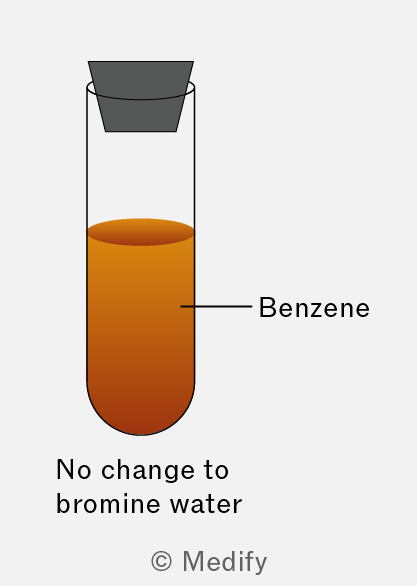
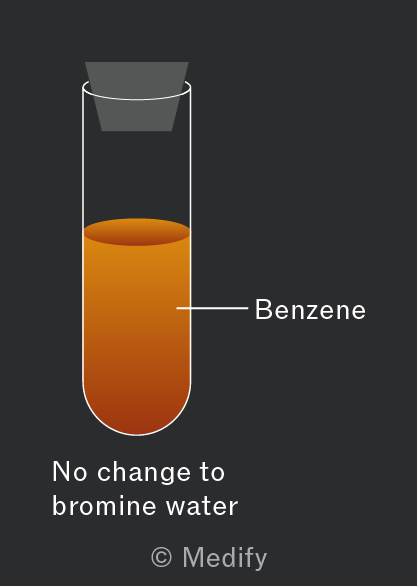
According to the Kekulé model, benzene has three double bonds so should readily decolourise bromine water giving the positive result for alkenes.
In reality, benzene is highly resistant to such addition reactions. When benzene is shaken with bromine water, the solution remains orange. This indicates that benzene does not contain isolated carbon-carbon double bonds.
The delocalised electron ring in benzene is very stable.
If electrophiles were to add onto benzene the delocalised ring would become permanently disrupted.
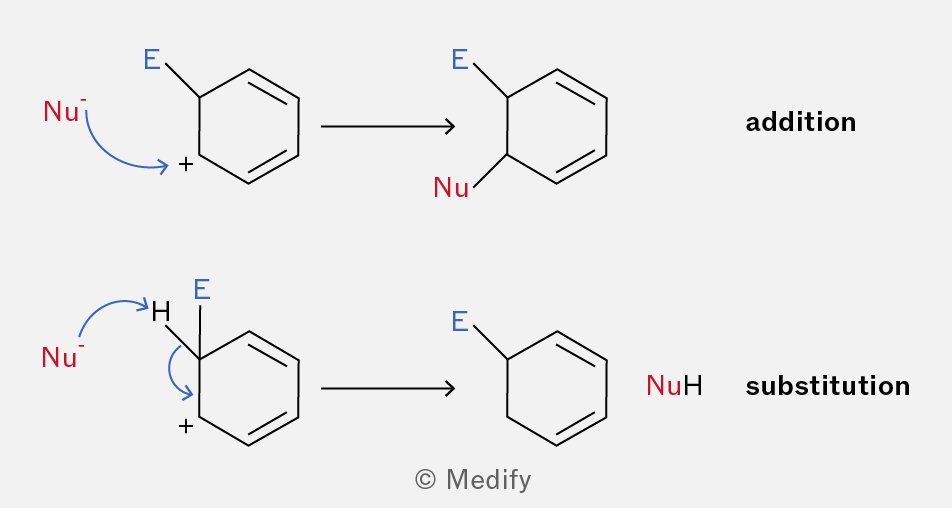
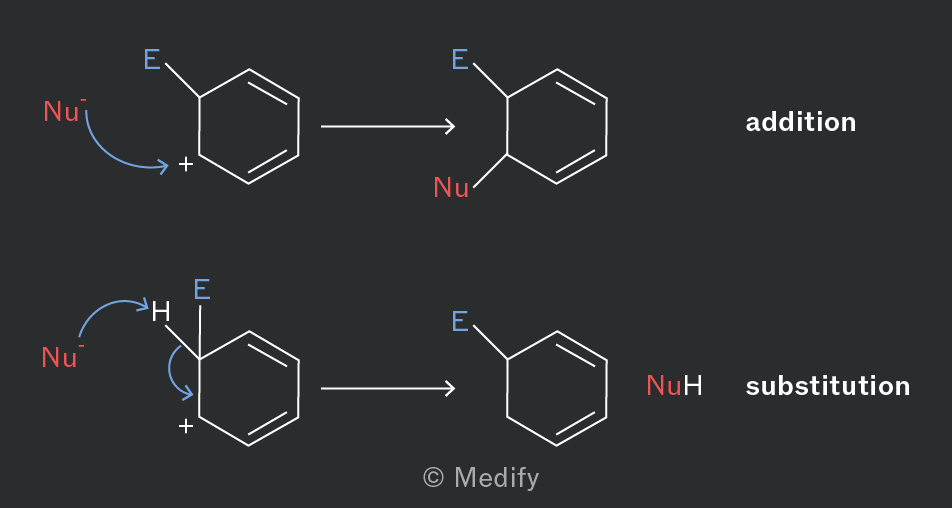
Aromaticity is lost in the addition product but not in the substitution product.
In substitution reactions, the delocalized system is restored in the product. This makes electrophilic substitution reactions favourable over addition reactions.
Alkenes readily undergo bromination via electrophilic addition, whereas benzene reacts via electrophilic substitution and requires the presence of a halogen carrier catalyst.
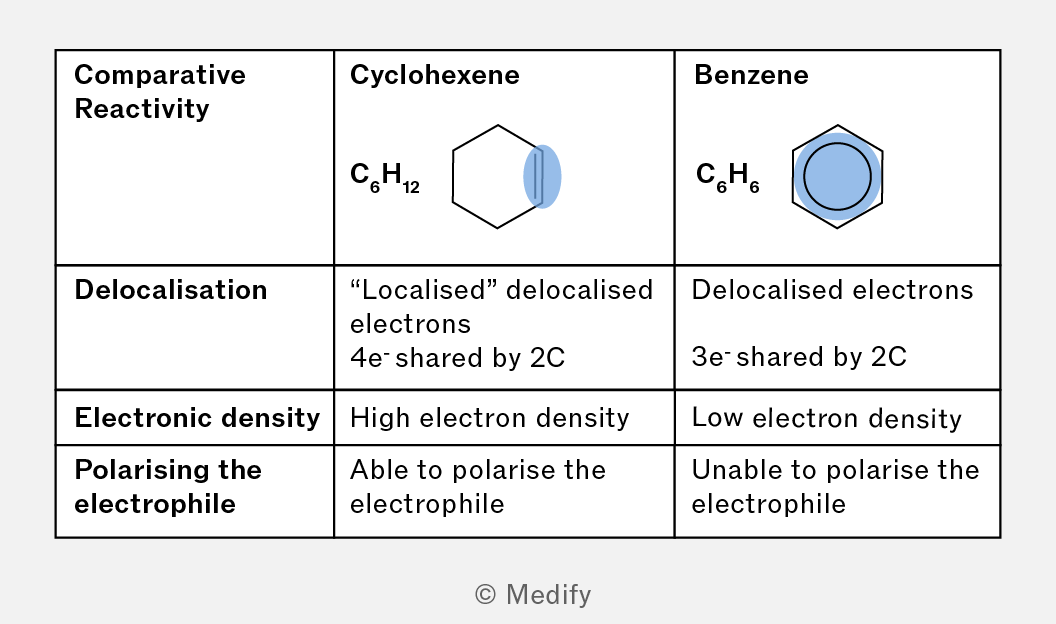
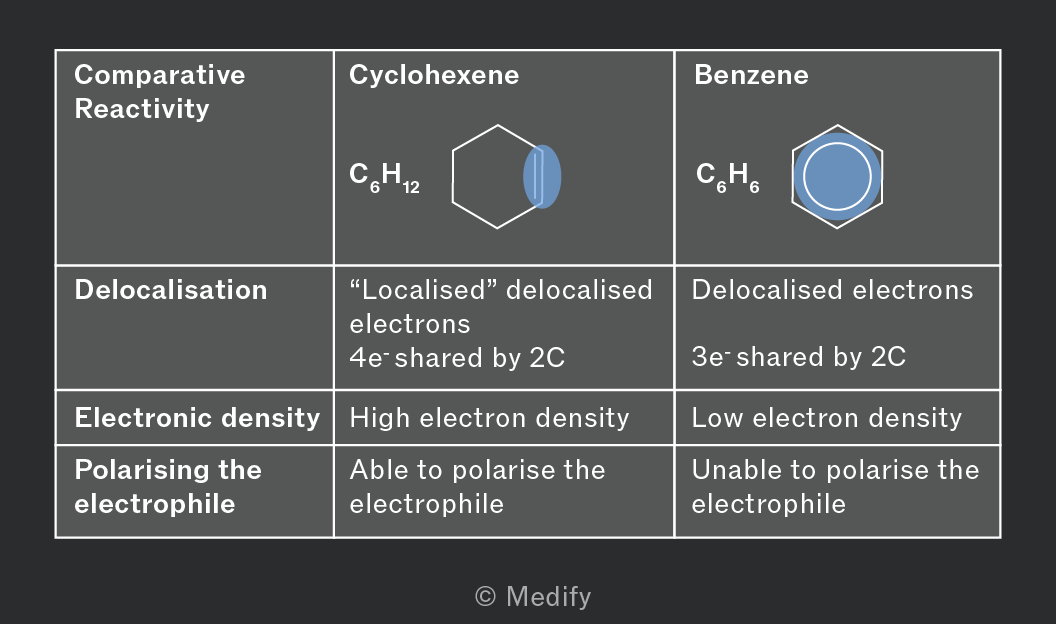
Bromine can act as an electrophile; it is attracted to, and will be polarised by, parts of molecules that have high electron densities forming a dipole. In an alkene, the -electrons in the double bond are localised between the two carbon atoms. This results in high electron density, capable of polarising the bromine molecule and creating an electrophile.
In contrast, benzene’s -electrons are delocalised across the ring. This reduces the electron density of any given region of the molecule relative to an alkene. Benzene is therefore less able to polarise bromine and a halogen carrier is required to create the electrophile.
Arenes, such as benzene and its derivatives, will burn in oxygen.
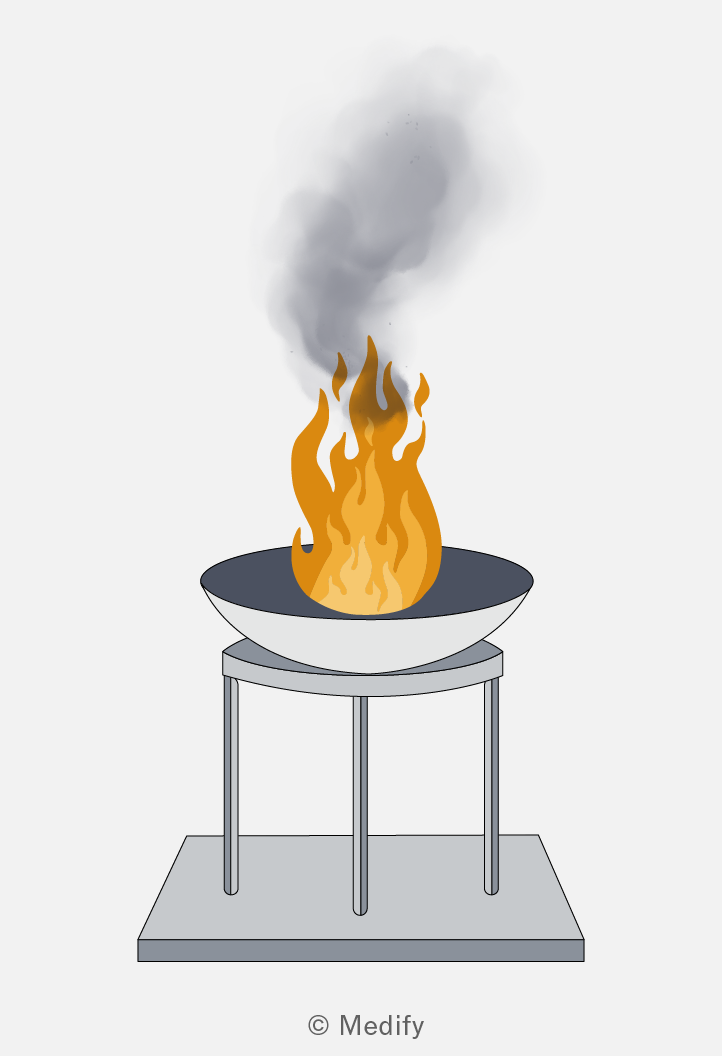
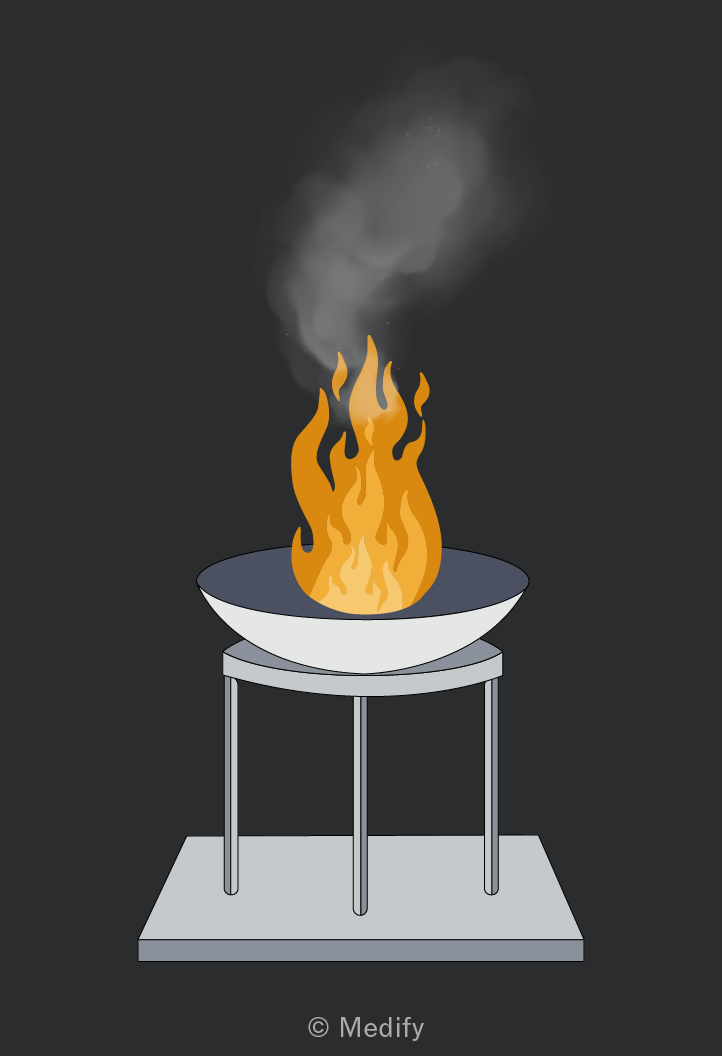
Arenes burn with a very smoky (sooty) flame as there is a higher proportion of carbon than in corresponding alkanes. Incomplete combustion results in carbon particulates.
In an electrophilic substitution reaction, one of the hydrogen atoms in the benzene ring is replaced by an electrophile, E, which is an electron pair acceptor.
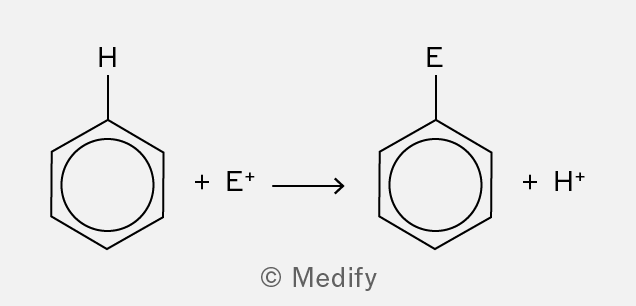
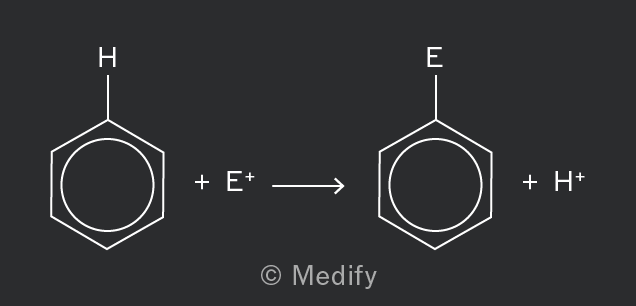
Monosubstitution is when a single hydrogen atom from the benzene ring is replaced.
Nitration introduces a (nitro) group to the benzene ring.
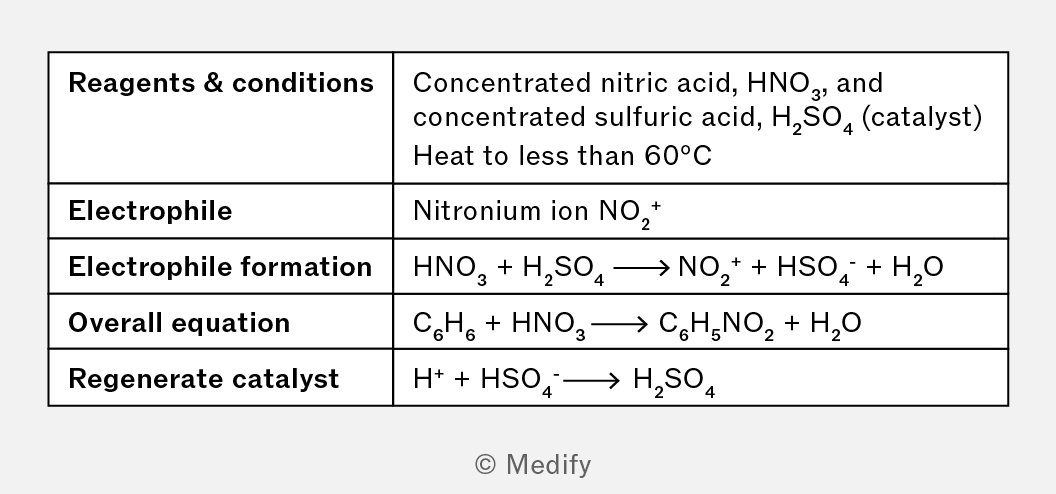
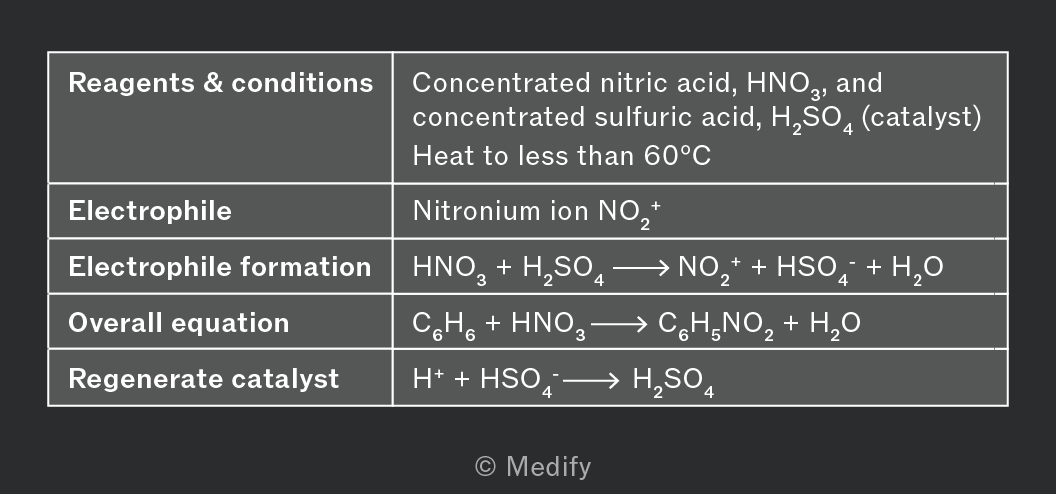
Nitration reactions are carried out using concentrated nitric acid with a concentrated sulfuric acid catalyst. These conditions are required to generate the electrophile, (the nitronium ion).
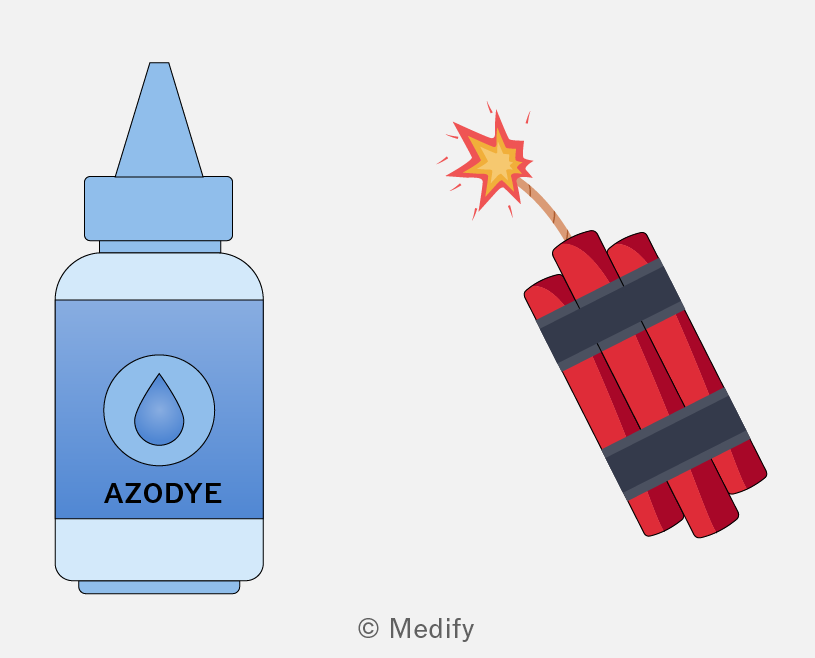
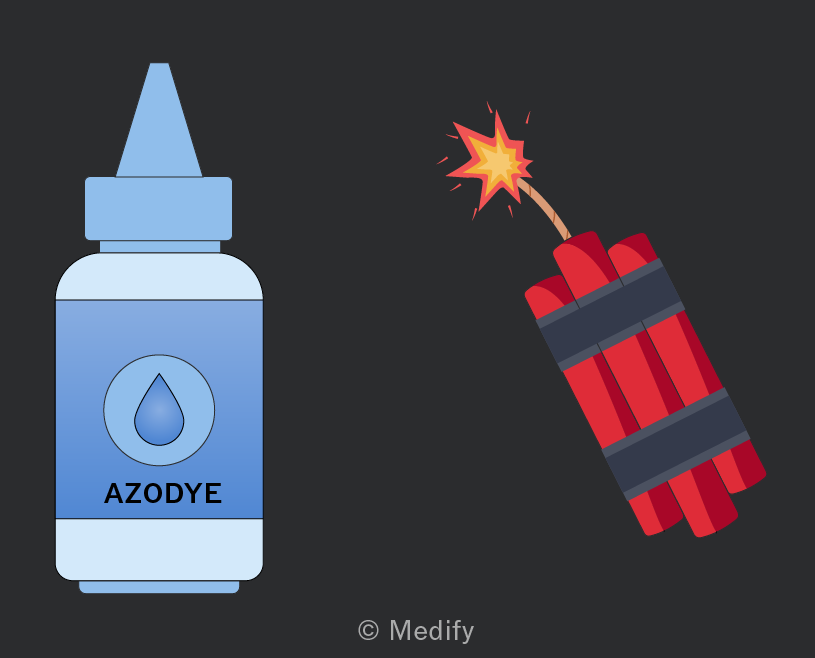
Nitration of arenes is an important industrial process and is required for the manufacture of explosives and aromatic amines, which can be synthesised into dyes.
Nitration of aromatic compounds is described in three main steps.
Step 1 – generating the electrophile, :
Overall reaction:
Step 2- electrophilic substitution:
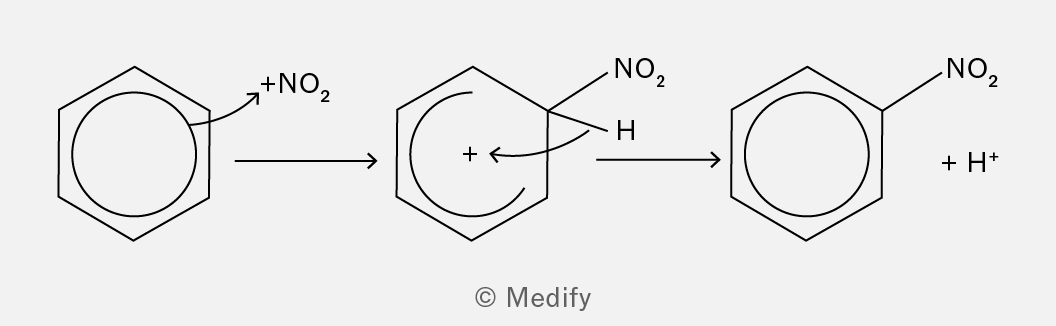
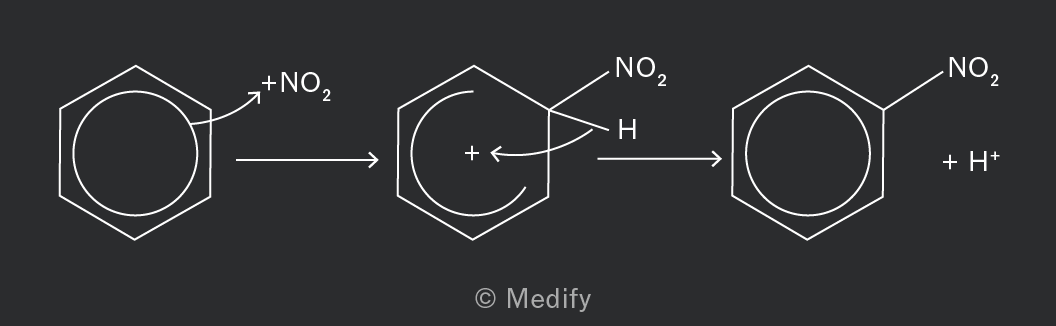
- Ensure the curly arrow moves from the inner ring to the electrophile.
- The intermediate must have a “horseshoe” of electrons extending to the positions either side of the site of substitution; positions 2–6.
- The intermediate has a positive charge, sitting within the mouth of the horseshoe.
- Show recovery an electron pair to restore aromaticity. This arrow goes from the bond of the ring hydrogen to the gap in the horseshoe, with the loss of .
Step 3 – regeneration of the catalyst:
The proton released to complete this reaction returns to the reaction mixture resulting in no net change to the amount of present; the sulfuric acid is catalytic.
Halogenation introduces a halogen atom, often represented as .
A ‘halogen carrier’ such as or is used as a catalyst in these reactions. It reacts with a halogen molecule to produce the electrophile, .
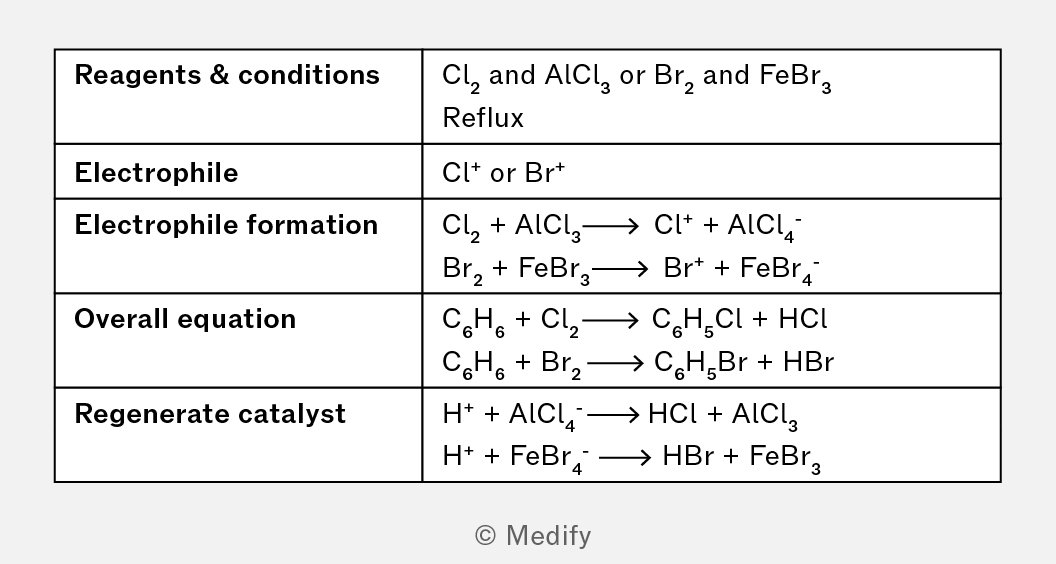
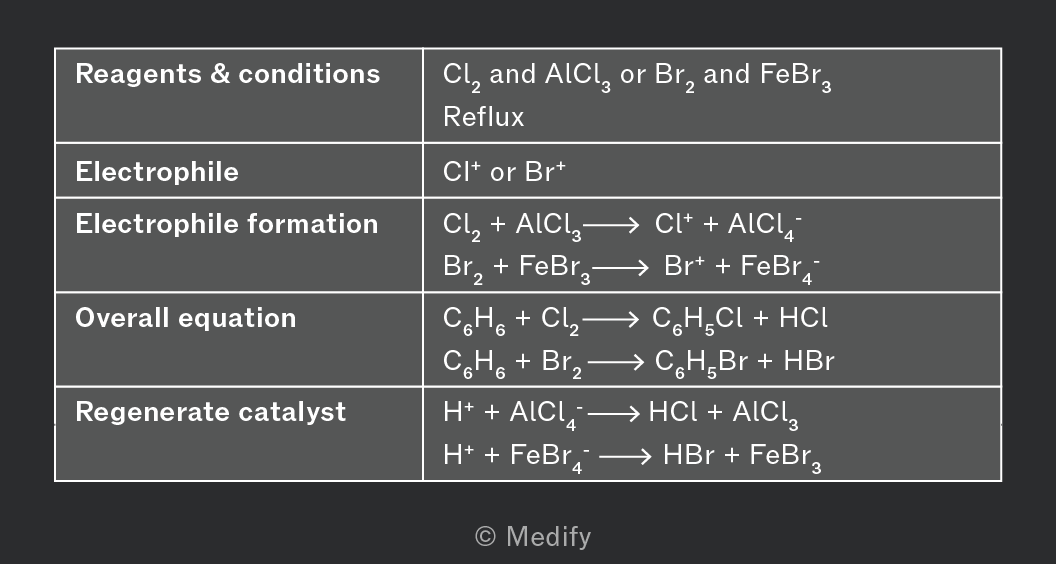
Halogenation of aromatic compounds
Generating the electrophile: where is a halogen, or )
Electrophilic substitution mechanism:
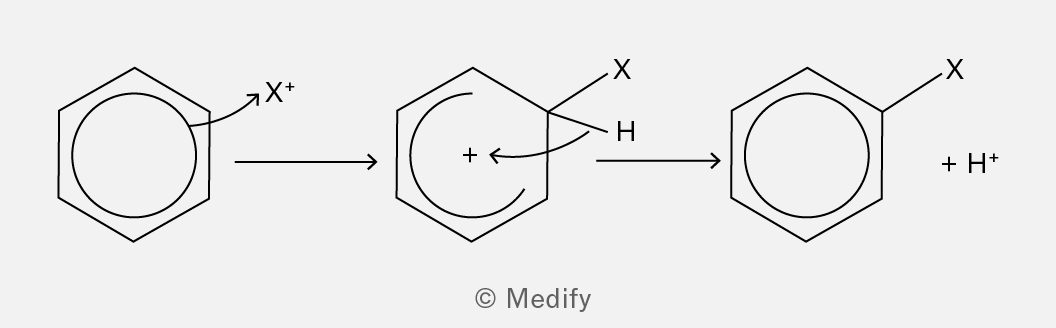
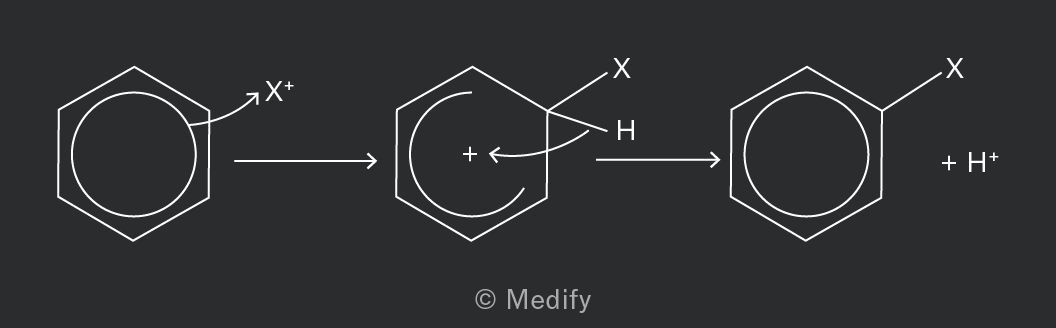
- Ensure the curly arrow moves from the inner ring to the electrophile.
- The intermediate must have a “horseshoe” of electrons extending to the positions either side of the site of substitution; positions 2–6.
- The intermediate has a positive charge.
- Recover an electron pair from the ring hydrogen with the loss of an .
Regeneration of catalyst:
Acylation introduces an acyl group, , to the benzene ring.
Acylation is carried out using an acyl chloride in the presence of a halogen carrier or .
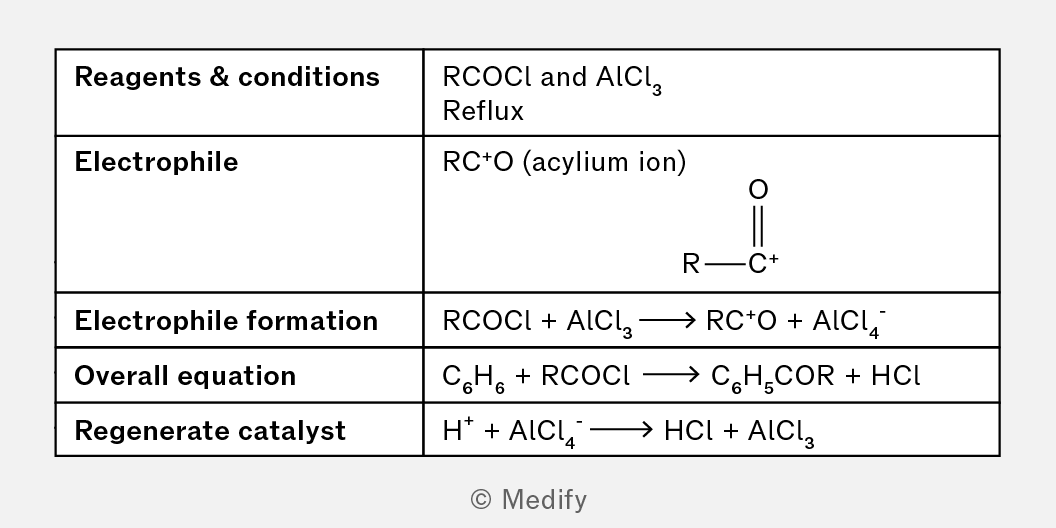
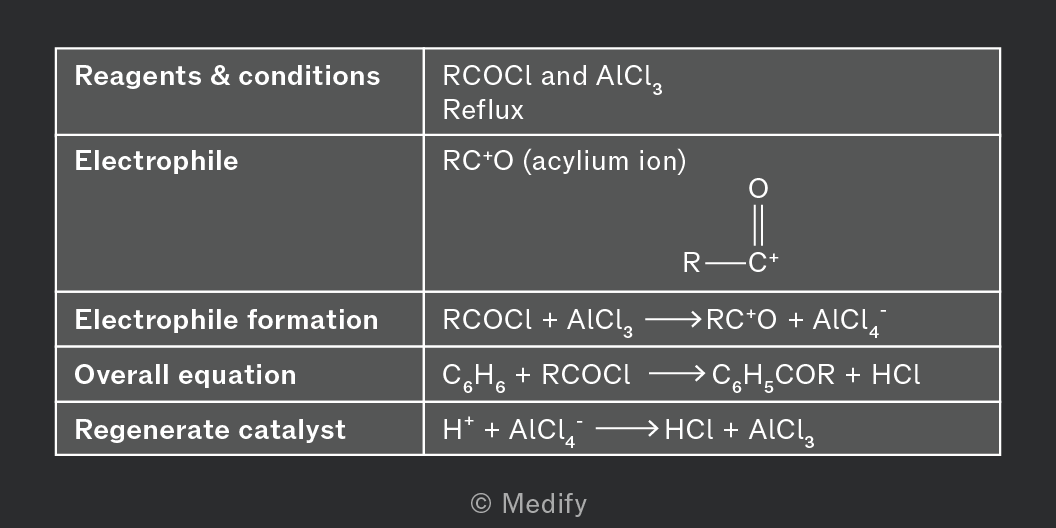
This type of reaction is known as a Friedel-Crafts acylation. These reactions are useful in organic synthesis because they enable the formation of new bonds.
Acylation of aromatic compounds is described in three main steps.
Step 1 – Generating the electrophile: from an acyl chloride
The reaction occurs in anhydrous conditions, under reflux.
Step 2 -electrophilic substitution:
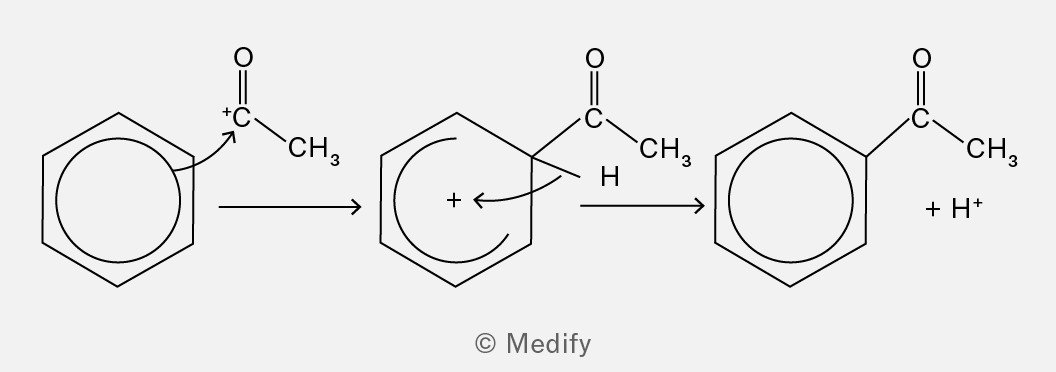
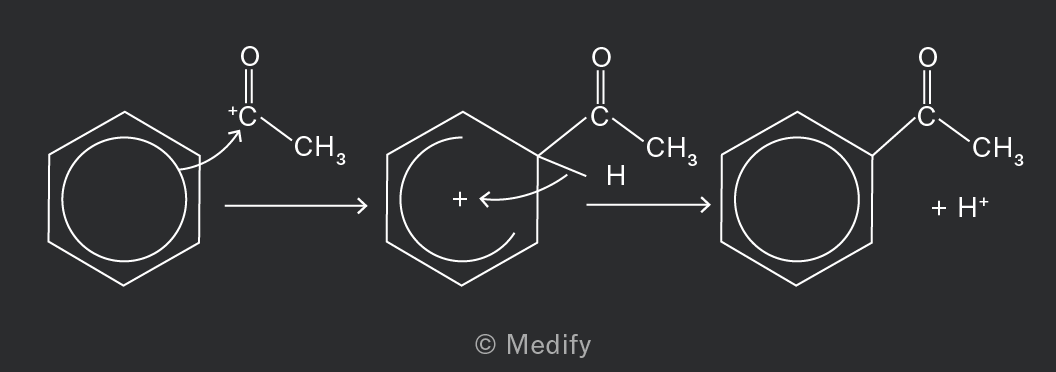
- Ensure the curly arrow moves from the inner ring to the electrophile.
- The intermediate must have a “horseshoe” of electrons extending to the positions either side of the site of substitution; positions 2–6.
- The intermediate has a positive charge, sitting within the mouth of the horseshoe.
- Show recovery of an electron pair to restore aromaticity. This arrow goes from the bond of the ring hydrogen to the gap in the horseshoe, with the loss of .
Step 3 – regeneration of the catalyst:
This is a very useful reaction for creating a carbon-carbon bond between an arene ring and a carbonyl group.
The product is an aromatic ketone.
Alkylation introduces an alkyl group to a benzene ring using a halogen carrier catalyst. In the reaction, the electrophile, is formed through reaction of the haloalkane with the halogen carrier.
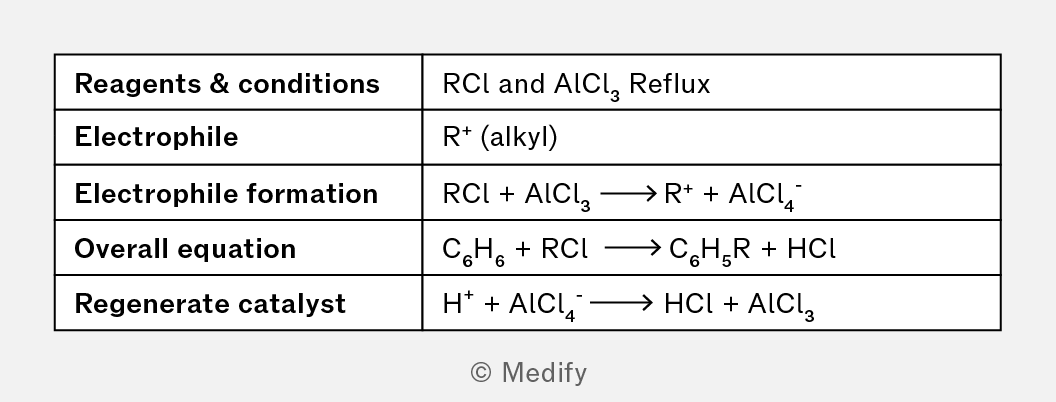
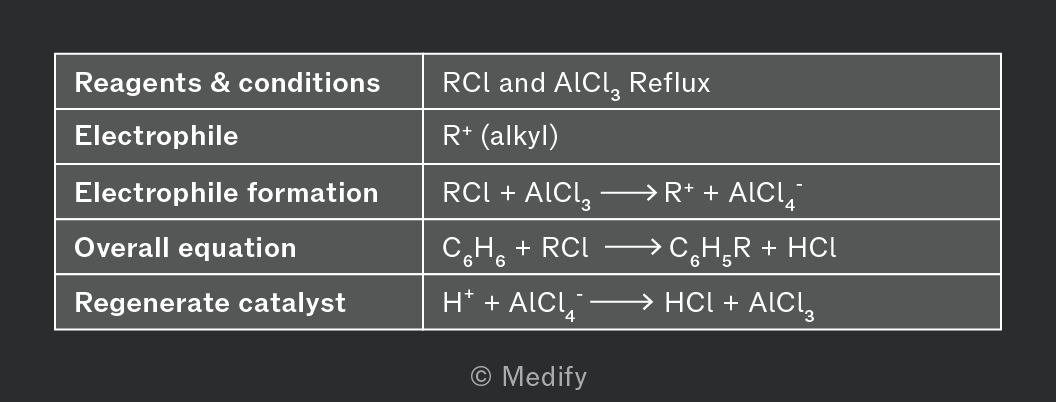
This type of reaction is known as a Friedel–Crafts alkylation. These reactions are useful in organic synthesis because they enable the formation of new bonds.
Alkylation of aromatic compounds.
Generating the electrophile: from a chloroalkane
In anhydrous conditions under reflux.
Mechanism: electrophilic substitution
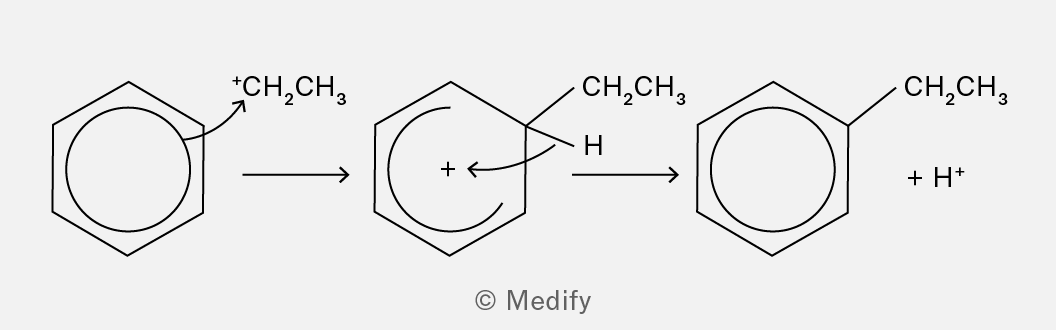
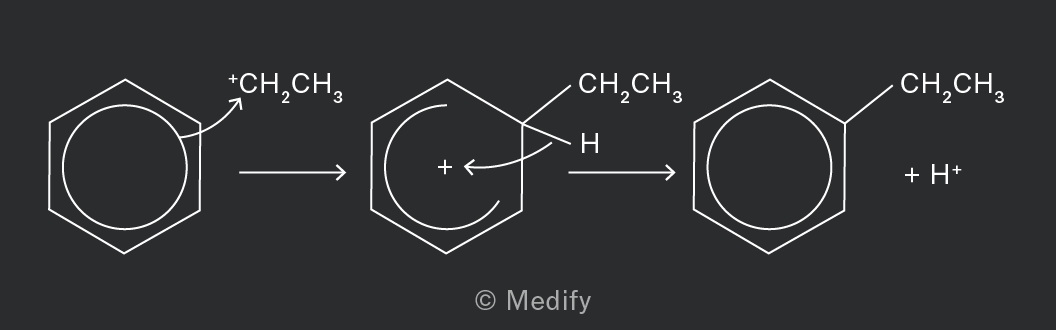
Ensure the curly arrow moves from the inner ring to the electrophile.
- The intermediate must have a “horseshoe” of electrons extending to the positions either side of the site of substitution; positions 2–6.
- The intermediate has a positive charge.
- Recover an electron pair from the ring hydrogen with the loss of a proton .
Regeneration of catalyst:
Some groups in aromatic compounds interact with the delocalised -system to increase or decrease electron density in the ring. These groups can be classified as:
- electron-donating (e.g. , ) or
- electron-withdrawing (e.g. ).
The electronic effects of these groups influence the positions around the ring at which electrophilic substitution is most likely to take place.
The electron-donating groups and are 2 and 4 directing.
In substituted aromatic rings, with one of these groups present, electrophilic substitution is most likely to take place of the 2 or 4 positions, or both.
Note that the 2 and 6 positions are equivalent in an unsubstituted ring. The 2 position is specified as this results in the lowest sum of position numbers in the product.
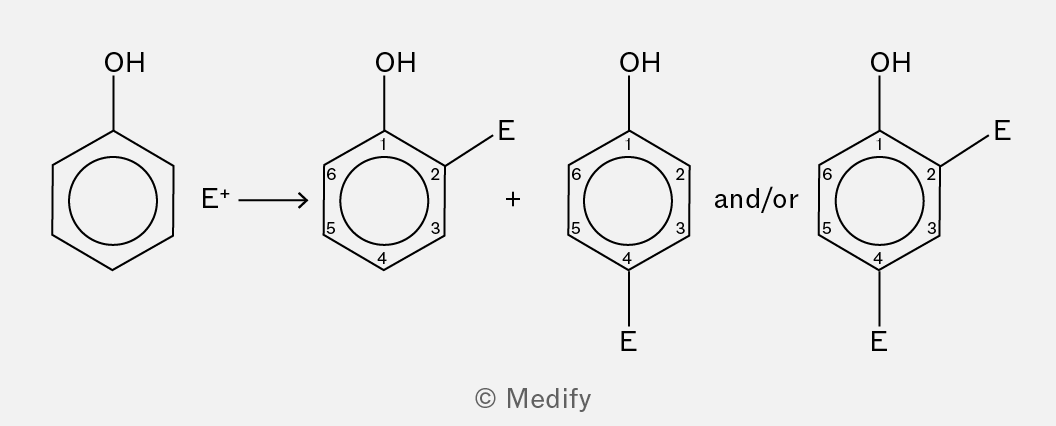
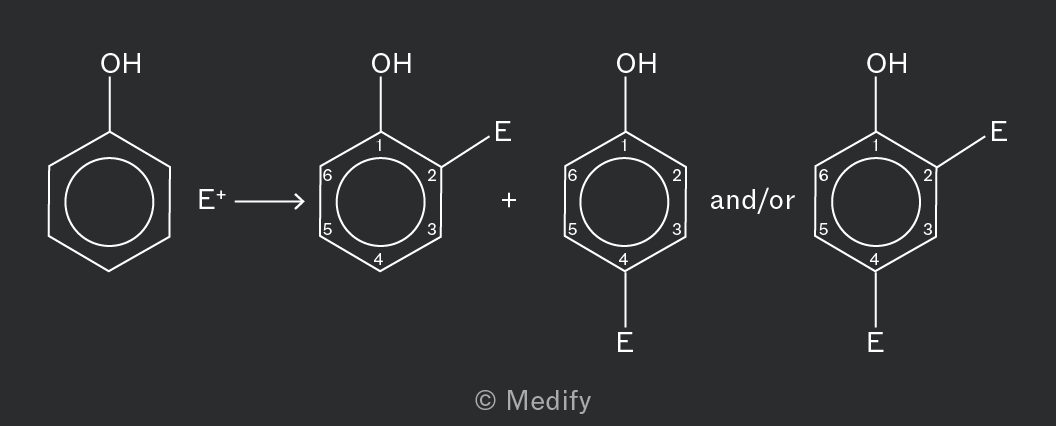
Whether multiple substitution occurs depends on the reaction conditions used, and the effect of the introduced group on the reactivity of the ring.
Where an electron-donating group is added to an aromatic ring, the reactivity increases in the product and further substitutions occur.
The electron-withdrawing groups like has a 3-directing effect in electrophilic substitution reactions. In substituted aromatic rings containing the group, electrophilic substitution is most likely to take place at the 3 position.
Note that the 3 and 5 positions are equivalent in an unsubstituted ring. The 3 position is specified as this results in the lowest sum of position numbers in the product.
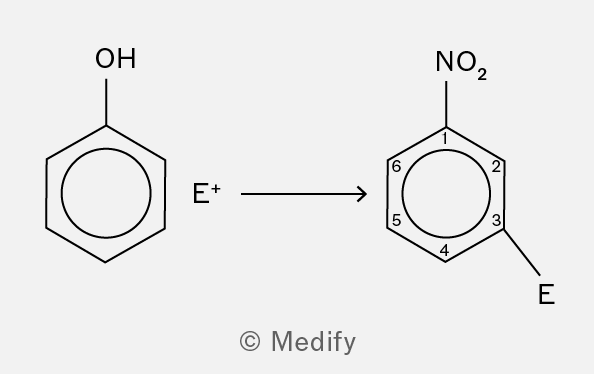
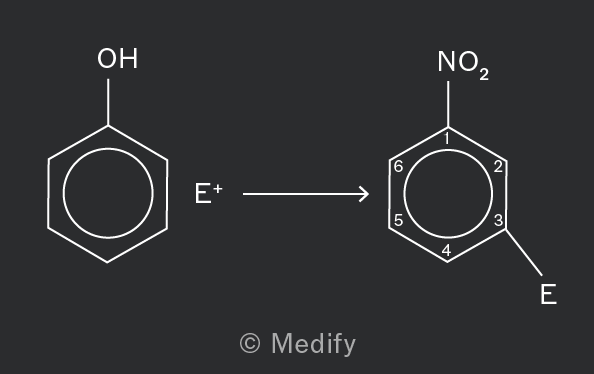
Whether multiple substitution occurs depends on the reaction conditions used and the effect of the introduced group on the reactivity of the ring.
Where an electron-withdrawing group is added, the reactivity decreases in the product and further substitutions are prevented.
Knowledge of the directing effects of different functional groups allows us to predict the substitution products of aromatic compounds. This is vital in organic synthesis.
Salicylic acid is a precursor to aspirin. Salicylic acid requires the alcohol and the carboxylic acid functional groups to be sited on positions 1 and 2 of a benzene ring. The order in which functional groups is introduced is important if the end product is to have the desired structure.
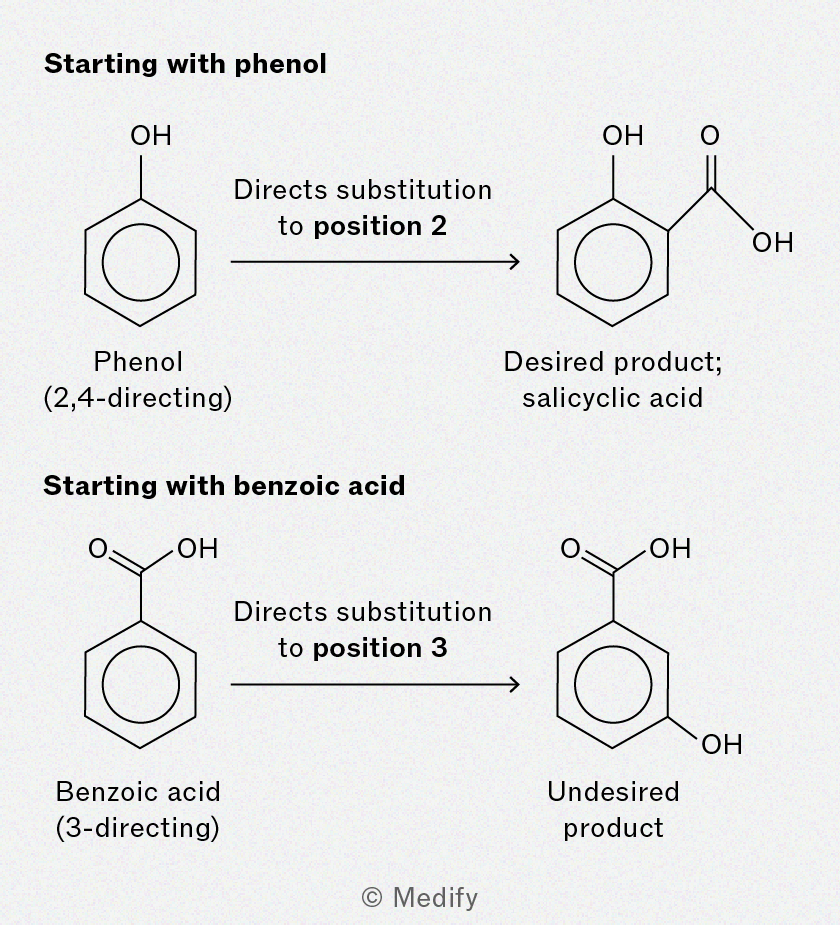
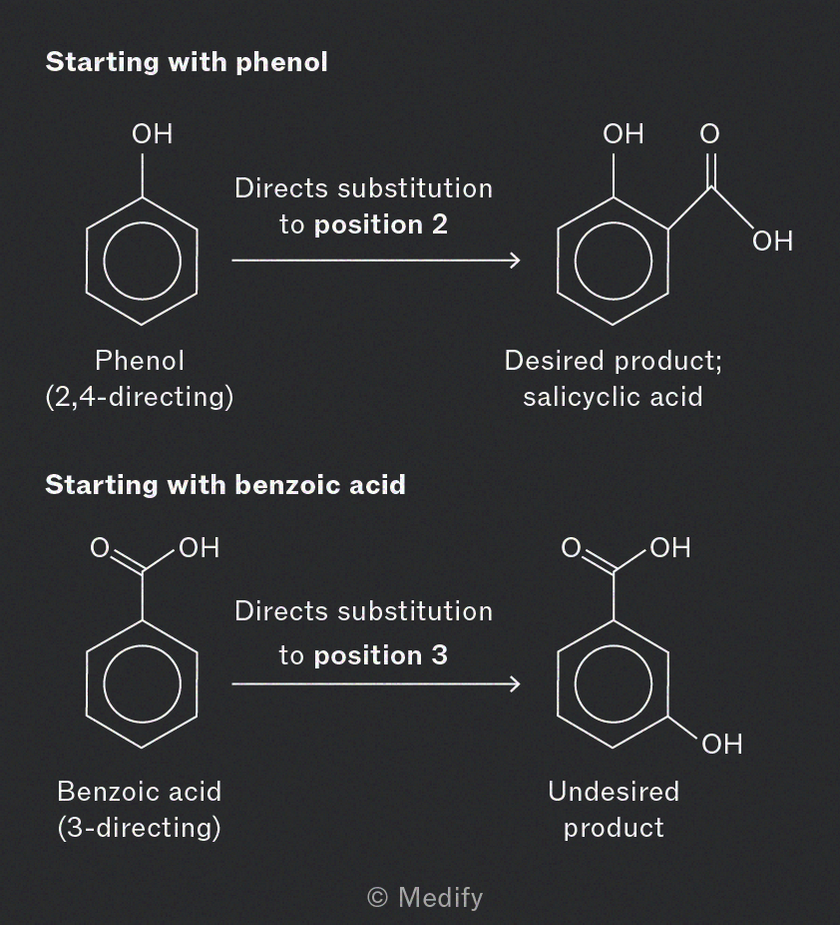
The group phenol is electron donating and therefore 2,4 directing.
The carboxylic acid group in benzoic acid is electron withdrawing and therefore 3 directing. Phenol is the preferred starting material in the synthesis.
Phenols are aromatic alcohols.
The alcohol group in phenol is weakly acidic. Phenol will partially dissociate in water into and leaving a weakly acidic solution with a of about
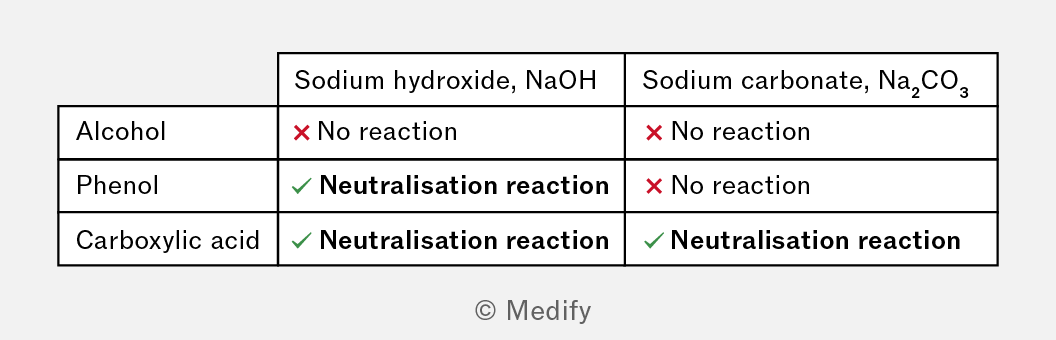
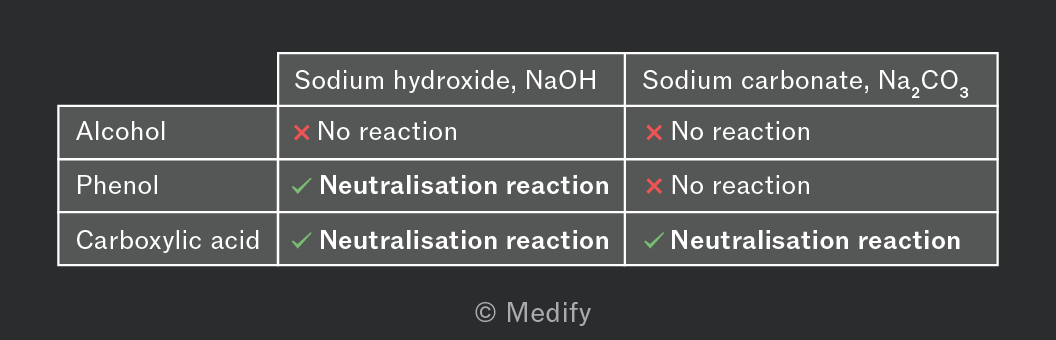
Phenols will undergo neutralisation reactions with sodium hydroxide but will not react with carbonates. This allows them to be chemically distinguished from carboxylic acids and non-aromatic alcohols.
Phenol undergoes electrophilic substitution more readily than benzene.
The lone pair of electrons on phenol’s oxygen atom is incorporated into the aromatic ring’s delocalised -system, thus increasing electron density within the ring.
For this reason, despite oxygen’s electronegativity, the group in phenol is described as being an electron-donating group.
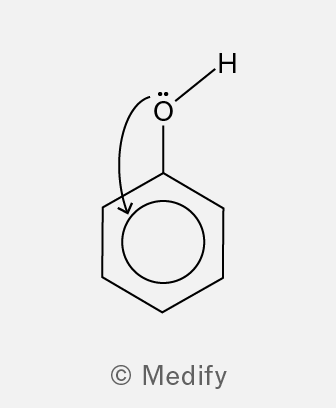
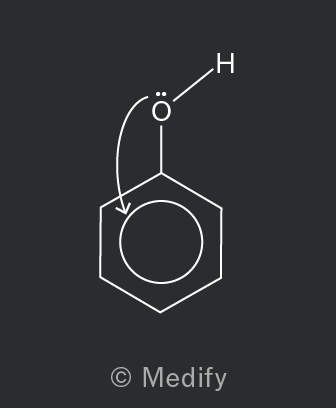
The ring’s increased electron density makes it more susceptible to attack by electrophiles and better at stabilising the positive charge on the intermediate.
Phenol’s greater reactivity compared to benzene can be illustrated by comparing the conditions required for bromination and nitration.
Phenol is more reactive than benzene and undergoes electrophilic substitution reactions under conditions where benzene does not react.
Phenol reacts with bromine water readily, undergoing multiple bromination events via electrophilic substitution. This produces 2,4,6-tribromophenol. No reaction occures with bromine water and benzene.
This reaction can be used as a distinguishing test for phenol. Bromine water loses its orange-brown colour. The product formed is white precipitate in a colourless solution.
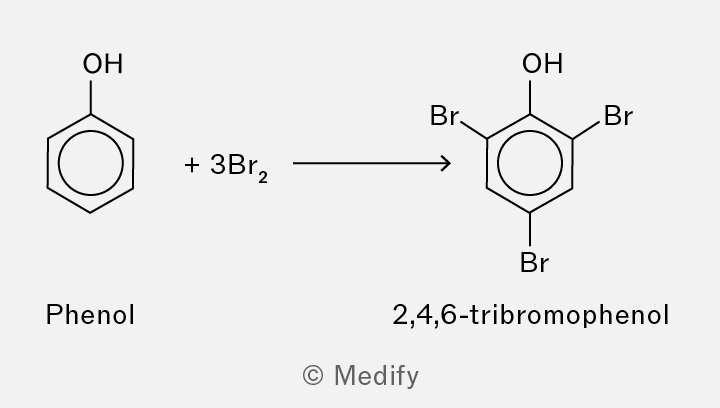
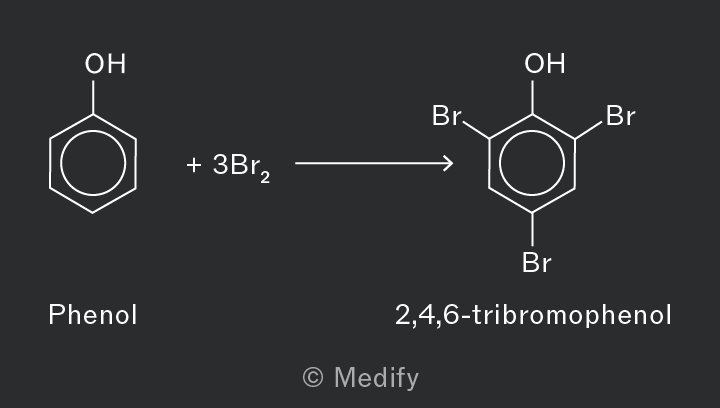
Note that the group in phenol is situated in the 1 position on the ring. With excess bromine, atoms will substitute at positions 2, 4, and 6, if they are not occupied by other groups.
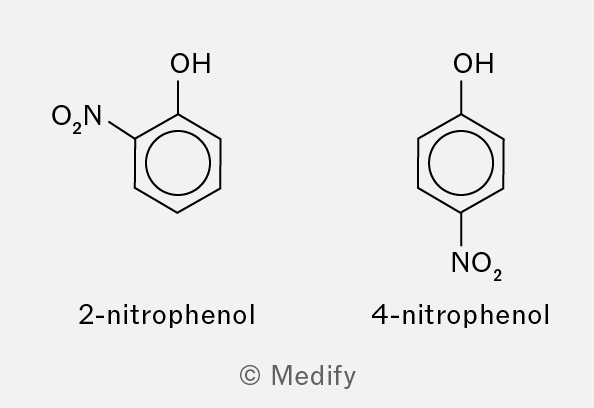
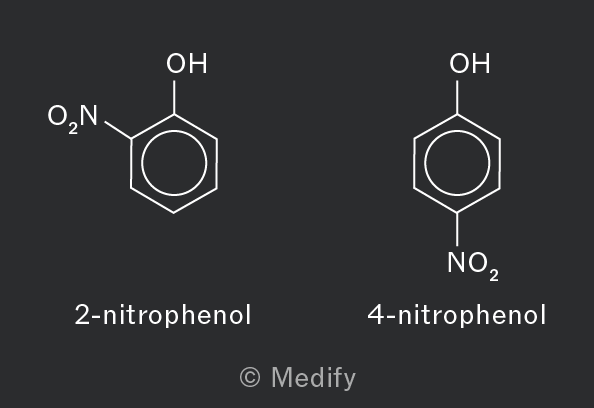
The nitration of benzene requires concentrated nitric acid in the presence of a concentrated sulfuric acid catalyst. In contrast, phenol undergoes nitration in the presence of dilute nitric acid alone, without concentrated sulfuric acid.
Under these mild conditions, phenol only undergoes mono nitration, either at the 2- or 4- position. The nitration of phenol in dilute nitric acid produces a mixture of two products.