Classification and phylogeny (4.6)
On this page
Taxonomic hierarchy is a system of classification that organises living organisms into progressively smaller and more specific groups that do not overlap.
Each level in the hierarchy is known as a taxon (plural: taxa). The main levels of the taxonomic hierarchy are:
- Domain
- Kingdom
- Phylum
- Class
- Order
- Family
- Genus
- Species.
The binomial naming system is a universal system for naming organisms. Every species is given a unique two-part Latin name consisting of its genus and species, e.g., Homo sapiens.
The genus name begins with a capital letter, the species name is lowercase, and both are written in italics (or underlined if handwritten).
The binomial system provides a standardised, internationally recognised name for each species, avoiding confusion caused by different common names, and reflects relationships between organisms through shared genera.
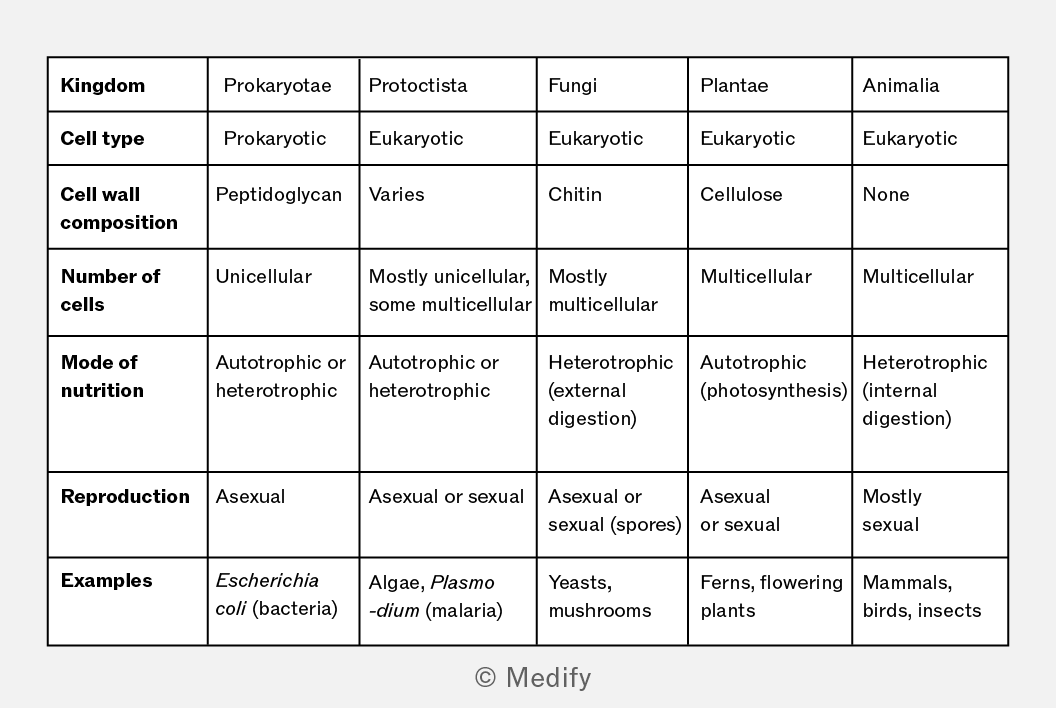
Organisms are grouped into five kingdoms: Prokaryotae, Protoctista, Fungi, Plantae, and Animalia based on the features used to classify them.
Convergent evolution occurs when unrelated species evolve similar adaptations because they are exposed to similar environmental selection pressures, rather than because they share a recent common ancestor.
The evolutionary relationships between species can be determined by comparing biological molecules, such as DNA, RNA, or proteins, which are found in all living organisms.
Species with more similar biological molecules are more closely related because they share a more recent common ancestor. Differences in these molecules arise through mutations that accumulate over time during evolution.
By comparing gene sequences and entire genomes, scientists can determine the evolutionary relationships between organisms at the genetic level.
Highly conserved genes, such as the genes that code for ribosomal RNA (rRNA), provide a powerful tool for classification because they change very slowly over time. The more similar the DNA sequences of two species, the more closely related they are, as they share a more recent common ancestor.
A domain is the highest taxonomic rank in biological classification.
The three domain system distinguishes organisms based on fundamental differences in their cell structure and genetic makeup.
The three domains are:
- Eubacteria – single–celled prokaryotic organisms with simple structures.
- Archaea – single–celled prokaryotes that differ from eubacteria in their cell wall composition, membrane lipids, and genetic characteristics.
- Eukarya – organisms with eukaryotic cells containing a membrane–bound nucleus and organelles, including plants, animals, fungi, and protists.
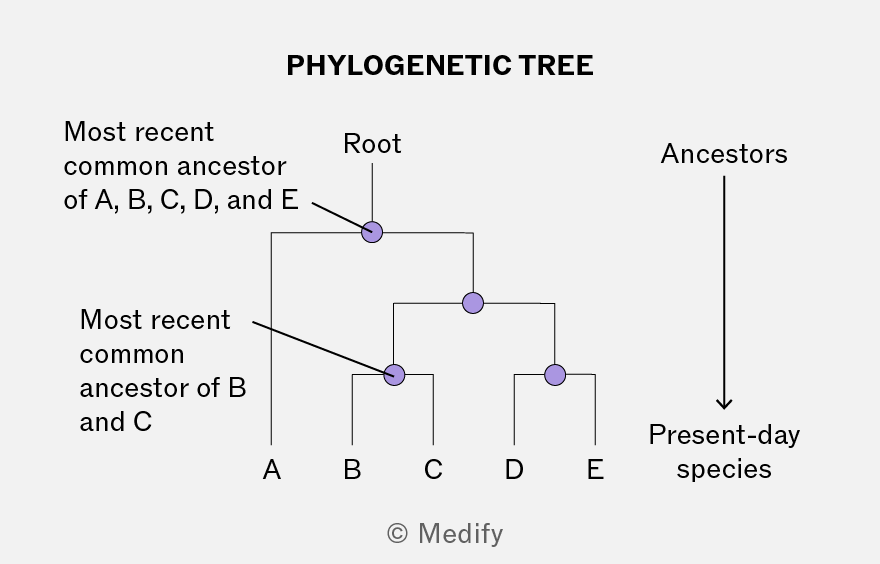
Phylogeny refers to the evolutionary history and relationships among species. It shows how species have evolved and diverged from common ancestors over time.
Phylogenetic trees (or evolutionary trees) are diagrams that represent these relationships.
Modern classification systems are increasingly based on phylogenetic relationships, using evidence from DNA, RNA, proteins, and other biological molecules to reflect evolutionary history rather than relying only on observable characteristics.