
Qualitative analysis for organics (6.3.1)
On this page
The electrophilic addition of bromine to alkenes is used as a test for unsaturation.
is orange and bromoalkanes are colourless. When the substances are mixed they react and as the reaction progresses the orange colour fades.
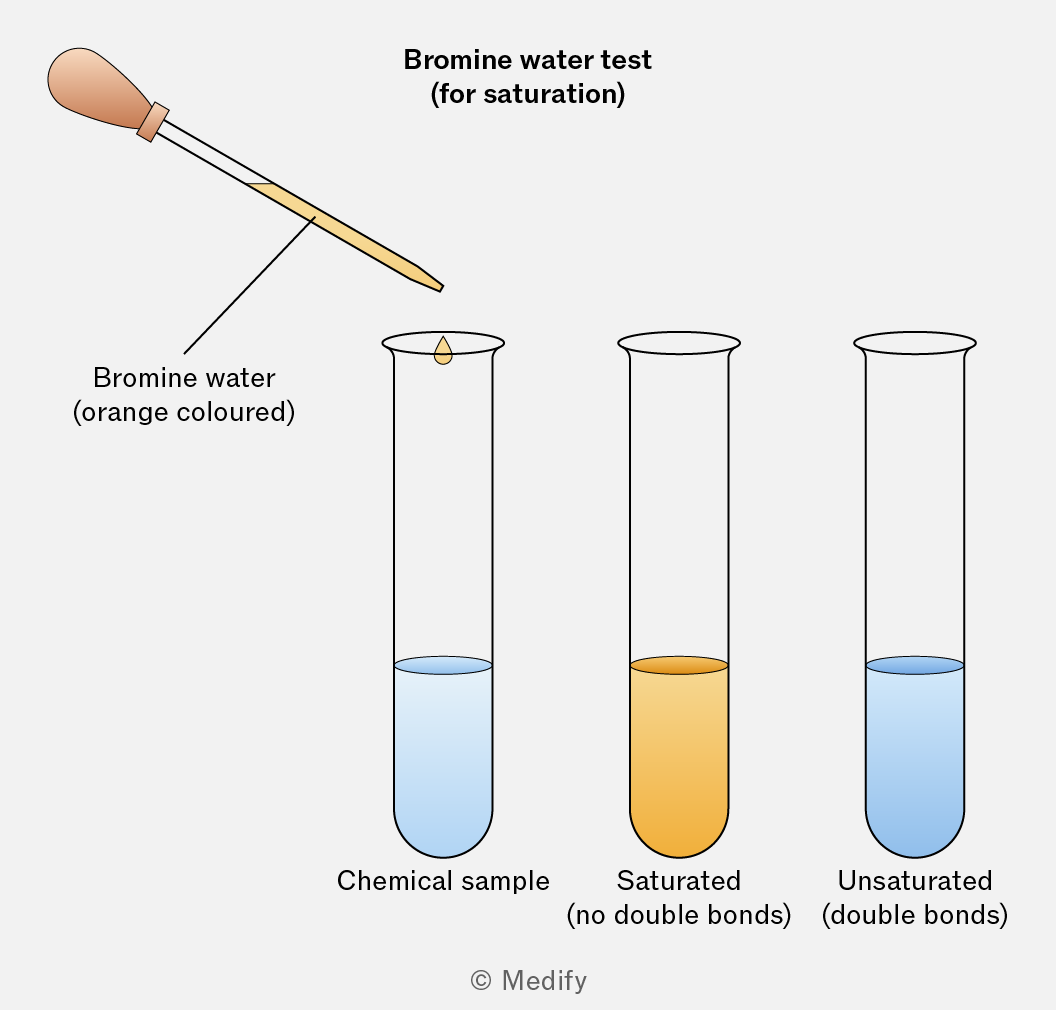
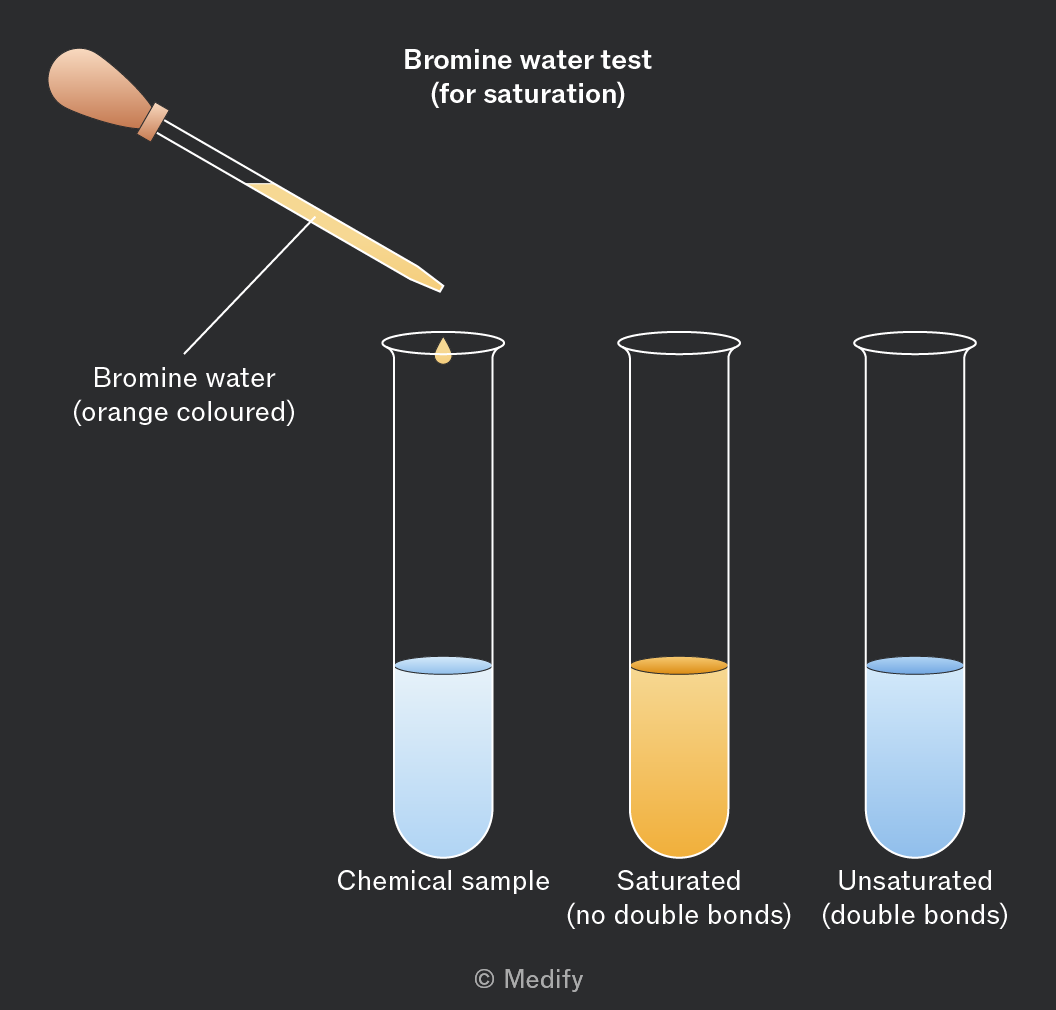
To complete the test, bromine water is shaken with a test sample, and the results are observed.
The conversion of a haloalkane to an alcohol via nucleophilic substitution is called hydrolysis. Halide ions are produced during the reaction.
Ethanolic can be used to identify the type of halogen present, and to study how fast the reaction progresses.
The addition of is a qualitative test in chemistry, as forms different coloured precipitates with halide anions.
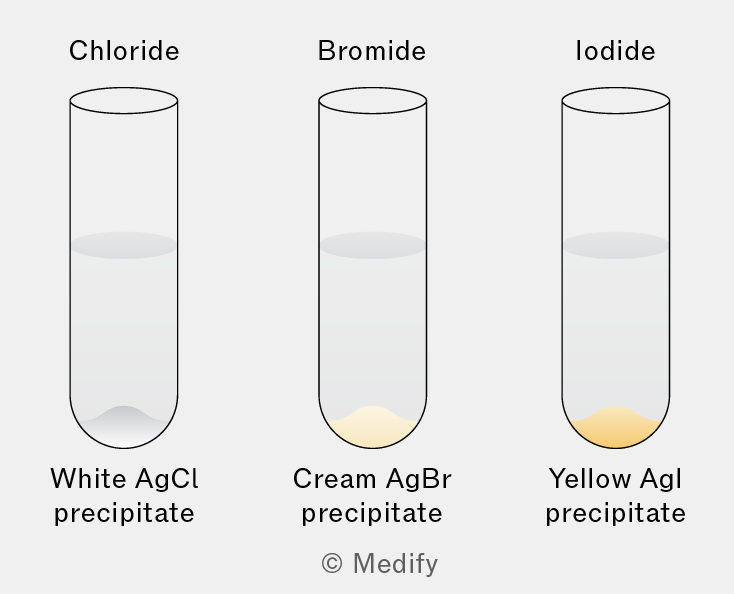
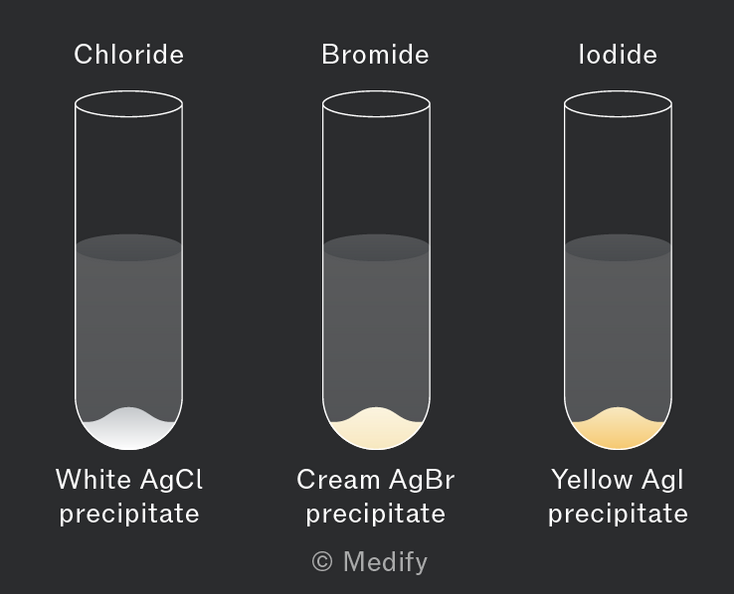
Halide ions are formed as the reaction progresses. The reaction rate is taken as the time taken for a silver halide precipitate to become visible.
Phenols are aromatic alcohols.
The alcohol group in phenol is weakly acidic. Phenol will partially dissociate in water into and leaving a weakly acidic solution with a of about
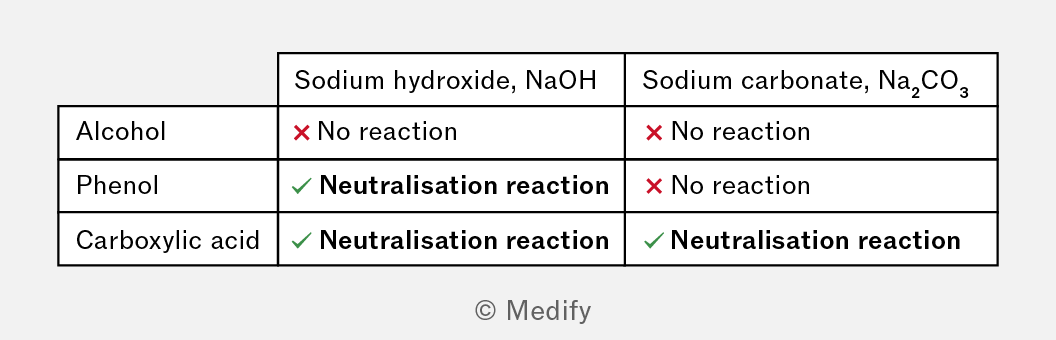
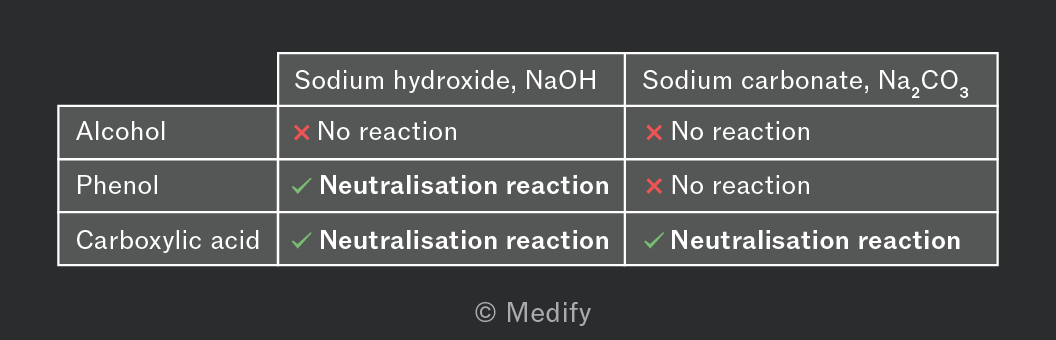
Phenols will undergo neutralisation reactions with sodium hydroxide but will not react with carbonates. This allows them to be chemically distinguished from carboxylic acids and non-aromatic alcohols.
Aldehydes and ketones will react with a solution of 2,4-dinitrophenylhydrazine () in methanol and concentrated sulfuric acid, to give a yellow or orange precipitate.
Alcohols and carboxylic acids DO NOT give a positive result with 2,4-DNPH making the reagent useful in distinguishing compounds containing carbon, hydrogen, and oxygen.
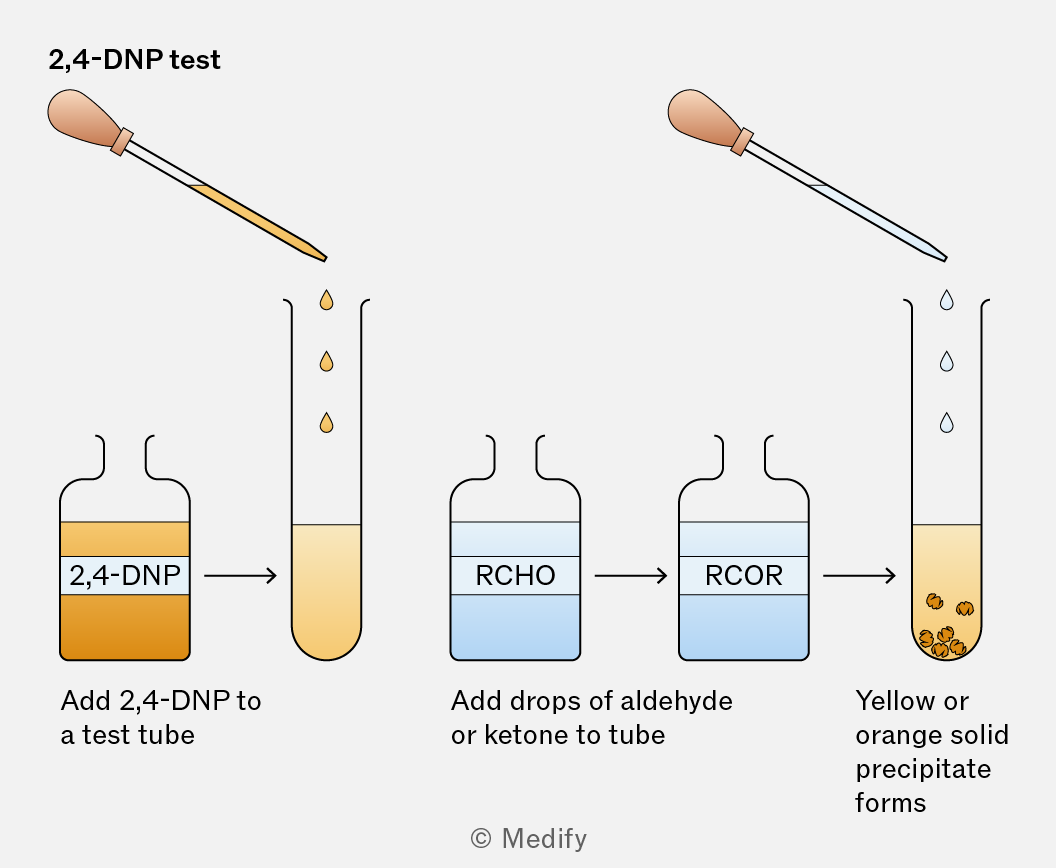
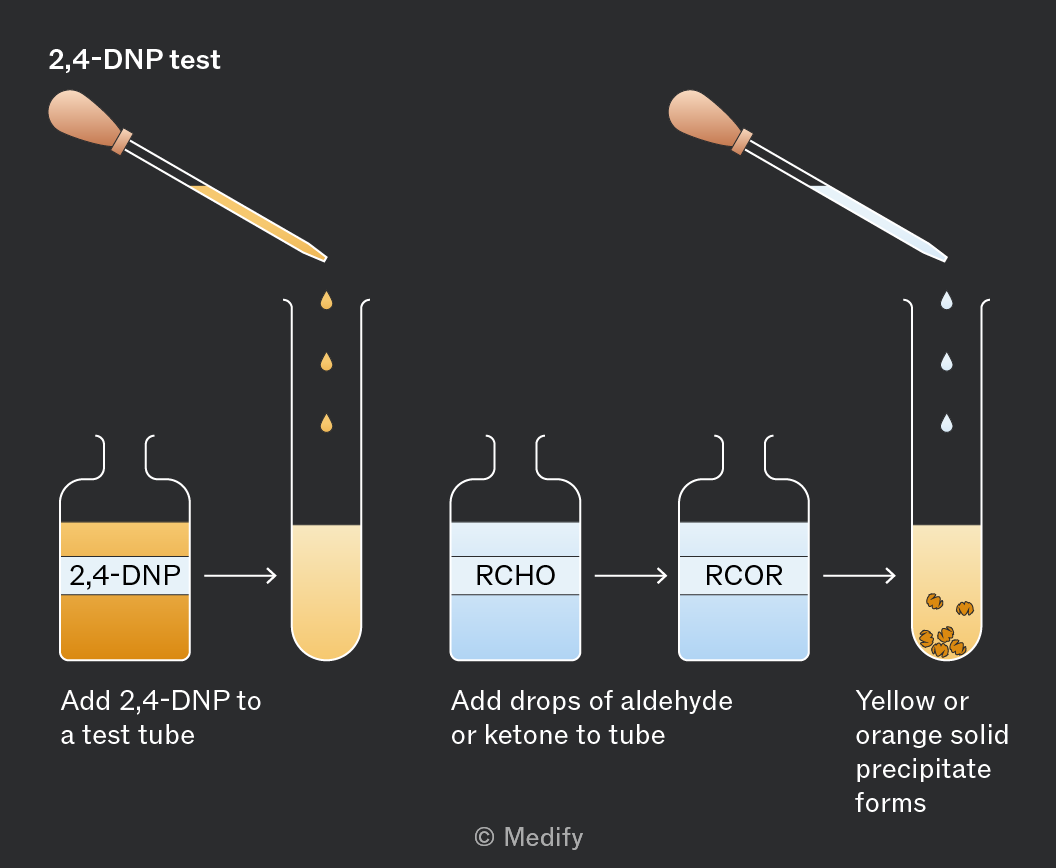
Following the identification of an aldehyde or ketone, the 2,4-DNPH test can also be used to identify a specific aldehyde or ketone.
The solid product is purified and its melting point is determined.
The melting point will be a sharp specific value which is unique to each carbonyl compound. This enables positive identification of the carbonyl compound by comparing the melting point of the derivative to a database of values.
The Tollen’s reagent test can be used to distinguish aldehydes from ketones.
The reagent is prepared on the day of use, as it is unstable. It consists of a colourless solution of ammoniacal silver nitrate, which is made from an alkaline silver nitrate reacted with concentrated ammonia solution.
The observation for aldehydes is the formation of a ‘silver mirror’. Ketones DO NOT give a silver mirror – the solution remains colourless.
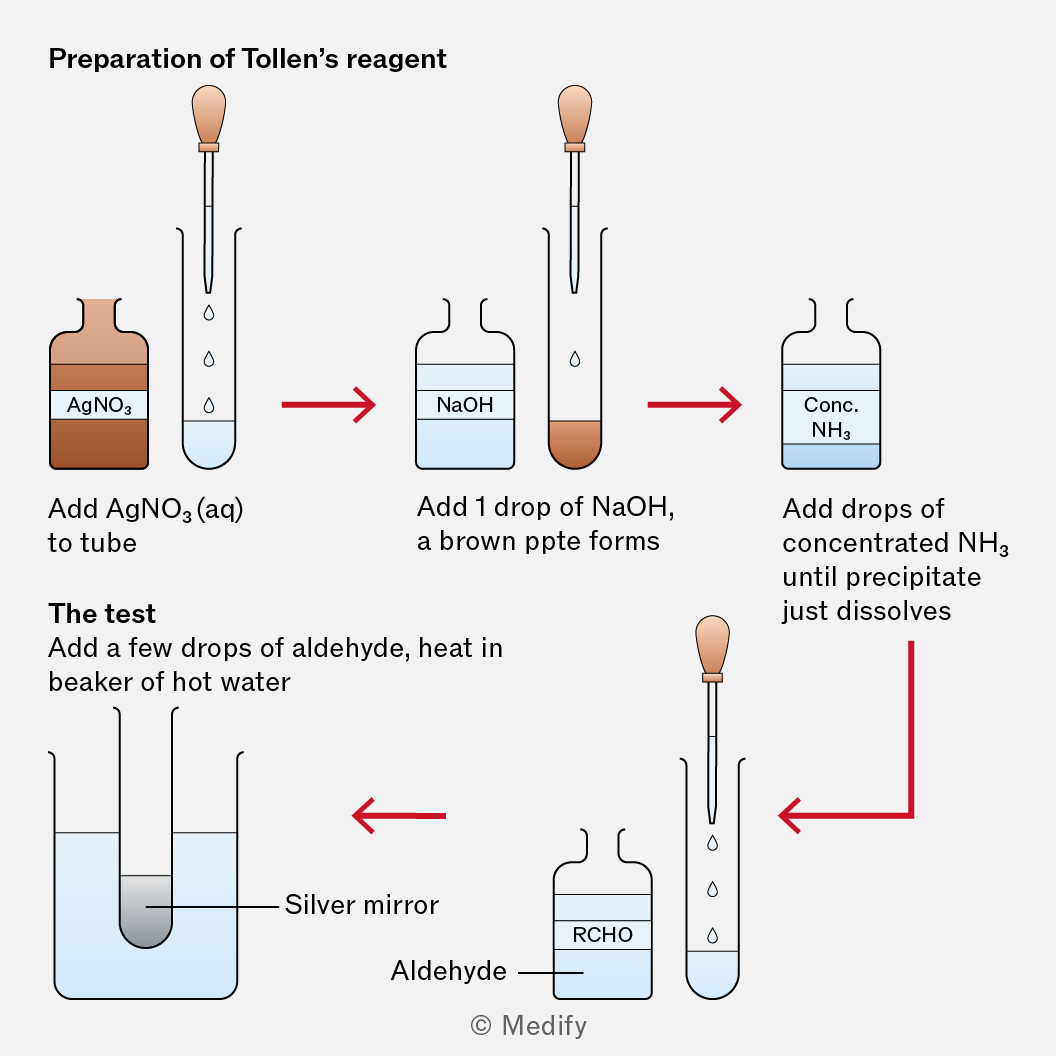
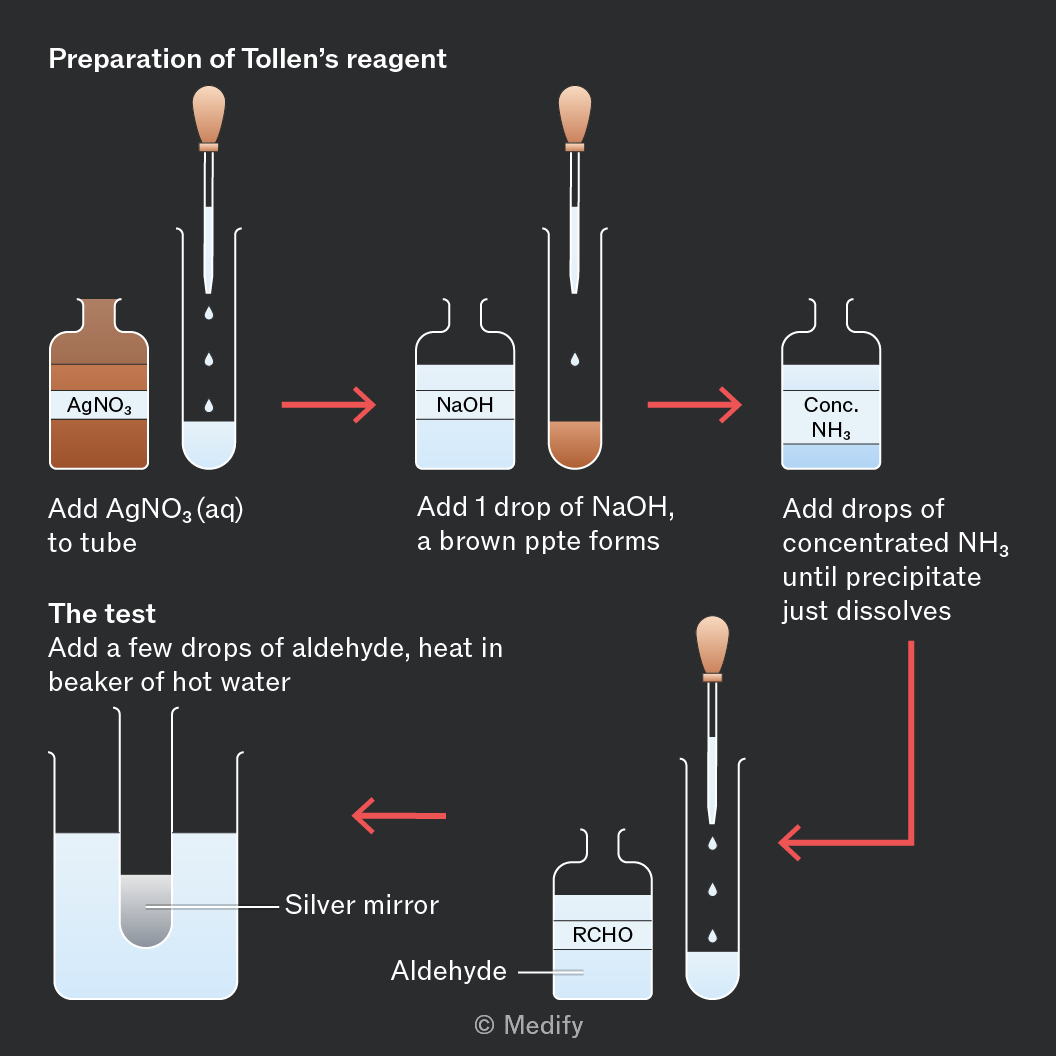
The silver mirror is formed as a redox reaction occurs with the silver ions reduced to silver metal, as the aldehyde is oxidised to a carboxylic acid salt.
Ketones cannot be further oxidised so do not support the reduction of Tollen’s reagent.
Alcohols can be oxidised to carbonyl compounds during redox reactions with oxidising agents.
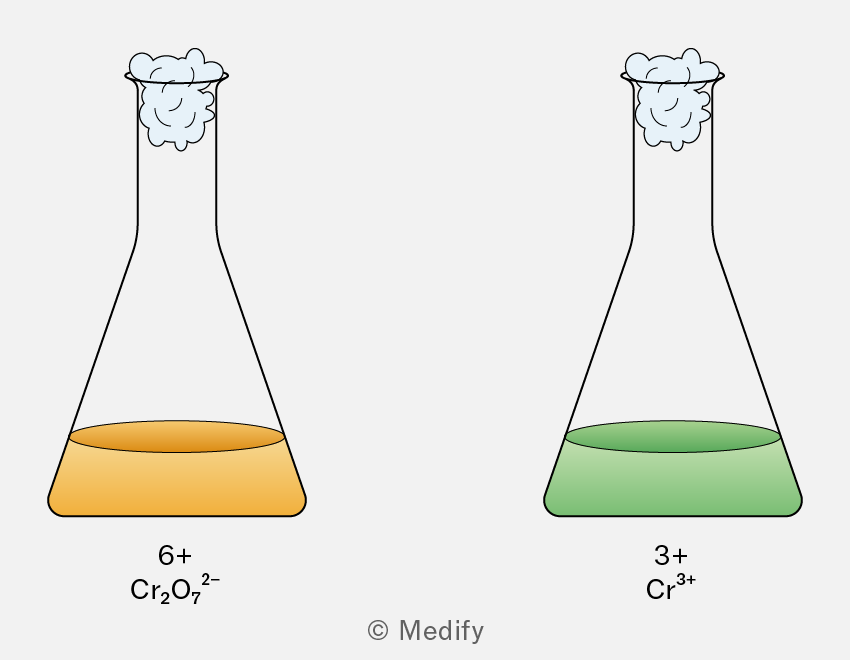
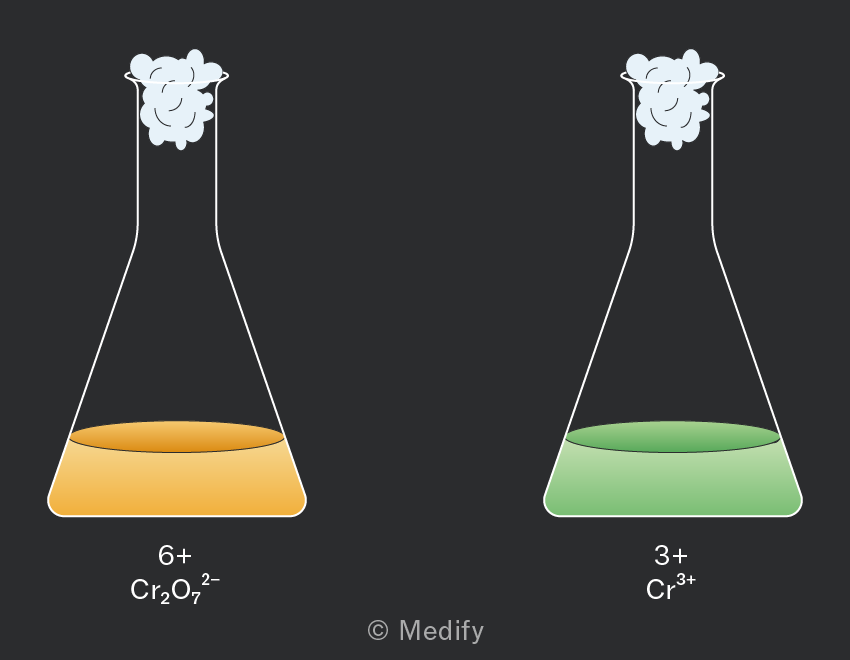
Acidified potassium dichromate VI () is commonly used in the oxidation of alcohols.
Dichromate ions, , turn from orange to green as they are reduced to . The oxidation state of chromium reduces from +6 to +3.
Alcohols can be oxidised to carbonyl compounds during redox reactions with oxidising agents.
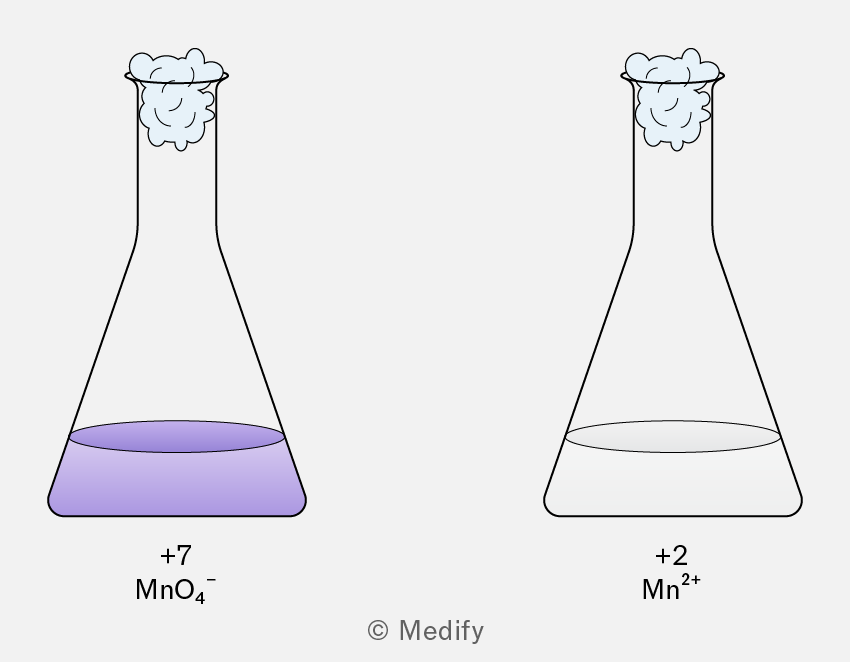
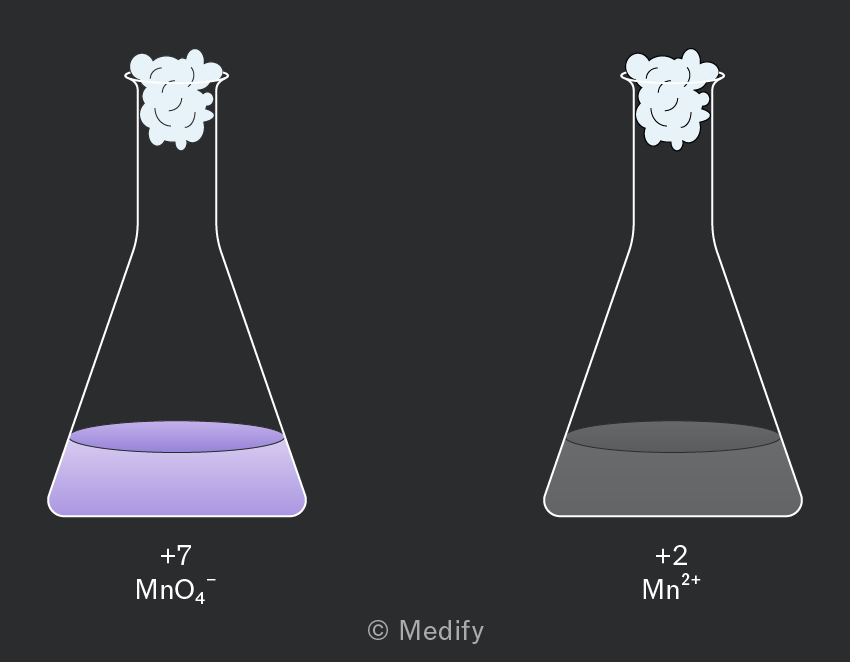
Acidified potassium permanganate, (), is a commonly used oxidising agent.
Permanganate ions, -, turn from deep purple to colourless as they are reduced to .
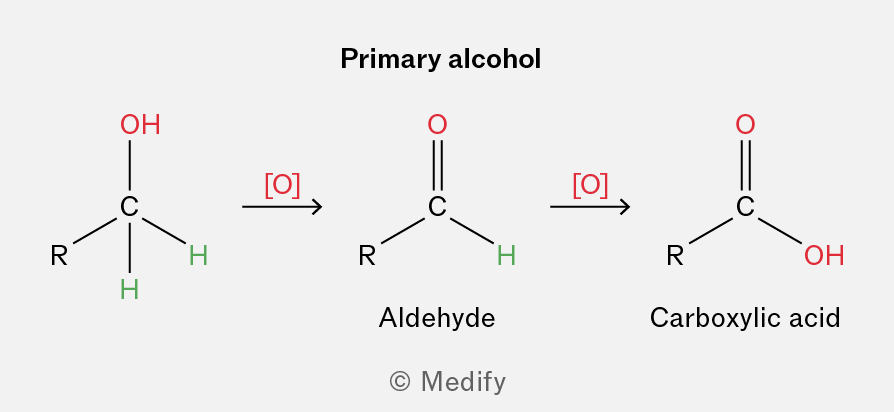
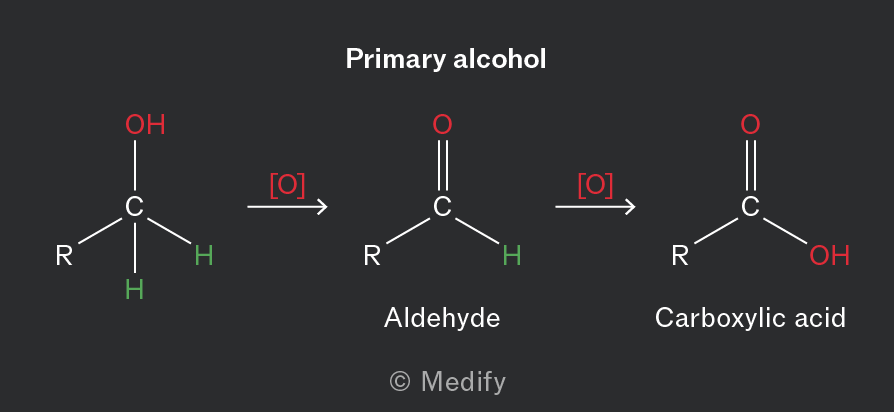
When oxidised, primary alcohols form aldehydes first before further oxidation to carboxylic acids.
Secondary alcohols are oxidised to form ketones.
![Diagram illustrating the conversion of a secondary alcohol to a ketone. The structure on the left shows a secondary alcohol with an -OH group, while the structure on the right depicts the resulting ketone after oxidation, indicated by the [O] arrow.](https://d3nzlfkeryzt6j.cloudfront.net/ureuxa53bsjadc6n1c519otlc9fe)
![Diagram illustrating the conversion of a secondary alcohol to a ketone. The structure on the left shows a secondary alcohol with an -OH group, while the structure on the right depicts the resulting ketone after oxidation, indicated by the [O] arrow.](https://d3nzlfkeryzt6j.cloudfront.net/fpo21ky6ygtl50p97moiqrehjt9o)
Tertiary alcohols CANNOT be oxidised as they do not have a proton on the carbon bearing the group.
![Diagram illustrating a tertiary alcohol with the hydroxyl group (OH) attached to a carbon atom (C) that is connected to three other groups (R, R', R'). The diagram indicates that when oxidized ([O]), there is no reaction.](https://d3nzlfkeryzt6j.cloudfront.net/rpqes1ws54law0c5iyunm87ppk7q)
![Diagram illustrating a tertiary alcohol with the hydroxyl group (OH) attached to a carbon atom (C) that is connected to three other groups (R, R', R'). The diagram indicates that when oxidized ([O]), there is no reaction.](https://d3nzlfkeryzt6j.cloudfront.net/a06c71fkwvywxb5zxj5kzbiuzqoe)