
Carboxylic acids and esters (6.1.3)
On this page
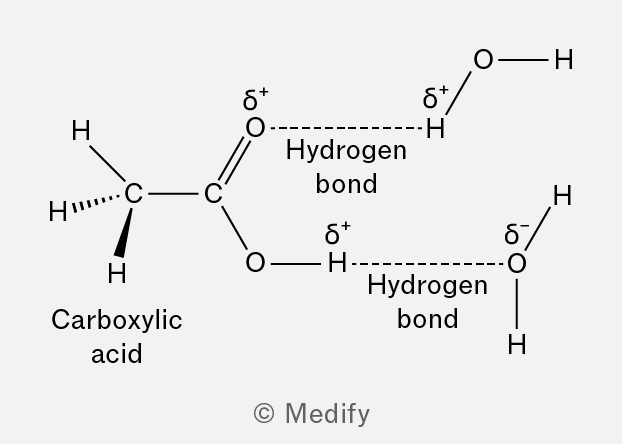
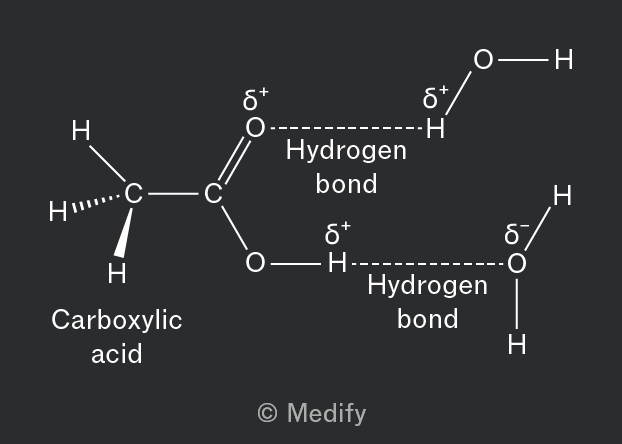
The shorter carboxylic acids, up to and including butanoic acid, are completely soluble in water due to the formation of hydrogen bonds between the carboxylic acid group and water molecules.
As the hydrocarbon chain increases and exerts a more nonpolar influence, the carboxylic acids become less soluble.
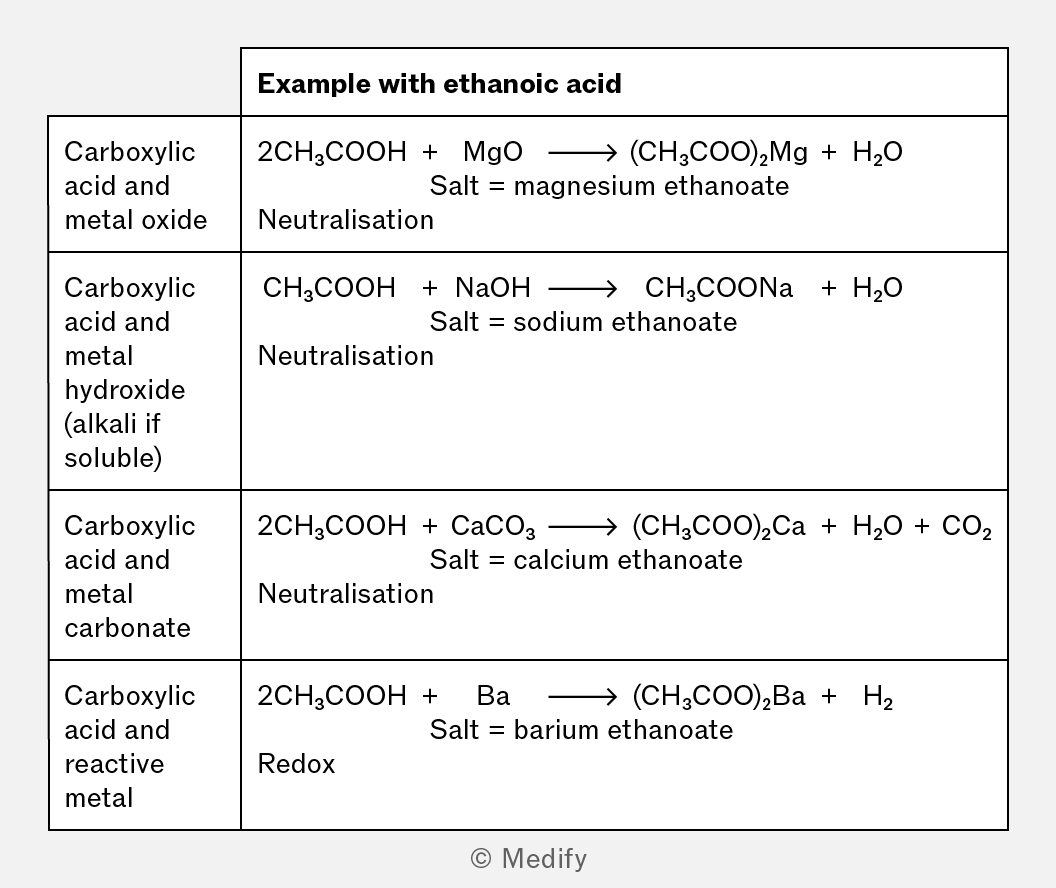
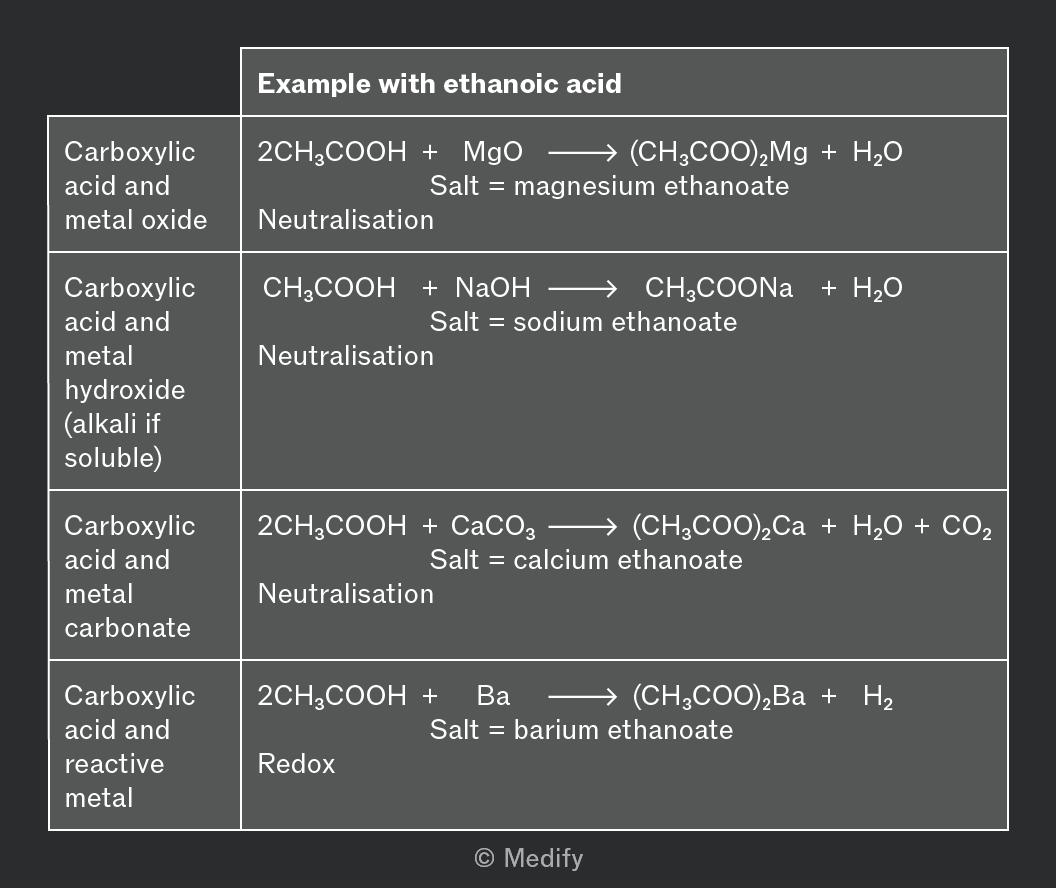
Carboxylic acids are weak acids and are able to donate protons to bases, such as metal oxides and hydroxides to form carboxylate salts and water in neutralisation reactions. These are analogous to the reactions of strong mineral acids.
The reaction of carboxylic acids with carbonates or hydrogen carbonates, with the observed effervescence of , is a test for the carboxylic acid functional group.
They can also react with metals such as and forming carboxylate salts and hydrogen gas. These are not neutralisations as water is not formed, but are redox reactions.
Carboxylic acids react slowly and reversibly with alcohols in the presence of a strong acid catalyst to form esters.
A water molecule is eliminated. It forms from the group of the carboxylic acid and the of the alcohol’s group.
This is a condensation reaction.
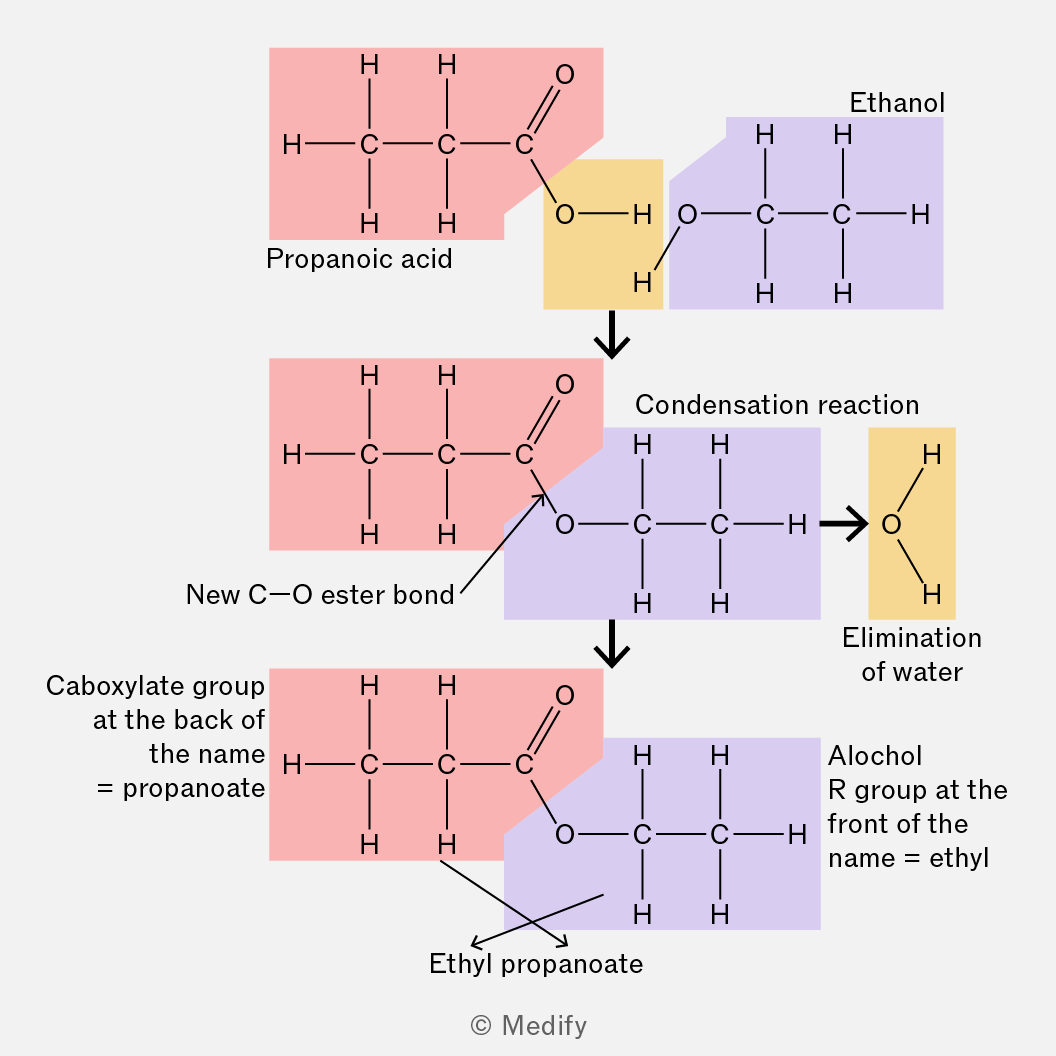
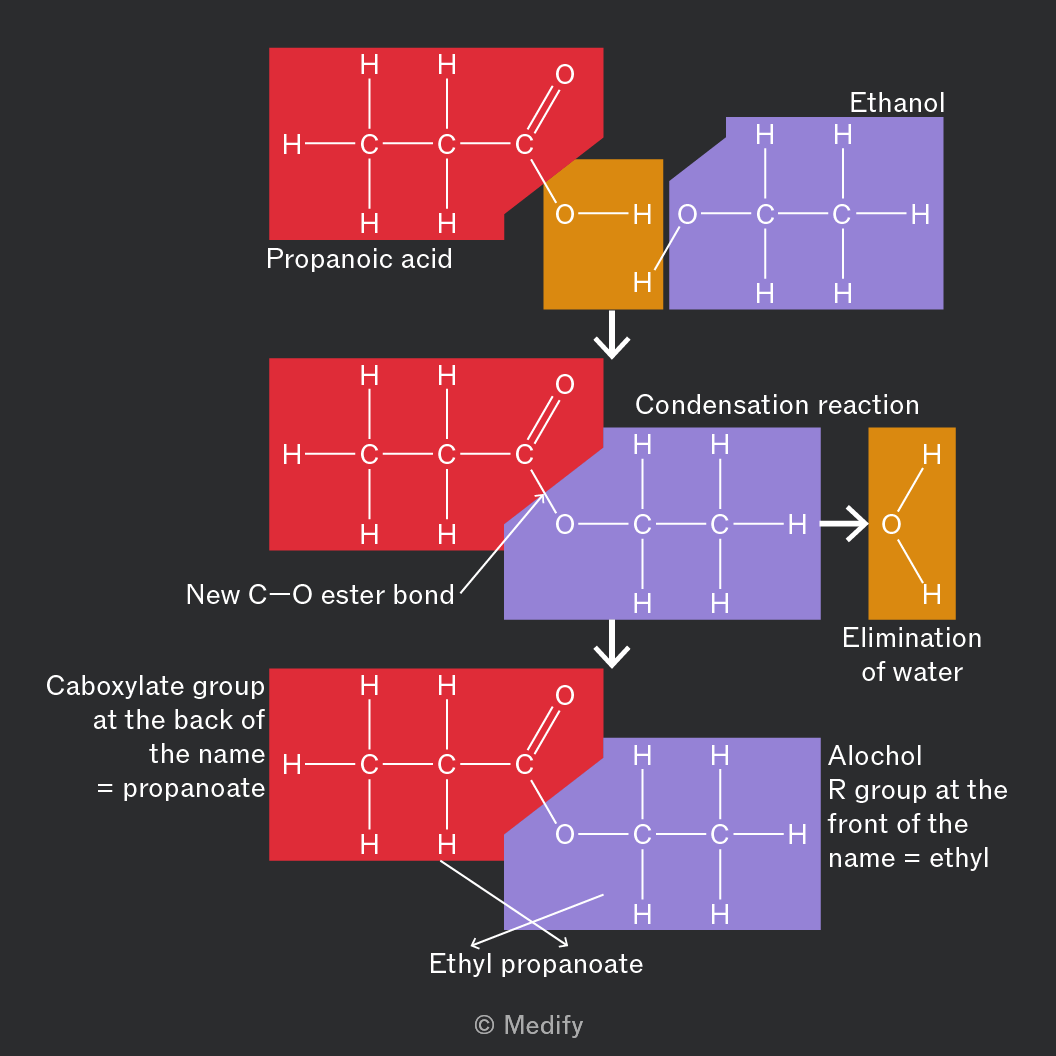
When naming the ester product, the prefix comes from the alcohol, and the suffix comes from the carboxylic acid.
An acid anhydride reacts with an alcohol to form an ester and a molecule of free carboxylic acid in a nucleophilic addition–elimination reaction.
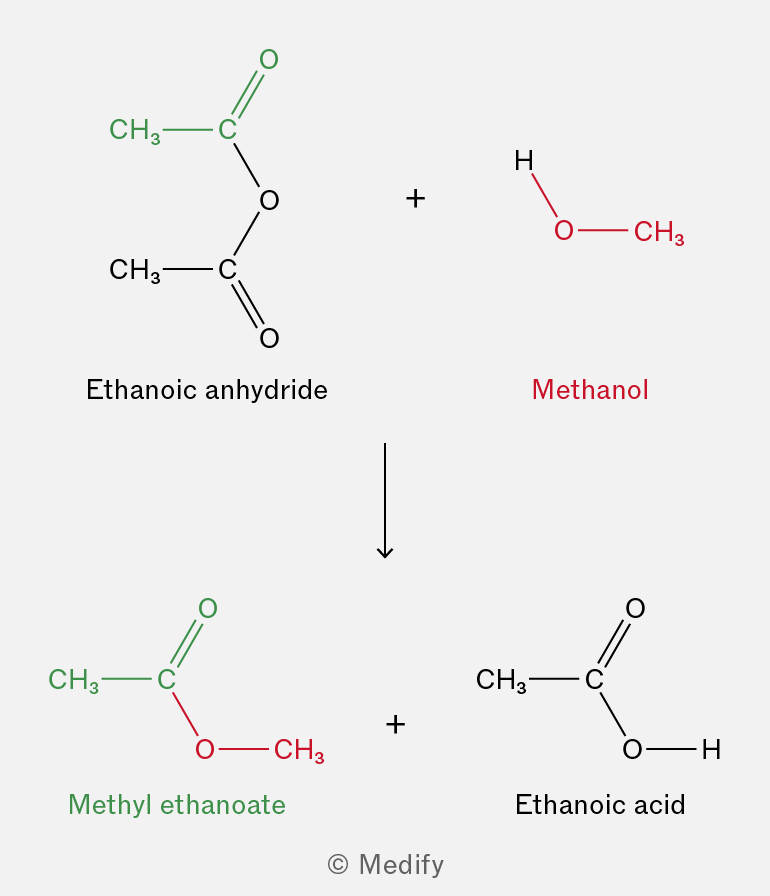
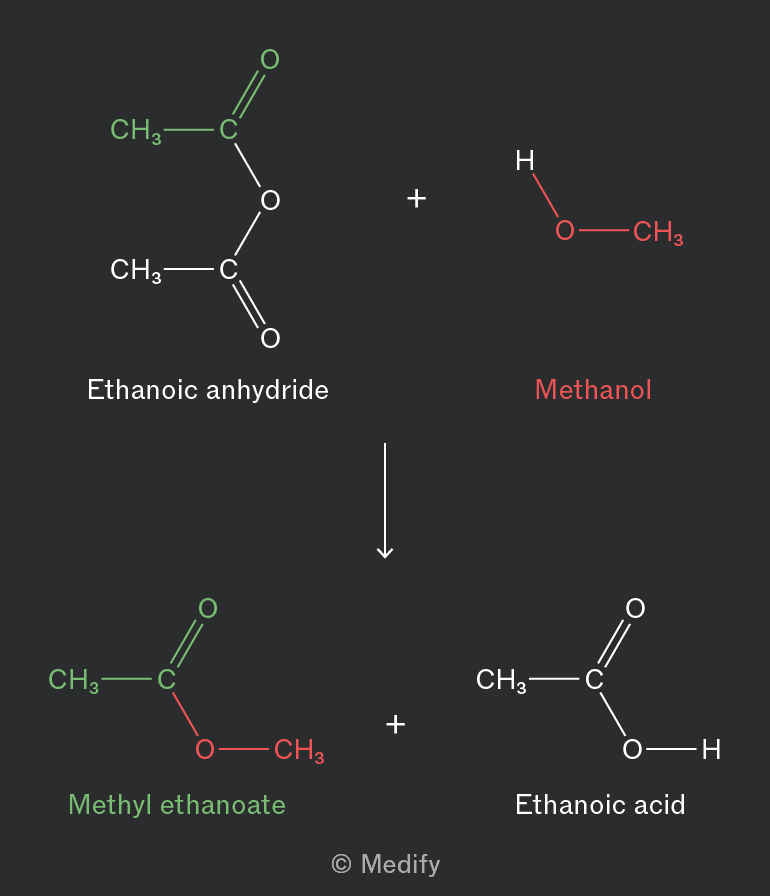
Acid anhydrides are more reactive than carboxylic acids so esterification takes place at room temperature in a non-reversible reaction. Heat is usually applied to increase the rate.
The carboxylic acid side product can be reused, or made into the anhydride again. This increases the reaction’s sustainability.
Esters hydrolyse in aqueous solution to reform alcohols and carboxylic acids.
The hydrolysis reaction is very slow in neutral conditions, so we use acidic or alkaline conditions to accelerate the hydrolysis.
In hot aqueous acid, ester hydrolysis forms a carboxylic acid and an alcohol.
This is the reverse of the ester formation reaction. This means the products of acid hydrolysis can, in turn, regenerate the ester.
The acid-catalysed hydrolysis of methyl butanoate is shown below:
In hot aqueous alkali, hydrolysis of esters yields a carboxylate salt, and an alcohol.
Alkaline hydrolysis is not reversible, as the products do not react together to reform the ester. The carboxylate salt does not contain an leaving group and so cannot be attacked by the alcohol.
The alkaline-catalysed hydrolysis of methyl butanoate is shown below:
Alkaline hydrolysis is also called saponification; it is a reaction used in soap manufacture.
Carboxylic acids react with sulfur dichloride oxide () to form acyl chlorides.
The reaction also produces two other gaseous products, and , which makes the separation of the liquid acyl chloride product easy.
Acyl chlorides are much more reactive than carboxylic acids and so the conversion is important in chemical synthesis. Less energy is required to heat the reaction mixture than with the carboxylic acid equivalent.
Esterification with acyl chlorides is not a reversible reaction.
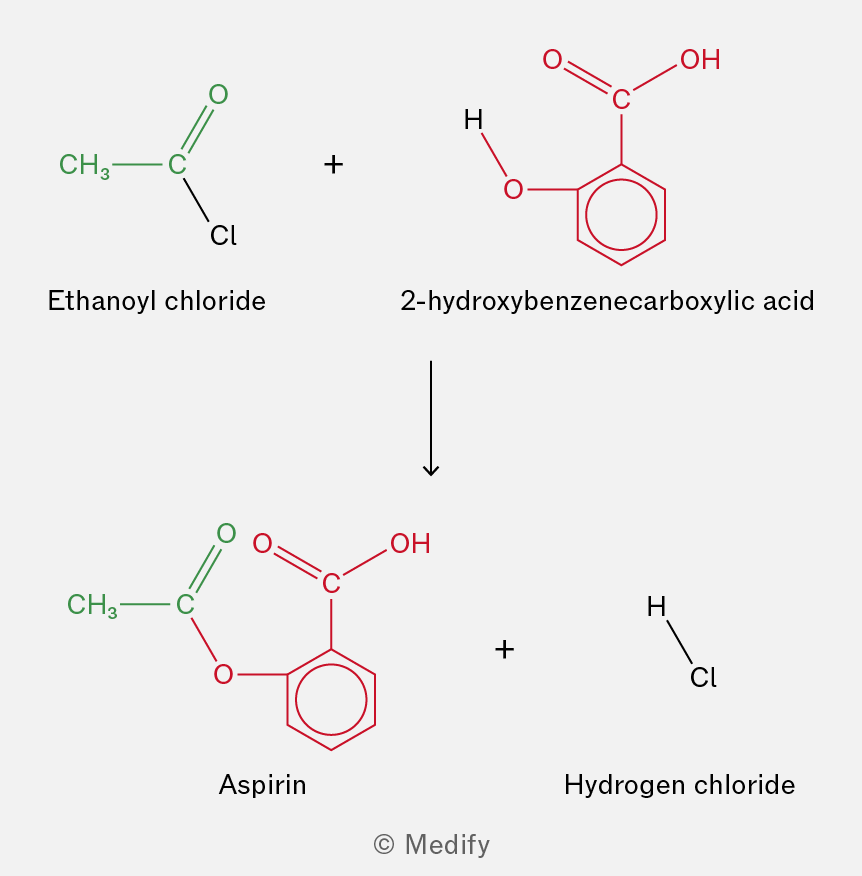
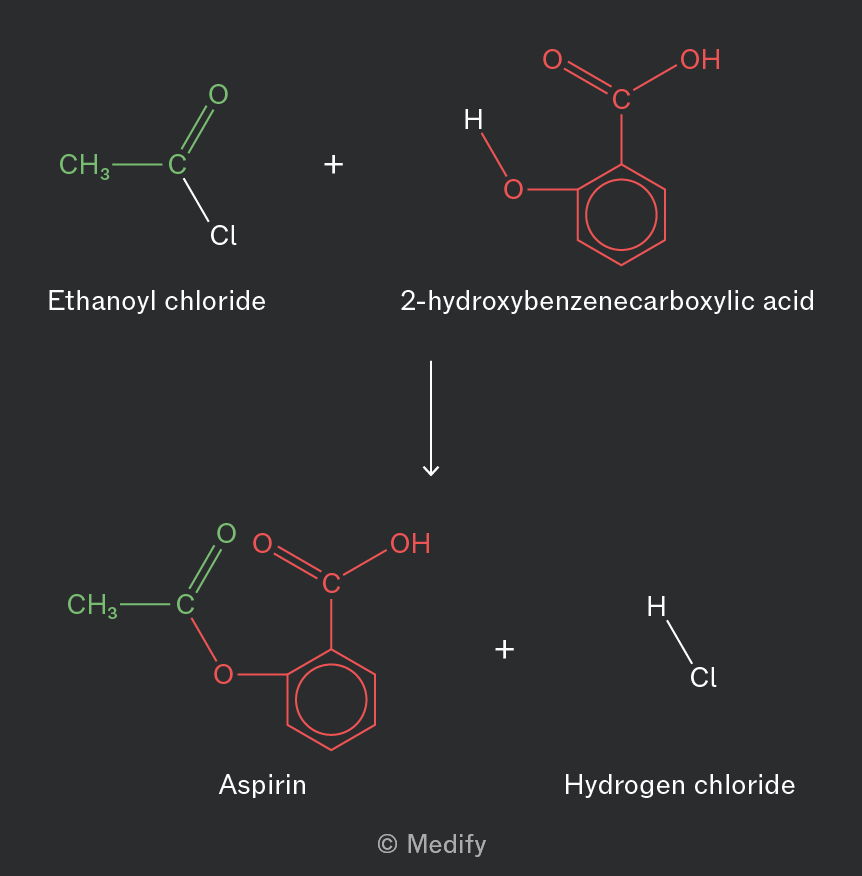
Acyl chlorides are significantly more reactive than carboxylic acids and are able to produce esters with phenols. The carboxylic acid reaction with phenol is very slow and is not used.
The esterification of 2-hydroxybenzenecarboxylic acid (salicylic acid) to form aspirin is a key example of the esterification of an acyl chloride and a phenol.
Acyl chlorides react readily with water to form a carboxylic acid and gaseous hydrogen chloride as steamy fumes.
Ethanoyl chloride reacts with water to form ethanoic acid and hydrochloric acid.
The products are formed in a nucleophilic addition–elimination reaction.
Acyl chlorides react with alcohols to form esters and water.
Acyl chlorides are much more reactive than carboxylic acids, so esters are readily formed at room temperature in a non-reversible reaction that does not require a catalyst.
This is a nucleophilic addition–elimination reaction.
Acyl chlorides are very reactive towards nucleophiles such as ammonia and the amines.
Ethanoyl chloride reacts with ammonia to form the primary amide, ethanamide, and hydrochloric acid in a nucleophilic addition–elimination reaction.
Acyl chlorides react very vigorously with primary amines, forming a secondary amide and hydrochloric acid.
The products are N-ethyl ethanamide (a secondary amide) and hydrochloric acid.