
Developing exam strategies
On this page
Knowing what to expect from the digital interface before sitting your official exam:
- reduces the cognitive load on Test Day.
- allows you to use bookmarks, hyperlinks, and zoom to your advantage.
- increases your speed when navigating between questions.
For Section II, you will have two essays to write.
Each of these has its own set of prompts and is written on its own screen. You can move forward and backwards between screens as often as you like.
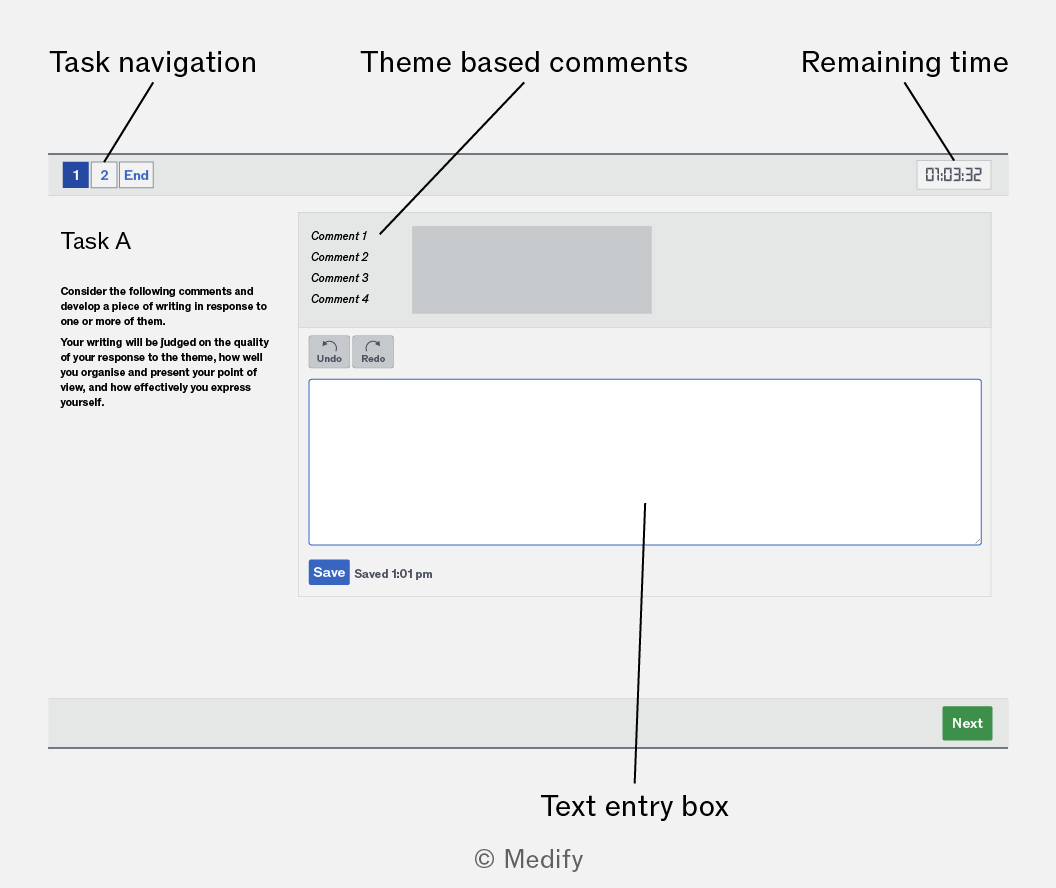
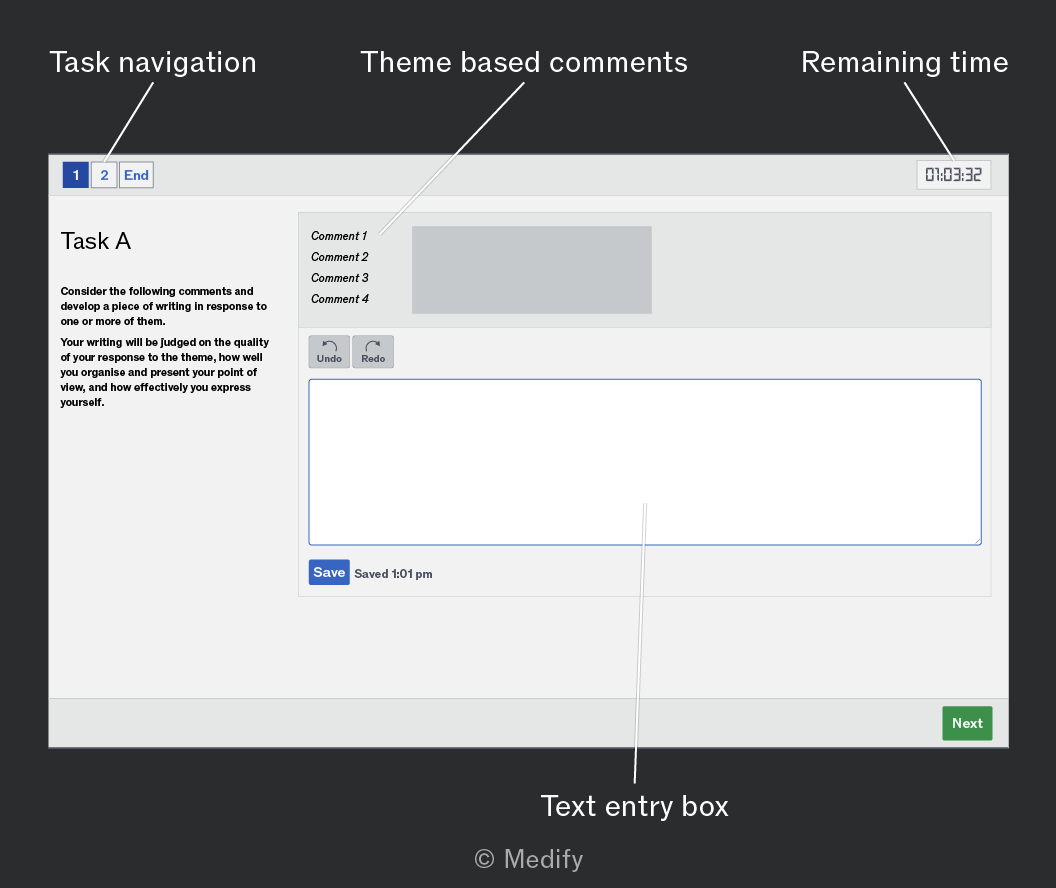
The text entry box is expandable, and a scroll bar will appear when you have filled the space initially available.
The writing in Section II is done in a basic plain-text box.
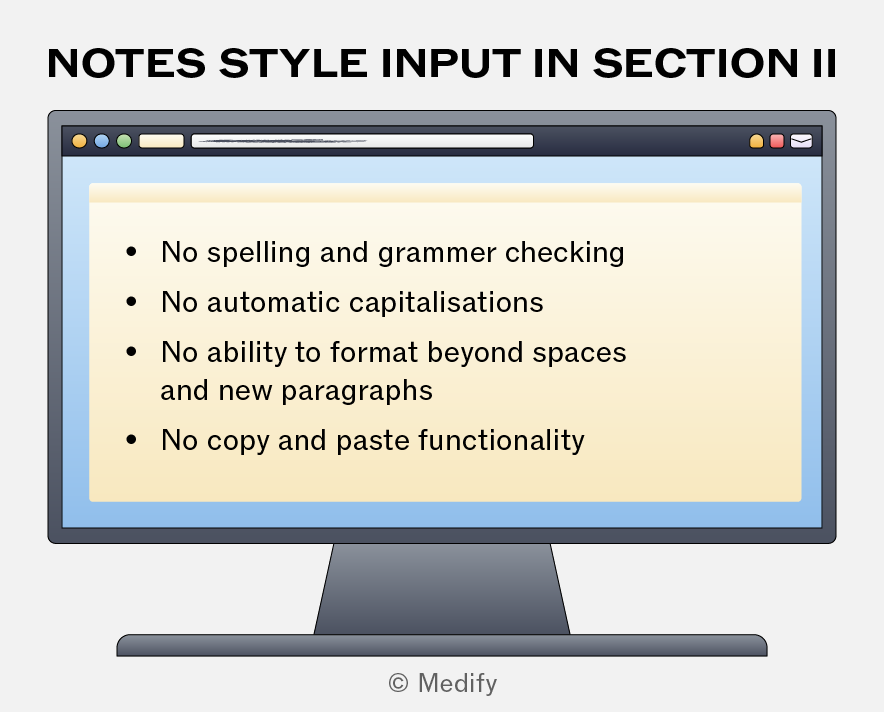
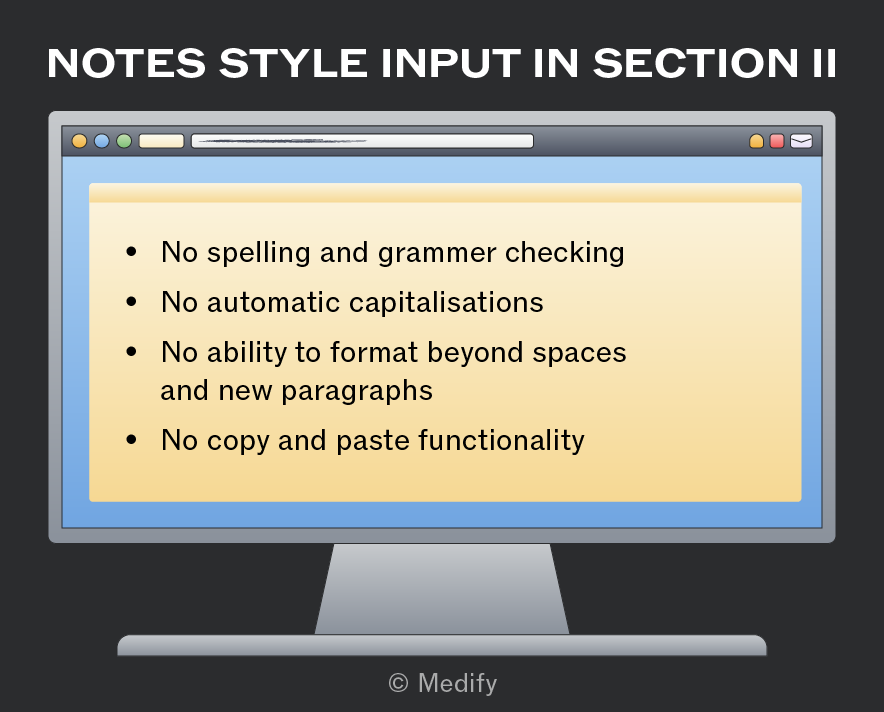
It is wise to write any practice essays in a basic digital notebook rather than a word processing document to develop a greater awareness of what you actually type, rather than the auto-corrected version.
Sections I and III work through the same interface.
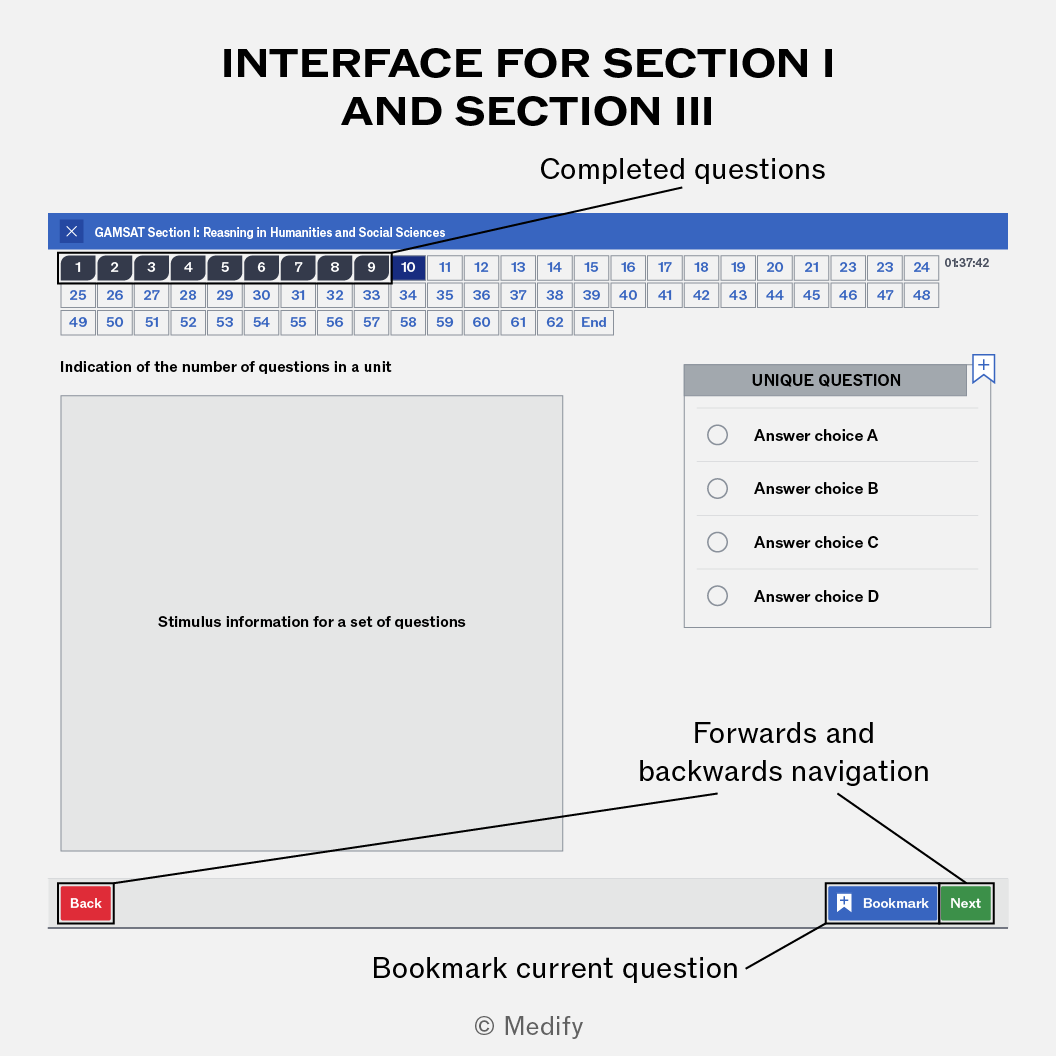
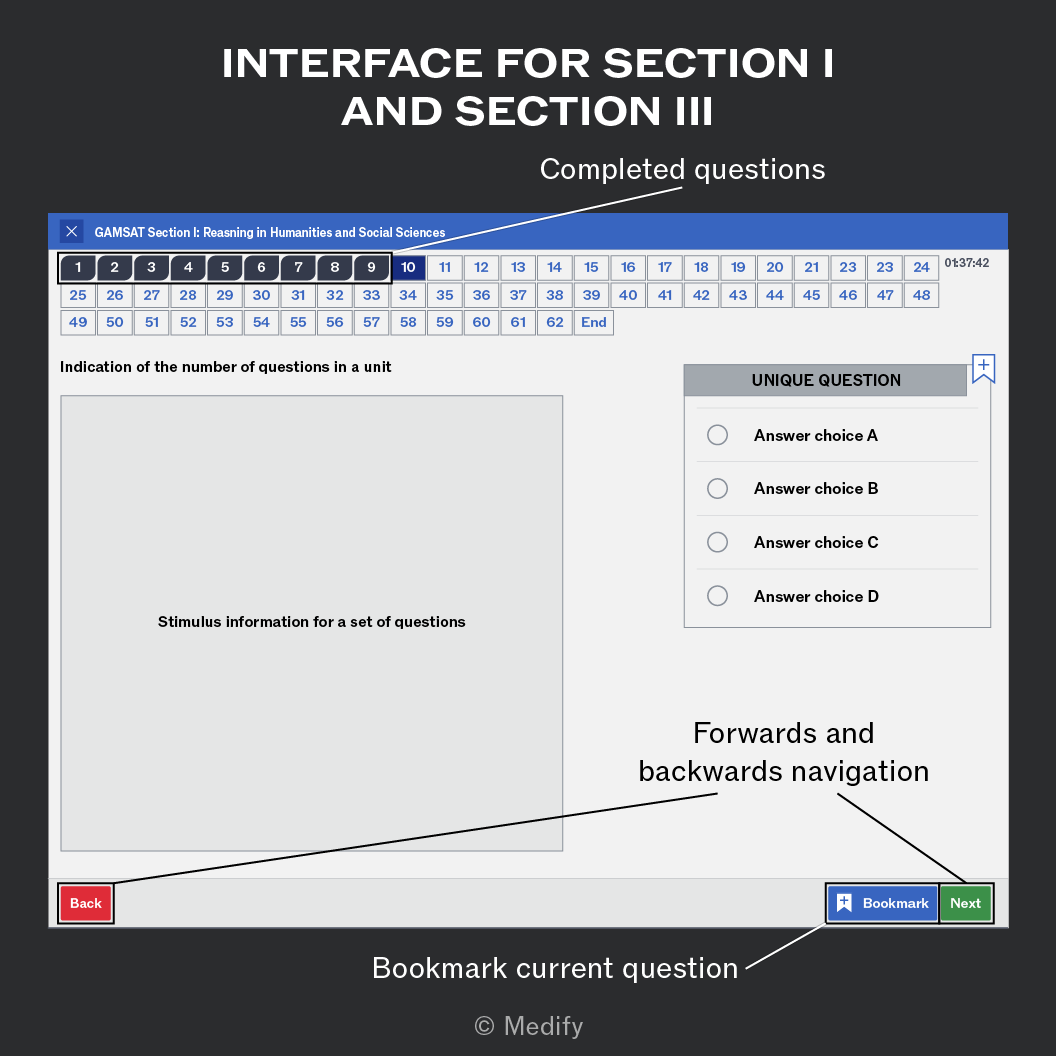
This means that any navigation habits you develop in Section I will carry directly into Section III.
You can navigate between questions by using:
- the Next and Back buttons
- the question number in the navigation bar.
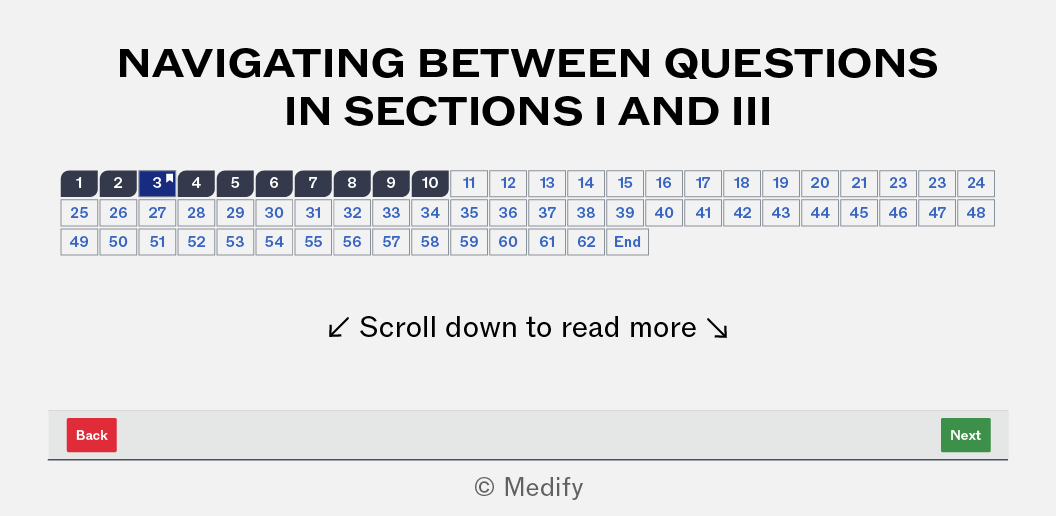
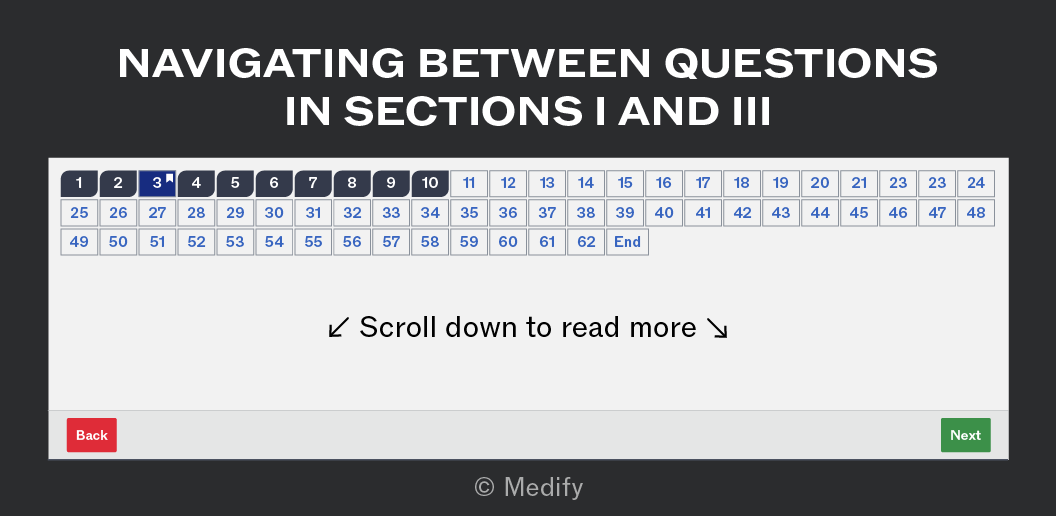
Be aware that the ‘Back’ and ‘Next’ buttons may be off the screen when the stimulus is long.
Forming a habit of using the question number navigation reduces wasted time scrolling down to hit ‘Next’.
The degree of zoom on the interface can be adjusted according to your preference. If you have good vision, you may prefer a zoomed-out version, ensuring the full stimulus is shown at once.
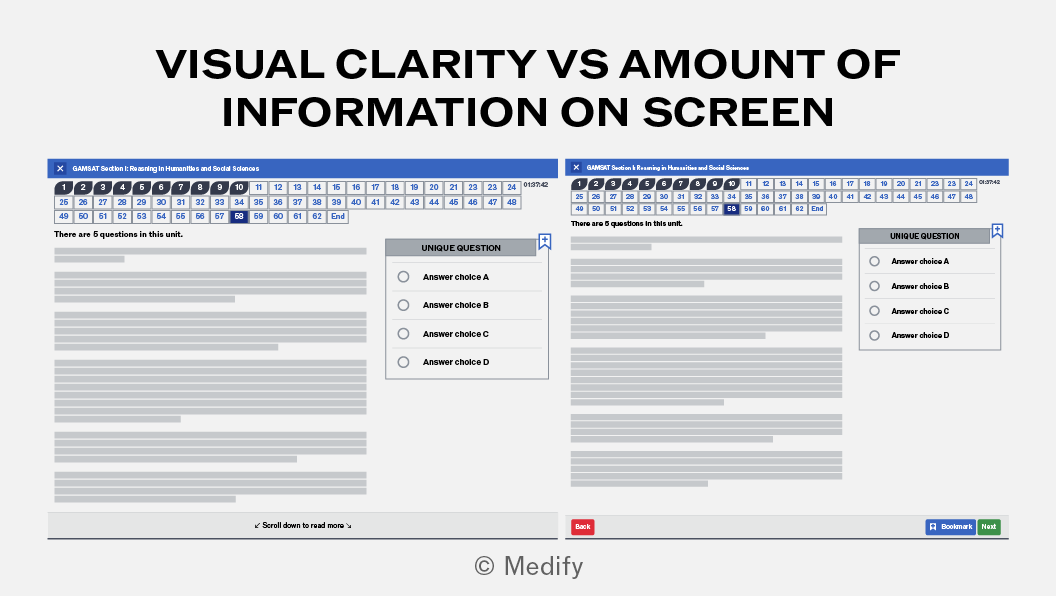
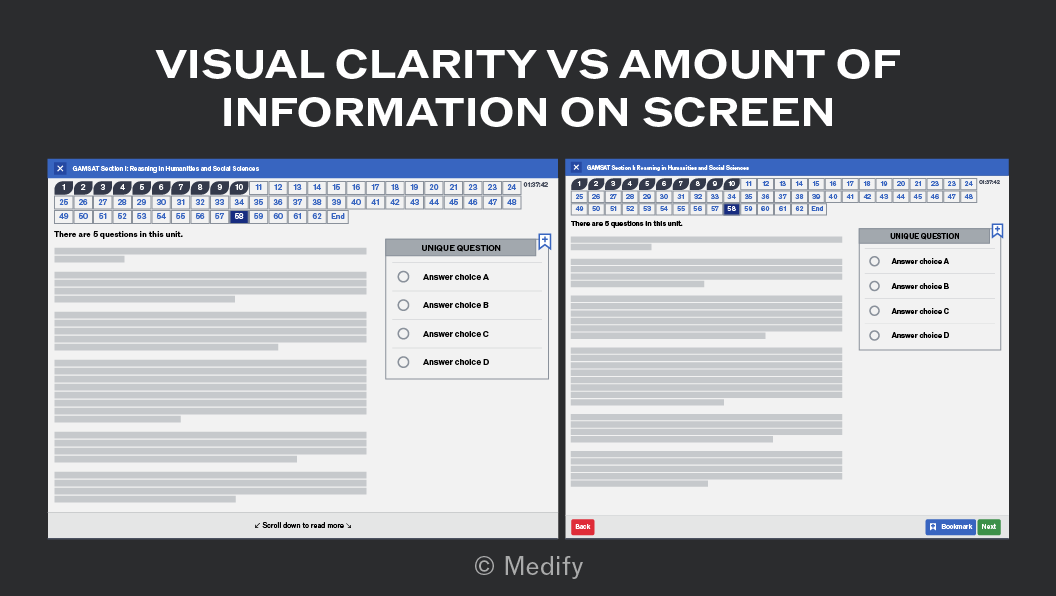
The methods for zooming in and out vary depending on the device. Some common methods which may work are:
- “command” and “-" or "+” on an Apple device
- “Windows logo” and “-" or "+” on a Windows PC
- going through the screen settings bar.
The bookmark function can be used to flag a question you have attempted, but want to return to.
Bookmarks can be removed at any time.
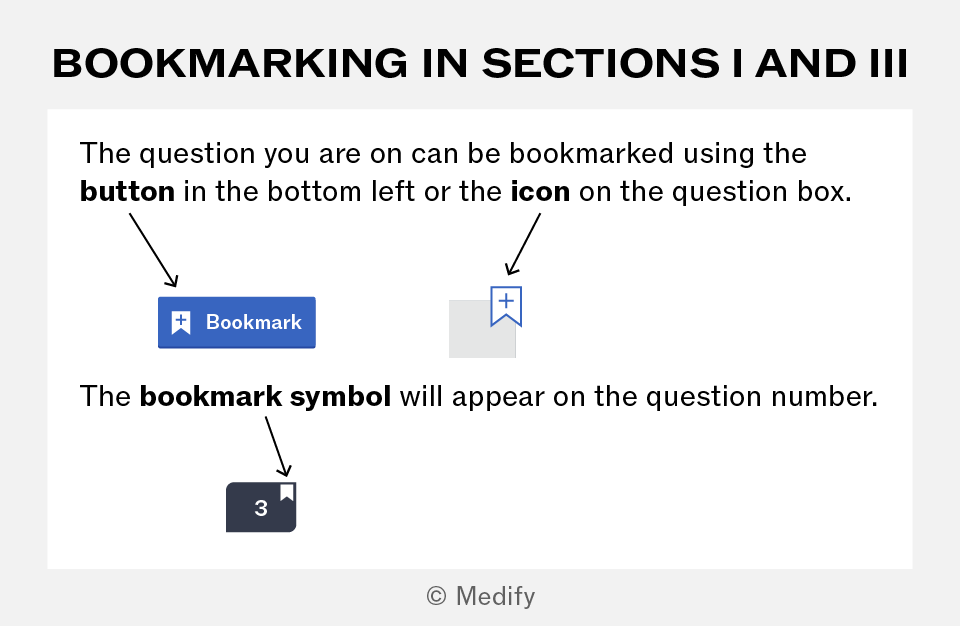
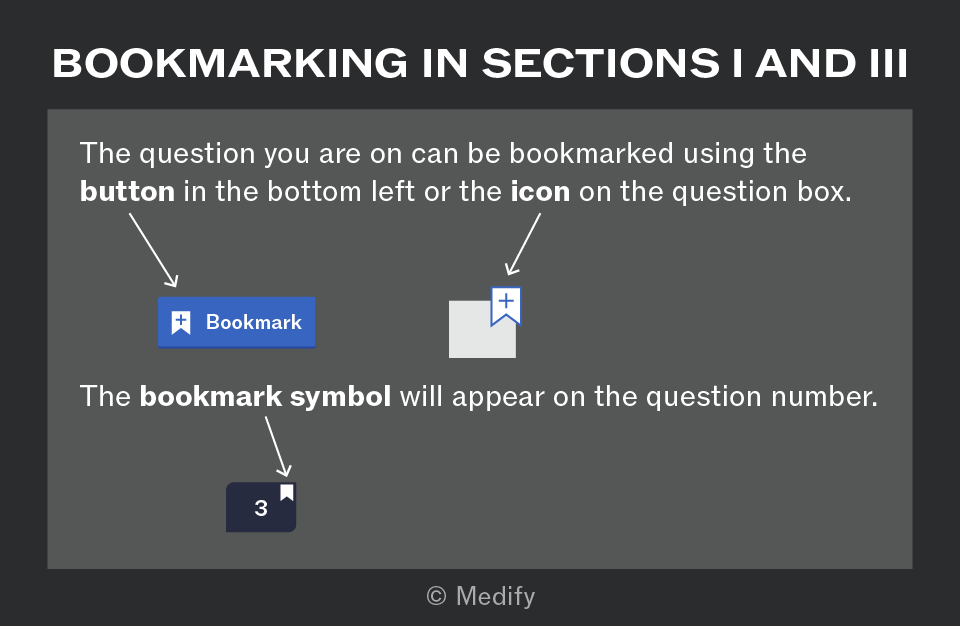
It can also be useful to bookmark the first question in each set, making it easier to do the sets out of order.
An effective strategy for some students is to use the bookmark function in Section III to mark questions pertaining to a specific science or skill, such as Chemistry or Calculation. This allows you to answer your most confident questions first, returning to bookmarked ones later.
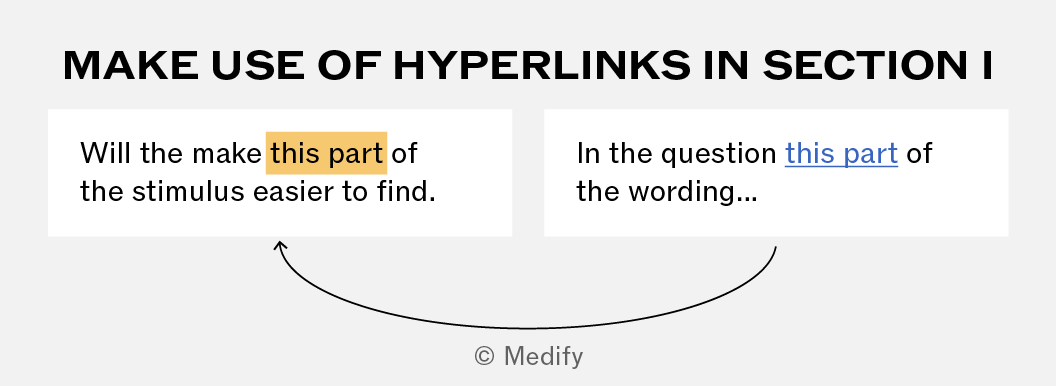
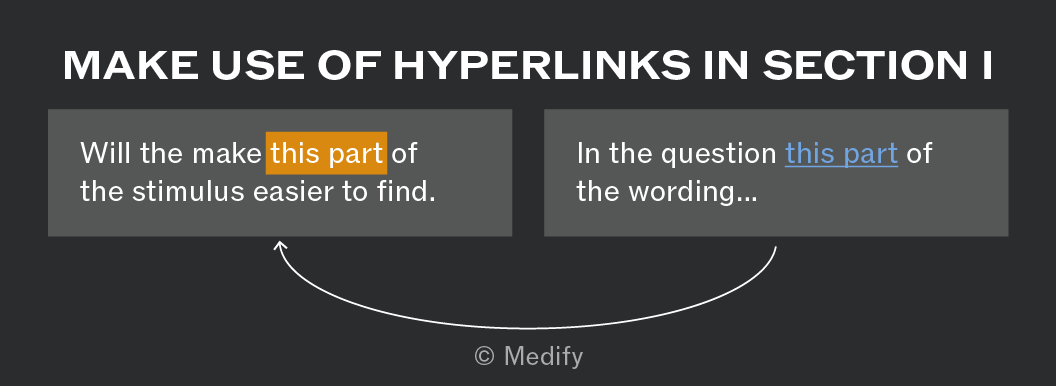
Some Section I questions feature links, shown in blue underlined text, in order to highlight specific sections of the stimulus in yellow. These save time scanning the text.
You can end the session at any time, but it is advised to wait until your time is over to maximise review time.

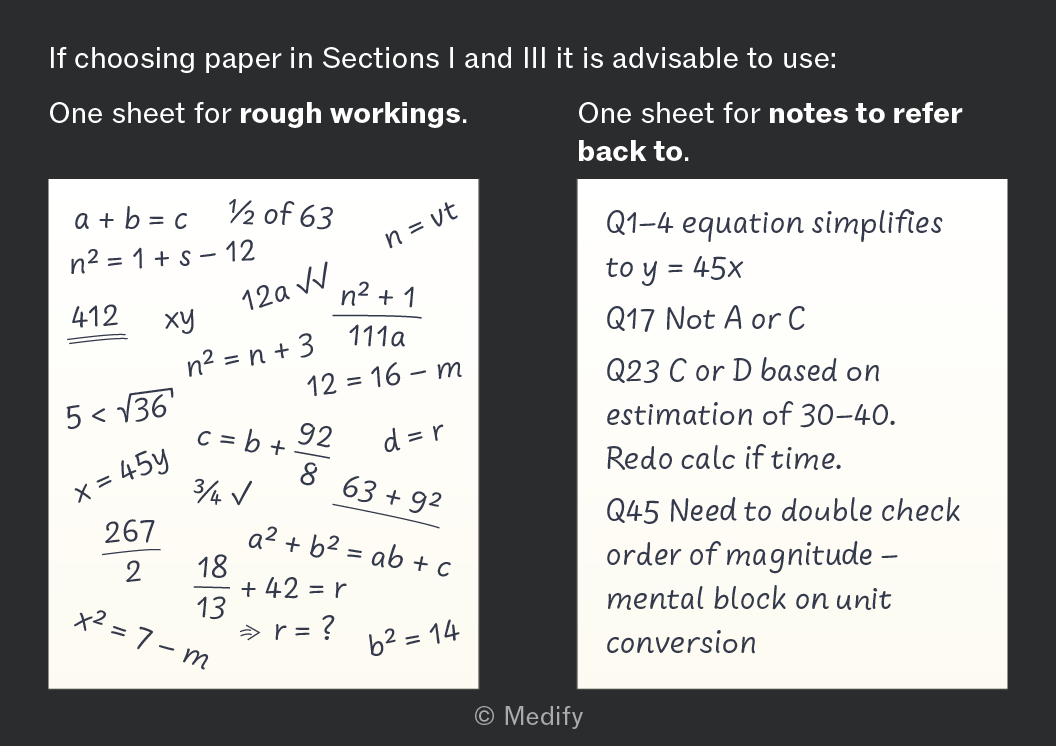
You can take notes during your exam. You will have the choice of two sheets of blank paper and pens or a small whiteboard and markers.
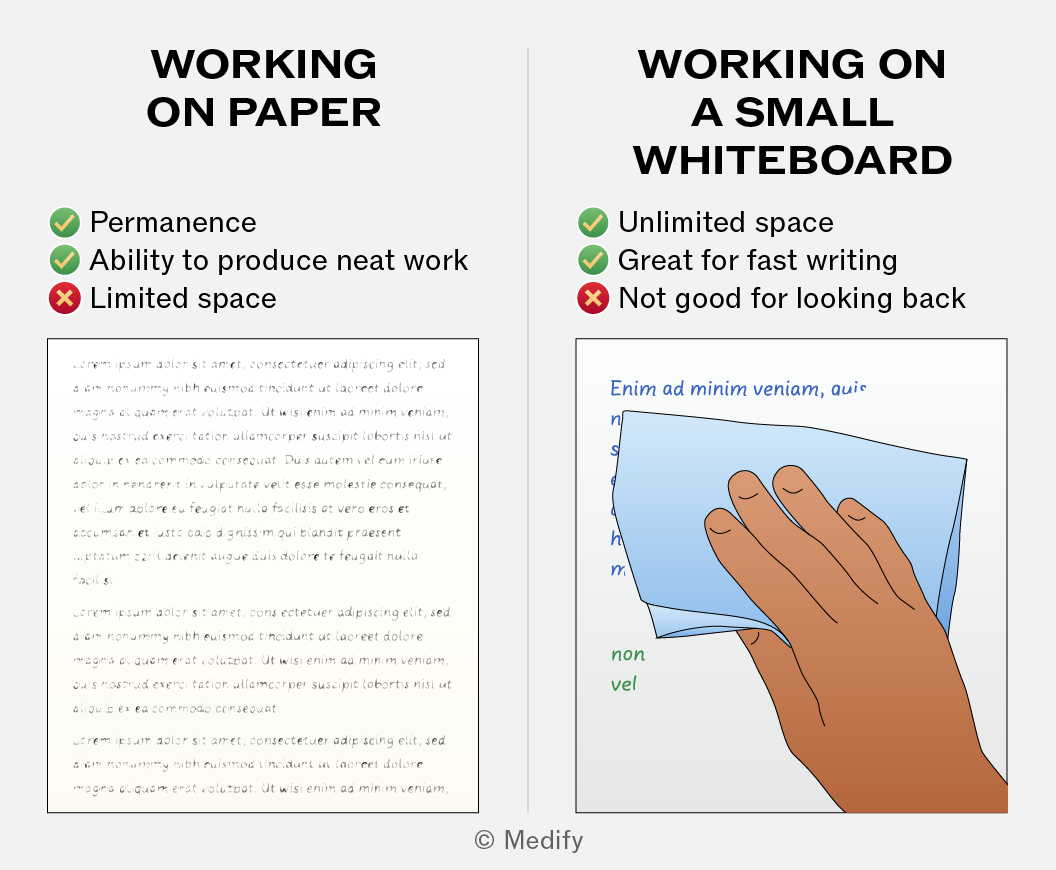
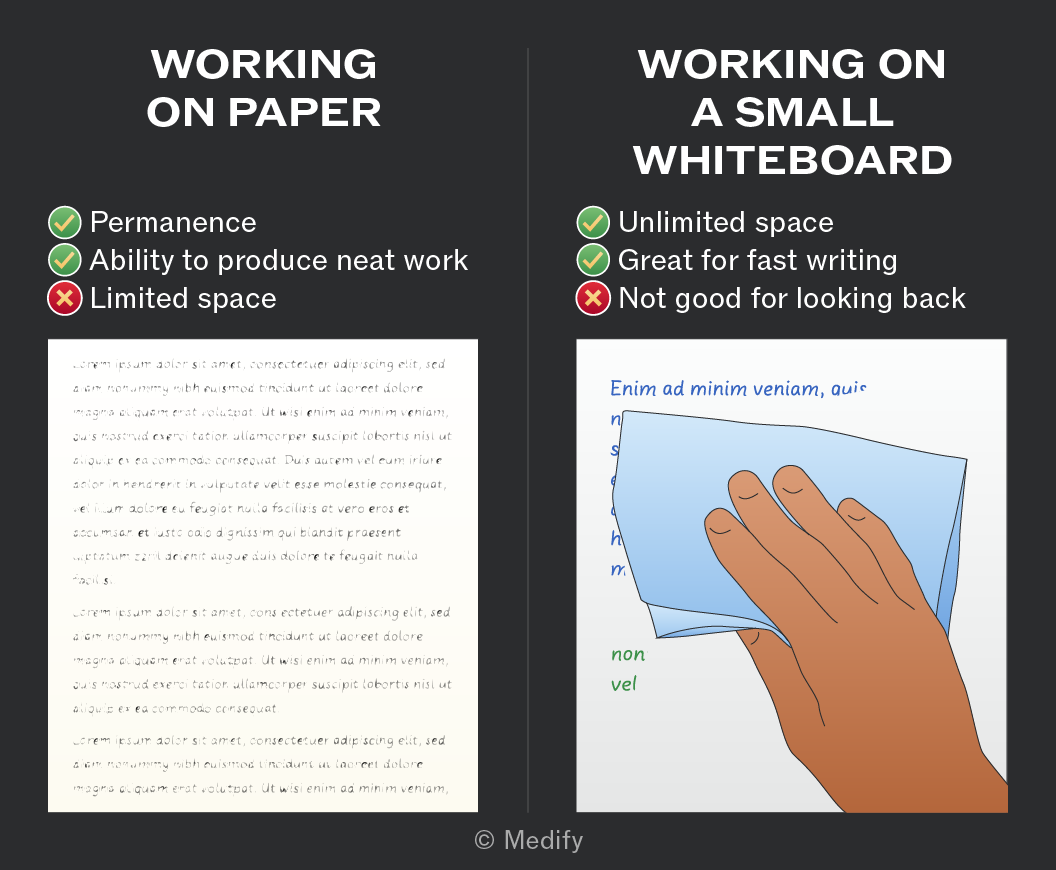
You can bring fresh materials to each section and do not need to make the same selection for all sections.
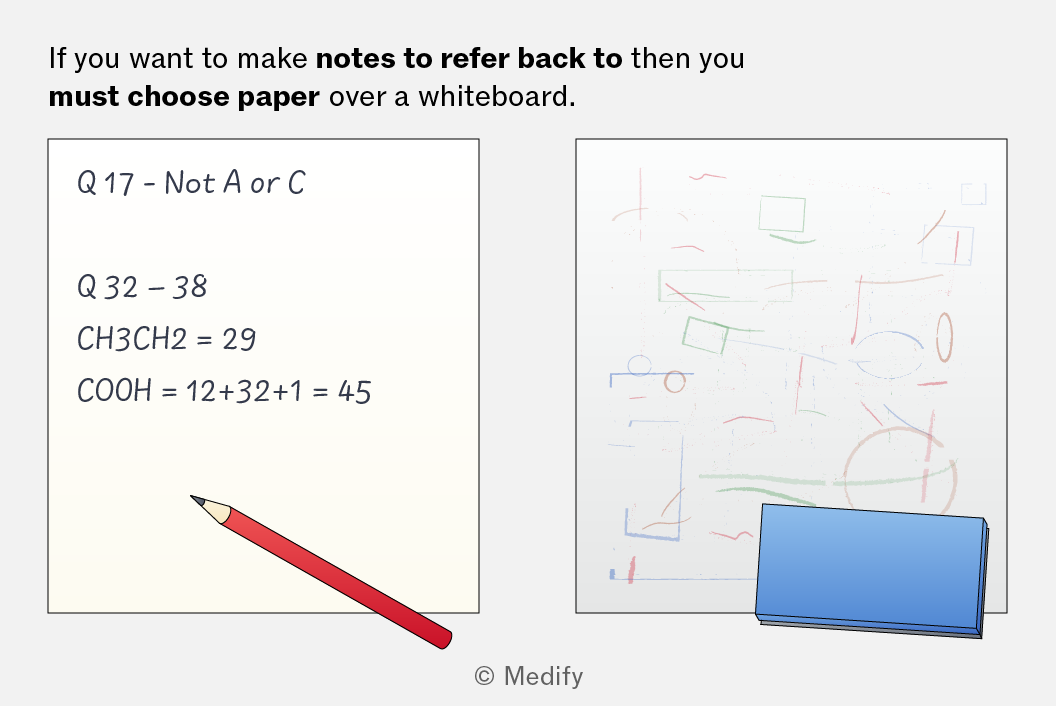
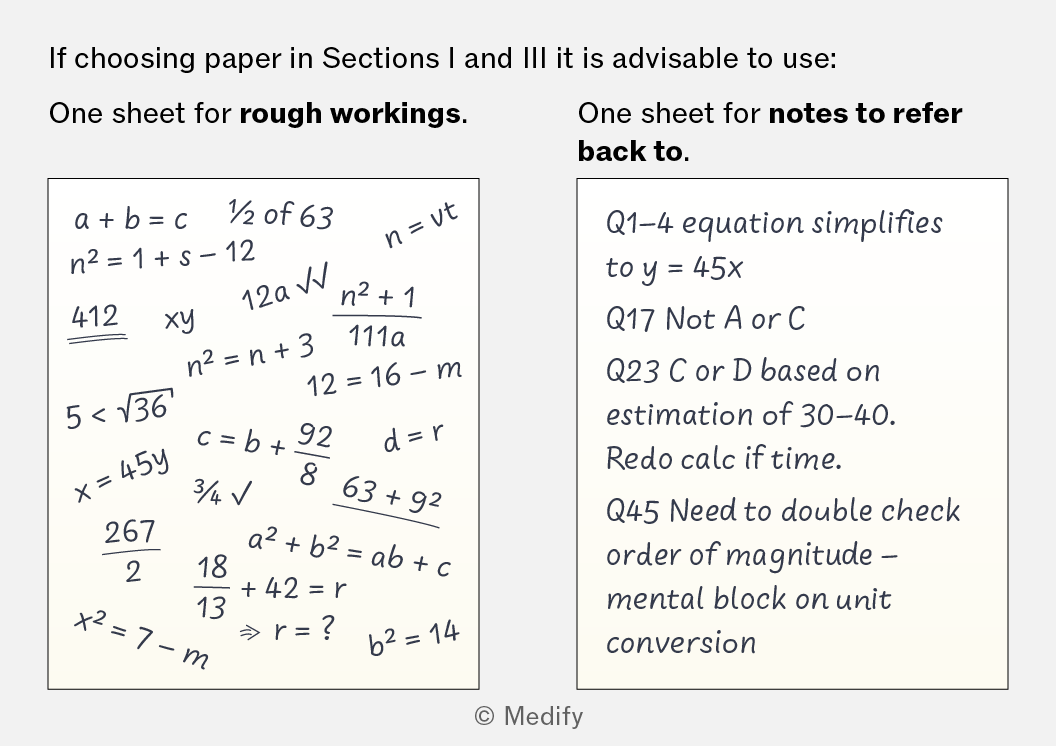
Making notes to refer back to is particularly useful where you have:
- successfully eliminated answer choices.
- made deductions which can be applied across a set.
- planned an essay for Section II.
You are permitted to use disposable foam earplugs in test centres. These may or may not be provided, so if you know you want to use them, pack your own.
If you plan on using earplugs to block out noise distractions on test day, it is advisable to try them first in practice sessions.
ACER expects you to follow all verbal instructions given during the exam; be aware that not following instructions because you are using earplugs, and therefore not able to hear them, is not deemed an acceptable excuse.
At some point during your GAMSAT preparation, you should complete mocks. When you do these, try to emulate test conditions as much as possible.
Working under test conditions:
- gives the most accurate indication of your current performance.
- leaves you more psychologically prepared for the official exam.
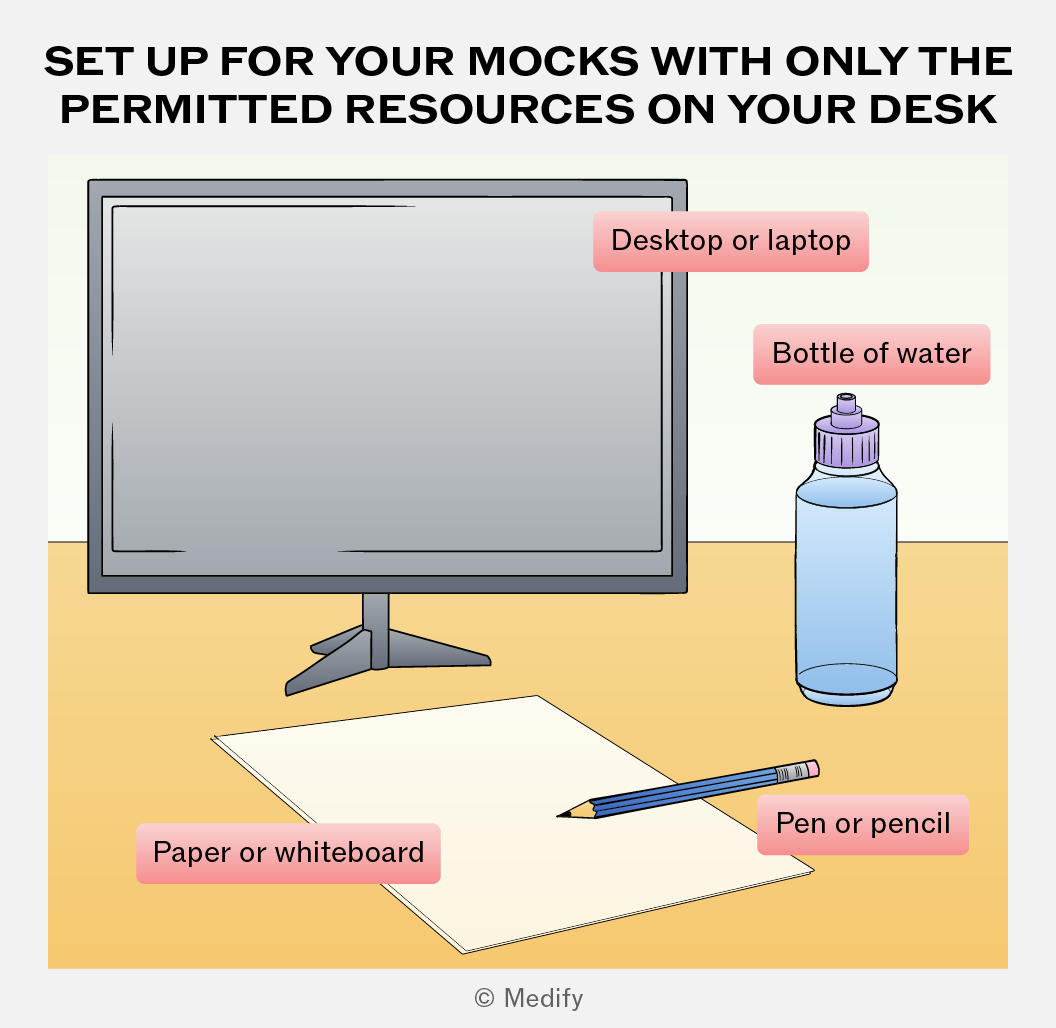

It is tempting to fuel your work with snacks and hot drinks, but you will not have this option in the exam.
When sitting mocks, create a distraction-free test-like environment.



Once you start a Medify mock, a timer will start. This can be paused if needed, but we advise you to avoid using this function.




Test Day stamina should not be overlooked in exam preparation. Use the short mocks in Sections I and III earlier in your preparation journey to build your stamina.
It is valuable to schedule at least one revision day for sitting both a Section I and a Section III mock consecutively. You will need 4.5 hours.
Permit yourself a 30-minute comfort break between the sections. Analyse the impact of prolonged focus on your quality of work. Consider how this might impact your test strategy and whether brief mental resets within a section would help.
The golden rule for optimising your Section I and Section III GAMSAT scores is to answer every question.
There are no negative marks:
- a blind guess gives a 25% chance of a mark.
- no answer being selected guarantees no mark.
Build your ability to identify correct answers quickly and confidently. This is the surest way to a high score in the GAMSAT.
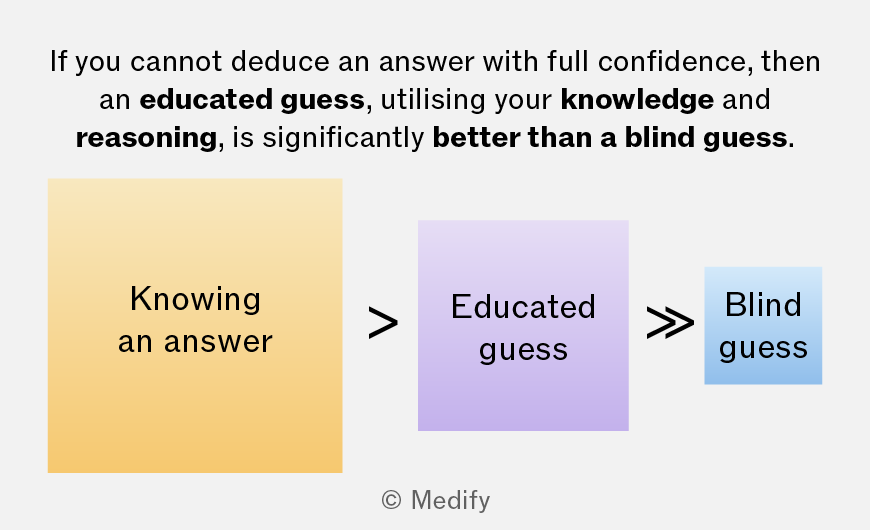
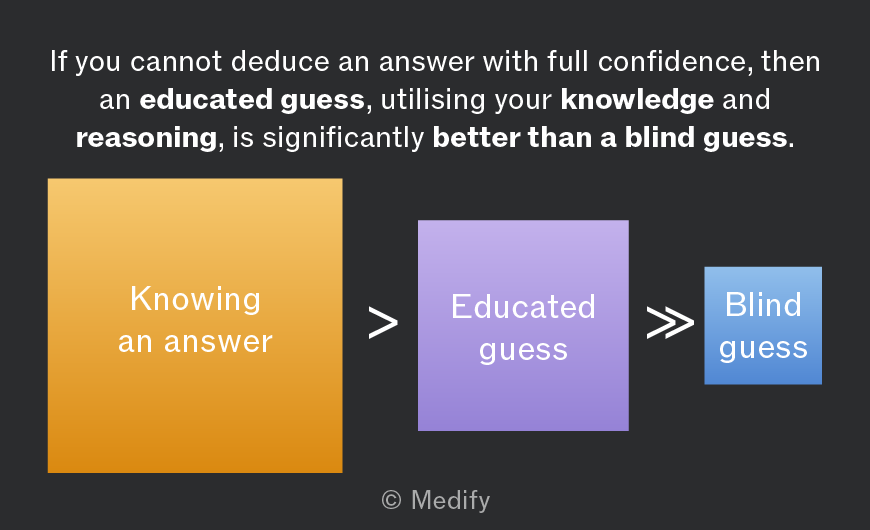
It is always better to guess than to leave a question blank, as unselected answers are wrong answers and are worth nothing.
Most of your marks should come from questions you are able to answer confidently in a reasonable amount of time. Identify skill gaps and address these as you prepare to increase the proportion of the questions you can answer confidently.
Make full use of Medify’s full mocks, shortened mocks and practice banks in the months leading up to your exam to increase your overall capability.
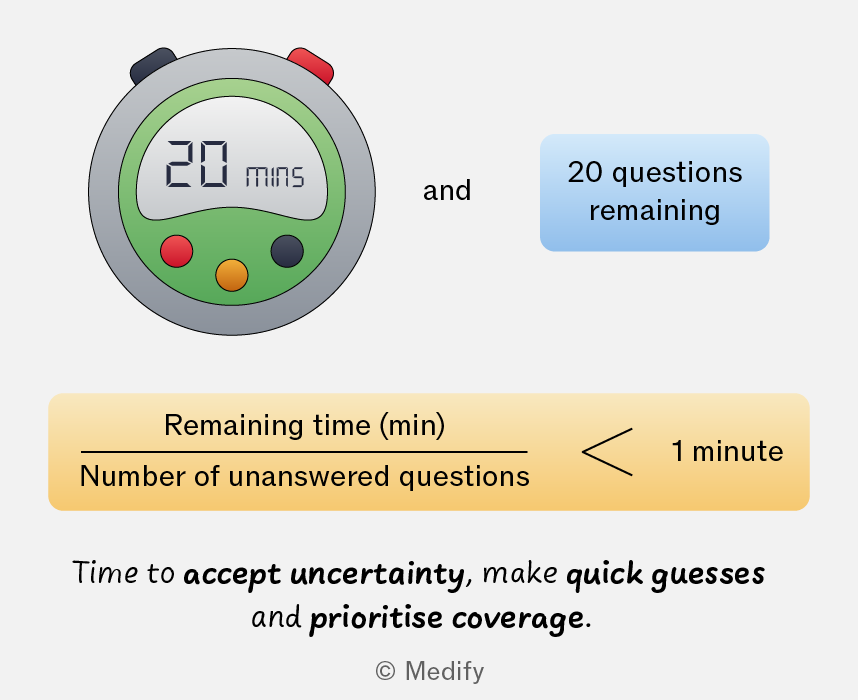
Keep track of time. It is best to conserve some time to make educated guesses on the most problematic questions in the exam. Educated guesses should lead to a higher success rate than blind guesses.
We recommend around 1 minute per question for a quick, educated guess.
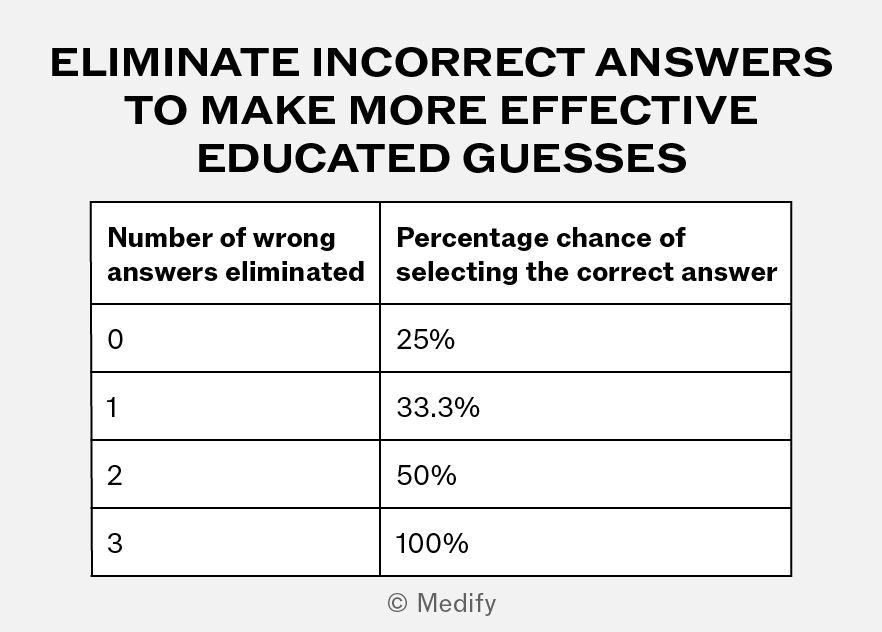
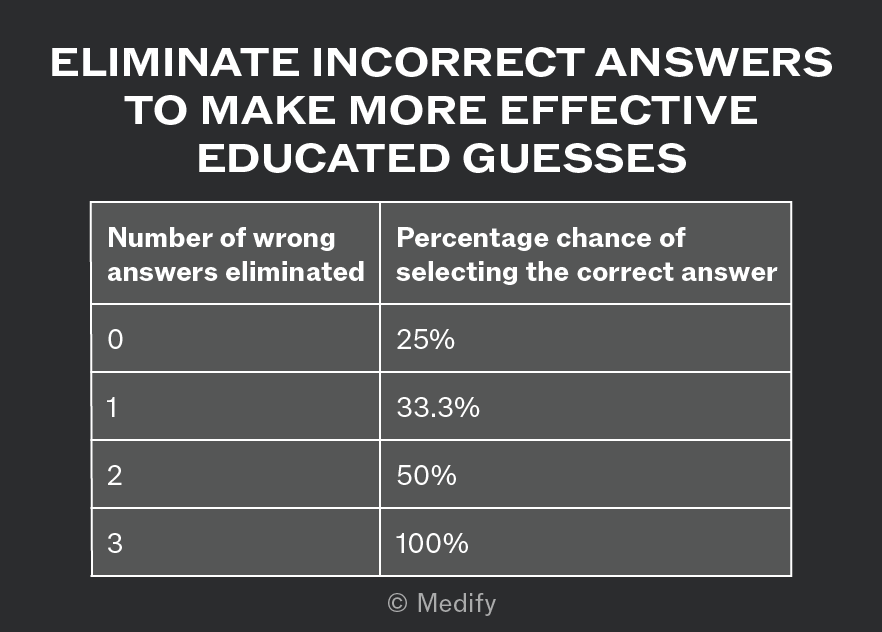
You can eliminate incorrect answers by:
- using estimations to reduce the value range of feasible answers.
- using unit analysis in scientific calculations to check the answer dimensions.
- cross-checking against known facts.
- finding information in the stimuli which contradicts an answer choice.
You can also exclude some answer options based on gut insticts when making educated guesses.
If it becomes necessary, spend the last two minutes blindly selecting answers for any unattempted questions.
If you have noticed an answer choice is underrepresented in your responses you could use this answer choice in your blind guesses. The test should have a roughly even distribution of answer choices, so underused answer choices may feature more heavily in the remaining questions.
Beyond this, there is little statistical difference between random guessing and sticking with a single answer choice.
In medicine, triage is the process of assessing the specific needs of individuals within a group of patients, alongside the resources available for their treatment, to develop an efficient and effective plan for delivering the best care possible overall.
In the GAMSAT, the concept of triage can be used to develop an approach to test-taking to maximise your marks in the time remaining.
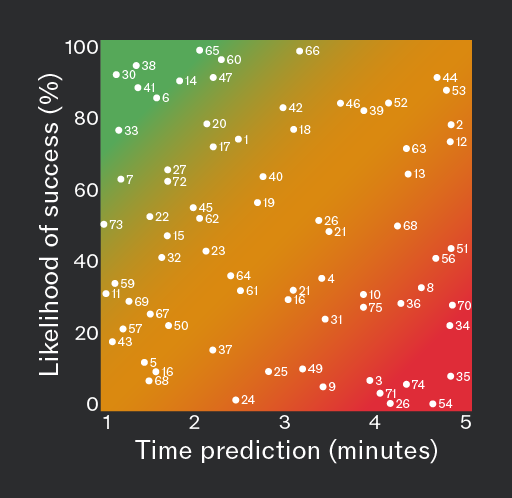
The approach to triage will vary depending on your personal strengths and weaknesses, but should essentially balance the time required to select an answer and the likelihood of that answer being correct.
You can triage effectively by identifying which questions you can do fastest and which are likely to take you longer. You also need to know if, having spent the time, you are likely to get the question right.
Look at the stimulus, and the associated questions, and make a quick decision: do now or do later?
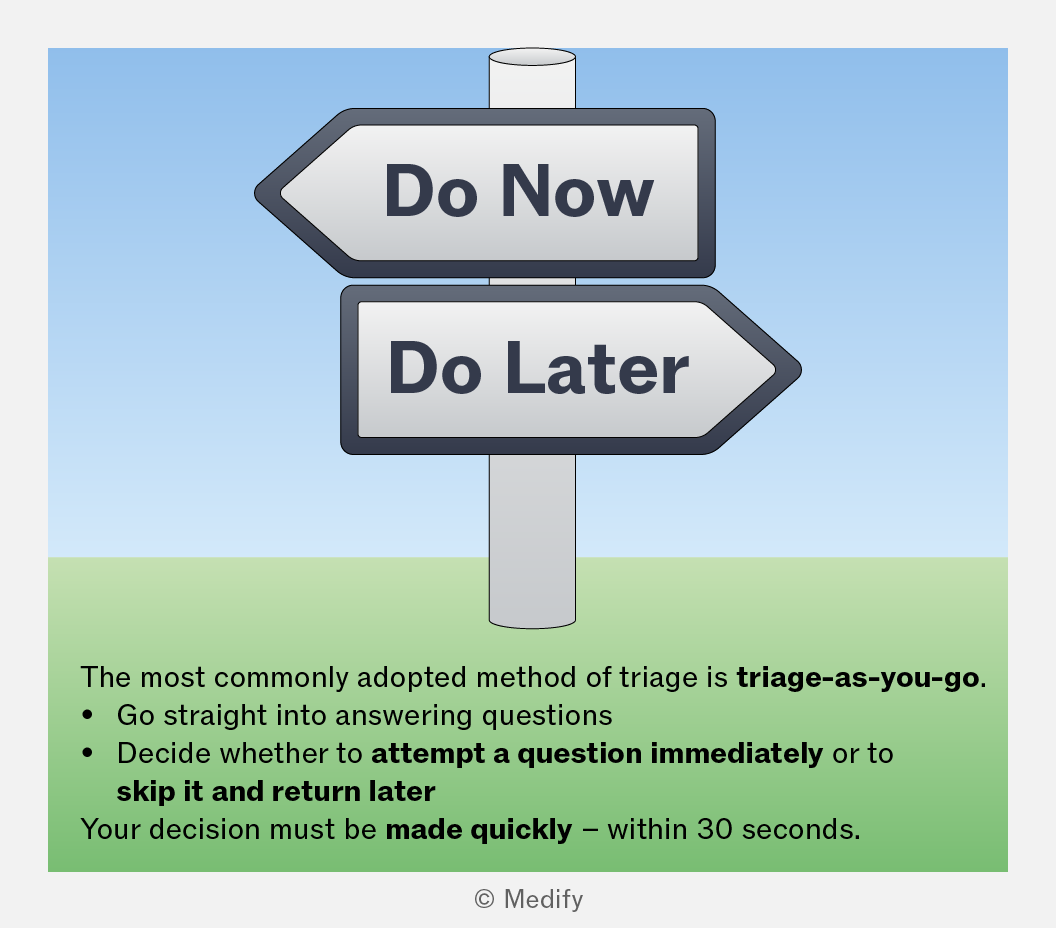
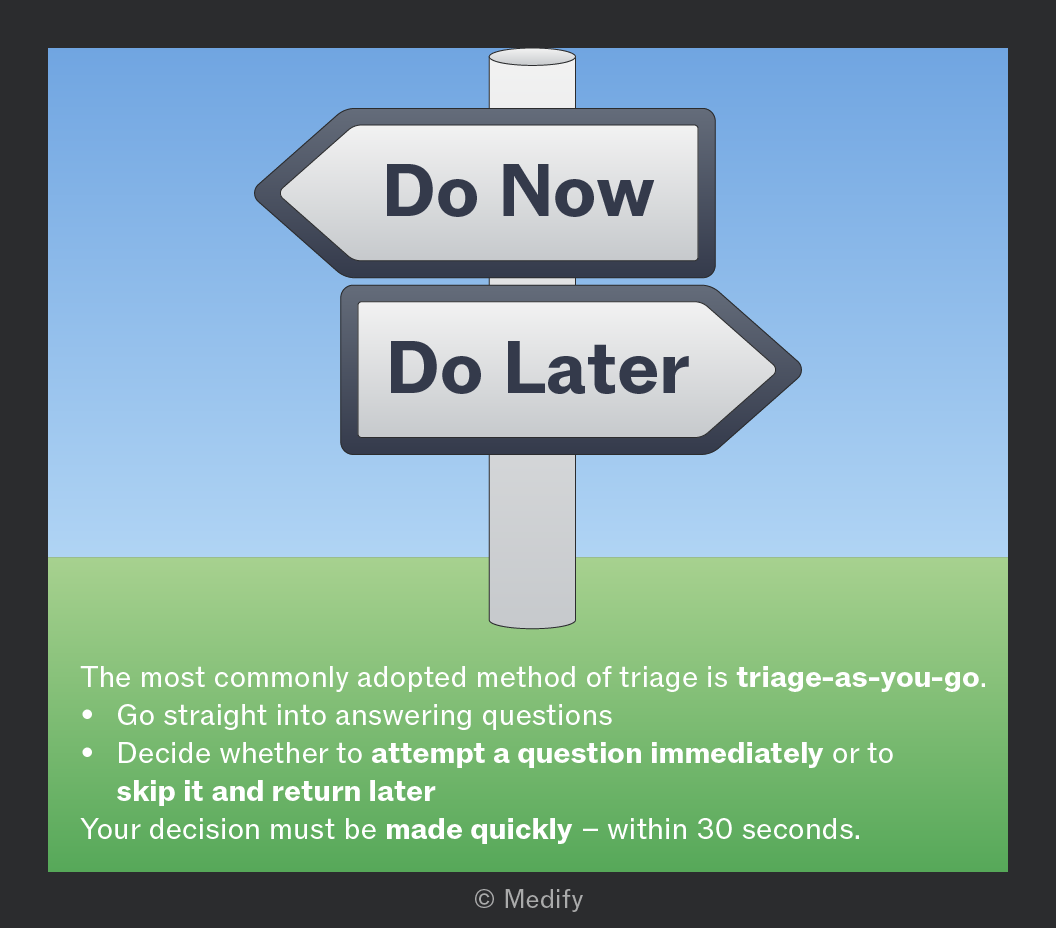
Remember that triage is about the order the questions are completed, but every question must be answered eventually.
Use your preparation time to identify your strengths and weaknesses:
- Which kind of questions or topics do you usually get right?
- Which kind of questions or topics do you usually spend the least time on?
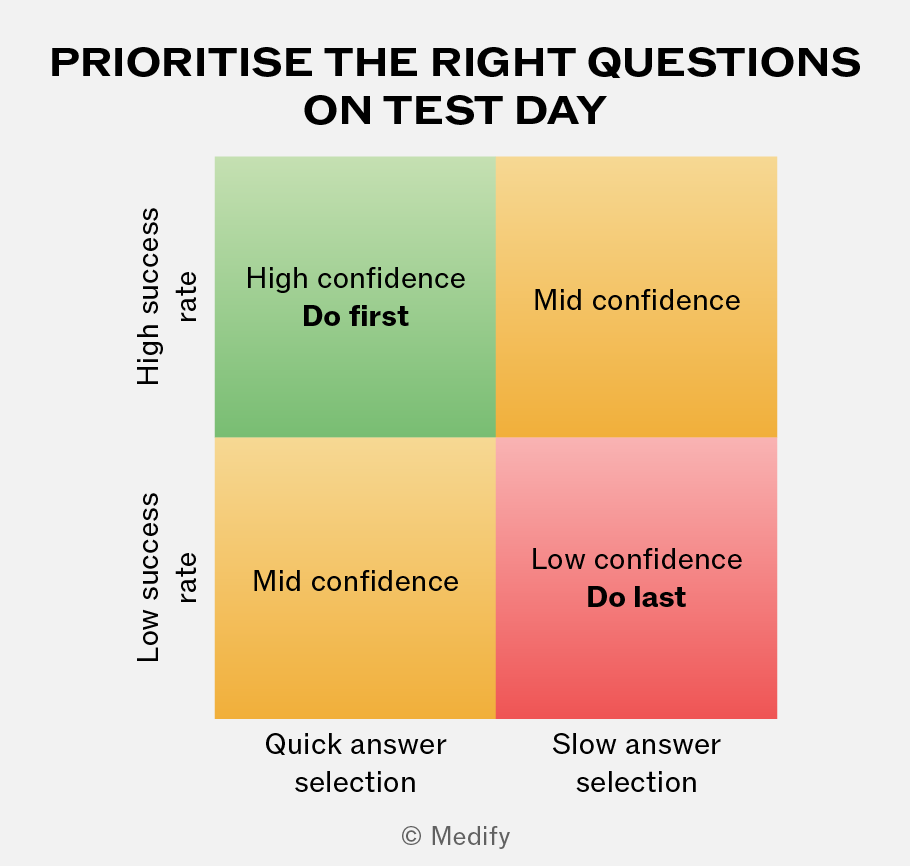
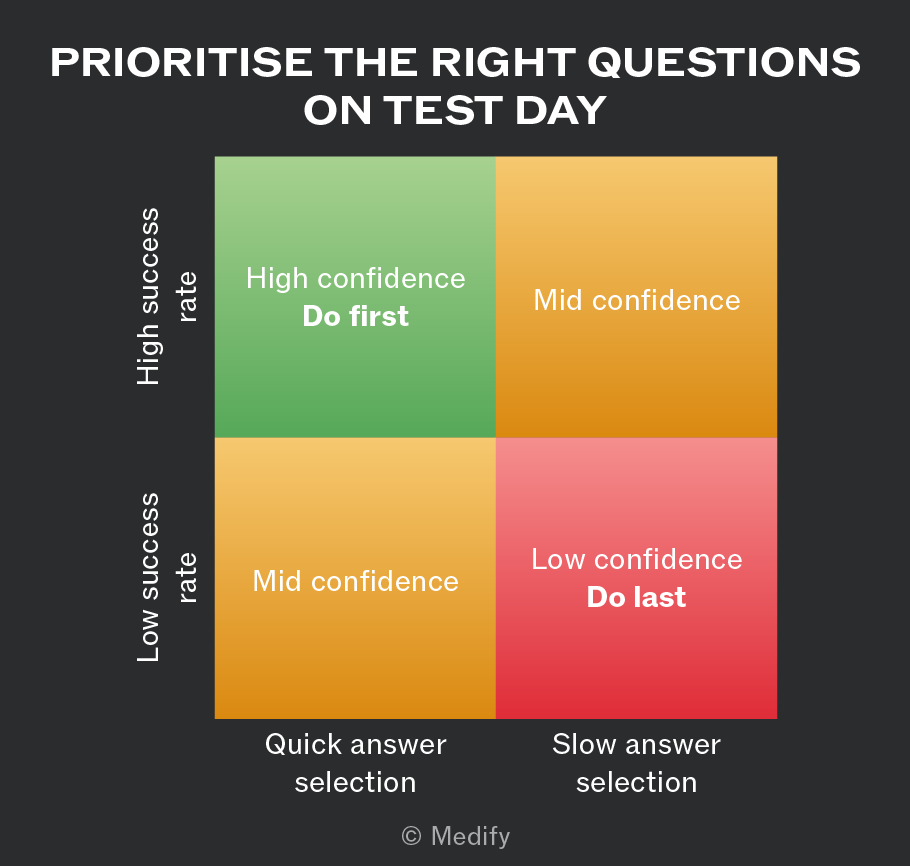
Triage can be really useful in ensuring that you give your time to the questions most likely to get you marks, but there is a time cost.
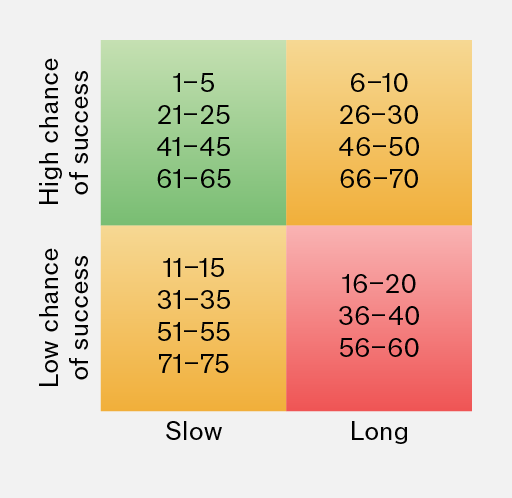
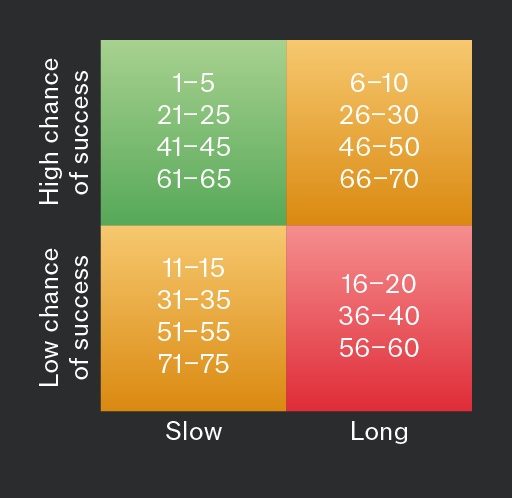
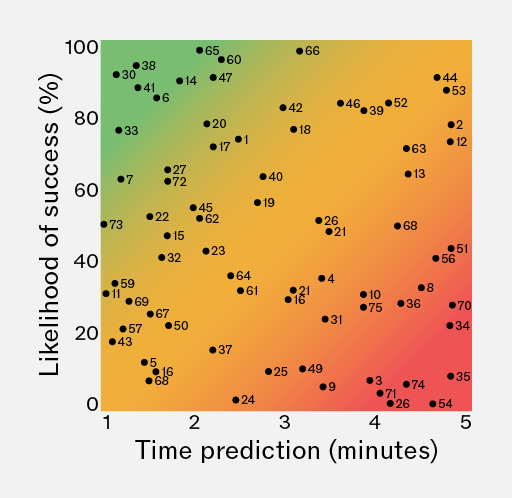
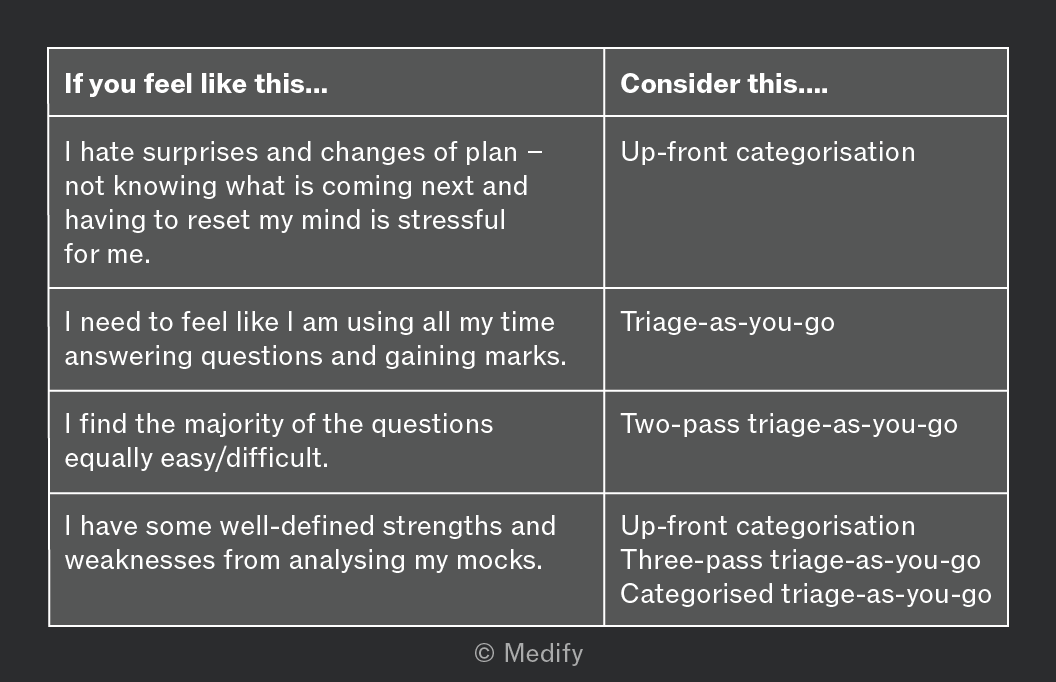
In a two-pass triage-as-you-go strategy:
- high and mid-confidence questions are completed in your first pass.
- problem questions/sets are done in your second pass.
This removes decision-making from your second pass, leaving more time to focus on answering the questions.
In a three-pass triage-as-you-go strategy:
- only very high-confidence questions are completed during your first pass.
- ‘do later’ questions are given minimal consideration during the first pass.
- in the second pass, questions should be considered for a maximum of 30 seconds before deciding whether to skip or answer.
- only very challenging questions should be left for the third pass.
This strategy allows you to gain your most accessible marks quickly, while your brain is at its freshest, whilst still allowing you to delay answering particularly challenging questions.
Categorised triage-as-you-go gives the graduation of a multi-pass strategy without the time penalty of repeated question evaluation.
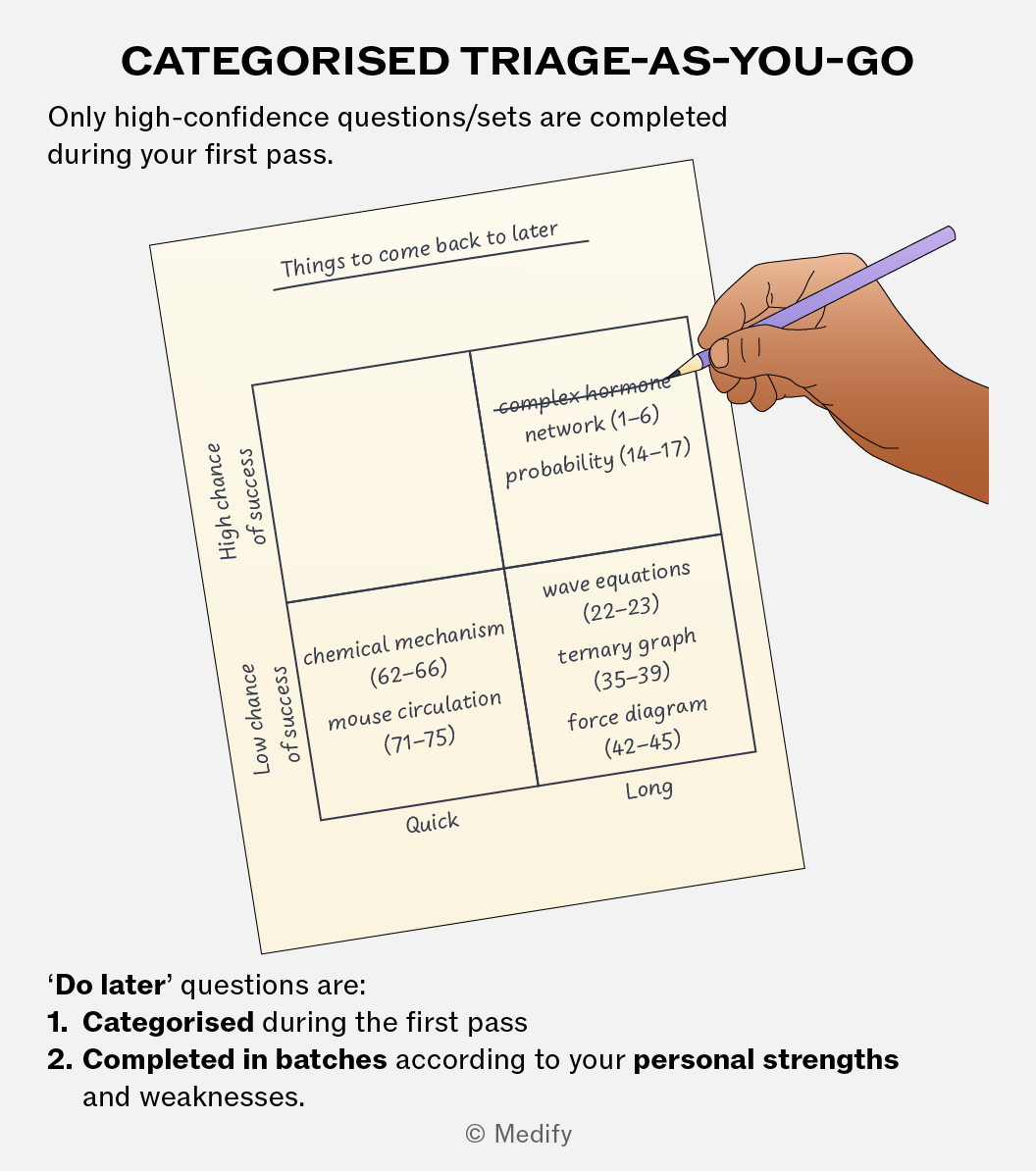
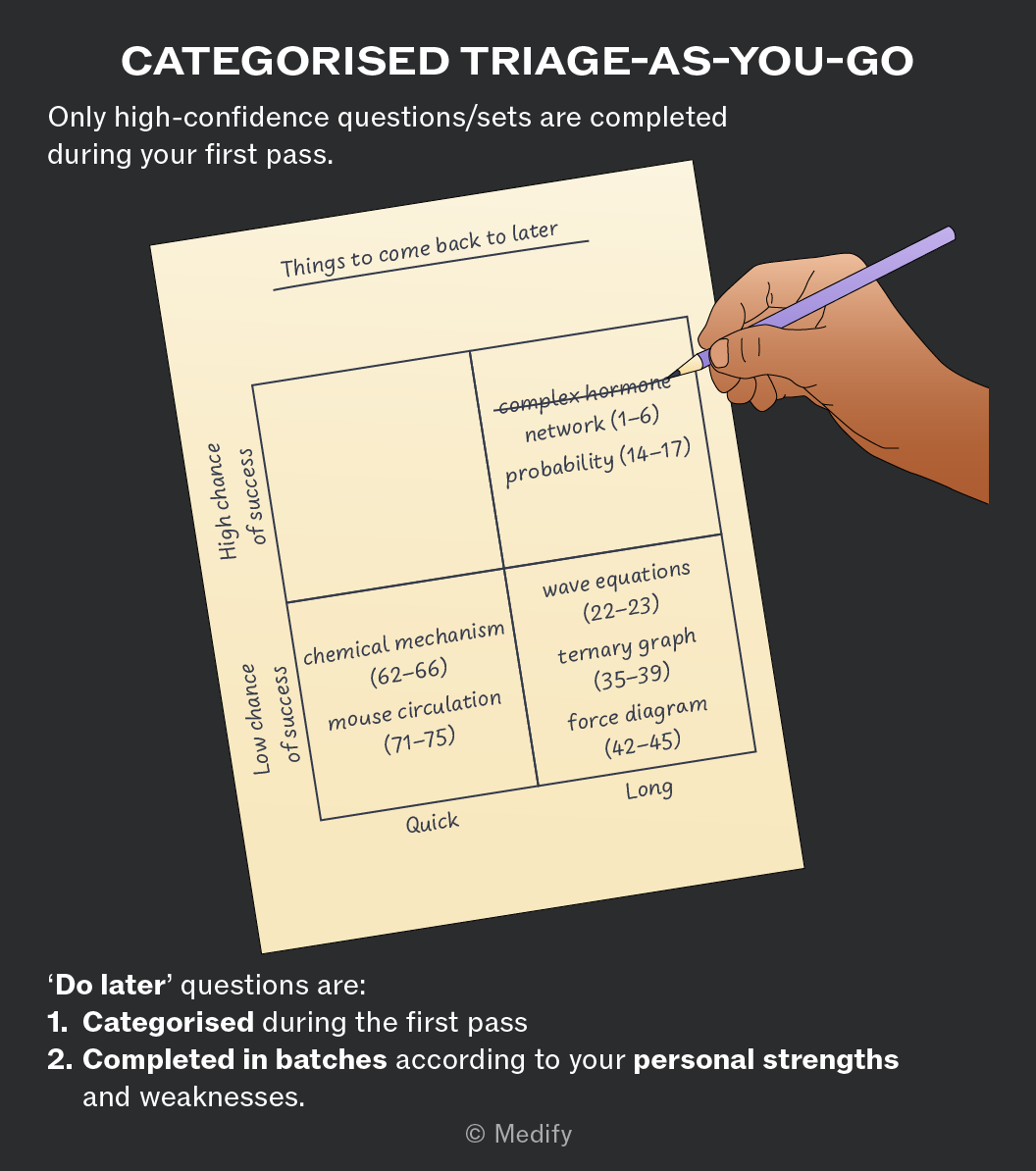
Categorisation:
- can be a mental process, where you remember which question you want to come back to first/last, or you can use a section of your scratch paper to make more detailed notes.
- can be more effective in Section III than Section I, where you may prefer to work through questions related to a particular area of science (e.g. biological pathways) or a skill (e.g. calculations) in blocks.
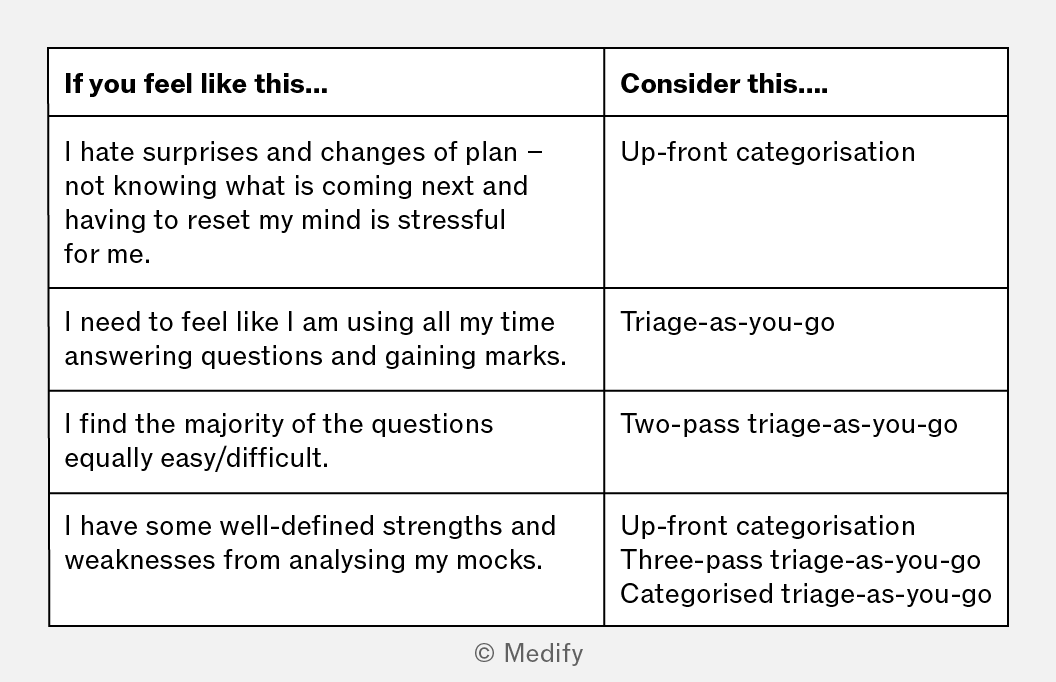
Some students prefer up-front categorisation.
Use your intial time to triage all questions. This delivers two key advantages:
- You can get an overview of the exam as a whole. This can allow your subconscious to prepare you for seeing the question again and generate a feeling of control over the test.
- You can group sets requiring similar skills, meaning your mind does not have to make big transitions between sets.
Triage up-front when you have heavily favoured subjects or skills.
The strategy allows you to dedicate the first portion of the exam, when you are likely to be most alert, to securing your most attainable marks.
Remember, there is no single ‘correct’ triage strategy.
When selecting a triage, consider your personal strengths and weaknesses in Section I and Section III independently — your strategy may be different for each section.
Quote on two-pass triage-as-you-go in Section I
“I didn’t have any particular strengths or weaknesses going into Section I. My practice hadn’t shown a preference for a particular category of question.
My exam technique was to just do each question in order and to guess and flag the question if I started taking too long. The exception to this was the really long texts. I read really slowly, so these would take a disproportionate amount of time. I left these to the end so I could decide how long to give them based on how long I had left. I think it was two sets, and I managed to get to them with enough time to read them properly. This was great for me as I wasn’t worrying about them taking time from other questions.”
Test taker – Section I score 68
Quote on up-front categorisation in Section III
“I’m a chemistry graduate, and I am good at maths. I didn’t feel confident at all in my biology when I walked into the exam.
I gave myself 10 minutes to flick through the test from start to finish. I wrote down the essence of the question in a couple of words and added a star where I felt I stood a good chance of answering the set. I then gave my starred sets my full attention and probably picked up the majority of my marks.
Having a strong start definitely made me feel more confident when moving on to the remaining questions, where I was definitely making educated guesses and alongside random answer selection in order to finish on time!”
Test taker – Section III score 73