
Getting ready for Test Day
On this page
Planning your travel and accommodation logistics in advance isn’t just about ticking boxes. It’s about creating the optimal conditions for peak performance and your mental well-being.
When you know exactly:
- how you’ll get to the test centre,
- where you’re staying,
- and what your morning routine will look like,
you free up mental energy that would otherwise be wasted on last-minute decisions and anxiety. This clarity allows you to focus entirely on the exam itself.
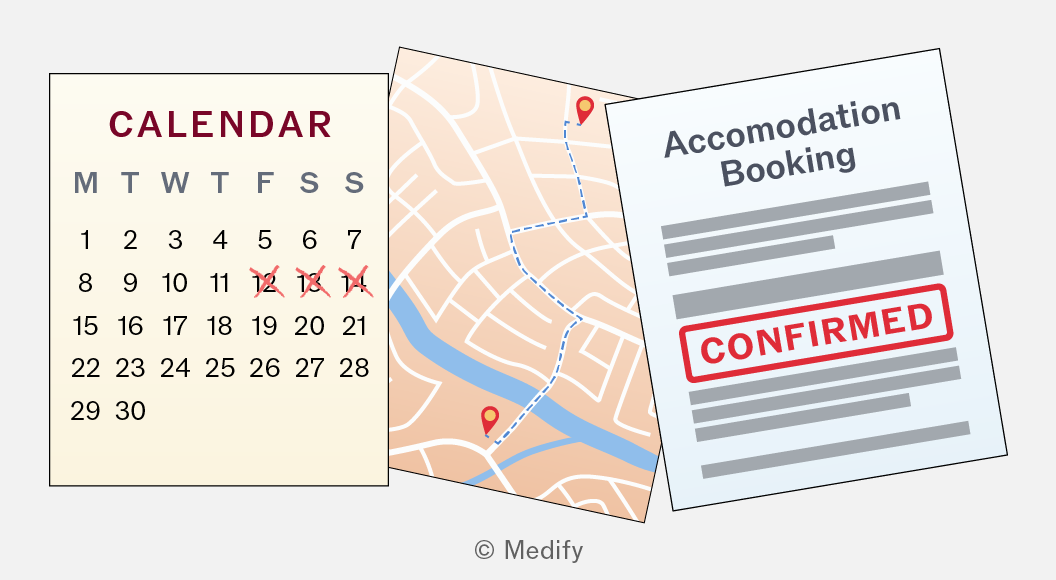

The difference between a 10-minute walk from a nearby hotel versus a 90-minute commute through rush-hour traffic could be the difference between arriving calm, fresh and focused or stressed and fatigued.
Smart logistics planning involves booking accommodation close to your test centre, if possible, and having backup transportation plans. Remember, every decision you make in advance is one less worry on test day.
If given the choice between morning (AM) and afternoon (PM) sessions, your start time can significantly impact your performance. Consider your natural energy patterns when booking.
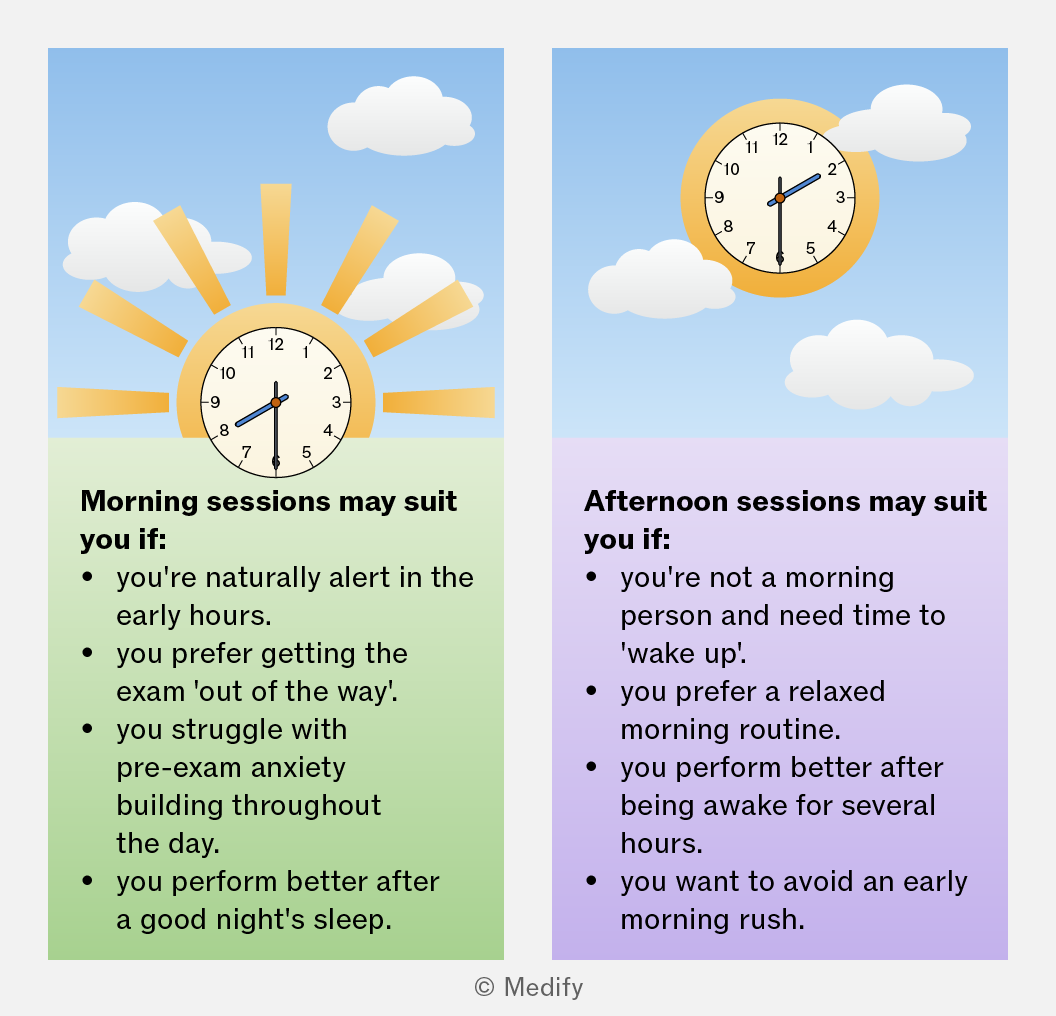
Arrival times, both in the morning and afternoon, may vary based on the specific date and test centre location.
Furthermore, start and finish times may be subject to unforeseen delays on test day. Care should be taken when making return travel arrangements to allow adequate time at the test centre.
Your session choice and travel distance to the test centre directly affect accommodation needs:
- For morning sessions, consider booking a hotel the night before if you are travelling a long distance to avoid early morning travel stress. You should be able to comfortably travel home shortly after the exam concludes in the early afternoon.
- For afternoon sessions, if you live 90 minutes or more away, consider booking two nights. Arrive the day before to reduce travel stress and fatigue. Staying an extra night post-test can prevent a mentally draining long journey home. This comfort investment aids performance and recovery.
Ultimately, do what is right for you.
Even if you reside in the same city as the test centre, or have arranged nearby lodging for the night before, travel on test day may still be necessary. Walking might not always be feasible.
Smart travel ensures you arrive on time and stress-free, ready for peak performance, regardless of distance.
If you intend to travel by public transport, options include:
- Train
- Bus
- Coach
- Taxi
For specific journeys, it might be advisable to use a ride-hailing service instead.




Driving directly to the test centre in your personal vehicle can often be the most efficient travel option, if available to you.




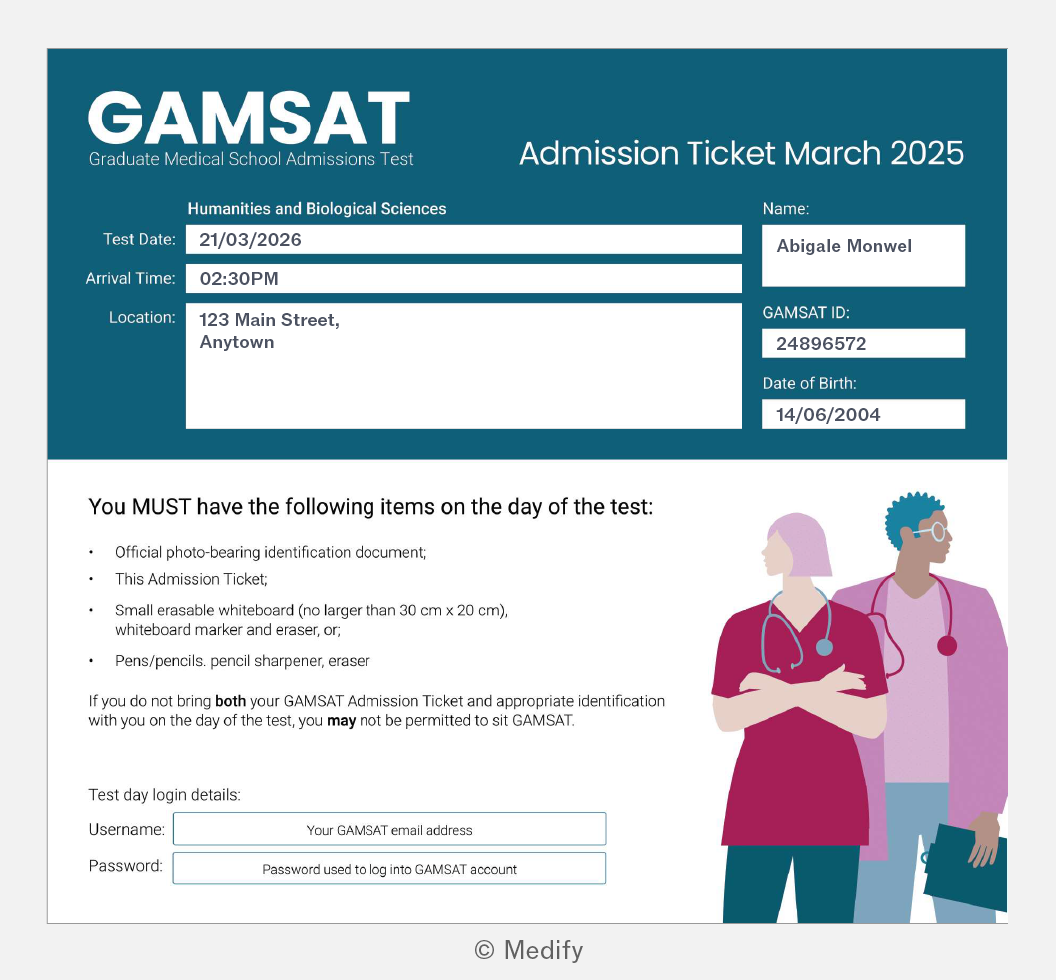
Your admission ticket will be sent by email approximately one month before the Humanities and Biological Sciences test window.
Don’t just glance at it, scrutinise every detail. Test takers have reported arriving at the wrong venue, on the wrong day, or at the wrong session time, resulting in missed exams and forfeited fees.
Check three critical details: the exact test centre address (not just the city), your specific test date, and whether you’re in the AM or PM session.
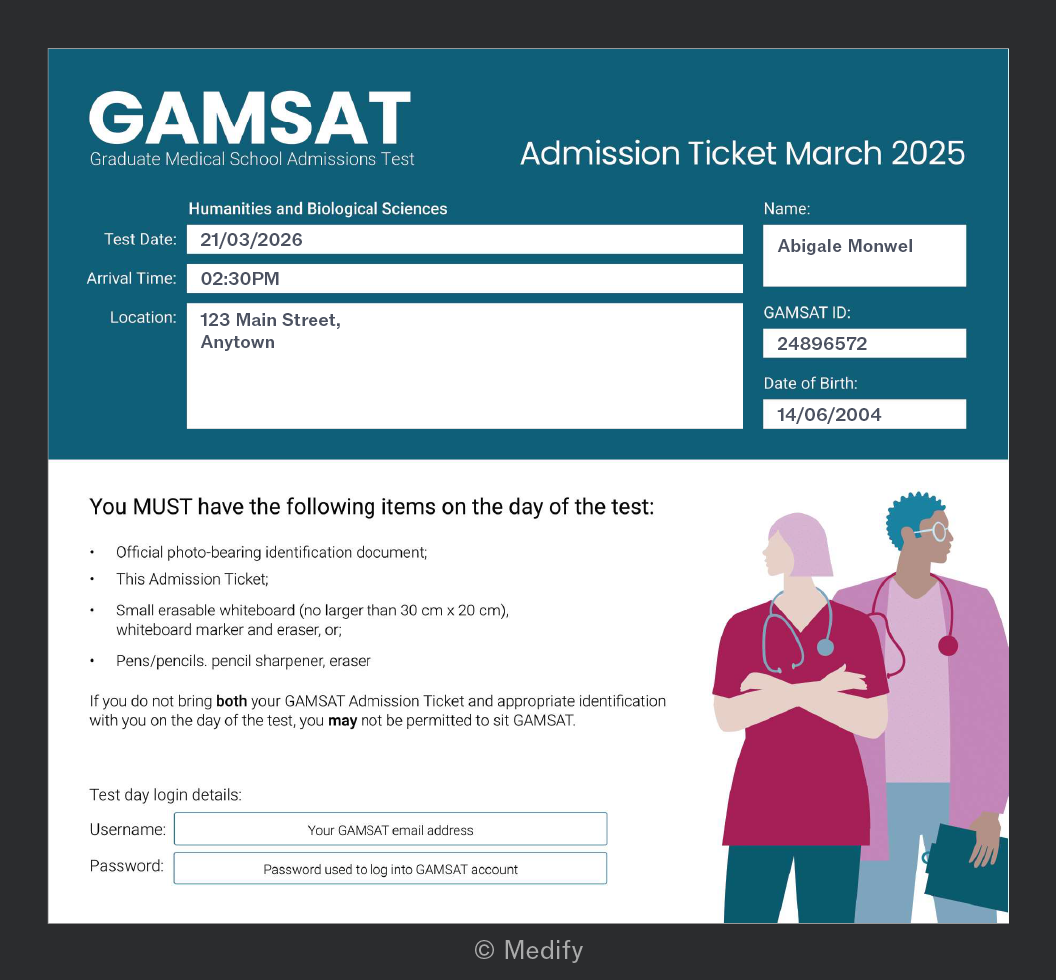
Create multiple reminders:
- Screenshot your ticket details to your phone.
- Add the date to your calendar with the full address.
- Share the information with someone who can remind you.
If there is more than one venue in a selected city when registering, pay extra attention. You’ll be automatically allocated to one with no preference.
Arriving at the wrong location or time means no entry and no refund. Those few minutes spent triple-checking could save your entire GAMSAT sitting.
Don’t rely solely on GPS or Street View on test day. Some test centres are tucked away in university campuses, hidden within building complexes, or located in areas with poor mobile reception.
Once testing begins, no latecomers are admitted, regardless of the reason. That quick 5-minute detour to find the right building could jeopardise your entire GAMSAT sitting.
A reconnaissance visit to your test centre before the exam eliminates the risk of getting lost when it matters most. If this is not an option, plan to arrive with extra time.
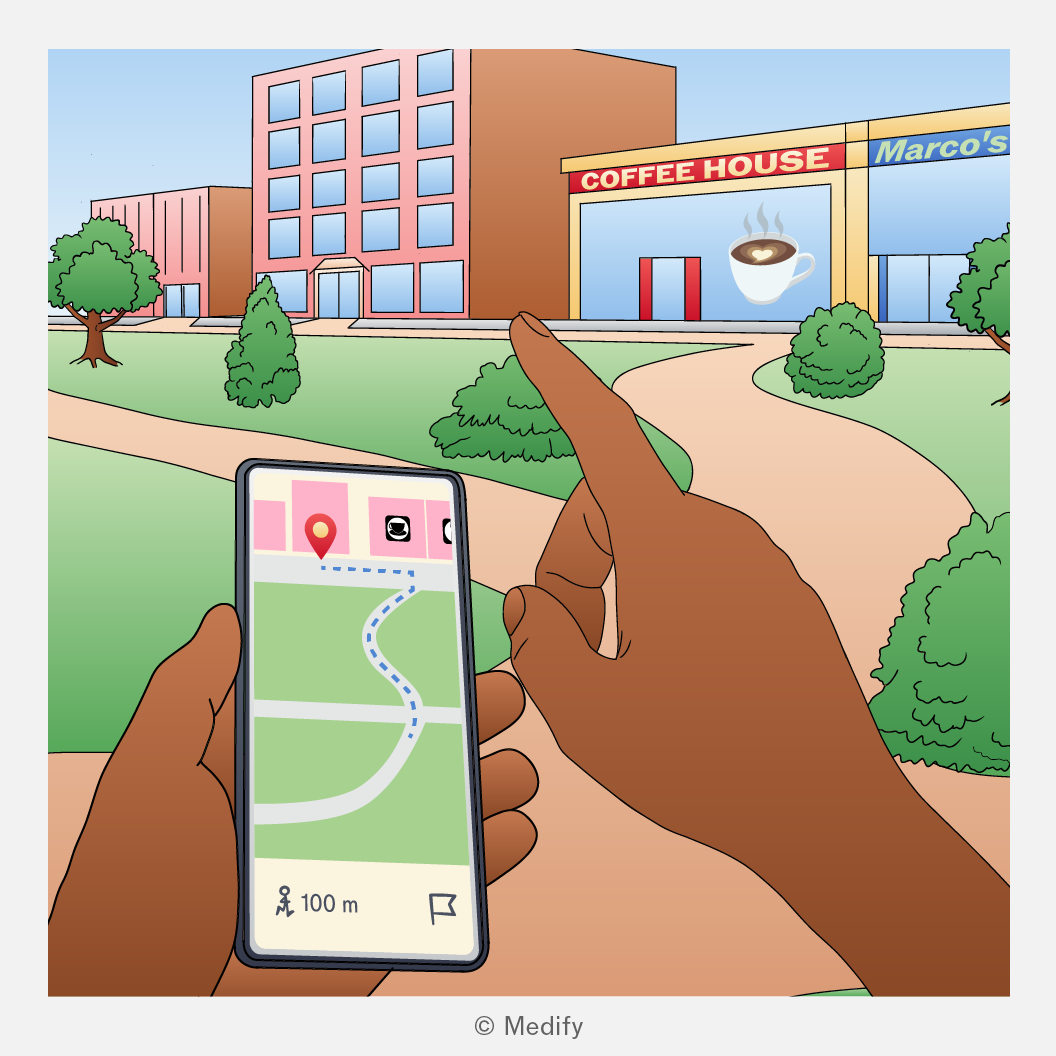

If you make a reconnaissance visit, note specific landmarks, parking availability, and the exact entrance you’ll use. Take photos of the building and entrance for reference.
This familiarity transforms the test morning from a stressful navigation challenge into a calm, routine journey. You’ll arrive knowing exactly where to go, allowing you to focus on mental preparation rather than frantically searching for the right door at the final hour.
Eating is not permitted during any section of the GAMSAT. With over four hours of rigorous testing for the Humanities and Biological Sciences sections, plus registration, break and travel time, strategic nutrition planning is essential to maintaining focus and energy throughout.
Never assume you won’t be hungry — the mental effort required is exhausting.




Fortunately, there is a 30-minute break between the Humanities and Biological Sciences sections of the test. Take advantage of this time to empty your bladder and replenish your essential nutrients ahead of the 2.5-hour Biological Science section.




Written Communication (Section II) is conducted entirely via remote proctoring for all test-takers, regardless of their location. This means you’ll complete your essays from home approximately three weeks before other sections.
Setting up your remote proctoring environment correctly is crucial for a smooth experience. Technical issues on test day can be stressful and time-consuming, potentially affecting your performance.
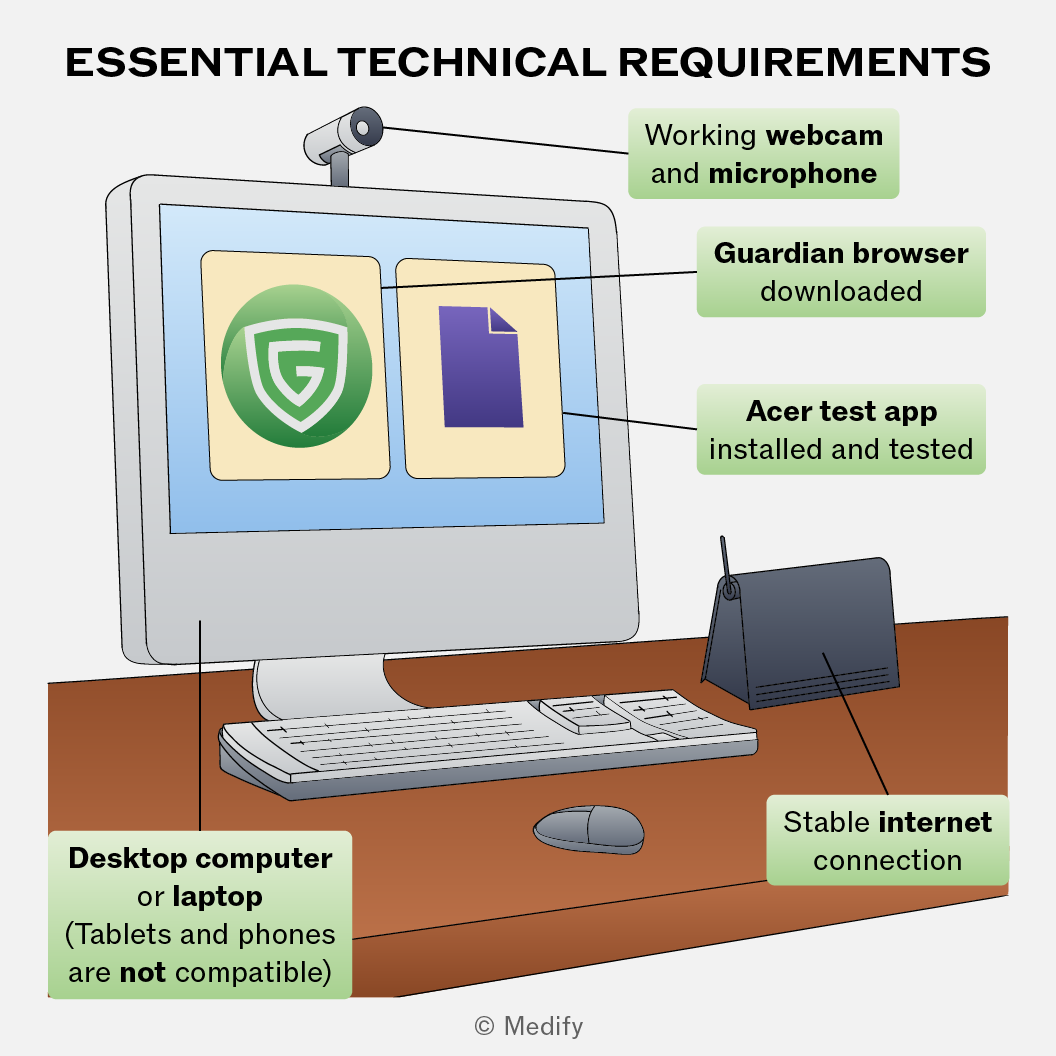
Test your setup at least one week before. ProctorU provides an equipment check feature. Use it! Remember, you’ll spend 10-30 minutes in pre-checks before your writing time begins, so factor this into your schedule.
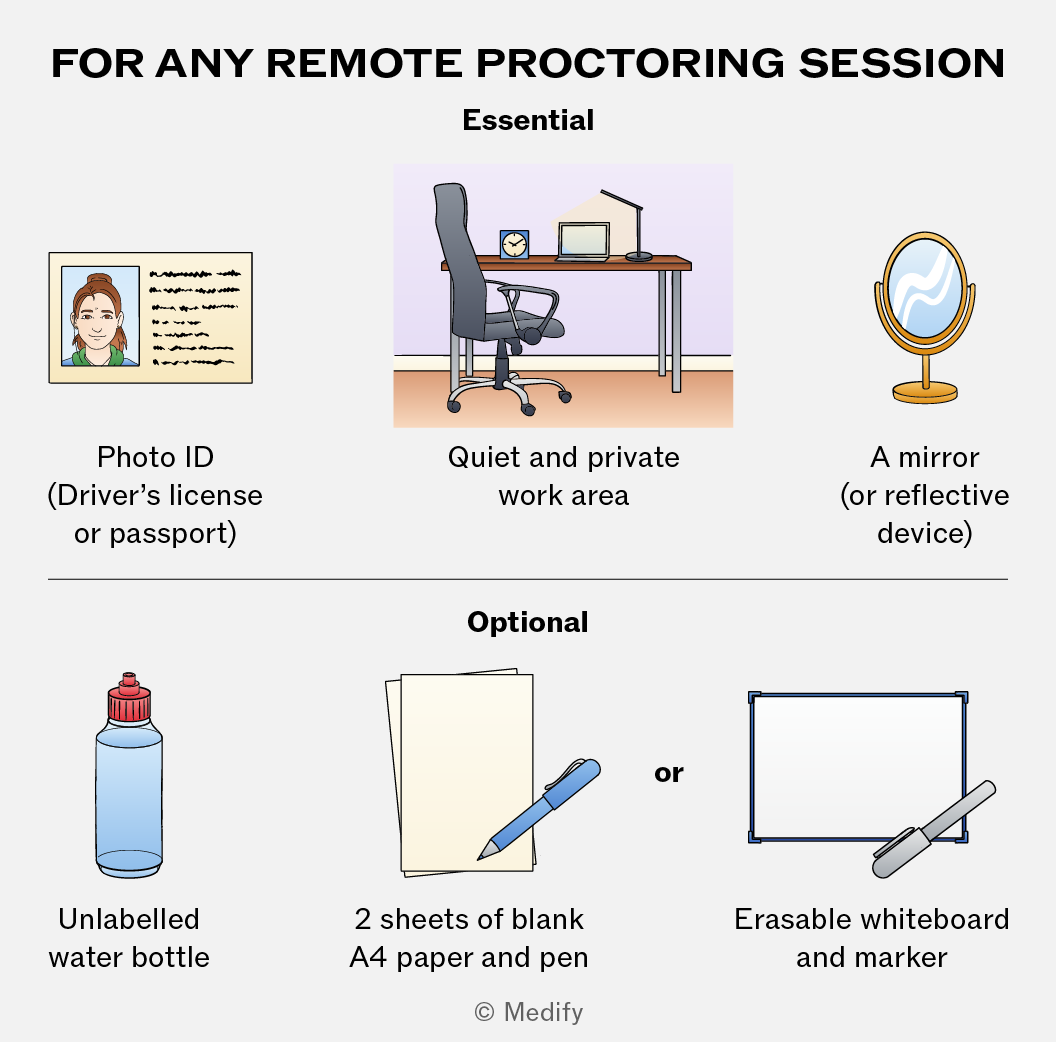
Before registering for GAMSAT, please check these essential technical requirements. If you do not expect to meet these and therefore cannot complete the Written Communication section through remote proctoring, contact the GAMSAT Office for guidance.
Medify strongly recommends bringing the optional items alongside the essentials.
Unlike Section 2, which is only delivered via remote proctoring, Sections I and III require special approval for remote delivery. You’re not automatically eligible.
You must live more than 3 hours’ travel from any test centre listed in the Information Booklet, or live in a country where no test centre is offered.
If you fulfil this criterion, follow the application process:
- Select “Alternative Delivery Request” when registering for the GAMSAT.
- Upload supporting documentation.
- Submit by the registration deadline.
- Await separate approval email; Registration confirmation ≠ approval.
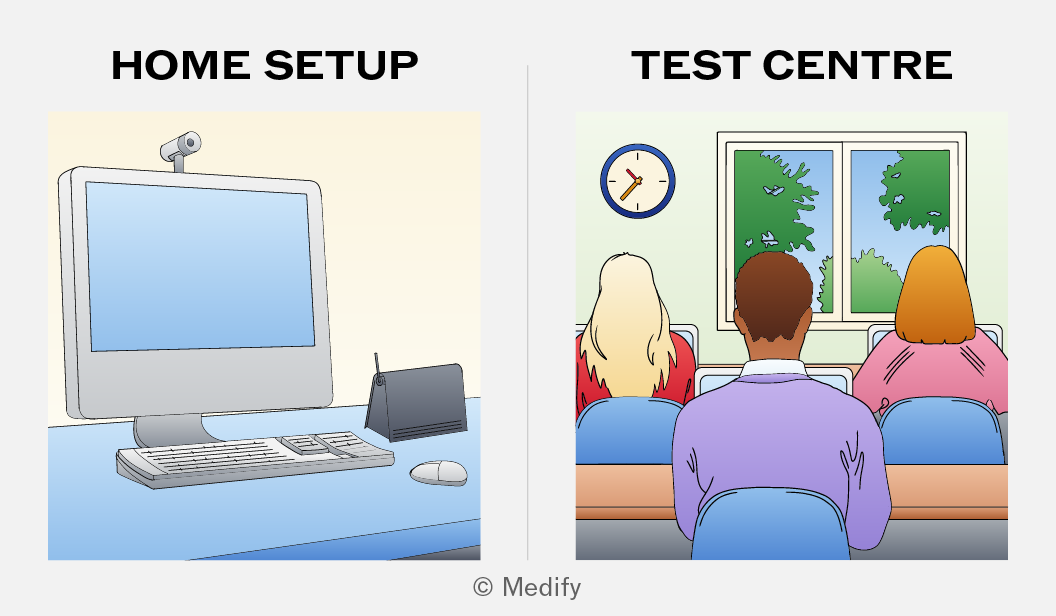
For everyone else, you’ll need to prepare for two different test environments: your home setup for Written Communication and the test centre for Humanities and Biological Sciences.
Most test takers complete Sections I and III at test centres. Remote proctoring for these sections is the exception, not the rule, requiring documented proof of genuine need based on location.
If considering applying for remote proctoring, be aware that:
- Late requests incur additional fees
- No requests accepted after late registration closes
- False documentation could mean disqualification
- Being on holiday does not qualify you
- A preferred physical session reaching capacity doesn’t qualify you
If denied, you must update your registration to select a physical test centre before late registration closes. Otherwise, your registration will be cancelled. No exceptions.
After completing your GAMSAT registration and payment, book your remote proctoring session immediately through your ACER account dashboard.
Admission tickets are not issued for remotely proctored exams.


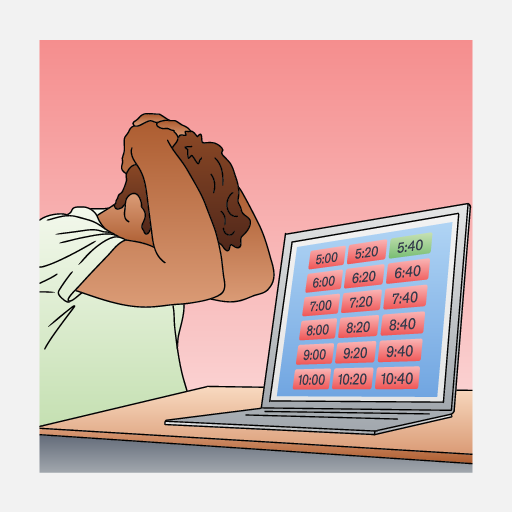
Understanding the remote proctoring process reduces anxiety and helps you prepare mentally for the experience.
Depending on the circumstances, pre-exam checks by the invigilator may take between 10 and 30 minutes after your scheduled session starts.
The invigilation process features:
- Identity verification: Show photo ID and take a selfie.
- System check: Proctor remotely controls your computer to check for prohibited programs.
- Room scan: Use a mirror/phone to show a 360° view of the room, desk surface, and under the desk.
- Rules review: Confirm exam guidelines with the proctor.
- Password entry: Proctor unlocks your exam, and you begin your test.
During a remotely proctored test, the proctor will monitor your webcam and screen continuously, but will not interrupt unless necessary.
- Bathroom breaks are allowed, although the timer continues.
- Stay in camera view — no excessive movement.
- Do not adjust the position of the webcam.
- Keep hands visible when possible.
- A chat box will remain open for any required communication.
The entire invigilation process, conducted by ProctorU, ensures test integrity while respecting your privacy. Proctors are trained professionals who want you to succeed. They’re job is to help, not to intimidate.
You can see everything the proctor does on your screen. Proctors cannot access personal files without your knowledge.
ProctorU will only wait 15 minutes past your scheduled start time for any remotely proctored session. After this window, you’ll be marked as a “No Show" and your session will be cancelled.
If you miss a session:
Contact the GAMSAT Office IMMEDIATELY
You’re allowed one no-show per remotely-proctored test section. Rescheduling is subject to availability within the test window, and a rescheduling fee applies. Therefore, it is not guaranteed that a missed session can be rescheduled.
The “no show” policy for remote proctoring differs significantly from that for Sections I and III at physical test centres. If you miss a session at a physical test centre, your registration fee will be forfeited once testing begins, and you will not be allowed to enter or reschedule.
The unexpected issues detailed in this chapter aren’t meant to alarm you, but to prepare you. They’re based on real experiences shared by multiple GAMSAT test takers over recent years through forums and social media.
It’s crucial to understand that ACER contracts independent test centres across different cities to administer the exam. Each venue, whether it’s a university, conference centre, or dedicated testing facility, has its own infrastructure, equipment, and staff. This means conditions can vary significantly between locations.
While ACER sets standardised procedures, they cannot control every variable at every location. Some venues run like clockwork; others may have quirks or challenges. By familiarising yourself with potential disruptions, you’ll be better equipped to maintain your composure if something unexpected occurs.
Your practice sessions likely involved a familiar mouse and keyboard setup, but test centres can throw curveballs. Multiple students have reported having to use laptop trackpads instead of mice. It’s a small but important difference to be aware of if you’ve been practising with a mouse.
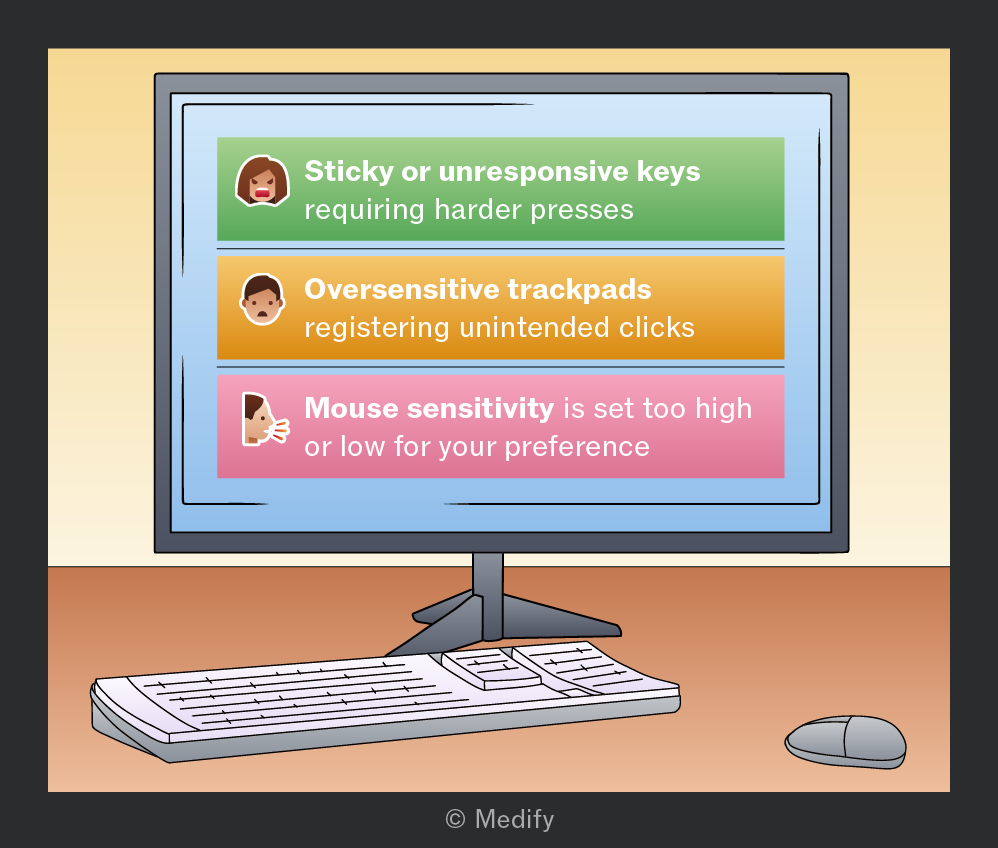
Other input issues reported include:
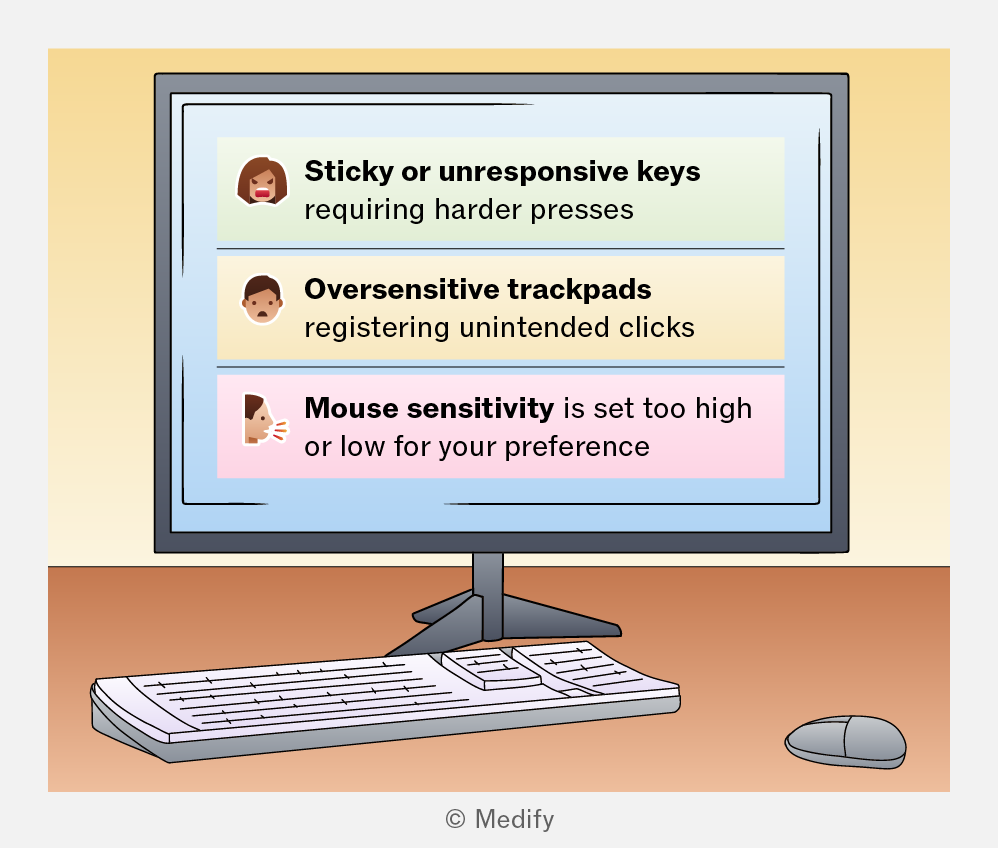
System performance can be unpredictable across different test centres, even varying between computers in the same test centre. For instance, input lag can be slower than you are used to. This is something you may need to accept while taking the test and consider reporting to ACER later. It is worth flagging issues to the invigilator, but it is in your interest to keep your attention on the questions rather than focusing on any frustration you may feel.
Larger technical issues, such as screen freezes or computer crashes, require immediate attention. Stay calm, and raise your hand for assistance. The psychological impact of these issues can be severe:
- ACER tracks all your responses on the server side. Even if your screen freezes or your browser crashes, your previous answers are saved.
- You have the right to the full allocated time for the section. Politely asking the invigilator, “Can you let me know what my new finish time will be?” will ensure those lost minutes are added back to your remaining time.
Technical issues during the GAMSAT are stressful but manageable. Accept that minor technical impediments can be part of the test experience. The students who maximise their success are those who adapt quickly.




Test centres are working environments with their own unique quirks. The room assigned for GAMSAT may be a repurposed lecture hall, conference room, or computer lab, each with its own unique environmental characteristics.
Common environmental disruptions can include:
- temperature changes — rooms that are uncomfortably cold or stuffy.
- noise — from adjacent rooms, corridors, or outside construction and traffic.
- lighting issues — harsh fluorescents or flickering bulbs.
- distracting behaviour from other test takers — coughing, tapping, frequent bathroom trips.
While test centres and proctors strive to minimise disruptions, there are steps you can take to help yourself.
- Dress in layers — you can’t control the thermostat.
- Bring approved earplugs (without audio function) to minimise distractions.
Administrative and technical bottlenecks don’t just test your patience; they can disrupt your test day timeline.
When registration takes longer than expected due to missing names on registration lists, technical issues affecting one or more test-takers, or any other unforeseen circumstance, the actual test start time may be pushed back. Rest assured, you will still be guaranteed the full amount of time for both sections, as well as the break period.
Mentally prepare for the possibility of a start time 30-90 minutes later than advertised:
- Morning sessions might not finish until well into the afternoon
- Afternoon sessions can stretch into the evening
- Pack extra snacks. You might need them
Your planned journey home, whether it’s catching a specific train, avoiding rush hour, or making a flight, suddenly becomes uncertain. So, book flexible return travel or consider staying overnight if travelling far. If you have a ride, let them know that finish times can be unpredictable.
Unexpected physical symptoms from illness during the GAMSAT can be devastating.
If symptoms strike unexpectedly, your options are limited but real:
1. Push through minor discomfort, use the bathroom for relief and take painkillers during the break.
or
2. Make the difficult decision to leave and seek medical attention/documentation.
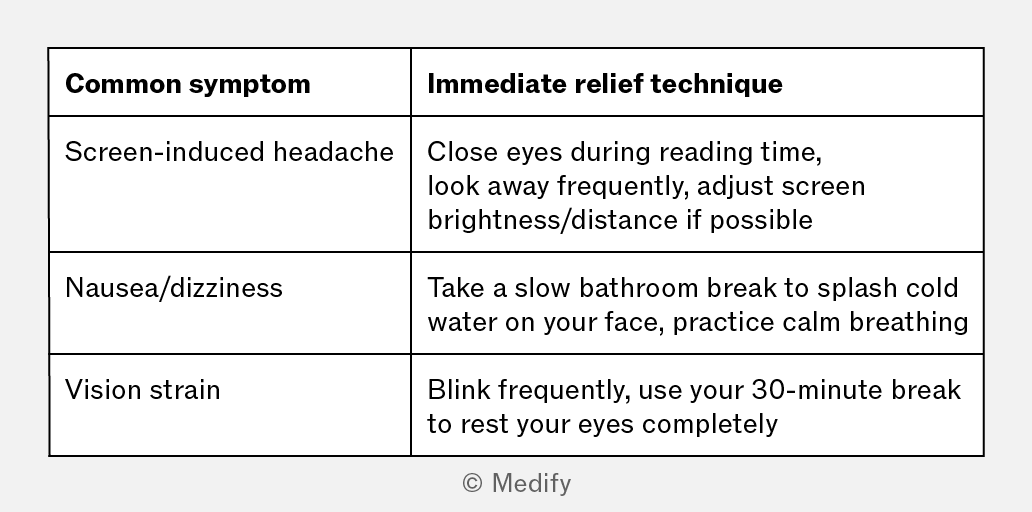
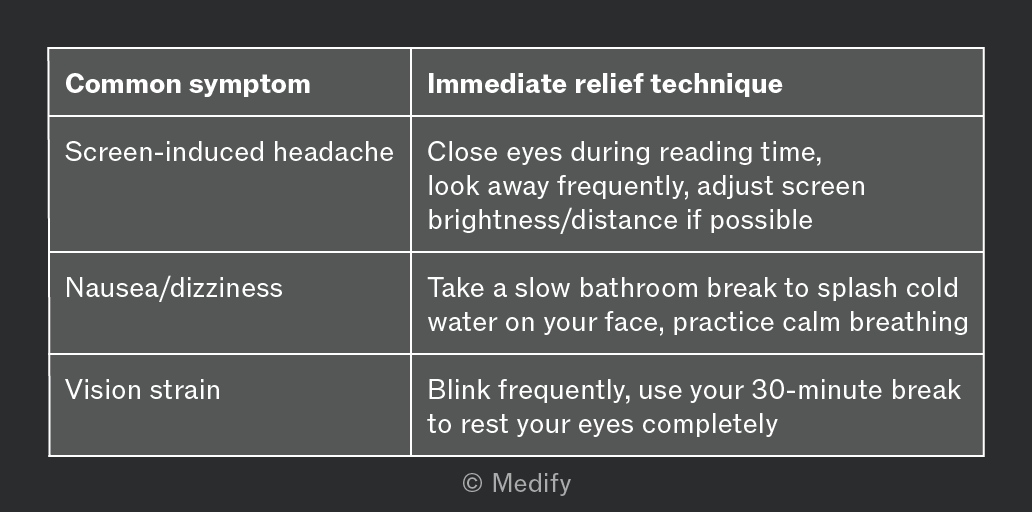
For severe symptoms, your health must come first. The GAMSAT can be retaken in the future.
Recall the following if unexpected symptoms strike:
- You cannot access food/medication during testing without prior Reasonable Adjustments approval.
- Leaving before Section III = no score.
- Leaving during Section III = medical certificate required within 3 days.
The 30-minute break between Section I and Section III is your only opportunity to reset physically and mentally during the 4+ hour test marathon. This break is strictly timed and occurs entirely within the test venue. The test centre staff will dictate the areas available to you during the break period.
Plan your break activities in advance. Decision fatigue may kick in after approximately 100 minutes of intense concentration. Plan a break you will look forward to. Know exactly what you’ll eat and what you’ll do to maximise recovery time.
When planning your breaks, prioritise the following:
- Bathroom — Queues can form quickly depending on the number of test-takers at your venue. If the line is extensive, consider coming back later.
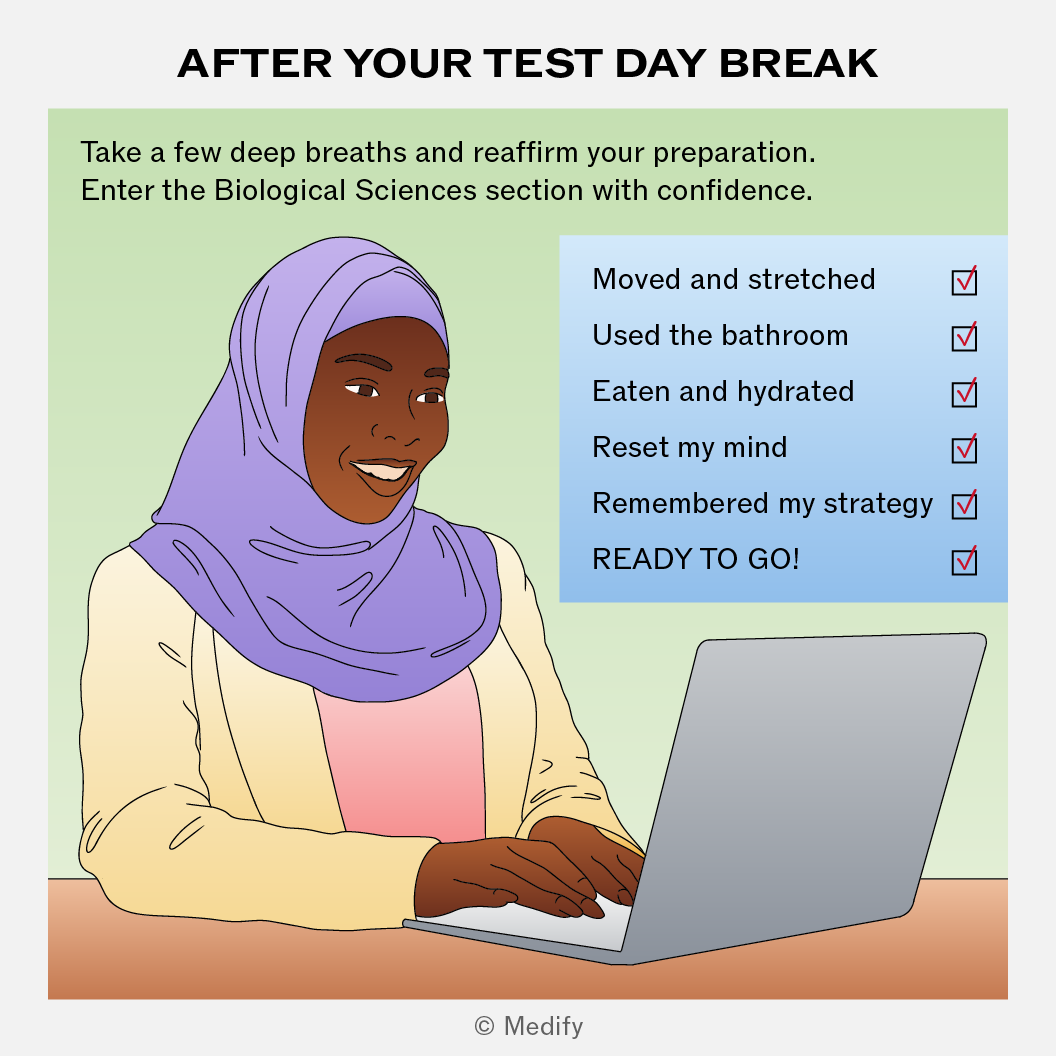
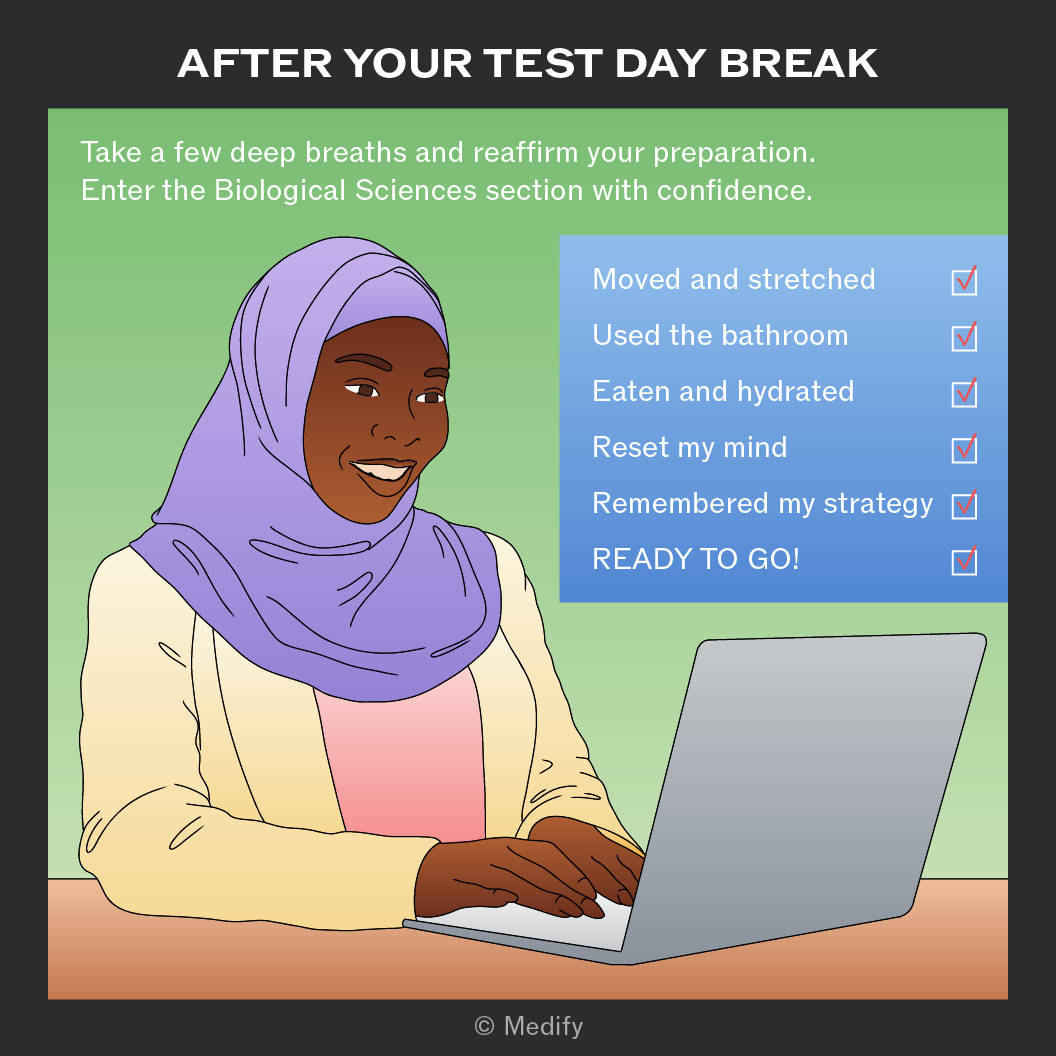
- Hydrate and eat — Replenish energy for the demanding 150-minute Biological Sciences Section.
- Move your body — Combat stiffness from sitting.
- Mental reset — Clear your mind before tackling the sciences.
- Return to your seat with time to spare — Being late means missing the start of Section III, which cannot be delayed for latecomers. It is unlikely you would be given the time back.
After 100 minutes of sitting, your body needs movement to restore circulation and alertness. Simple stretches and movement can significantly impact your Section III readiness.
Stand and walk around the venue. Roll your shoulders, stretch your neck, and do gentle wrist circles. These movements help combat the physical tension caused by extended computer use and prevent fatigue during the longer sciences section.
The illustration below demonstrates a selection of discrete stretches that can be performed in the test centre during your break or whilst seated at your computer.
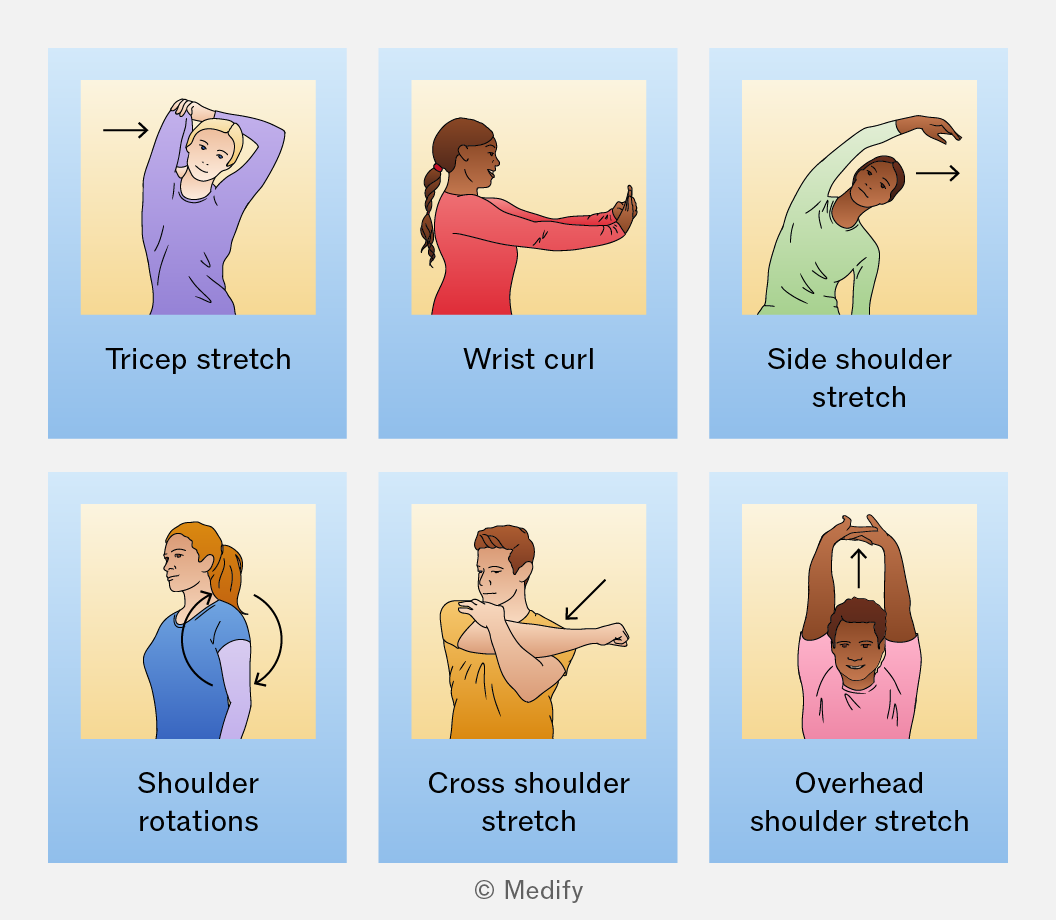
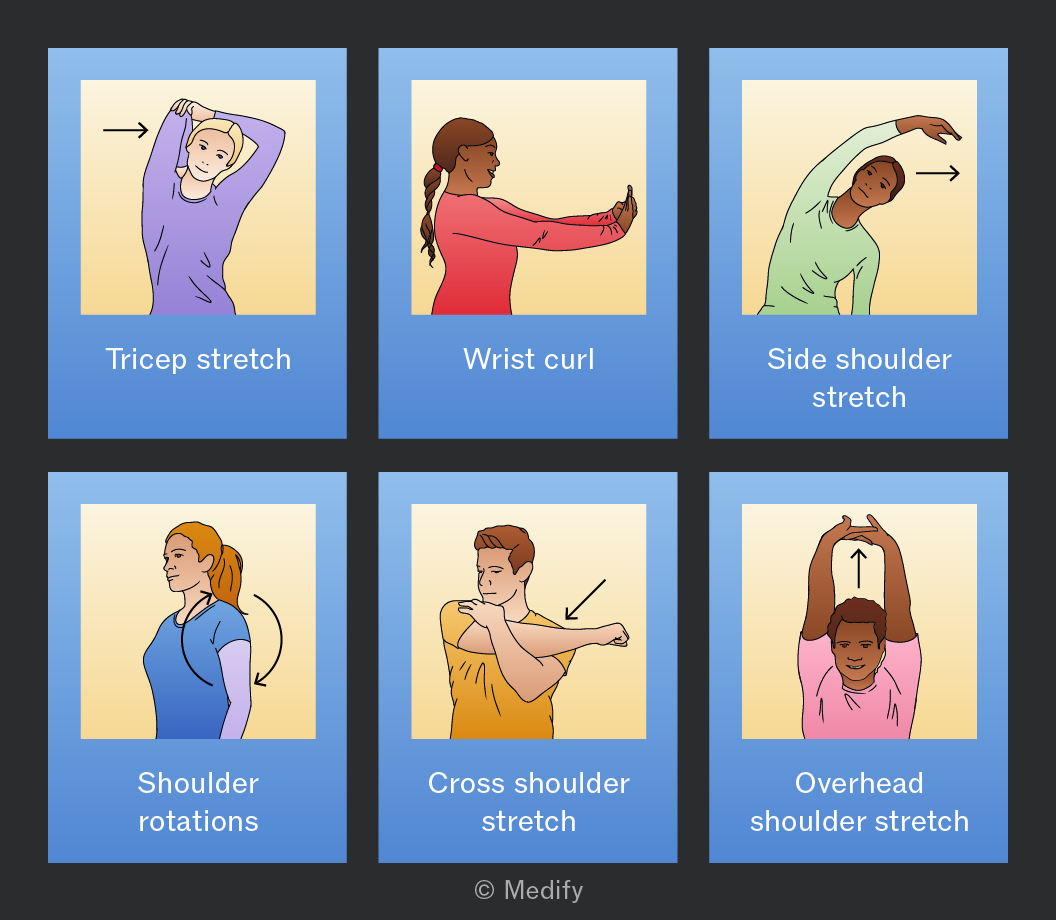
Even 5 minutes of gentle movement increases blood flow to your brain, improving focus and reducing the risk of cramping during a section.
Even well-prepared students can sabotage their performance with poor break management.




The final 5 minutes of your break should focus on preparing your mindset for Section III. This section is 50% longer than Humanities and tests different cognitive skills.
As you return to your seat early for the sciences section, remind yourself of your game plan:
- Your strongest subjects
- Your triage strategy
- Your timing benchmarks
A carefully devised plan and study schedule will enable you to feel in control as you prepare for the GAMSAT. After you have constructed your study schedule, focus on following it.
Confidence comes from trusting your process. You may find that you need to make small-scale adjustments to your plan based on what works best for you as you prepare. But avoid completely overhauling your schedule.
As you approach Test Day, resist the urge to second-guess your study plan. Keep perspective: you’ve prepared thoroughly, and last-minute doubts are unlikely to improve your performance; instead, they tend to create more stress.
Remind yourself that you made a strategic plan and followed it through. Applying a similar systematic approach in the actual test will make you feel confident and in control.
Physical preparation is as crucial as mental preparation for the GAMSAT’s demanding 4+ hour test marathon. Prioritise self-care in the days leading up to the GAMSAT. This preparation is as essential as academic study.




In the final days before Test Day, focus on practising your strengths.
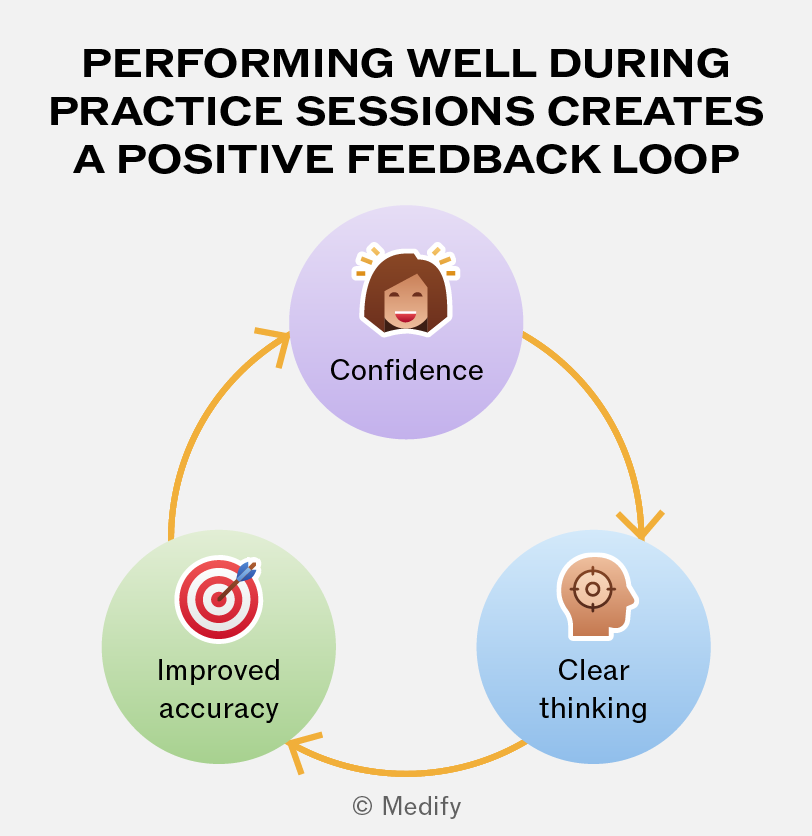
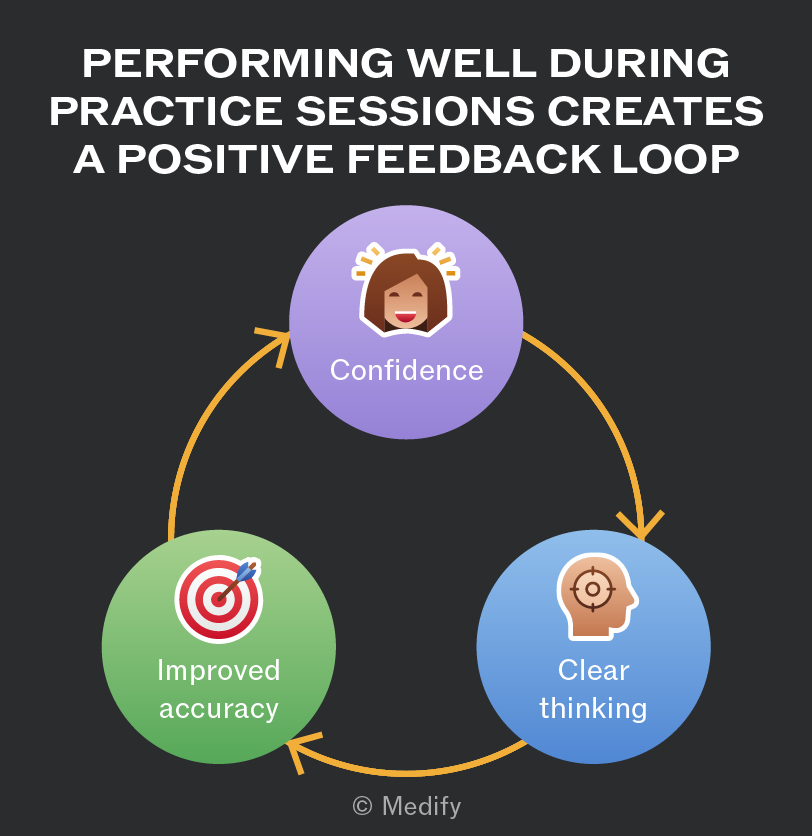
When you enter the test knowing that there are areas in which you have scored highly on a consistent basis, you will have confidence and momentum. This positive mindset helps you stay composed when you encounter difficult questions.
Practice during the final week should prioritise quality over quantity. Target your practice to specific areas where you can brush up strengths with individual questions or sets.
Always read explanations to ensure that you’re selecting answers for the right reasons, not just getting them correct by chance. One well-understood question is worth more than multiple rushed attempts. This approach reinforces proper reasoning patterns without inducing fatigue or anxiety from excessive practice.
On the last full day before the GAMSAT, limit your revision significantly. Heavy practice won’t improve your score but will instead drain the mental energy you need for Test Day.
You need to prepare your mind and body so you are ready for the long day ahead:
- pack your bag (ID, admission ticket, allowed materials).
- confirm your route and timing.
- switch off for the night and recharge.
Engage in activities you enjoy, have a good meal, and maintain your normal bedtime. Like an athlete the night before a marathon, rest is the final step in your preparation. Being as rested and relaxed as possible will be hugely helpful for stress management and endurance on Test Day.
On Test Day morning, avoid last-minute GAMSAT practice.
Don’t cram!
Instead, warm up your brain with light reading, such as news articles or familiar material that engages without exhausting you.
A carefully thought-out plan for Test Day logistics, such as getting to the test centre with time factored in for traffic-related issues, will significantly reduce anxiety and cognitive load, so you can dedicate all of your mental energy to the test itself.
During check-in and waiting periods, expect delays and stay calm. These intervals are part of the process, not a disruption to it.
You can use this waiting time for gentle stretches: physical relaxation promotes mental clarity when the exam begins.
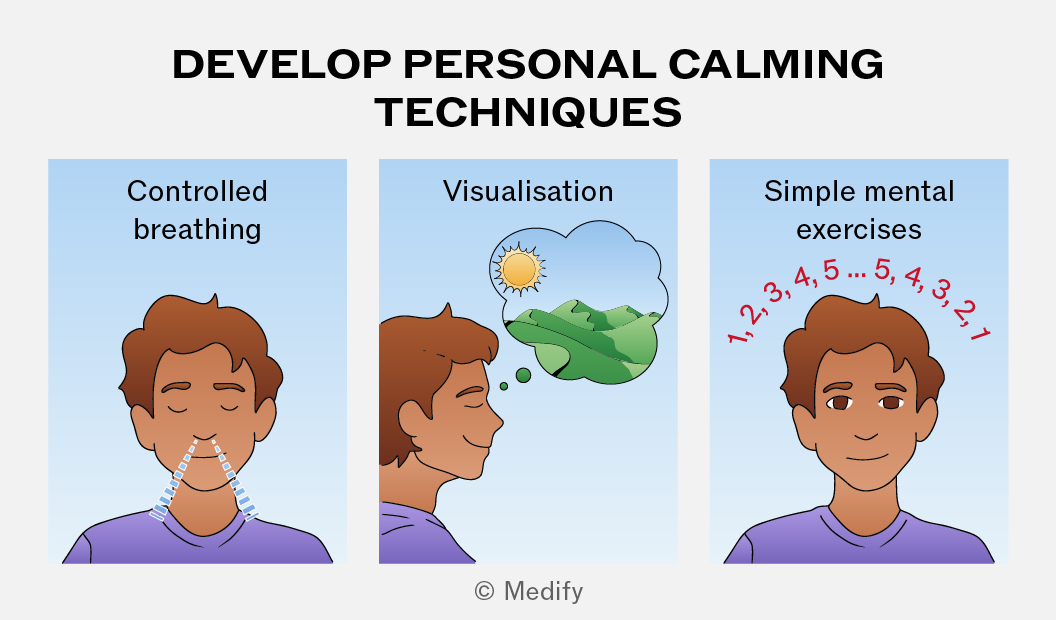
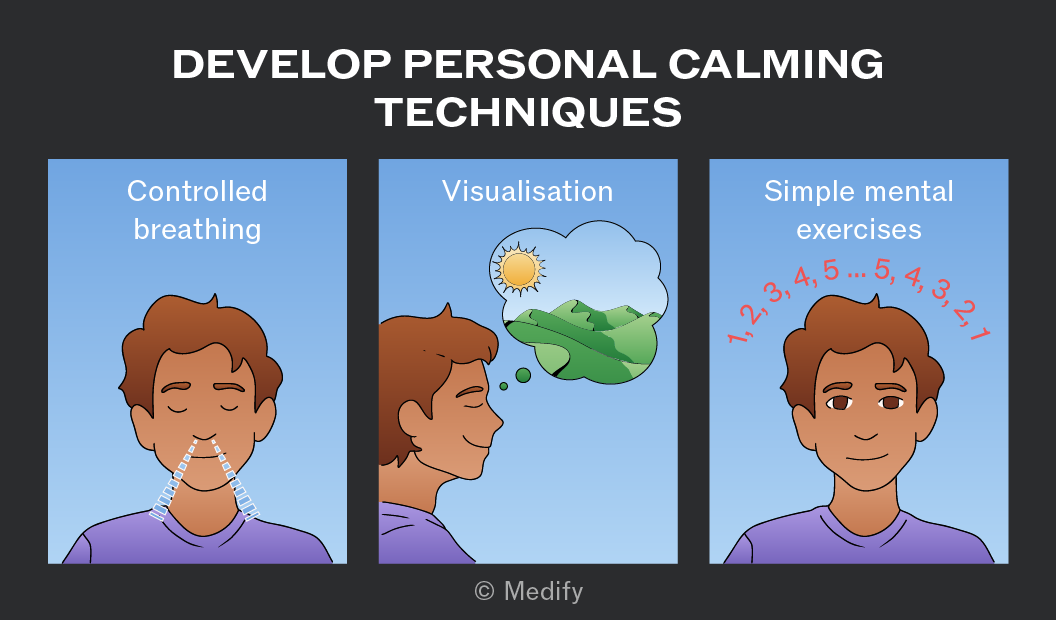
Avoid engaging in stressful conversations about exam difficulty or preparation levels. If other candidates discuss the exam, you can politely disengage. Saying that you are ‘getting in the zone’ is a perfectly acceptable excuse to protect your focus.
Everyone experiences stress, even students who typically excel academically. You are not alone.
Be aware of when you are feeling pressured and take steps to alleviate stress.




Test Day presents unique cognitive and logistical demands. A well-constructed checklist can transform anxiety-inducing variables into manageable tasks, freeing mental energy for what truly matters: the exam itself.
If you must travel to a test centre for any section of the GAMSAT, Medify recommends creating your own test day checklist. Your checklist is personal. Generic checklists often overlook critical details specific to your circumstances, such as your test centre location, travel method, dietary needs, and approved adjustments.
Keep this checklist handy for the week leading up to Test Day and review it periodically.
Consider writing your checklist by hand with a pen and paper. The act of writing reinforces memory and reduces the likelihood of forgetting critical items under test-day stress.
Consider including the following categories and items when constructing your Test Day checklist:
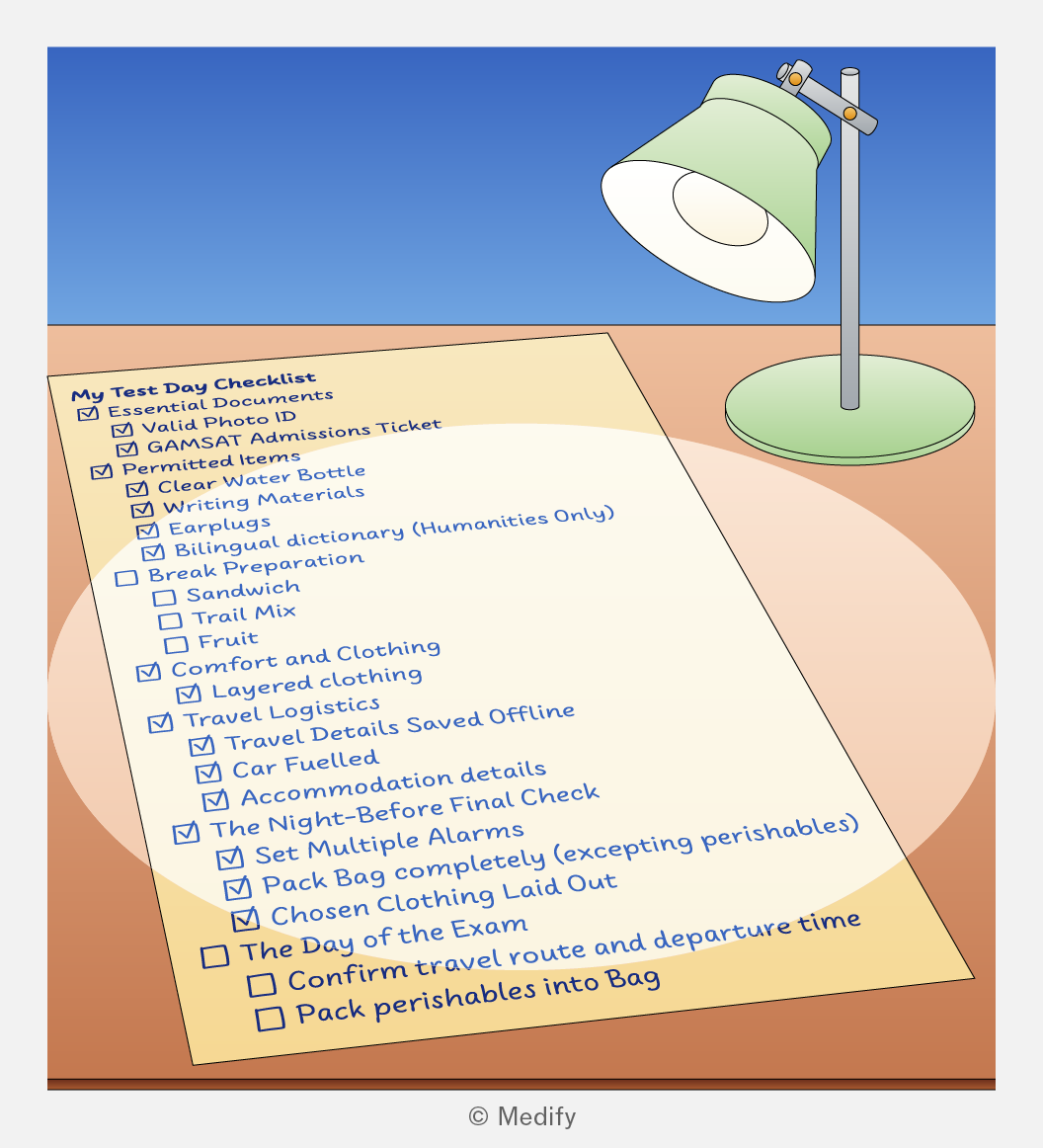
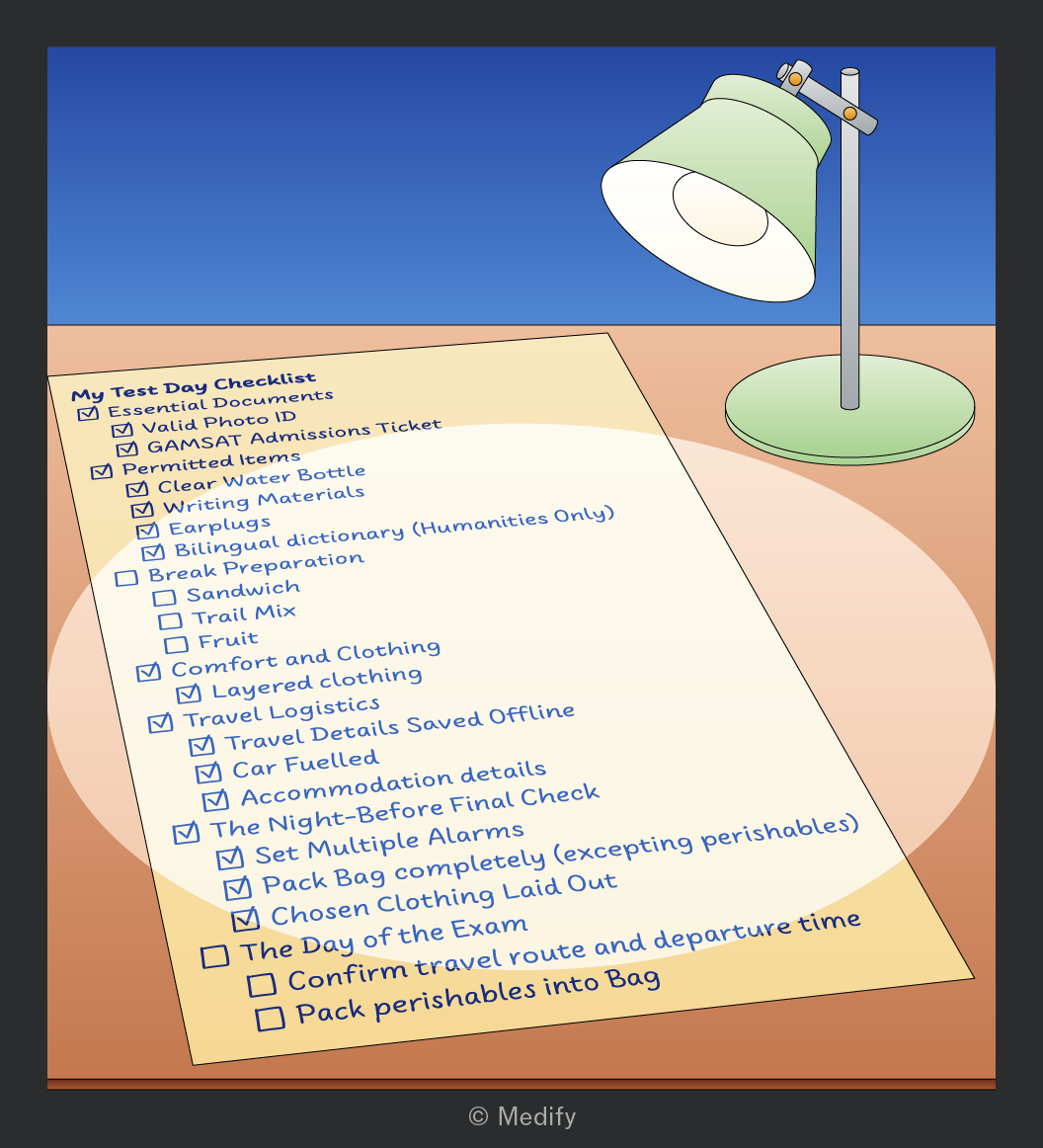
Please use the above as a guide only. For instance, you may choose to remove some items not applicable to you, or rephrase ‘writing materials’ as:
- 2 pieces of A4 lined paper and a pen,
- OR marker and erasable whiteboard,
based on your preference. Ultimately, your Test Day checklist should be tailored to work for you.
Begin checking off these items only on the evening before your test.