
Thermal physics
On this page
Temperature is a measure of the hotness of an object. On any temperature scale, a higher temperature means the object is hotter.
When two objects at different temperatures are in thermal contact, thermal energy flows from the hotter to the cooler object until their temperatures are equal.
It is useful to note that thermal contact does not necessarily require direct physical contact.
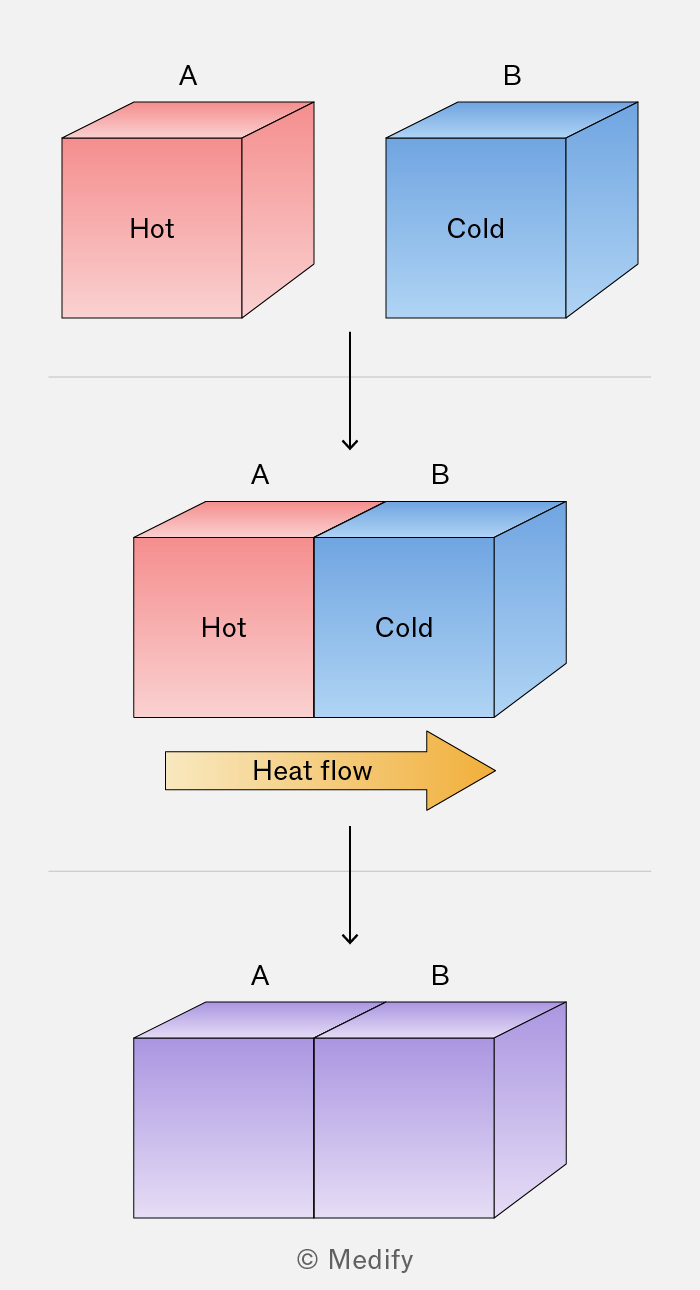
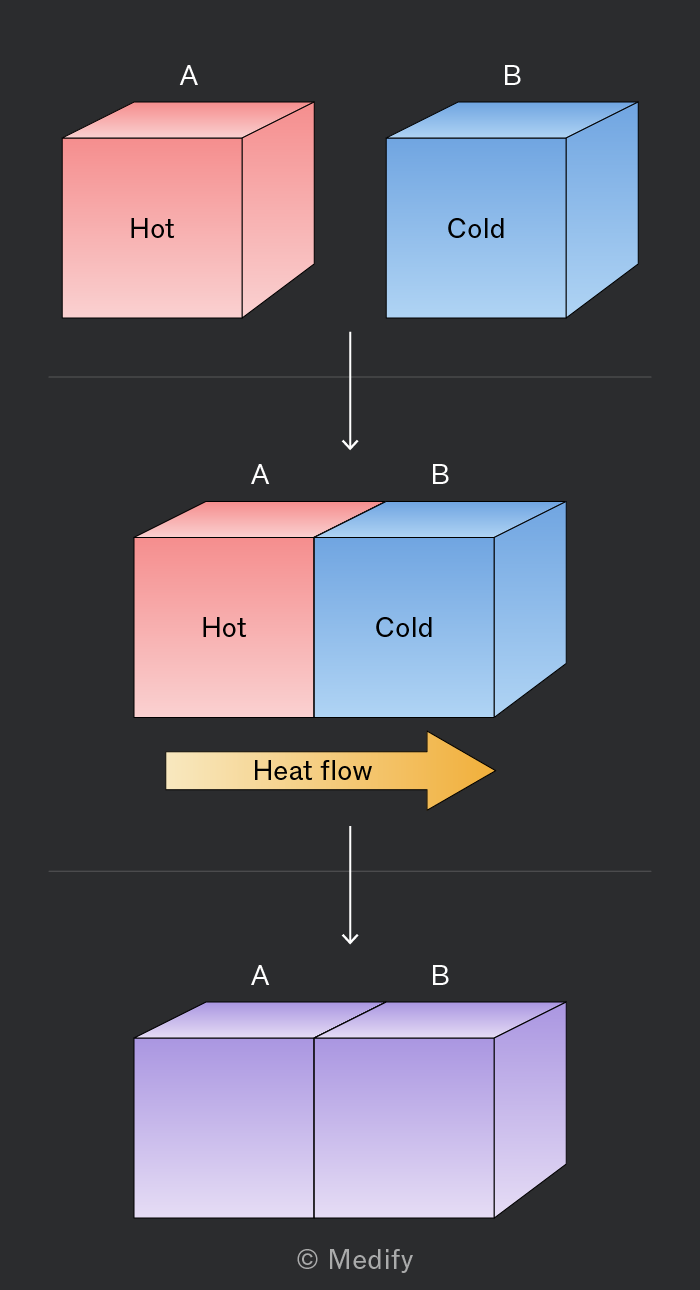
When two objects reach the same temperature, there is no net flow of thermal energy; they are in thermal equilibrium.
The zeroth law of thermodynamics states that if objects A and B are both in thermal equilibrium with object C, then A and B are in thermal equilibrium with each other, providing a physical definition of temperature.
Heat transfer through conduction occurs when the particles of a hotter object collide with those of a cooler object, resulting in the transfer of thermal energy.
Particles in the hotter object have higher average kinetic energy. When objects are in contact, collisions transfer kinetic energy from the hotter object to the colder one.
Over time, the hotter object loses kinetic energy, and the cooler object gains kinetic energy, until both have the same average kinetic energy.
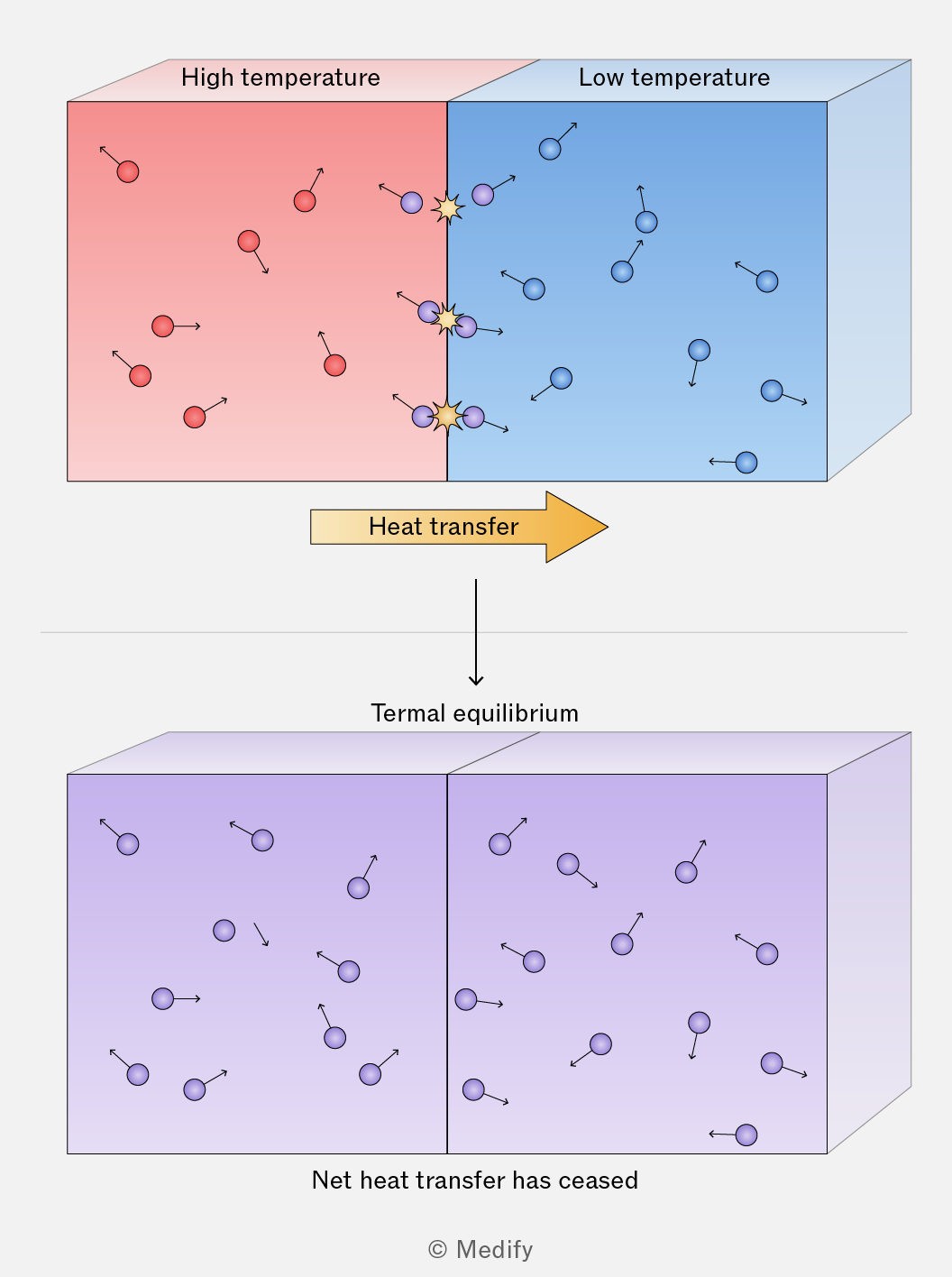
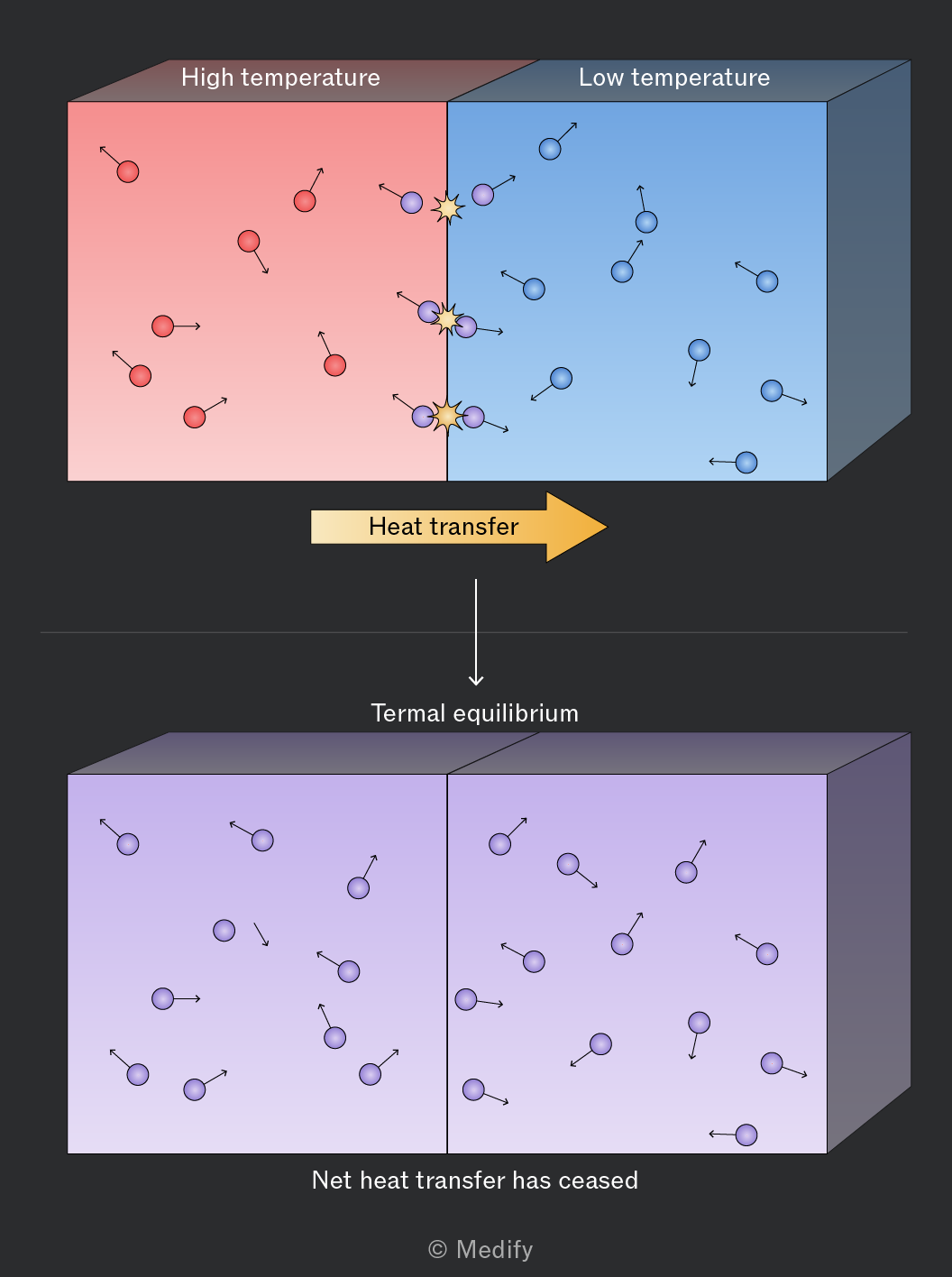
It is important to note that particles are not exchanged between two bodies or systems through conduction.
As a substance is cooled, the average kinetic energy of its particles decreases. The temperature at which the average kinetic energy is zero is known as absolute zero, the lowest theoretical temperature.
The absolute (thermodynamic) scale starts at this point, so it has no negative values. The standard unit of temperature is the kelvin , one of the seven SI base units. The increment is the same as Celsius.
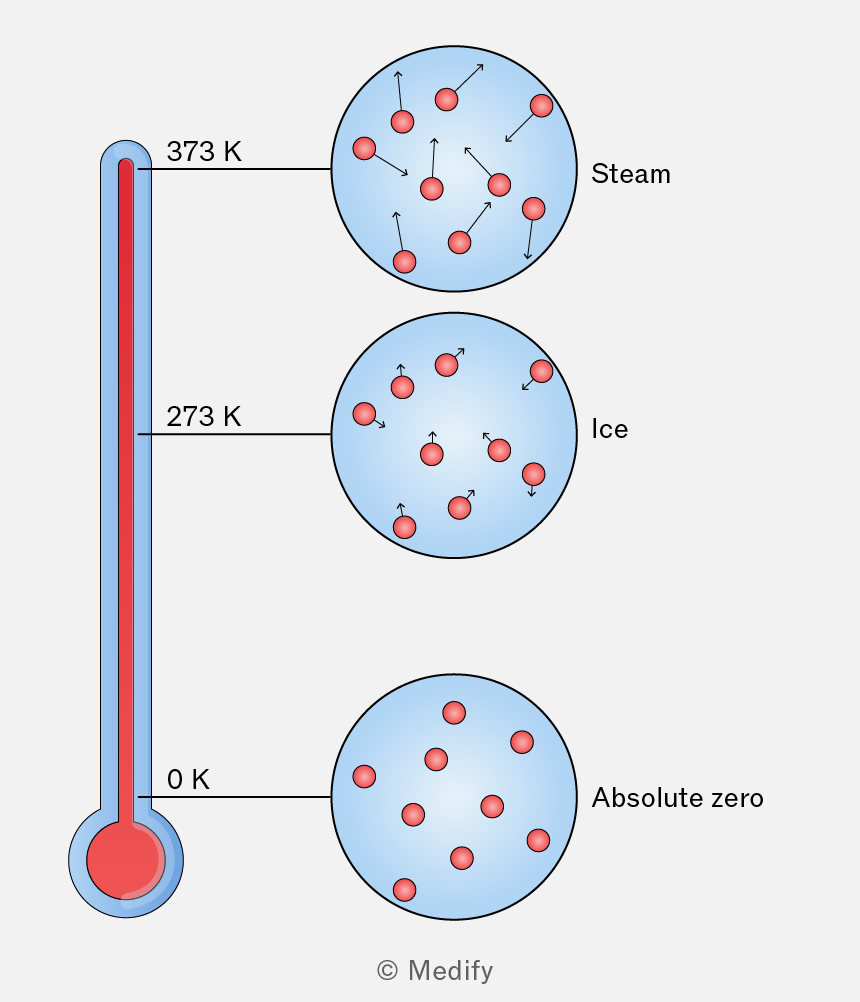
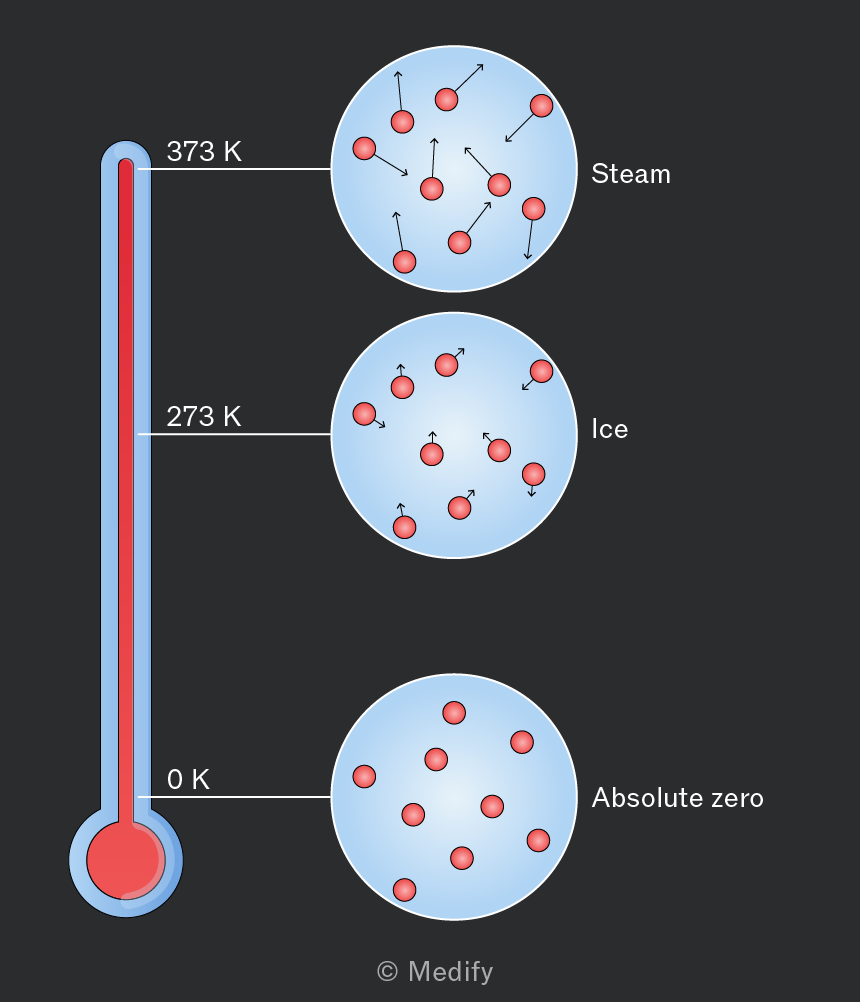
On the absolute scale, temperature is directly proportional to the average kinetic energy of the particles in a substance. Therefore, doubling the absolute temperature doubles the average kinetic energy, regardless of the material. This is why the scale is independent of any particular substance.
The Celsius scale is defined by two particular points:
- The freezing () of pure water at atmospheric pressure ().
- The boiling point () of pure water at atmospheric pressure.
One degree Celsius is 1/100 of this interval.
A thermometer can be calibrated by placing it in boiling water and setting it to An object at is in thermal equilibrium with boiling water.
The Celsius scale is used for everyday temperatures. For example, room temperature is around and body temperature is around
The Kelvin temperature scale is defined by two specific points:
- Absolute zero () where particle kinetic energy is zero.
- The triple point of water, which is the unique temperature ( ~) and pressure () where ice, liquid water, and water vapour coexist in equilibrium.
This defines the scale and sets the offset from Celsius:
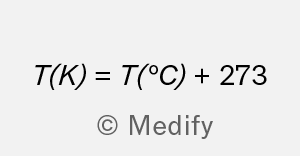
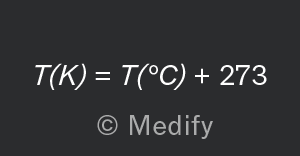
This means that a change of corresponds to a change of
The Kelvin scale is used in scientific calculations, extreme temperatures, and experiments because it is absolute and proportional to particle kinetic energy.
The Kelvin temperature scale is defined in relation to absolute zero and the triple point of pure water.
The triple point occurs at on the Celsius scale and on the kelvin scale.
Since = , the offset between the scales is 273.15, so the relationship is:
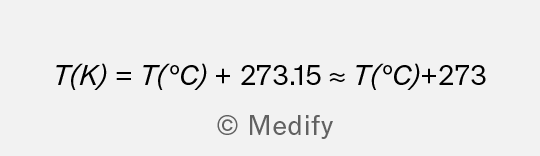
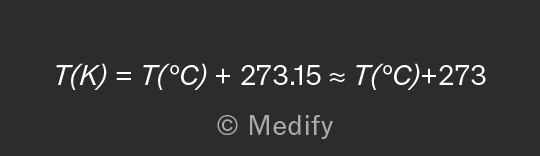
The equation relating the Kelvin and Celsius temperature scales can be used to find absolute zero () in degrees Celsius:
This also shows that the freezing point of pure water () in Kelvin is:
A more exact value for absolute zero is
The three main phases of matter are solids, liquids, and gases.
The solid phase is the most ordered, followed by the liquid phase, and the gas phase is the least ordered.
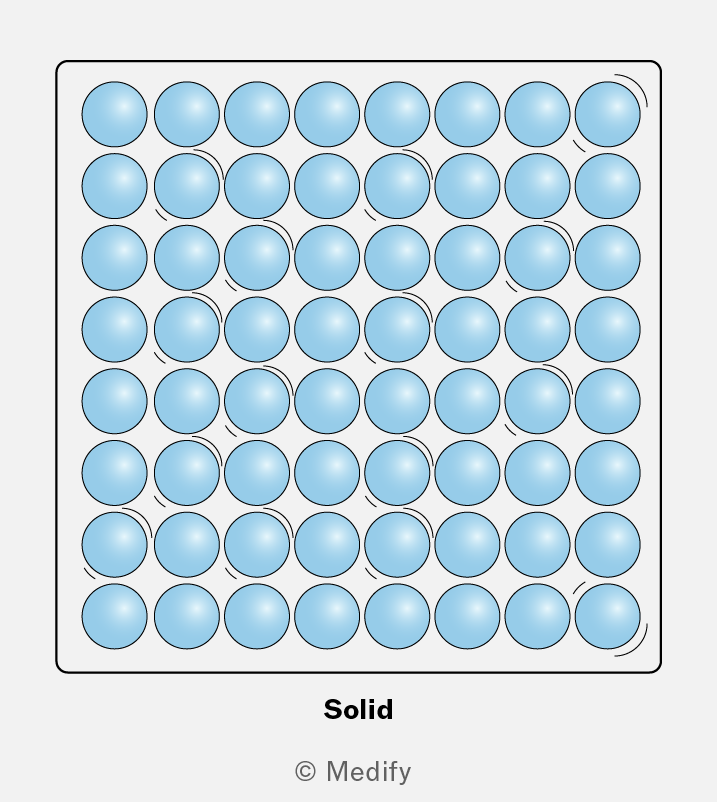
Solids have the following properties:
- The spacing between the particles is small.
- The particles are ordered, arranged in a regular structure.
- The particles vibrate about fixed positions.

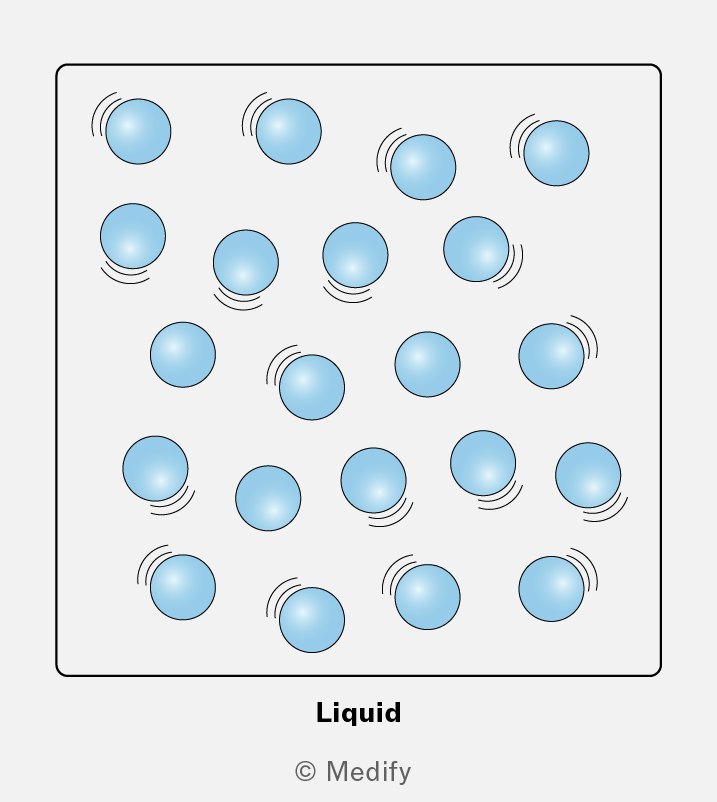
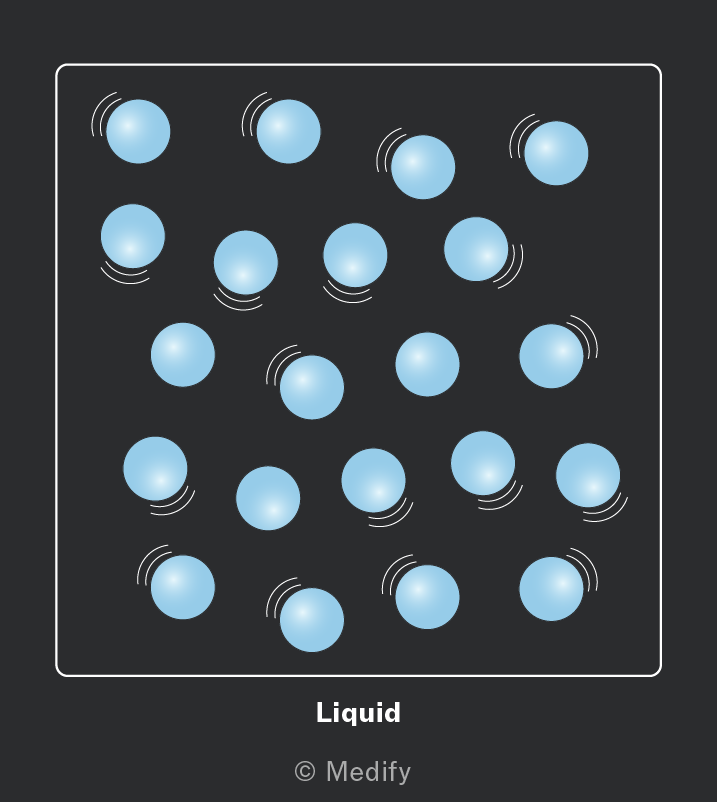
Liquids have the following properties:
- The spacing between the particles is small but not as small as in solids.
- The particles have no fixed arrangement.
- The particles can flow past each other.
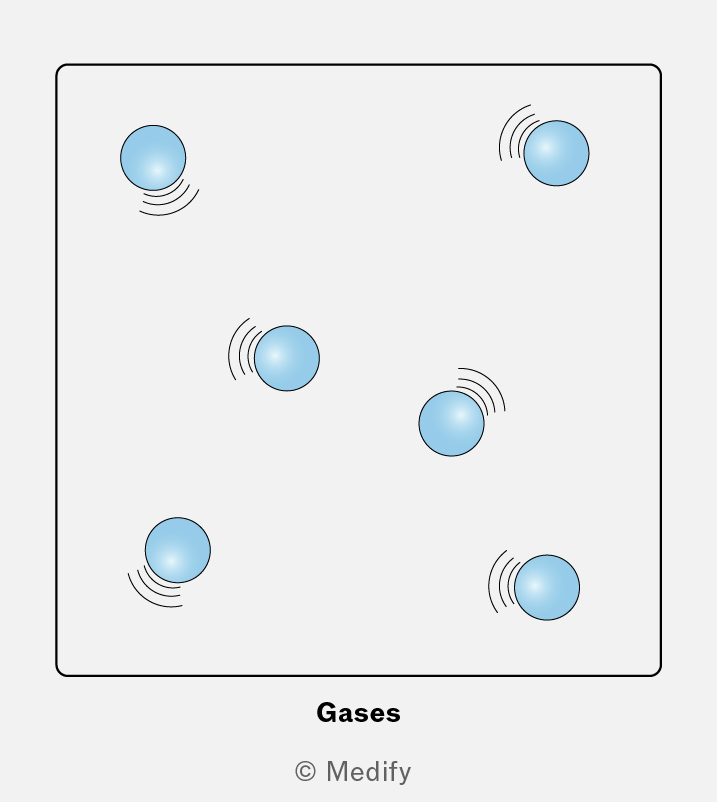
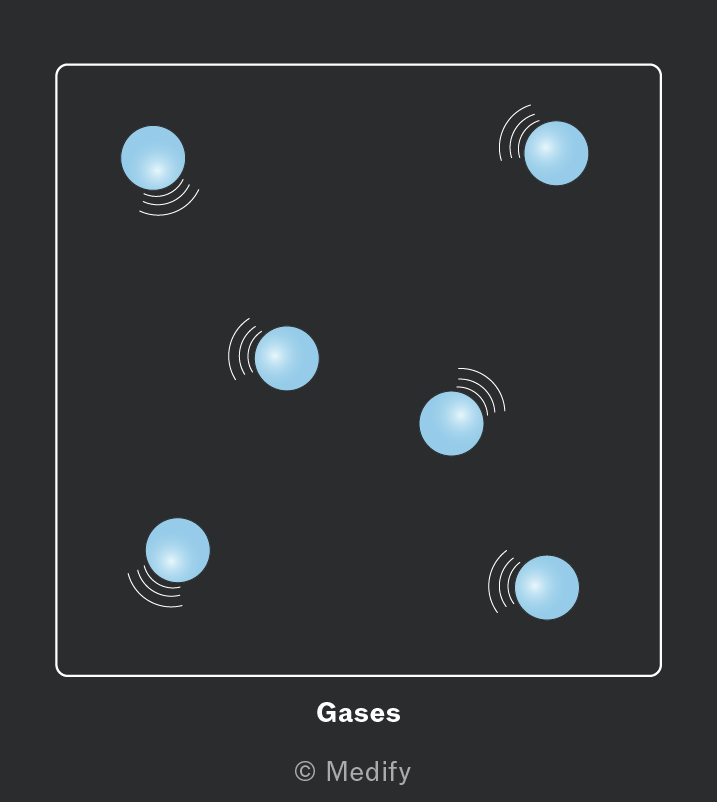
Gases have the following properties:
- The spacing between the particles is large.
- The particles move at high speeds.
Plasma is often called the fourth state of matter. It forms when a gas is heated to such extreme temperatures that atoms gain enough energy for electrons to separate from their nuclei. A process called ionisation. The result is a high-energy mixture of free electrons and positively charged ions.
Examples of ionisation include stars, lightning, and neon signs.
The kinetic model explains the phases of matter in terms of particle motion.
In a solid, particles experience strong electrostatic forces, so they can only vibrate about fixed positions and cannot move freely.
- When a solid is heated, the particles gain kinetic energy and vibrate more strongly.
- Once they have enough energy to overcome some of the attractive forces, the solid melts and becomes a liquid.
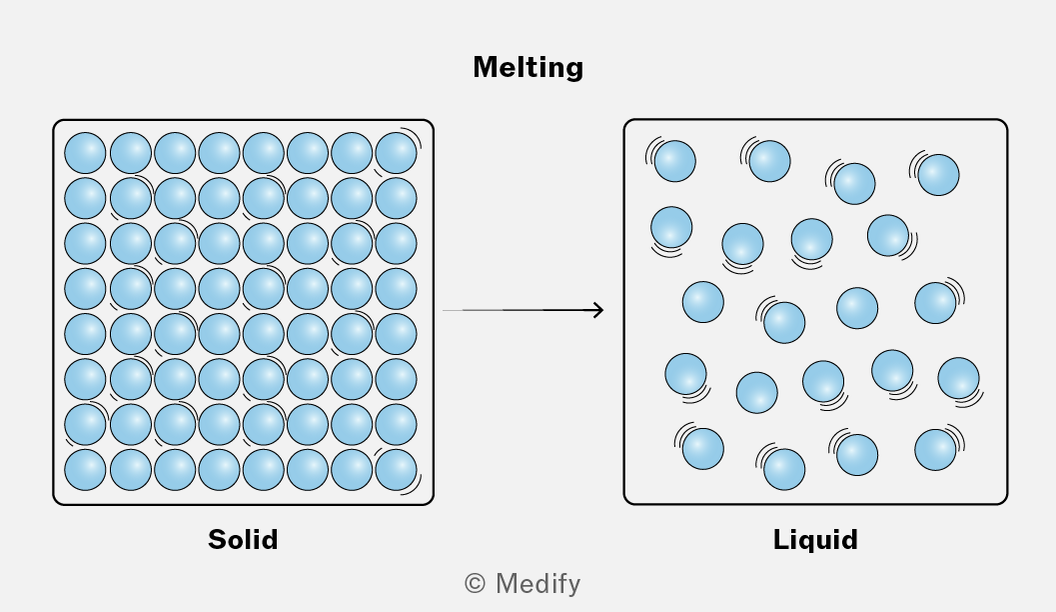
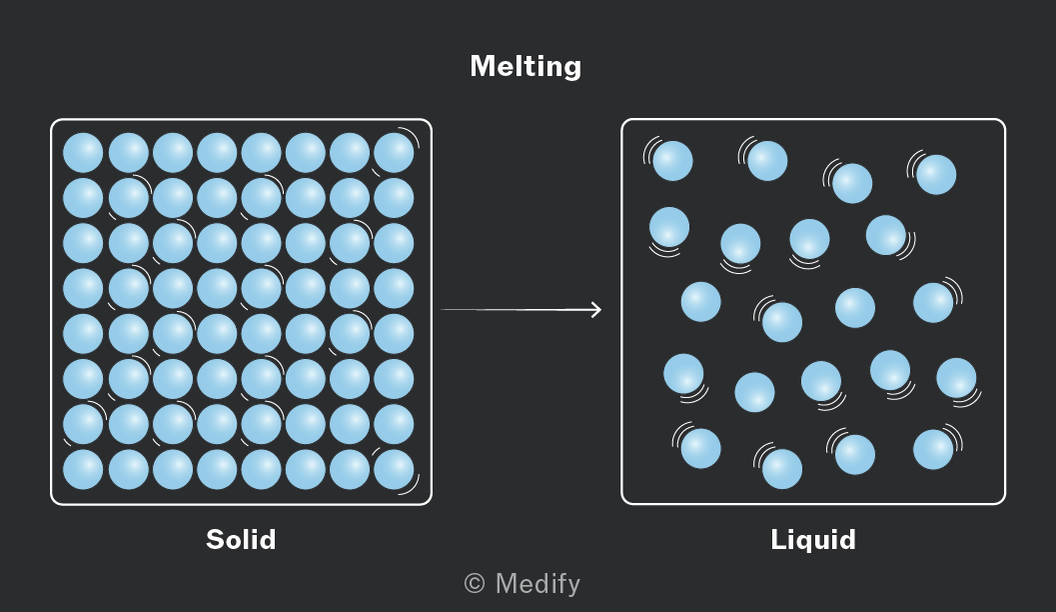
In a liquid, particles experience weaker electrostatic forces than in a solid, allowing them to move past each other while remaining close together.
Liquid particles, therefore, have greater kinetic energy than solid particles.
- When a liquid is heated, the particles gain kinetic energy and move faster.
- Evaporation occurs when particles on the surface gain sufficient energy to overcome intermolecular forces and escape, resulting in the formation of a gas.
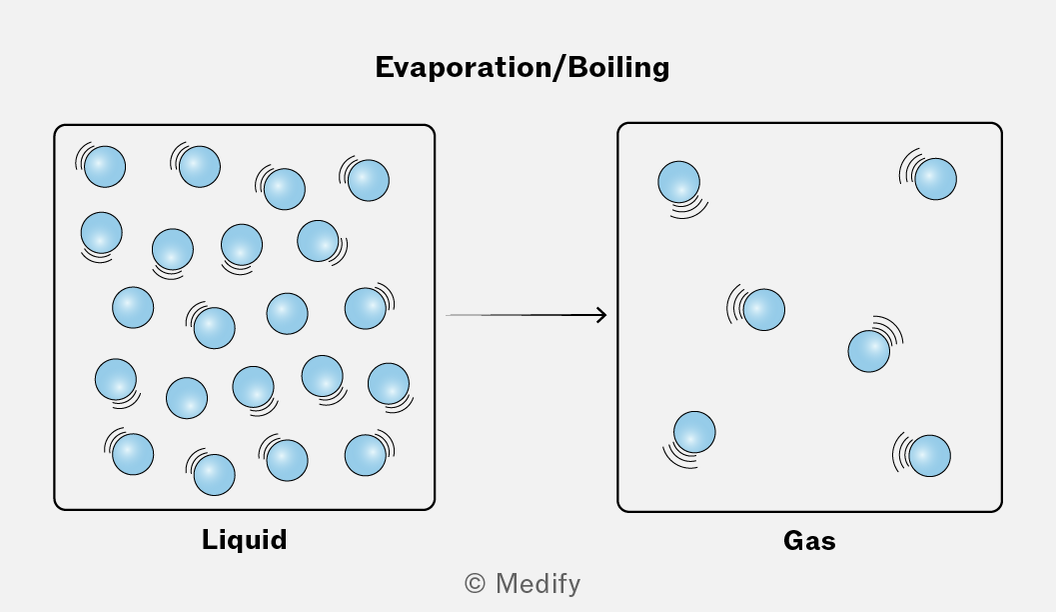
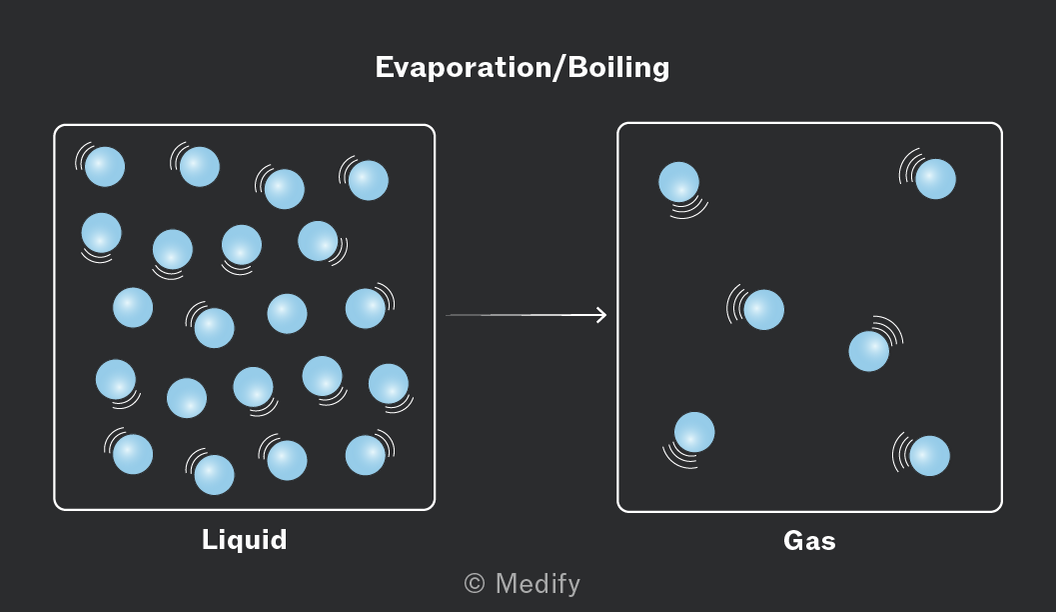
It is important to note that evaporation is distinct from boiling:
- Evaporation is a surface phenomenon that occurs at any temperature, where high-energy particles escape into a gas.
- Boiling happens at a fixed temperature throughout the liquid, as particles gain enough energy to form gas bubbles.
In a gas, particles experience negligible intermolecular forces, except during collisions. As a result, gas particles move freely in random directions.
Gas particles have greater kinetic energy than liquid particles.
- When a gas is cooled, the particles lose kinetic energy and move more slowly.
- As the gas particles slow down, they come closer together, and the attractive intermolecular forces between them become more significant.
- Once the particles are close enough, they begin to stick together, transitioning from a gas to a liquid. This process is called condensation.
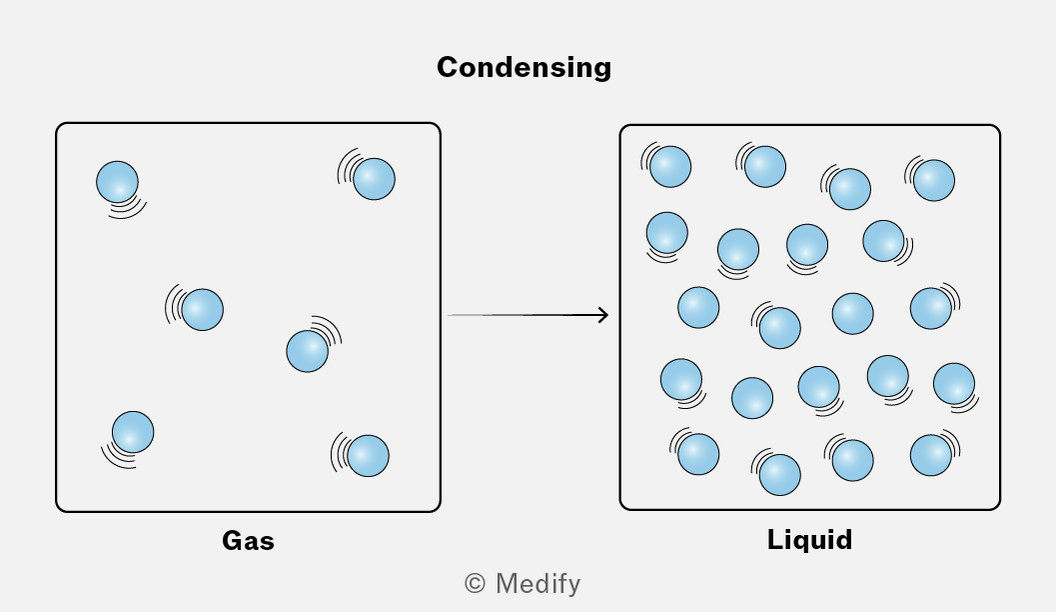
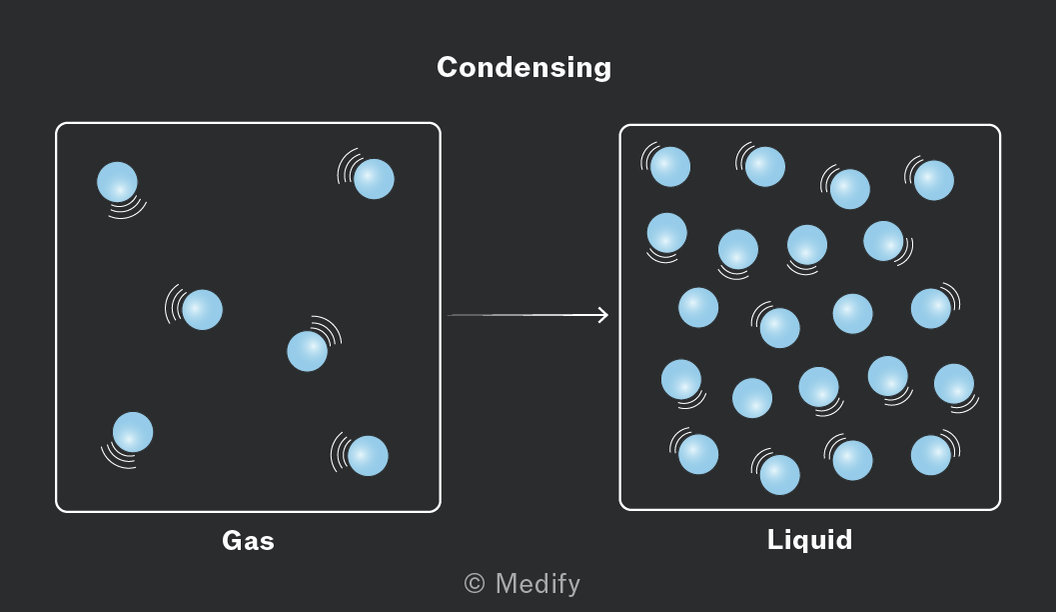
In a liquid, particles experience weaker electrostatic forces than in a solid, allowing them to move past each other, while remaining close together.
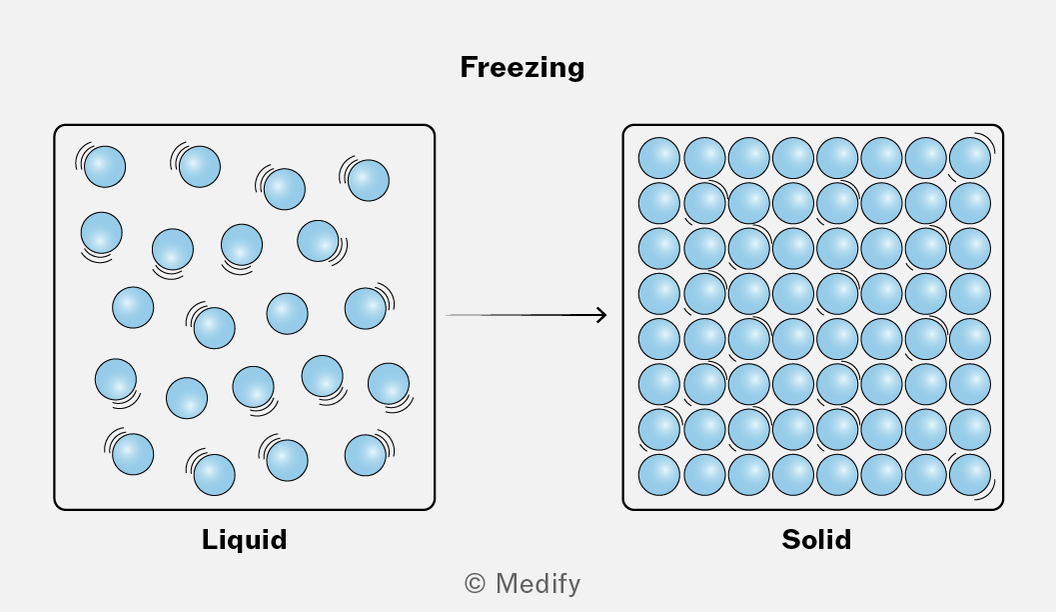
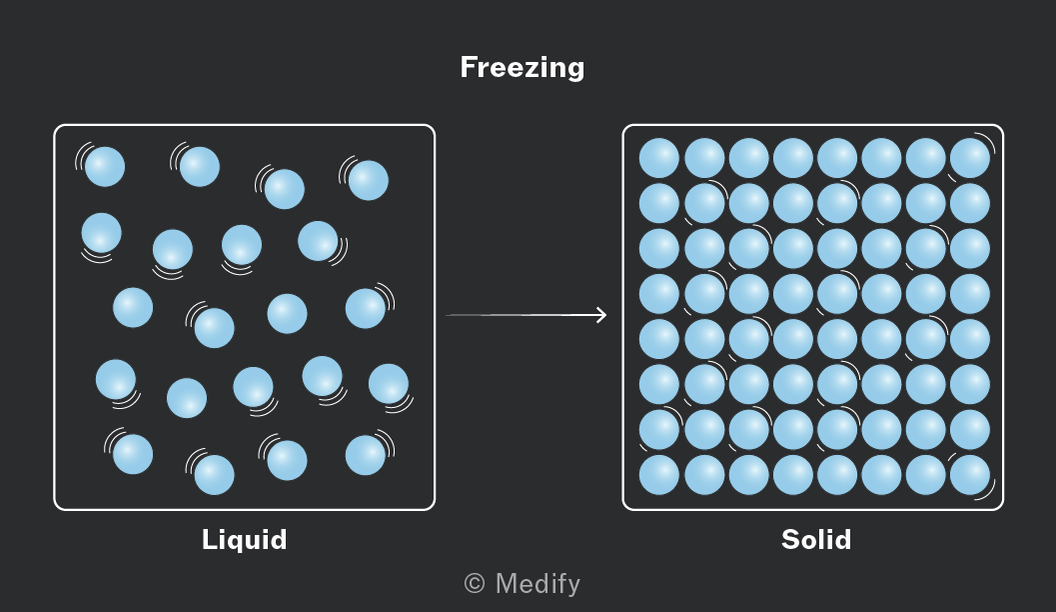
- When a liquid is cooled, the particles lose kinetic energy and move more slowly.
- As their kinetic energy decreases, the particles are less able to overcome the attractive intermolecular forces.
- Eventually, the particles become fixed in position, and the liquid freezes to form a solid.
Density is defined as mass per unit volume. According to the particle model, substances with particles that are further apart have a lower density. For most substances, the solid phase is denser than the liquid phase, which is denser than the gas phase.
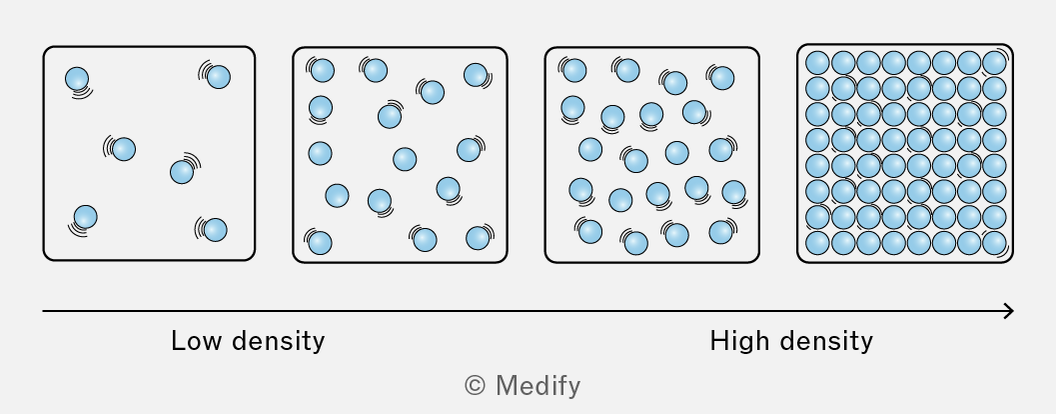
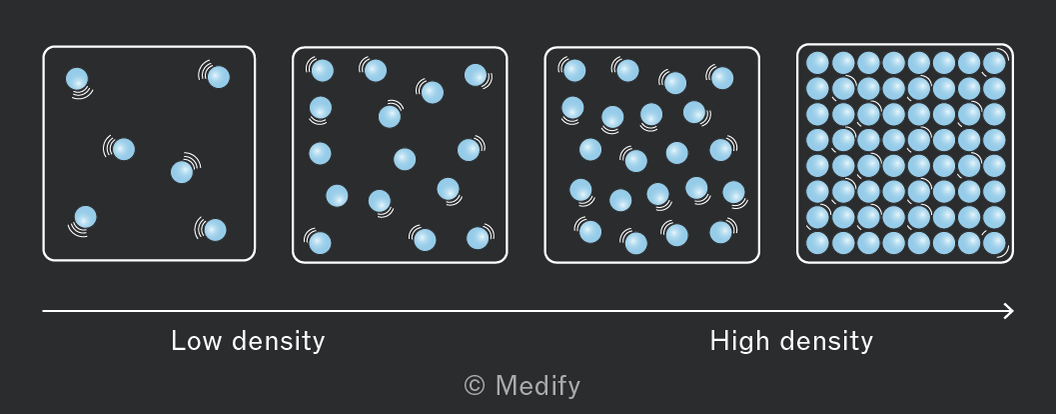
Water is unusual because its solid phase, ice, is less dense than liquid water.
When water freezes, its volume increases because the ice crystal structure forms with more open space between the water molecules than in the liquid state.
Brownian motion is the random motion of microscopic particles suspended in a fluid, such as a liquid or a gas.
It was first observed by Robert Brown in 1827, when he used a microscope to observe the random motion of pollen grains suspended in water. At the time, the cause of this motion was not understood.
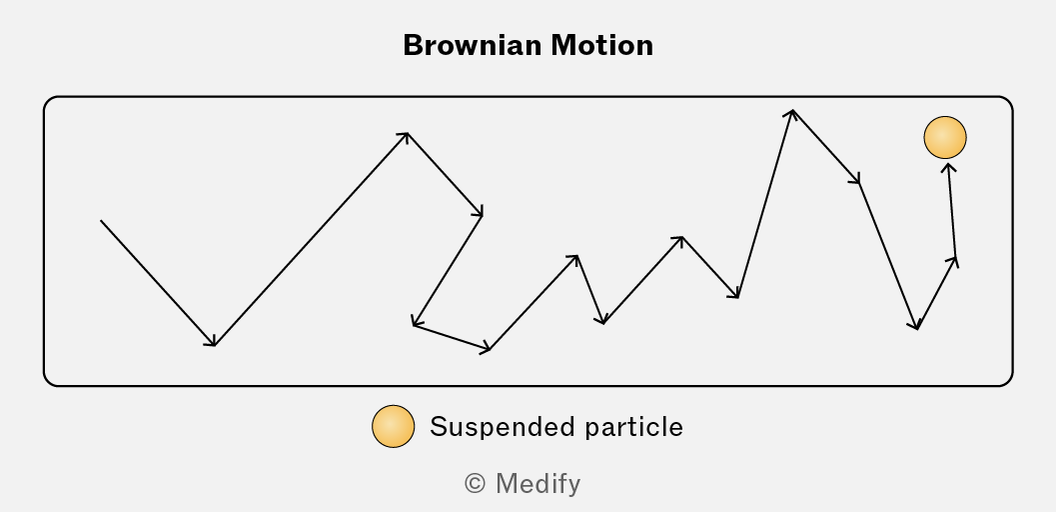
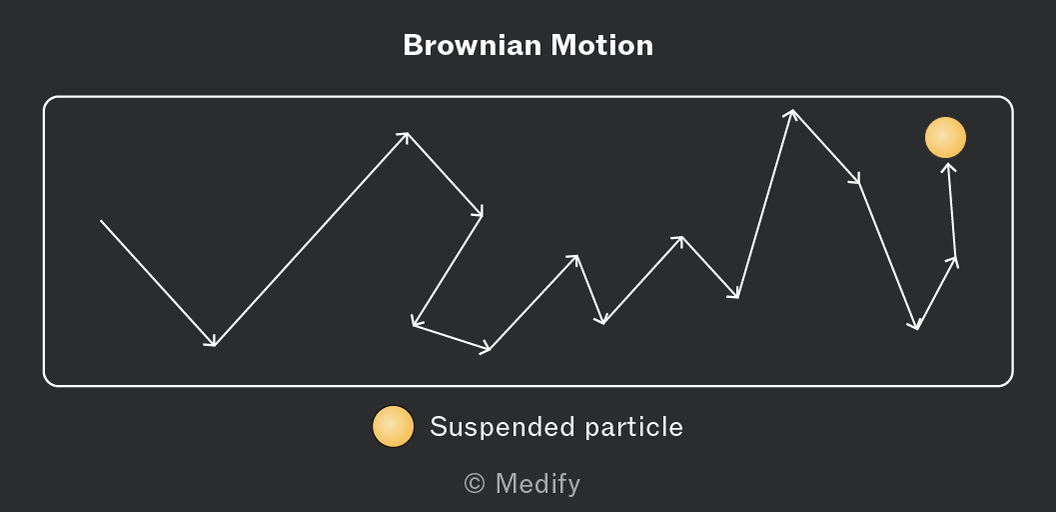
In 1905, Einstein explained Brownian motion in terms of collisions with the molecules of the fluid, which, unlike the pollen grains, were too small to be observed with a microscope.
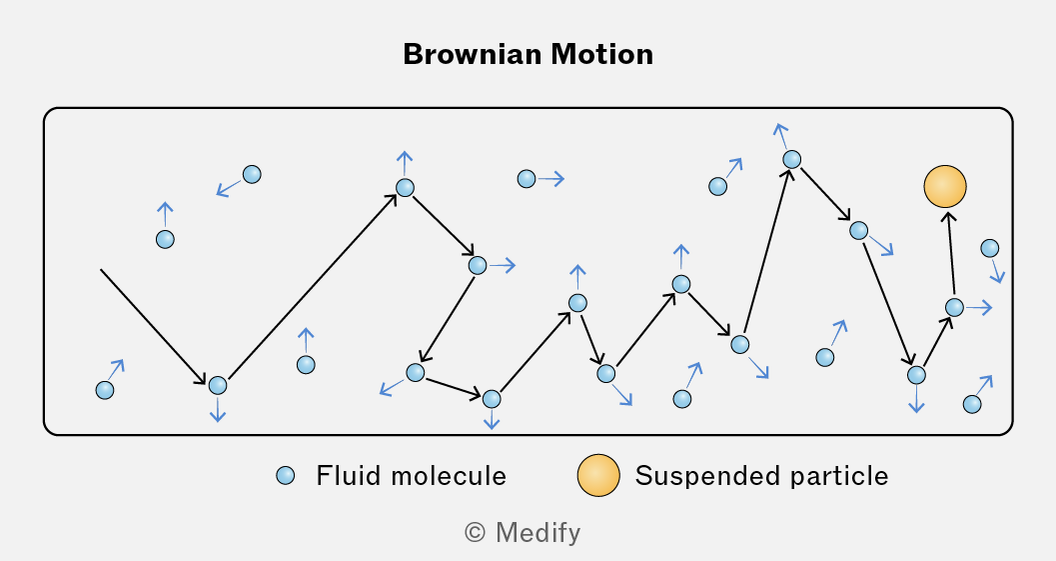
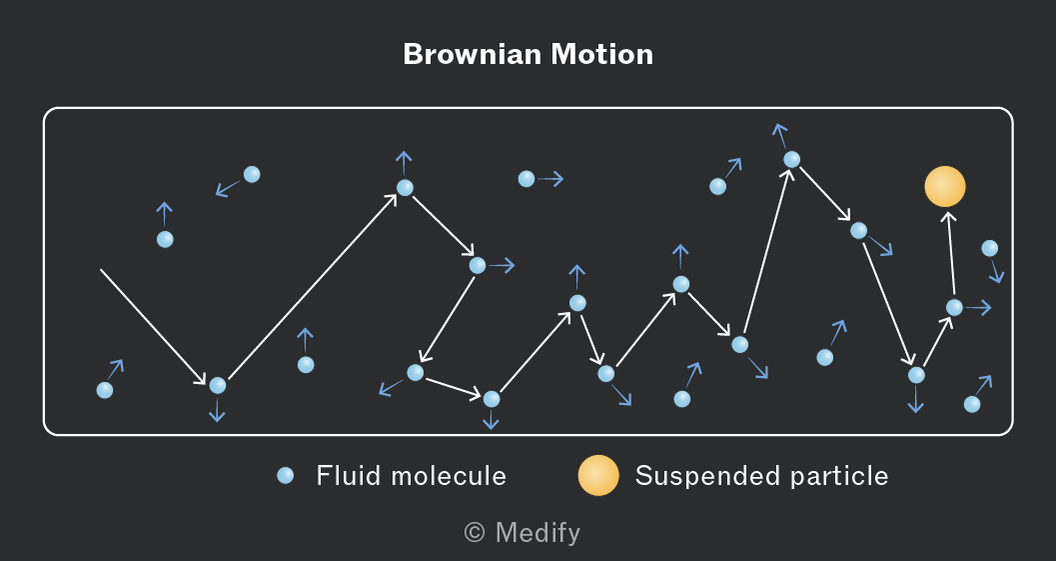
When a pollen grain is placed in water, the water molecules collide elastically with the grain, transferring momentum to it.
Because the water molecules move randomly, the collisions are unequal, so at any moment, more molecules may strike one side of the grain than the other, causing it to move randomly.
Einstein’s explanation of Brownian motion provided strong evidence for the kinetic model, showing that matter is made up of atoms and molecules in constant random motion.
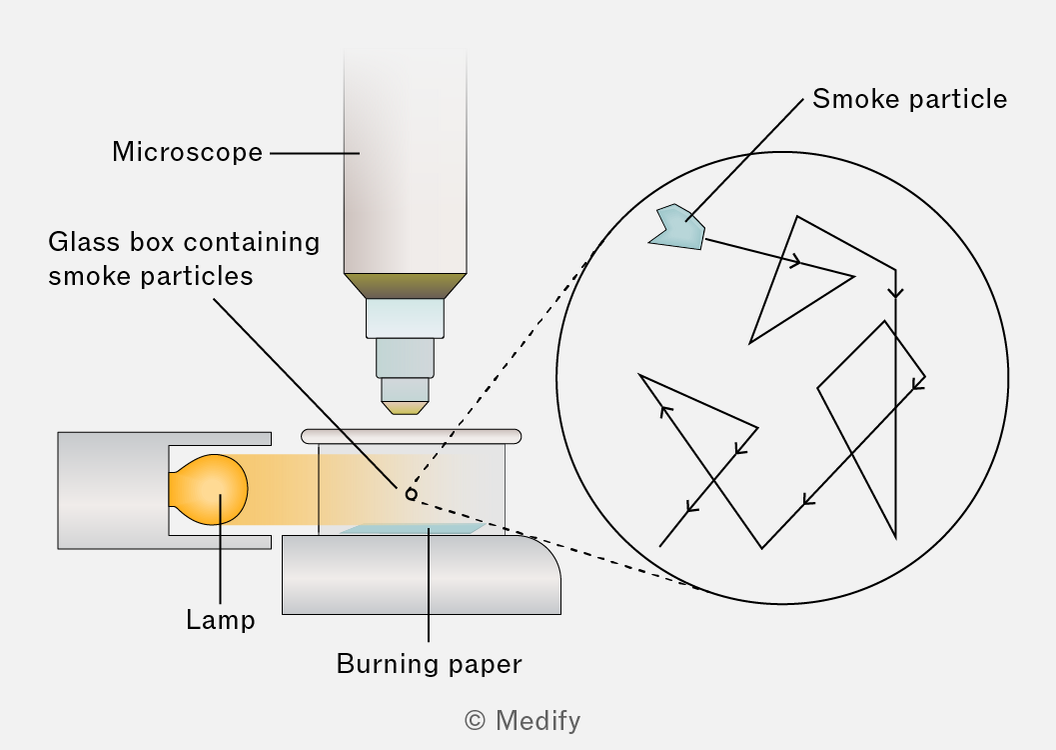
Brownian motion can also be observed by suspending smoke particles in air.
A small piece of paper is burned in a glass box to produce smoke, then the box is closed to keep the smoke inside. Light from a lamp illuminates the particles.
Using a microscope, the random motion of the smoke particles can be observed by the light they scatter, while the air molecules are too small to scatter visible light.
The internal energy of a substance is the sum of the random distribution of kinetic and potential energies of its particles.
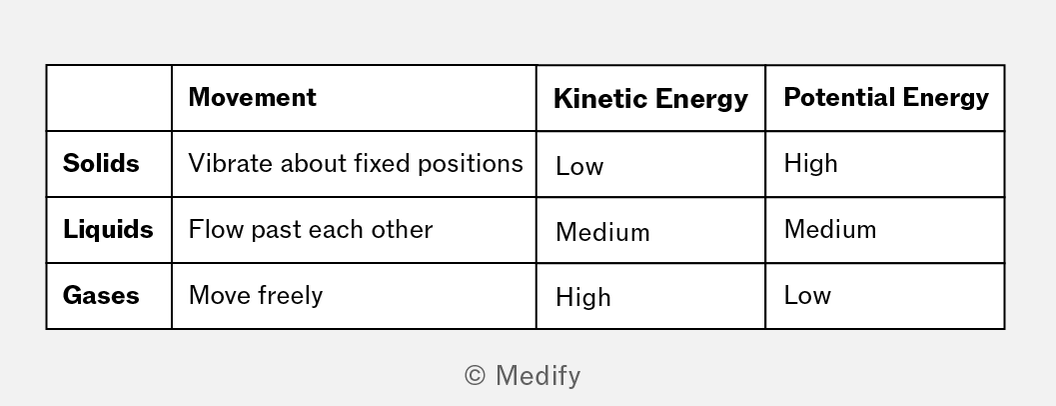
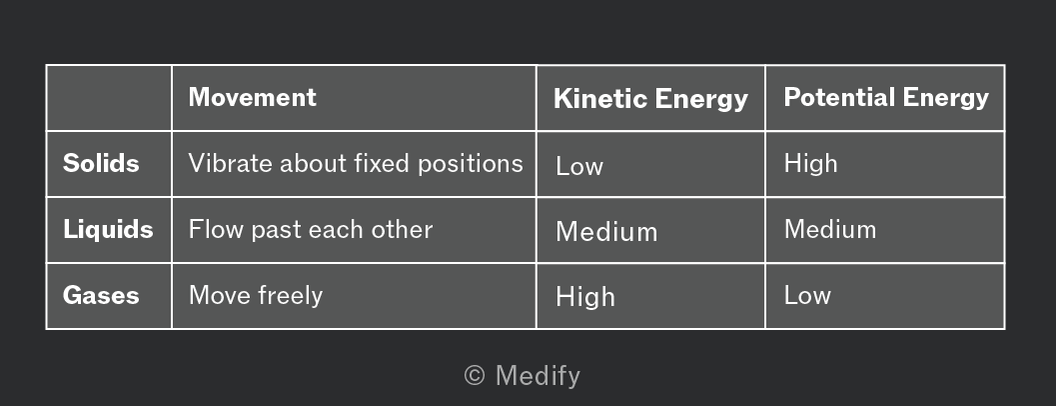
Particles in solids, liquids, and gases have potential energy due to the electrostatic attraction between the particles. This energy is negative because energy must be supplied to overcome the attractions.
Solids have the largest magnitude of negative potential energy, liquids have a lower magnitude, and gases have a negligible magnitude.
The internal energy of a substance is the sum of the random distribution of kinetic and potential energies of its particles (atoms or molecules).
As a substance is cooled, the average kinetic energy of the particles decreases. The temperature at which particles stop moving and have zero kinetic energy is called absolute zero (0 K), the lowest possible temperature.
However, at absolute zero, the particles still possess some potential energy due to electrostatic attractions between them, so the internal energy is never zero. Absolute zero is therefore the temperature at which a substance has the minimum internal energy due to the particles having zero kinetic energy and the smallest possible potential energy.
It is useful to know that the coldest natural temperature detected as of the time of writing is in the Boomerang Nebula (~1 K), while the lowest temperature achieved experimentally is around 1 picokelvin (1 pK) using ultracold atoms in laser and magnetic traps.
When a substance is heated, its internal energy increases.
- While a substance remains in the same phase, the heat energy supplied increases the average kinetic energy of its particles, causing the substance’s temperature to rise.
- When the substance reaches its melting point or boiling point, the heat energy is used to weaken intermolecular bonds, increasing the particles’ potential energy and changing the phase of the substance, without changing the temperature.
This can be seen on a temperature–heat graph, which shows temperature rising between phase changes and remaining constant during melting or boiling.
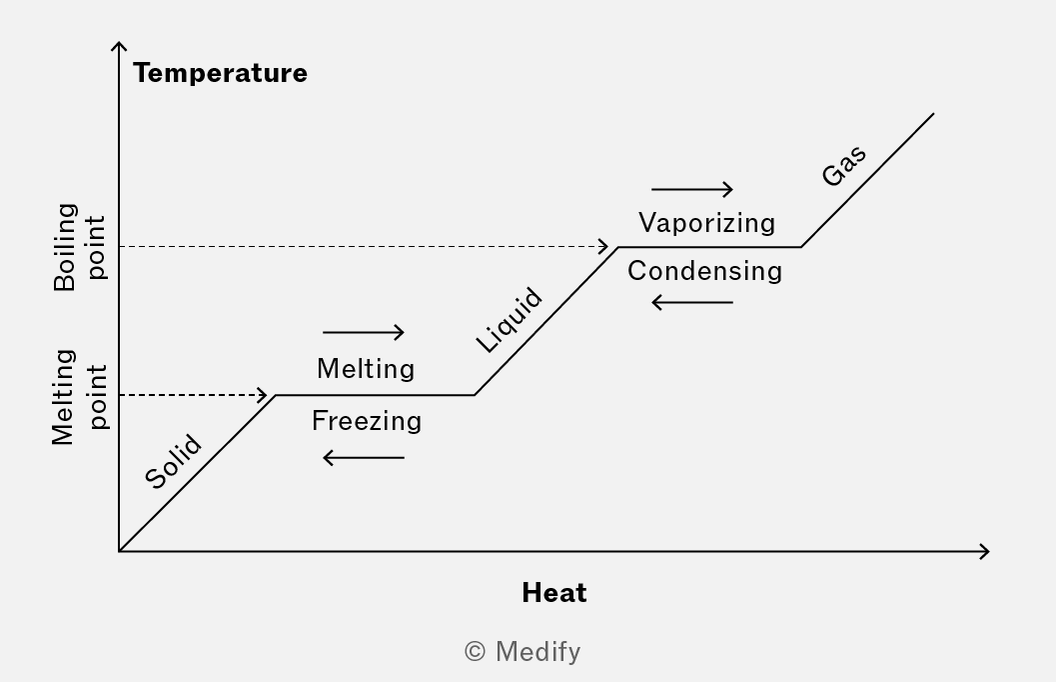
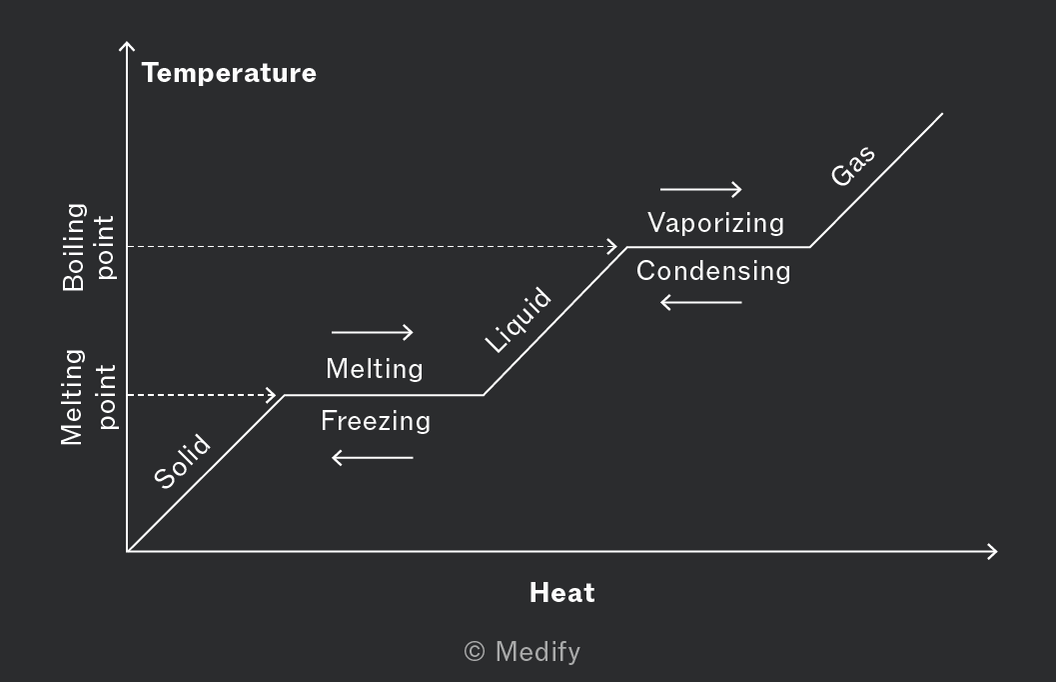
The transition of a substance from solid to liquid, and then to gas, involves changes in energy, bonding, and temperature:
1. Melting:
- At the melting point, the supplied energy does not increase the temperature.
- Instead, this energy is used to weaken the bonds within the solid structure.
- This process makes the potential energies less negative, allowing the solid to melt into a liquid.
2. Heating the liquid:
- Once melting is complete, continuous heating increases the liquid’s kinetic energy, causing its temperature to rise.
3. Vaporisation:
- At the boiling point, the temperature remains constant.
- The energy supplied weakens the intermolecular bonds.
- The particle’s potential energies become less negative, and the liquid evaporates into a gas.
4. Heating the gas:
- After all the liquid has vaporised, further heating increases the gas’s kinetic energy, resulting in a temperature rise.
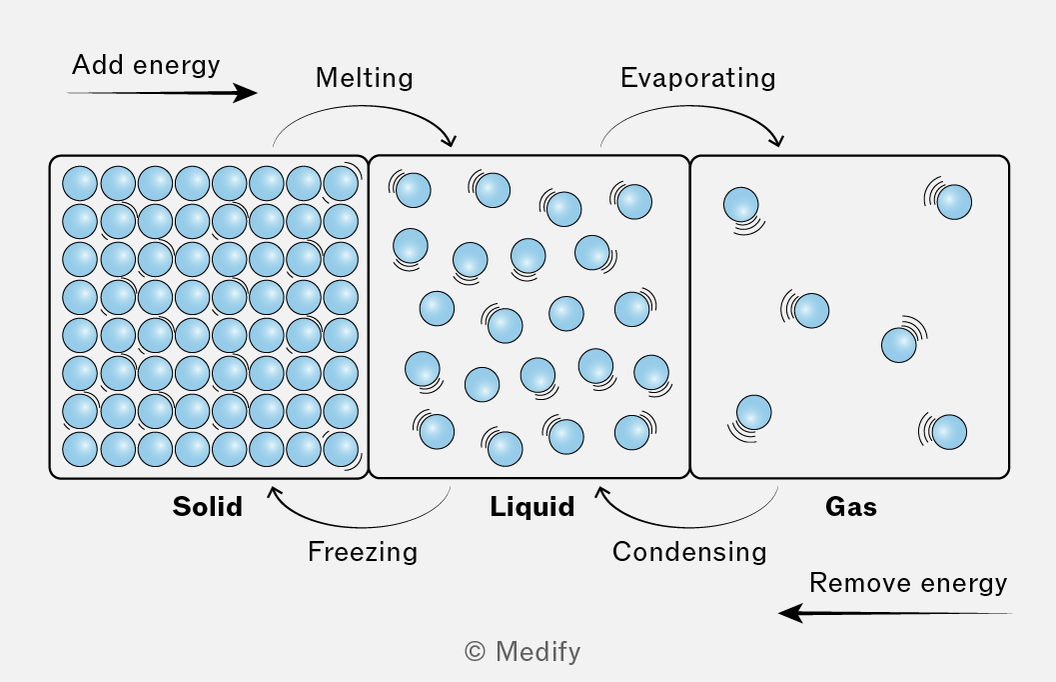
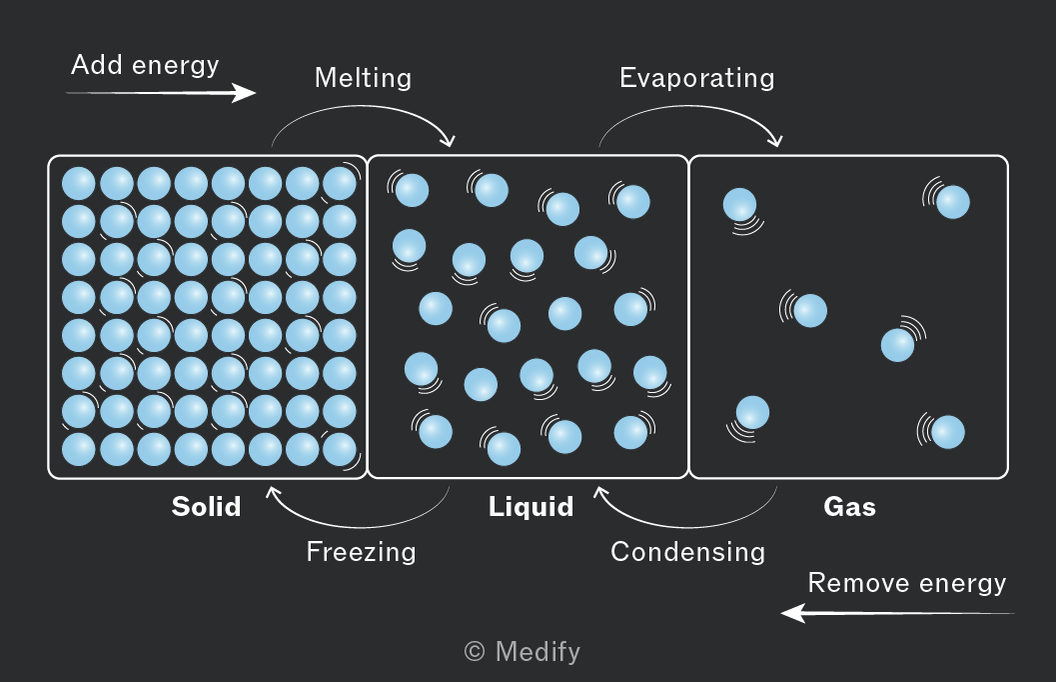
As a substance cools, internal energy decreases. Phase changes occur at the freezing or condensation points. Removing energy strengthens bonds, making potential energies more negative, reducing internal energy.
After the phase change, further cooling lowers the kinetic energy, resulting in a drop in temperature.