
Periodicity (3.2.1)
On this page
The periodic table is a fundamental tool in chemistry that organises the elements based on their atomic number, creating a systematic arrangement that reveals patterns in their properties and reactivity.
These repeating patterns are known as periodicity.
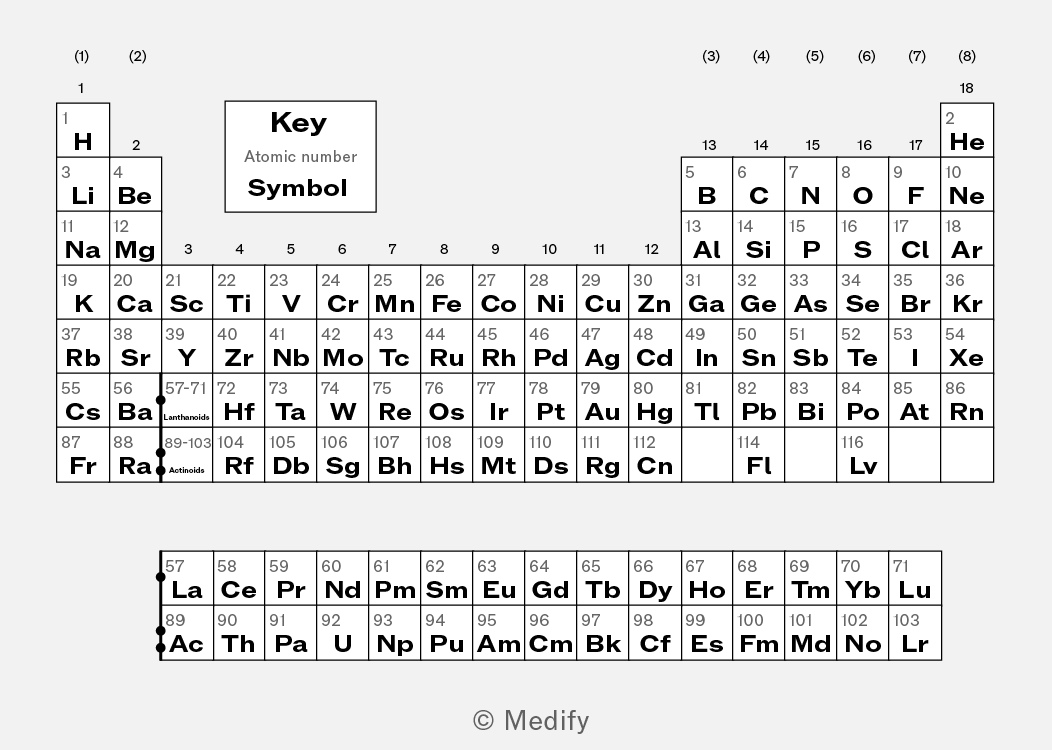
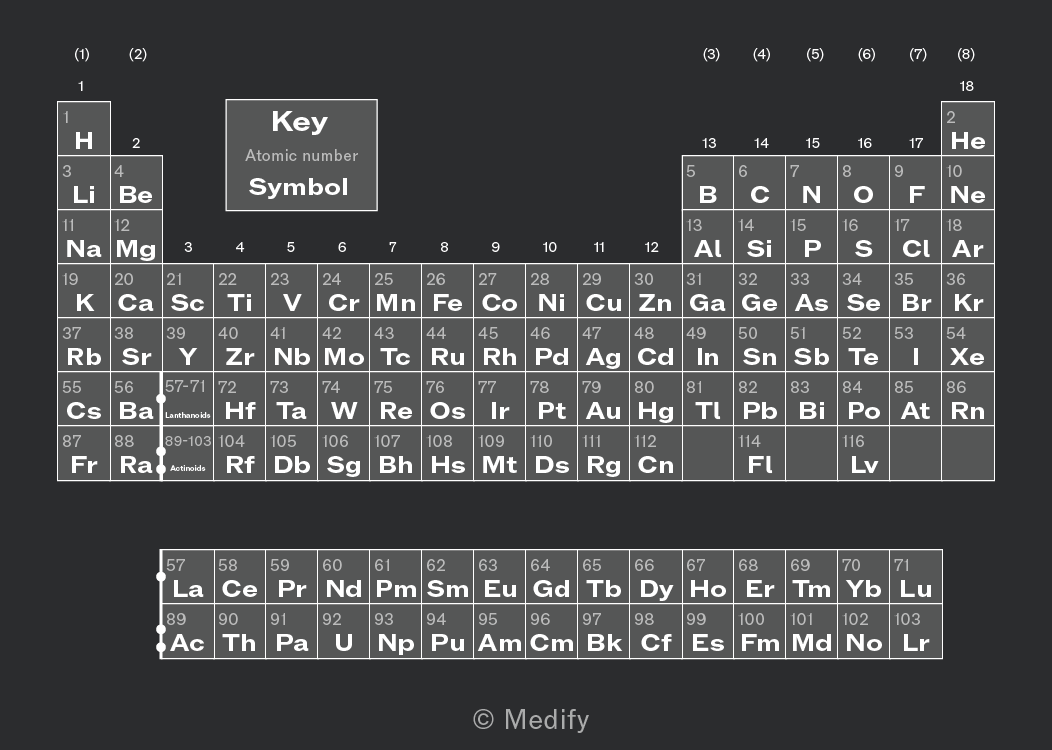
The periodic table is divided into rows called periods.
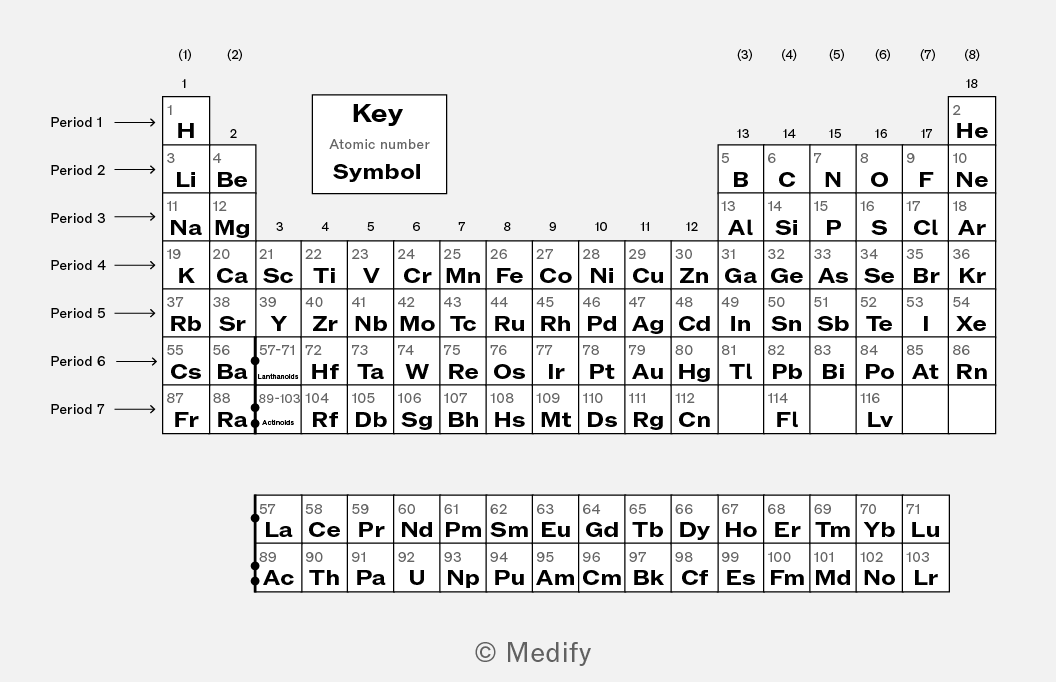
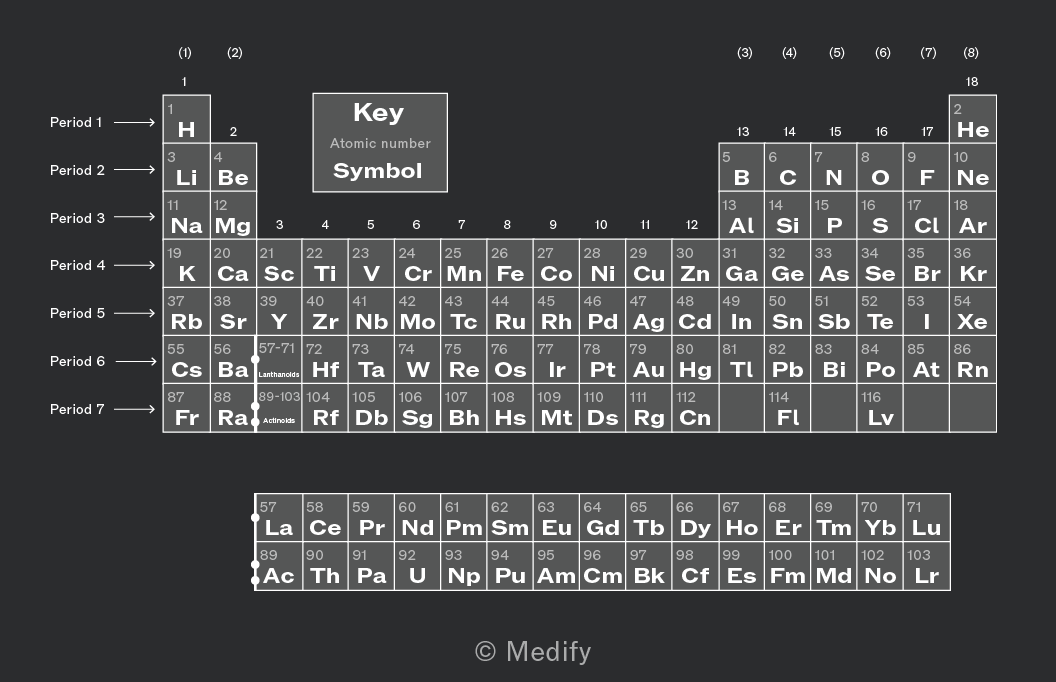
There are a total of seven periods.
Elements in the same period have the same number of electron shells.
Columns in the periodic table are known as groups.
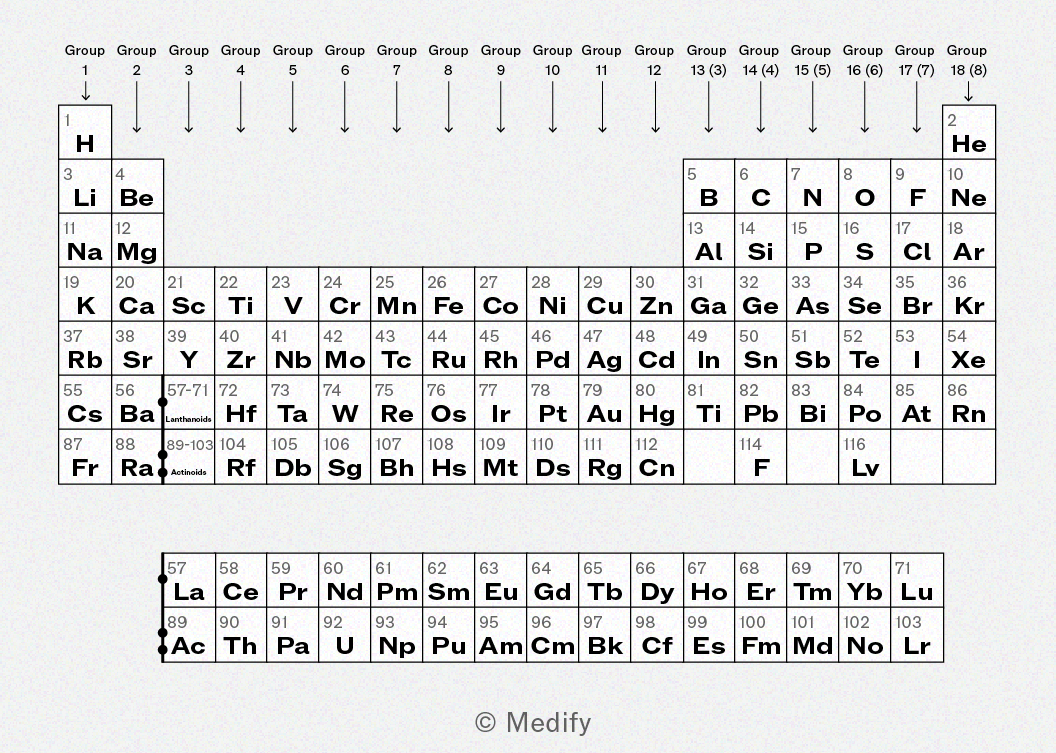
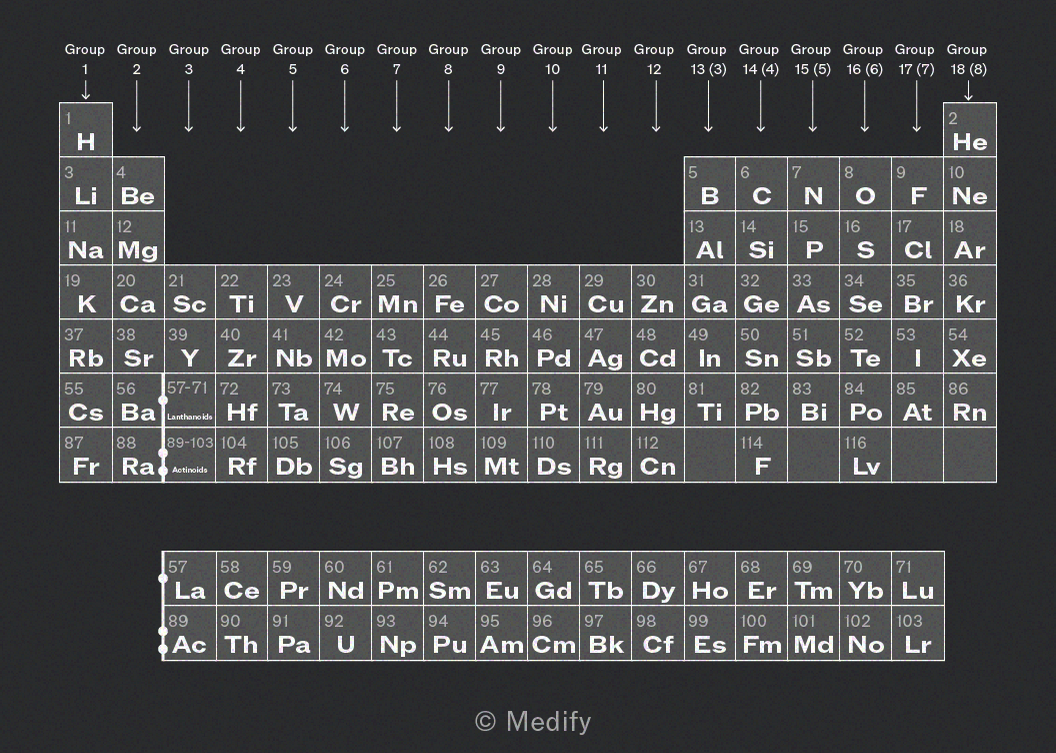
There are 18 groups in the periodic table.
Elements within the same group have similar chemical properties because they have the same number of outer electrons.
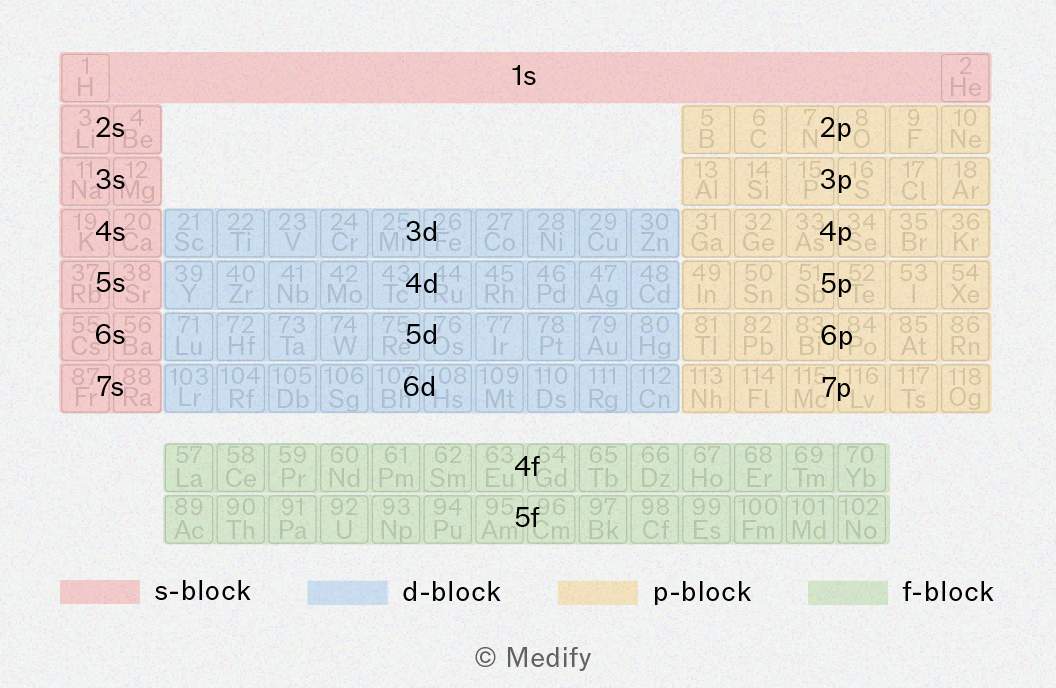
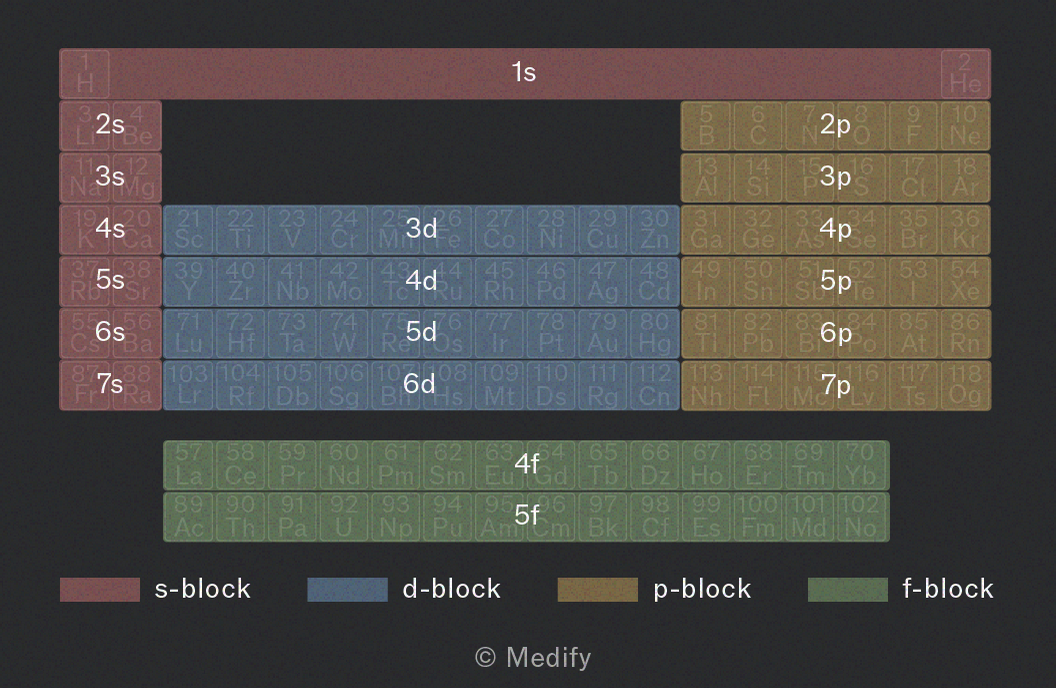
All of the elements in the periodic table belong to blocks based on their electron configuration.
s-block: the outermost electron is in the s-subshell; for example, the electron configuration for potassium is
p-block: the outermost electron is in the p-subshell; for example, the electron configuration for aluminium is
d-block: the outermost electron is in the d-subshell; for example, the electron configuration for vanadium is
f-block: the outermost electron is in the f-subshell; for example, the electron configuration for cerium is
First ionisation energy decreases down the group.
The increasing atomic radius down the group means the outer electrons are further from the nucleus.
The increase in energy level means there is an increased amount of nuclear shielding from filled electron shells.
The net effect is that, despite the increased nuclear charge, the effective nuclear attraction to the outermost electron decreases. The outermost electron is easier to remove and the first ionisation energy decreases.
Although across a period, the general trend is that the first ionisation energy increases, there are some exceptions.
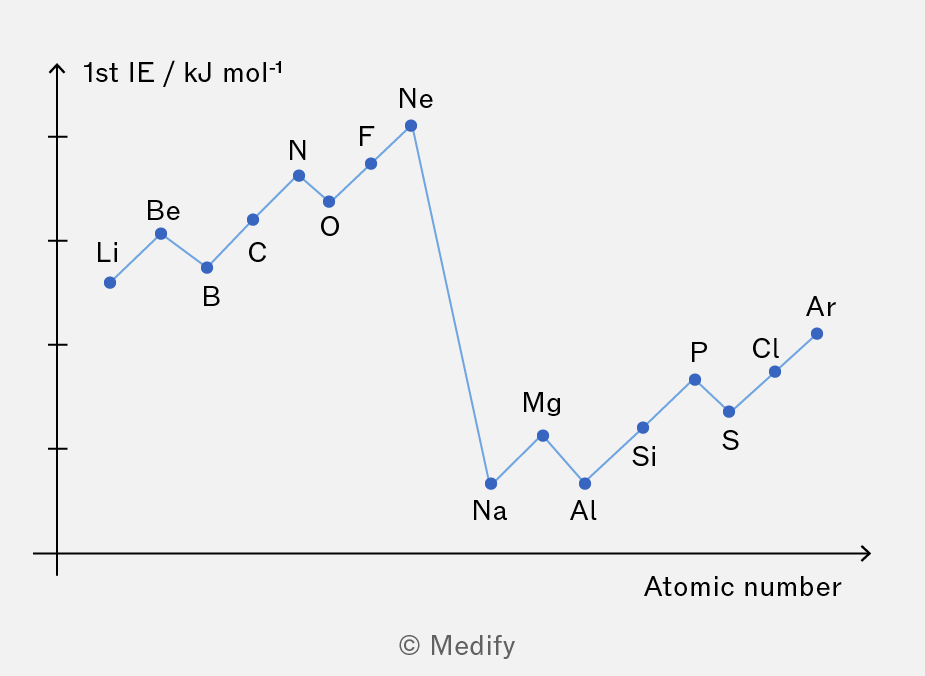
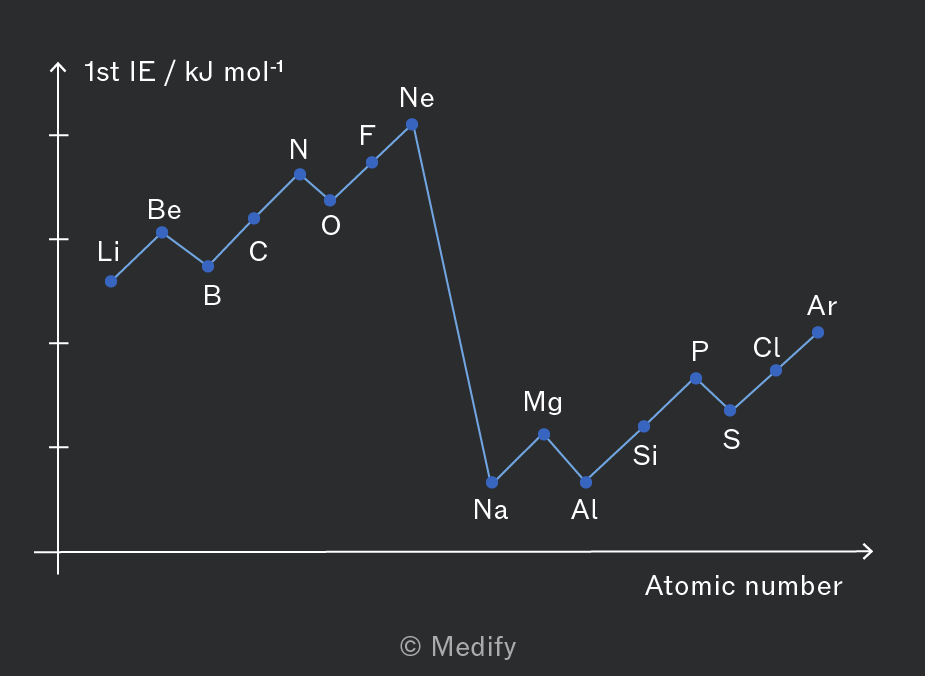
There is a drop in first ionisation energy between Group 2 and 3, and . This is linked to the outermost electron sitting in the p-subshell, which is at a higher energy level than the s-subshell.
There is another drop in first ionisation energy between Group 5 and 6, and . This is linked to electron–electron repulsion in the half filled p-subshell. The fourth electron in the p-subshell is paired in an orbital and so experiences more electron-electron repulsion than the unpaired p-subshell electrons in group five elements.
The general trend across periods is an increase in melting point from Group 1 to Group 4. There is then a sharp decrease in melting point between Group 4 and Group 5.
The melting points from Group 5 onwards are comparatively low.
The trend exists due to the transition from giant lattices to simple molecules, held together by weak intermolecular forces.
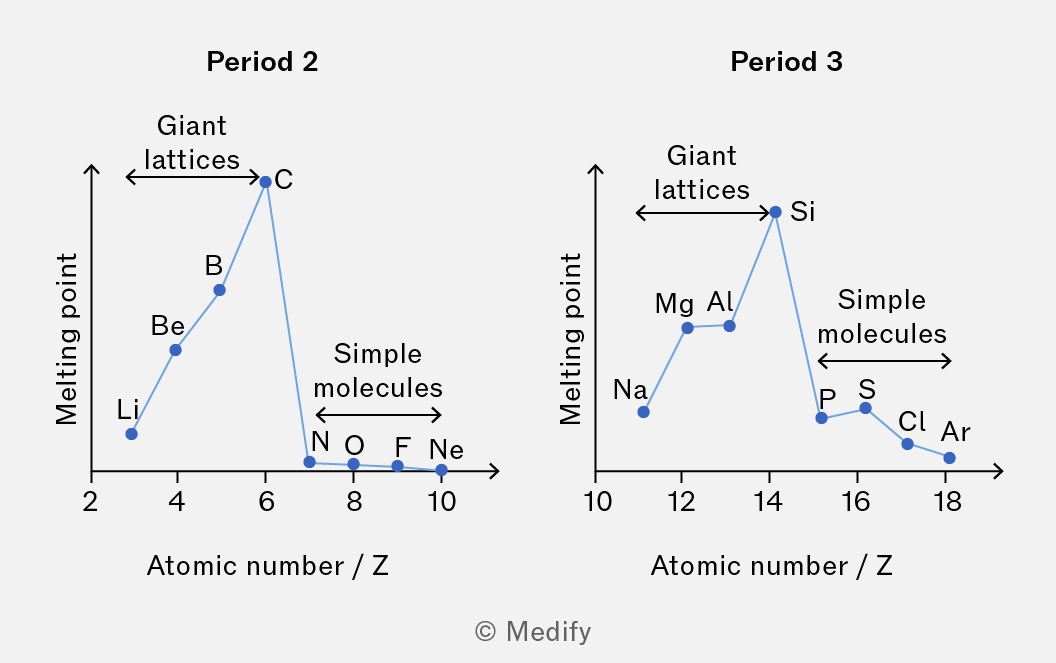
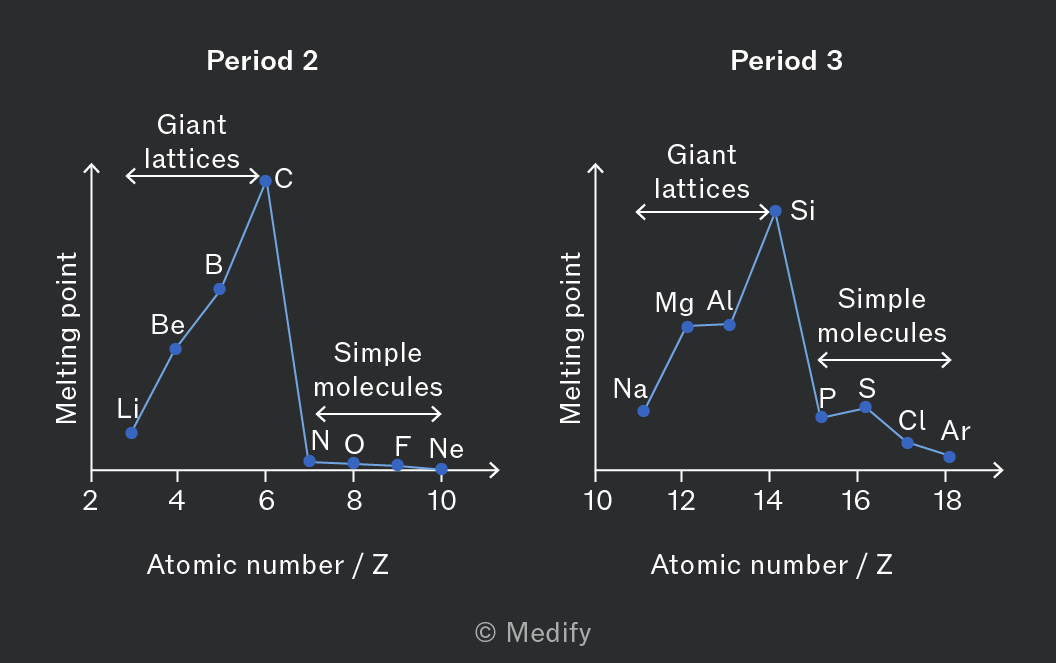
There is an increase in melting point between phosphorus () and sulfur () in period 3. This is due to the increased molecular size and therefore the number of electrons is higher in compared to , creating to more significant temporary dipoles. This leads to stronger intermolecular forces that require more energy to overcome.
The atomic radius is taken from atoms in their most stable elemental form. It gives information about the distance between the nucleus and the outer shell electrons.
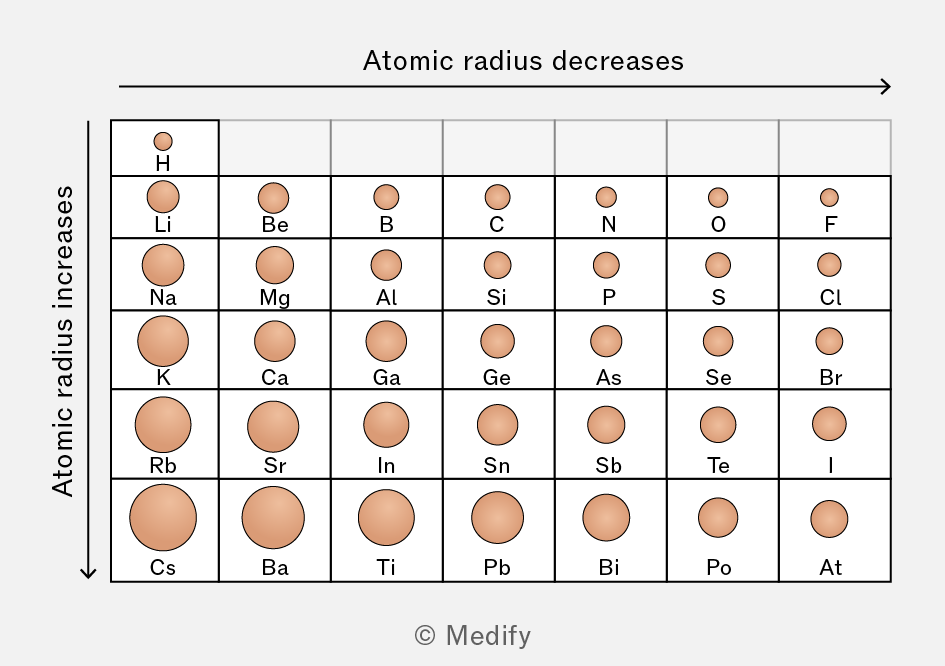
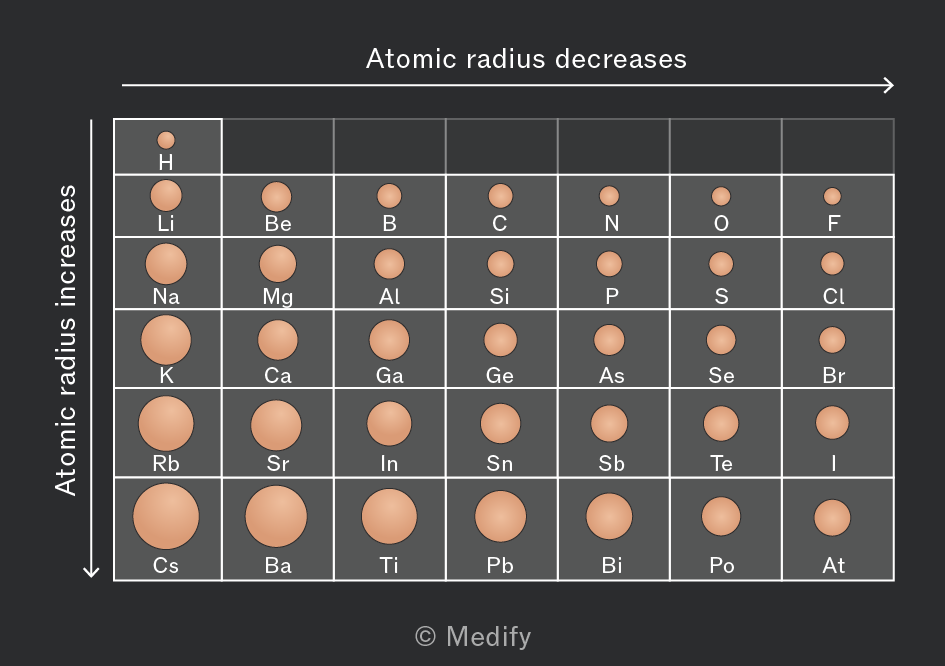
Across periods in the periodic table, atomic radii decrease from left to right.
The increasing atomic number across the period, and therefore the increased nuclear charge, attracts the electrons more tightly to the nucleus.
Electrons are added to the same electron shell, so there is no significant increase in nuclear shielding across the period. This means the stronger nuclear attraction directly reduces the atomic radius.