
Reactions of ions in aqueous solution - AL only (3.2.6)
On this page
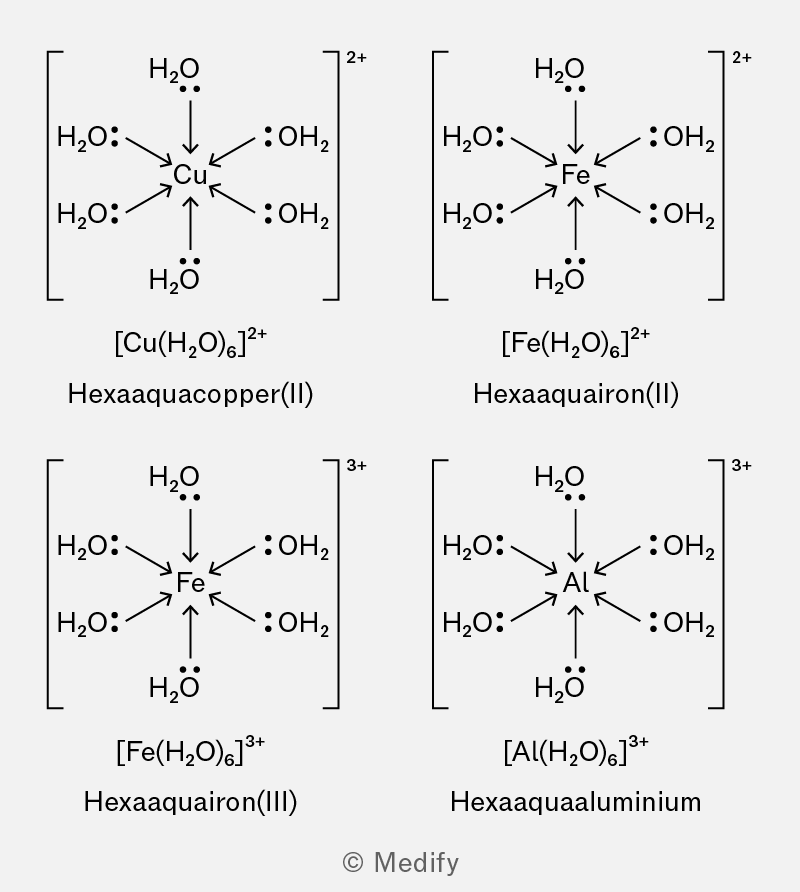
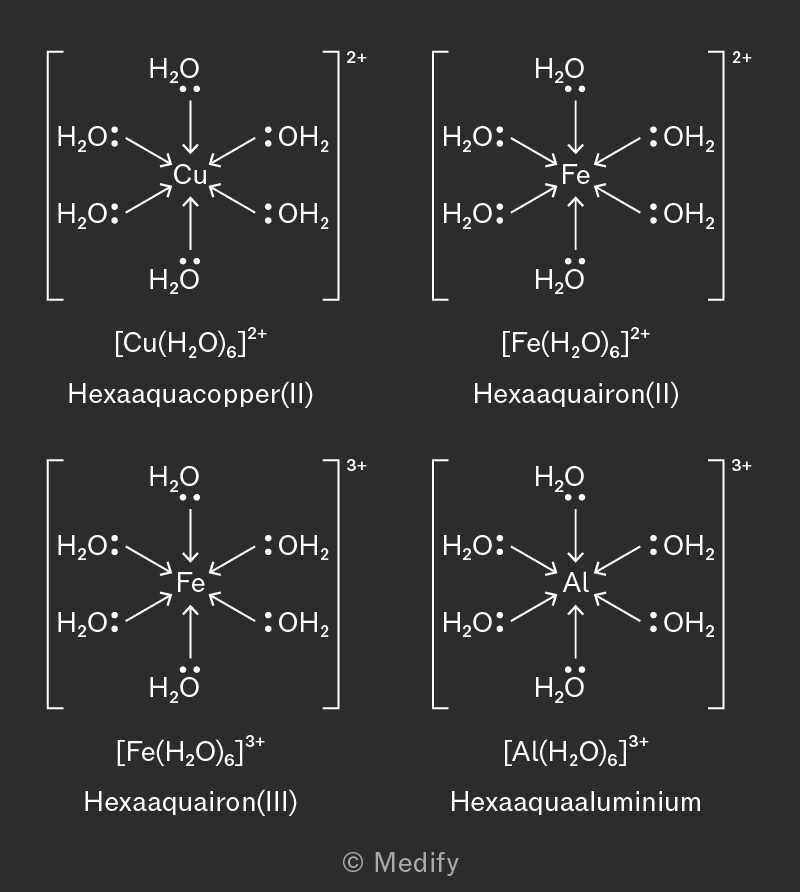
When transition metal salts dissolve in water, they form metal–aqua complexes.
These are octahedral ions where six water molecules coordinate to the metal ion.
For AQA you need to know:
Ions with oxidation state II:
Ions with oxidation state III:
The charge density of a metal ion affects the strength of its interaction with water molecules, influencing the acidity of its metal-aqua complex.
The 3+ ion has a higher charge and smaller ionic radius than the 2+ ion that results in a higher charge density, which strongly polarises the O–H bonds in the coordinated water molecules.
This makes much more acidic compared to .
An amphoteric substance can act as both an acid and a base.
Aluminium hydroxide, exemplifies this by reacting with both acids and bases.
In acidic solutions, donates hydroxide ions, acting as a base:
In basic solutions, accepts hydroxide ions to form a soluble complex ion, acting as an acid:
You need to be able to recall the colour and solubility for these metal ions with addition of ammonia and sodium hydroxide, and any changes in excess.
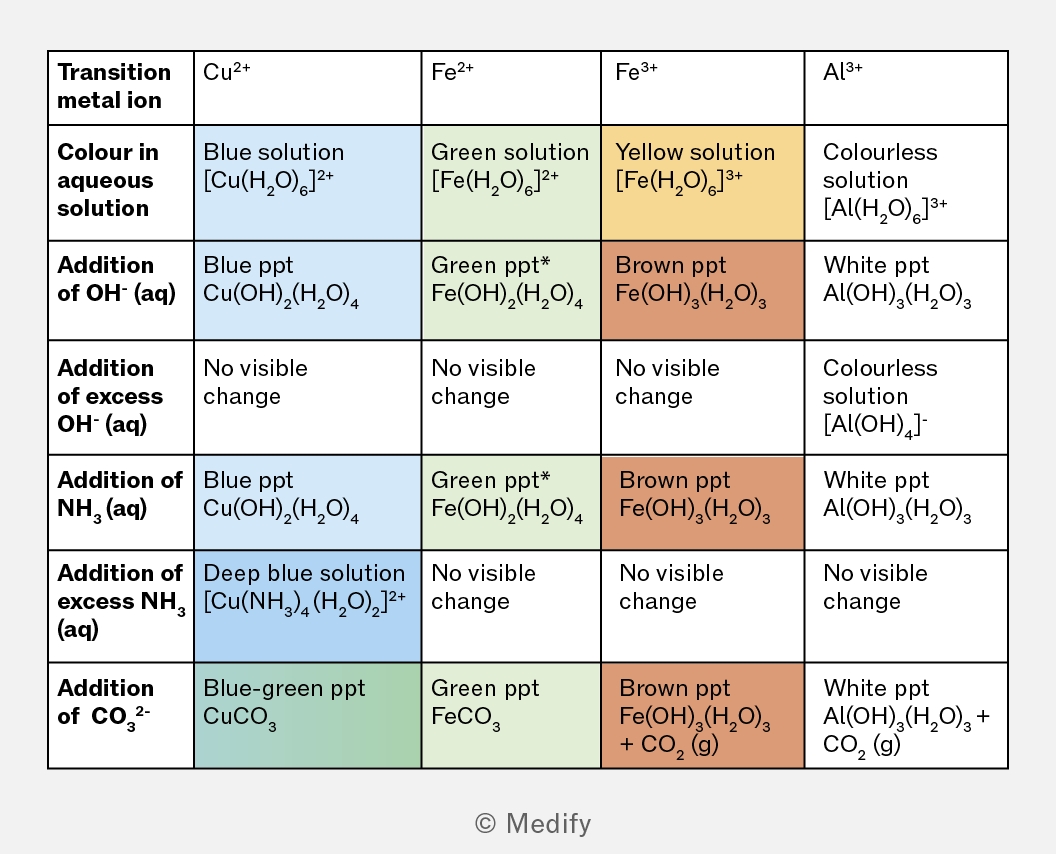
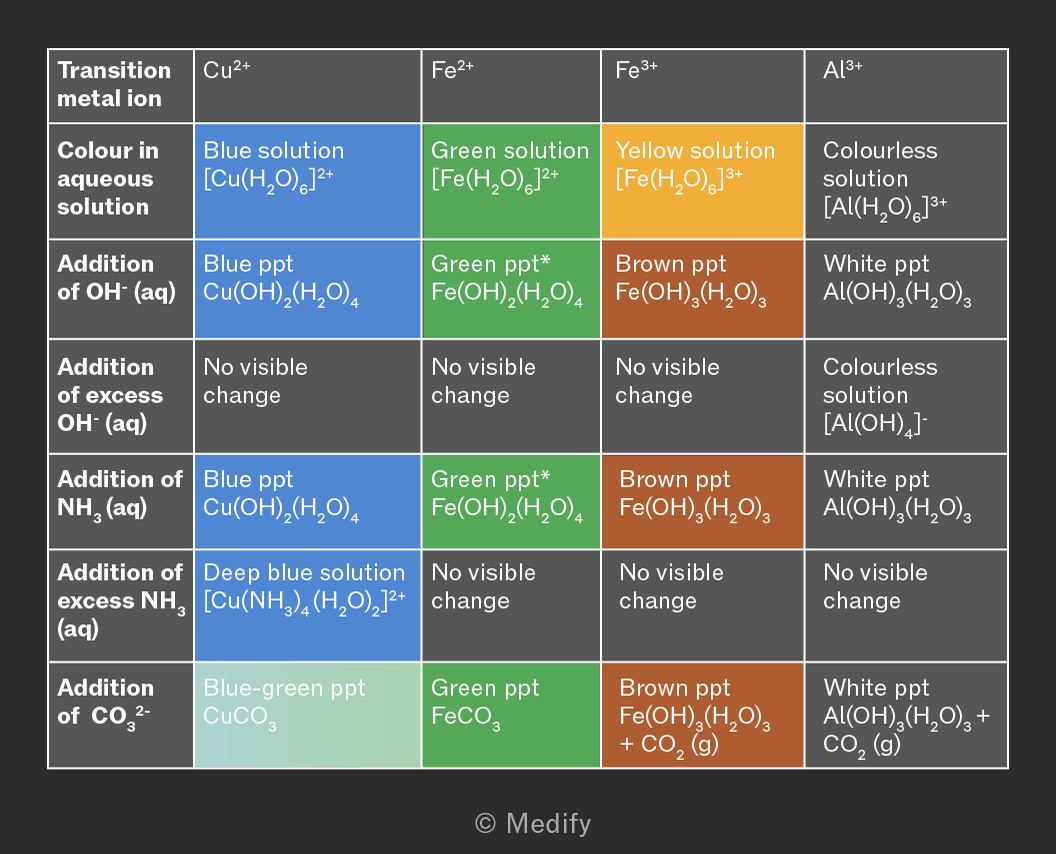
forms a green precipitate which may turn brown on standing with air. This is due to being oxidized to when left to stand in air.
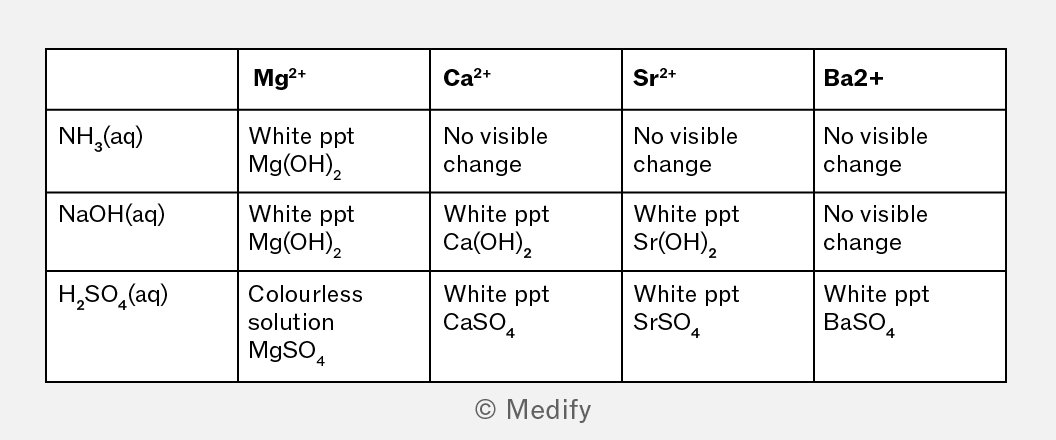
Group 2 cations can be identified by their reactions with an excess of ammonia, sodium hydroxide, and sulfuric acid solutions.
The ammonium cation, , is tested for by:
1. Dissolving the sample in water.
2. Adding sodium hydroxide and warming the solution.
3. Holding damp red litmus paper in the fumes.
If ammonia is generated, it will turn damp red litmus paper blue.