
Properties of Period 3 elements and their oxides - AL only (3.2.4)
On this page
Sodium reacts vigorously with cold water to produce sodium hydroxide and hydrogen:
Magnesium reacts slowly with cold water to produce magnesium hydroxide and hydrogen:
With steam, magnesium reacts vigorously to produce magnesium oxide and hydrogen:
The reactions of Period 3 elements with oxygen show a trend from forming basic ionic oxides to acidic covalent oxides, with the amphoteric (a substance that can act as both an acid and base) marking the transition; this reflects a shift from ionic to covalent bonding, which determines acid–base behaviour.
Sodium and magnesium form basic, ionic oxides:
Aluminium forms an amphoteric oxide:
Silicon forms an acidic, giant covalent oxide:
Phosphorus forms an acidic, molecular oxide:
Sulfur also forms an acidic, molecular oxide:
Then, sulfur dioxide reacts with oxygen to form the acidic sulfur trioxide
The melting points of the Period 3 oxides are shown below:
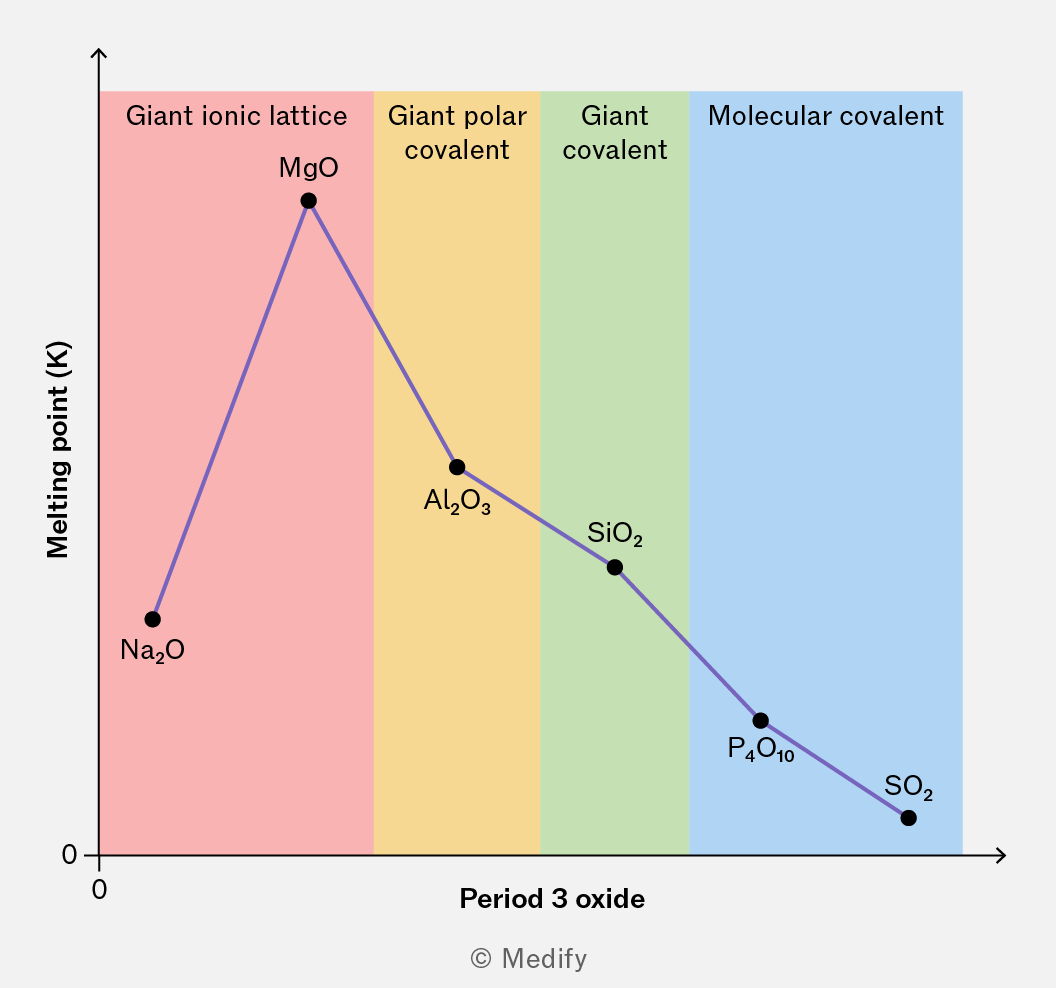
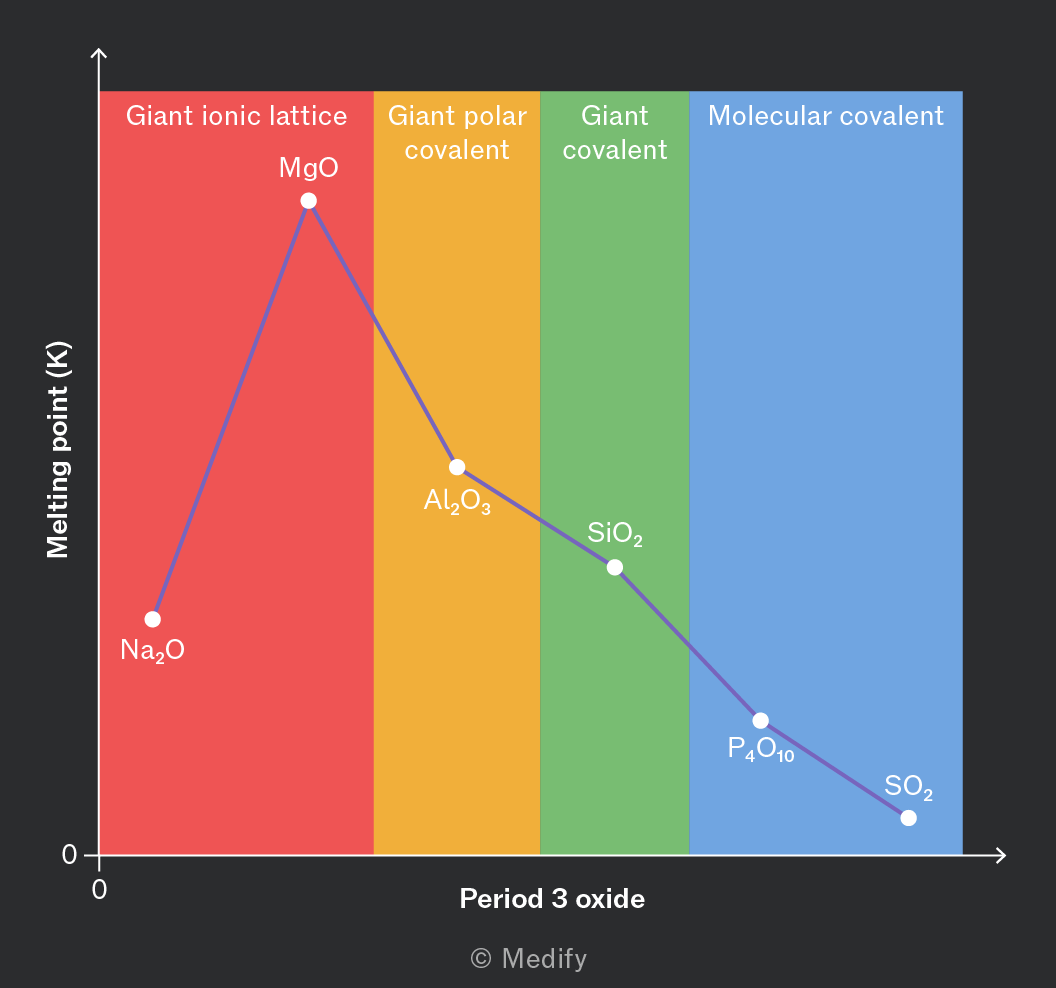
and both have high melting points as they are giant ionic lattice structures.
has a higher melting point than .
ions are smaller and more highly charged than ions, leading to stronger electrostatic attractions between the and ions, which require more energy to overcome.
, exhibits a mix of ionic and covalent character.
The strong ionic bonds between and contribute to a high melting point, although the covalent character in its structure makes its melting point less than .
has a giant covalent structure, where strong covalent bonds between silicon and oxygen atoms hold the structure together, resulting in a high melting point.
The network of covalent bonding leads to a strong, stable structure, which requires a lot of energy to overcome.
and , have simple molecular structures with weak intermolecular forces between molecules.
The melting points are lower than those of the giant ionic and giant covalent oxides in Period 3.
, with more electrons and greater polarisability, experiences stronger induced dipole–dipole forces and a higher melting point than , which has fewer electrons. is a gas at room temperature whereas is a solid.
Note that has a permanent dipole, but the difference in molecular size leads to the induced dipole–dipole forces in being larger than the permanent dipole–dipole forces in .
The Period 3 oxides react with water to form solutions with varying , depending on the type of bonding in each oxide.
and are basic oxides with a giant ionic lattice structure. When they react with water, they form alkaline solutions:
is a giant structure with a mix of ionic and covalent character.
is a giant covalent oxide with strong covalent bonds.
Both and are insoluble in water, resulting in a neutral .
and are simple molecular oxides with covalent bonding. They form acidic solutions when they react with water:
When and react with water, they form acidic solutions.
You need to recall the names and formulas of the resultant acids and the specific anions most readily formed:
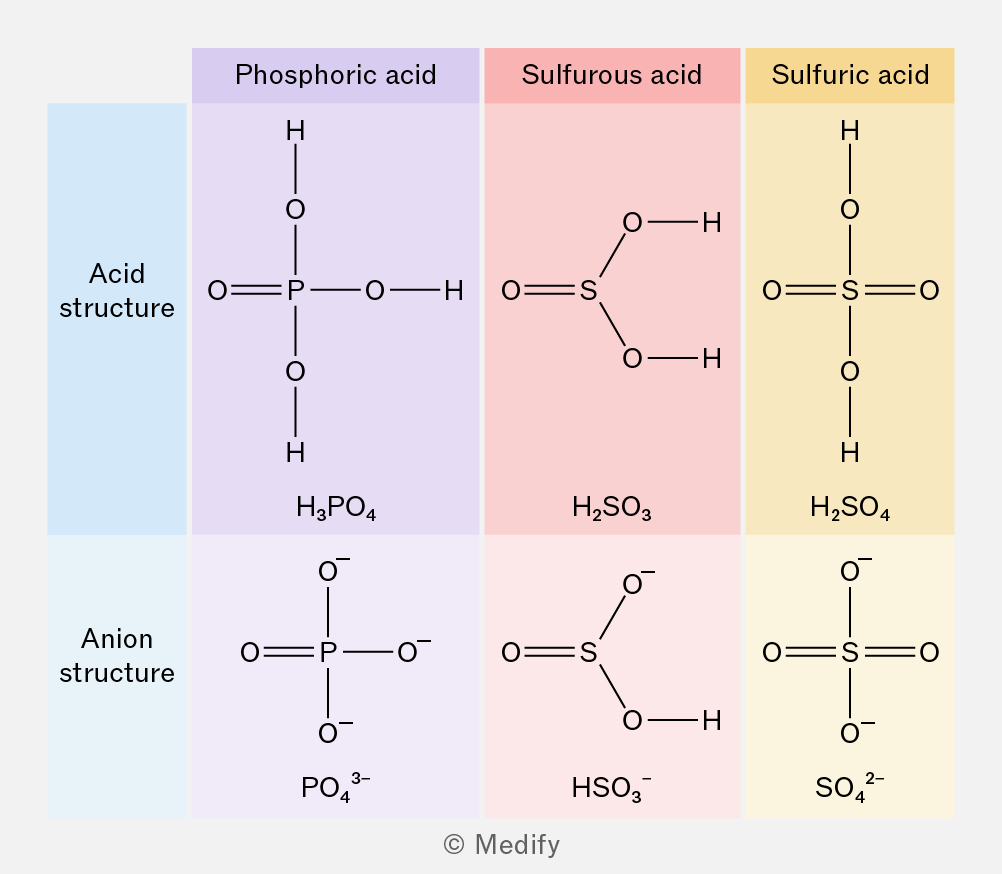
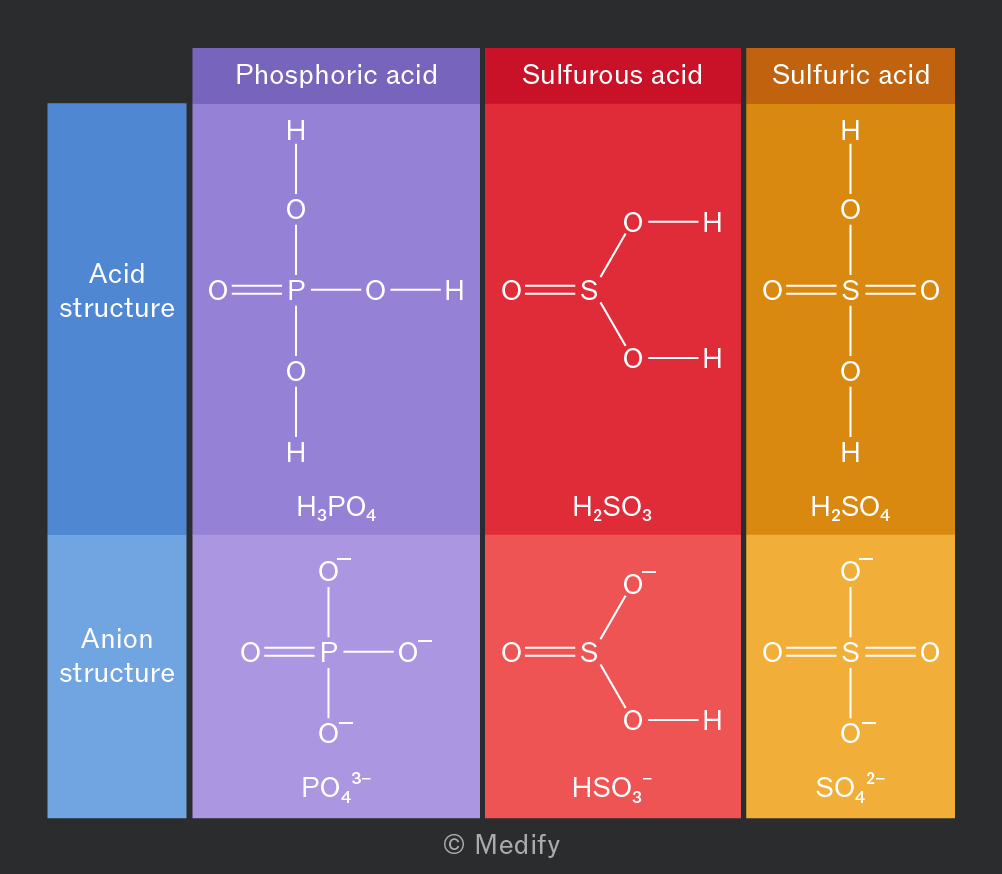
reacts with water to form phosphoric acid and the phosphate anion .
reacts to form sulfurous acid and the bisulfite anion .
reacts to form sulfuric acid and the sulfate anion
Basic oxides like and react with acids to form salts:
Aluminium oxide, is amphoteric and therefore reacts with both acids and bases:
Acidic oxides like , , and react with bases to form salts: