
Handling Data (M1)
On this page
You need to be able to give answers to calculations using a number of significant figures that is appropriate for the number of significant figures in the values used.
You also need to be able to round the answer correctly. For example, look at this calculation:
Each value has a different number of significant figures. You can only give an answer to the same number of significant figures as the lowest number of significant figures in any of the values.
The value 5.9 has 2 significant figures, so the final answer should be given to 2 significant figures.
Question walkthrough
Using an appropriate number of significant figures and rounding answers
,
In a multi-step calculation, you must use the unrounded answer from one calculation in another.
If you use a rounded answer in the next calculation, the final answer may be different.
For example, if you rounded the first part of the calculation:
to two significant figures (9.212 rounds to 9.2), the final answer would be 8.3 instead of 8.4.
When using a scientific calculator:
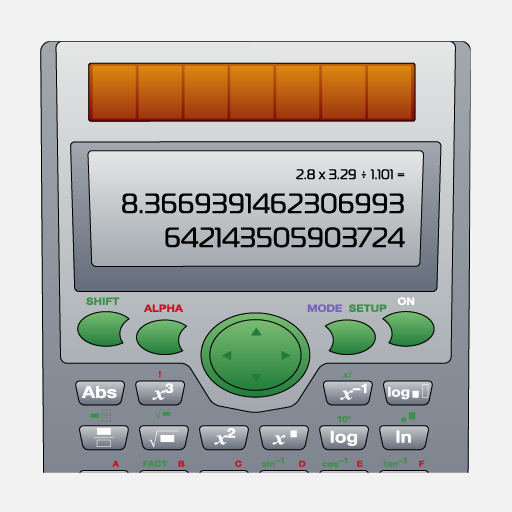
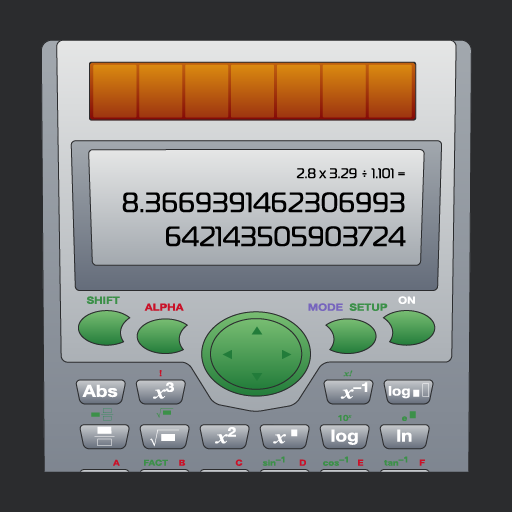
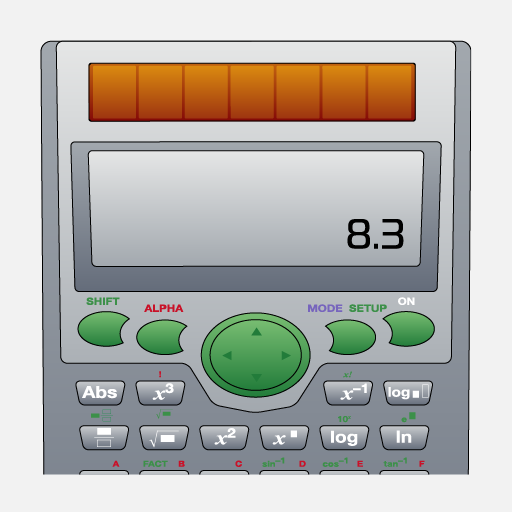
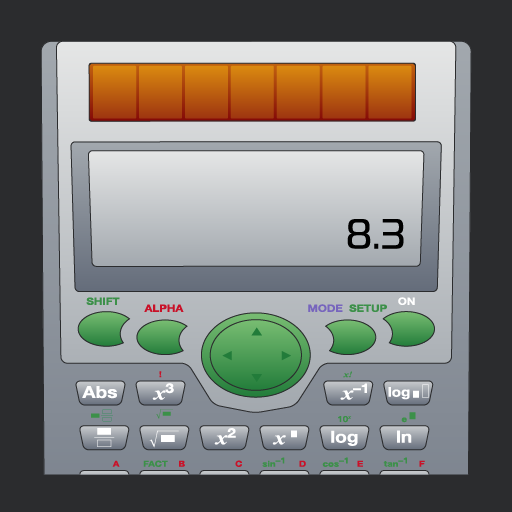
At the end of a calculation, you need to round an answer, usually to a number of significant figures.
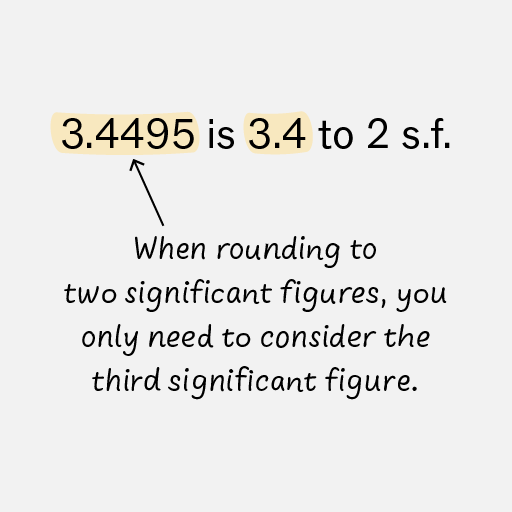
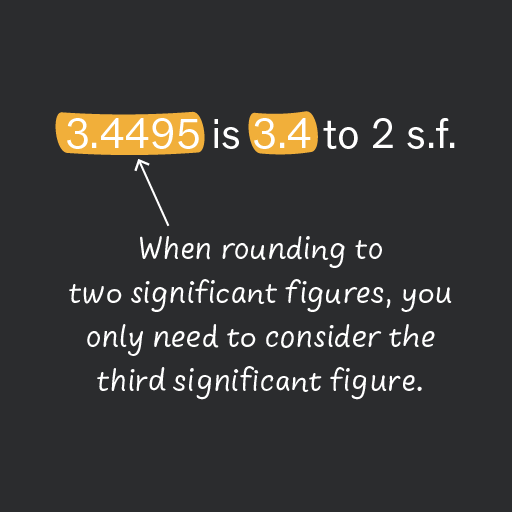
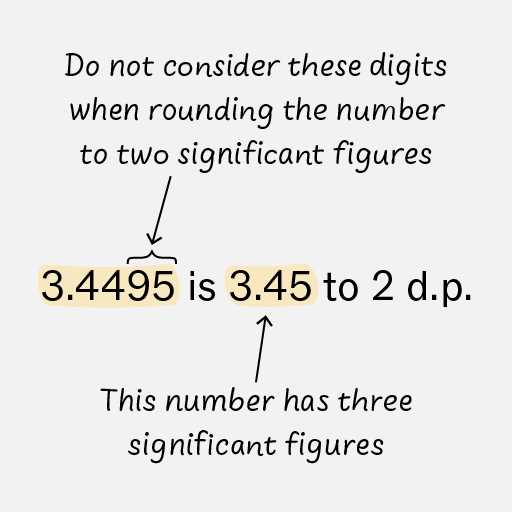
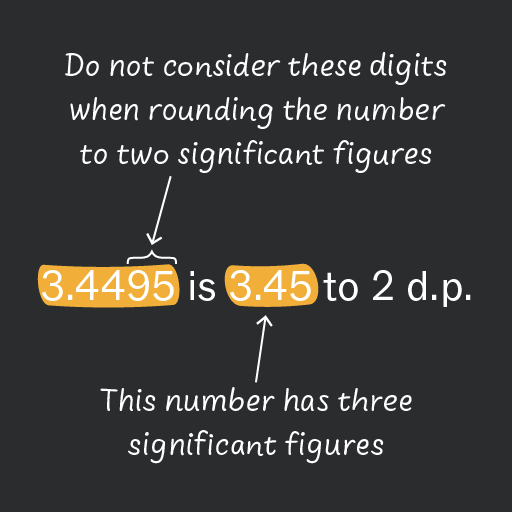
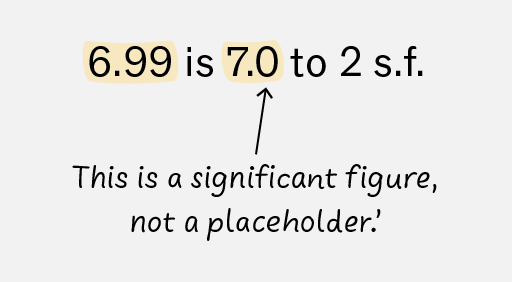
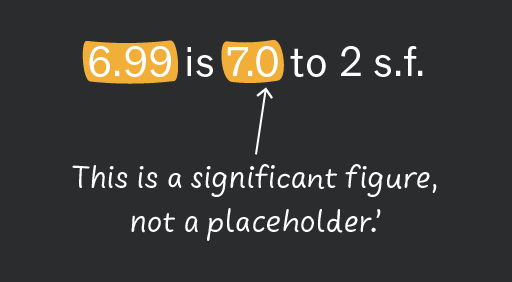
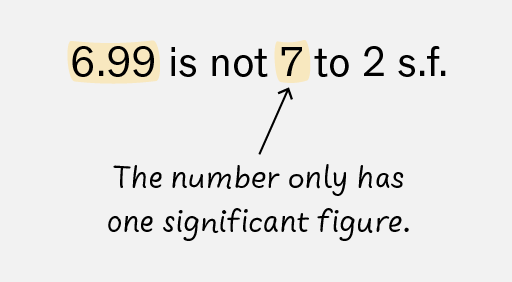
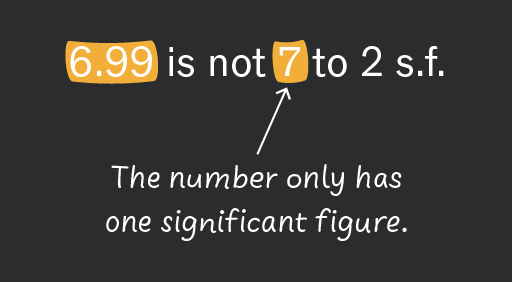
Zeroes at the end of a value can be significant figures.
When taking measurements in science, you usually take at least three readings.
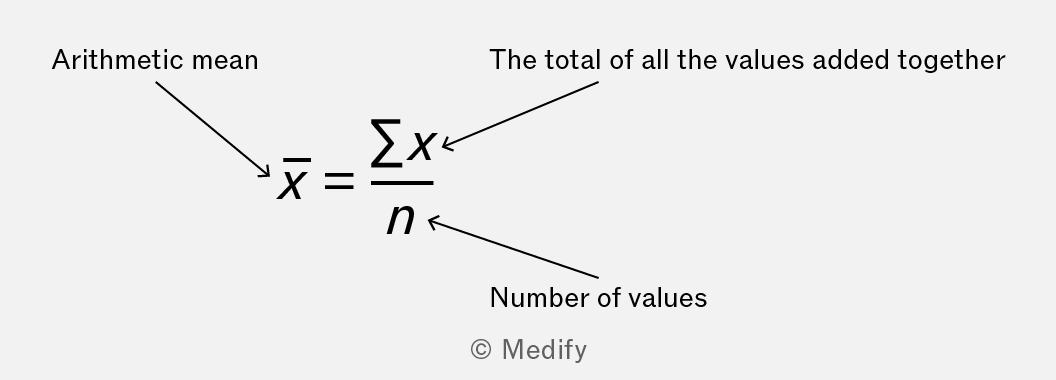
The average value of the readings, or the arithmetic mean, is calculated and used in subsequent calculations.
Calculate the mean ( ) using:
Sometimes you obtain readings that are anomalous (or outliers), and you need to consider what to include or exclude them.
Question walkthrough
Calculating arithmetic means
Determine the arithmetic mean of three measurements recorded by a student.
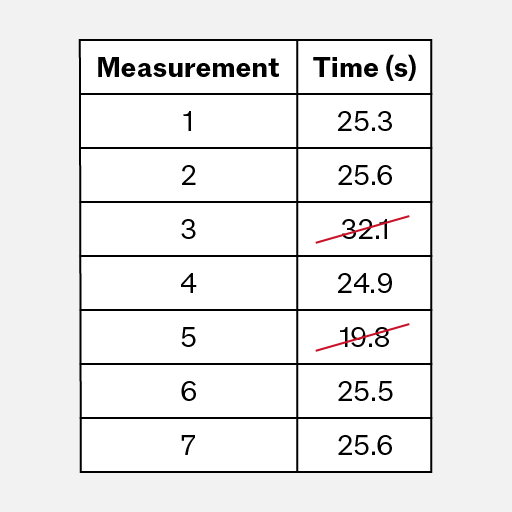
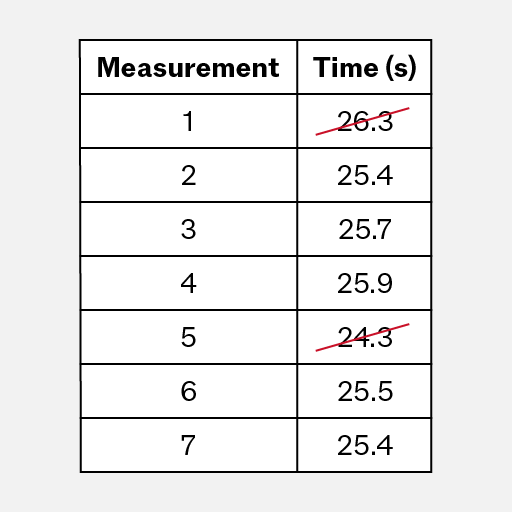
When you have taken at least three readings of a measurement, one reading may be anomalous or an outlier.
There are no absolute rules for dealing with these results, and you need to consider each case.
Ask yourself:
- Was the suspected anomaly recorded in error?
- Was the suspected anomaly recorded in different conditions from the other values?
If you answer yes to either of these questions, then you can consider the value as anomalous and omit it from the dataset. You should calculate the mean using the other values.
For example, a student repeatedly drops effervescent tablets into fresh cups of hot water and measures the time it takes for the reaction to complete.
Question walkthrough
Calculating weighted means
,
When you take a measurement, there is an uncertainty because no measuring instrument can show unlimited precision.
The precision offered by the instrument is called its resolution. This is usually determined by the scale on the instrument and is half of the smallest division on the scale.
Absolute uncertainty is the amount by which a measurement could differ from the actual value.
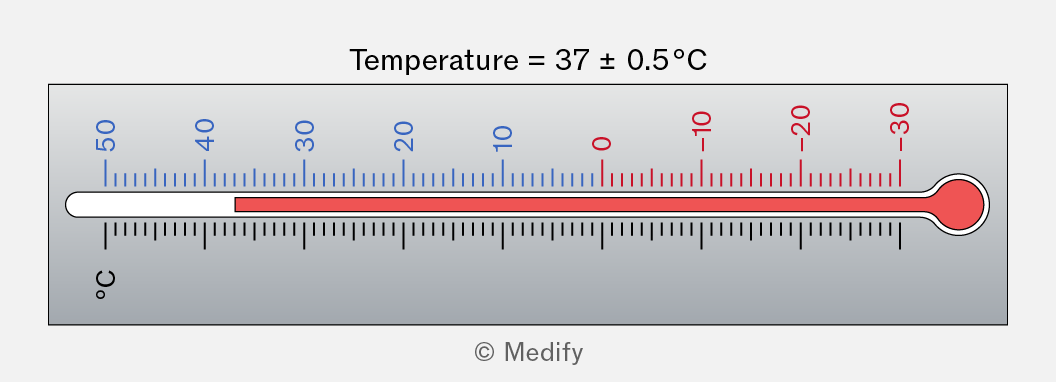
The smallest division on the scale above is
The absolute uncertainty is half of the smallest division.
So the uncertainty in the temperature is
You can calculate the relative uncertainty or percentage uncertainty using the equation:
The percentage uncertainty indicates the absolute uncertainty relative to the measured quantity.
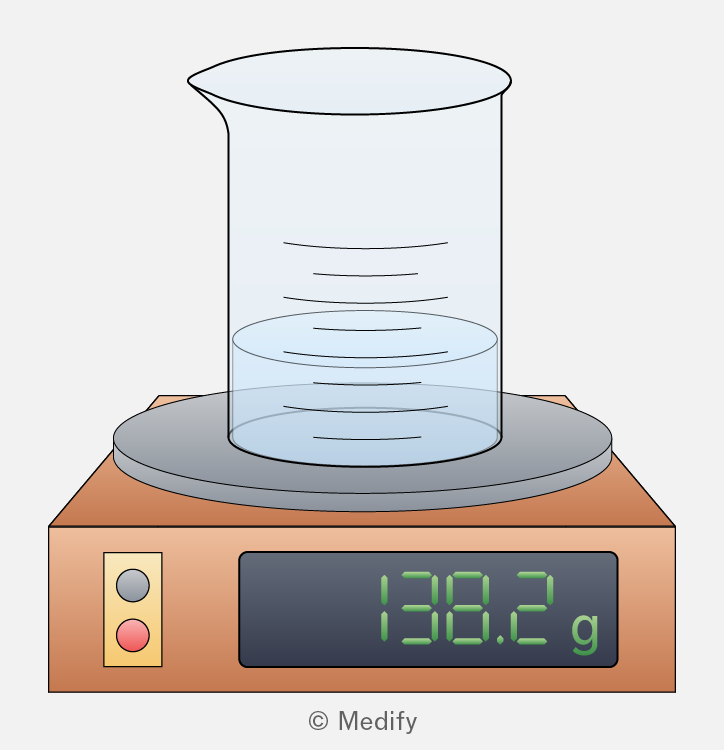
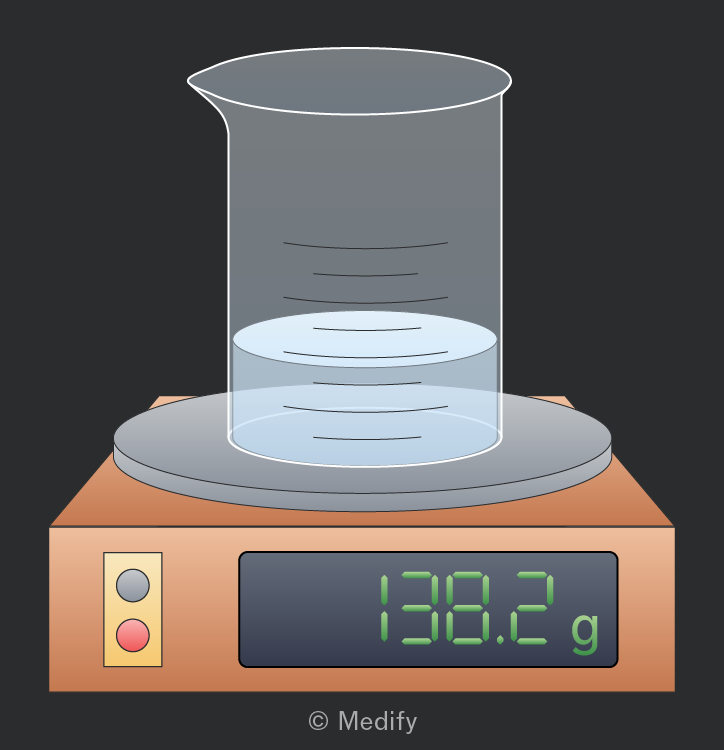
The smallest unit on the balance scale is So, the absolute uncertainty in the measurement is
It is useful to know that when measured quantities are smaller, the percentage uncertainty is greater. An example of this is when a balance is used to measure a mass of the percentage uncertainty will be much greater than a mass of
This is because the number you are dividing the absolute uncertainty by is much smaller.
Question walkthrough
Calculate relative uncertainty in a measurement
Doubles the thermometer’s reading uncertainty to account for two readings (initial and final), then finds the percentage uncertainty in a recorded temperature change.
Always add the absolute uncertainties in the measurements when calculating the percentage uncertainty in the difference between two measurements.
For example, a student records two temperatures, and using a thermometer marked in divisions.
They calculate the percentage uncertainty in the temperature difference.
Question walkthrough
Calculate relative uncertainty when two measurements are added or subtracted
Doubles the thermometer’s reading uncertainty to account for two readings, then finds the percentage uncertainty in the temperature difference between two measurements.