
Geometry and Trigonometry (M4)
On this page
In geometry, angles are usually measured in degrees, where a rotation of represents a complete turn.
If a complete turn is split into several angles, those angles must add up to
Therefore, if there are equal angles, each one is
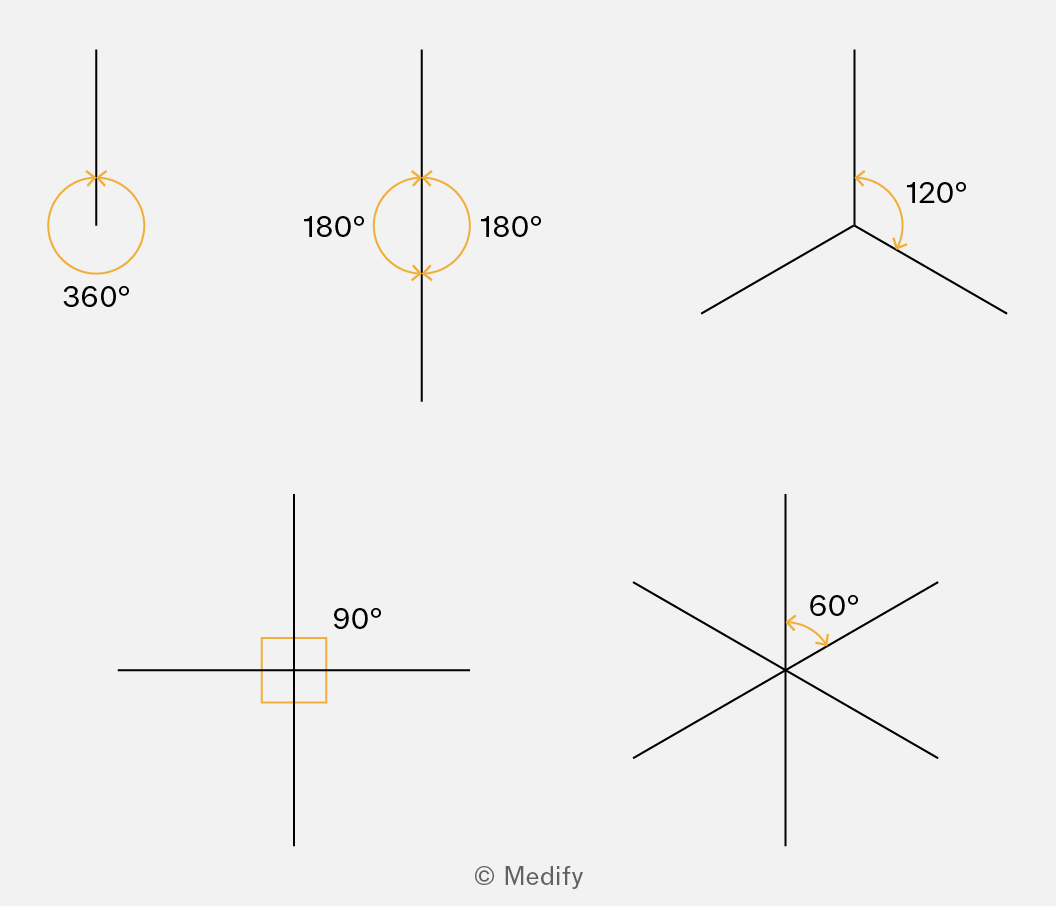
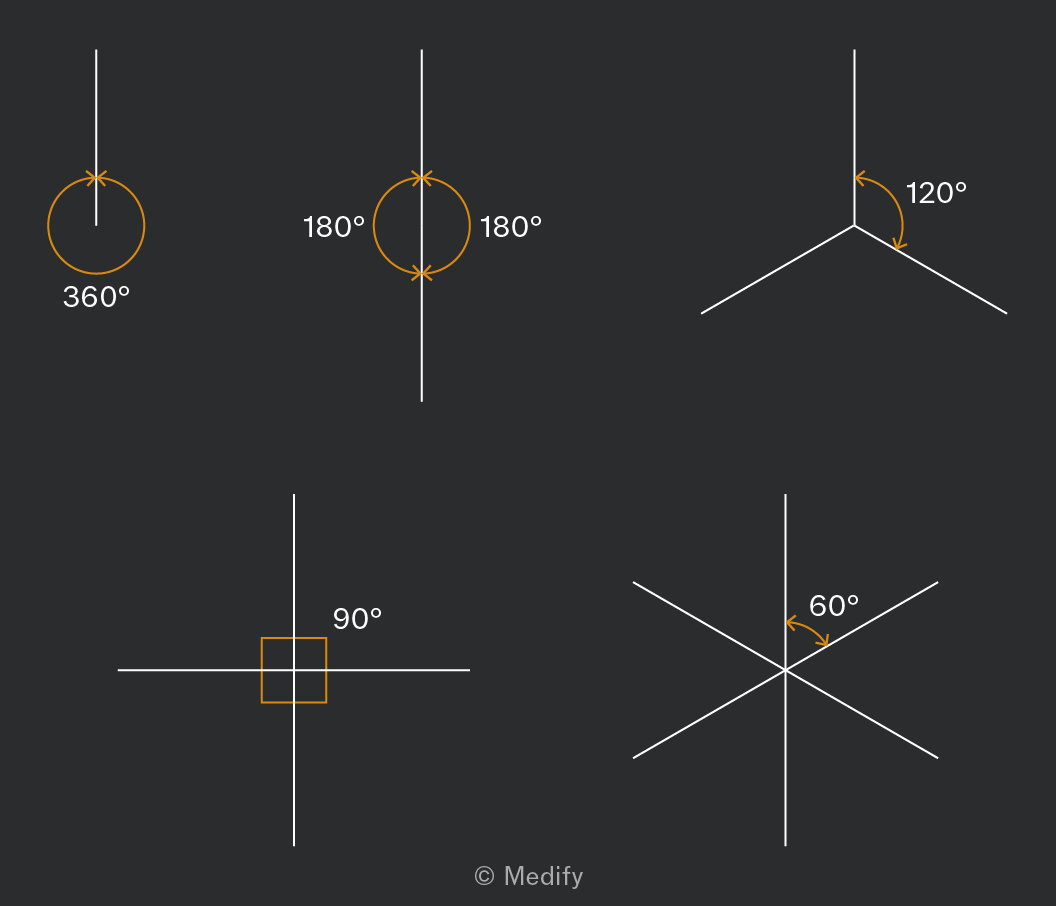
The image illustrates some examples that are commonly found in chemical structures.
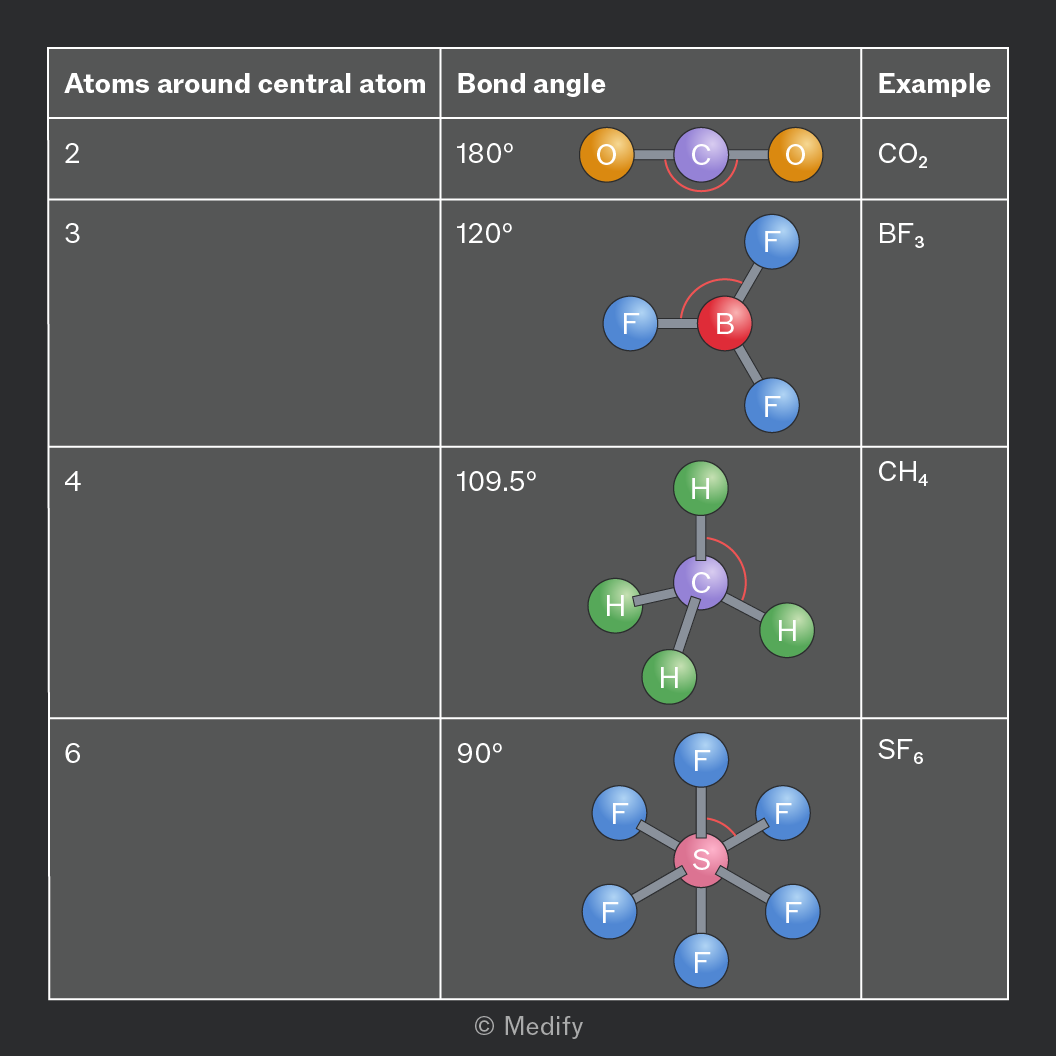
In regular chemical structures, several atoms are arranged evenly around a central atom in 3D space.
You need to know the bond angle between the atoms.
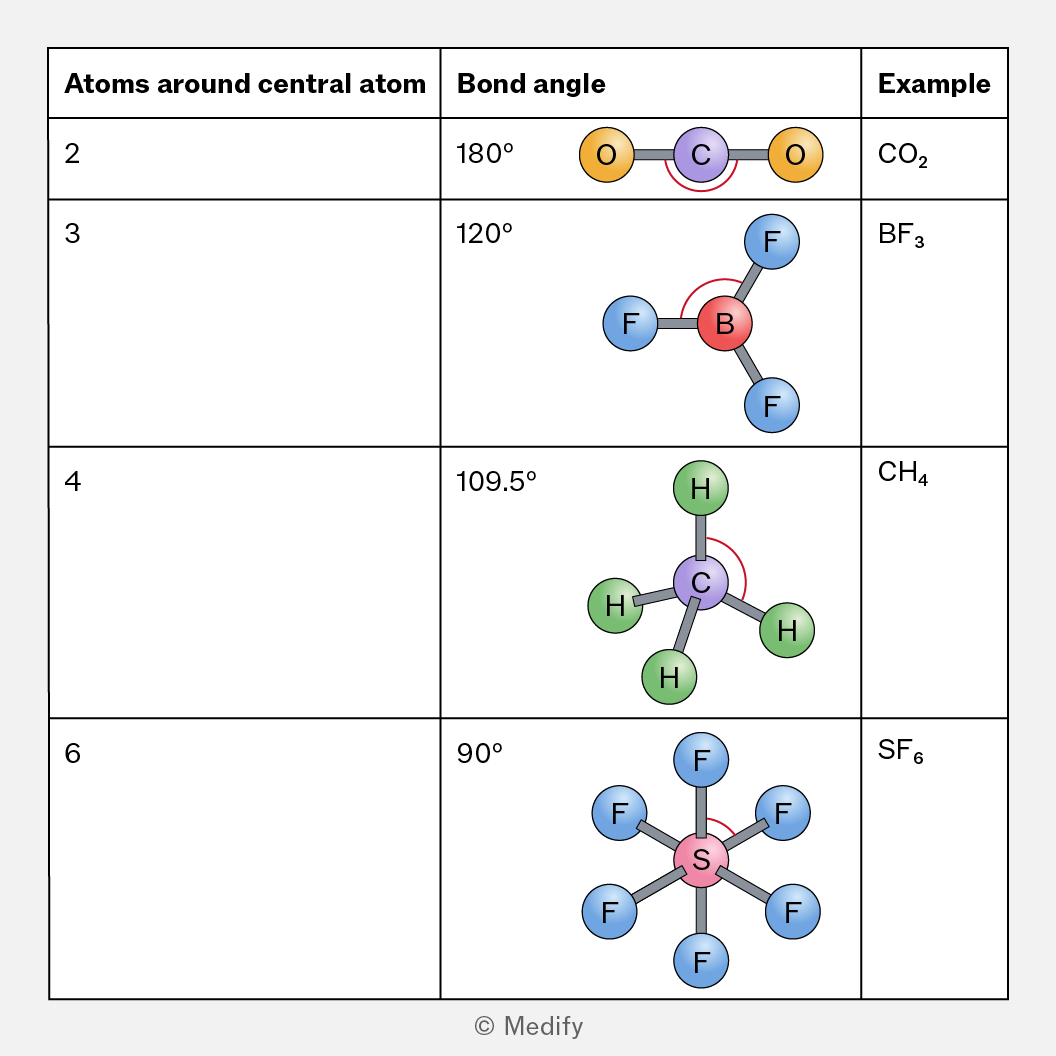
It is useful to know that some chemical structures are not regular, due to lone electron pairs or because they contain multiple types of atoms.
For example, do not have the bond angles described above.
You must be able to read and draw molecules in 3D, not just in 2D. There are ways to represent where bonds/atoms are in a molecule.
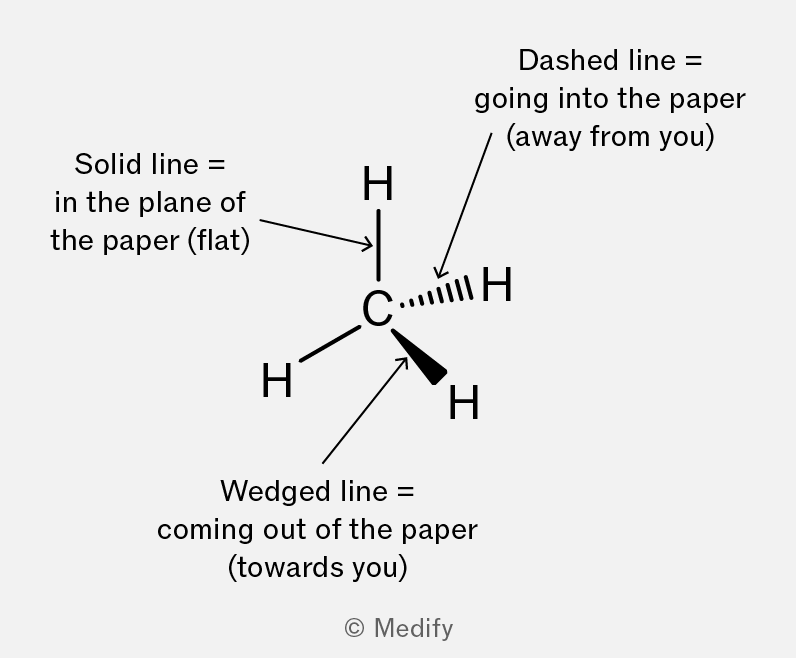
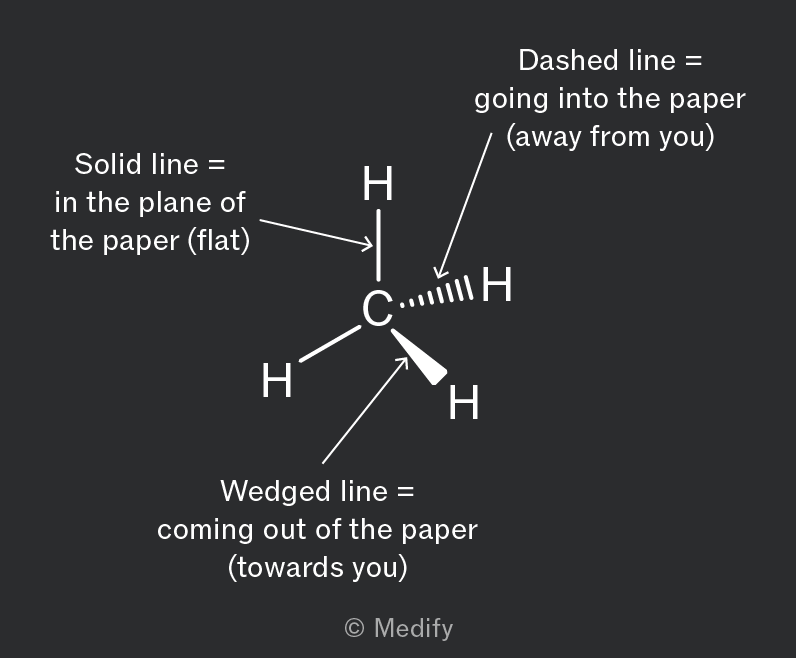
If a 2D shape has mirror symmetry, then it has (at least) one line of symmetry.
In Chemistry, you need to consider whether 3D shapes, such as molecules, have mirror symmetry, meaning they have a plane of symmetry.
Question walkthrough
Understand the symmetry of 2-D and 3-D shapes
Extends a square face’s four lines of symmetry into three dimensions, counting how many faces each resulting plane splits, to find a cube’s 3 rectangle-splitting and 6 triangle-splitting planes of symmetry.
In your chemistry exams, you will need to determine whether certain molecules are reflections or rotations of each other (in which case, the molecules are the same isomer).
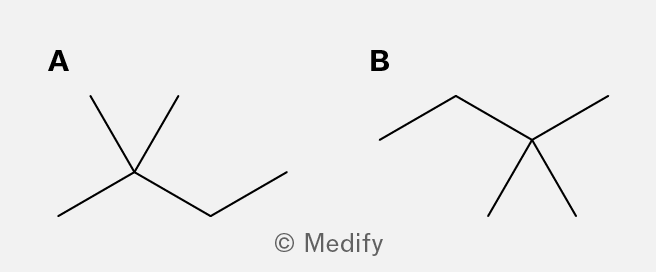
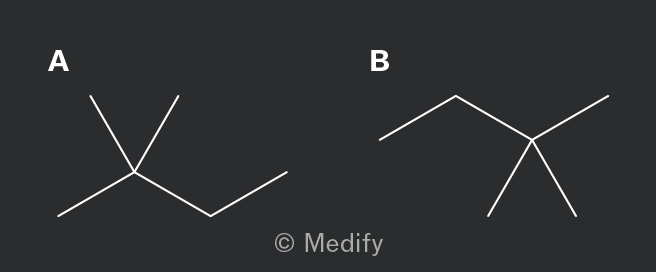
Compounds A and B are the same isomer. B is just a rotation of molecule A. It is important that you can spot molecules that are identical to one another.
In your Chemistry exams, you will need to determine whether certain shapes of molecules have the same structure but are not rotations of each other (known as enantiomers).
In other words, one shape cannot be rotated to superimpose exactly on another shape.
Consider the three shapes below. One of these shapes cannot be rotated to superimpose the others.
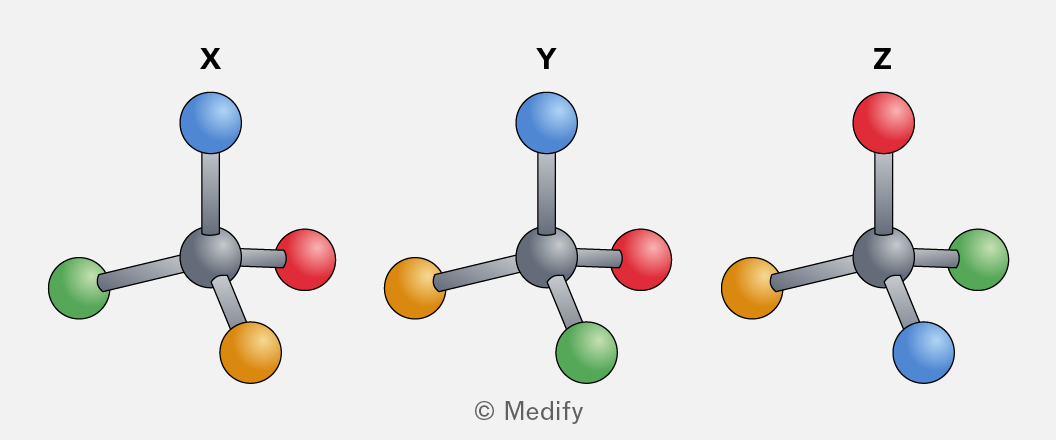
- X and Y cannot be superimposed on each other, because no rotation could keep the blue and red in the same place while switching the orange and green.
- Y and Z are rotations of each other, around the axis from the centre to the orange.
So X is the shape that cannot be rotated to superimpose on the others.
Visualising 3D images can be difficult. This makes it hard in Chemistry when considering the rotation and reflection of molecules.
To make it easier:
- At any moment, focus only on the key details of the image that you need to change. In a complex organic molecule, this might be just two of the bonds. If needed, you can focus on other parts of the molecule later.
- Draw a basic diagram to look at, to make it easier to imagine how it might change by rotation or reflection. This means you don’t need to store so much detail in your working memory.