
Atomic structure and isotopes (2.1.1)
On this page
The structure of the atom:
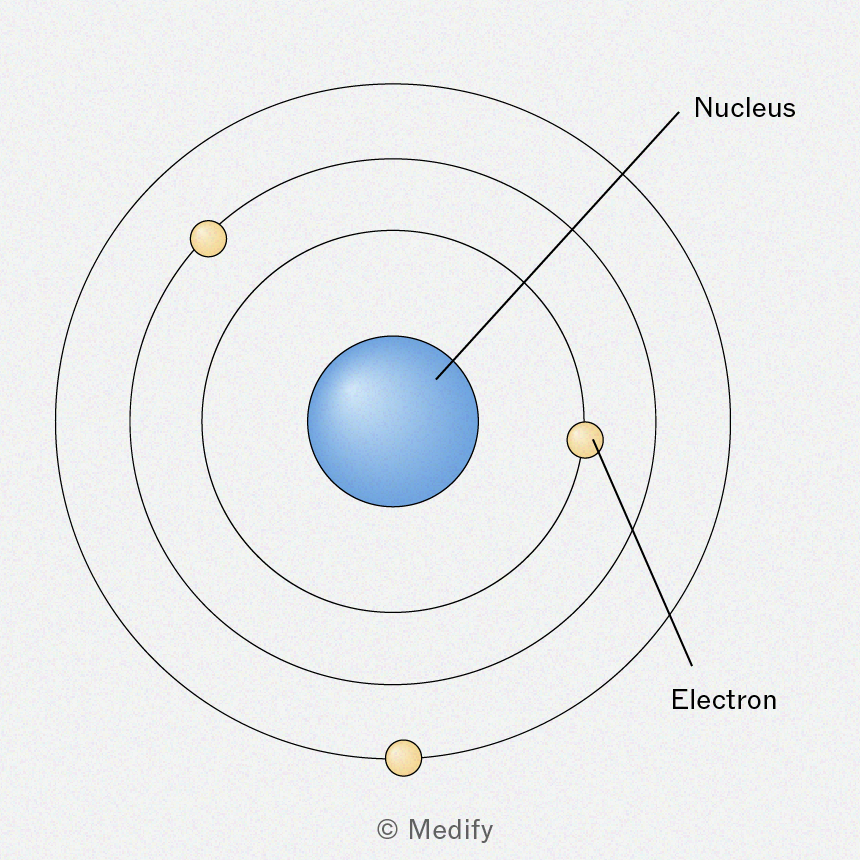
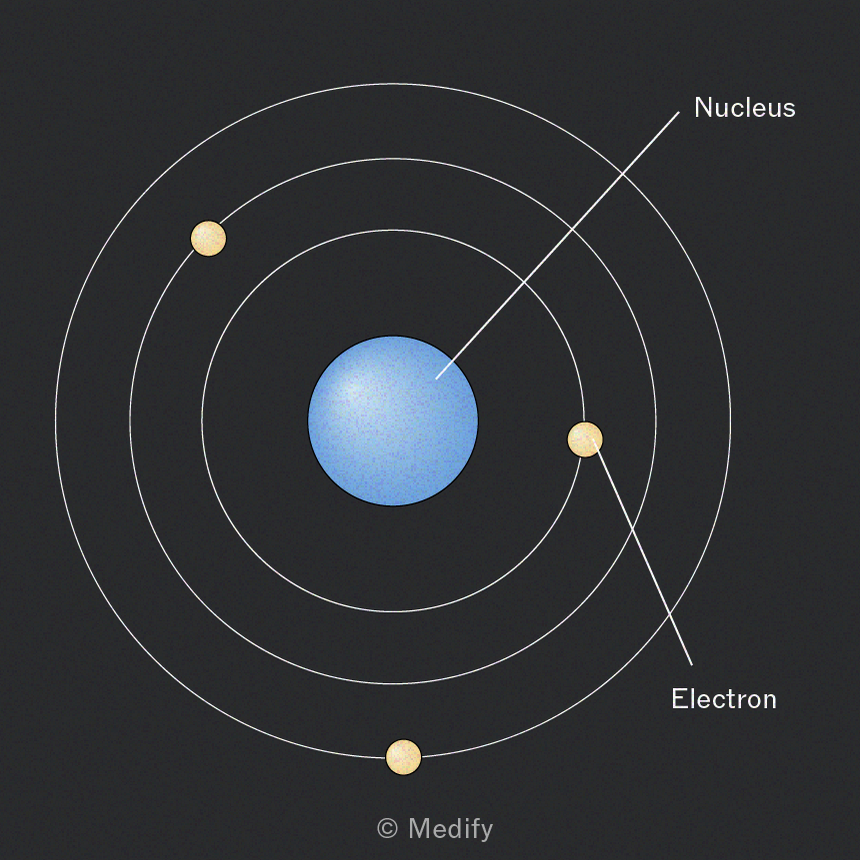
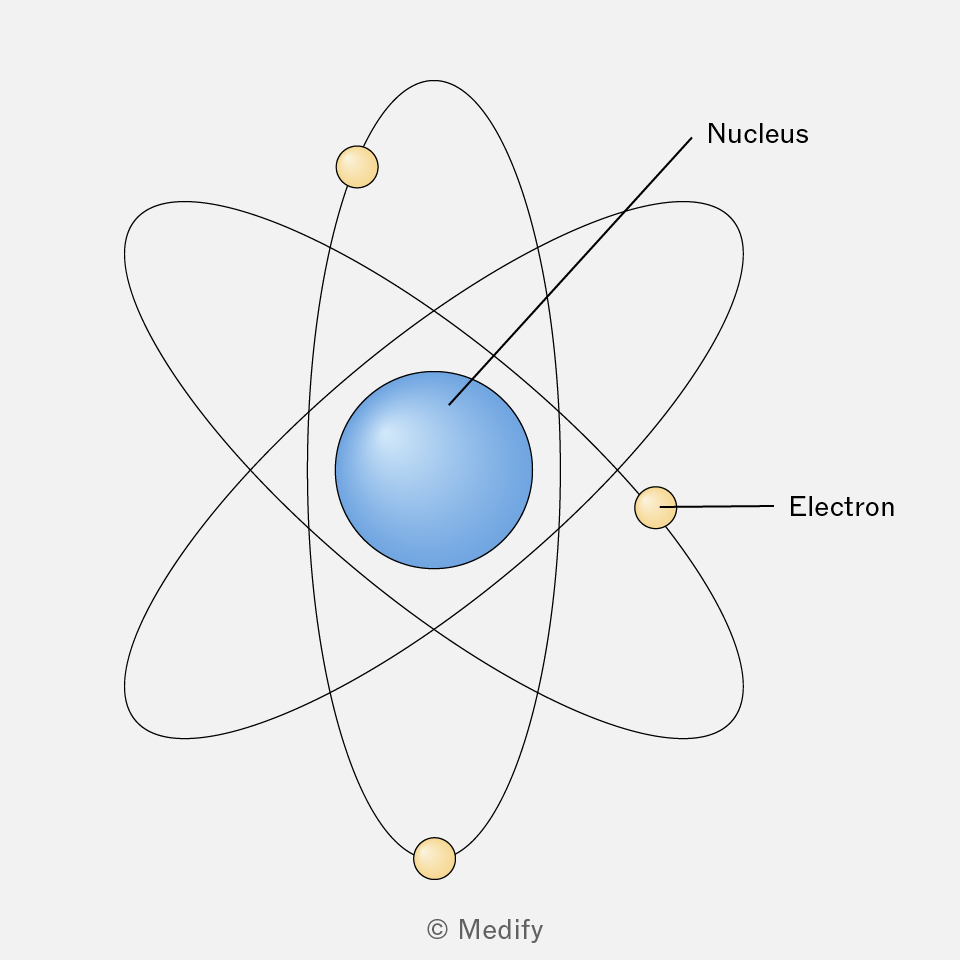
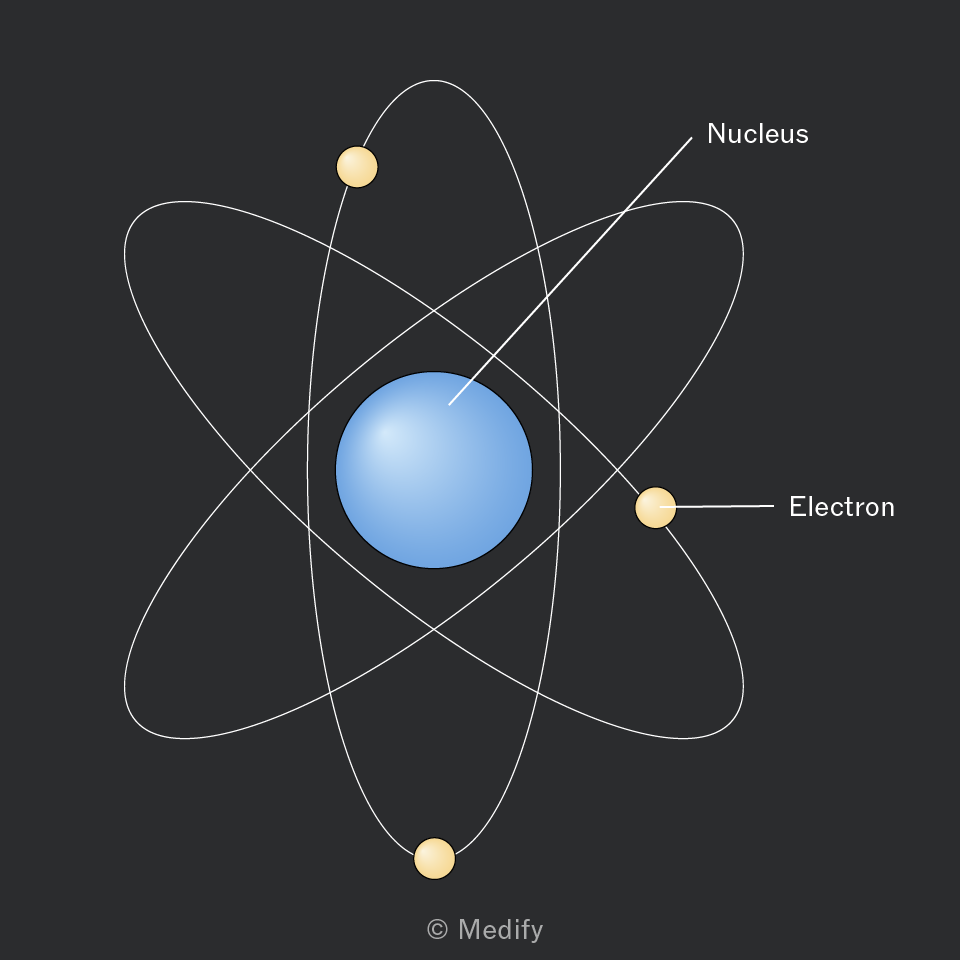
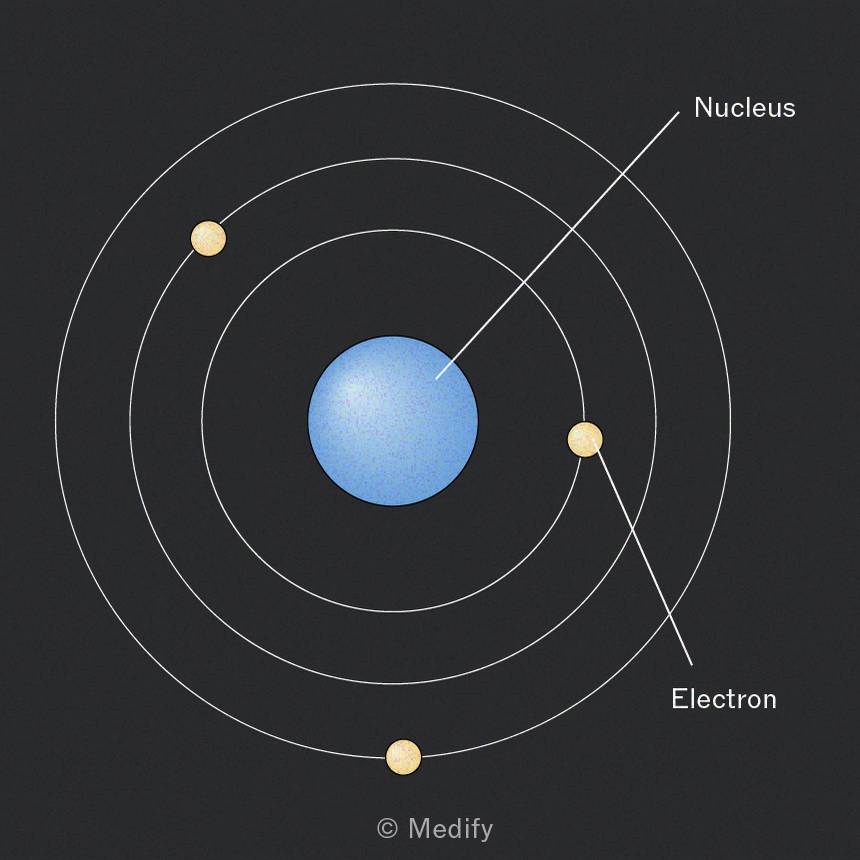
The nucleus contains the protons and neutrons.
The nucleus is surrounded by shells (orbitals) which contain the electrons.
Subatomic particles can be described by their relative charge and relative mass.
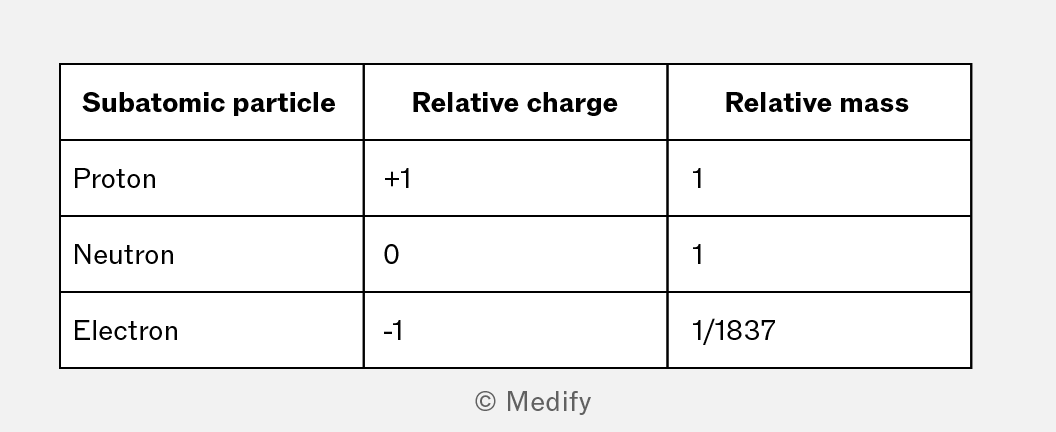
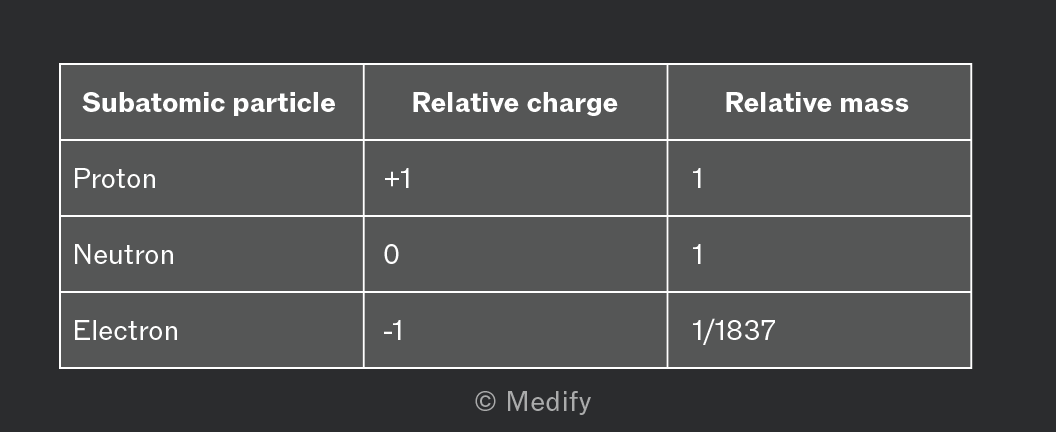
In a neutral atom, the number of protons is the same as the number of electrons.
Atomic number () = number of protons
Mass number () = number of neutrons + the atomic number
The number of neutrons = mass number − the atomic number.
Ions are particles with a charge.
In an ion, the number of electrons = number of protons − the charge.
- The number of electrons in a
- The number of electrons in a
Dalton (1800s):
- discovered that atoms can be combined to make compounds
- believed atoms cannot be broken into smaller parts
- disproved by J.J. Thomson’s cathode ray tube experiments.
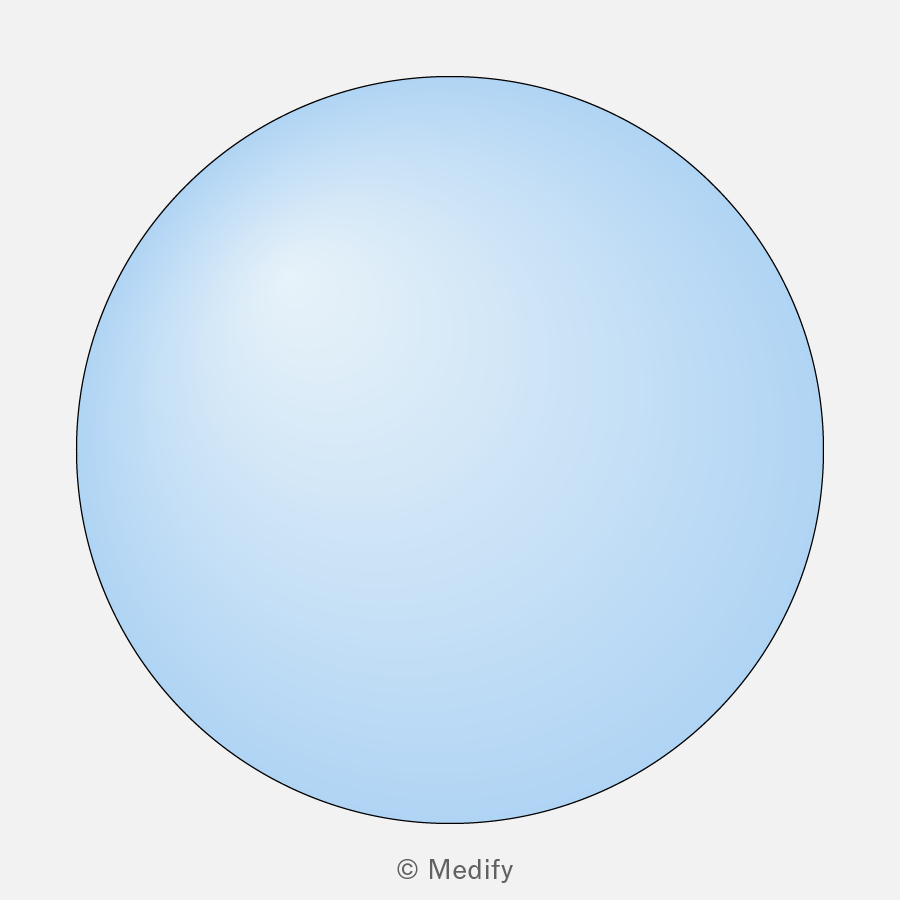

Thomson (1897):
- discovered the electron
- believed that atoms were a sphere of positive mass embedded with electrons: the plum pudding model
- was disproved by Rutherford’s gold foil experiment.
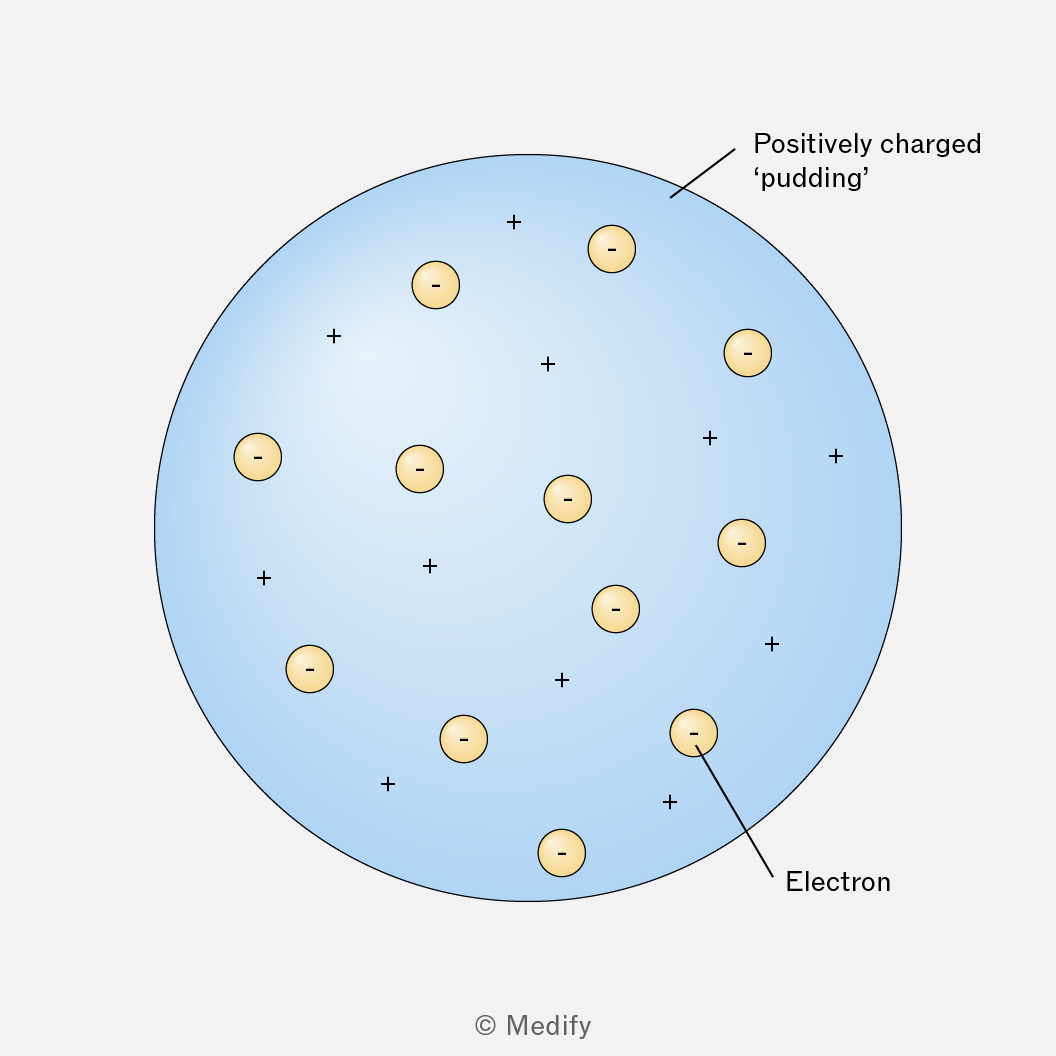
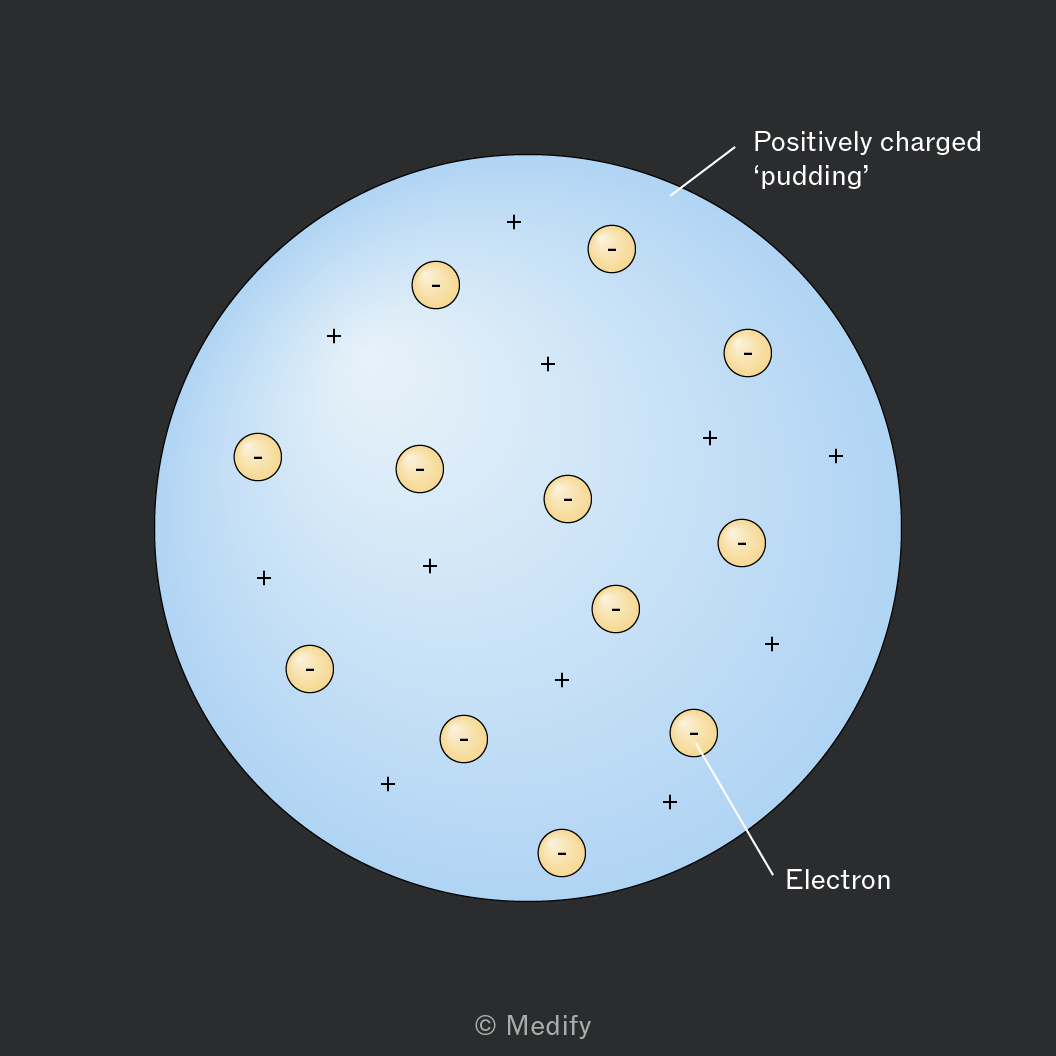
Rutherford (1905):
- discovered the nucleus with his gold foil experiment.
Rutherford’s gold foil experiment:
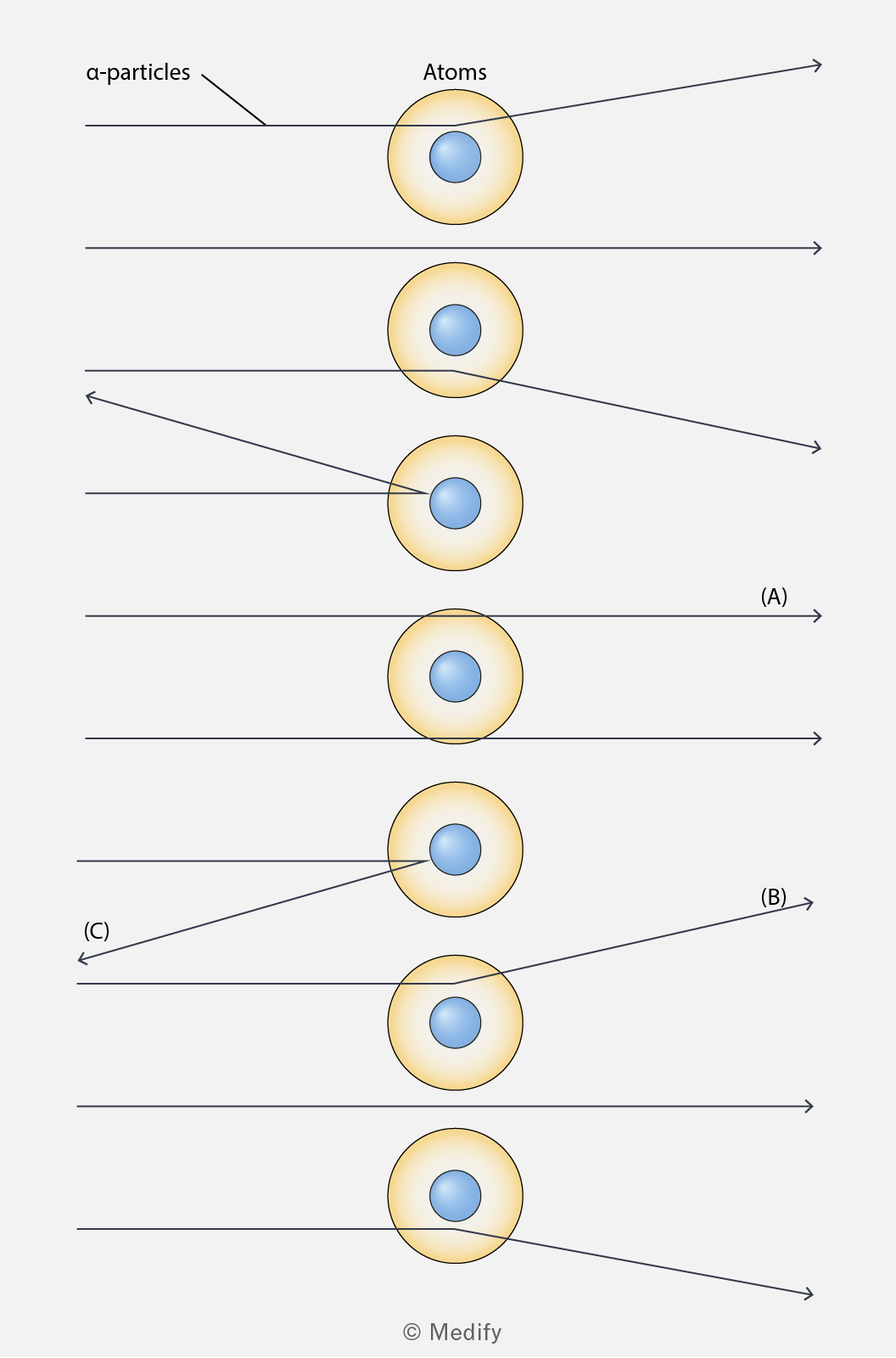
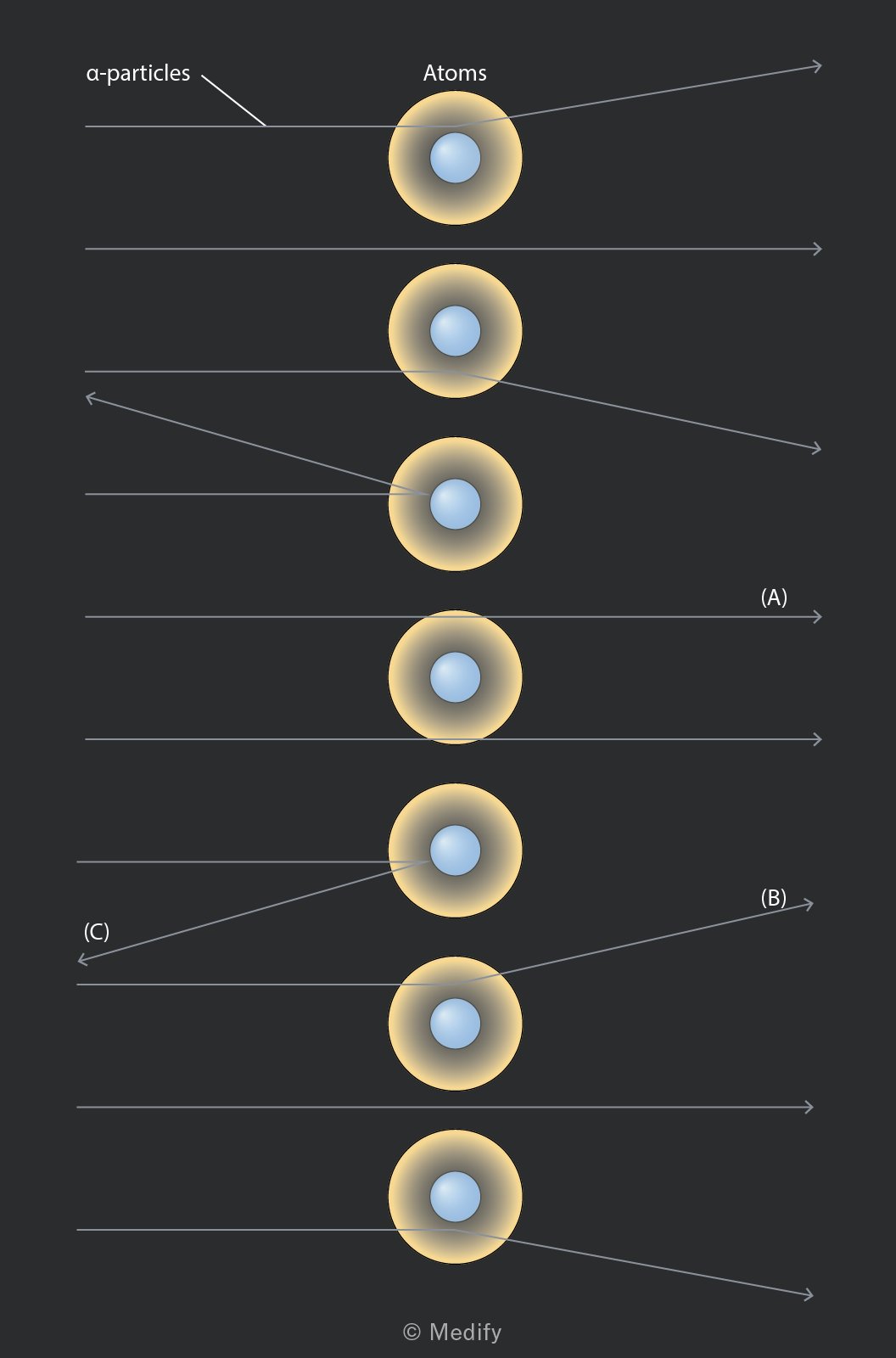
- A very thin piece of gold foil was bombarded with alpha particles.
- Most particles went straight through (A).
- Some were deflected (B) and a few were reflected (C).
- This proved that the vast majority of the mass of an atom is concentrated in a small central volume and that the central mass was positively charged.
Bohr (1913):
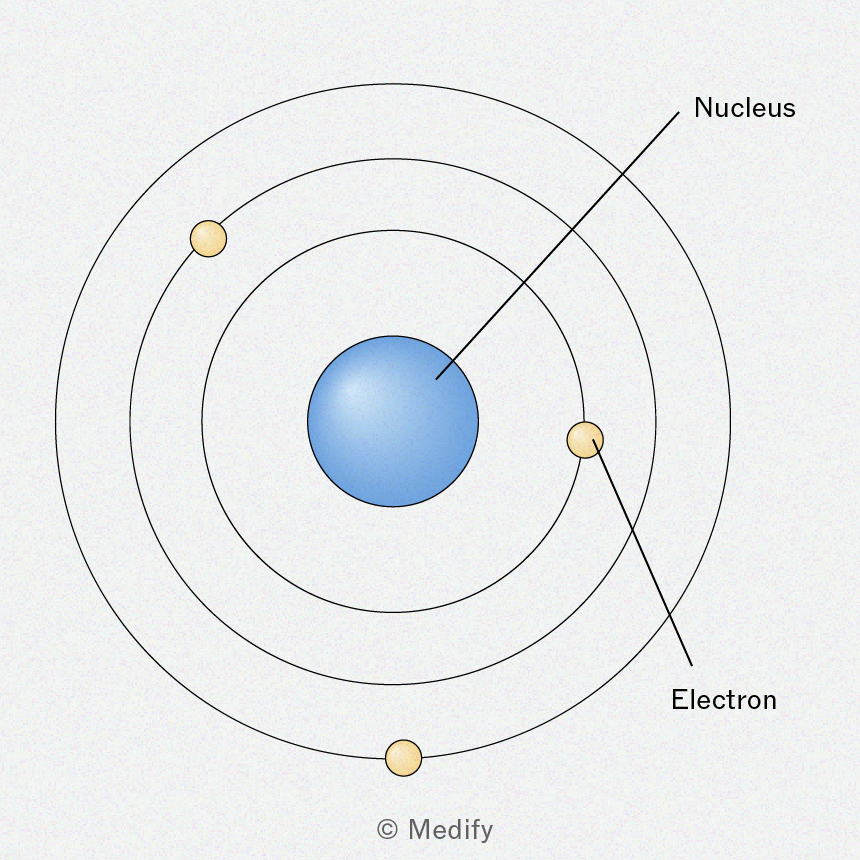
- discovered energy levels
- related atomic spectra to electronic energy levels.
Isotopes are atoms of the same element with different numbers of neutrons and different masses.
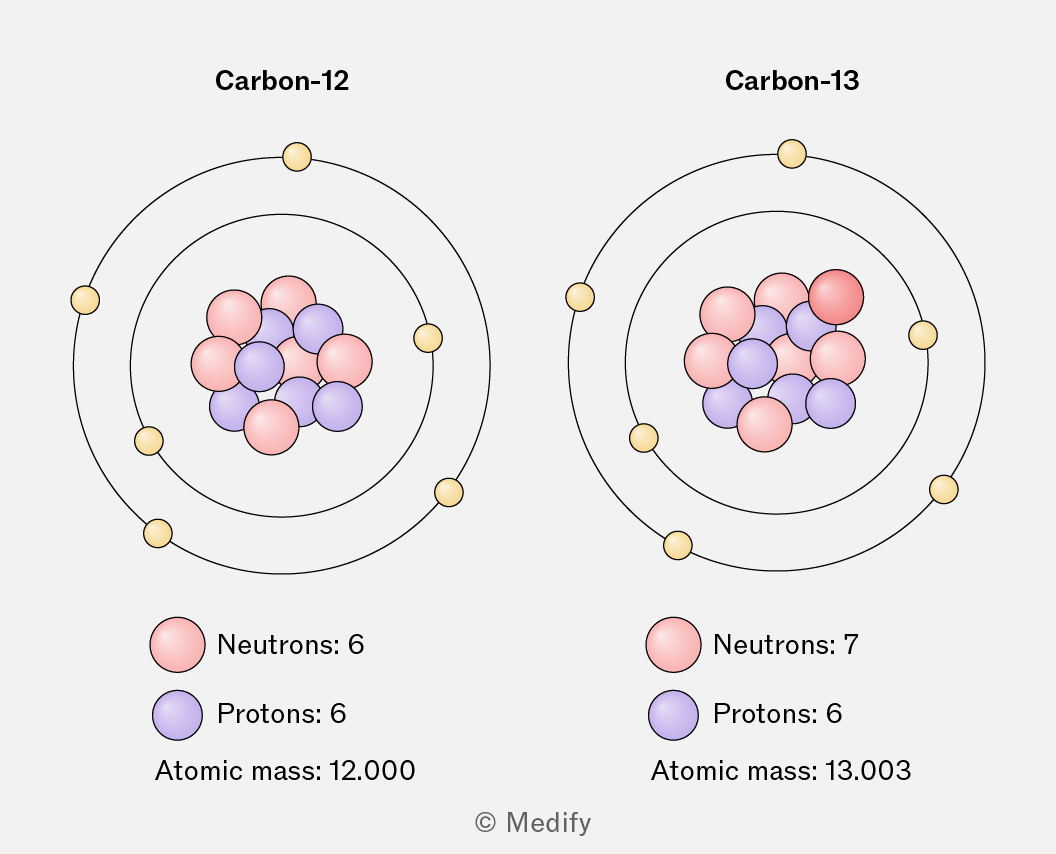
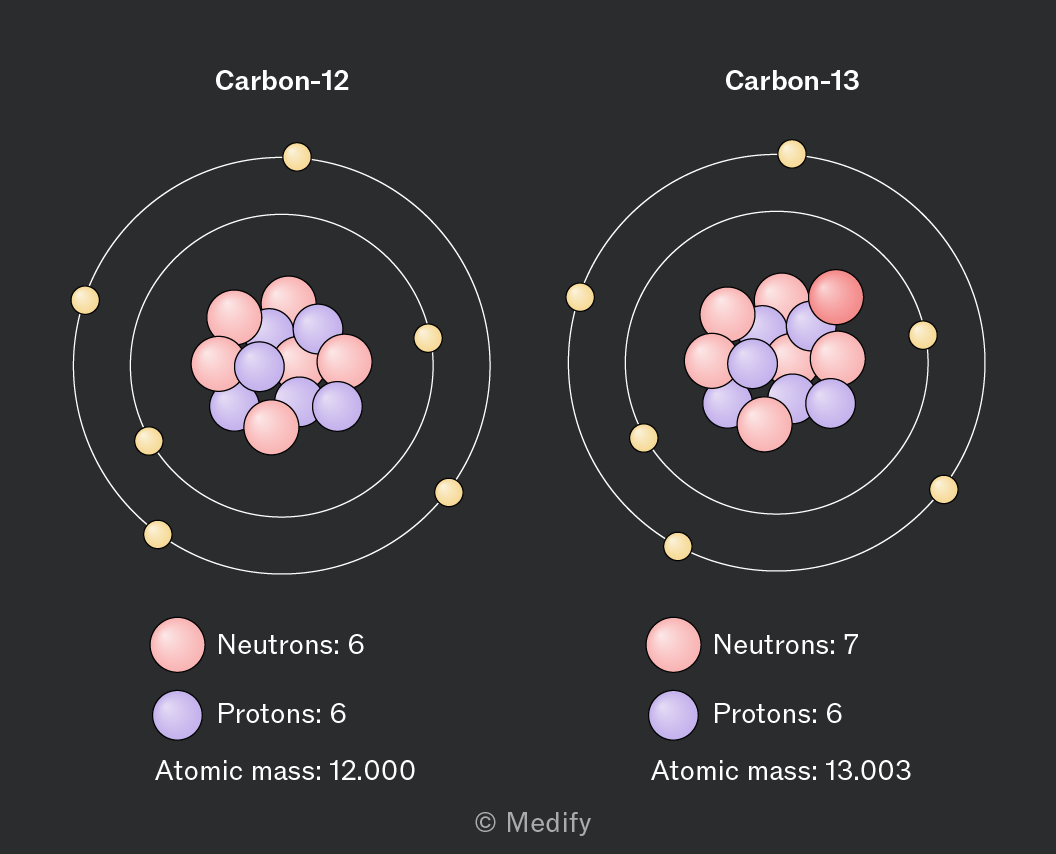
Carbon-12 and carbon-13 are isotopes of carbon.
- Both identify as carbon, with an atomic number of six.
- Carbon-12 has six neutrons and a relative atomic mass of 12 whereas carbon-13 has seven neutrons and a relative atomic mass of 13.
Relative isotopic mass: mass of a specific isotope compared with the mass of carbon-12.
Relative atomic mass: weighted mean mass of all isotopes in an element, compared with the mass of carbon-12.
It is determined using the following equation:
The term relative formula mass (RFM) is used for compounds with giant structures like ionic compounds or giant covalent lattices.
The RFM and (relative molecular mass) can be found from the sum of the relative atomic masses, .
Taking as an example:
- Sodium has
- Sulfur has
- Oxygen has
RFM
The mass spectrum below shows the relative abundance of the two isotopes of boron.
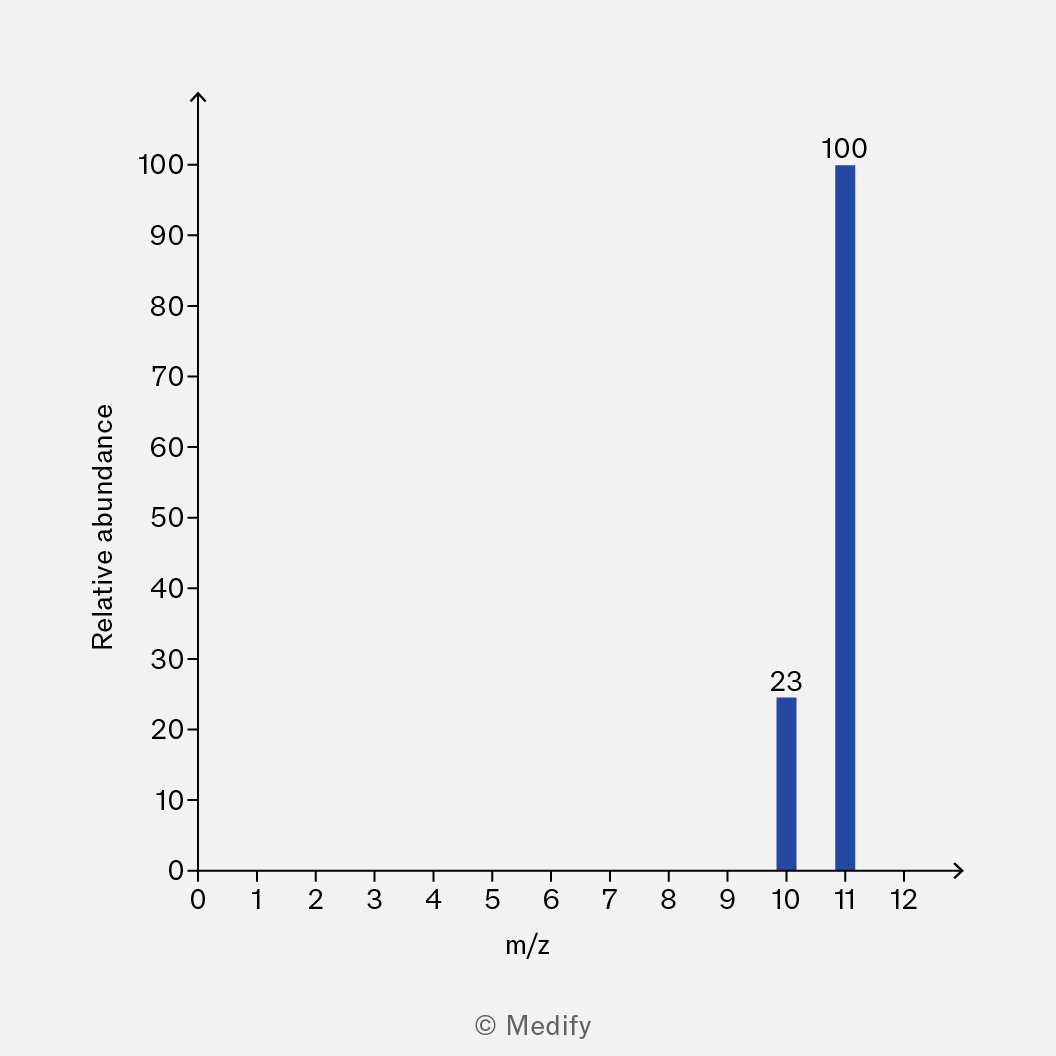
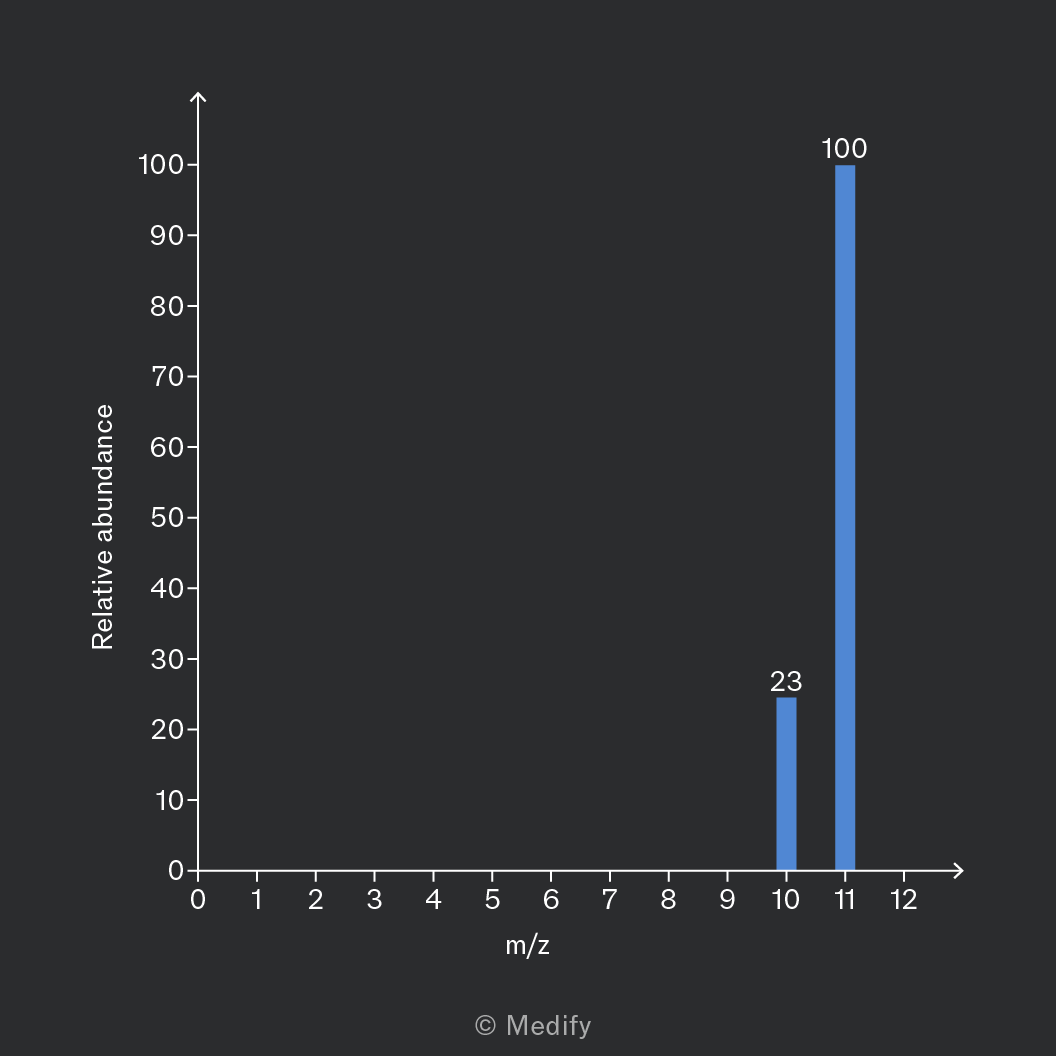
Isotope 1: m/z , relative abundance
Isotope 2: m/z , relative abundance
The relative atomic mass of boron can be calculated from this data: