
Electron structure (2.2.1)
On this page
Electrons occupy specific energy levels outside the nucleus of an atom.
The arrangement of electrons in these quantised energy levels in an atom is referred to as its electron structure or electronic configuration.
Principal energy levels or principal quantum shells (n) are numbered based on their distance from the nucleus.
The first principle quantum shell is closest to the nucleus and described as n = 1.
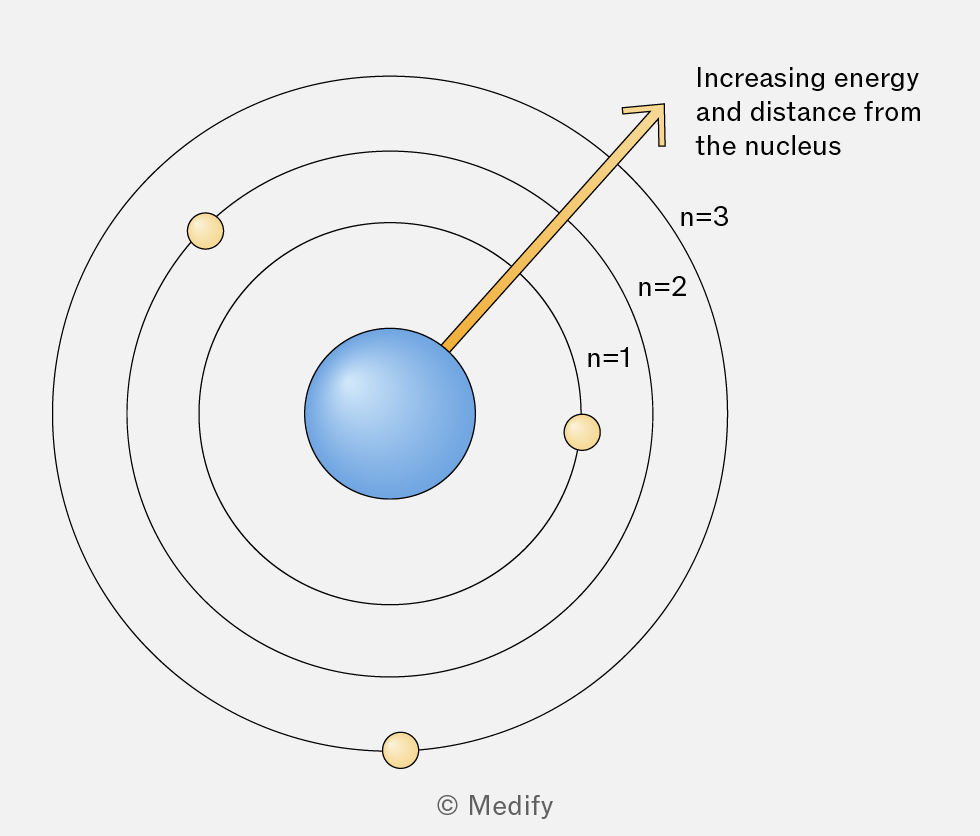
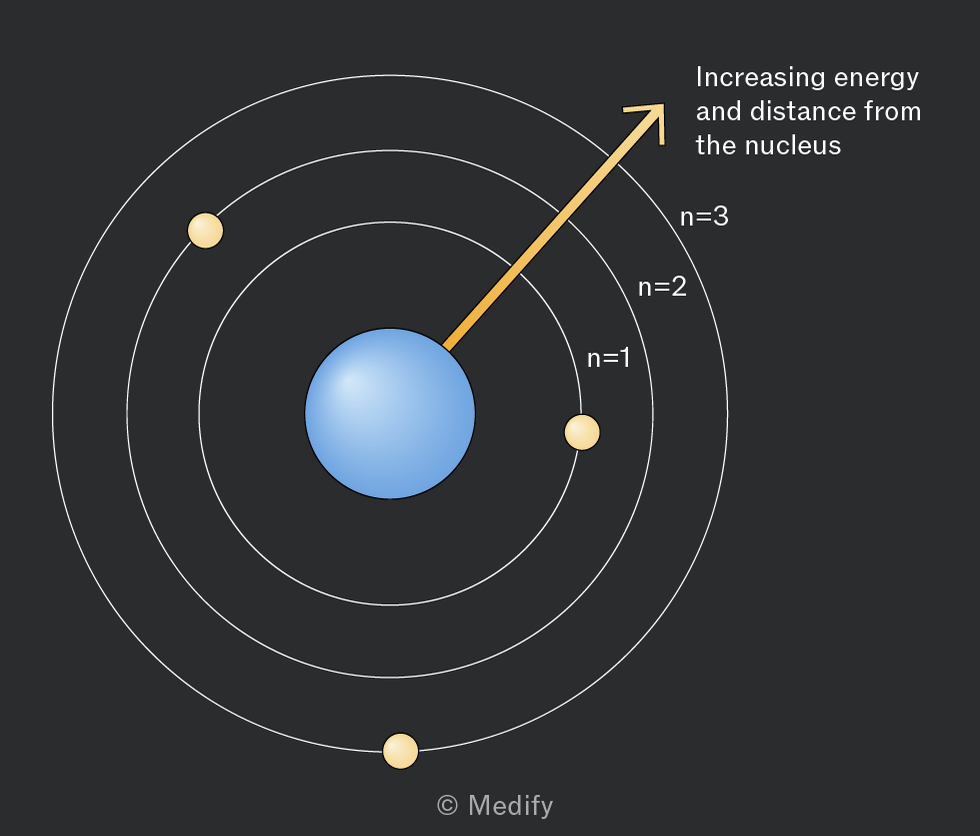
n is an integer value which increases as the shells move further from the nucleus.
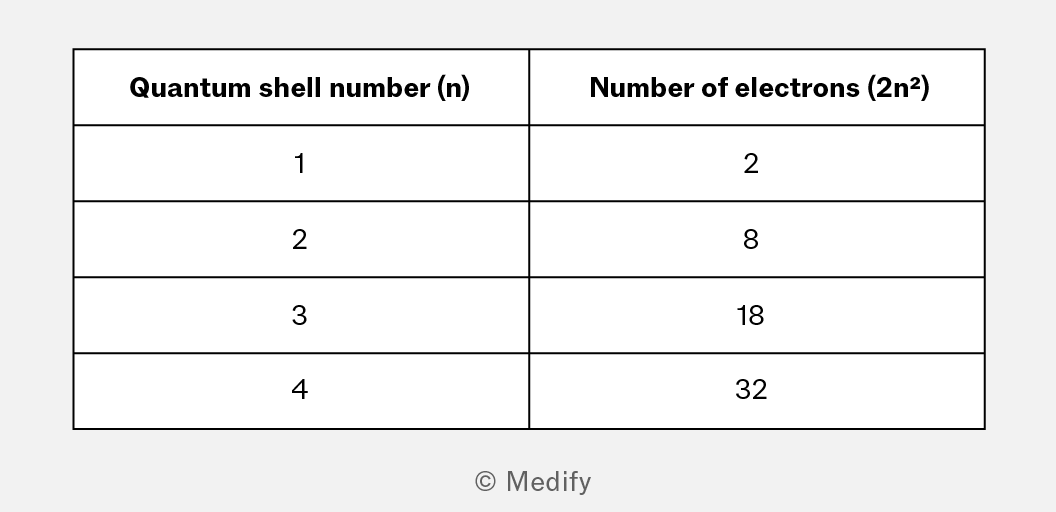
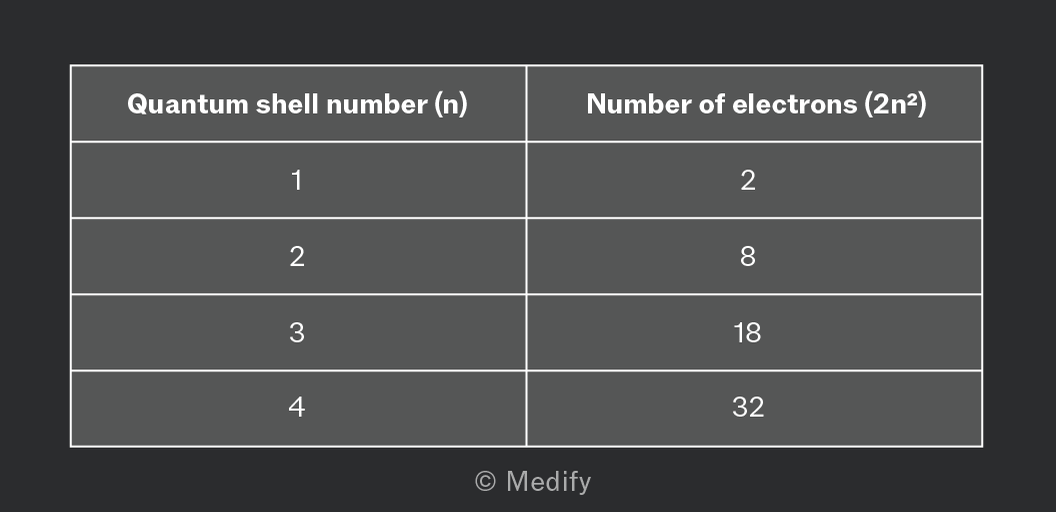
The maximum number of electrons that can fill a quantum shell is given by the formula e = 2n2
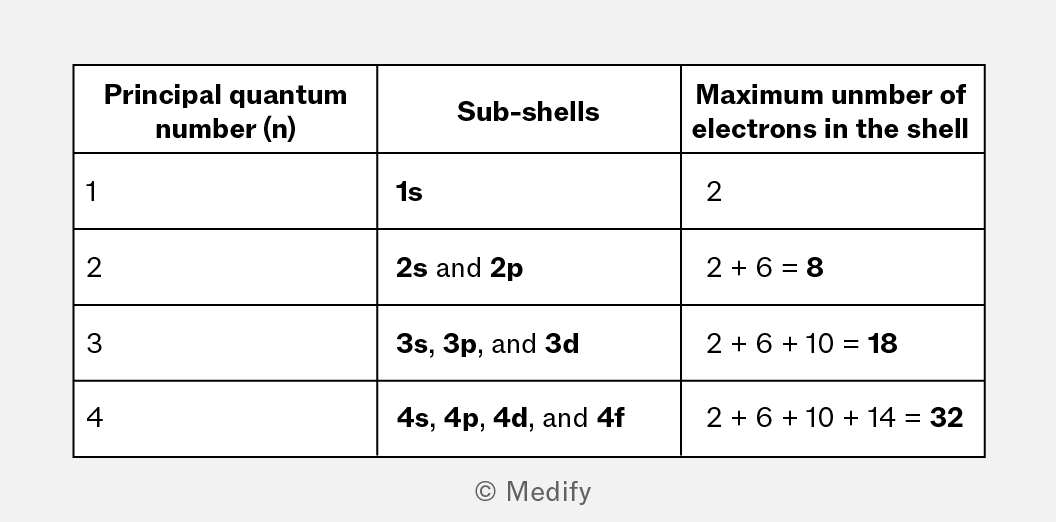
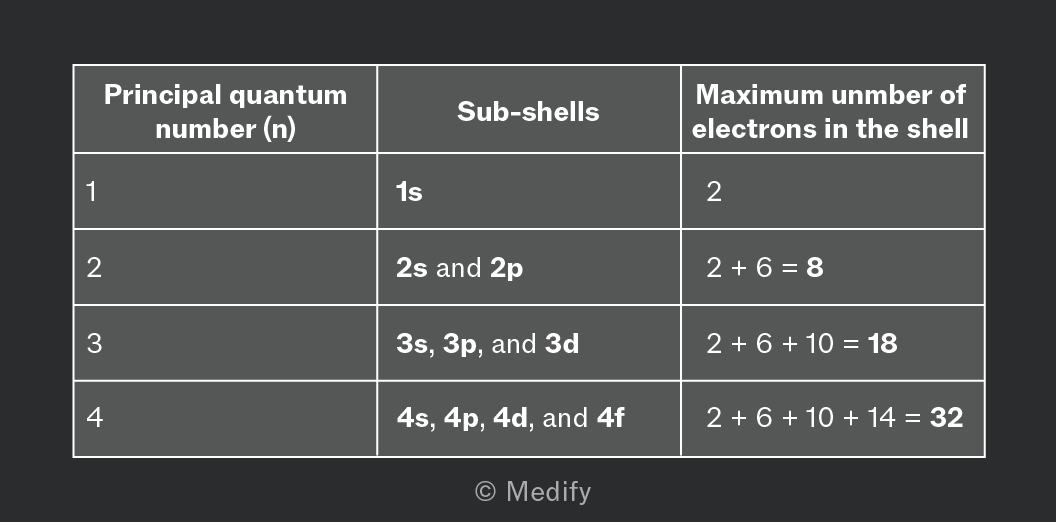
The number of electrons needed to fully occupy the first four quantum shells is shown below.
Shells are divided into subshells which can be further divided into atomic orbitals.
The atomic orbital is a three-dimensional region around the nucleus of an atom, where there is a maximum probability of finding an electron.
Each orbital can have a maximum of 2 electrons, with opposite spins.
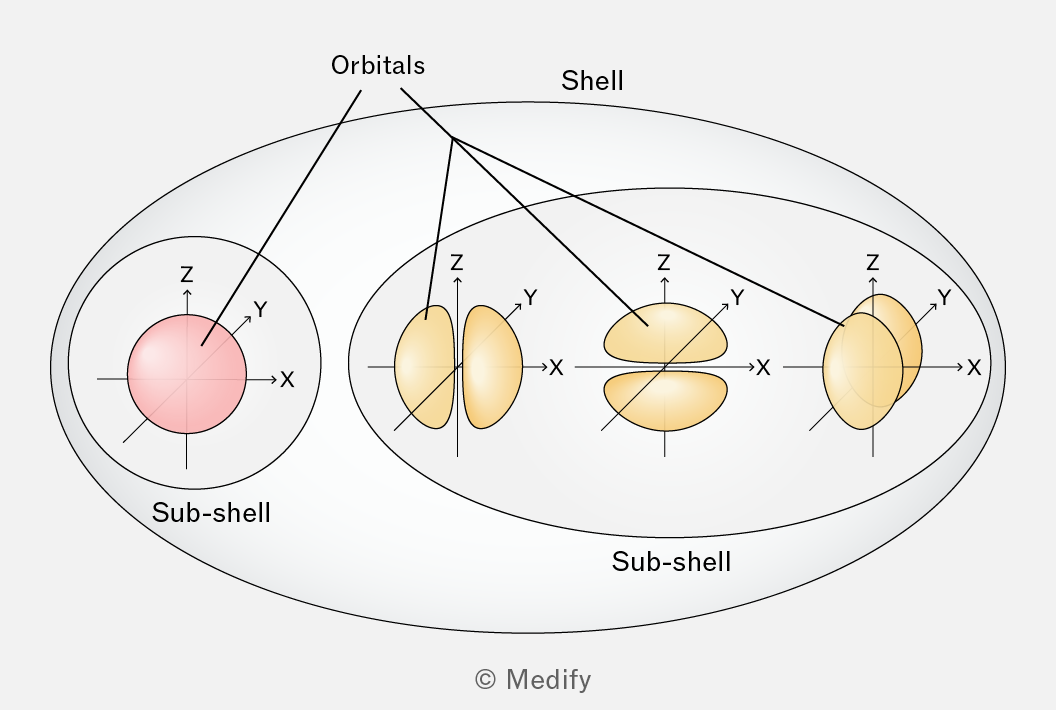
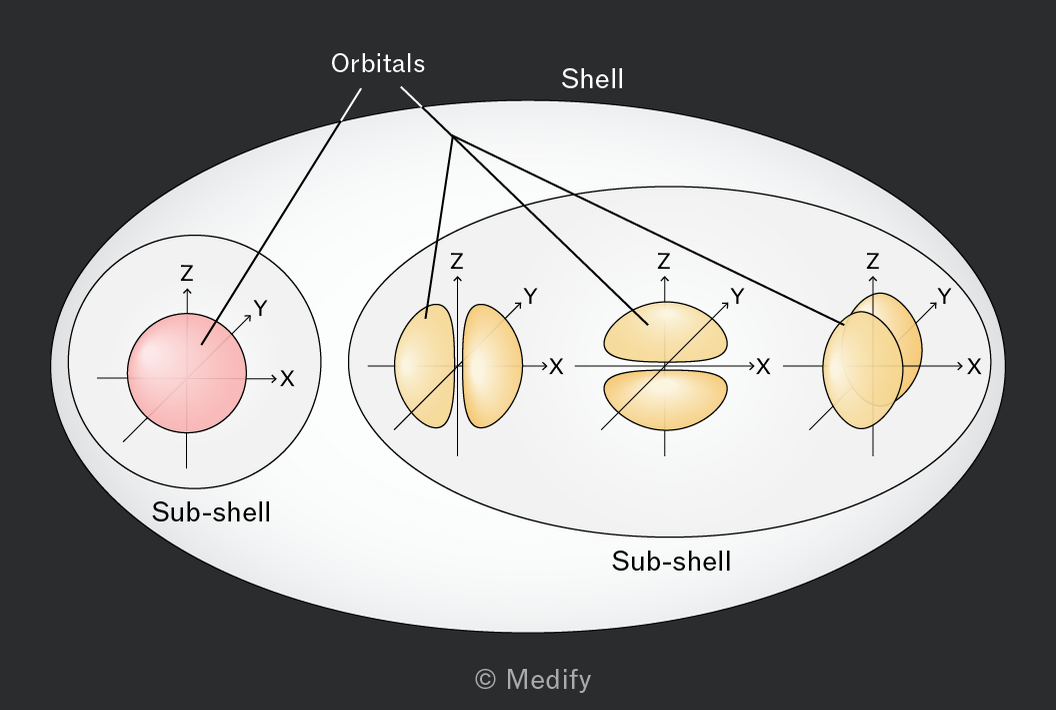
Within a shell, the atomic orbitals are grouped as subshells, distinguished by the letters s,p,d and f.
The s subshell has one atomic orbital, the p subshell has three orbitals, the d subshell has five orbitals while the f subshell has a total of seven atomic orbitals.
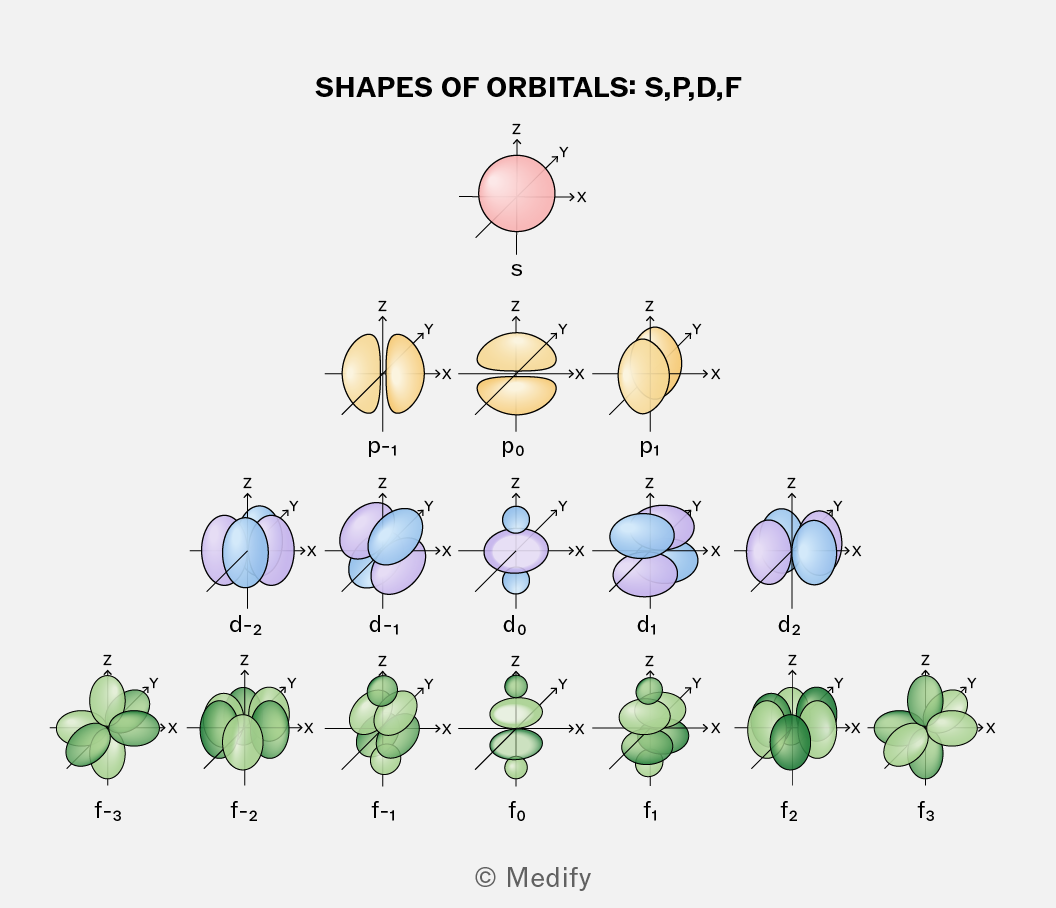
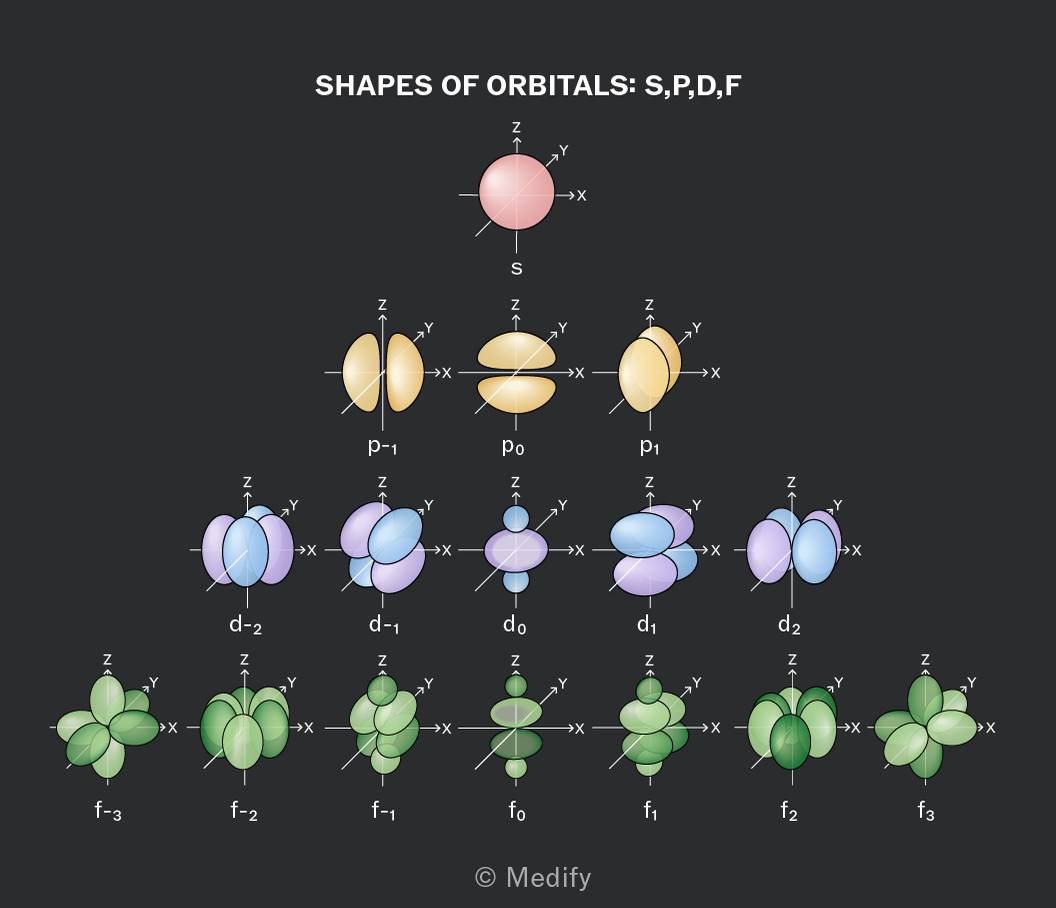
As the energy level of the shell increases, the size of the atomic orbitals within the subshells increases but their shapes remain similar.
The number of subshells per shell in an atom increases with the increase in principal quantum number.
The number of electrons per shell can be calculated by considering full occupancy of all the atomic orbitals present.
An atomic orbital has a three-dimensional shape indicating the area in which an electron is likely to be found.
The s orbital has a symmetrical, spherical shape, with the nucleus located at the centre.
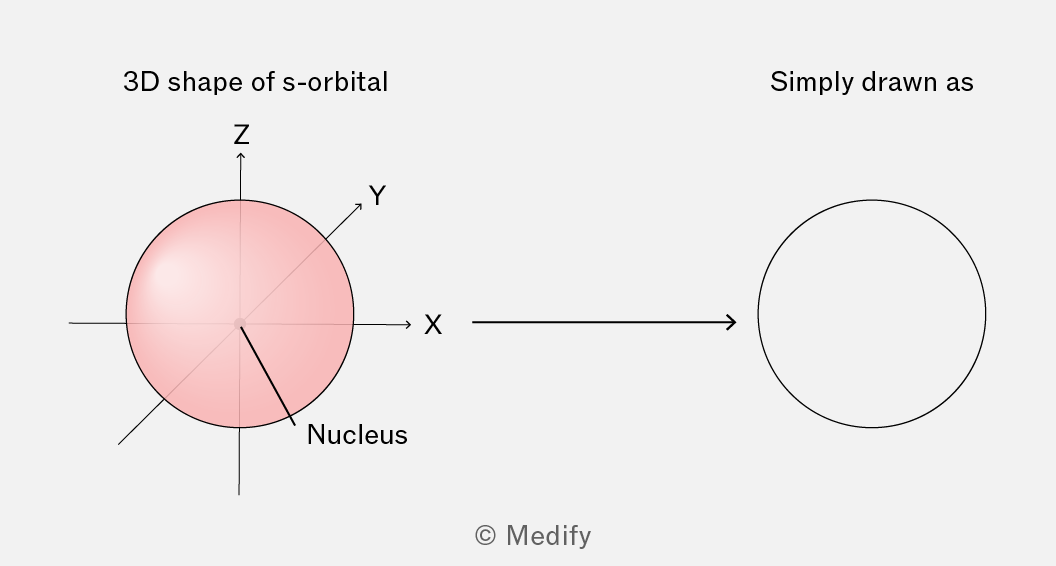
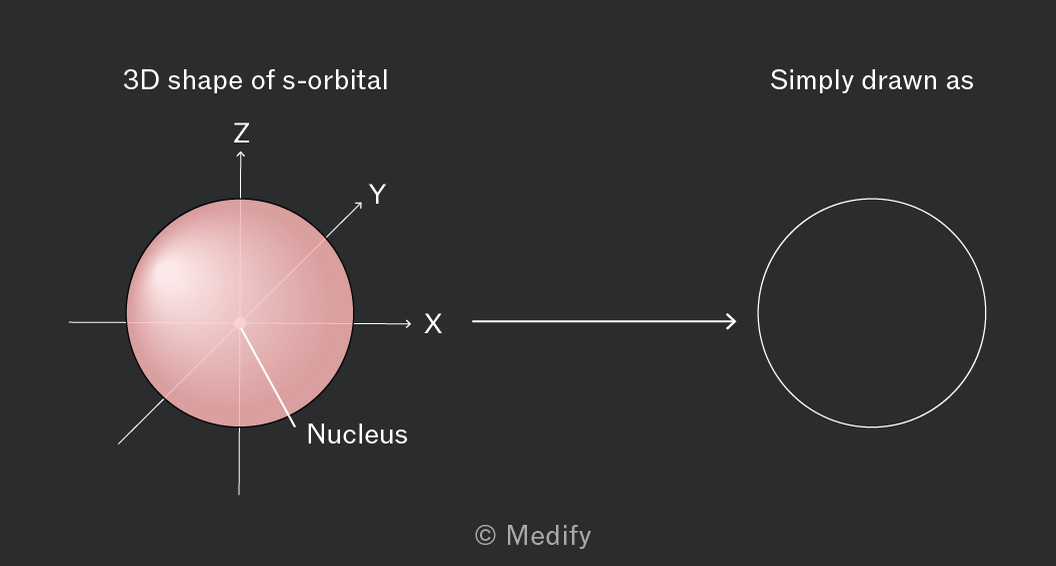
The s orbitals of all shells have the same spherical shape but differ in the size of their radius.
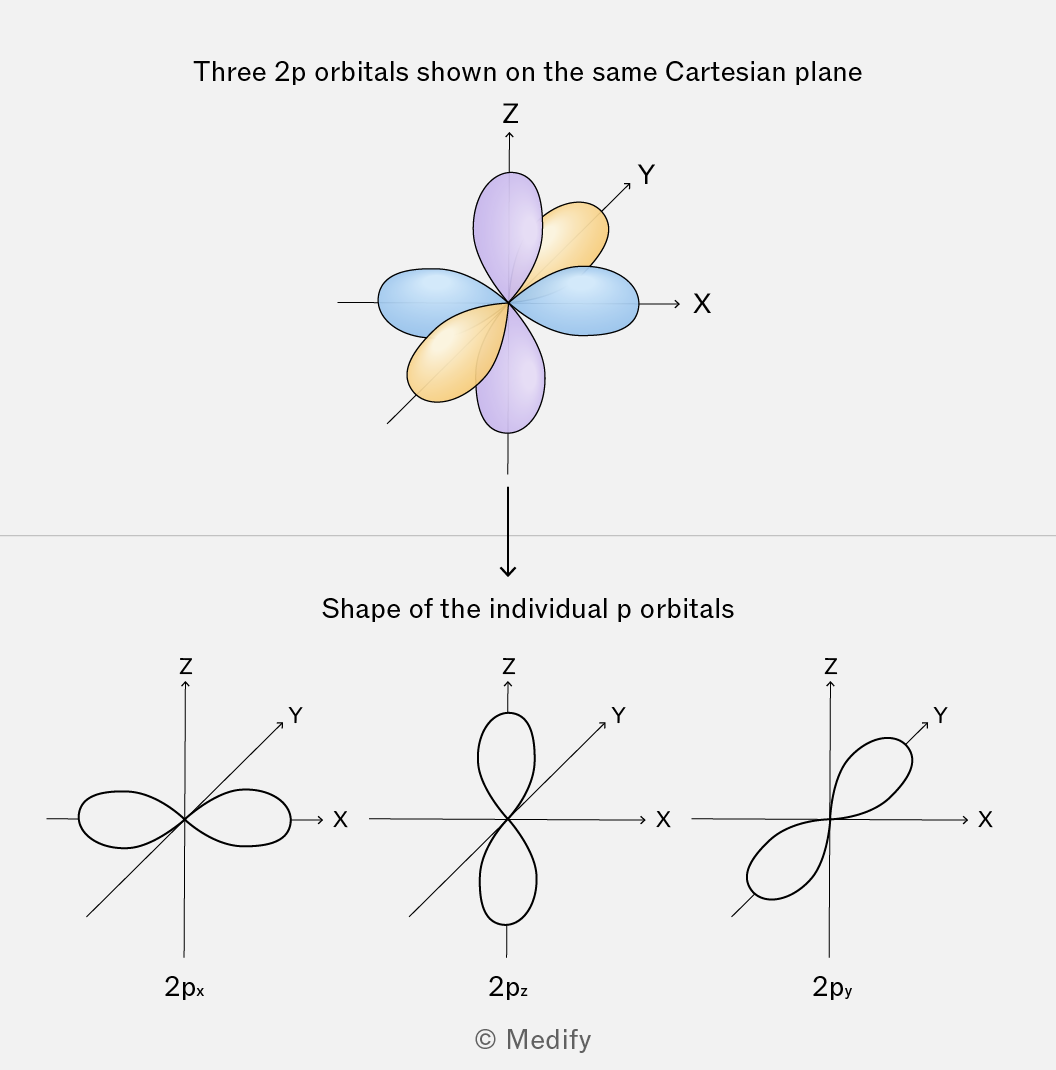
The p orbitals are described as dumb-bell shaped, with the nucleus located between the two halves.
There are three degenerate p orbitals in each p subshell. These orbitals have an identical shape and energy, however, their orientation in space differs. They lie at right angles to one another along the X, Y, and Z axes of a Cartesian plane.
The three p orbitals are thus distinguished as px, py, and pz.
Electrons always fill up atomic orbitals in an order of increasing orbital energy. This leads to the most stable electronic configuration of the atom; the one that has the lowest overall energy.
Orbital energy increases with increasing principle quantum number (shell number). 4 > 3 > 2 > 1.
The subshells within a shell have slightly different energy levels with the trend f > d > p > s.
All orbitals in the same subshell are degenerate; they have an equal energy. Electrons-electron repulsion means all degenerate orbitals are filled singly before any electrons are paired.
The first electron is always placed in the 1s orbital, the lowest energy orbital.
Subshell notation describes the electrons contained in each subshell of an atom:
- X denotes the principal quantum number (shell number)
- y shows the subshell type (s, p, d, f)
- z represents the number of electrons occupying the subshell
Using the subshell notation the electronic configuration of carbon (Z = 6) is:
1s2 2s2 2p2
Make use of your periodic table to remember the order in which the subshells are filled.
List the subshells in order as you move in increasing atomic number from hydrogen to the element of interest.
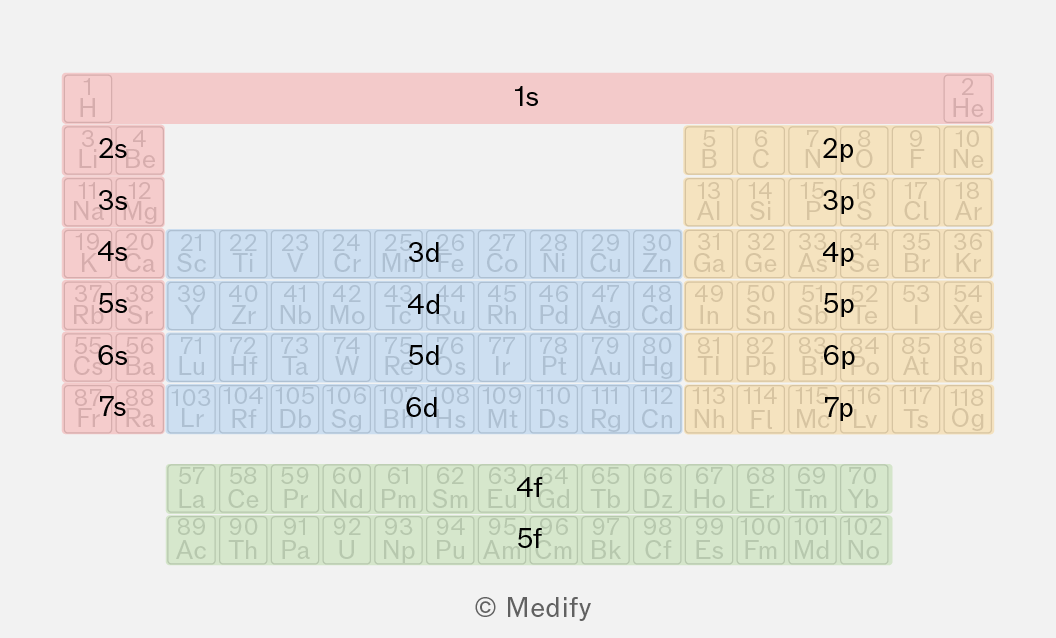
The energy levels of 3d and 4s subshells overlap.
The energy of 4s lies slightly below that of 3d therefore 4s is filled before 3d.
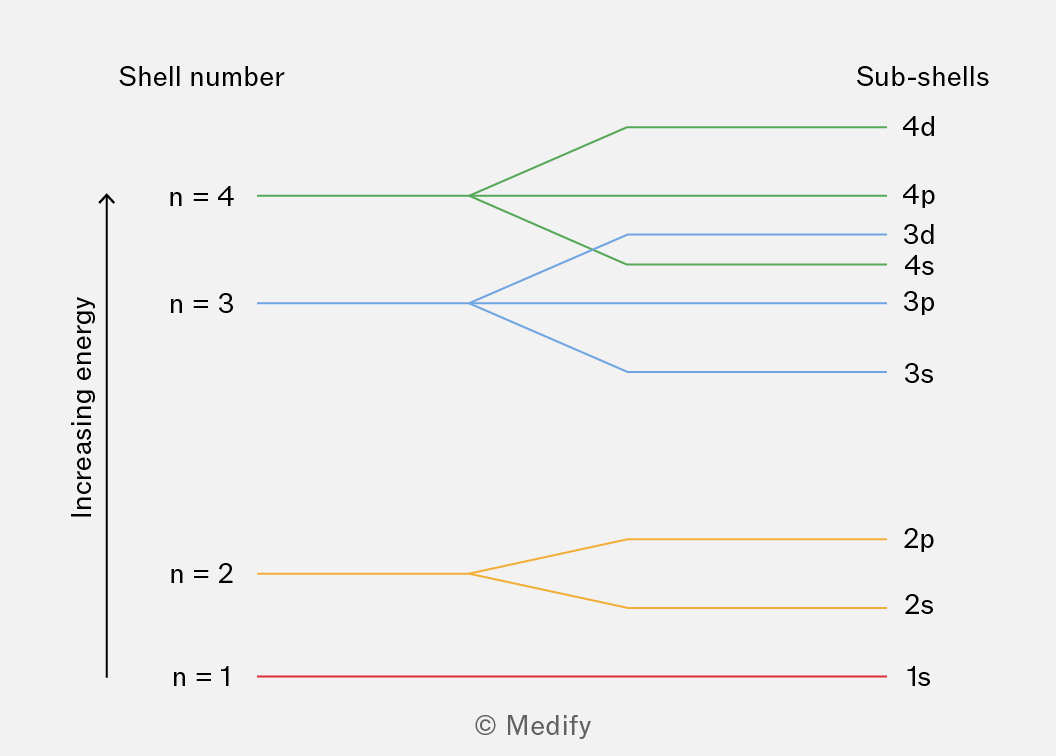
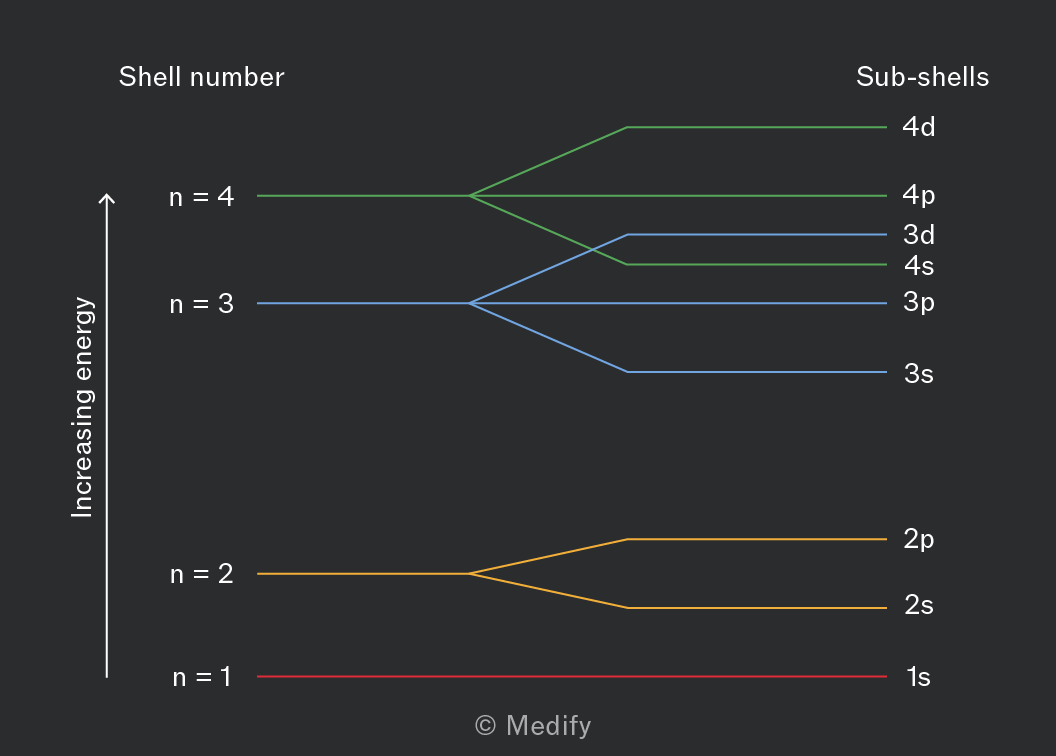
However, once filled, the energy of 3d falls below the 4s energy level.
When a transition metal is ionised, the 4s electrons are easier to remove than the 3d electrons.
Box notation goes beyond subshell notation as it describes which atomic orbitals contain electrons. Each atomic orbital is drawn as a box and each electron as an arrow.
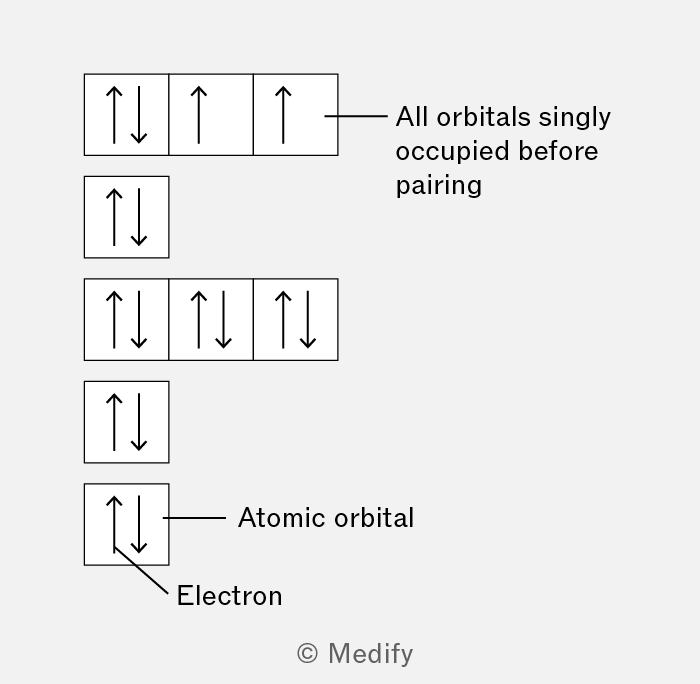
All electrons are identical negatively charged particles. Two electrons close to each other experience strong electrostatic repulsions.
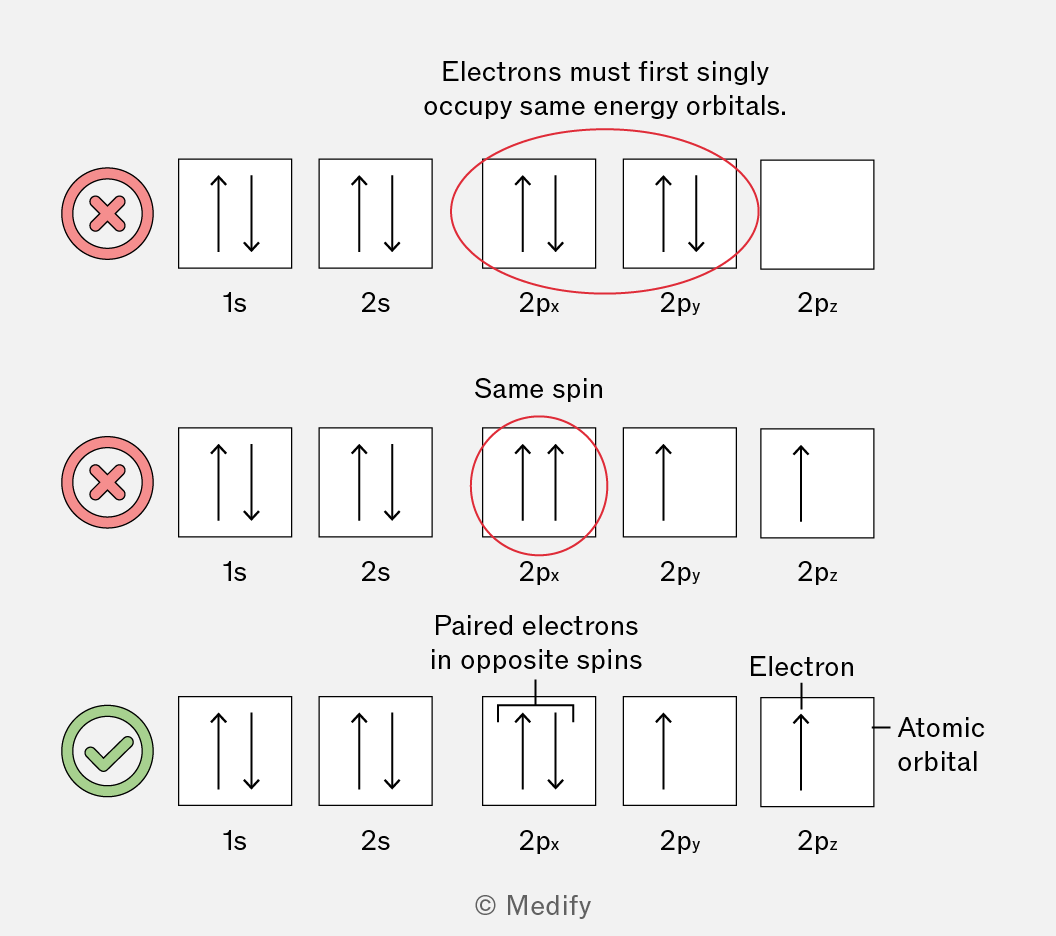
To minimise electron–electron repulsion, when filling degenerate orbitals (such as three 2p orbitals), electrons first singly occupy each orbital before pairing occurs.
Two electrons in the same orbital must be in opposite spin (clockwise and anticlockwise) denoted by an upwards (↑) and a downwards (↓) pointing arrow.
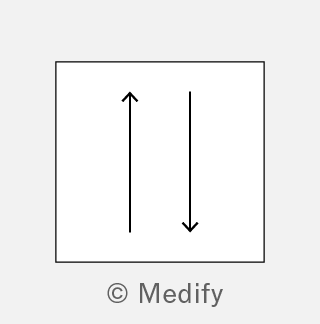
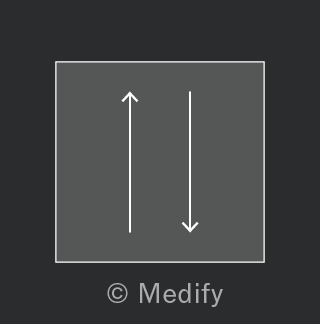
This minimises the repulsive effect between the two electrons.
The electronic configuration of oxygen is 1s2 2s2 2p4.
Common mistakes to avoid using box notation are:
- doubly filling degenerate orbitals from left to right without singly filling first
- pairing electrons with the same spin
Ions are formed by the loss or gain of electrons by the atom of an element.
The electronic configuration of an ion can be written using the same set of rules as that for the element and then adjusting for the increase or decrease in electron count.
For ionisation, it is important to adjust from the element rather than filling the atomic orbitals directly using the ions’ electron count. This is because, when filled, the 4s orbital becomes higher in energy than the 3d orbital.
Electrons must be taken from the 4s subshell before being removed from the 3d subshell.
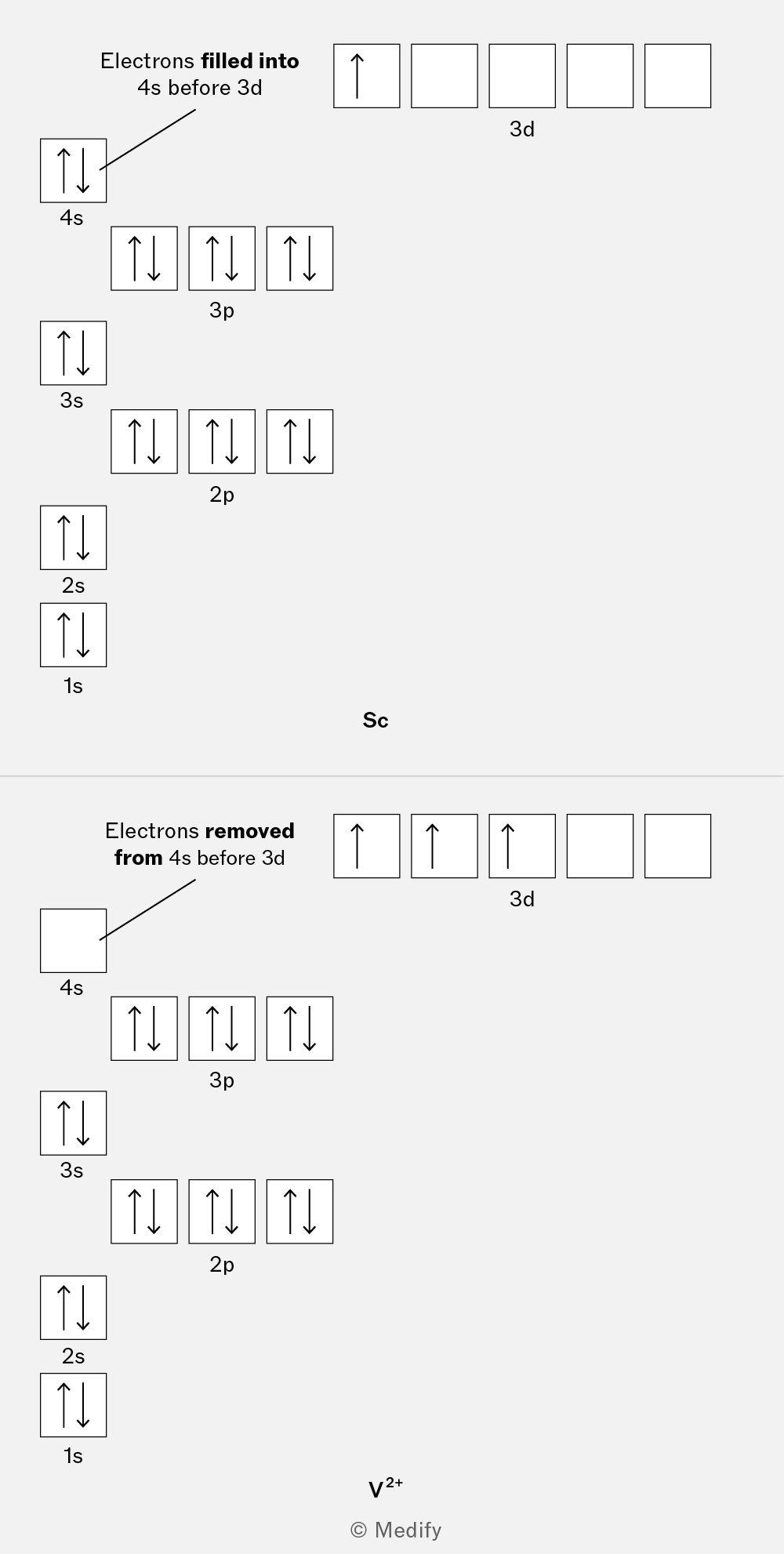
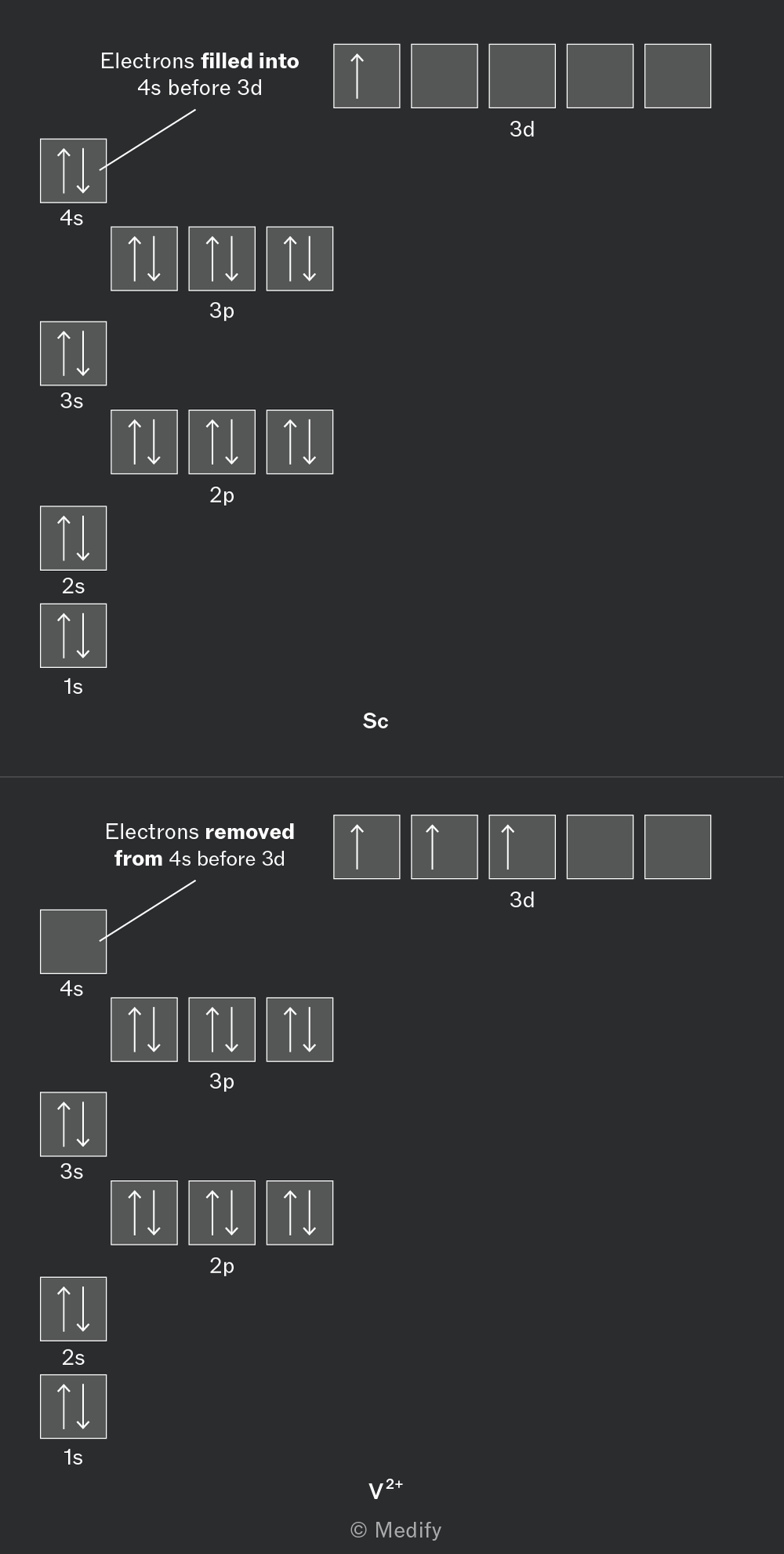
Vanadium 2+, , and scandium, , both have an electron count of 21 but their electron configuration is different.