
Group 2 (3.1.2)
On this page
The Group 2 elements, also called the alkaline earth metals, each have two electrons in their outermost s-subshell.
During redox reactions, they tend to lose these two electrons, forming ions with a 2+ charge.
Group 2 metals have an outer electron configuration of .
Calcium (Ca)
or
In redox reactions, Group 2 metals lose their two outer electrons to reach a stable electron configuration similar to that of a noble gas. This electron loss produces cations with a 2+ charge.
In this oxidation half equation, calcium loses its two outer electrons, forming
As you go down group 2, reactivity increases.
When explaining this trend reference these four key points.
1. Increasing atomic radius as an extra shell of electrons is added.
2. Increasing nuclear shielding effect from inner shells of electrons.
3. Reduced attraction of the outer electrons to the positive nucleus.
4. The outer electrons are therefore more easily lost as you go down the group.
The increased reactivity of Group 2 metals as you go down the group is explained as follows.
Increasing atomic radius. As you move down the group, each element has an additional electron shell compared to the one above it. This increased distance between the nucleus and the outermost electrons means the nucleus has less pull on these outer electrons.
Greater shielding effect. With more inner electron shells, there is increased shielding. The inner electrons create a barrier that lessens the attraction between the nucleus and the outermost electrons.
Although the positive nuclear charge increases with each successive element, this is offset by the larger atomic radius and increased shielding. Consequently, the effective nuclear charge felt by the outer electrons decreases down the group, contributing to the increased reactivity.
The reactivity of the Group 2 elements can be explained based on their first and second ionisation energies as shown in the bar graph.
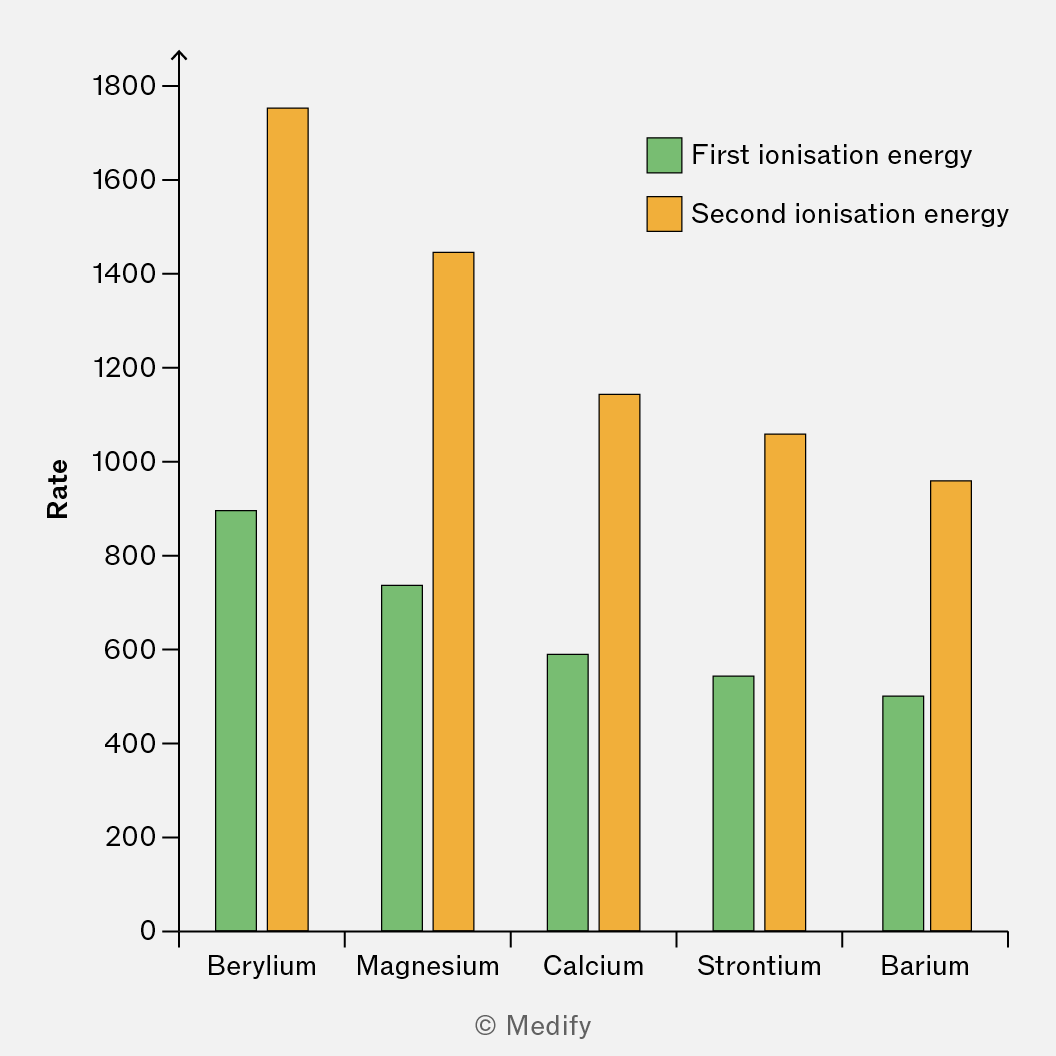
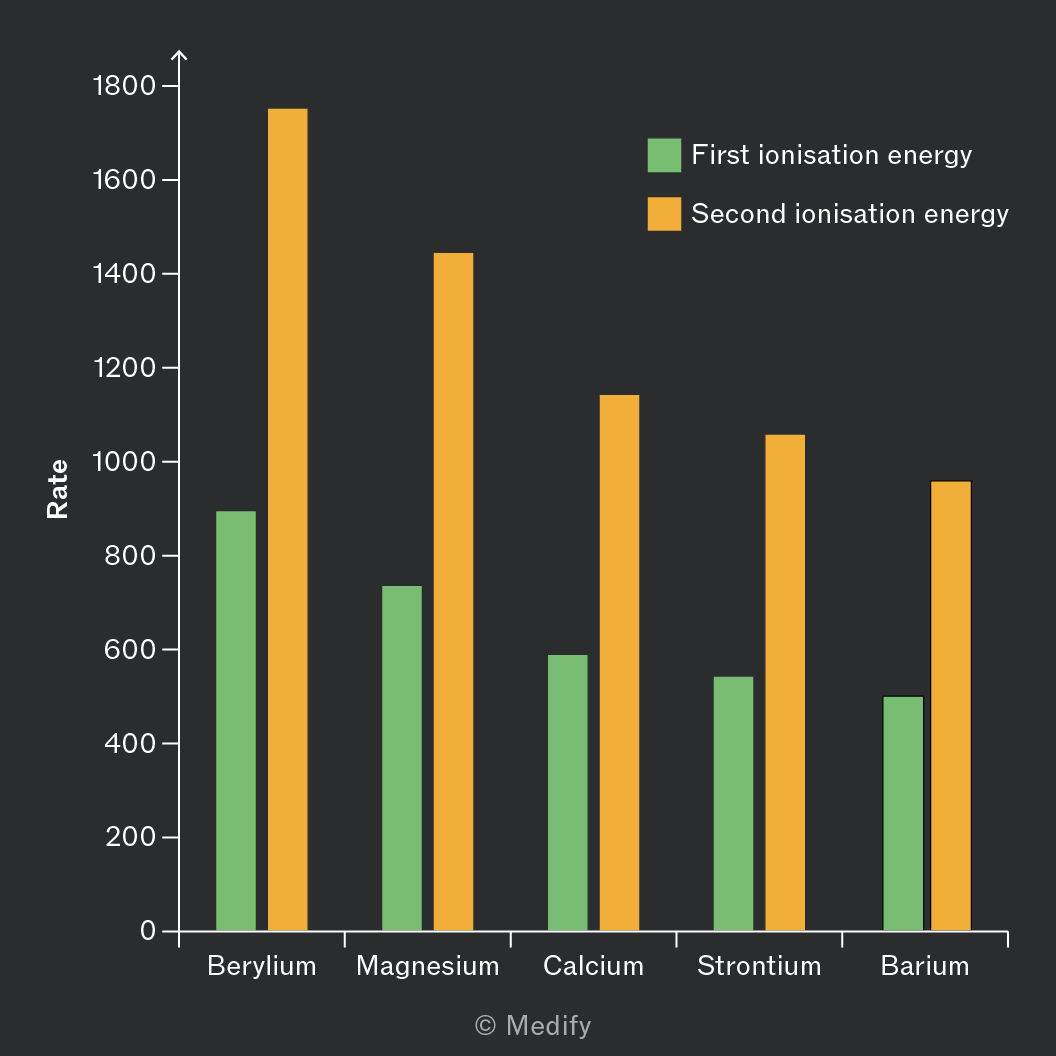
Both the first and second ionisation energies decrease as you go down Group 2.
The second ionisation energy is always higher than the first ionisation energy; it requires more energy to remove an electron from a positive ion due to the increased electrostatic attraction.
The Group 2 elements react by losing their electrons forming +2 cations. The formation of these +2 cations from gaseous atoms requires two ionisation energies:
The first ionisation energy removes one mole of electrons from one mole of gaseous atoms.
The second ionisation energy removes one mole of electrons from one mole of gaseous +1 ions.
The first and second ionisation energies decrease down Group 2. This is directly linked to subsequent increase in reactivity.
- Increasing atomic radius as an extra shell of electrons is added.
- Increasing shielding effect from inner shells of electrons.
- Reduced attraction of the outer electrons to the positive nucleus.
- The outer electrons are therefore more easily lost as you go down the group.
The Group 2 metals undergo redox reactions in which they lose their outer electrons to form +2 cations.
The reactions of Group 2 metals with oxygen occur by the following general equation:
For example, looking at the reaction of calcium with oxygen:
In the reaction the following oxidation state changes occur:
Note: the metal and the metal oxide are both solid. In exams, these reactions commonly appear alongside calculations based around the change in mass.
The reactions of Group 2 metals with water occur by the following general equation:
For example looking at the reaction of calcium with water:
In the reaction the following oxidation state changes occur:
Note: the state symbol for can be (aq) or (s).
The Group 2 metal hydroxides’ solubility increases as you go down Group 2 meaning that under standard conditions, will form as a solid precipitate, whereas will form an aqueous solution.
The reactions of Group 2 metals with acids occur by the following general equation:
The state of the salt formed in these reactions is dependent on its solubility.
The reactions of Group 2 metals with follow the general trend:
For example looking at the reaction of calcium with hydrochloric acid:
In the reaction the following oxidation state changes occur:
All Group 2 metal chlorides are highly soluble in water, hence the (aq) state symbol.
The reactions of Group 2 metals with :
For example, let us examine the reaction of calcium with sulfuric acid:
In the reaction the following oxidation state changes occur:
The solubility of the Group 2 metal sulfates decreases as you go down the group and so the salt can form in solution (aq) or as a precipitate (s).
The reactions of Group 2 metals with
For example, let us examine the reaction of calcium with nitric acid:
In the reaction the following oxidation state changes occur:
All Group 2 metal nitrates are highly soluble in water, hence the (aq) state symbol.
Barium sulfate is an insoluble salt.
Barium meals are commonly used in X-ray imaging because barium is a dense contrast medium – meaning that it is an effective X-ray absorber – so it is an ideal substance to enhance the visibility of certain structures in the digestive system.
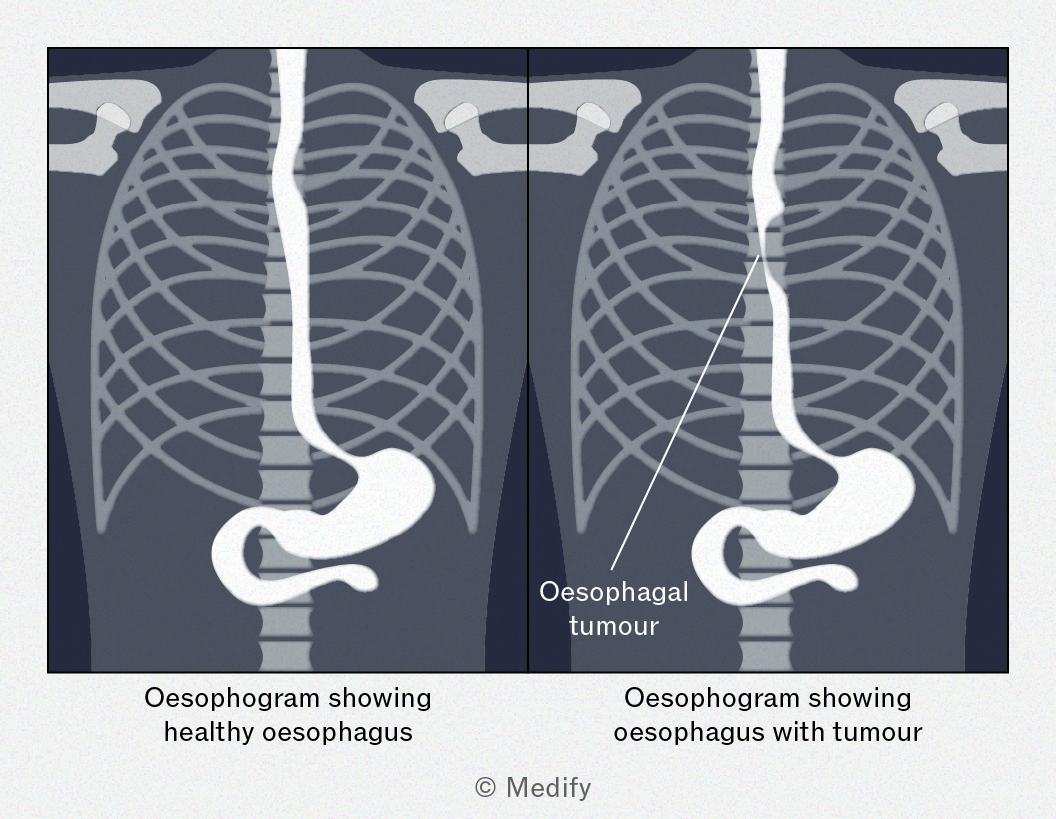
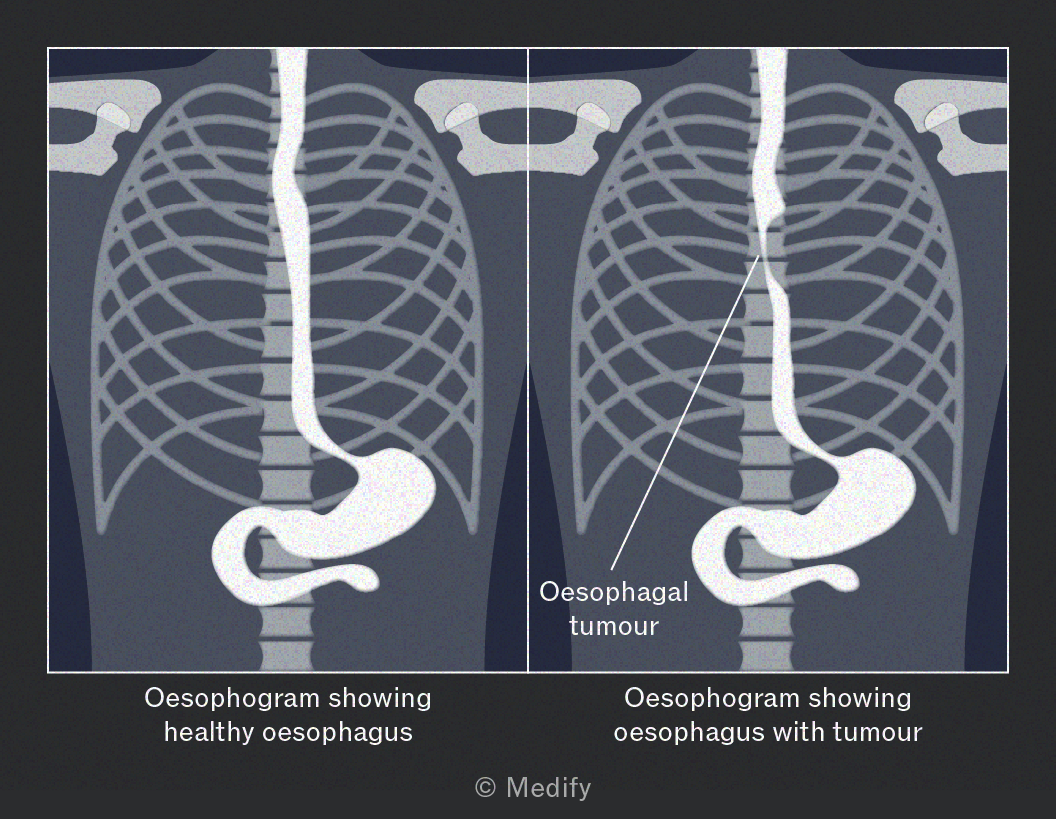
When ingested, barium coats the lining of the gastrointestinal tract due to its insolubility, providing a clear outline of the oesophagus, stomach, and intestines during X-ray imaging.
This contrast allows healthcare professionals to diagnose conditions such as gastrointestinal obstructions, ulcers and abnormalities with greater precision than an X-ray scan without the use of barium.
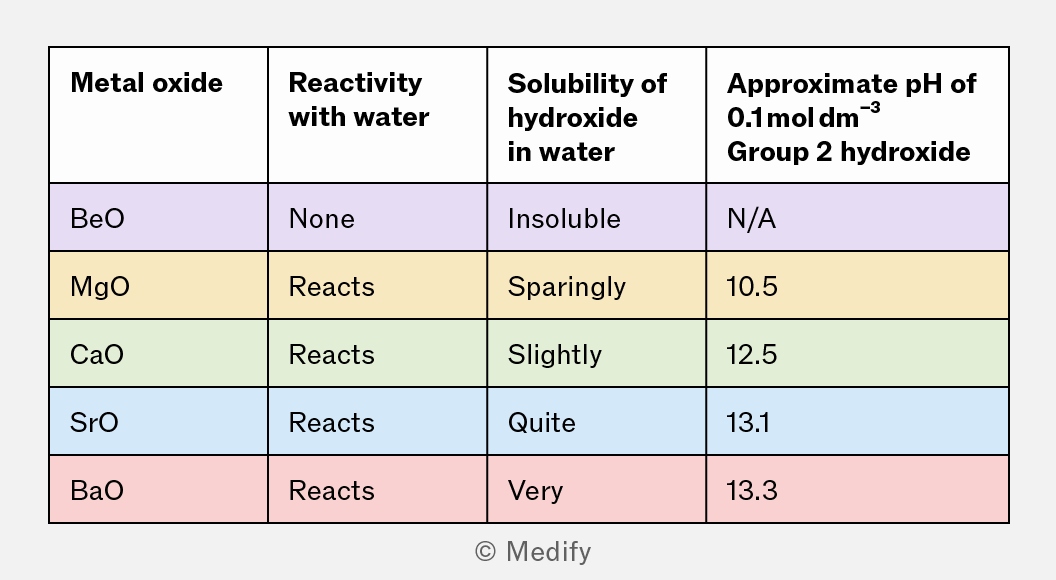
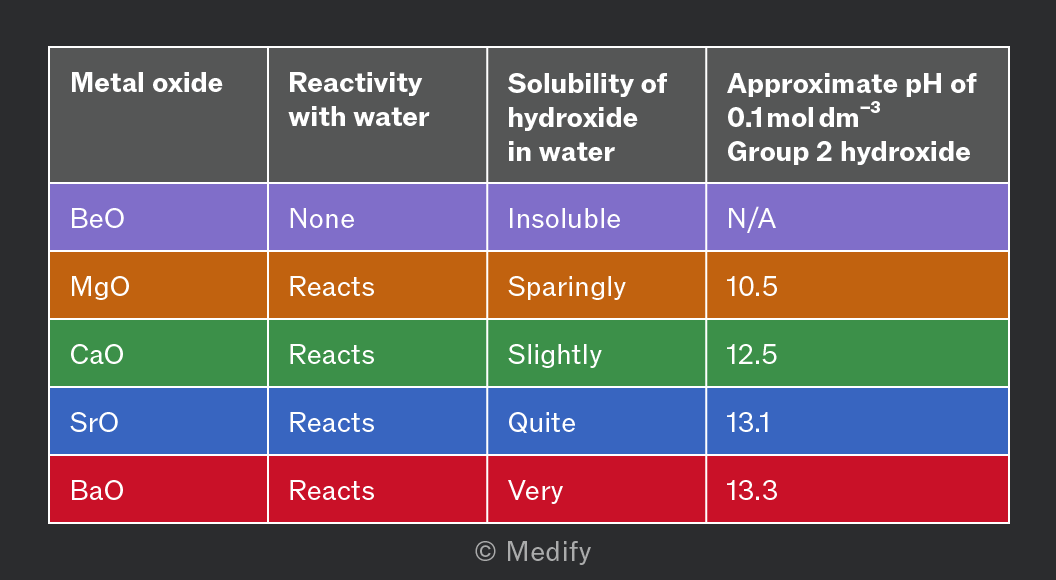
The hydroxides formed, , have variable solubility in water, forming alkaline solutions.
The alkalinity of the resulting solution increases down the group in line with solubility.
Magnesium hydroxide, , is only sparingly soluble and therefore only a small number of hydroxide ions dissociate in water. is normally observed as a precipitate when it is formed in an aqueous environment.
Barium hydroxide, , is very soluble and therefore more hydroxide ions dissociate which leads to a higher in comparison.
Indigestion often results from excess stomach acid. In medicine, magnesium hydroxide and calcium carbonate serve as effective antacids for managing indigestion.
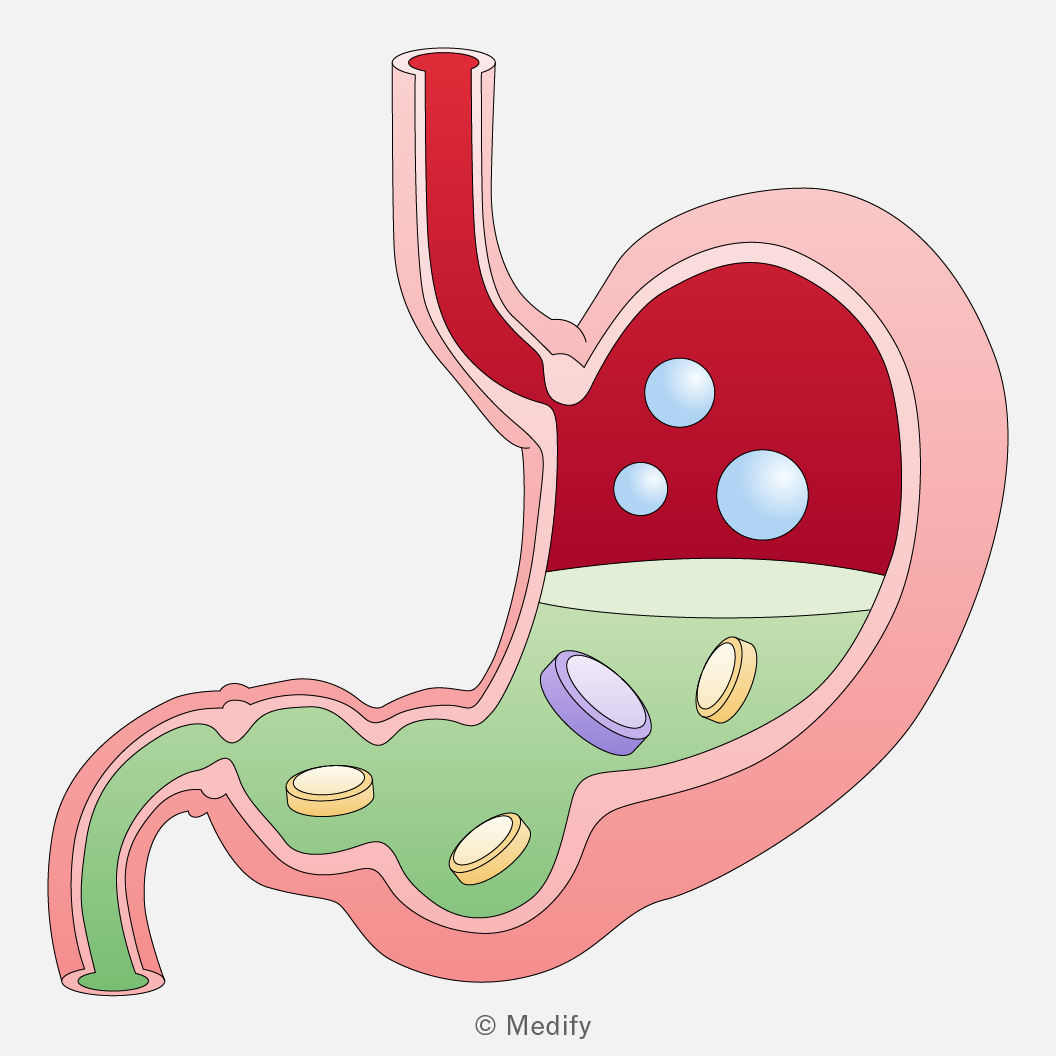
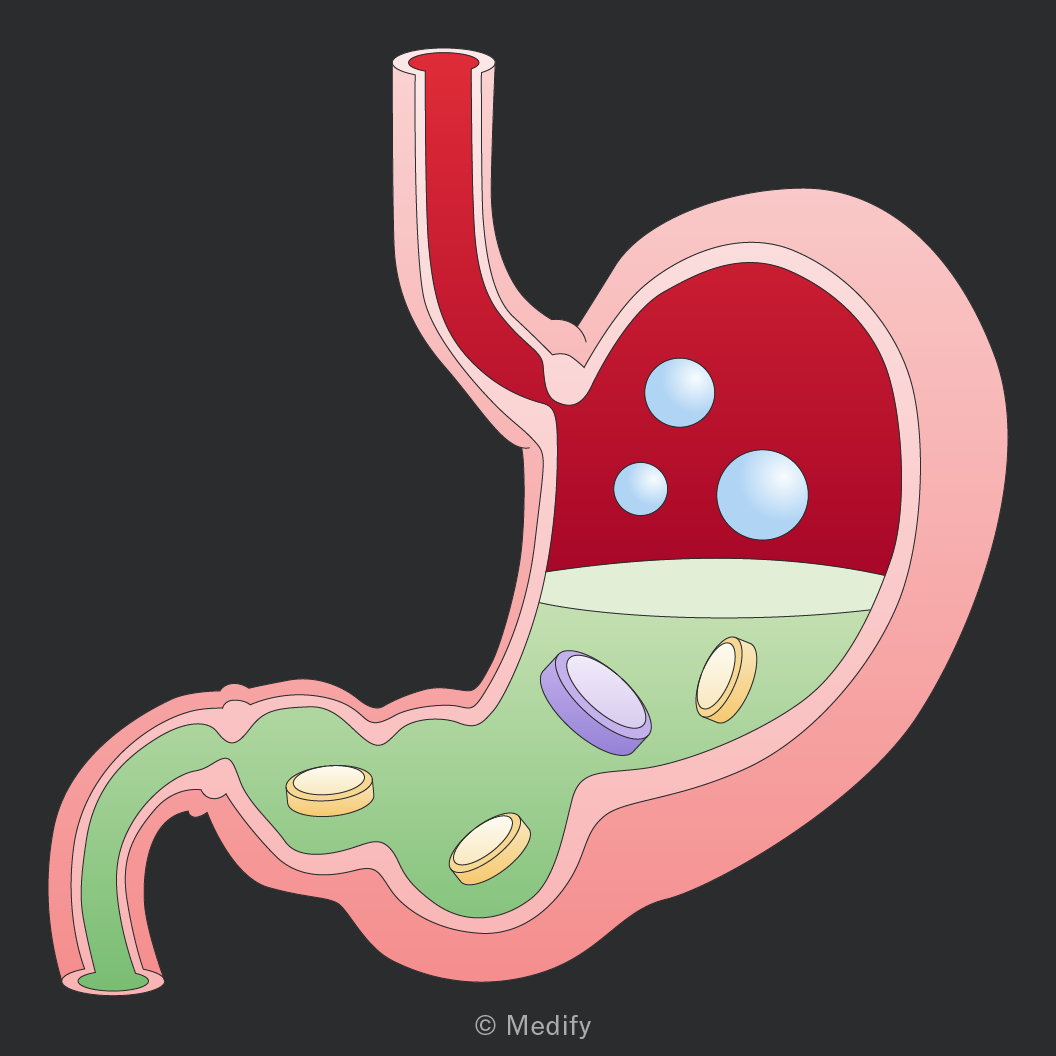
and act as bases, which neutralise excess acid, and provide relief from symptoms like heartburn.
These equations illustrate the use of magnesium hydroxide and calcium carbonate to treat indigestion:
Calcium oxide , commonly known as quicklime, is a crucial agent in the process of desulfurization of flue gases, particularly in industries that burn fossil fuels.
The primary reaction involves the absorption of sulfur dioxide by calcium oxide to form solid calcium sulfite :
In a further oxidation reaction, calcium sulfite is converted into the environmentally benign calcium sulfate, , commonly known as gypsum.
Calcium hydroxide, often referred to as slaked lime, plays a crucial role in agriculture. When added to acidic soils, calcium hydroxide acts as a neutralising agent.
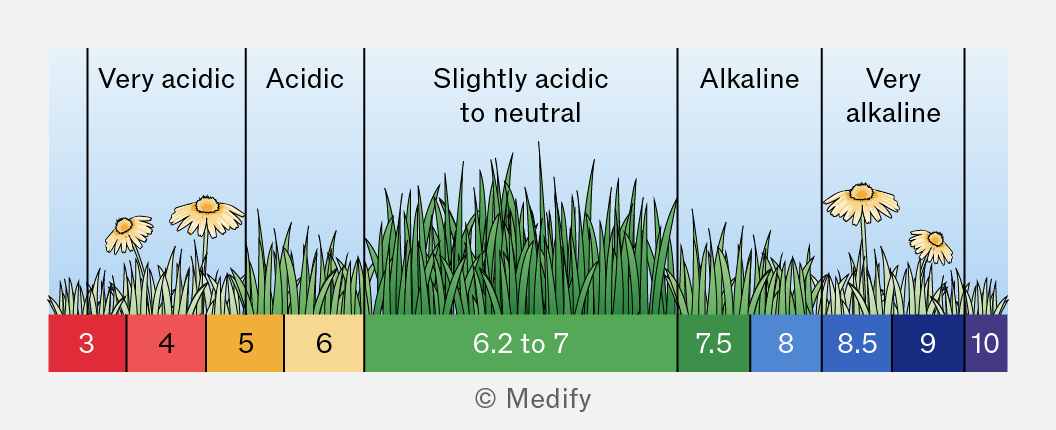
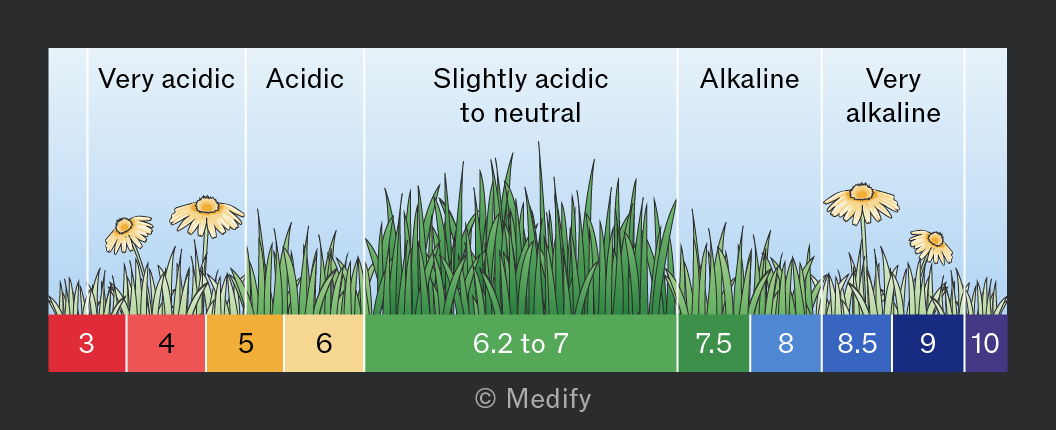
Acidic soils hinder growth of some plants by limiting nutrient availability. Calcium hydroxide reacts with soil acids, forming water and calcium salts. This process, known as liming, raises the soil’s pH, making it less acidic and more conducive to plant growth.
The equation illustrates the use of calcium hydroxide in acidic soils: