Qualitative analysis for AS level (3.1.4)
On this page
The ammonium cation, , is tested for by:
1. Dissolving the sample in water.
2. Adding sodium hydroxide and warming the solution.
3. Holding damp red litmus paper in the fumes.
If ammonia is generated, it will turn damp red litmus paper blue.
Carbonate + Acid → Salt + Water + Carbon Dioxide
Calcium carbonate reacts with sulfuric acid:
In ionic form this is:
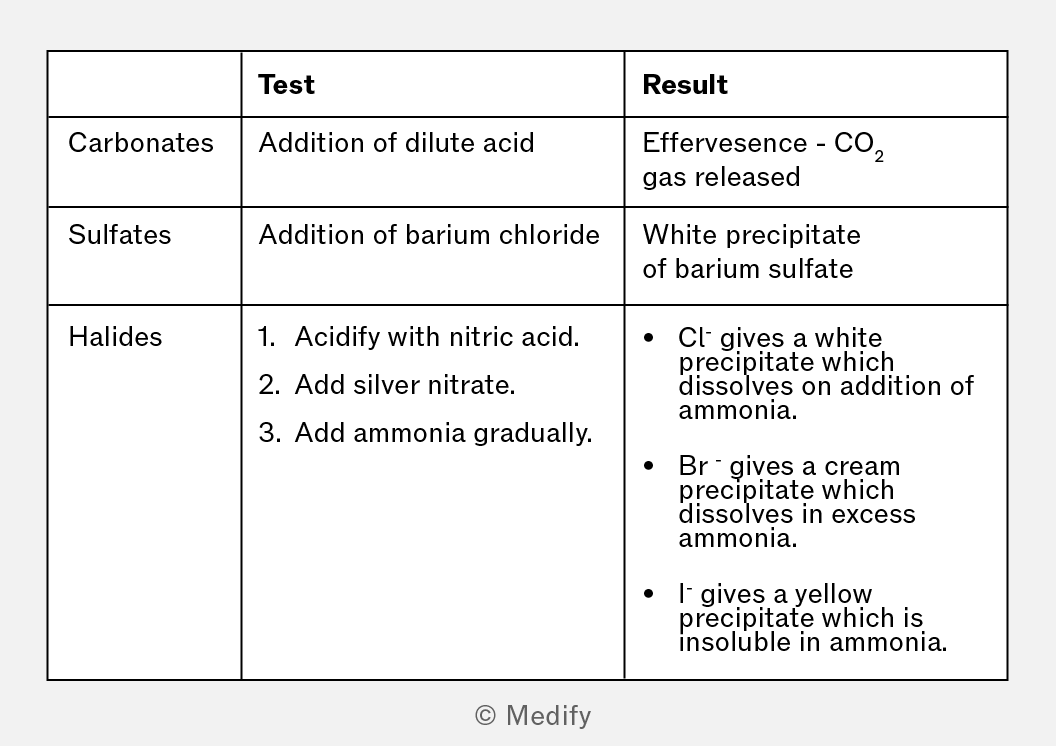
The generation of carbon dioxide gas, following the addition of acid, tests for the presence of a carbonate.
Acidified barium chloride solution is used to test for the presence of sulfate ions in a solution.
1. Add ~of unknown solution to a clean test tube.
2. Add a few drops of dilute hydrochloric acid to the solution.
3. Add a few drops of barium chloride solution to the acidified test solution.
If sulfate ions are present, a white precipitate of barium sulfate will form.
Note that the acidification step is crucial to prevent interference from carbonate ions, which also form a white precipitate with barium.
Halide ions can be identified with simple test tube reactions.
The unknown solution is first acidified with nitric acid.
Silver nitrate is then added dropwise to produce a silver halide precipitate.
The reaction follows the following general ionic equation:
If a solution contains halide ions it will form a silver halide precipitate, .
The colour of the precipitate formed depends on the halide ion present:
Silver chloride : white
Silver bromide : cream
Silver iodide : yellow
Silver carbonates also precipitate in neutral solutions, but the nitric acid added reacts with any carbonate ions that might be present, preventing a false positive result.
Hydrochloric acid should never be used to acidify the silver nitrate in this test as it is a source of chloride ions. These would react with silver ions, giving a false positive result.
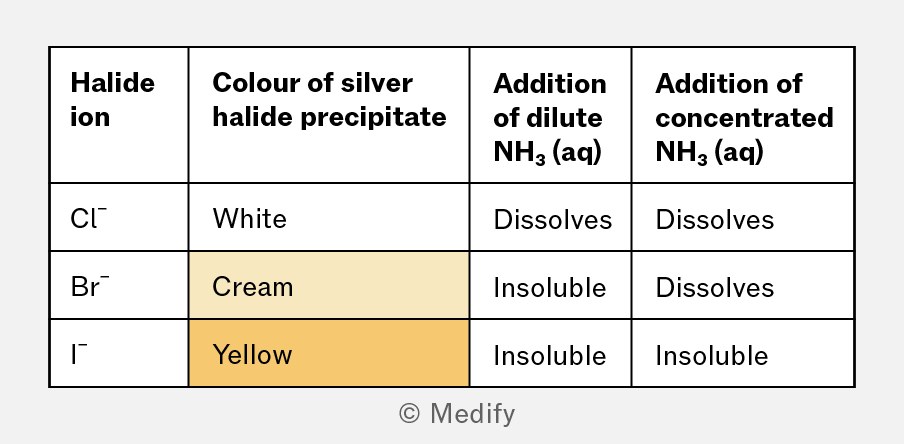
Further testing of precipitates of silver halides, formed by the addition of acidified silver nitrate to a halide ion solution, can be carried out by adding dilute ammonia, followed by concentrated ammonia to confirm the silver halide present.
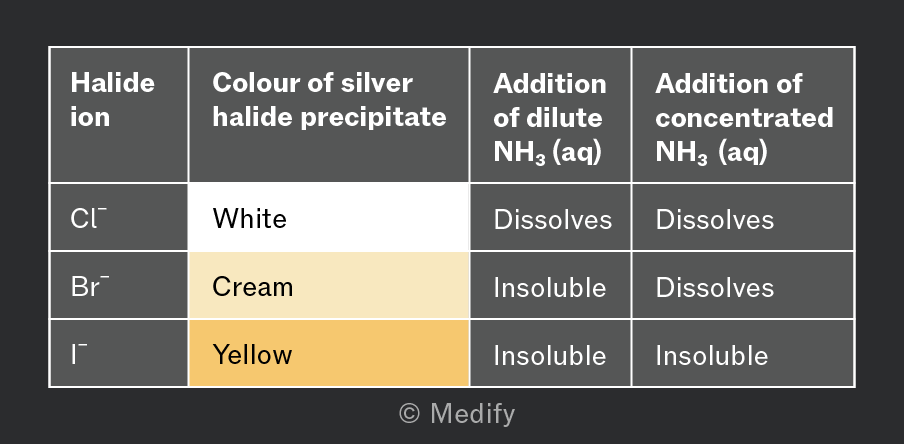
The table shows the observations of reactions of halide ions with silver nitrate, and the subsequent addition of ammonia solutions:
When testing for anions, the order in which the tests are completed is critical.
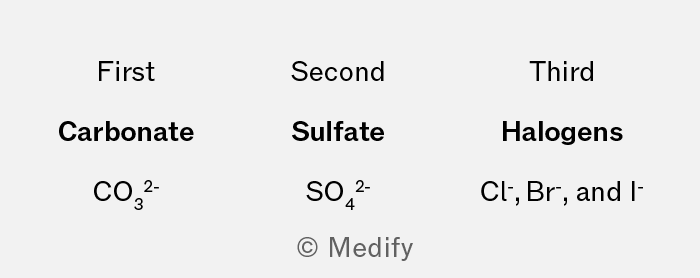
Both carbonate and sulfate ions will give a white precipitate when reacted with barium chloride, but only carbonate ions will cause effervescence with dilute acid; exclude the possibility of carbonate ions before testing for sulfates.
Both sulfate and chloride ions for a white precipitate when reacted with acidified silver nitrate, but only sulfate ions form a precipitate with barium chloride; exclude the possibility of sulfate ions before testing for halides.
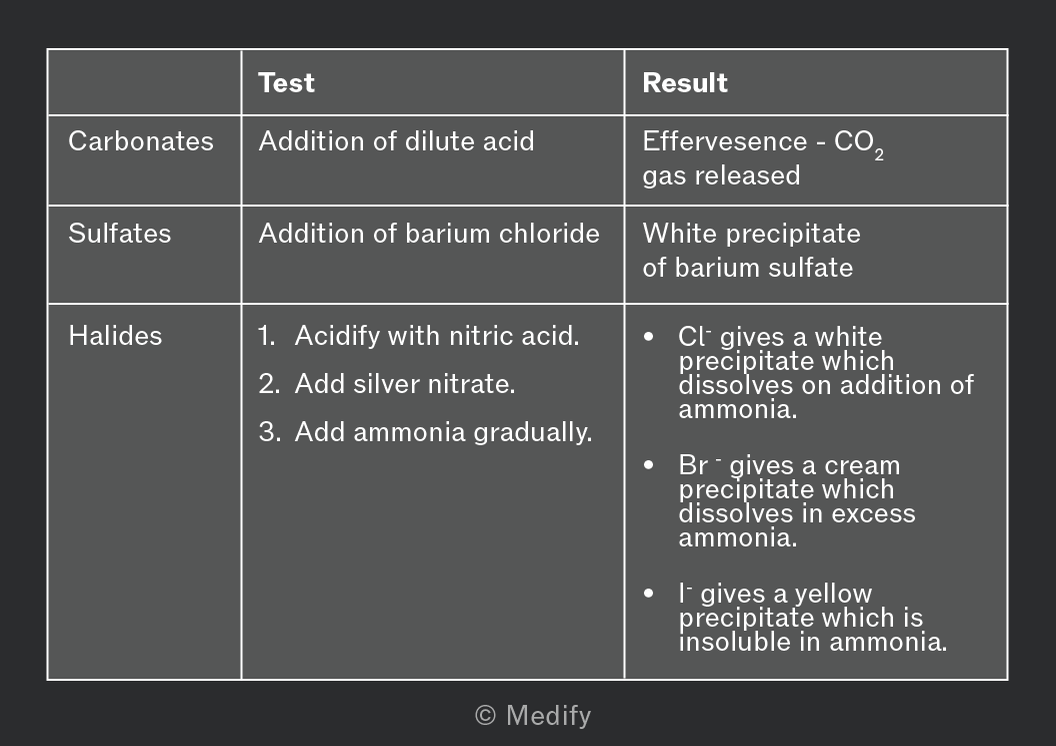
The qualitative tests for anions included in this specification are summarised below.