
Monomers and polymers (3.1.1)
On this page
A monomer is a small, single molecule that can bind chemically to other monomers to form a larger structure.
A polymer is a large chain molecule composed of repeating units of monomers that are bonded together. Polymers play a crucial role in the formation of complex biological macromolecules.
Examples of monomers and polymers include:
- Amino acids link together to form proteins.
- Nucleotides join to create nucleic acids like DNA and RNA.
- Monosaccharides, such as glucose, bond to form polysaccharides as starch and cellulose.
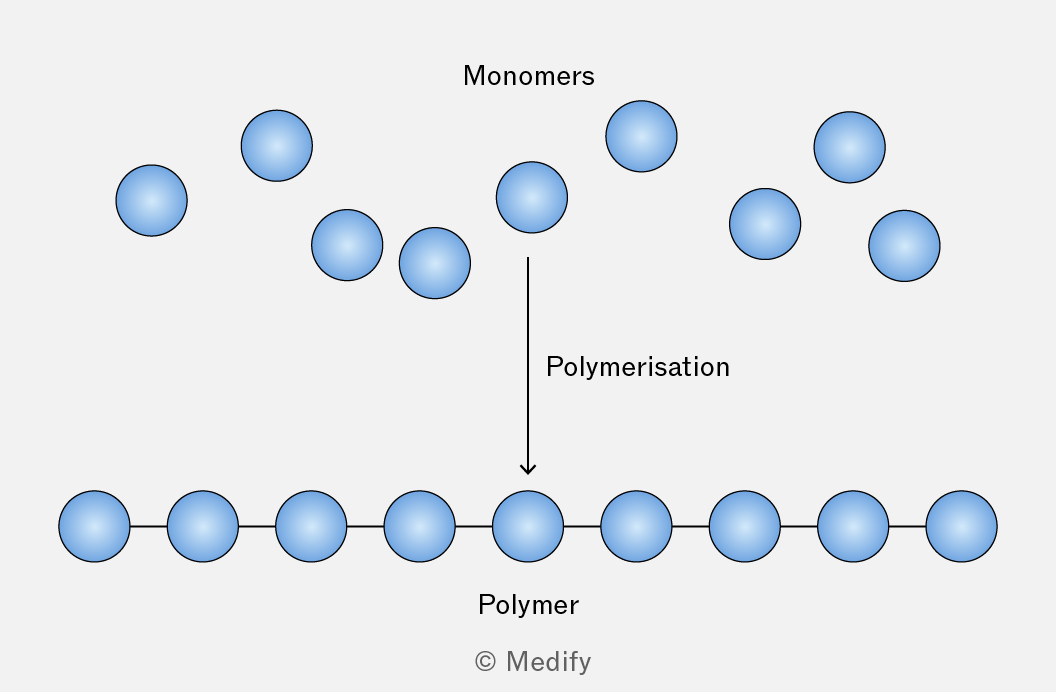
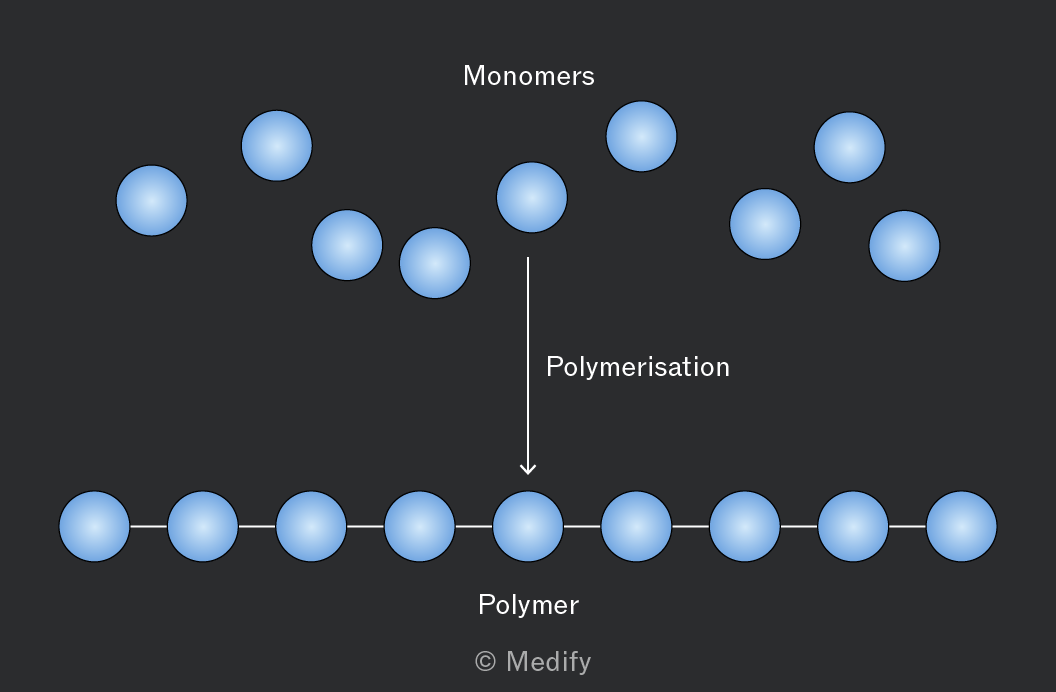
Condensation reactions occur when two molecules combine to form a larger molecule, releasing one molecule of water ().
These reactions are essential for the synthesis of many biological polymers. For example, peptide bonds form between amino acids through condensation reactions to make polypeptides.
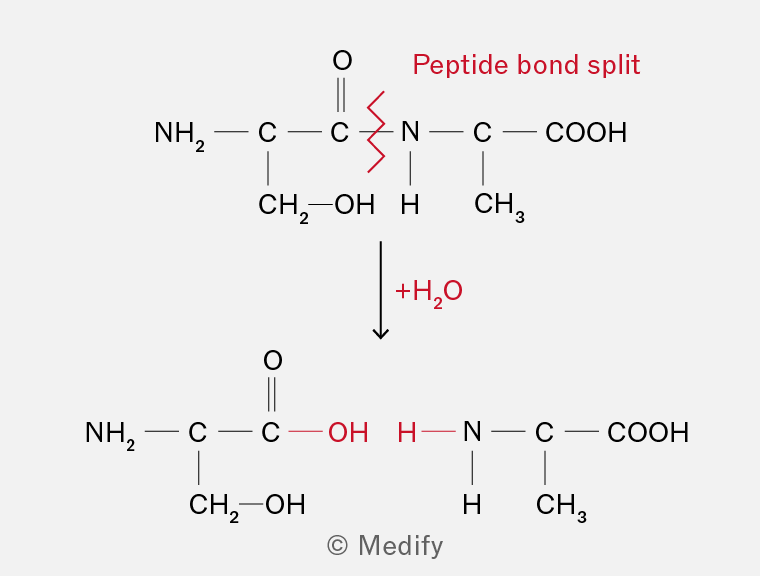
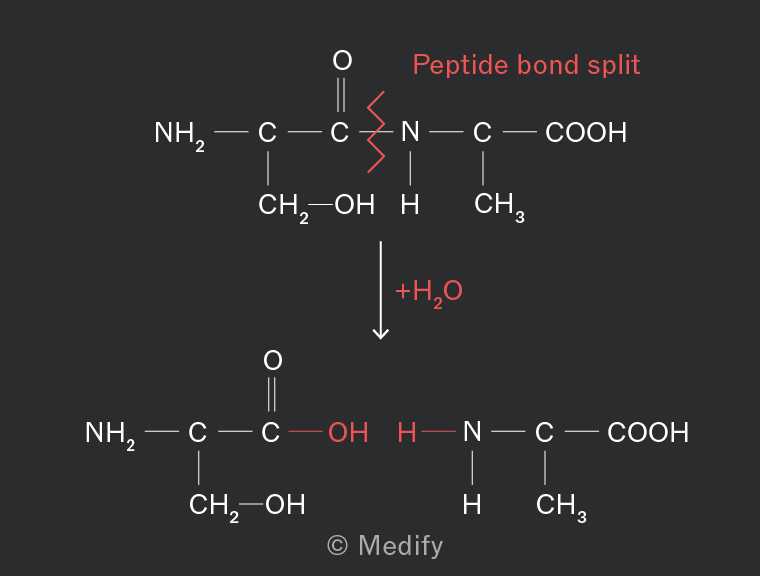
Hydrolysis reactions involve splitting a large molecule into smaller molecules by adding one molecule of water ().
These reactions are the reverse of condensation reactions and are essential for breaking down polymers into their monomer components. For example, the peptide bonds in a dipeptide can be broken by adding water in a hydrolysis reaction to produce two amino acid monomers.
There are four groups of biological macromolecules: carbohydrates, lipids, proteins, and nucleic acids consisting of the following chemical elements:
- carbohydrates –
- lipids –
- proteins –
- nucleic acids –