Biological molecules (3.1)›ATP (3.1.6)

ATP (3.1.6)

An overview of ATP (3.1.6) from AQA A level Biology
1 min

On this page

ATP (Adenosine triphosphate) is a phosphorylated nucleotide derivative that acts as the immediate energy source in cells. It consists of three key components:

  • Adenine: a nitrogenous base.
  • Ribose: a five-carbon (pentose) sugar.
  • Three phosphate groups: linked with high-energy bonds, which release energy when hydrolysed.
Add to favourites

ATP provides an immediate energy source for biological processes. ATP is continuously hydrolysed (by ATP hydrolase) to form ADP + Pi and resynthesised within cells to support metabolic activities such as active transport, muscle contraction and protein synthesis.

The phosphate released from the hydrolysis of ATP can be used to phosphorylate other compounds.
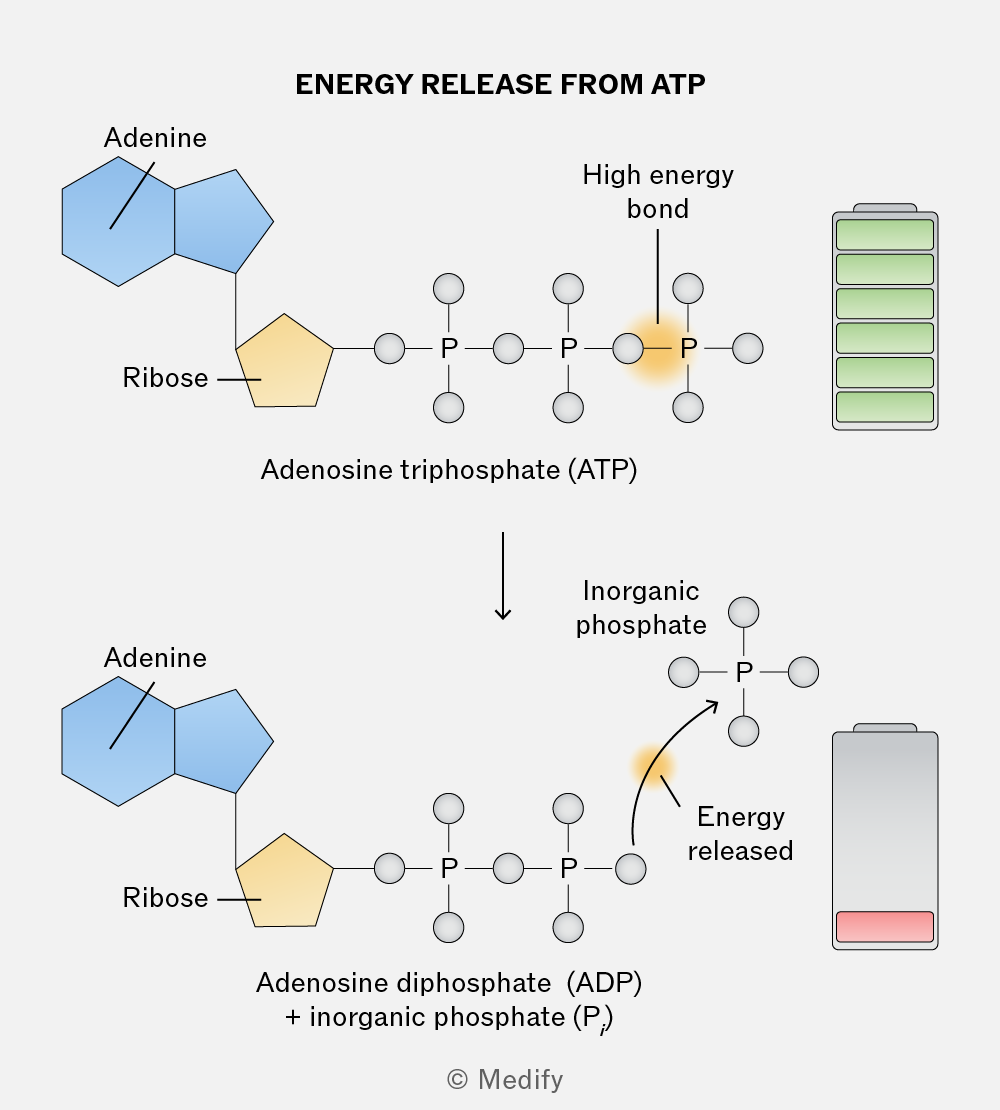
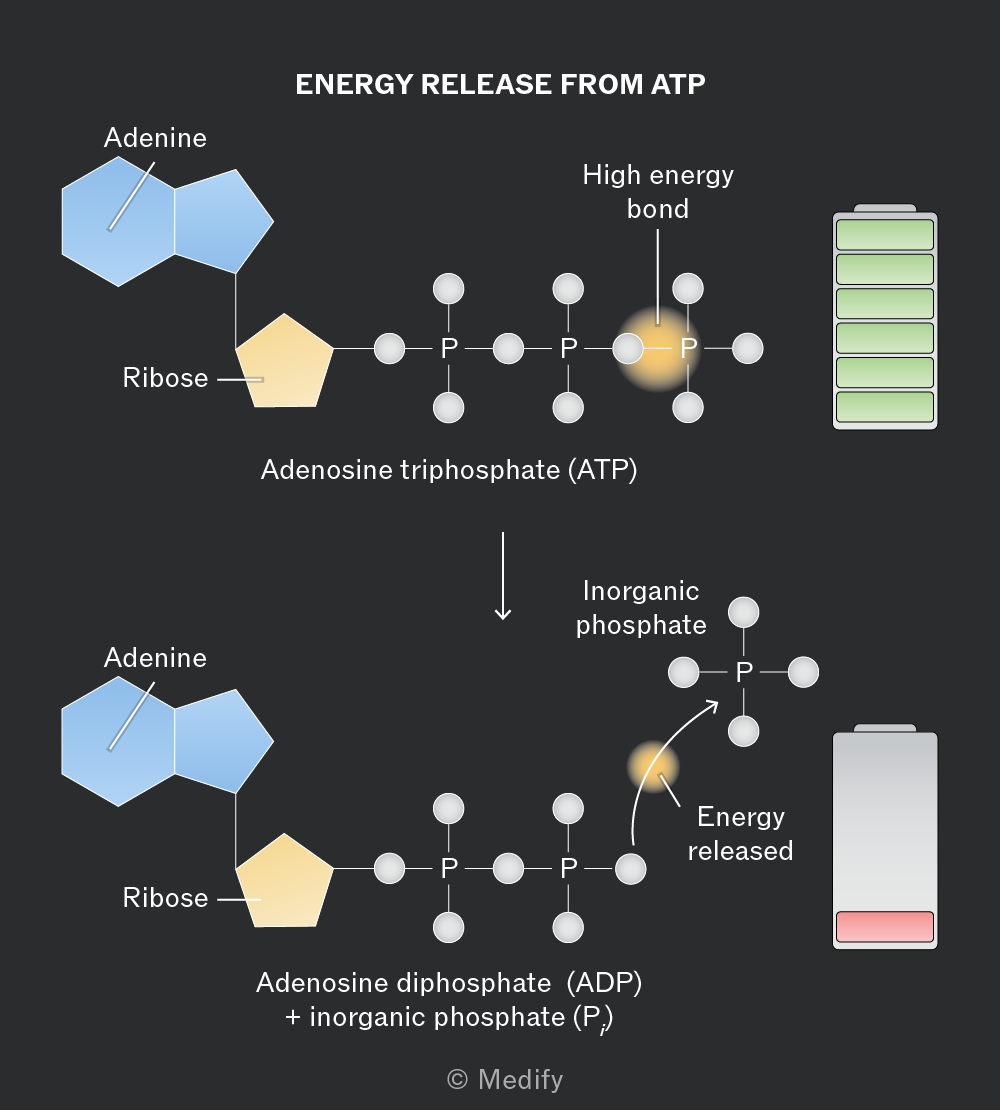
The diagram illustrates the process of energy release from ATP. At the top, Adenosine triphosphate (ATP) is shown with Adenine and Ribose structures on the left and three phosphate groups labeled 'P' connected in a chain. The third phosphate is highlighted as a 'High energy bond' with an adjacent full battery icon. Below, an arrow points downward to Adenosine diphosphate (ADP) with two phosphate groups and an inorganic phosphate (Pi) detached, labeled as 'Inorganic phosphate.' A curved arrow indicates 'Energy released,' pointing to the right where a depleted battery icon is displayed. Both ATP and ADP structures have Adenine and Ribose components. The diagram is labeled 'ENERGY RELEASE FROM ATP.'
Add to favourites

ATP can be (re)synthesised by the condensation of ADP via a phosphorylation reaction requiring energy.

Phosphorylation of ADP is catalysed by the enzyme ATP synthase and occurs in mitochondria, during aerobic respiration (electron transport chain) and in chloroplasts, during photosynthesis (light-dependent reactions).
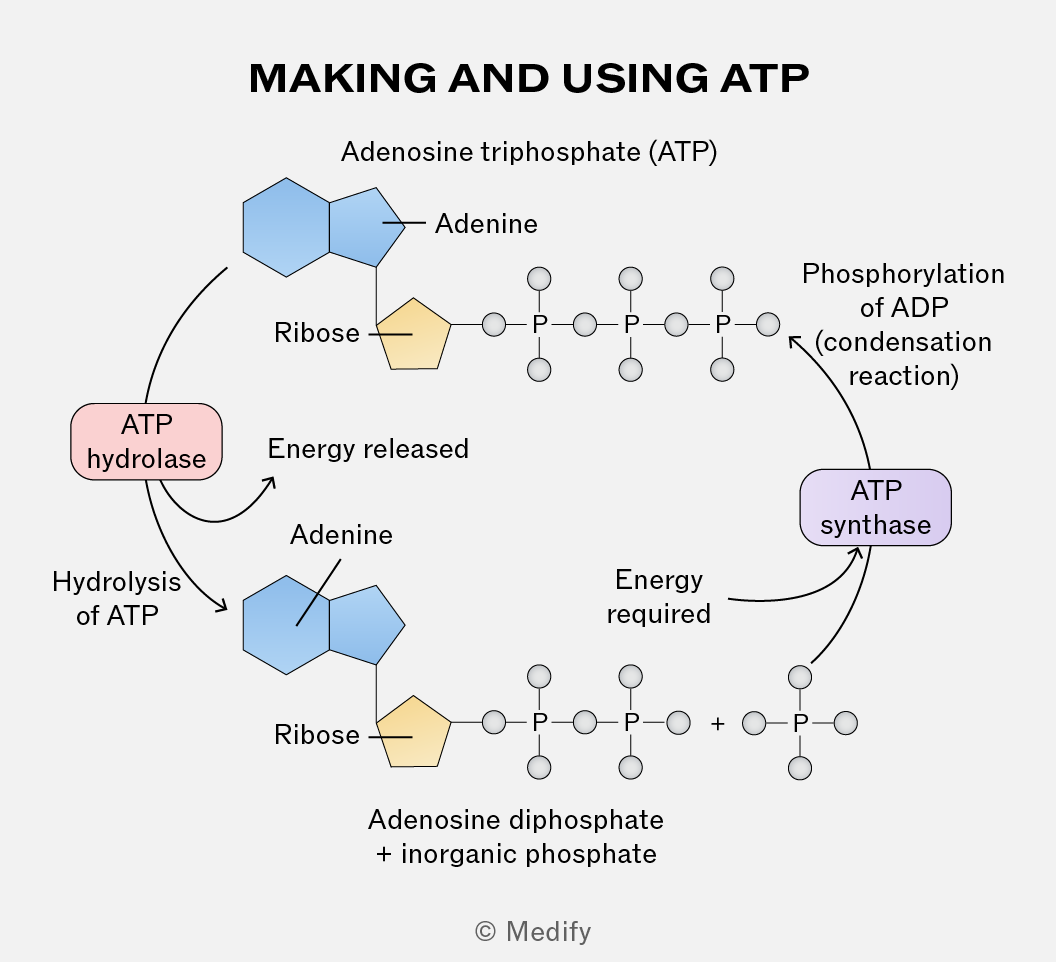
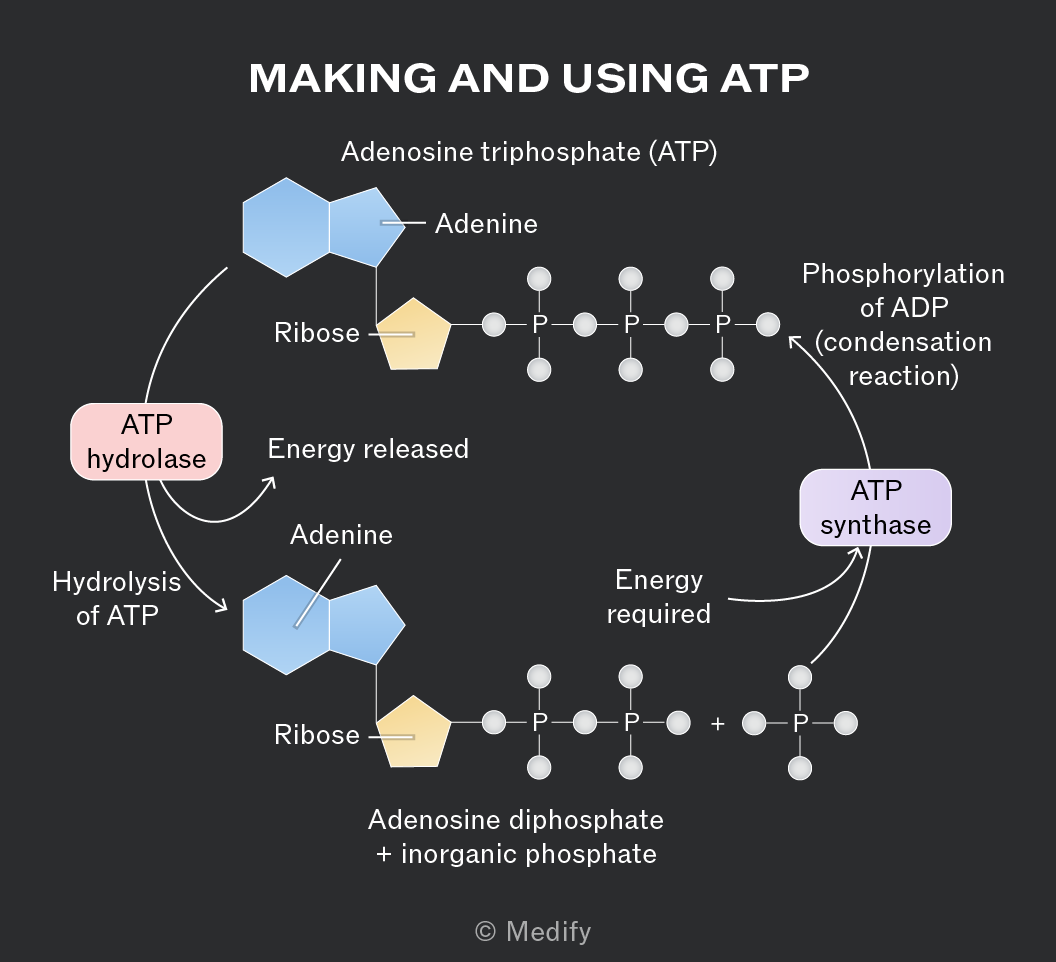
The diagram titled 'MAKING AND USING ATP' illustrates the cycle of ATP hydrolysis and synthesis. At the top, Adenosine triphosphate (ATP) is shown, consisting of adenine, ribose, and three phosphate groups. An arrow labeled 'Hydrolysis of ATP' points downward to a product labeled 'Adenosine diphosphate + inorganic phosphate', with a separate phosphate group shown. The process is facilitated by 'ATP hydrolase', with the release of energy noted. Below, the transition back to ATP is shown with an arrow labeled 'Phosphorylation of ADP (condensation reaction)', facilitated by 'ATP synthase', requiring energy. The cycle includes labels for adenine, ribose, and phosphate groups, and indicates the energy transitions involved.
Add to favourites