RP4 - Testing for cations and anions
On this page
In AQA Required Practical 4: Testing for cations and anions the objective is to perform simple test-tube reactions to identify various cations and anions in aqueous solutions.
This includes tests for Group 2 metal ions, ammonium ions, halide ions, hydroxide ions, carbonate ions, and sulfate ions. The identity of each compound is known prior to testing with the aim of the practical being the observation of a positive result.
In Required Practical 4: Testing for cations and anions, as outlined by AQA, there are several important safety requirements to be aware of (beyond normal lab practice, such as wearing goggles).
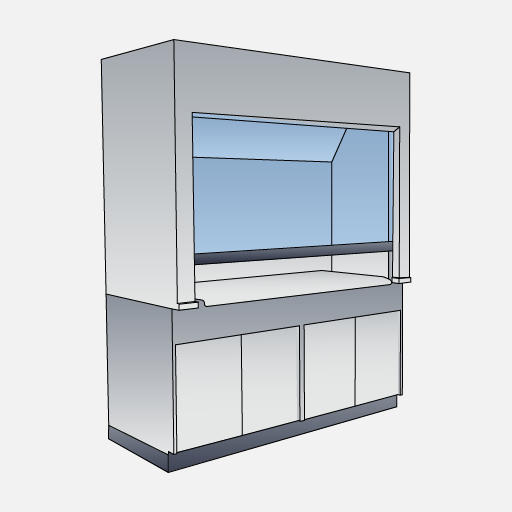
- Use a fume cupboard: Always perform tests involving ammonia gas and the reaction of halides with sulfuric acid in a fume cupboard to avoid inhaling harmful gases.
- Wear gloves: As well as goggles, wear gloves when handling concentrated sulfuric acid, as it is corrosive.
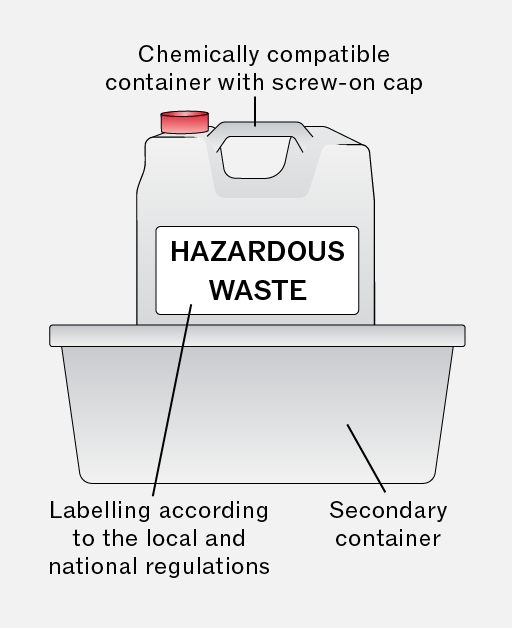
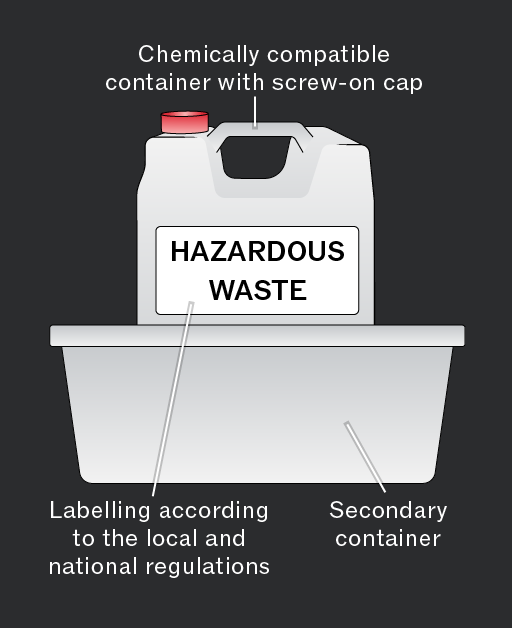
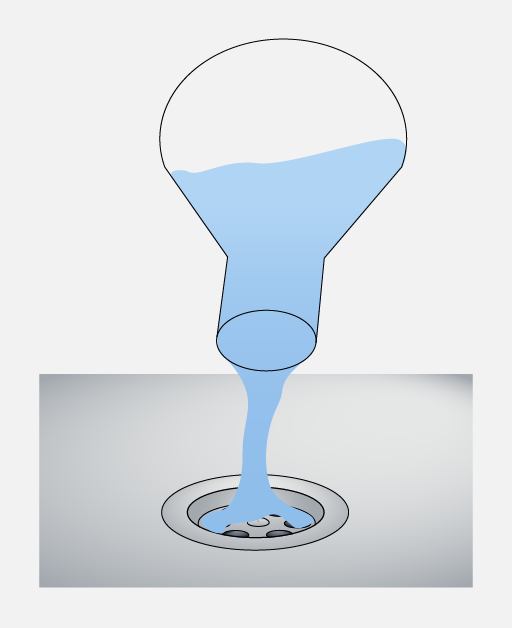
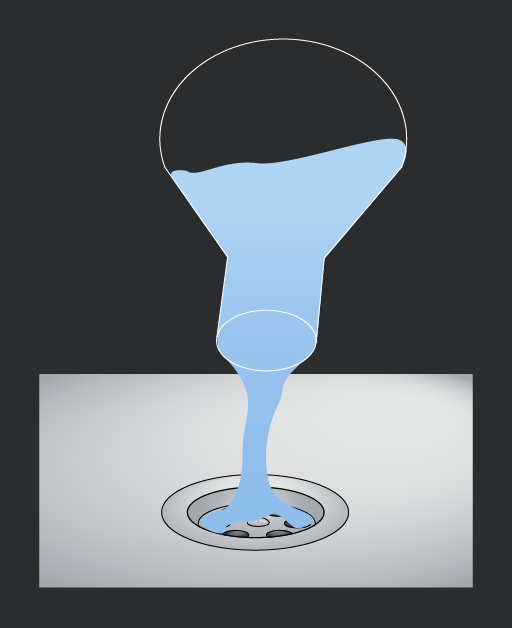
- Dispose of properly: Dispose of all chemicals in the designated waste containers, especially sulfuric acid and ammonium solutions. Do not pour them down the drain.
- Protect skin and eyes: In case of skin contact, rinse with water immediately. For eye contact, flush with water for at least 15 minutes and seek medical help.
Experimental method for AQA Required practical 4: Testing for cations and anions
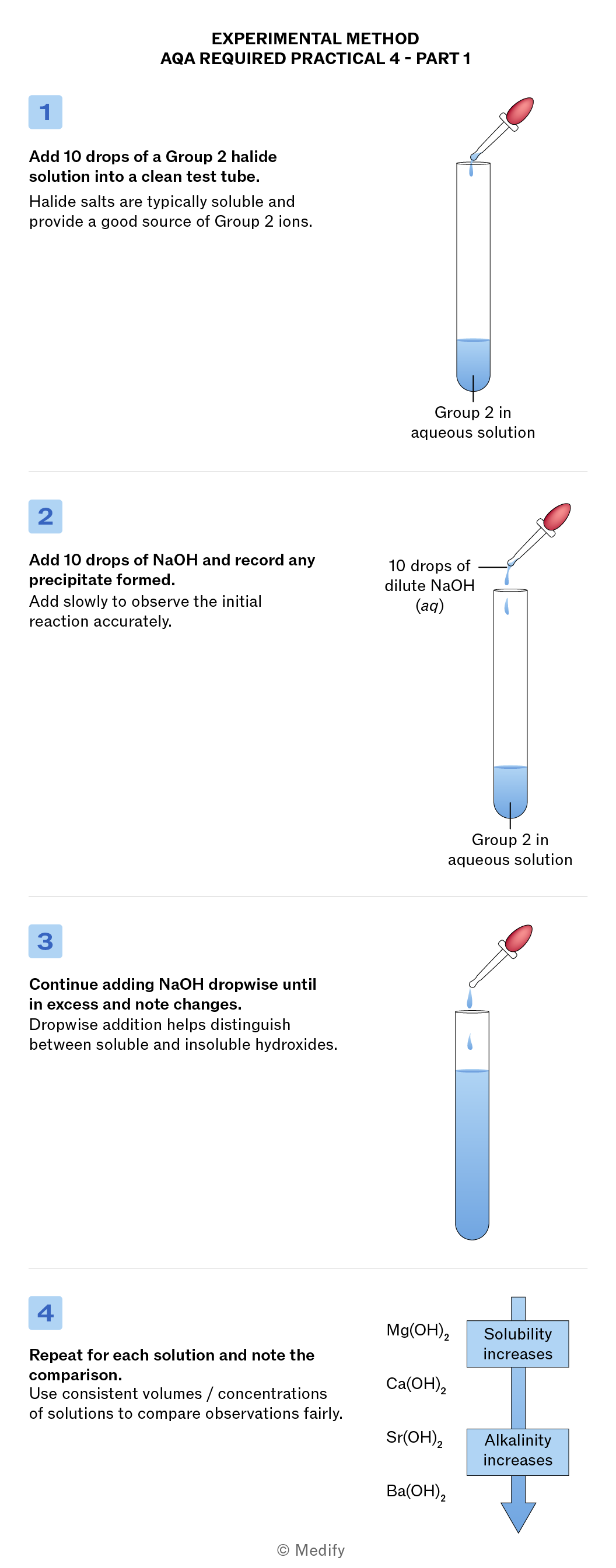
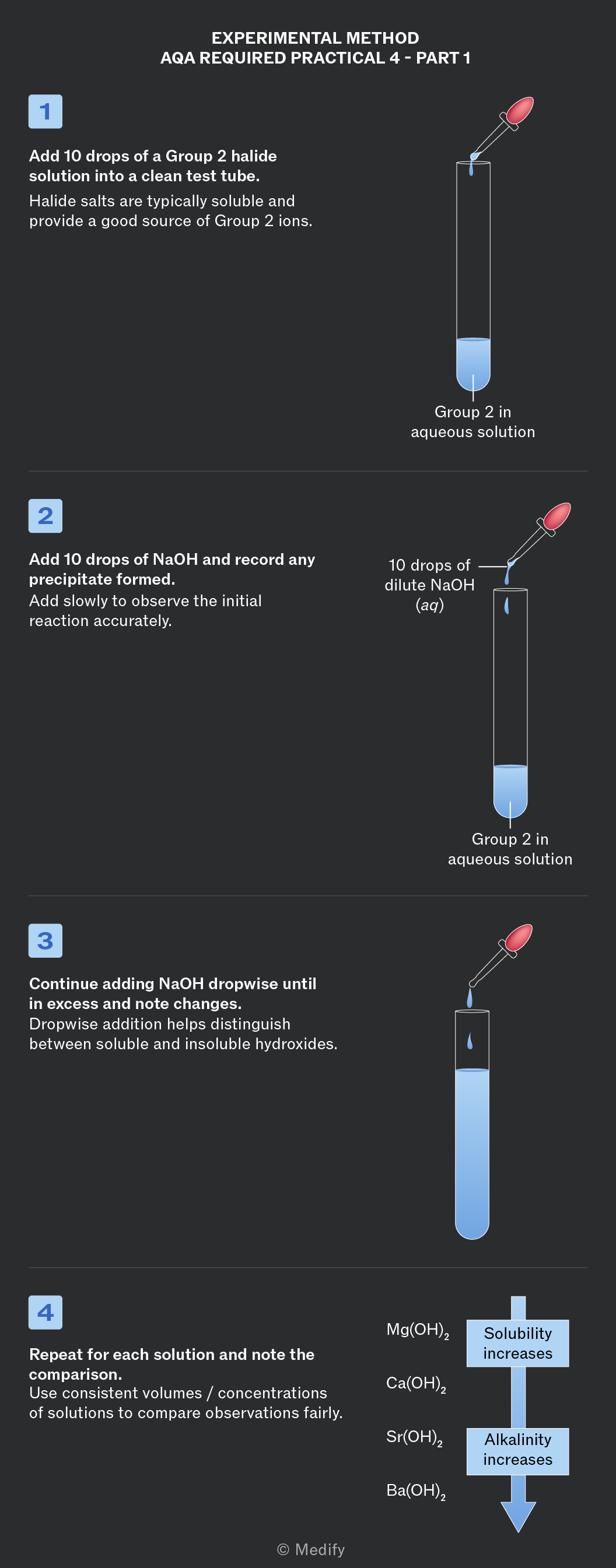
Part 1 observations adding sodium hydroxide to group 2 compounds
Experimental method for AQA Required practical 4: Testing for cations and anions
Part 2 observations adding sulfuric acid to Group 2 compounds.
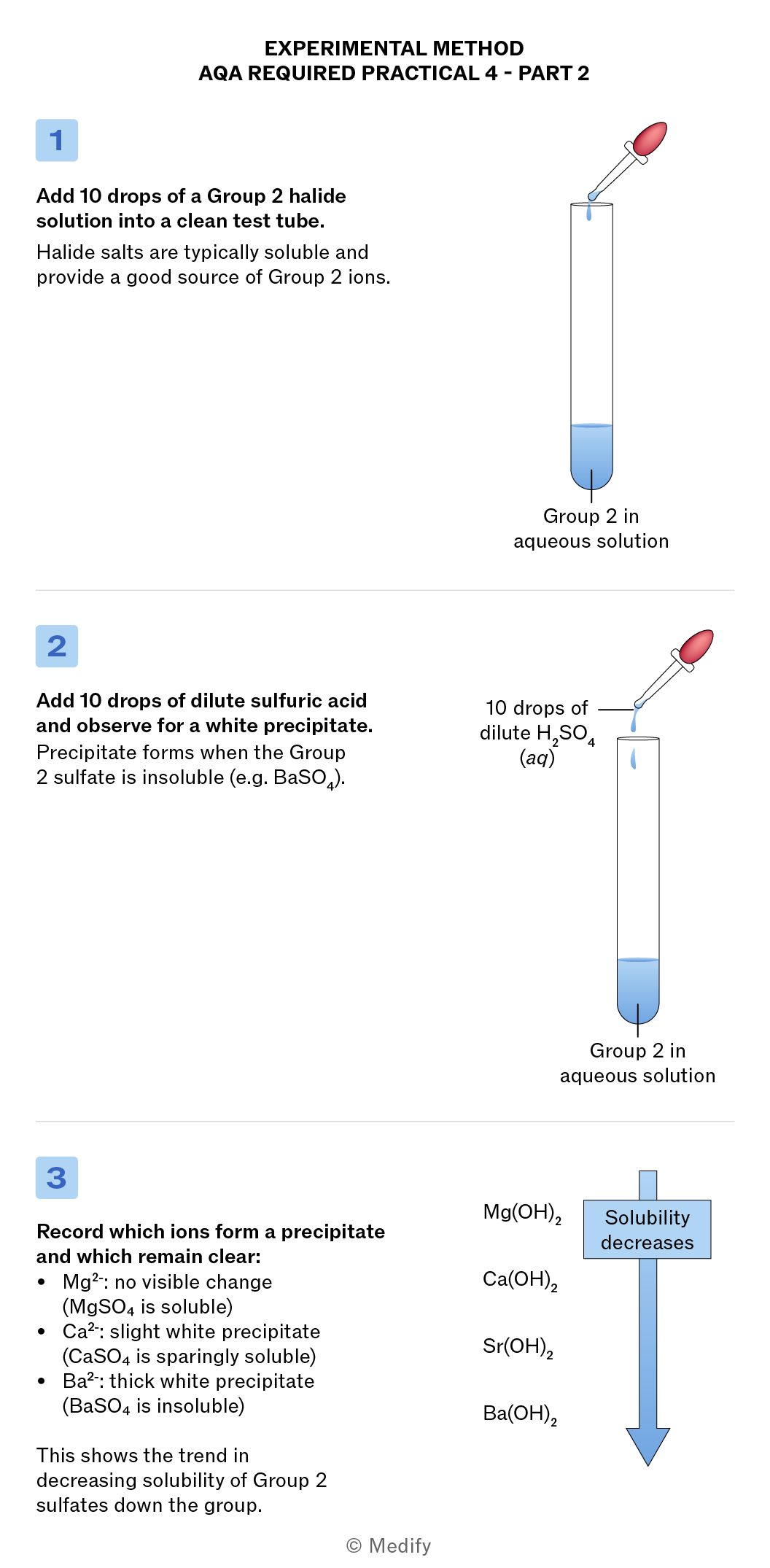
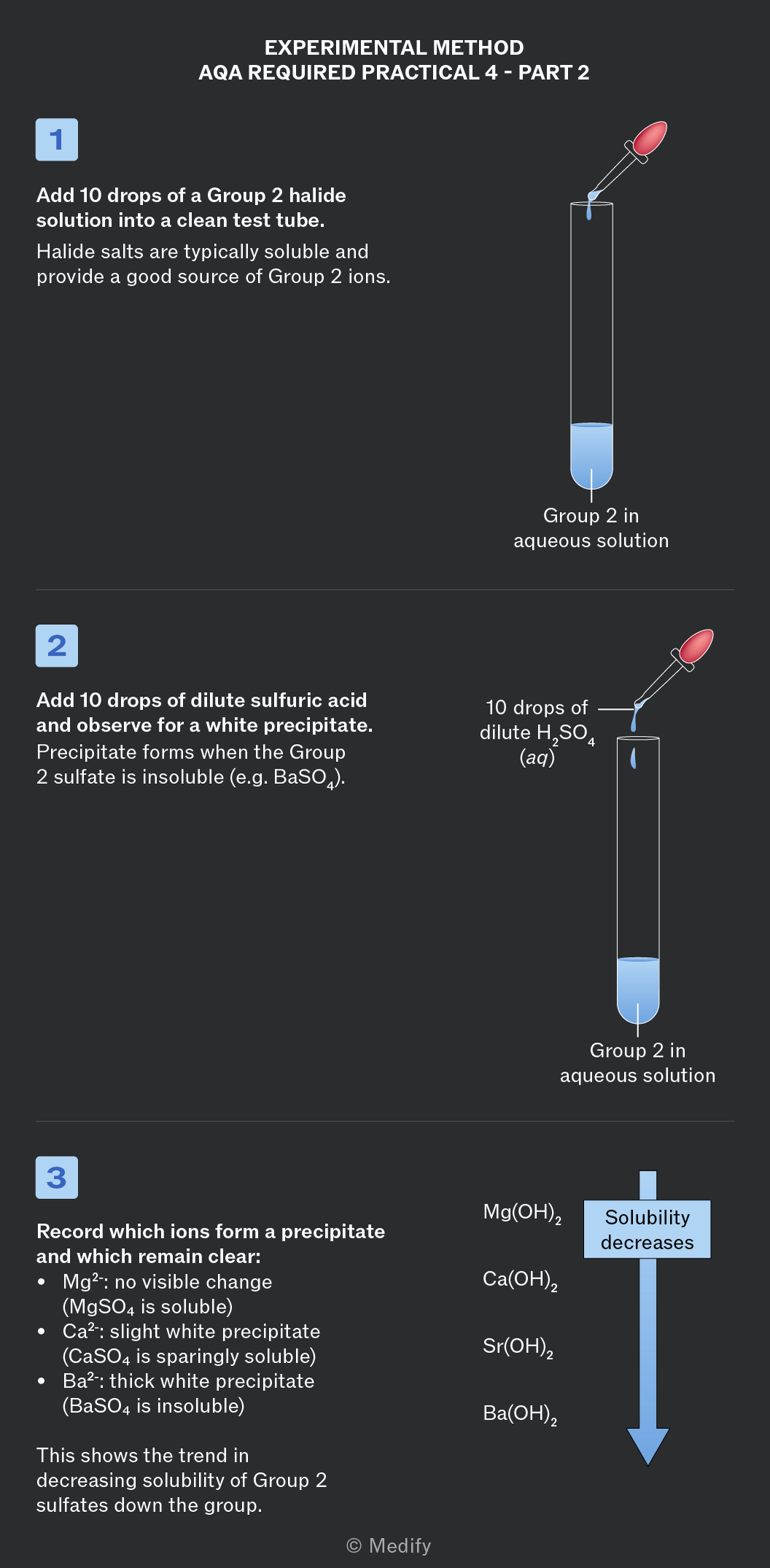
Experimental method for AQA Required practical 4: Testing for cations and anions
Part 3 testing for ammonium ions.
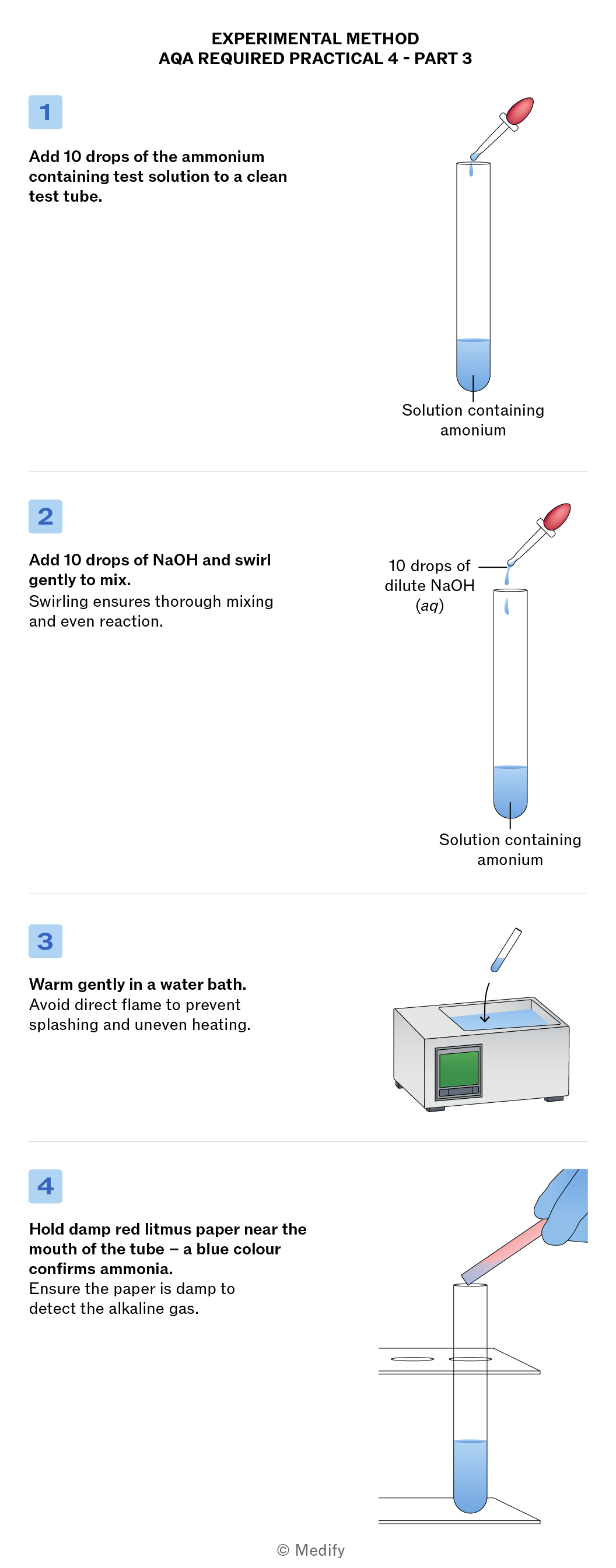
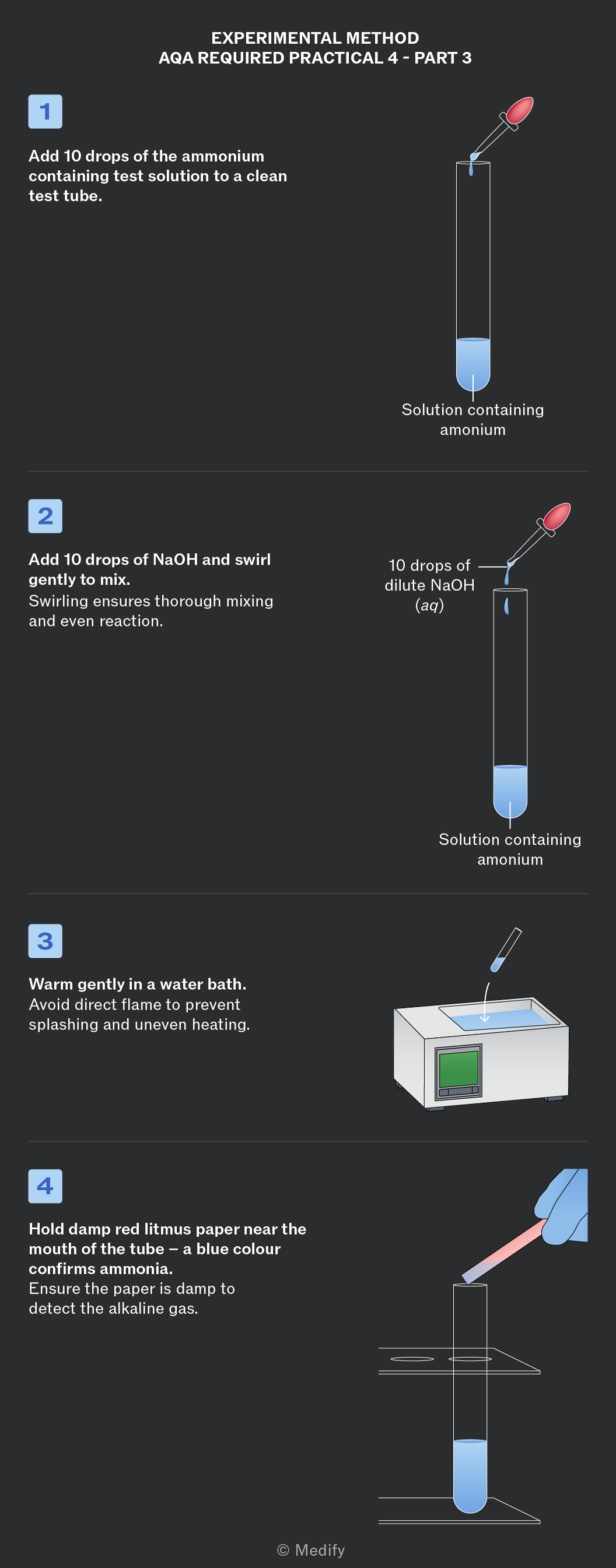
Experimental method for AQA Required practical 4: Testing for cations and anions
Part 4 testing for halide ions.
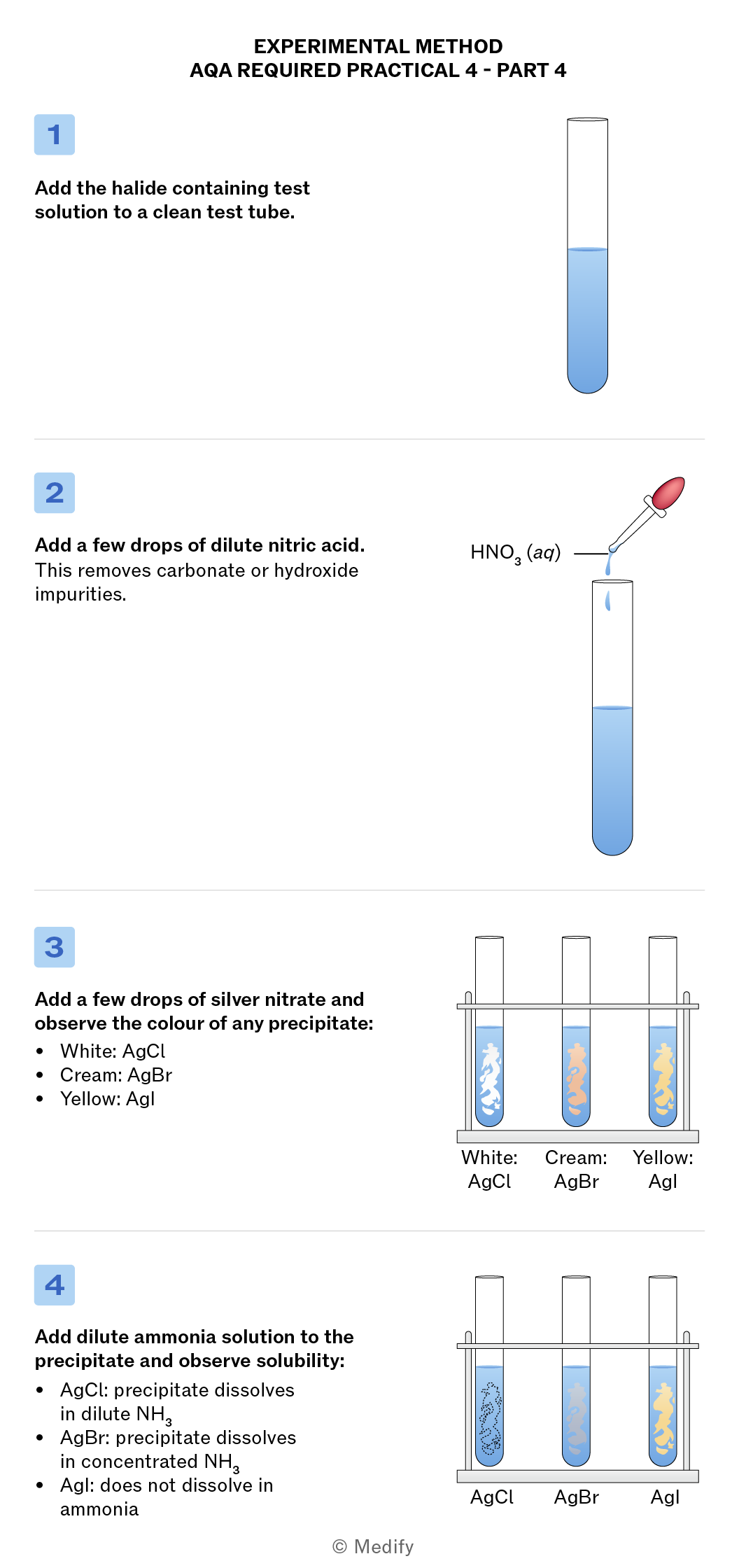
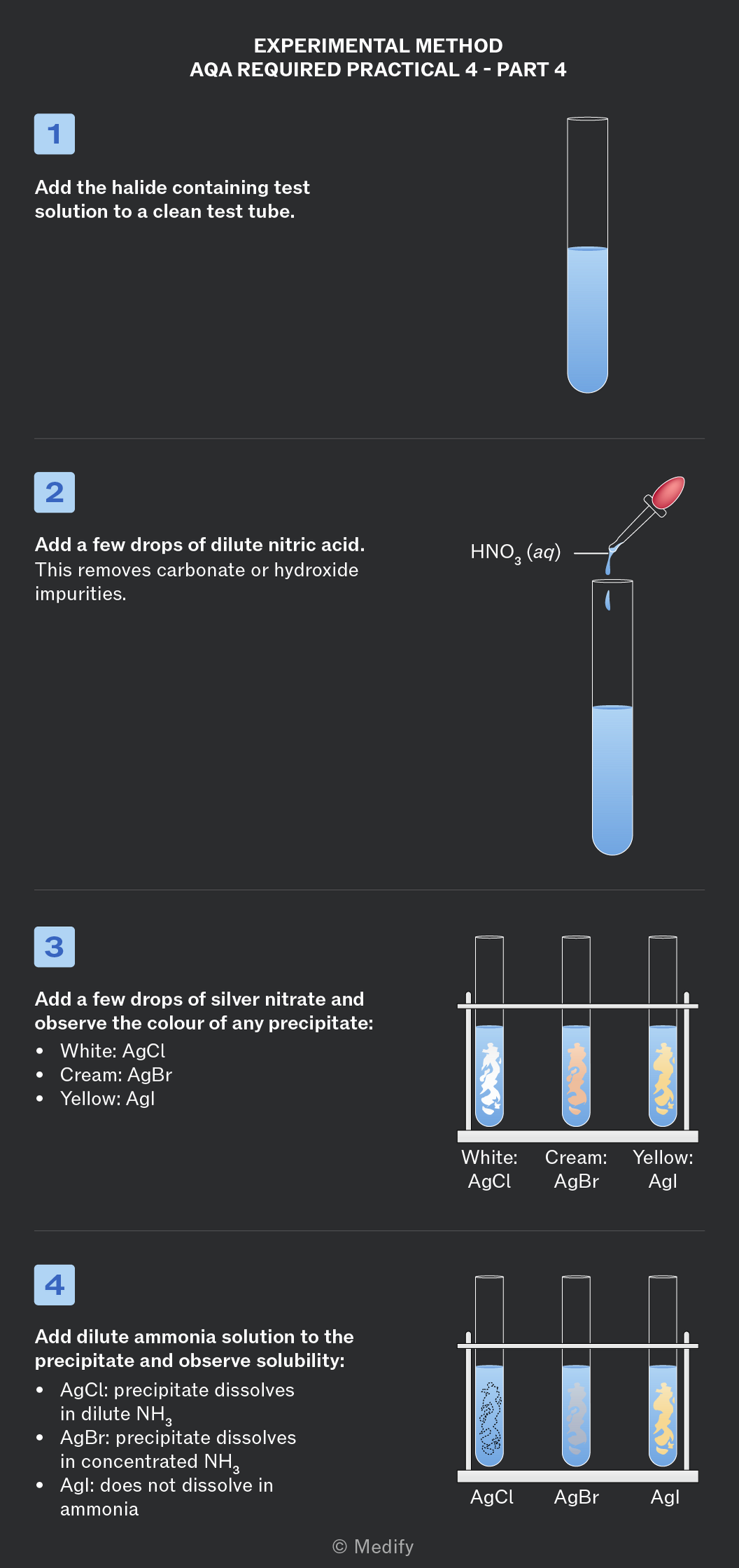
Experimental method for AQA Required practical 4: Testing for cations and anions
Part 5 testing for sulfate ions.
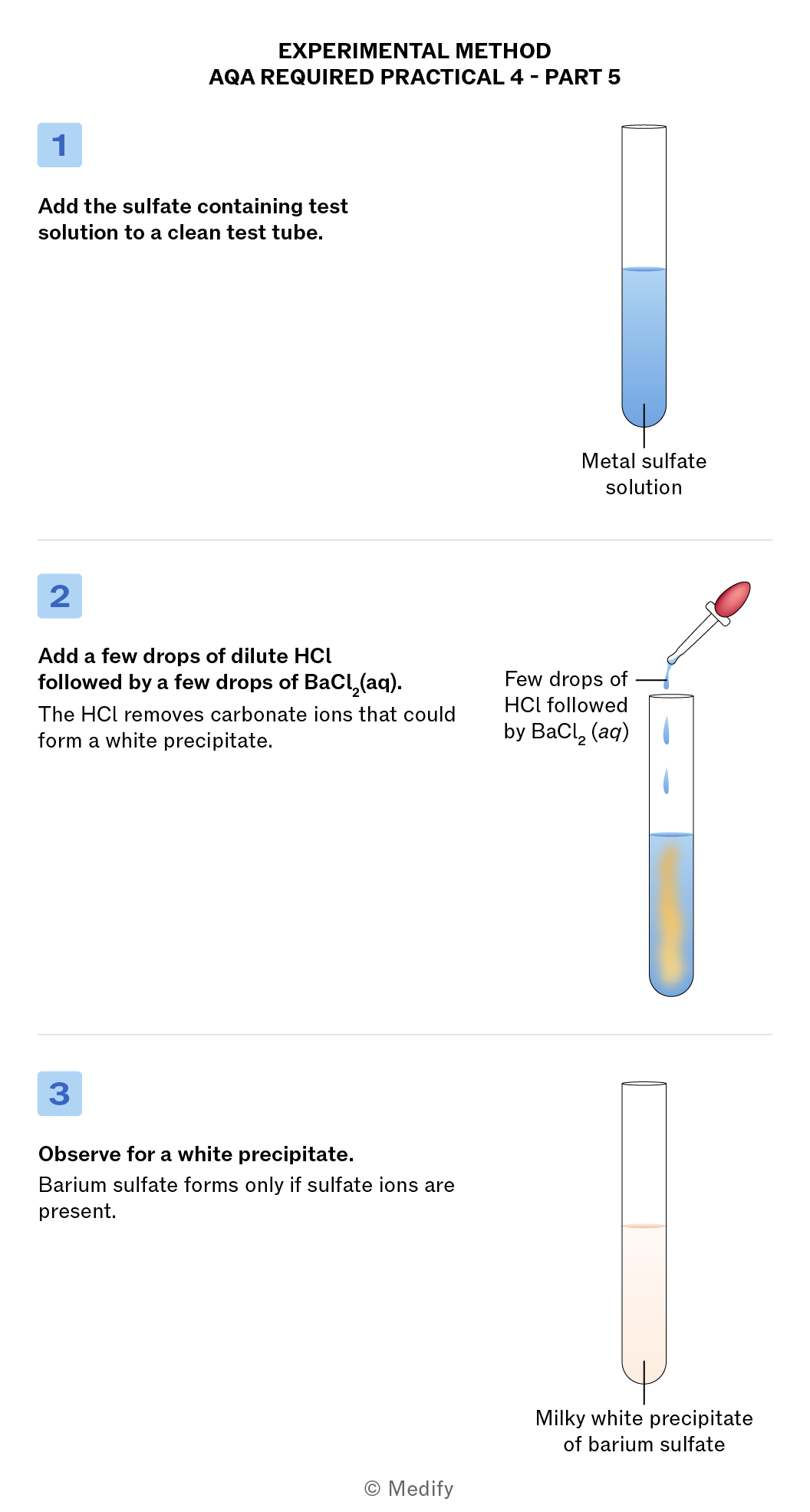
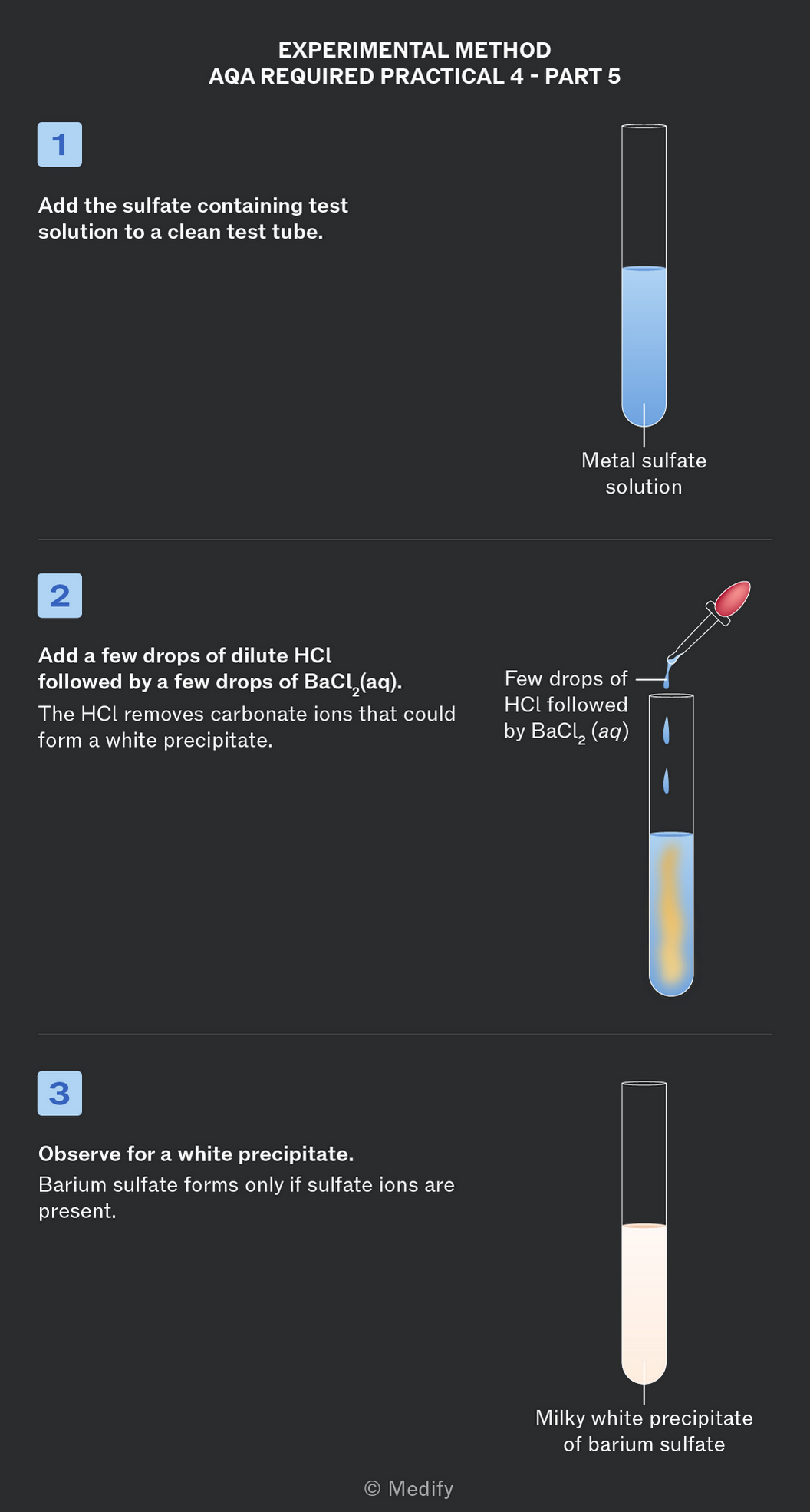
Experimental method for AQA Required practical 4: Testing for cations and anions
Part 6 testing for carbonate ions.
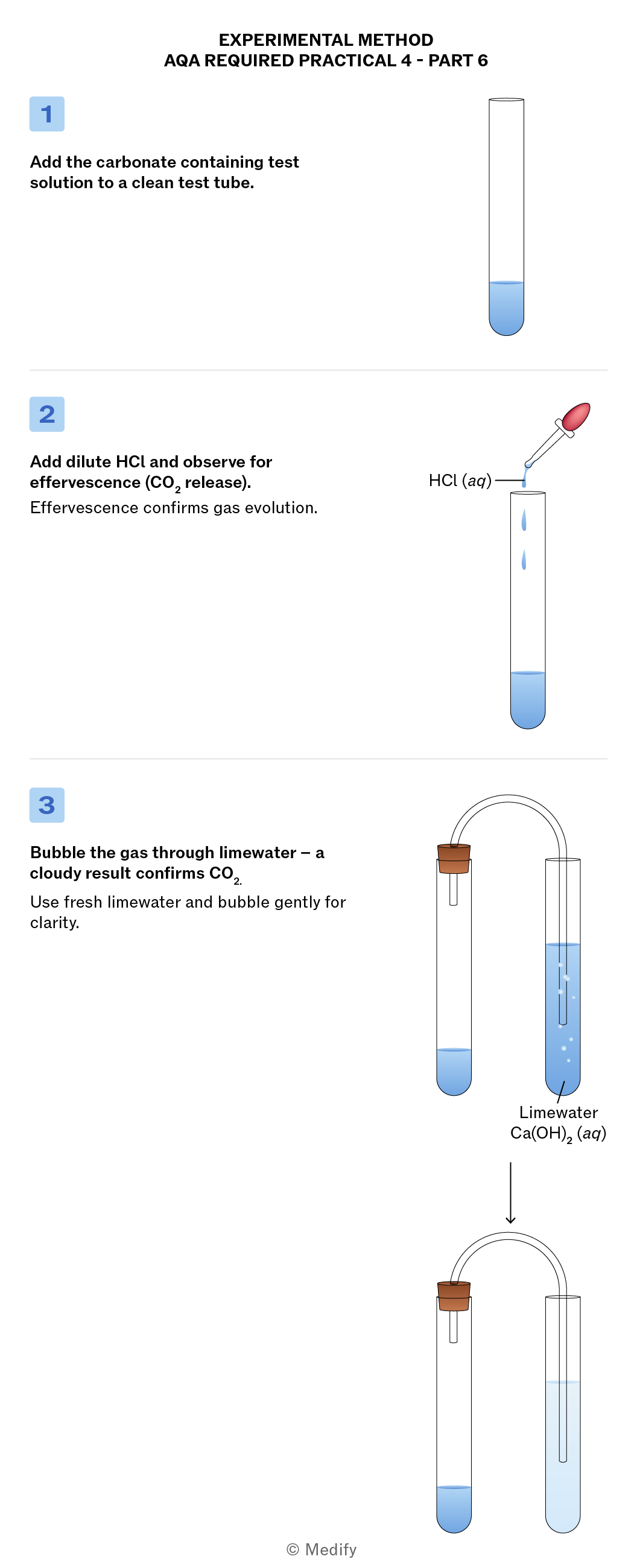
Experimental method for AQA Required practical 4: Testing for cations and anions
Part 7 testing for halide ions in solid salts.
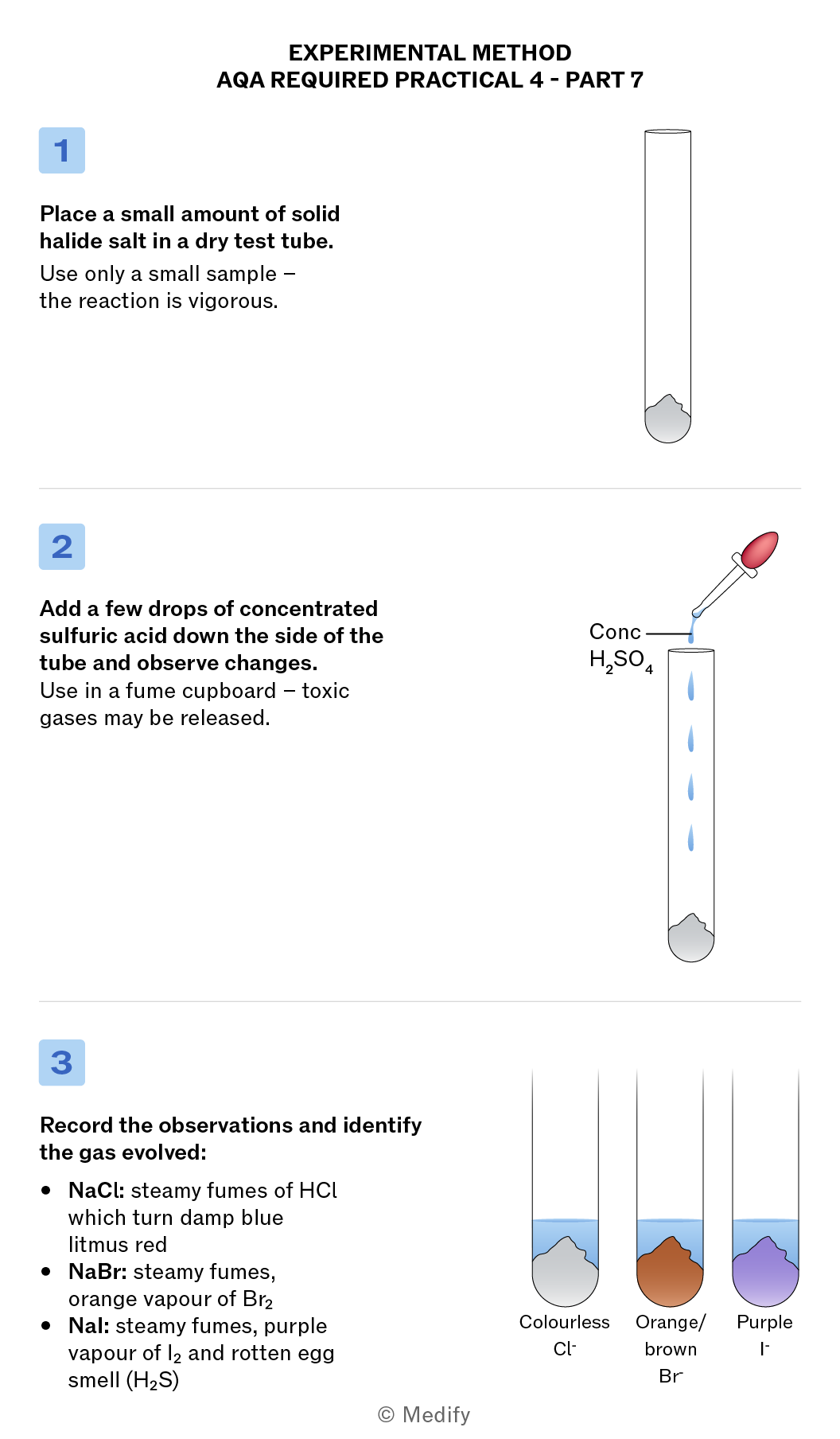
Experimental method for AQA Required practical 4: Testing for cations and anions
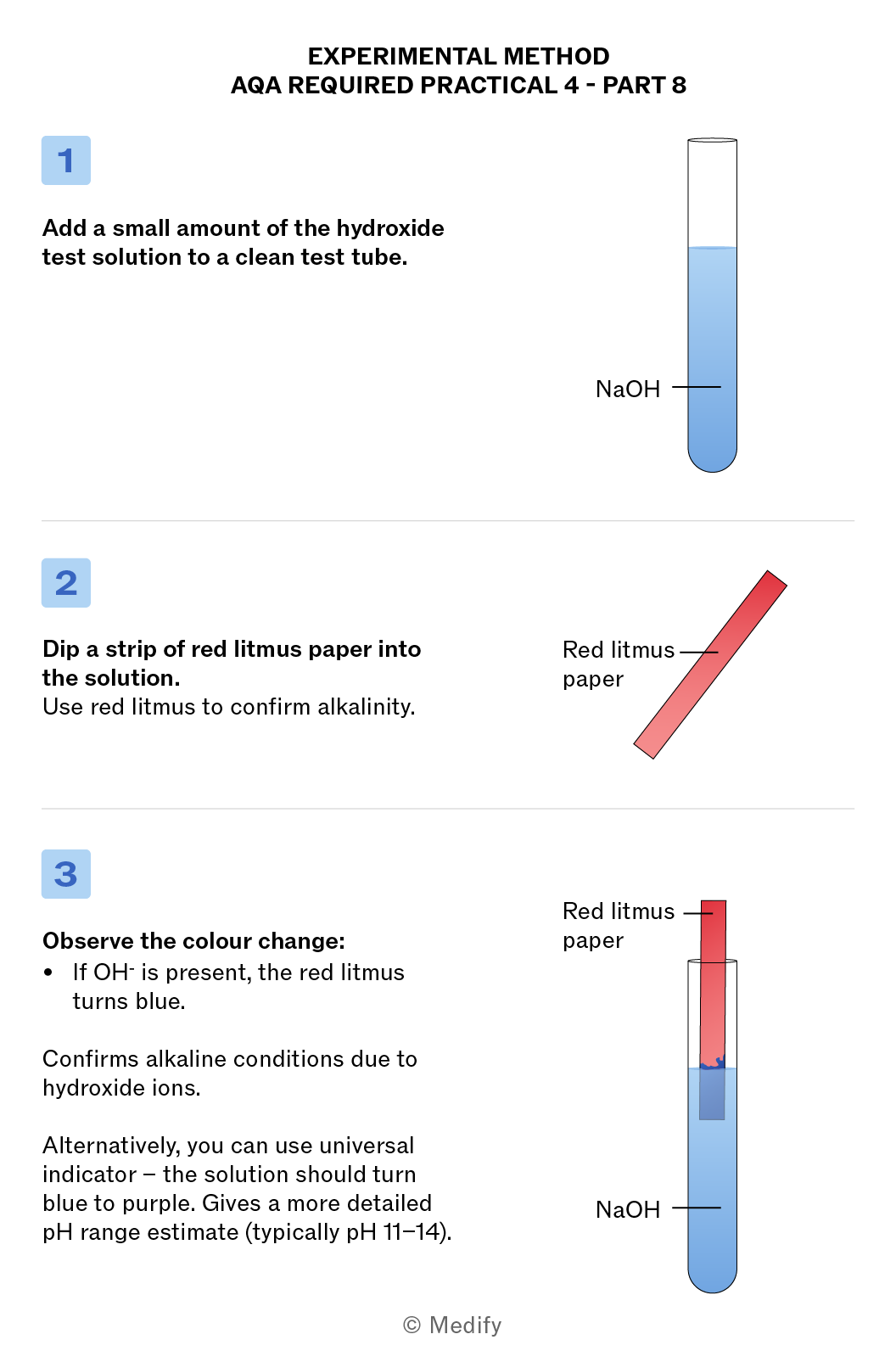
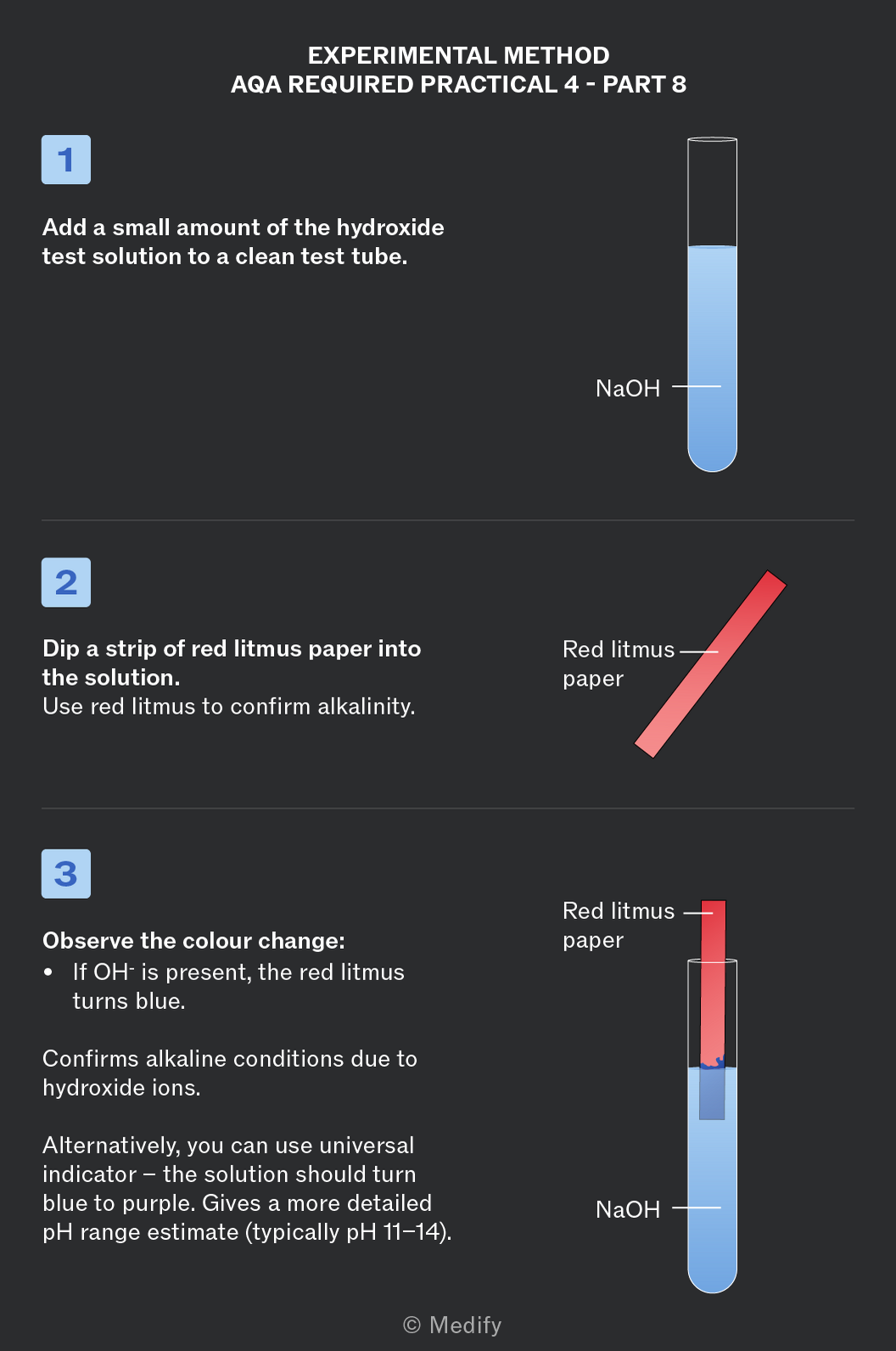
Part 8 testing for hydroxide ions in aqueous solutions.
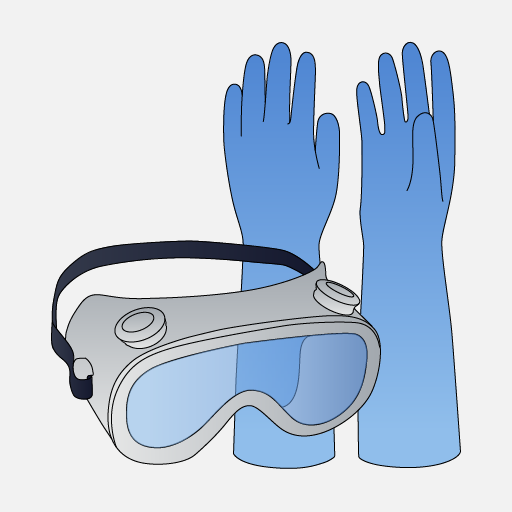
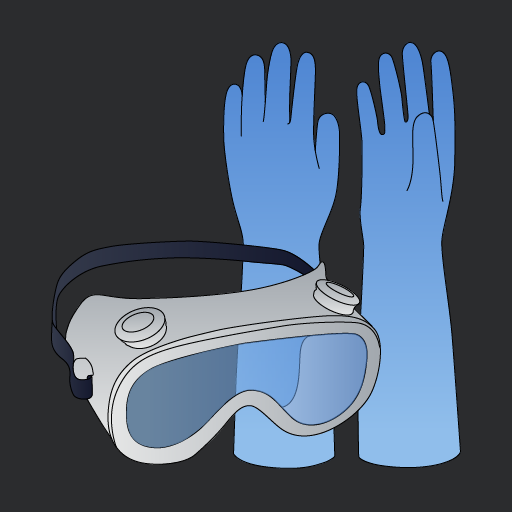
Wearing the appropriate personal protective equipment is essential to avoid direct contact with harmful chemicals and to ensure safety throughout the experiment.
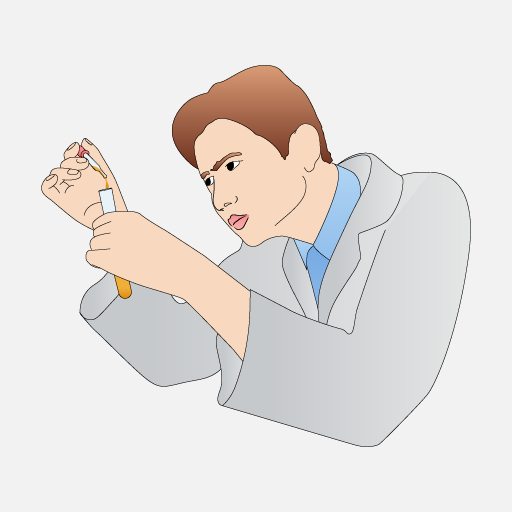
Ensuring proper ventilation during chemical testing is critical to avoid inhaling harmful fumes, such as ammonia or sulfuric acid vapours, which can irritate the respiratory system.
It is crucial to use clean and dry glassware when performing analytical tests.


Proper disposal of chemicals is essential to avoid environmental damage and ensure safe laboratory practices. Always follow disposal guidelines.
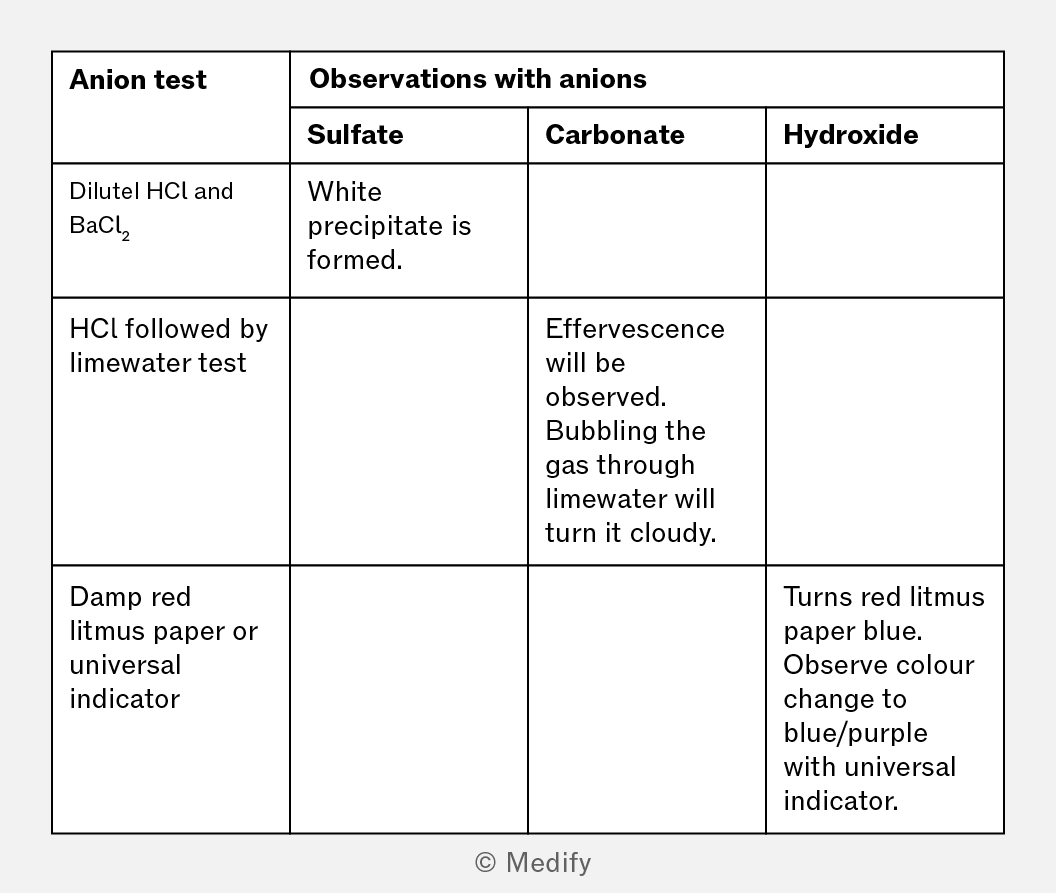
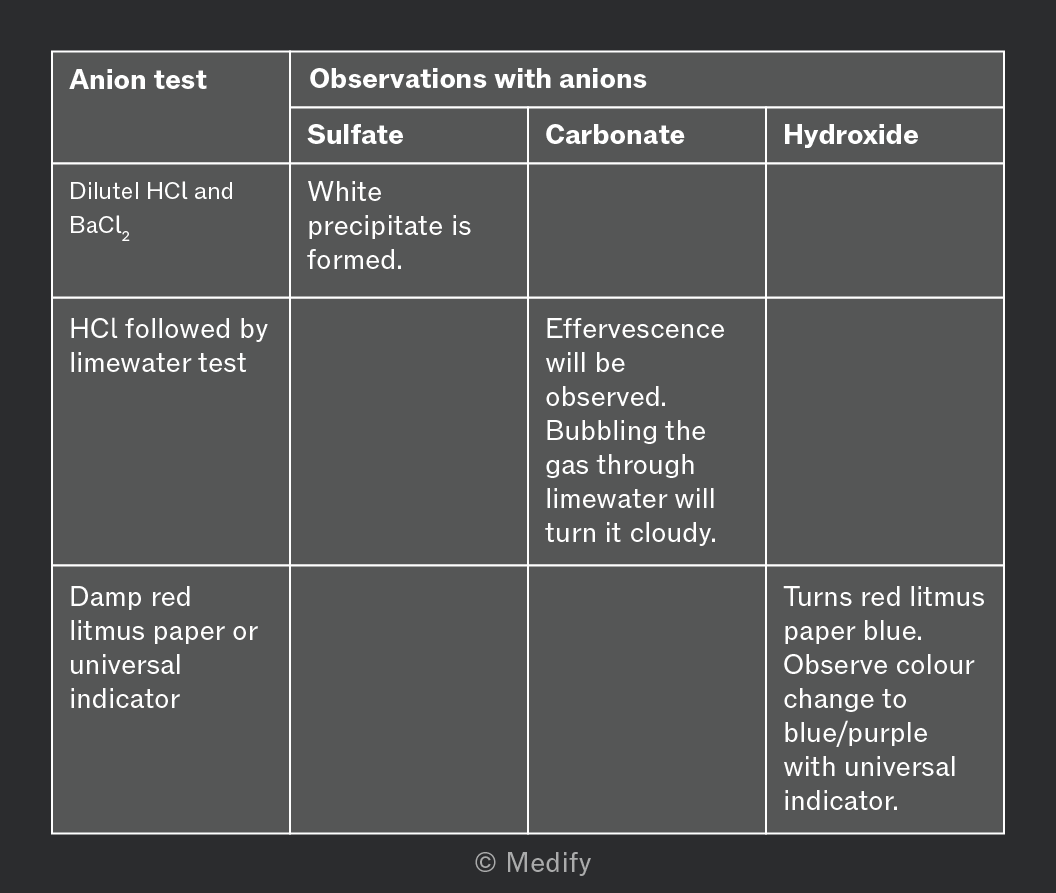
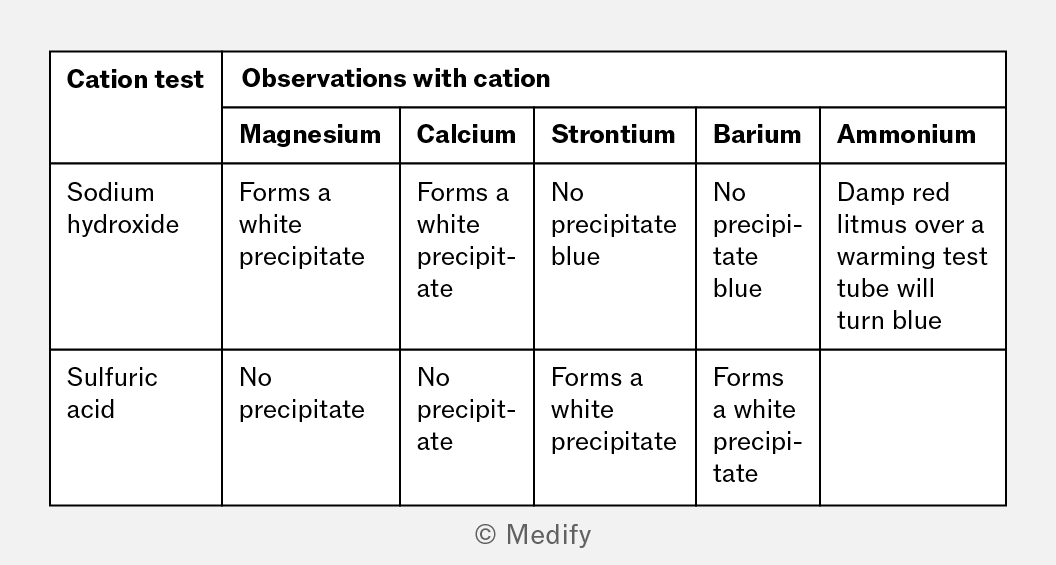
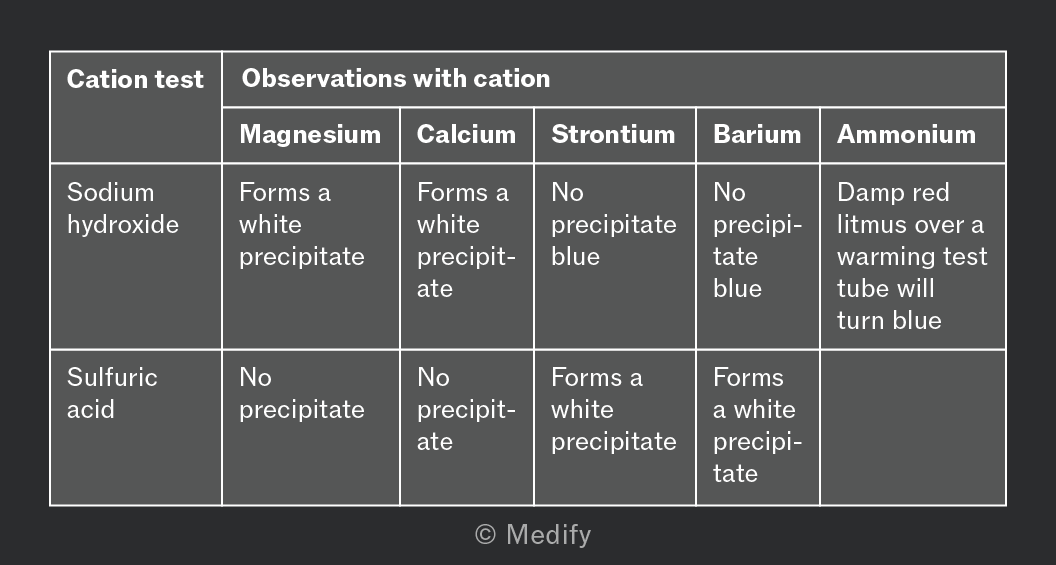
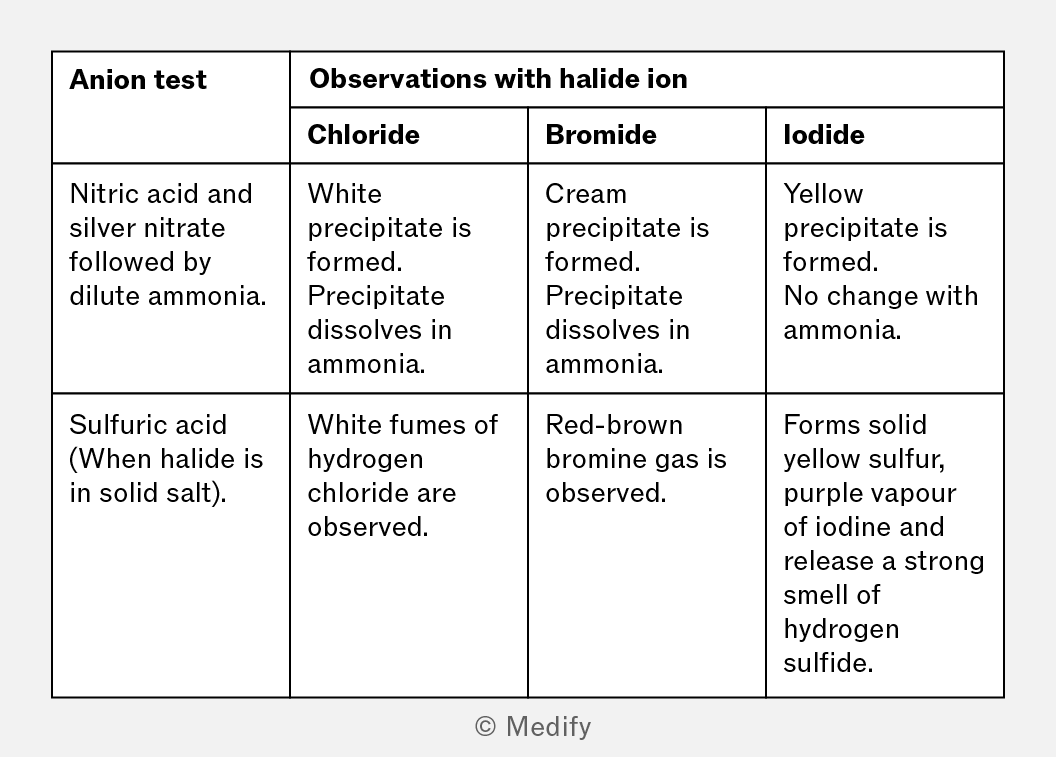
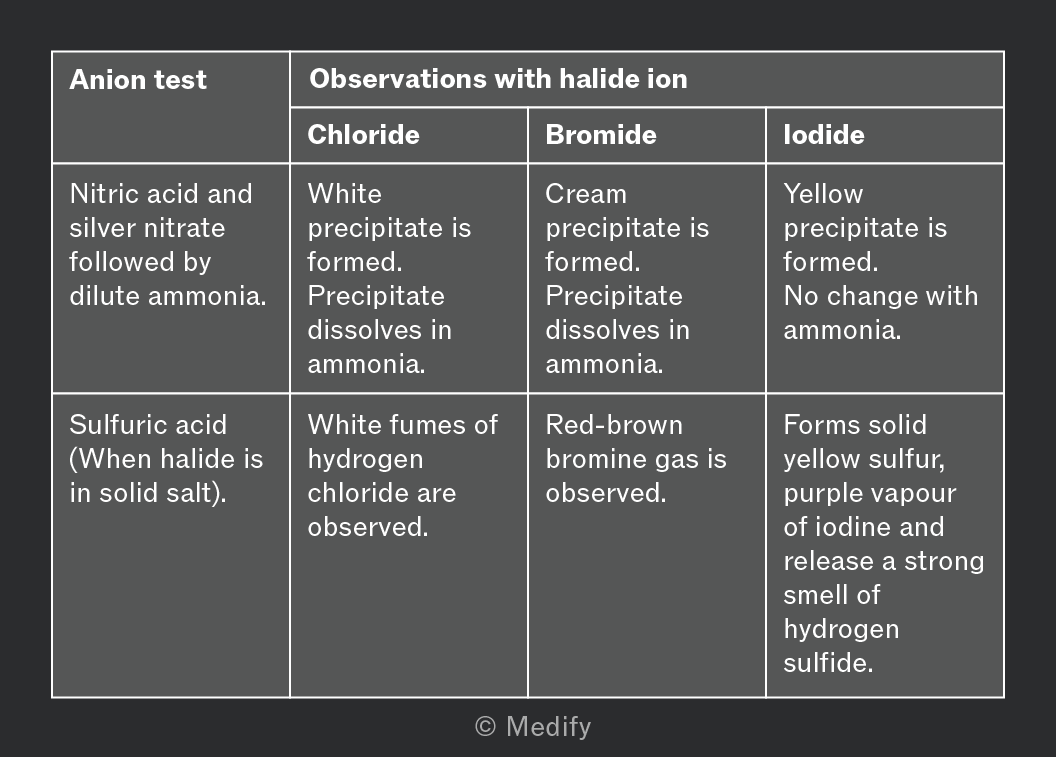
The tables below show the positive test results for all ions present in Required practical 4. These are the observations that you should have noted for each.
Below is a summary of the positive cation tests from Required Practical 4:
Below is a summary of all halide anion tests from Required Practical 4:
Below is a summary of all other negative anion tests from Required Practical 4: