Practical chemistry for exams›RP5 - Distillation of a product from a reaction

RP5 - Distillation of a product from a reaction

An overview of RP5 - Distillation of a product from a reaction
3 min

In AQA Required Practical 5: Distillation of a product from a reaction, the aim is to prepare cyclohexene from cyclohexanol using an acid-catalysed dehydration reaction, purifying the crude product via distillation and drying.

The purified product is then tested to confirm the presence of an alkene functional group.

Add to favourites

In Required Practical 5: Distillation of a product from a reaction, as outlined by AQA, there are several important safety requirements to be aware of (beyond normal lab practice, such as wearing goggles).

  • Concentrated phosphoric acid is corrosive – wear gloves and add slowly with swirling.
  • Organic vapours are flammable – keep away from flames and work in a well-ventilated area or fume cupboard.
  • Use a boiling tube or pear-shaped flask with anti-bumping granules to prevent sudden boiling.
  • When using the separating funnel, always release pressure by inverting and opening the tap away from people.
Add to favourites

Experimental method for AQA Required Practical 5: Distillation of a product from a reaction

1. Prepare a set of standardized titrations in an Erlenmeyer flask. 2. Using a pipette, add the required amount of solution to the flask. 3. Add a stirring bar to facilitate mixing during the titration process. 4. Heat the flask gently, ensuring the solution does not boil. 5. Pour and add the required reagent to the flask, ensuring it is mixed thoroughly. 6. Gradually add the reagent from a burette to the flask. 7. Transfer the solution into a graduated cylinder for measurement. 8. Prepare a sample for analysis, ensuring all materials are clean. 9. Decant the liquid carefully into a clean container. 10. To analyze the sample, use a spectrophotometer to measure absorbance.
Add to favourites

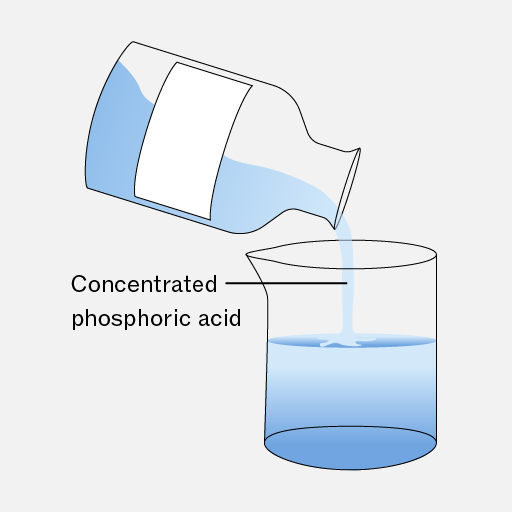
The elimination of water from an alcohol is a highly exothermic reaction. The acid catalyst, is corrosive and must be handled with care during addition.
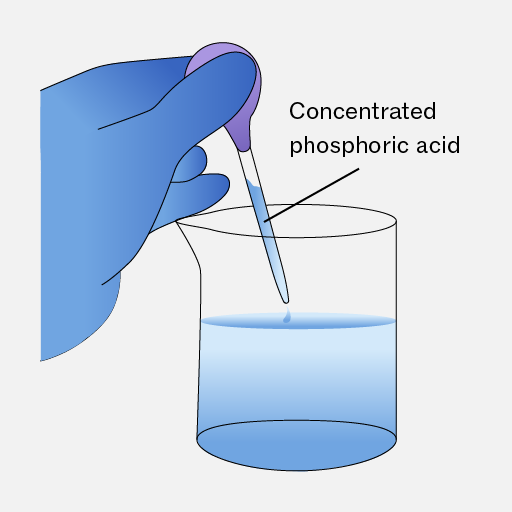
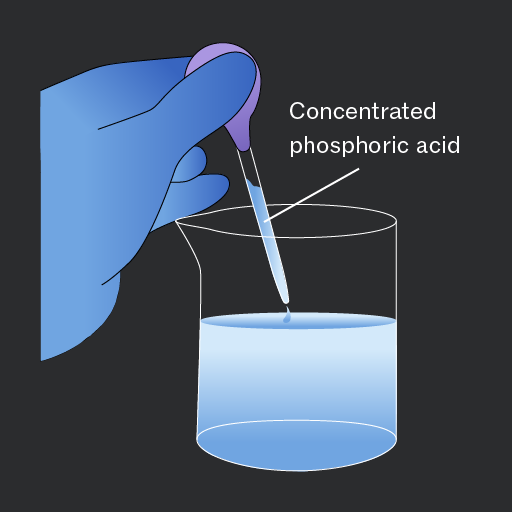
A gloved hand holding a dropper above a beaker containing blue liquid, labeled 'Concentrated phosphoric acid.'
Do

Add concentrated phosphoric acid to the alcohol slowly with frequent shaking to avoid overheating and splashing.

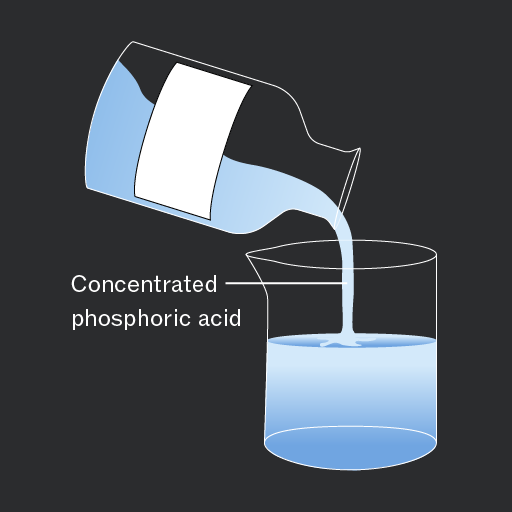
A bottle labeled 'Concentrated phosphoric acid' is pouring a blue liquid into a glass beaker.
Don't

Add the acid all at once – this can lead to excessive heat release and a potential hazardous build up of pressure.

Add to favourites

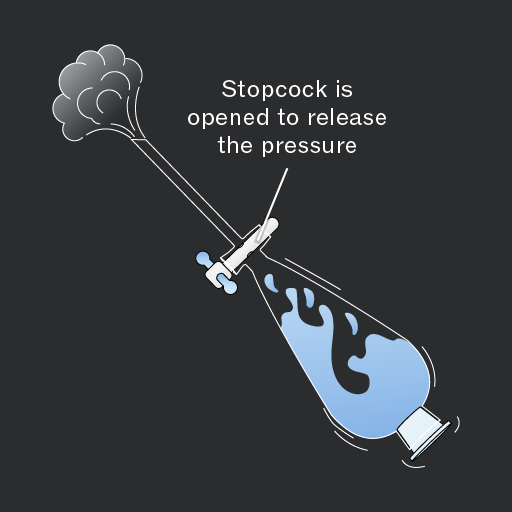
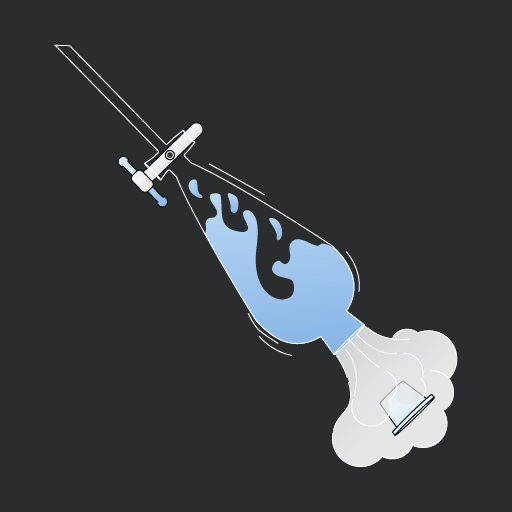
Vapour can be produced when volatile substances are mixed in a separating funnel.
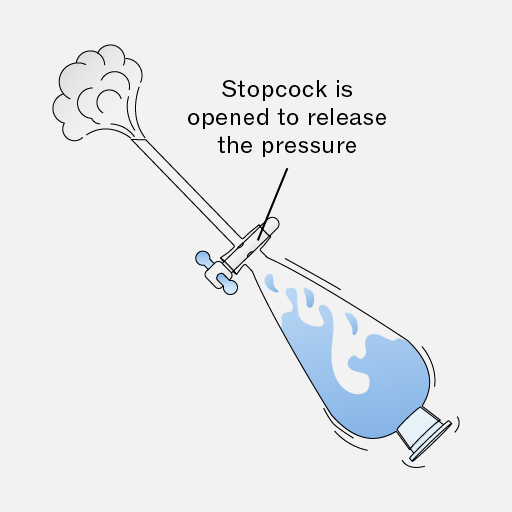
A laboratory setup showing a stopcock that is opened to release the pressure, with steam coming out and a flask containing a blue liquid.
Do

Vent the separating funnel periodically. This allows the release of any gas produced.

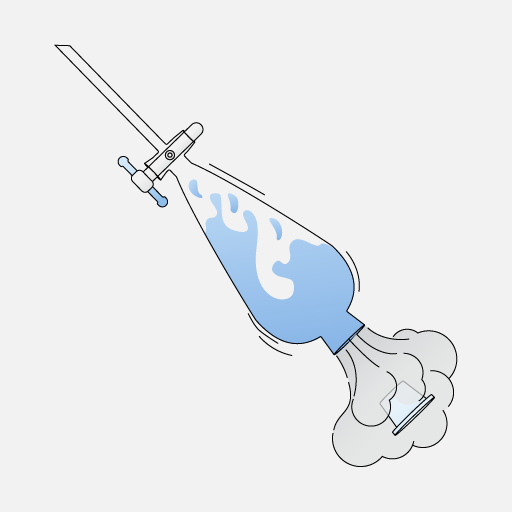
A laboratory apparatus with a blue liquid and steam coming out of a flask, held by a clamp.
Don't

Shake the separating funnel with the stopper in place without venting – pressure can build up and cause the stopper to fly off.

Add to favourites

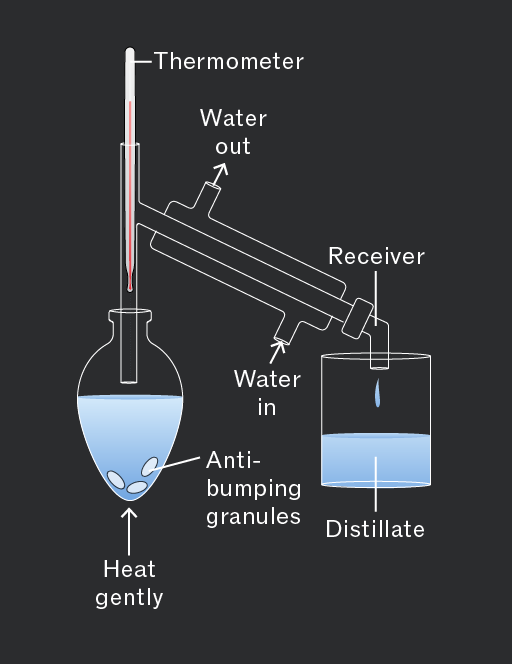
The distillation process requires careful setup to avoid loss of product or accidents.
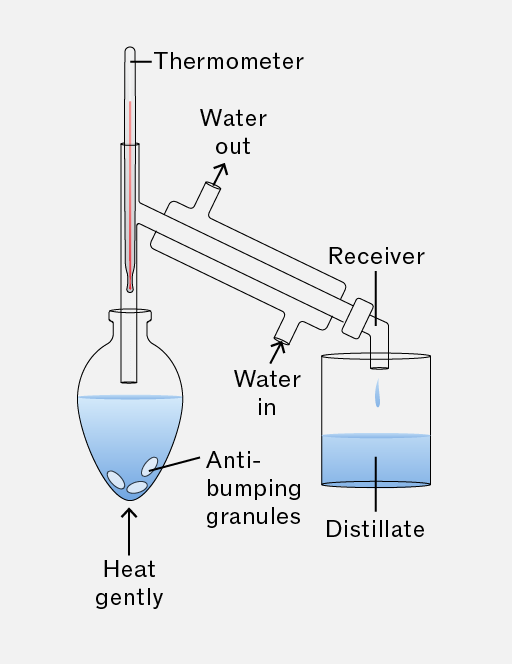
An illustration of a distillation apparatus showing a thermometer, water out, receiver, water in, anti-bumping granules, and distillate. The flask is labeled to heat gently.
Do

Use anti-bumping granules and heat the mixture gently during distillation.

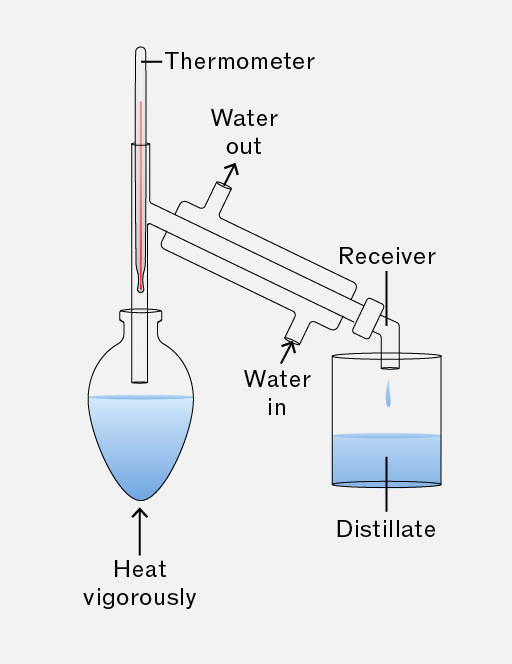
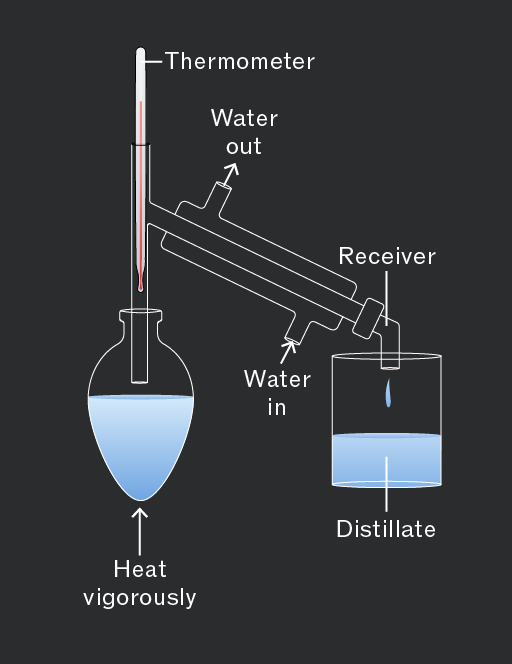
A diagram illustrating a distillation setup. It includes a thermometer, a flask labeled 'Heat vigorously', a receiver, and arrows indicating 'Water in' and 'Water out'. The flask contains blue liquid, and the receiver is labeled 'Distillate'.
Don't

Allow the mixture to boil violently or heat it without anti-bumping granules – this can cause dangerous splashing or bumping.

Add to favourites

Calculate the percentage yield using the equation:

  • The theoretical mass is based on the stoichiometry of the dehydration reaction and the limiting reagent, cyclohexanol.
  • Assume the distillate is pure cyclohexene for this calculation.

To calculate the mass of cyclohexanol used, subtract the mass of the empty pear-shaped flask from the mass of the flask plus cyclohexanol. Ensure masses are recorded to the same decimal places as the balance (e.g. two decimal places for a balance).

Then, using the equation:

calculate the moles of cyclohexanol used and therefore the theoretical moles of cyclohexene that can be produced. Convert this back to mass.
To calculate the actual mass of product, subtract the mass of the clean, dry sample container from the mass of the container plus the dry product. Be sure the sample is fully dried before weighing to avoid including water mass in your yield.

Add to favourites