
RP10 - Preparation of an organic solid and liquid
On this page
In AQA Required Practical 10 – Preparation of an organic solid and liquid, the aim is to prepare two organic compounds:
Part 1. Aspirin through the acylation of salicylic acid using the acylating agent ethanoic anhydride:
salicylic acid + ethanoic anhydride → aspirin + ethanoic acid
Part 2. Ethyl ethanoate through the esterification of ethanol with ethanoic acid:
ethanol + ethanoic acid → ethyl ethanoate + water
Both organic products are purified, and their yields are calculated. The melting point of aspirin is determined to assess purity, while the distillation of ethyl ethanoate is performed to isolate and purify the organic liquid.
In Required Practical 10: Preparation of an organic solid and liquid, as outlined by AQA, there are several important safety requirements to be aware of (beyond normal lab practice, such as wearing goggles).
- Concentrated sulfuric acid: Handle with care to avoid skin or eye contact. Gloves must be worn when handling.
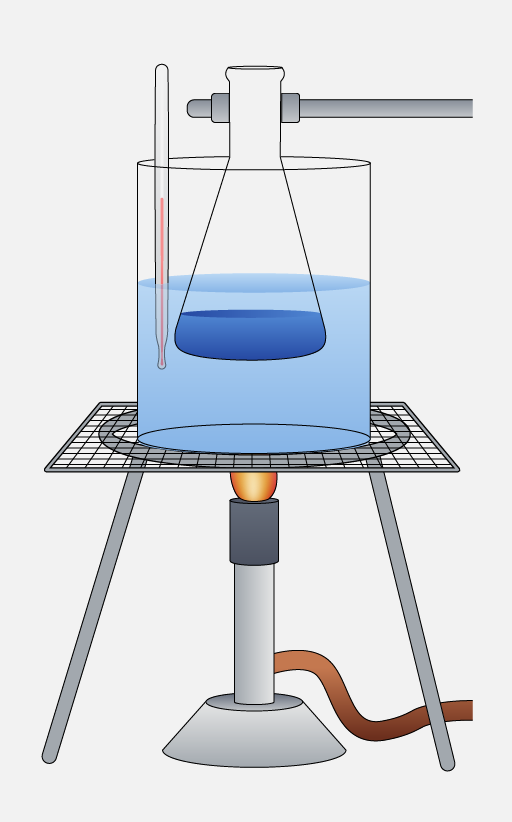
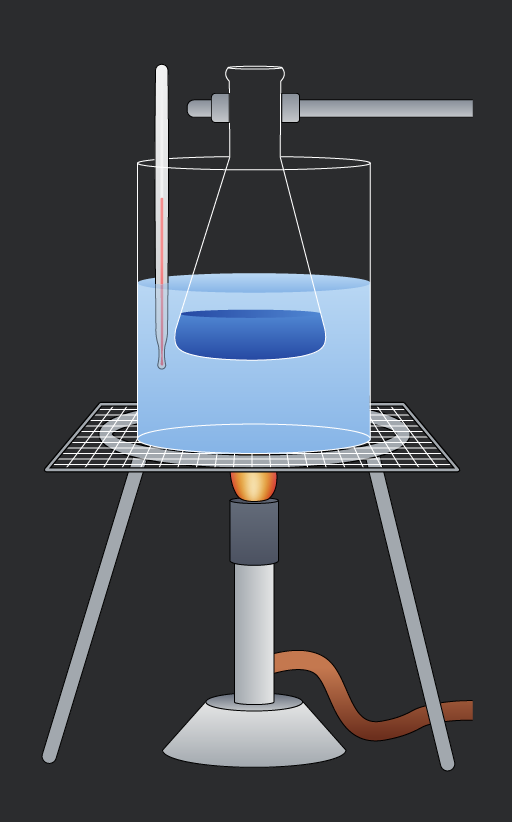
- Hot water baths: Take care when handling hot beakers or flasks.
- Ethanol and glacial ethanoic acid: Both are flammable; handle in a fume cupboard and ensure there are no naked flames when handling.
- Separating funnel: When using the separating funnel, vent the system regularly to avoid pressure buildup.
Experimental method for AQA Required Practical 10 – Preparation of an organic solid and liquid
Part 1 Preparation of aspirin


Experimental method for AQA Required Practical 10 – Preparation of an organic solid and liquid
Part 2 Preparation of ethyl ethanoate


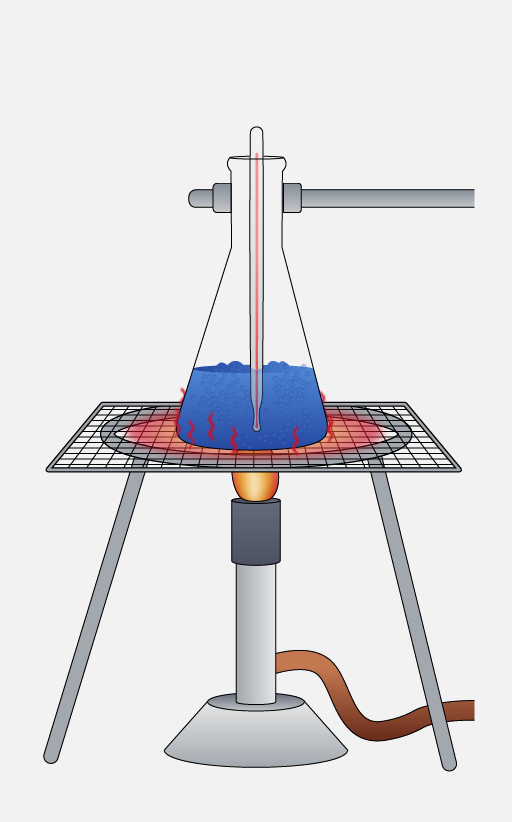
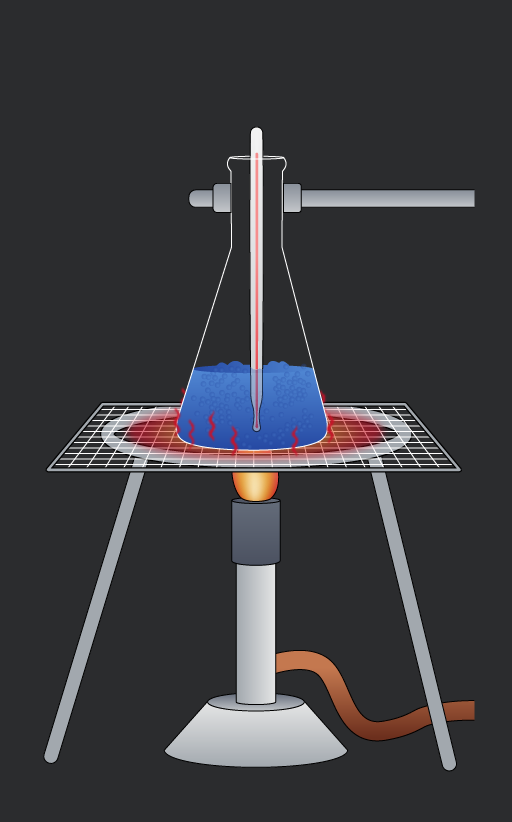
Temperature control in the preparation of aspirin is essential.
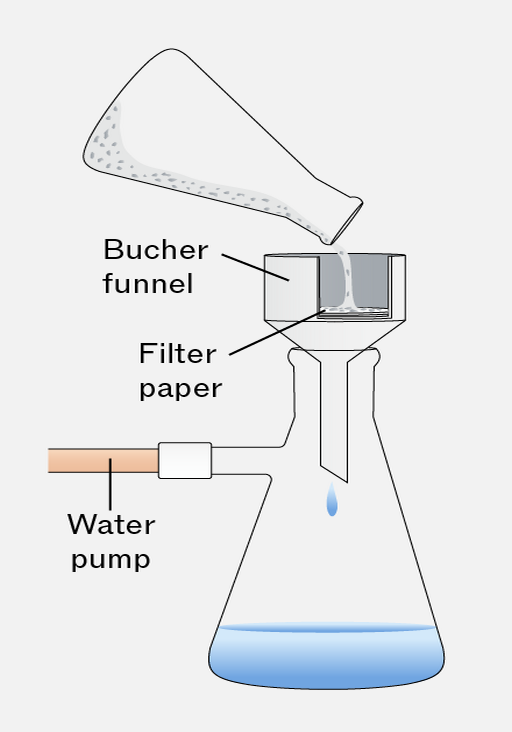
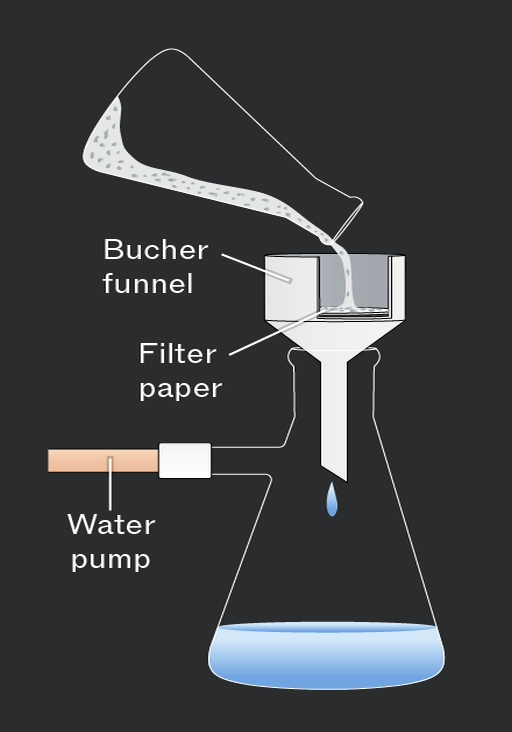
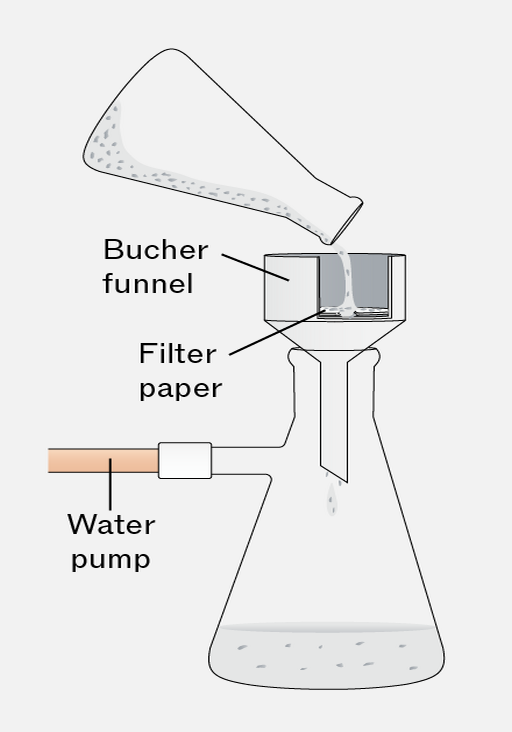
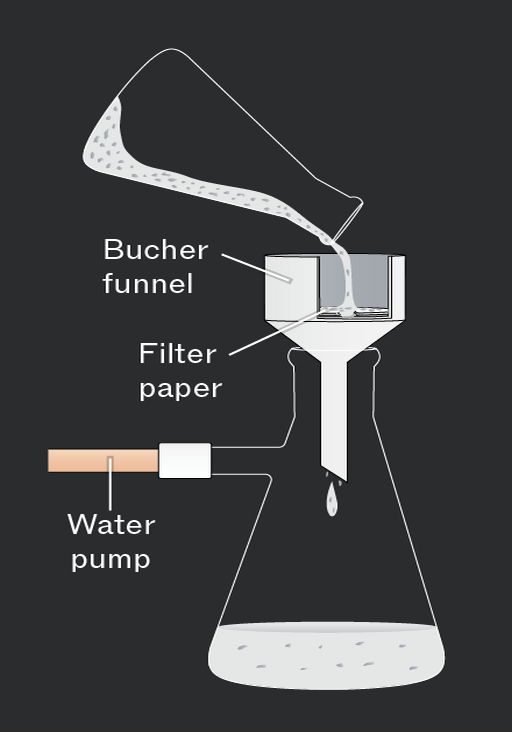
Take care when filtering the aspirin product under reduced pressure.
When purifying ethyl ethanoate, a suitable drying agent should be used.


Atom economy measures the efficiency of a chemical reaction in terms of how well atoms are utilized to form the desired product. For aspirin preparation, calculate the atom economy using the molecular formulas of reactants and products.
Compare this method with the alternative method using ethanoyl chloride, which has a higher atom economy but is less favored in industry due to safety concerns (e.g. more reactive and toxic by-products).
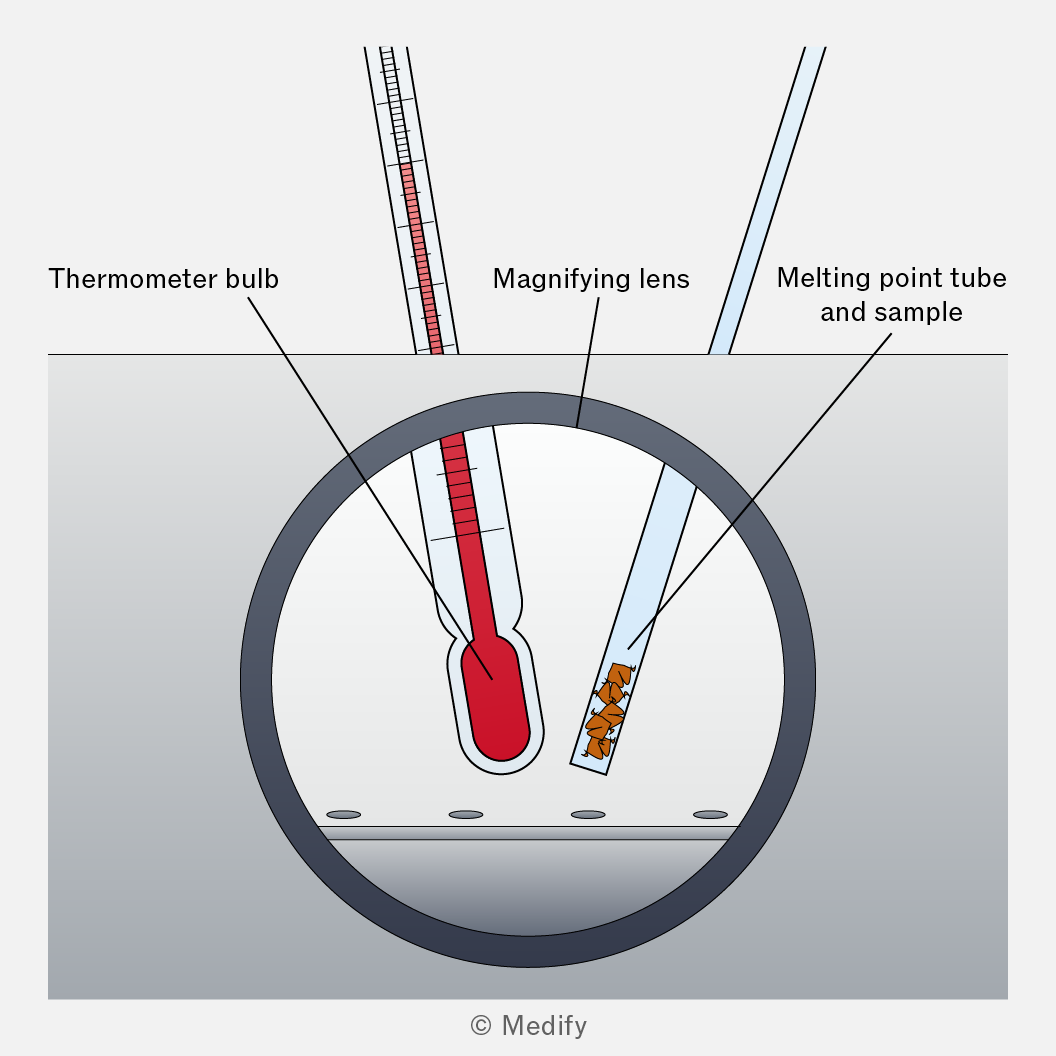
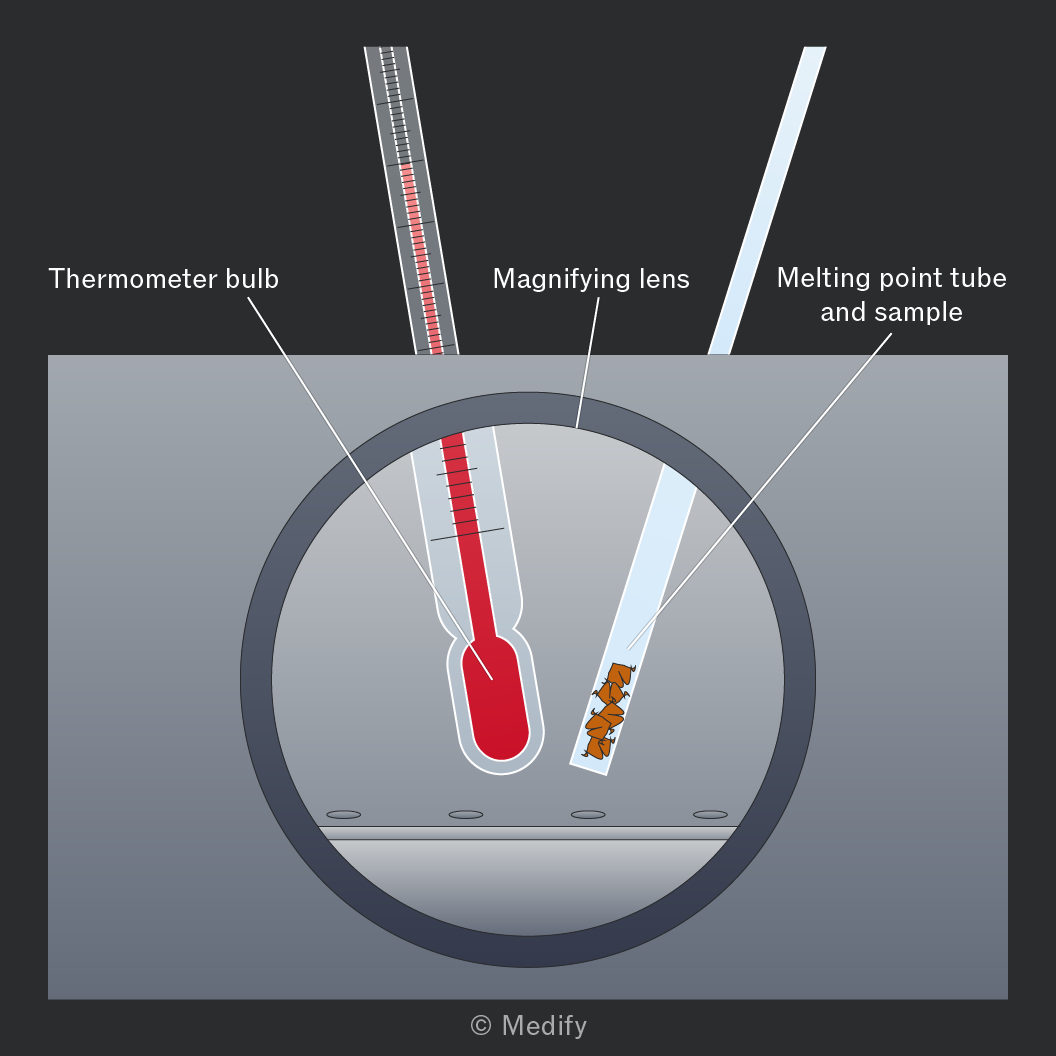
Compare the melting point of your sample of aspirin to the known value for pure aspirin,, using melting point apparatus.
A lower, broader melting point may indicate impurities in your sample.
Calculate the theoretical yield of ethyl ethanoate from the reaction between ethanol and glacial ethanoic acid.
Identify the limiting reagent:
The stoichiometric ratio is 1:1, therefore the limiting reagent is the reagent with the highest number of moles from the reactants, which is ethanoic acid.
There is also a 1:1 mole ratio of ethanoic acid to ethyl ethanoate.
After obtaining the mass of the distilled ethyl ethanoate, calculate the percentage yield:
Potential reasons for yield loss include:
- Loss of product during filtration or purification
- Incomplete reaction or side reactions.
Impurities remaining in the crude product affect the final mass. This is the only explanation for yields over 100%.
The purity of the ethyl ethanoate can be assessed by measuring the boiling point during distillation. Pure ethyl ethanoate has a boiling point of approximately . Any deviation from this value may suggest the presence of impurities, such as unreacted starting materials.