Practical chemistry for exams›RP6 - Tests for organic functional groups

RP6 - Tests for organic functional groups

An overview of RP6 - Tests for organic functional groups
5 min

In Required Practical 6: Tests for organic functional groups, the purpose is to perform qualitative tests for:

  • Alcohols
  • Aldehydes
  • Alkenes
  • Carboxylic acids
  • Halogenoalkanes.

Each test gives a distinct colour change or observation that helps confirm the functional group present. The identity of each compound is known prior to testing with the aim of the practical being the observation of a positive result.

Add to favourites

In Required Practical 6: Tests for organic functional groups, as outlined by AQA, there are several important safety requirements to be aware of (beyond normal lab practice, such as wearing goggles).

  • Handle sodium with care: When adding metallic sodium to ethanol, do so carefully, as it reacts violently with water. Ensure all equipment is dry and use small pieces of sodium.
  • Be cautious with bromine water: Bromine water is corrosive and toxic. Avoid inhaling fumes and ensure it does not come into contact with skin.
  • Use heat carefully: When heating the test tubes, use a water bath to avoid sudden temperature changes that could cause the glass to crack.
  • Dispose of chemicals safely: Dispose of excess sodium in ethanol and silver nitrate according to disposal protocols to prevent dangerous reactions.
Add to favourites

Experimental method for AQA Required Practical 6: Tests for organic functional groups

Part 1 Testing ethanol for the alcohol functional group
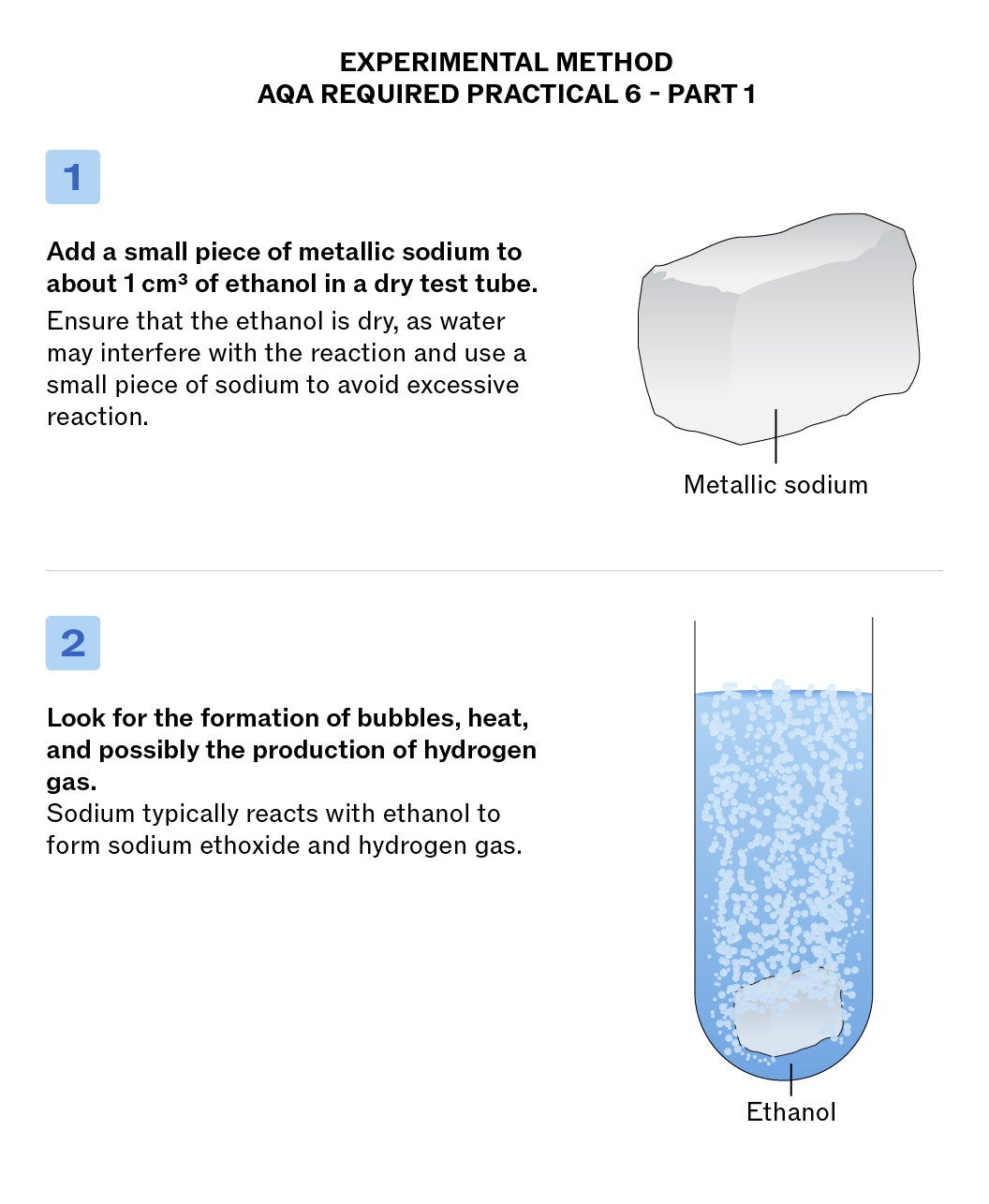
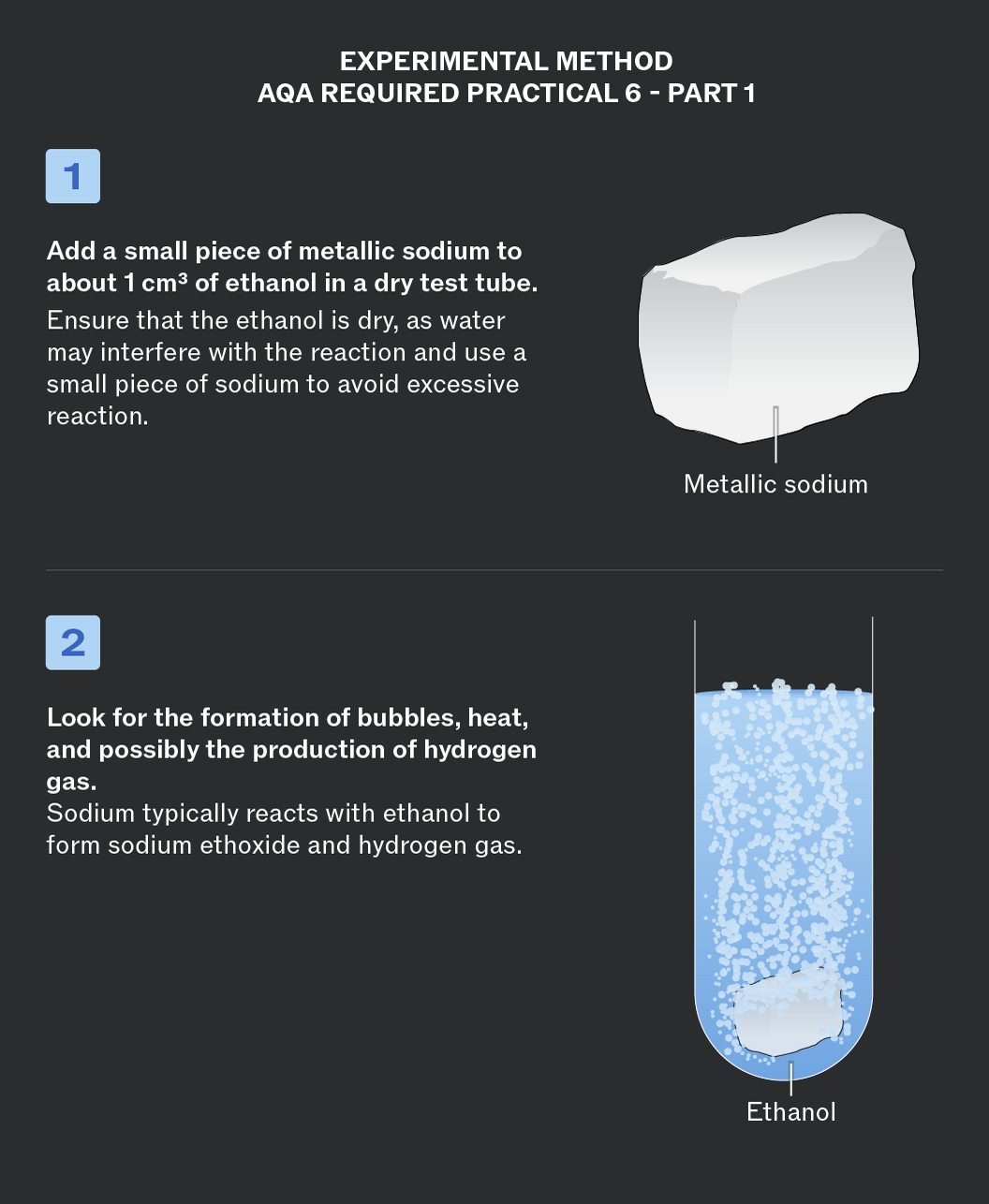
EXPERIMENTAL METHOD AQA REQUIRED PRACTICAL 6 - PART 1. 1. Add a small piece of metallic sodium to about 1 cm³ of ethanol in a dry test tube. Ensure that the ethanol is dry, as water may interfere with the reaction and use a small piece of sodium to avoid excessive reaction. 2. Look for the formation of bubbles, heat, and possibly the production of hydrogen gas. Sodium typically reacts with ethanol to form sodium ethoxide and hydrogen gas.

Note that traces of water would produce this result and so all samples tested in this manner must be dried first.

Add to favourites

Experimental method for AQA Required Practical 6: Tests for organic functional groups

Part 2 Testing ethanal for the aldehyde functional group
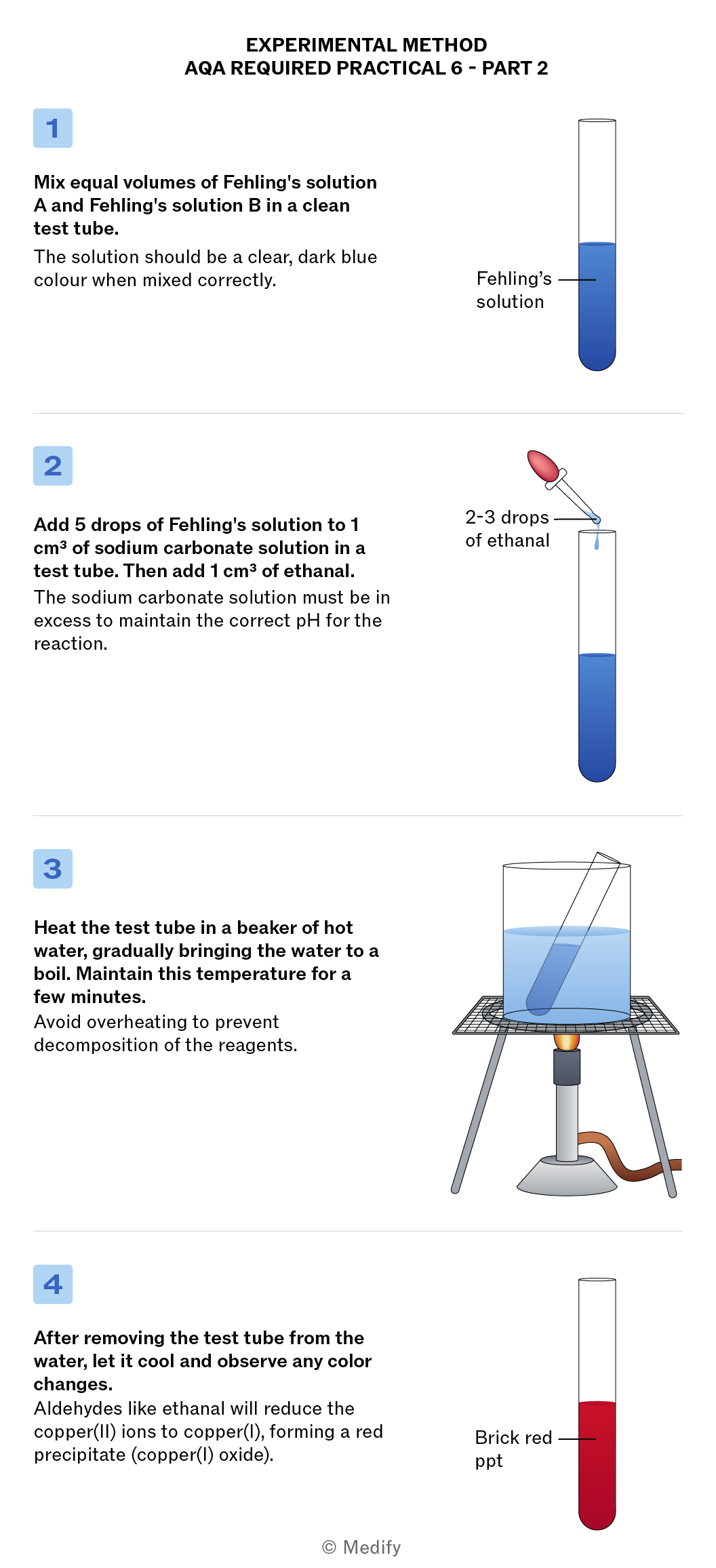
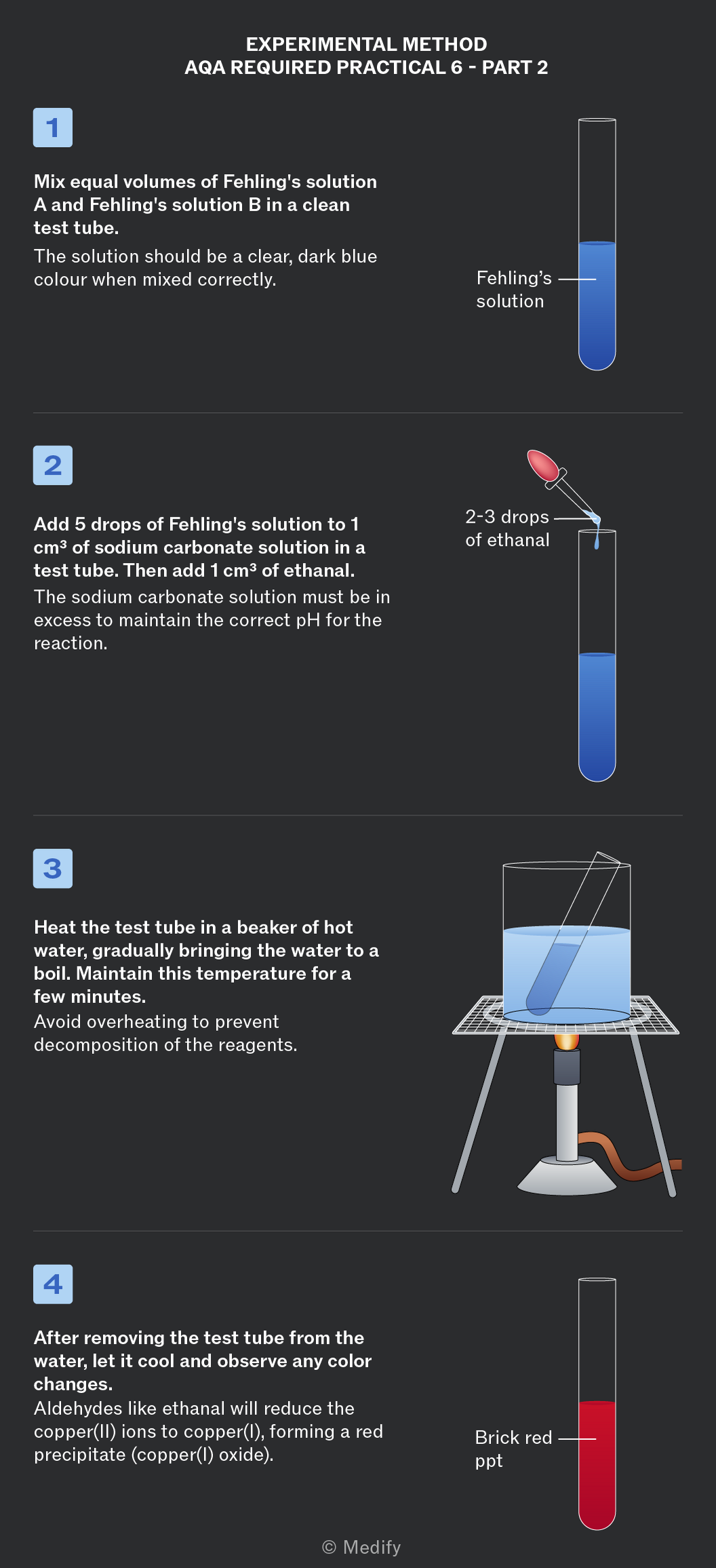
EXPERIMENTAL METHOD AQA REQUIRED PRACTICAL 6 - PART 2. 1. Mix equal volumes of Fehling's solution A and Fehling's solution B in a clean test tube. The solution should be a clear, dark blue colour when mixed correctly. Fehling’s solution. 2. Add 5 drops of Fehling's solution to 1 cm³ of sodium carbonate solution in a test tube. Then add 1 cm³ of ethanal. The sodium carbonate solution must be in excess to maintain the correct pH for the reaction. 2-3 drops of ethanal. 3. Heat the test tube in a beaker of hot water, gradually bringing the water to a boil. Maintain this temperature for a few minutes. Avoid overheating to prevent decomposition of the reagents. 4. After removing the test tube from the water, let it cool and observe any color changes. Aldehydes like ethanal will reduce the copper(II) ions to copper(I), forming a red precipitate (copper(I) oxide). Brick red ppt.
Add to favourites

Experimental method for AQA Required Practical 6: Tests for organic functional groups

Part 3 Testing cyclohexene for the alkene functional group.
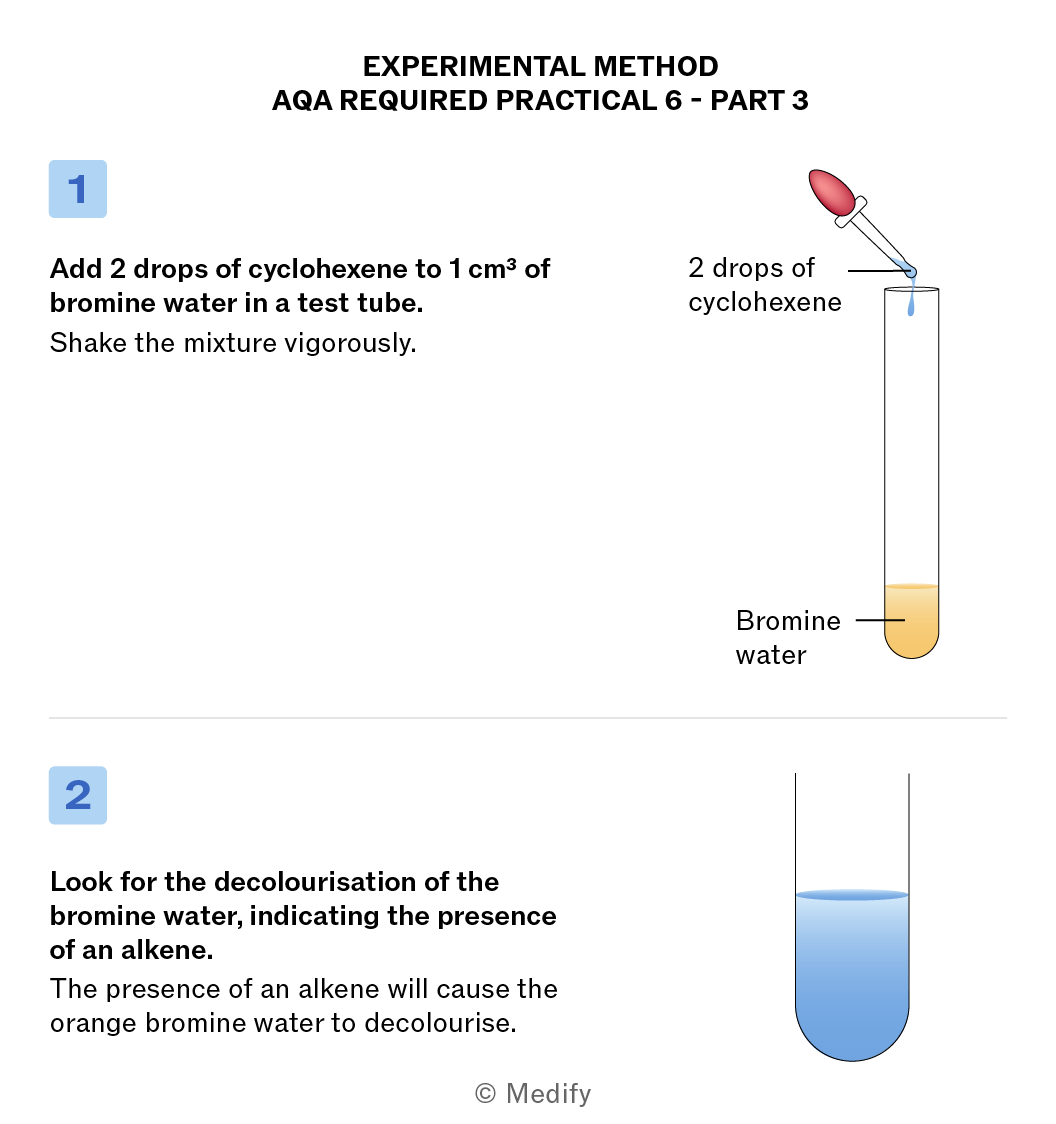
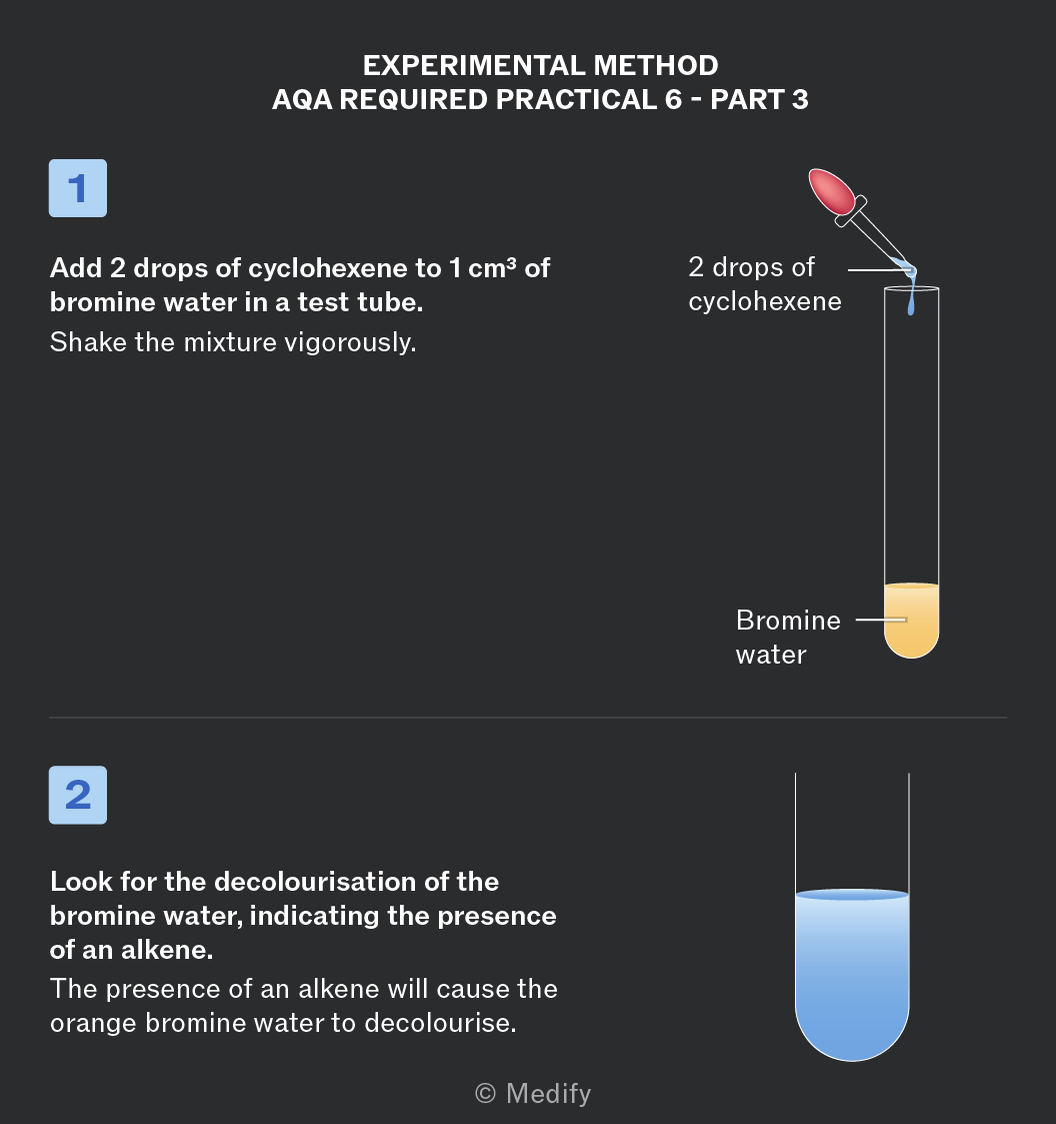
EXPERIMENTAL METHOD AQA REQUIRED PRACTICAL 6 - PART 3. 1. Add 2 drops of cyclohexene to 1 cm³ of bromine water in a test tube. Shake the mixture vigorously. 2. Look for the decolourisation of the bromine water, indicating the presence of an alkene. The presence of an alkene will cause the orange bromine water to decolourise.
Add to favourites

Experimental method for AQA Required Practical 6: Tests for organic functional groups

Part 4 Testing ethanoic acid for the carboxylic acid functional group
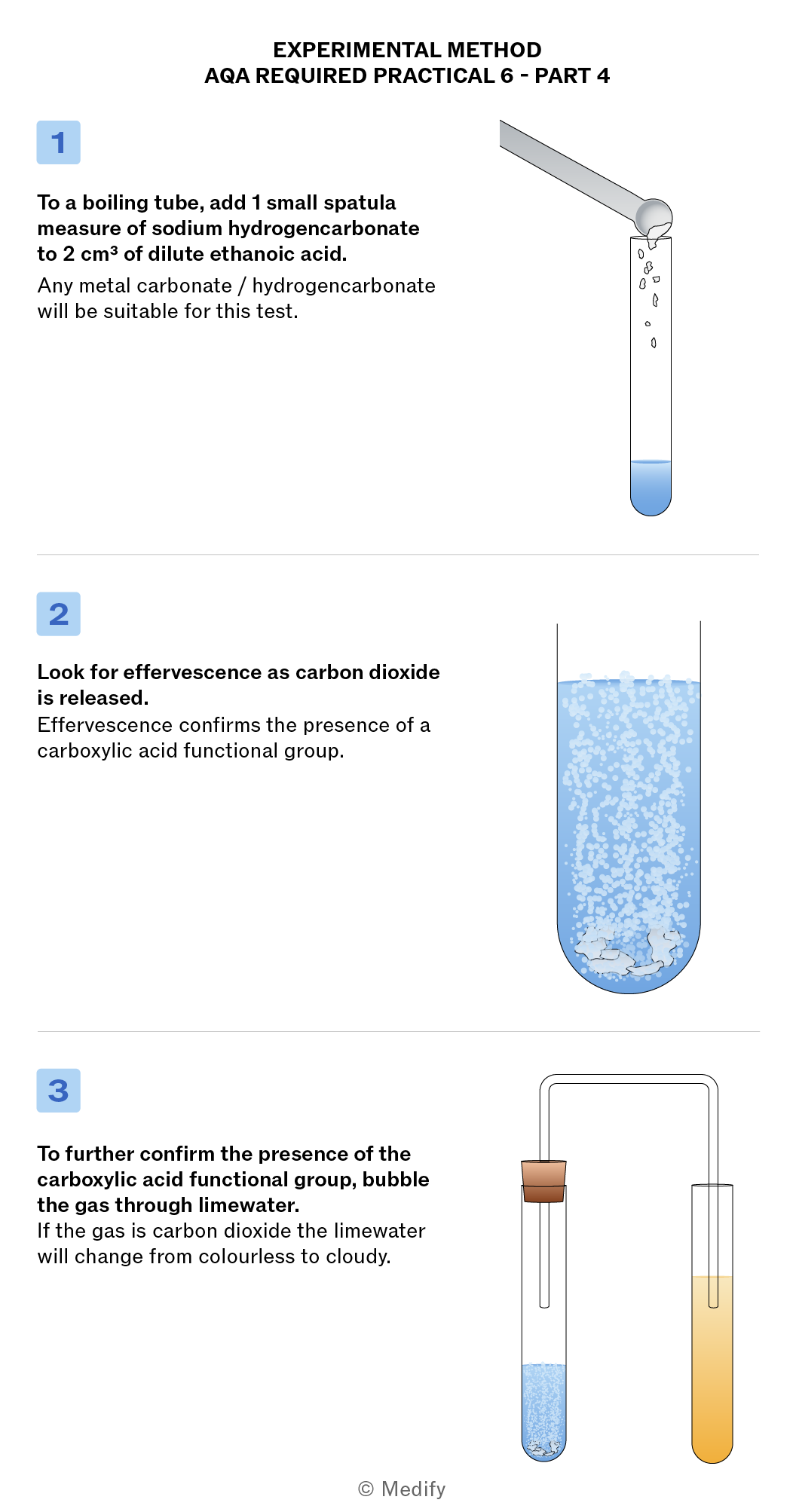
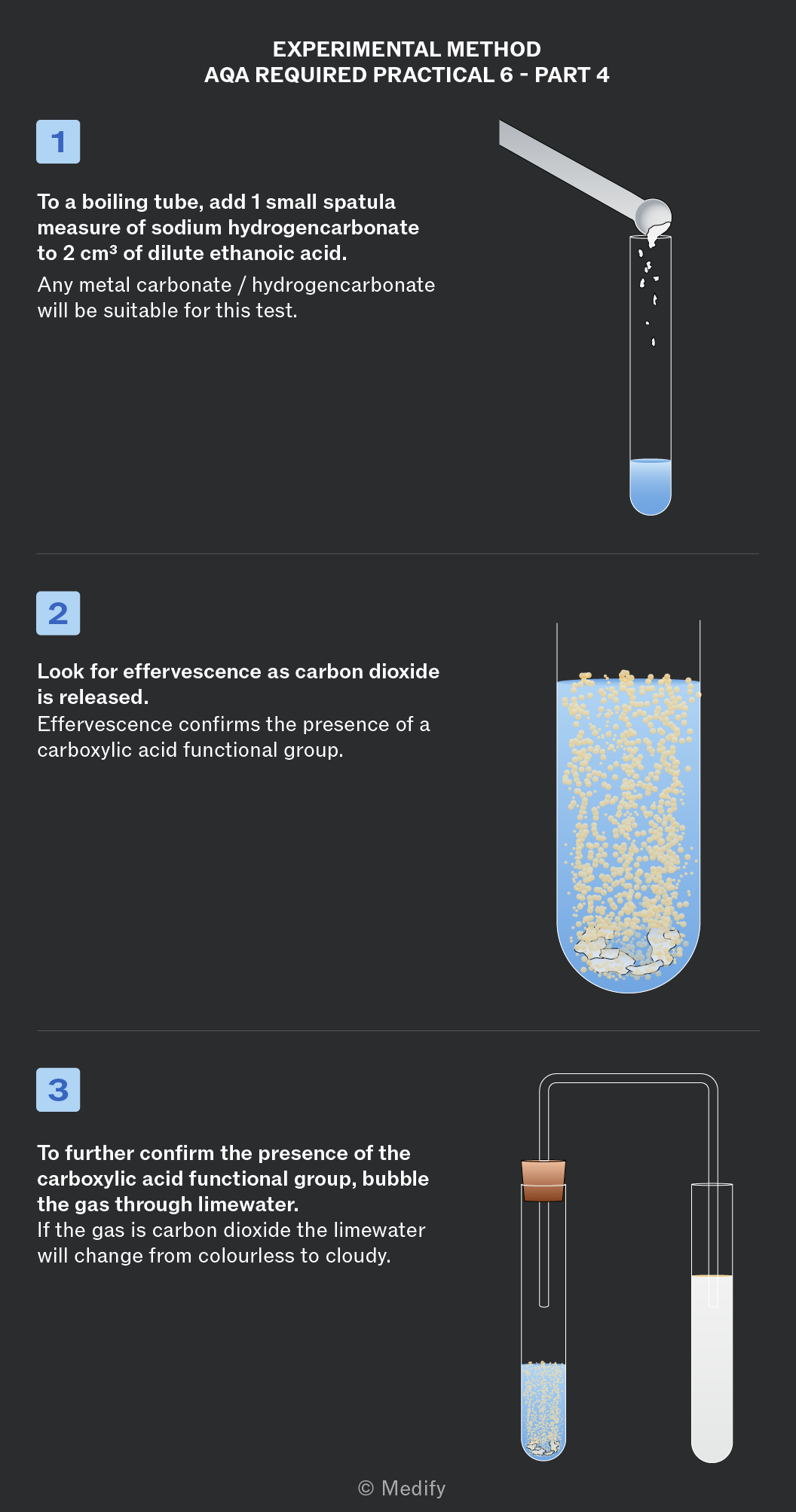
EXPERIMENTAL METHOD AQA REQUIRED PRACTICAL 6 - PART 4  1 To a boiling tube, add 1 small spatula measure of sodium hydrogencarbonate to 2 cm³ of dilute ethanoic acid. Any metal carbonate / hydrogen carbonate will be suitable for this test.  2 Look for effervescence as carbon dioxide is released. Effervescence confirms the presence of a carboxylic acid functional group.  3 To further confirm the presence of the carboxylic acid functional group, bubble the gas through limewater. If the gas is carbon dioxide the limewater will change from colourless to cloudy.

Note that any acidic compound will produce this result so the test is only definitive if the carbonyl group is already confirmed.

Add to favourites

Experimental method for AQA Required Practical 6: Tests for organic functional groups

Part 5 Testing bromoethane for the halogen functional group
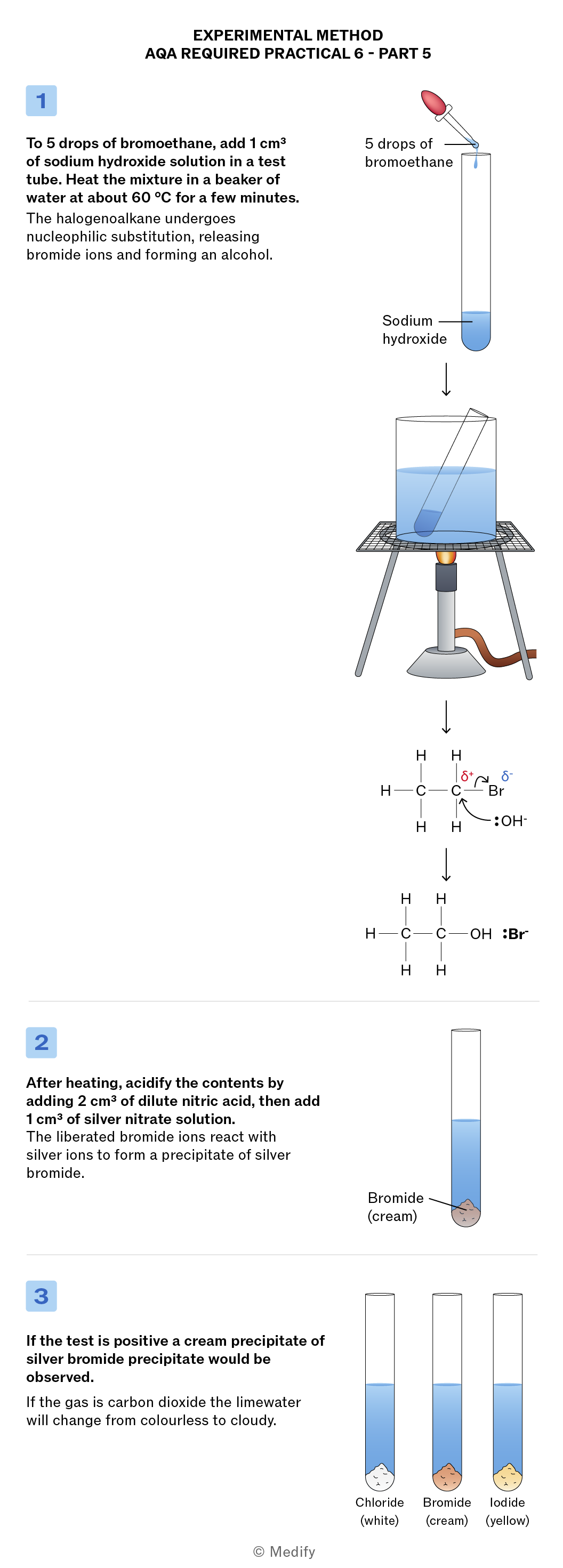
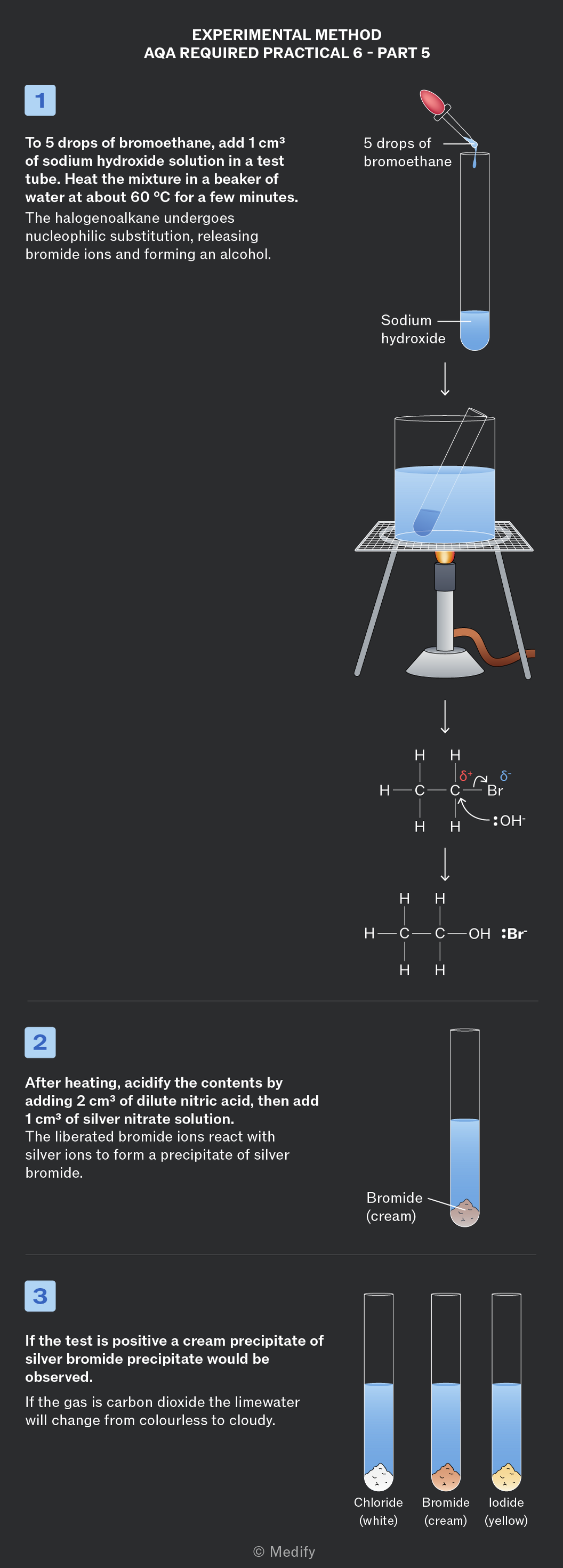
EXPERIMENTAL METHOD AQA REQUIRED PRACTICAL 6 - PART 5. Step 1: To 5 drops of bromoethane, add 1 cm³ of sodium hydroxide solution in a test tube. Heat the mixture in a beaker of water at about 60 ºC for a few minutes. The haloalkane undergoes nucleophilic substitution, releasing bromide ions and forming an alcohol. Step 2: After heating, acidify the contents by adding 2 cm³ of dilute nitric acid, then add 1 cm³ of silver nitrate solution. The liberated bromide ions react with silver ions to form a precipitate of silver bromide. Step 3: If the test is positive a cream precipitate of silver bromide precipitate would be observed. If the gas is carbon dioxide the limewater will change from colourless to cloudy. Chloride (white), Bromide (cream), Iodide (yellow).
Add to favourites

Be sure to heat the test tubes carefully when the contents are temperature sensitive.
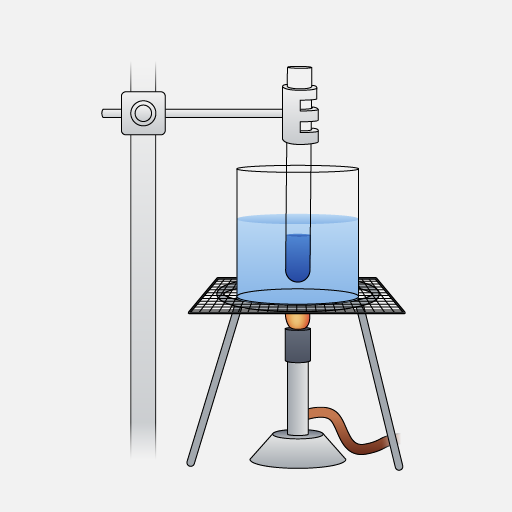
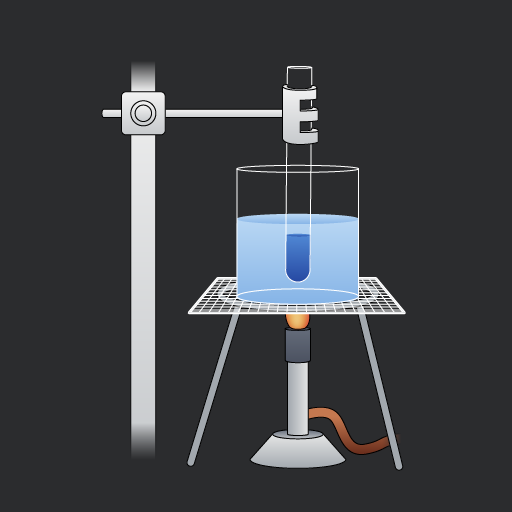
A laboratory setup featuring a beaker filled with blue liquid, supported by a wire gauze on a stand. A thermometer is inserted into the beaker, and the setup is heated by a Bunsen burner with a gas hose.
Do

Use a water bath for heating test tubes. A water bath provides even, controlled heating, reducing the risk of glassware breaking or the contents overheating. Maximum temperature is capped at the boiling temperature of water.

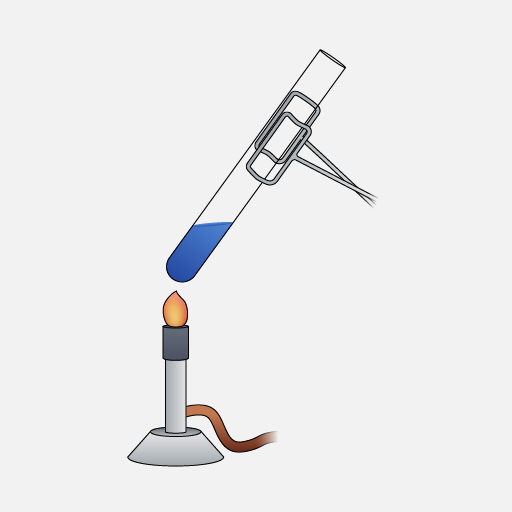
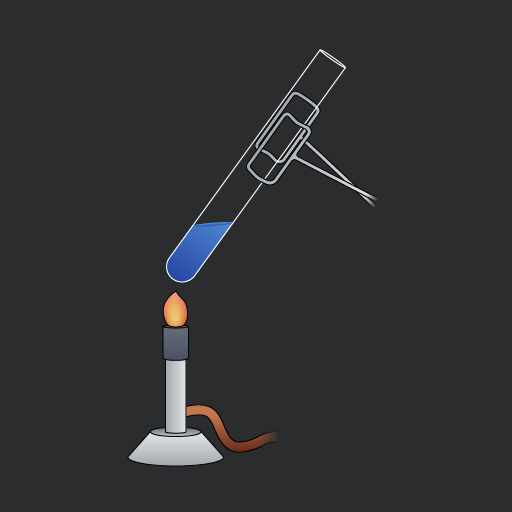
A test tube with blue liquid is being heated over a flame from a Bunsen burner.
Don't

Heat test tubes directly over a Bunsen burner. Direct flame can cause rapid temperature changes.

Add to favourites

Make sure to handle the bromine water safely.
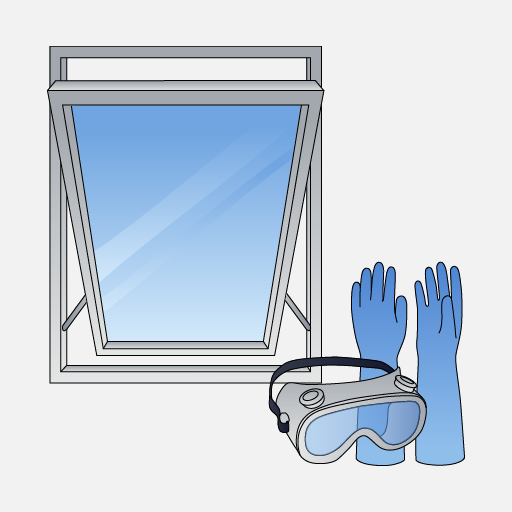
A window with a blue sky reflection, accompanied by a pair of blue gloves and a protective goggles.
Do

Ensure good ventilation, and use gloves and eye protection when working with bromine water. Bromine is toxic and corrosive, and its fumes can be harmful if inhaled. Proper ventilation reduces the risk of exposure.

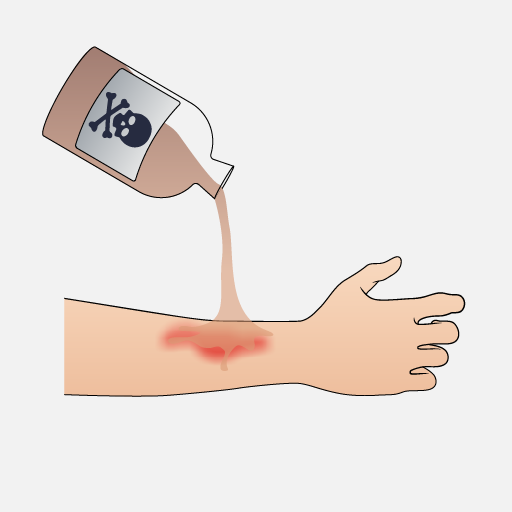
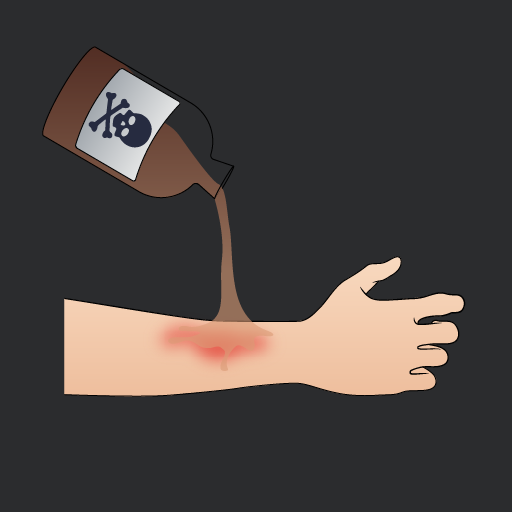
A hand is shown with a wound on the wrist, and a bottle labeled with a skull and crossbones is pouring a brown liquid onto the wound.
Don't

Let bromine water come into contact with skin or eyes, or use in enclosed spaces. Bromine can cause severe irritation and burns. Its fumes are harmful if inhaled.

Add to favourites

The tables below show the positive test results for all functional groups present in Required practical 6. These are the observations that you should have noted for each.

Add to favourites

Below is a summary of the tests for functional groups and their observations from Required Practical 6:
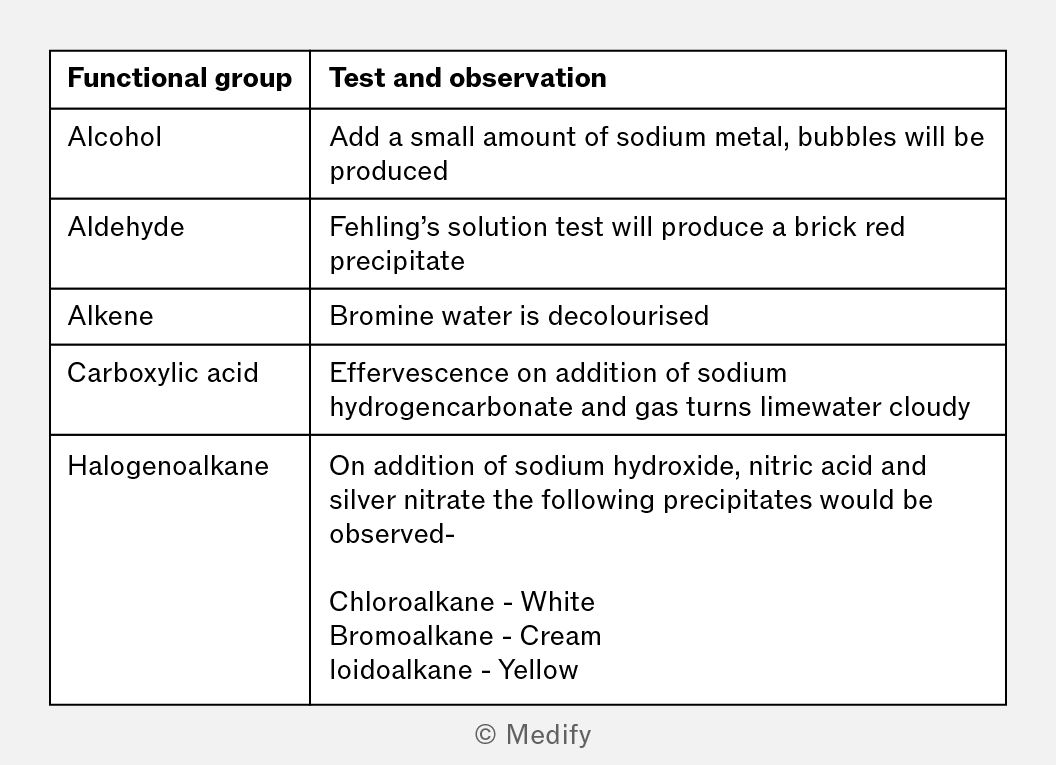
A table with two columns titled 'Functional group' and 'Test and observation.' Rows include: 1. Alcohol: 'Add a small amount of sodium metal, bubbles will be produced.' 2. Aldehyde: 'Fehling’s solution test will produce a brick red precipitate.' 3. Alkene: 'Bromine water is decolourised.' 4. Carboxylic acid: 'Effervescence on addition of sodium hydrogencarbonate and gas turns limewater cloudy.' 5. Halogenoalkane: 'On addition of sodium hydroxide, nitric acid and silver nitrate the following precipitates would be observed - Chloroalkane - White, Bromoalkane - Cream, Iodoalkane - Yellow.'
Add to favourites