RP8 - Measuring the EMF of an electrochemical cell
On this page
In AQA Required Practical 8: Measuring the EMF of an electrochemical cell, how electrochemical cells generate voltage due to differences in the tendency of metals to lose electrons is investigated.
In Part 1, a standard electrochemical cell is constructed using copper and zinc half-cells to measure the EMF from the redox reaction:
Cell notation:
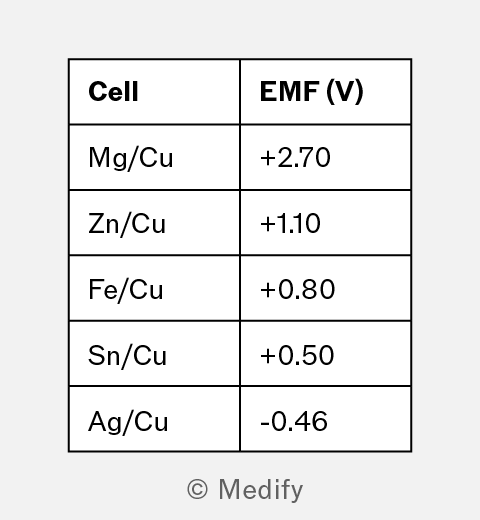
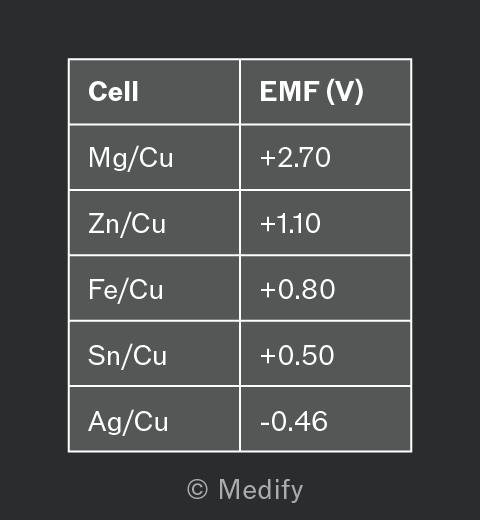
In Part 2, simple cells are built by pressing various metals against sodium-chloride-soaked filter paper on copper. The voltmeter measures EMF, revealing each metal’s relative ability to act as a reducing agent.
In Required Practical 8: Measuring the EMF of an electrochemical cell, as outlined by AQA, there are several important safety requirements to be aware of (beyond normal lab practice, such as wearing goggles).
- Propanone is highly flammable – keep away from ignition sources and use in a well-ventilated area.
- Copper(II) sulfate and zinc sulfate are irritants – avoid skin contact and wash spills with water.
- Dispose of all metal solutions properly – especially copper(II) sulfate, which is harmful to aquatic life.
Experimental method for AQA Required Practical 8: Measuring the EMF of an electrochemical cell
Part 1 – construction of a copper and zinc standard electrochemical cell.
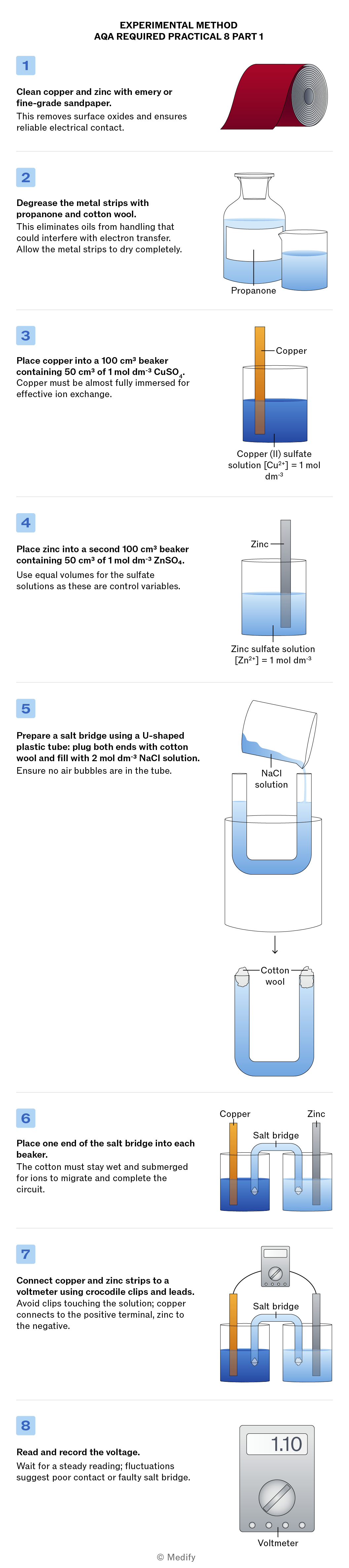
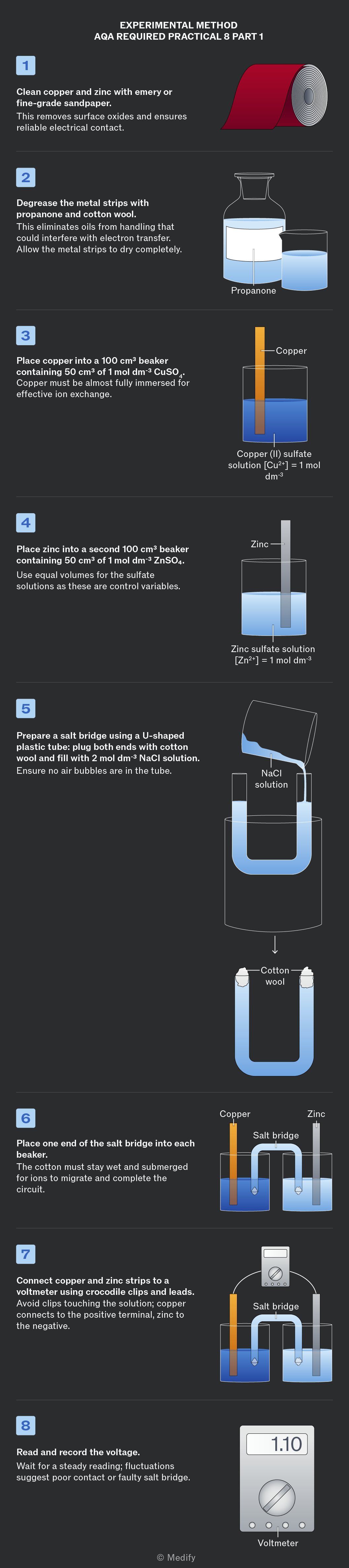
Experimental method for AQA Required Practical 8: Measuring the EMF of an electrochemical cell
Part 2 – comparing electrode potentials of different metals using a simple cell.
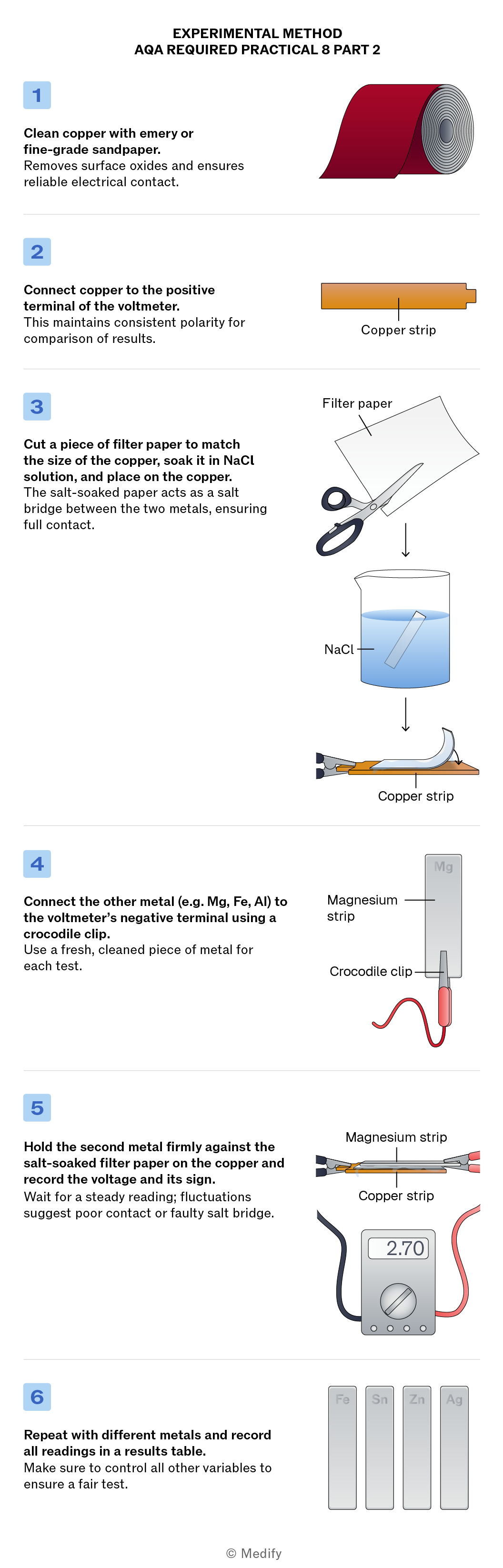
To ensure clean and reactive metal surfaces when preparing an electrode for accurate voltage readings.




It is important to have strong connections between half cells.
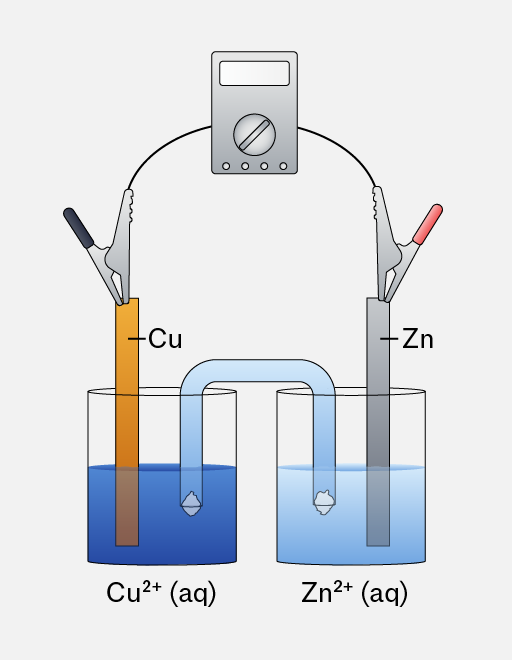
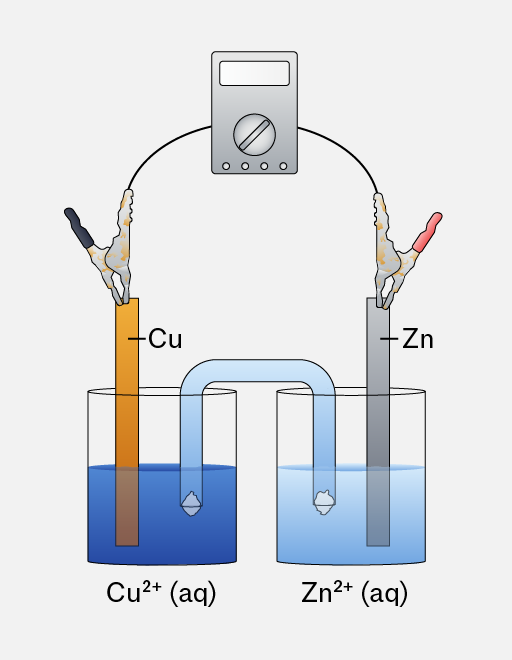
In Part 1 of RP8, setting up a standard cell:
- The voltmeter reading reflects the EMF of the cell:
- A positive EMF confirms a spontaneous reaction.
- Compare the EMF value of the cell you have produced with the literature value to gauge the quality of the set-up
In Part 2 of RP8, comparing electrode potentials of different metals:
- A positive voltage means the test metal is more reactive than copper – it more readily loses electrons (a stronger reducing agent).
- A negative voltage means the test metal is less reactive than copper – it more readily gains electrons (a weaker reducing agent).
- The greater the magnitude of the voltage, the greater the difference in the tendency of the two metals to be oxidised/reduced.
- You can rank the metals based on the sign and size of the EMF to construct a mini electrochemical series.