
CP 13b - Use a clock reaction to determine a rate equation
On this page
In Edexcel Core practical 13b: Investigating a ‘clock reaction’ (Harcourt–Esson, iodine clock) you will use a clock reaction to determine the rate equation for a chemical reaction between potassium iodide and sodium peroxodisulfate .
This will be achieved by measuring the time taken for a visible colour change to occur (from colourless to blue) and varying the concentrations of reactants.
In Edexcel core practical 13b: Use a clock reaction to determine a rate equation, normal lab practice such as wearing goggles is adequate when carrying out the practical steps.
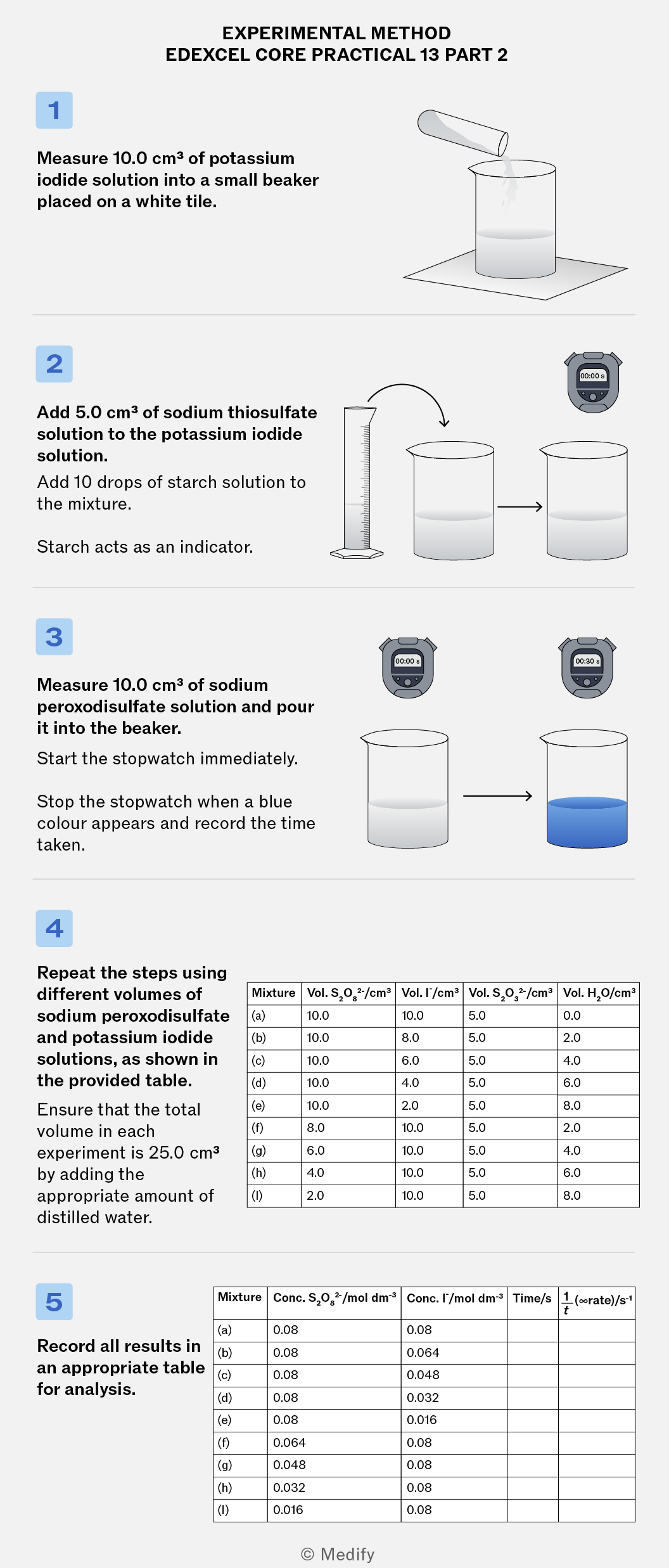
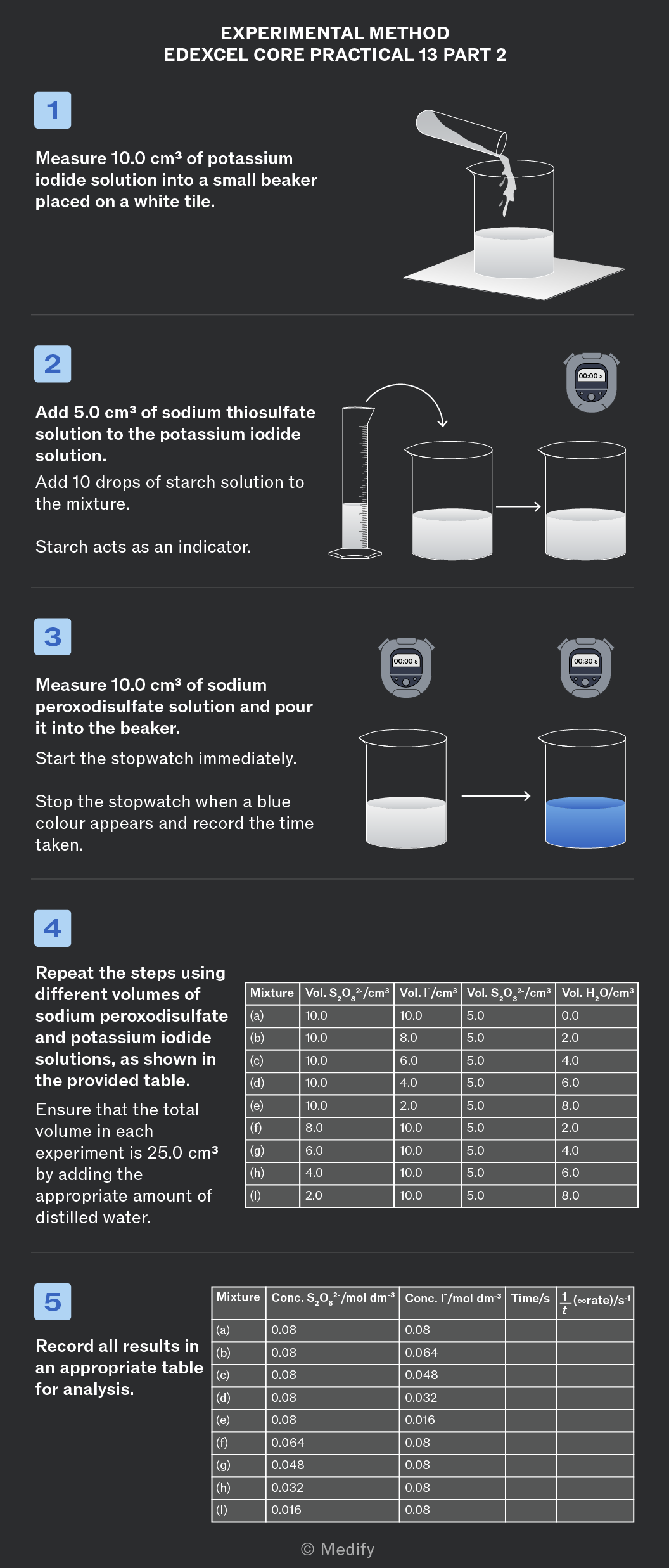
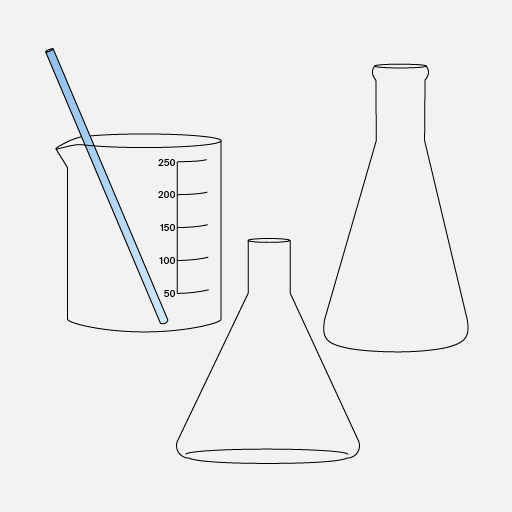
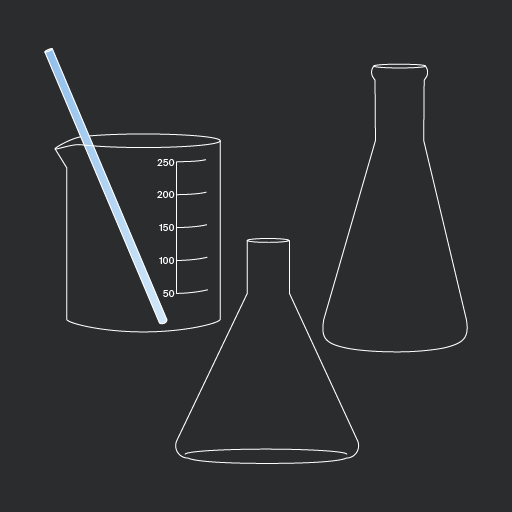
Clean, dry glassware should always be used in any experiment where concentration is important.

Accurately measuring time is essential in rate investigations.



From the results collected, the table below can be calculated.
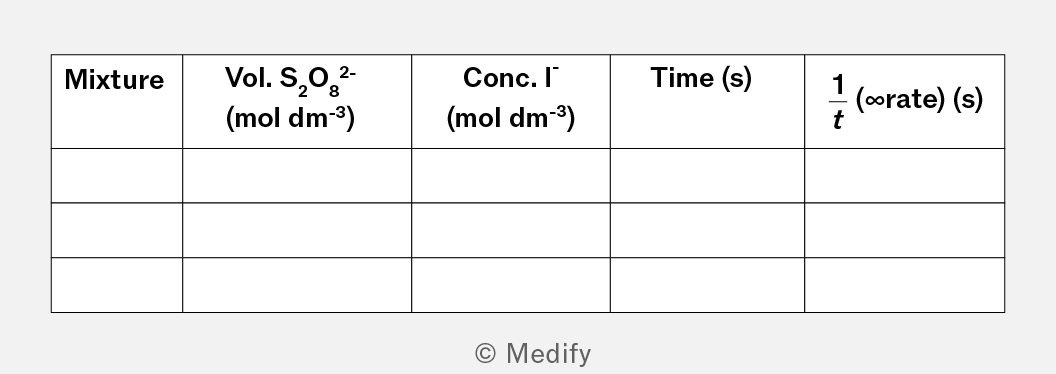
After completing the table above, plot a graph of rate against concentration, where concentration of iodide ions has changed. Using the shape of the graph, deduce the order of the reaction with respect to iodide ions.
Another graph can be plotted of rate against concentration, this time using the values where peroxodisulfate ion concentration has been changed. Using the shape of the graph, deduce the order of the reaction with respect to peroxodisulfate ions.