Practical chemistry for exams›CP 8 - To determine the enthalpy change of a reaction using Hess’s Law

CP 8 - To determine the enthalpy change of a reaction using Hess’s Law

An overview of CP 8 - To determine the enthalpy change of a reaction using Hess’s Law
4 min

In Edexcel Core Practical 8: To determine the enthalpy change of a reaction using Hess’s Law, the enthalpy changes of reactions between potassium carbonate and potassium hydrogen carbonate with hydrochloric acid are determined.

Add to favourites

In Edexcel core practical 8: Calculate the enthalpy change for the thermal decomposition of potassium hydrogencarbonate, there are several important safety requirements to be aware of (beyond normal lab practice such as wearing goggles).

  • 2 mol dm–3 hydrochloric acid and potassium carbonate are both irritants.
Add to favourites
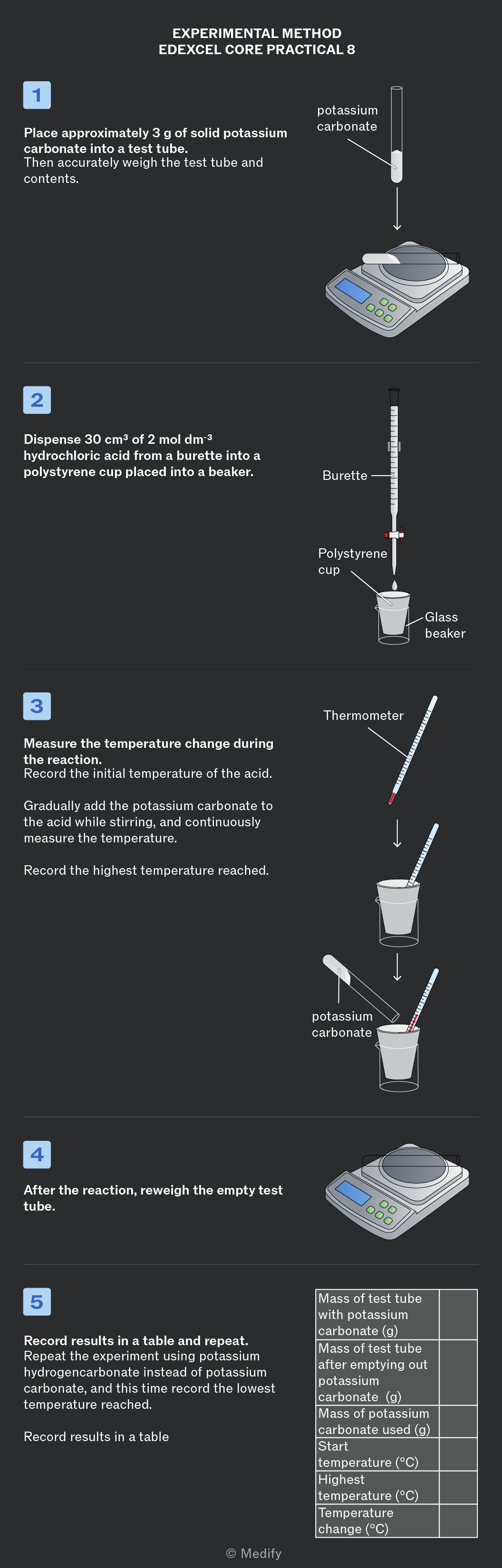
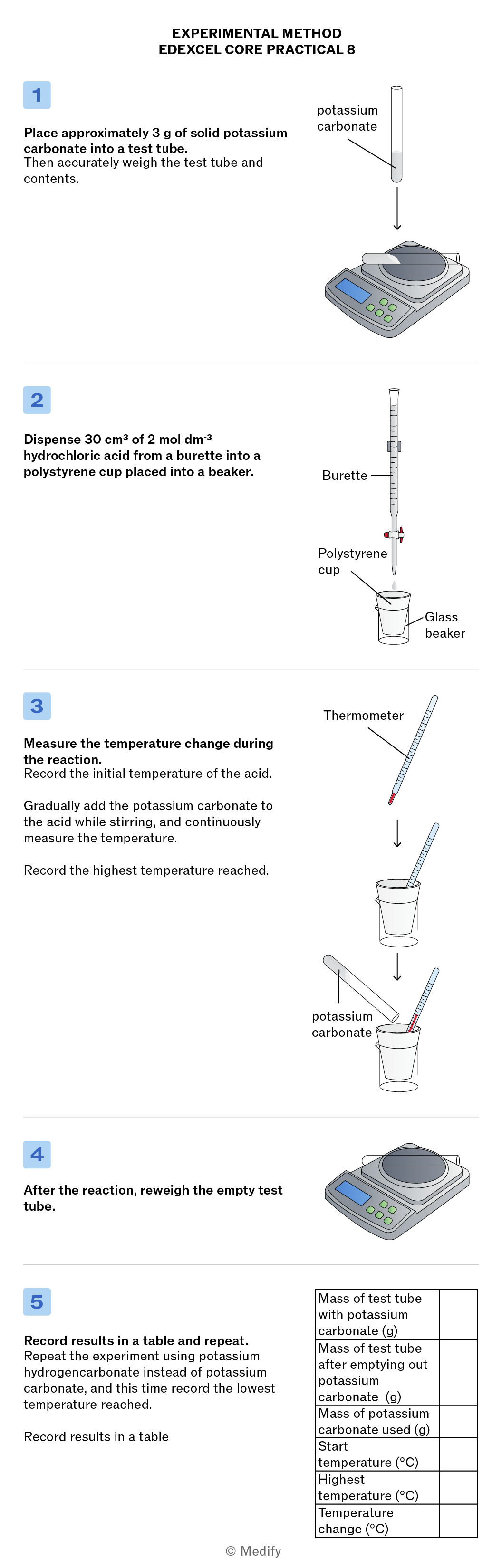
A step-by-step experimental method for Edexcel Core Practical 8 is depicted. Step 1: Shows a test tube labeled 'potassium carbonate' being weighed on a digital scale with instructions to place approximately 3 g of solid potassium carbonate into a test tube and accurately weigh it. Step 2: Illustrates a burette dispensing 30 cm³ of 2 mol/dm³ hydrochloric acid into a polystyrene cup in a glass beaker. Step 3: Displays a thermometer being used to measure temperature change during the reaction, with instructions to add potassium carbonate to the acid while stirring and record the highest temperature reached. Step 4: Shows a test tube being reweighed after the reaction. Step 5: Instructs to record results in a table and repeat the experiment using potassium hydrogencarbonate instead, recording the lowest temperature reached. A table on the right lists columns for mass of test tube with potassium carbonate, mass after emptying, mass of carbonate used, start temperature, highest temperature, and temperature change, all in grams or degrees Celsius.
Add to favourites

The precision of the balance used is critical for ensuring the accuracy of mass measurements and subsequent calculations.
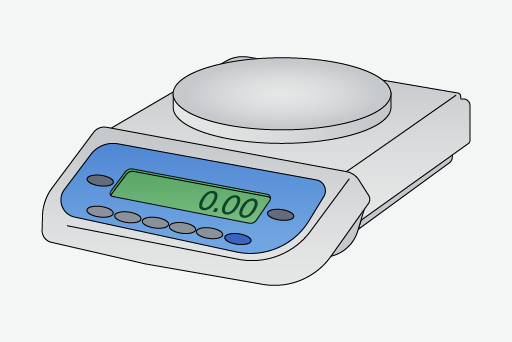
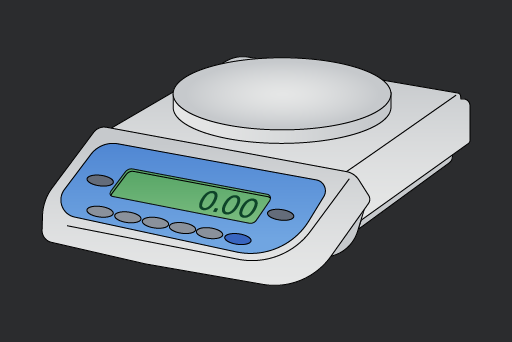
A digital laboratory scale with a circular weighing platform and a blue control panel displaying a reading of 0.00.
Do

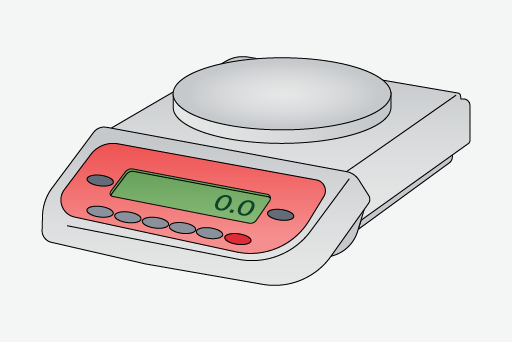
Measure solids and liquids precisely. Ensures accurate mole calculations and enthalpy values. A balance with a resolution of at least two decimal places should be used.

A digital weighing scale with a round platform and a red control panel displaying '0.0' on a green screen.
Don't

Use a balance with a resolution of 1 decimal place or lower.

Add to favourites

The use of a lid and polystyrene cup is critical for minimising heat loss to the surroundings and ensuring accurate temperature measurements.


A simple illustration of a disposable cup with a straw, featuring a light blue straw protruding from the top.
Do

Use a lid and a polystyrene cup. Minimises heat loss to surroundings.

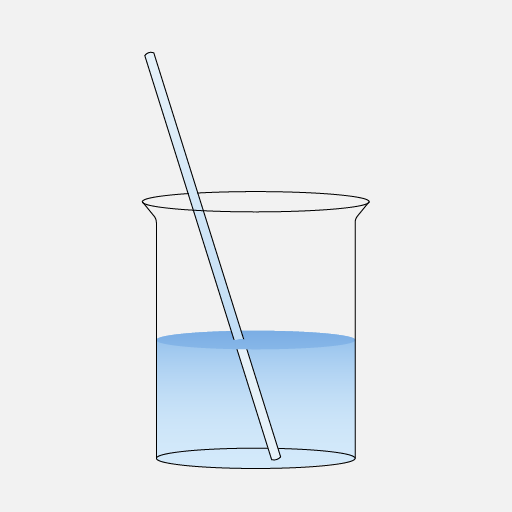
A clear beaker filled with blue liquid, with a stirring rod positioned inside.
Don't

Use a glass beaker and leave the calorimeter uncovered.
This will result in excessive heat loss to the surroundings and inaccurate temperature measurements.

Add to favourites

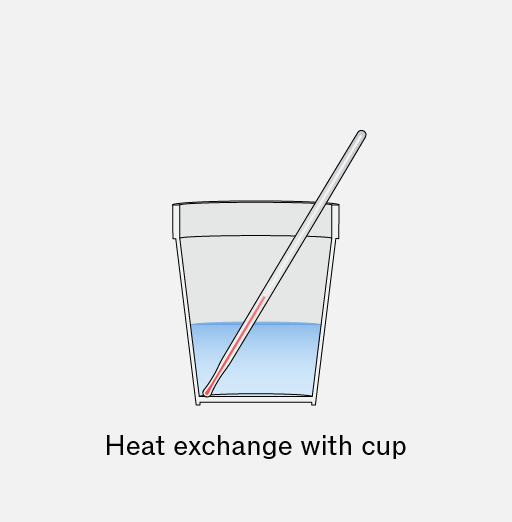
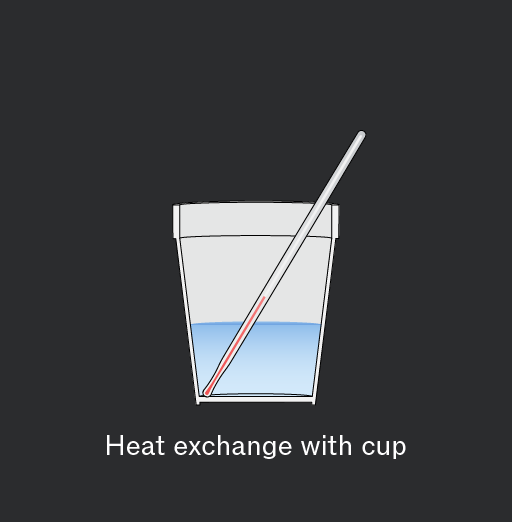
The position of the thermometer in the calorimeter is critical for ensuring accuracy of results.
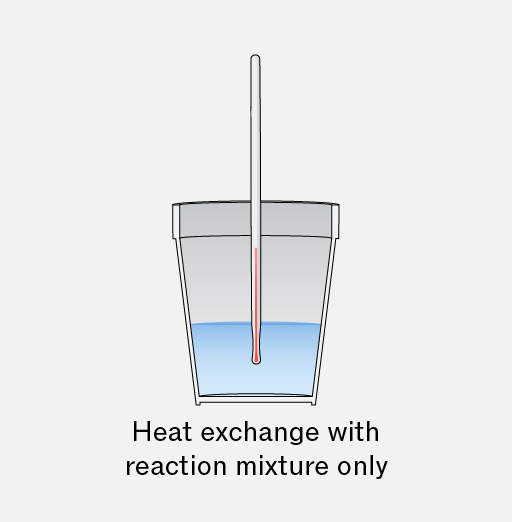
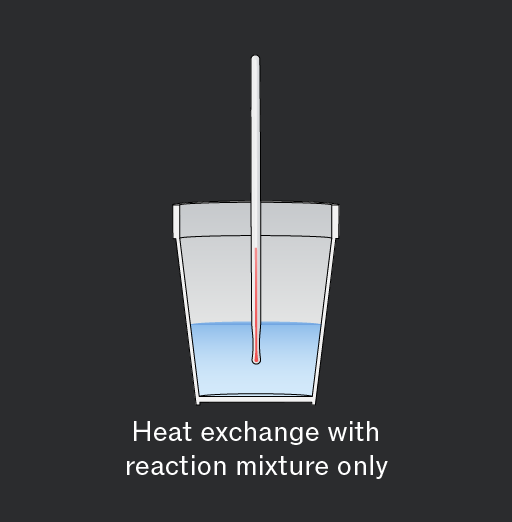
Illustration of a beaker containing a blue liquid with a thermometer inserted, indicating heat exchange with the reaction mixture only.
Do

Position your thermometer so the bulb is fully covered and away from the container walls.

Illustration of a cup with water and a thermometer, demonstrating heat exchange. The thermometer is partially submerged in the blue water, indicating a measurement of temperature.
Don't

Don’t allow the bulb of the thermometer to make contact with the bottom of the container. This will lead to heat transfer with the container by conduction, which will alter the reading and therefore reduce accuracy of your results.

Add to favourites

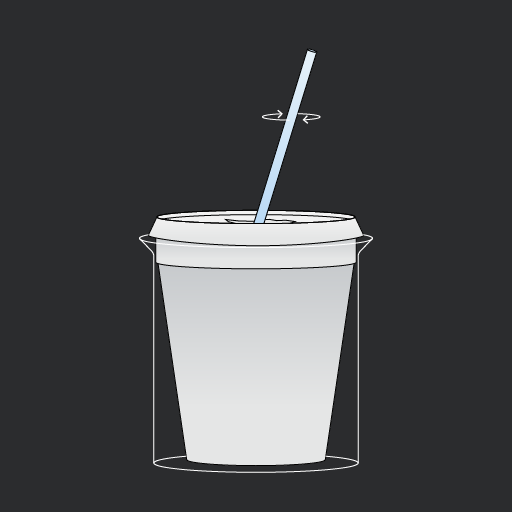
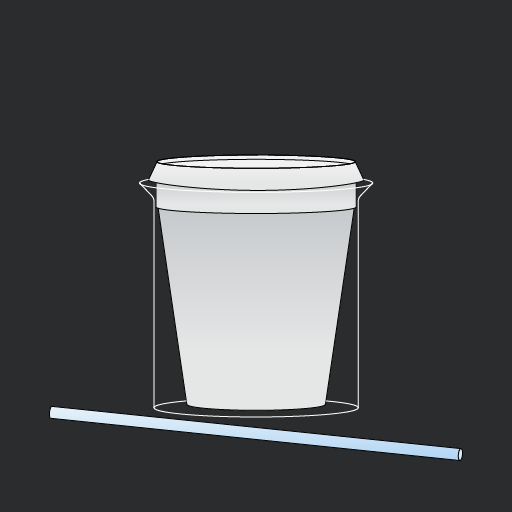
Stirring continuously is critical for ensuring even heat distribution and obtaining precise temperature readings.
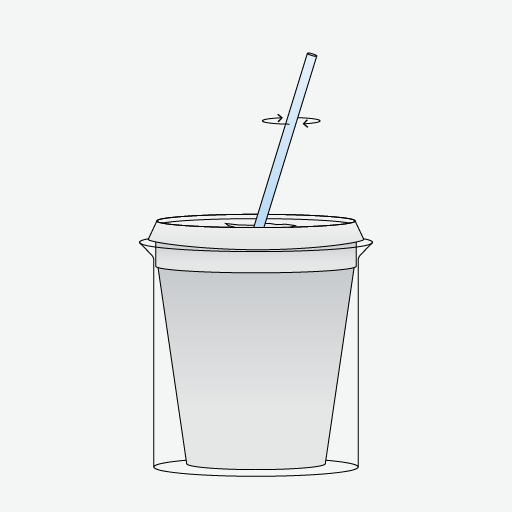
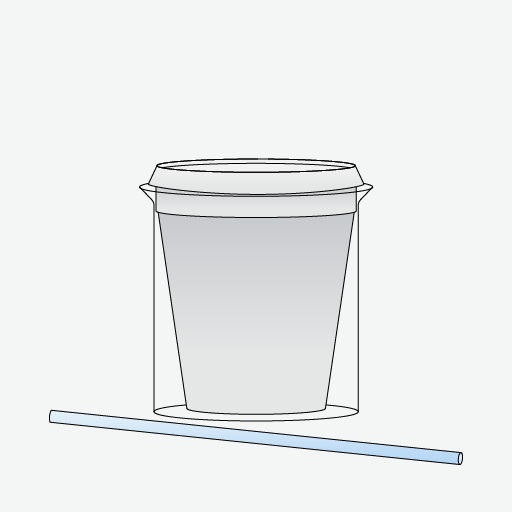
A simple illustration of a disposable cup with a straw inserted, showing a gradient fill from light to dark.
Do

Stir continuously.
Distributes heat evenly for consistent temperature readings.

A simple illustration of a disposable cup with a lid, placed next to a light blue straw.
Don't

Stir inconsistently or stop stirring.
Leads to uneven temperature distribution and inaccurate temperature measurements.

Add to favourites

Repeating measurements is essential for improving the reliability of results, as it helps to reduce the impact of random errors and identify anomalies.
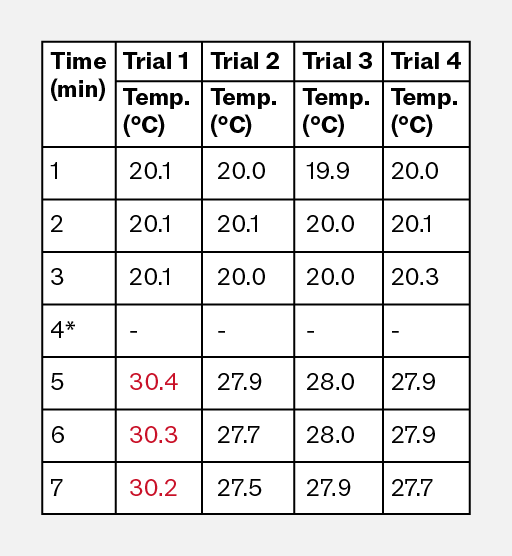
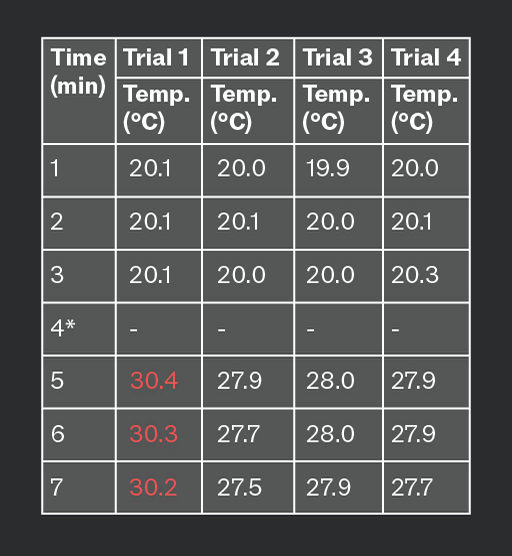
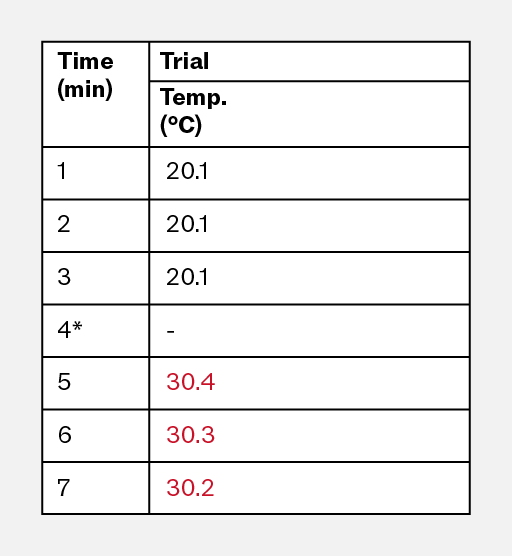
A table displaying temperature readings over time for four trials. The first three trials show consistent temperatures around 20°C for the first three minutes, with a gap in data for trial 4 at minute 4. From minute 5 to 7, temperatures in trials 1 to 4 vary, with trial 1 reaching a maximum of 30.4°C at minute 5.
Do

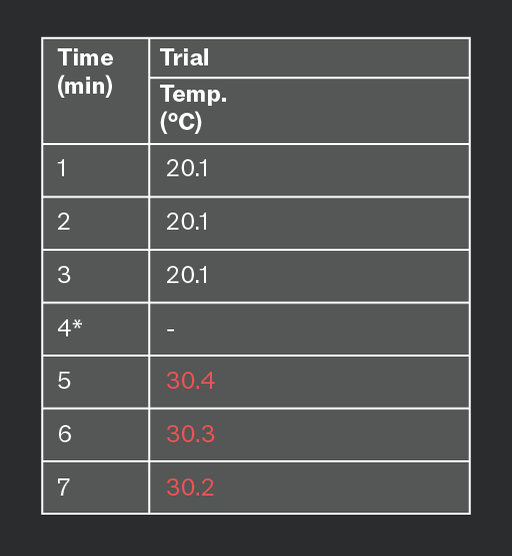
Repeat measurements and calculate the mean.
Improves reliability and reduces the impact of random errors and highlights values to exclude.

A table displaying temperature readings over time in a trial. The first three time points (1, 2, and 3 minutes) show a consistent temperature of 20.1°C. The fourth time point is marked with a dash, indicating no data. Subsequent readings at 5, 6, and 7 minutes show temperatures of 30.4°C, 30.3°C, and 30.2°C, respectively.
Don't

Rely on a single measurement. Increases the risk of anomalies affecting the accuracy of results. Results due to a systematic error will not be spotted.

Add to favourites

The equations for the reactions occurring are:

The moles of can be calculated using the equation:

The moles of the carbonate can then be calculated, using the equation:

Compare with to identify the limiting reagent.

The energy change for each reaction in J can be calculated using the equation:

where:

  • is the energy change
  • is the- mass
  • is the specific heat capacity
  • is the change in temperature.

The enthalpy change per mole, can be calculated by using the equation:

Convert this value to kJ mol-1 and ensure the correct sign is added.

These values can then be inputted into a Hess cycle to determine the enthalpy change for the decomposition of potassium hydrogen carbonate:
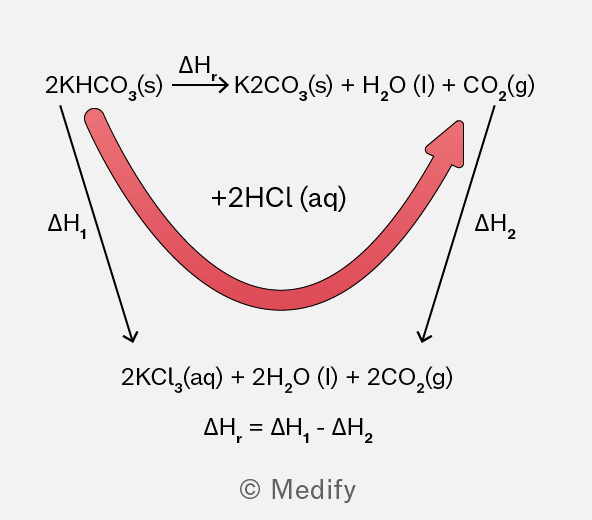
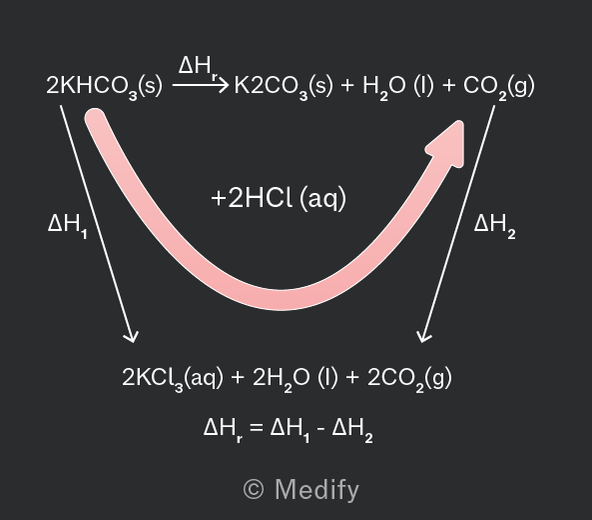
The image depicts a chemical reaction enthalpy diagram. At the top left, the reaction starts with '2KHCO3(s)' and an arrow labeled 'ΔH' points to the right towards 'K2CO3(s) + H2O(l) + CO2(g)'. Below the arrow, a red curved arrow labeled '+2HCl(aq)' points downwards and then upwards, forming a U-shape. On the left of the U-shape, a label 'ΔH1' points downward, and on the right, a label 'ΔH2' points downward. At the bottom of the U-shape, the products are '2KCl3(aq) + 2H2O(l) + 2CO2(g)'. Below this, an equation is shown: 'ΔHr = ΔH1 - ΔH2'.
Add to favourites