Practical chemistry for exams›CP 5 - The oxidation of ethanol

CP 5 - The oxidation of ethanol

An overview of CP 5 - The oxidation of ethanol
2 min

In Edexcel Core Practical 5: The oxidation of ethanol, potassium dichromate (oxidising agent) is used to oxidise ethanol.

The reaction is carried out under reflux, where the ethanol is first oxidised to ethanal. Under continued heating, ethanal is further oxidised to ethanoic acid. The reaction mixture is then distilled to obtain pure ethanoic acid.

The equations for each stage of the reaction are below:

Add to favourites

In Edexcel core practical 5: Investigate the oxidation of ethanol, there are several important safety requirements to be aware of (beyond normal lab practice such as wearing goggles).

  • Ethanol is flammable.
  • Acidified sodium dichromate is both corrosive and a carcinogen – wear chemical-resistant gloves.
Add to favourites

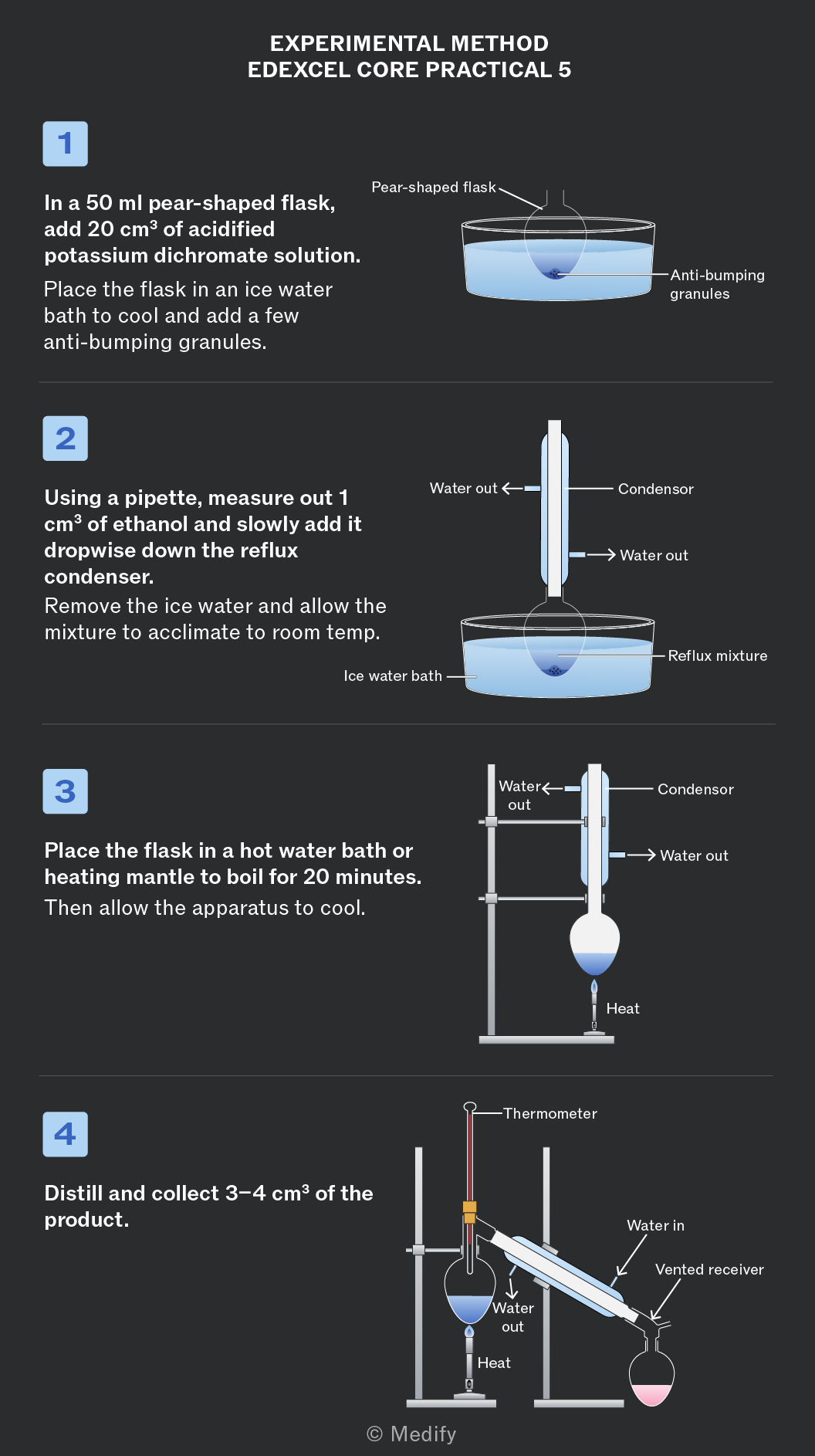
Experimental method for Edexcel Chemistry Core Practical 5
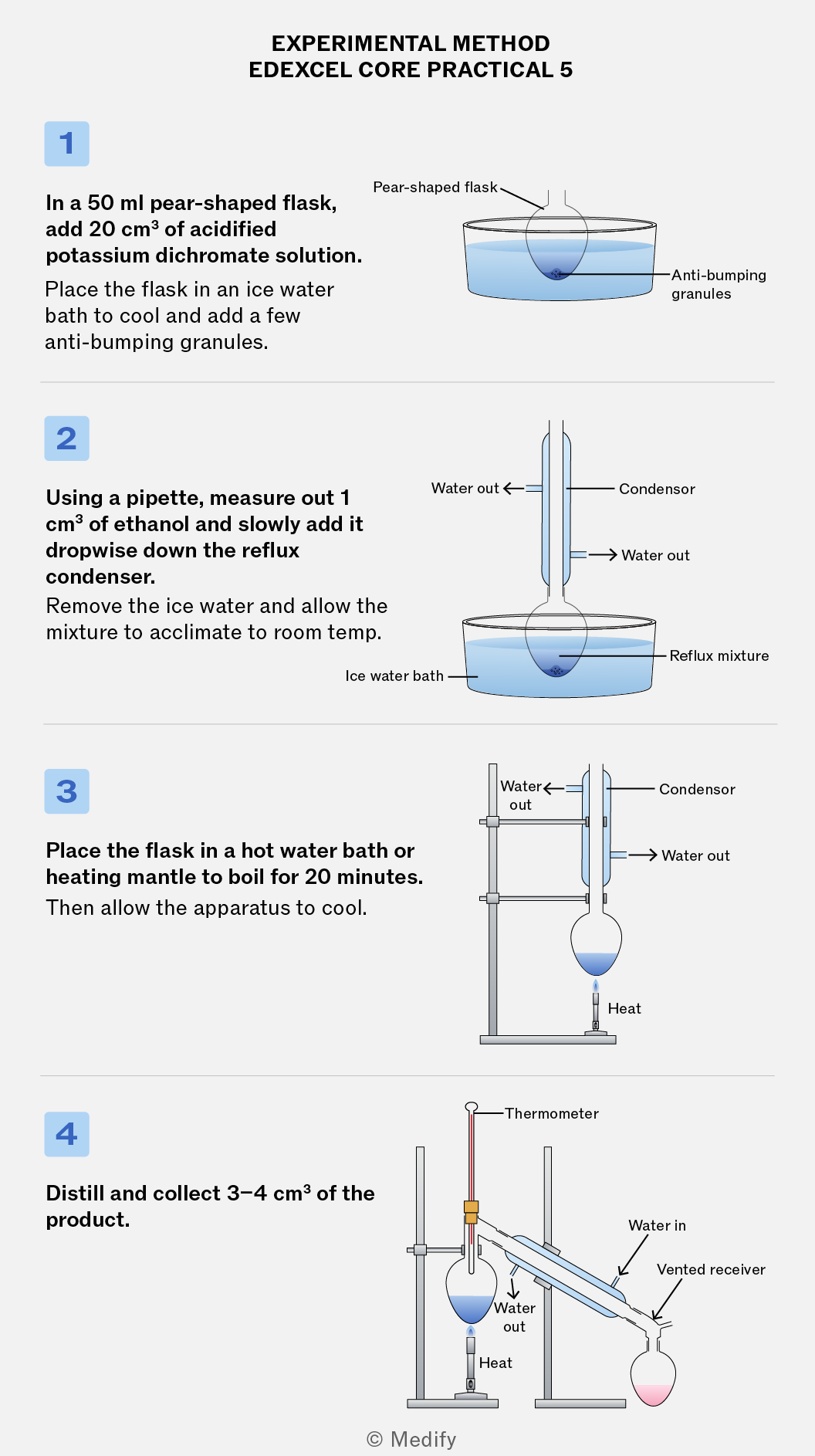
A four-step experimental method for an Edexcel Core Practical. Step 1: In a 50 ml pear-shaped flask, add 20 cm³ of acidified potassium dichromate solution. The flask is placed in an ice water bath with anti-bumping granules. Step 2: Using a pipette, measure out 1 cm³ of ethanol and add it dropwise down the reflux condenser. Remove the ice water and allow the mixture to acclimate to room temperature. Step 3: Place the flask in a hot water bath or heating mantle to boil for 20 minutes, then allow it to cool. Step 4: Distill and collect 3–4 cm³ of the product. The diagram includes labels such as 'Pear-shaped flask', 'Anti-bumping granules', 'Reflux mixture', 'Condenser', 'Water out', 'Ice water bath', 'Heat', 'Thermometer', 'Vented receiver', 'Water in'.
Add to favourites

The distillation process requires careful setup to avoid loss of product or accidents.
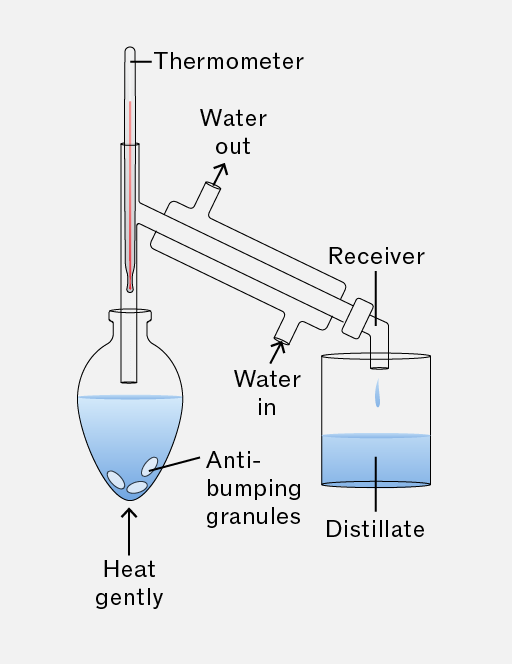
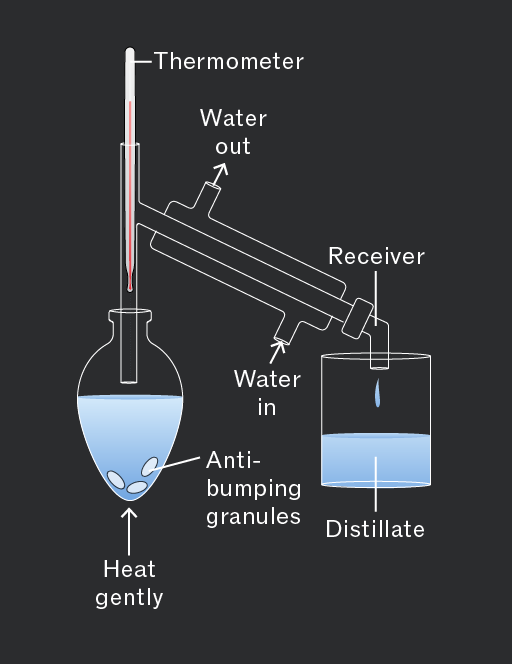
An illustration of a distillation apparatus showing a thermometer, water out, receiver, water in, anti-bumping granules, and distillate. The flask is labeled to heat gently.
Do

Use anti-bumping granules and heat the mixture gently during distillation.

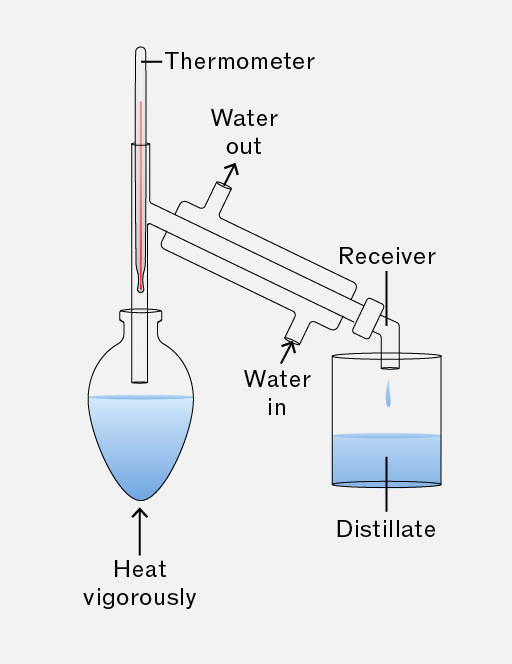
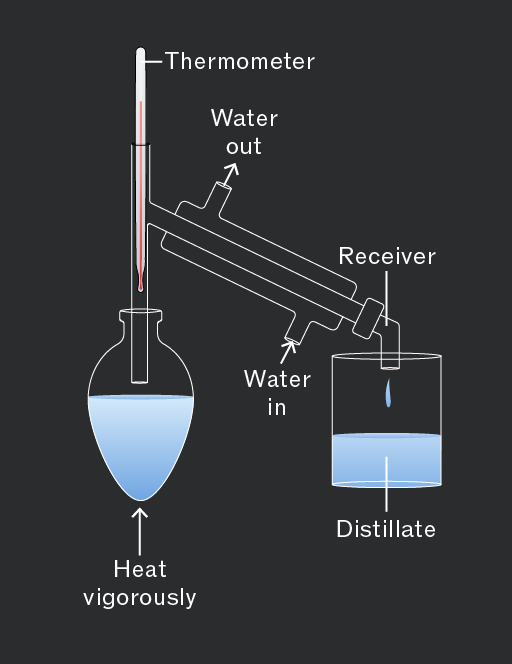
A diagram illustrating a distillation setup. It includes a thermometer, a flask labeled 'Heat vigorously', a receiver, and arrows indicating 'Water in' and 'Water out'. The flask contains blue liquid, and the receiver is labeled 'Distillate'.
Don't

Allow the mixture to boil violently or heat it without anti-bumping granules – this can cause dangerous splashing or bumping.

Add to favourites

Following the oxidation of ethanol, it is possible to test the product further.

The pH can be tested using universal indicator paper: in the presence of carboxylic acid, it will turn orange. This represents the formation of the weak acid.

On the addition of calcium carbonate to the distillate, effervescence will be observed.

There will be no change when the distillate is warmed with Fehling’s solution.

These observations indicate that the product is ethanoic acid.

Add to favourites