
CP 16 - The preparation of aspirin
On this page
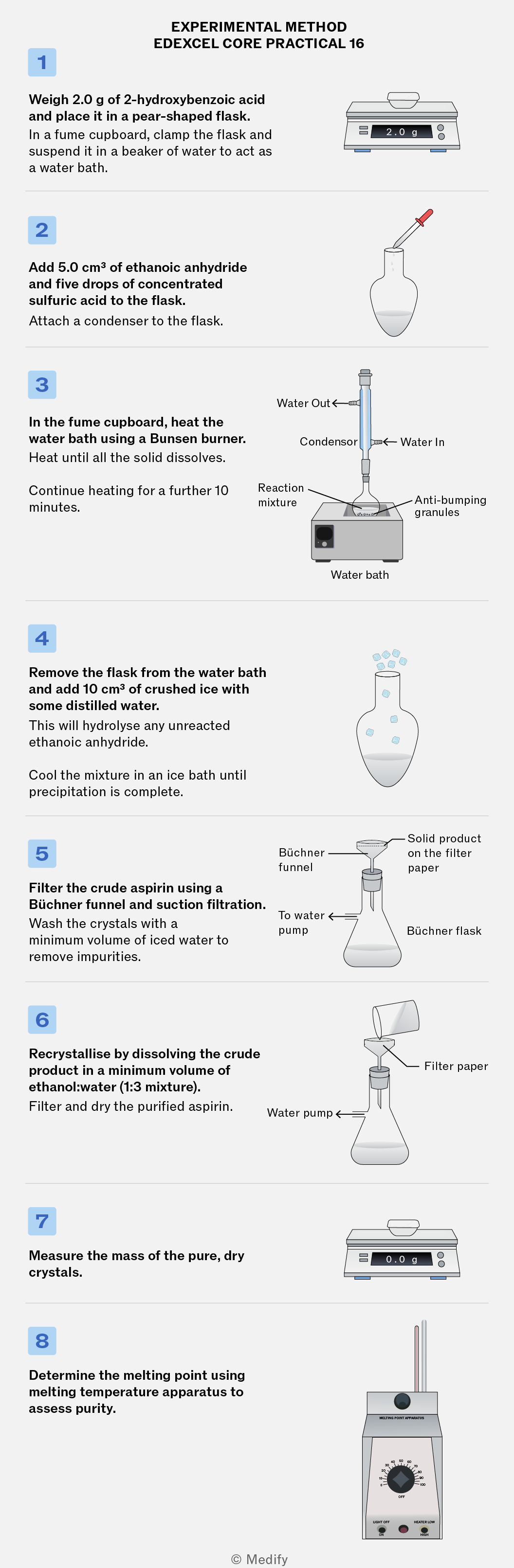
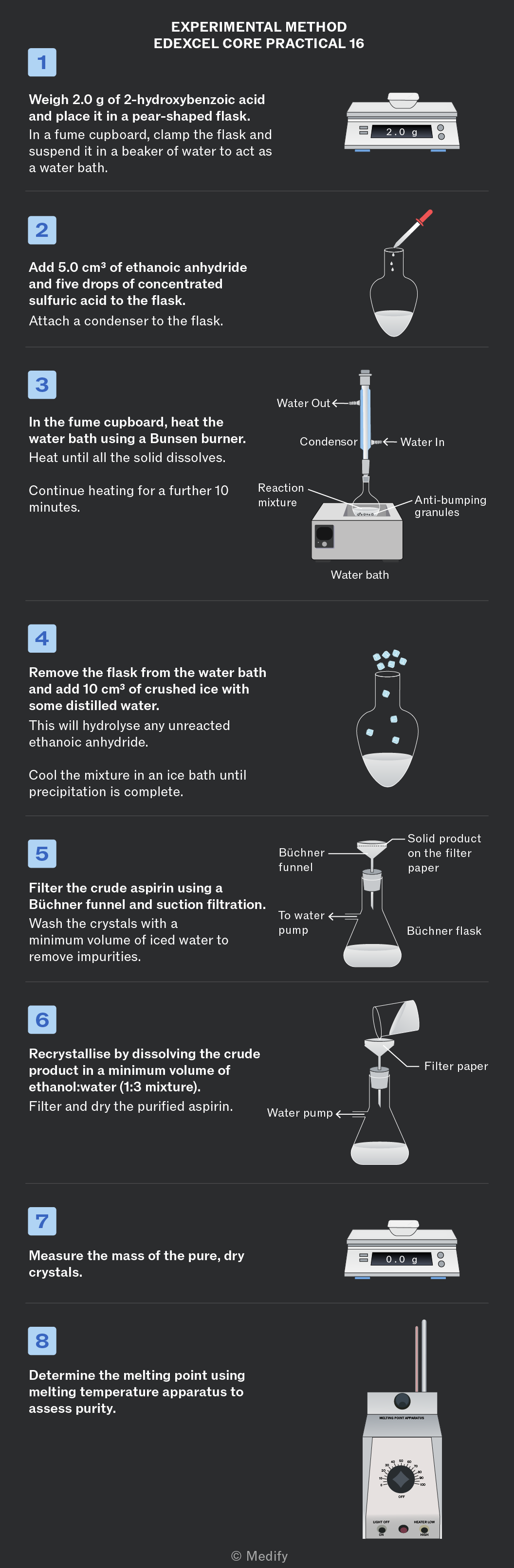
In Edexcel Core Practical 16: The preparation of aspirin, aspirin (acetylsalicylic acid) is produced by reacting salicylic acid with acetic anhydride in the presence of sulfuric acid as a catalyst.
The reaction produces aspirin and acetic acid as a waste product, after synthesising the aspirin, purification steps and testing of purity are completed.
In Edexcel core practical 16: Synthesise aspirin from 2-hydroxybenzoic acid, there are several important safety requirements to be aware of (beyond normal lab practice such as wearing goggles).
- Wear a lab coat.
- Perform the experiment in a well-ventilated room.
- Wear heat-protective gloves when handling hot equipment.
- Ethanoic anhydride and concentrated sulfuric acid are corrosive.
- 2-hydroxybenzoic acid is harmful.
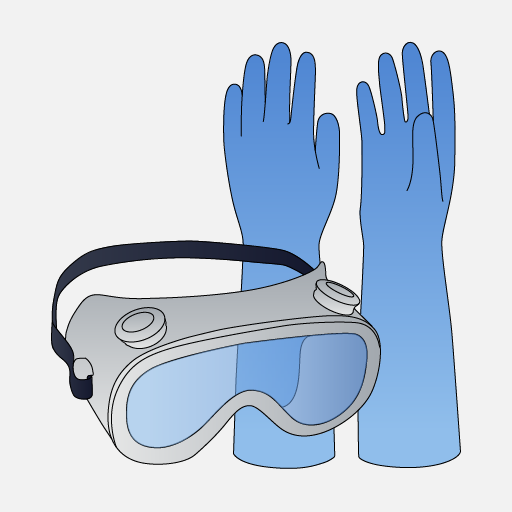
Wearing the appropriate personal protective equipment is essential to avoid direct contact with harmful chemicals and to ensure safety throughout the experiment.



It is crucial to use clean and dry glassware when performing analytical tests.



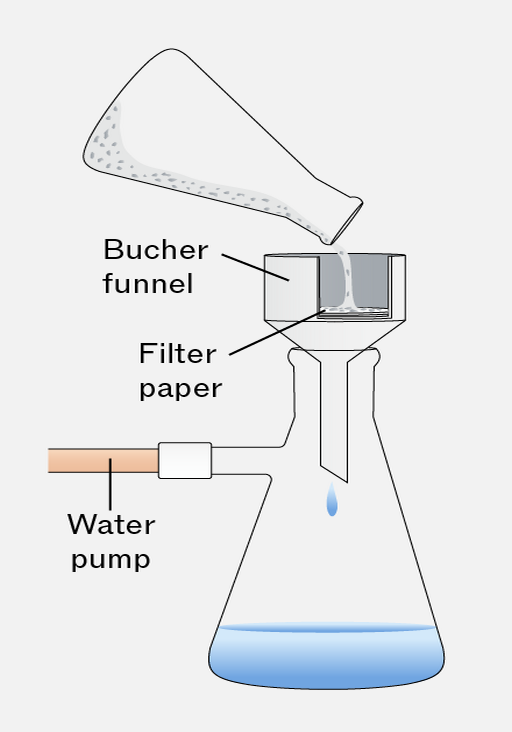
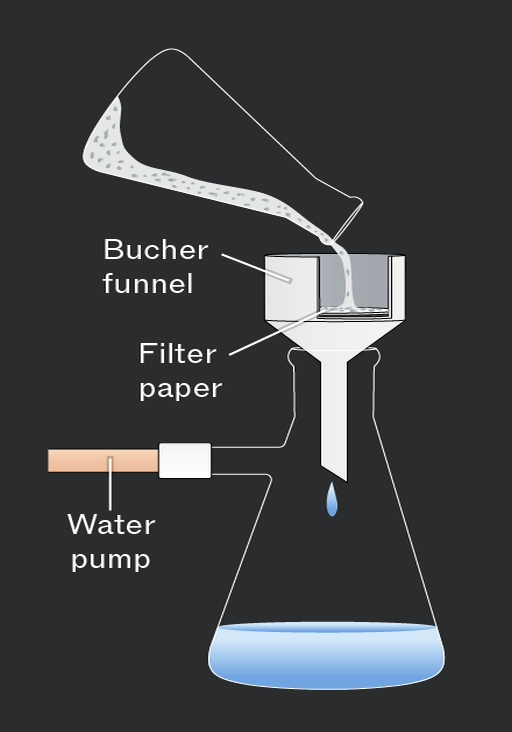
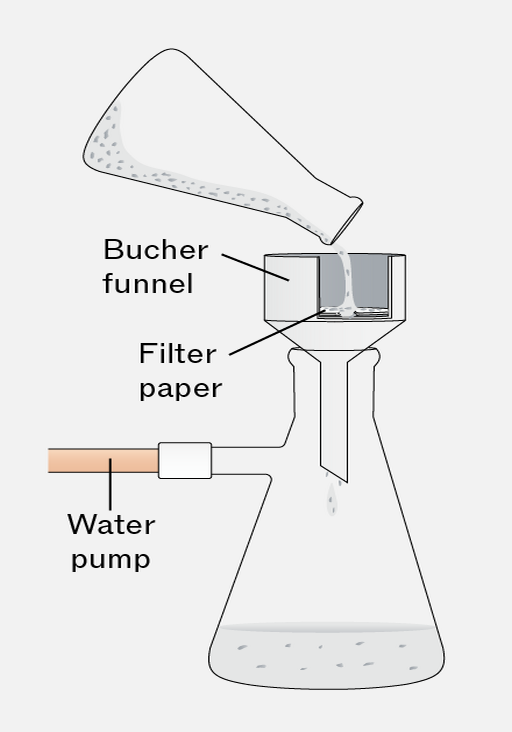
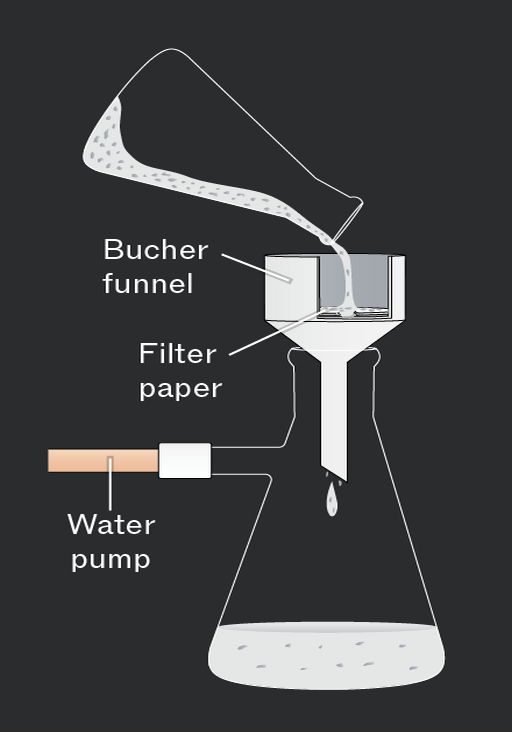
Take care when filtering the aspirin product under reduced pressure.
Calculate the relative molecular masses of 2-hydroxybenzoic acid and aspirin.
Calculate the moles of 2-hydroxybenzoic acid then calculate the moles of aspirin. The stoichiometric ratio is 1:1.
Theoretical mass can be calculated using:
Calculate the % yield by using your mass obtained as the actual yield into the equation: