Practical chemistry for exams›CP 9 - Finding the Ka value for a weak acid

CP 9 - Finding the Ka value for a weak acid

An overview of CP 9 - Finding the Ka value for a weak acid
2 min

In Edexcel Core Practical 9: Finding the Ka value for a weak acid the pH changes are measured during the titration of ethanoic acid with sodium hydroxide, using a pH meter. Upon reaching the equivalence point, Ka can be calculated.

Add to favourites

In Edexcel core practical 9: Determine Ka for a weak acid, there are several important safety requirements to be aware of (beyond normal lab practice such as wearing goggles).

  • Wear a lab coat during this practical.
  • Sodium hydroxide solution is an irritant.
Add to favourites
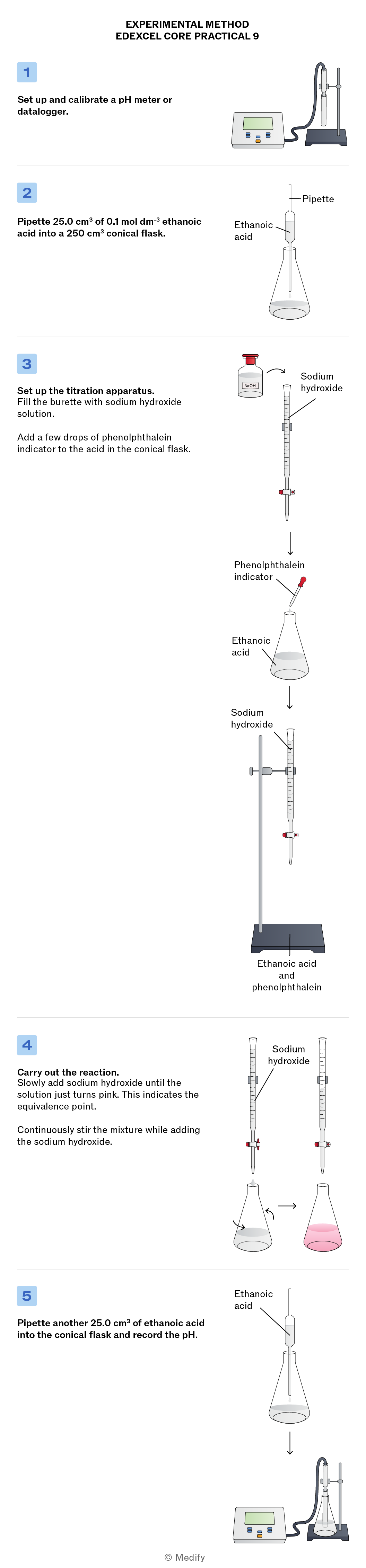
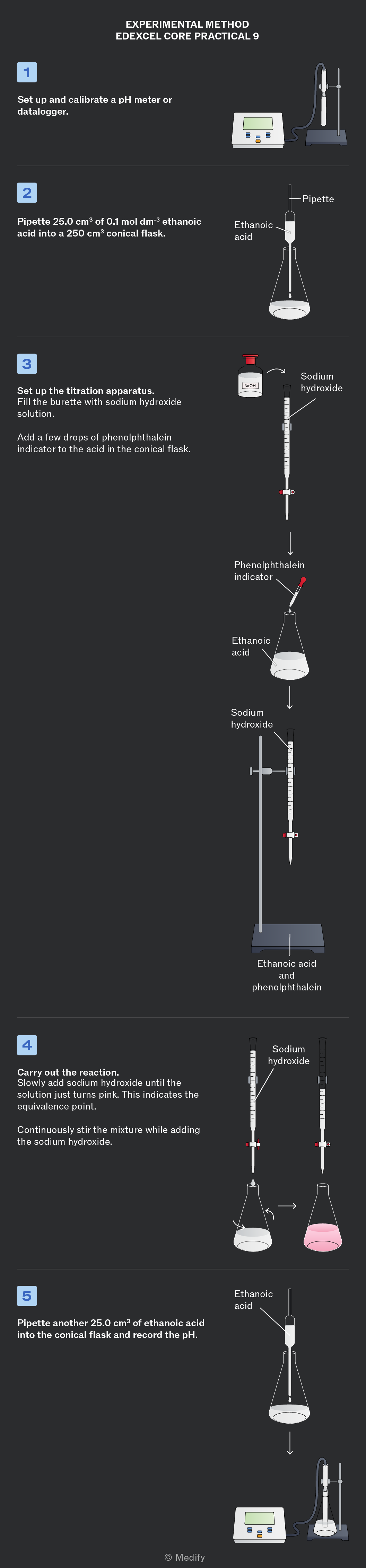
A step-by-step diagram titled 'Experimental Method Edexcel Core Practical 9' with five steps for a titration experiment. Step 1: 'Set up and calibrate a pH meter or datalogger.' Image shows a pH meter with a digital display and probe. Step 2: 'Pipette 25.0 cm³ of 0.1 mol dm⁻³ ethanoic acid into a 250 cm³ conical flask.' Image shows a pipette and conical flask labeled 'Ethanoic acid.' Step 3: 'Set up the titration apparatus. Fill the burette with sodium hydroxide solution. Add a few drops of phenolphthalein indicator to the acid in the conical flask.' Image shows a burette labeled 'Sodium hydroxide,' a conical flask with 'Ethanoic acid' and 'Phenolphthalein indicator,' and arrows indicating the addition process. Step 4: 'Carry out the reaction. Slowly add sodium hydroxide until the solution just turns pink. This indicates the equivalence point. Continuously stir the mixture while adding the sodium hydroxide.' Image shows the reaction setup with a burette labeled 'Sodium hydroxide.' Step 5: 'Pipette another 25.0 cm³ of ethanoic acid into the conical flask and record the pH.' Image shows a conical flask labeled 'Ethanoic acid' and a pH meter.
Add to favourites

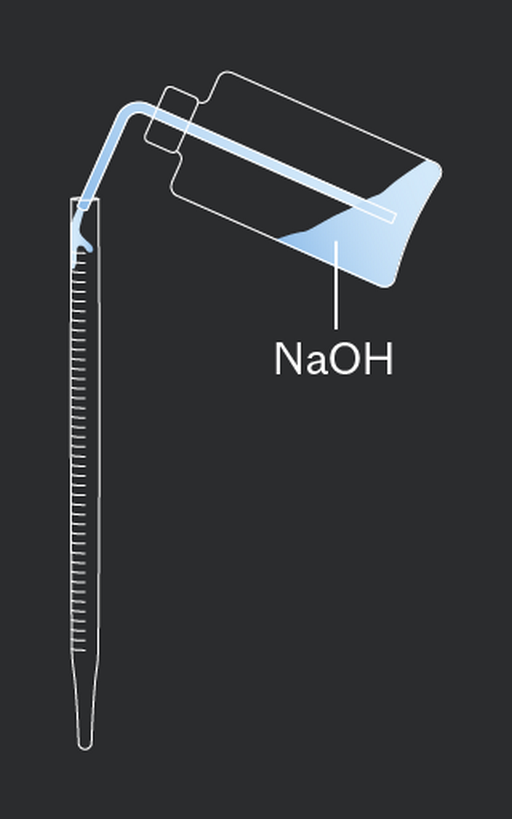
Avoid unintentional dilution of solutions.
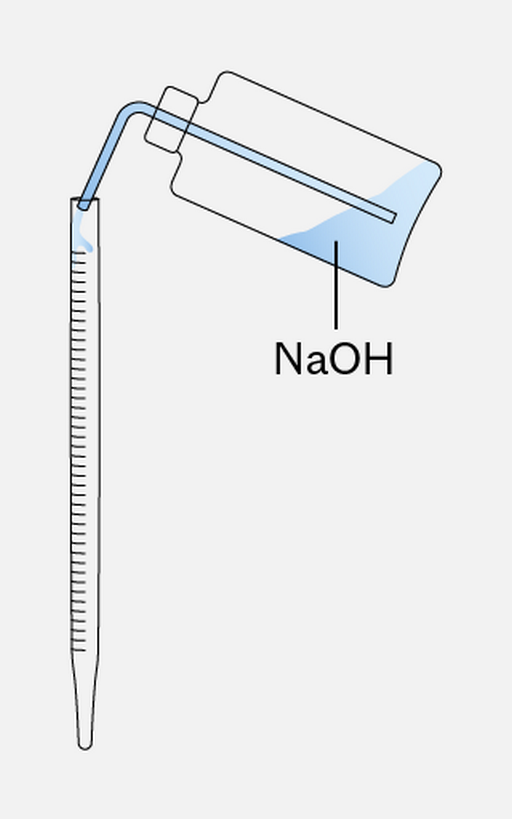
A laboratory pipette with a graduated scale on the side, positioned next to a container labeled NaOH, indicating the presence of sodium hydroxide.
Do

Rinse all glassware used for accurately measuring solution volumes with the solution itself.

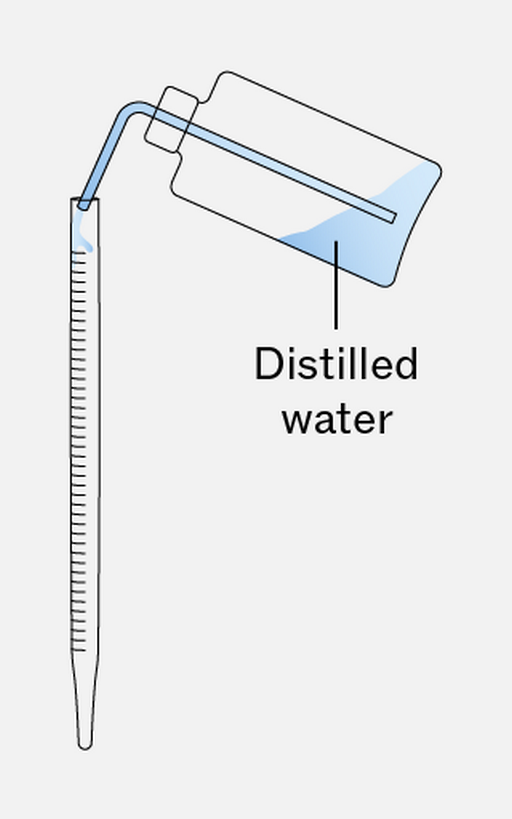
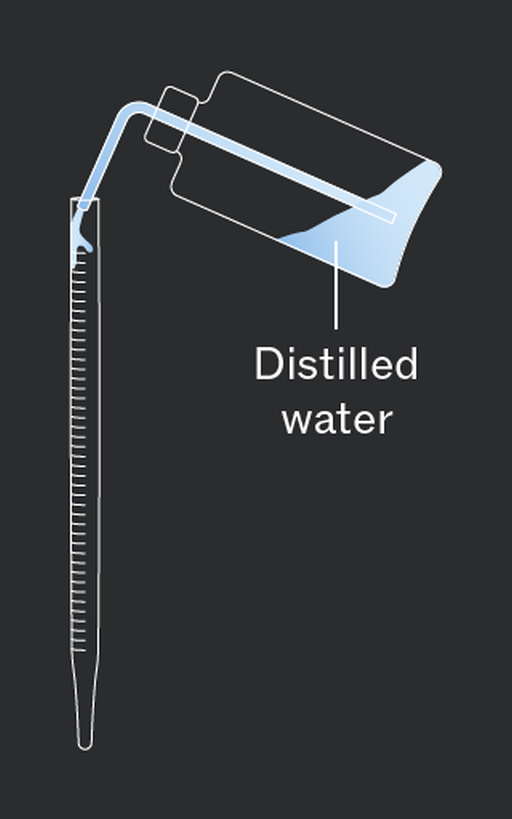
A pipette is shown with a container above it labeled 'Distilled water'.
Don't

Rinse precision glassware with water immediately before use – leftover water will dilute the solution.

Add to favourites

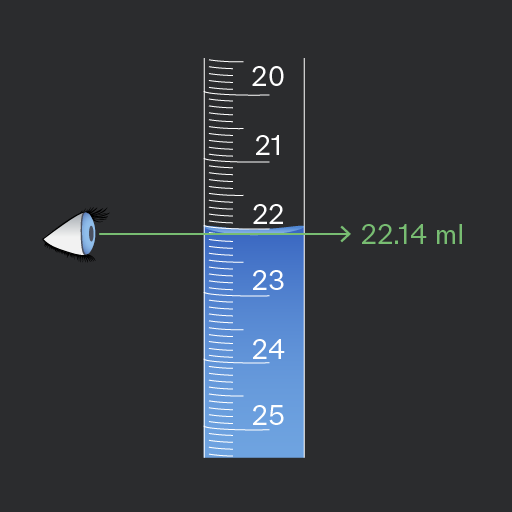
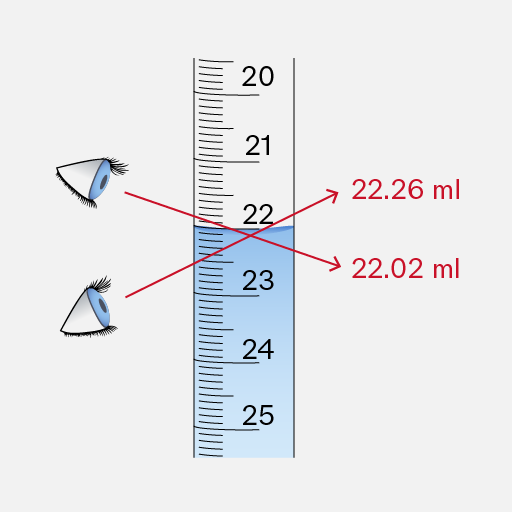
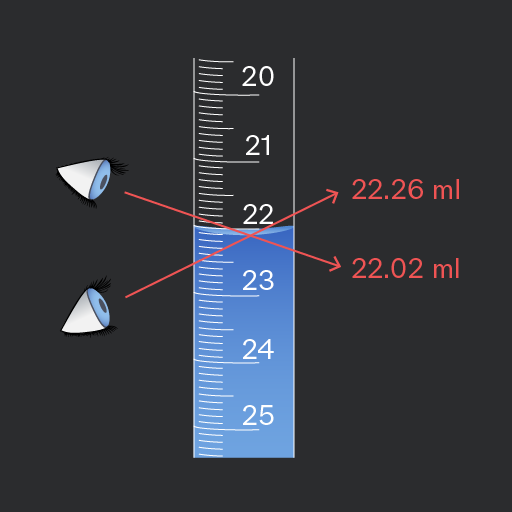
Prevent parallax errors when reading volumes.
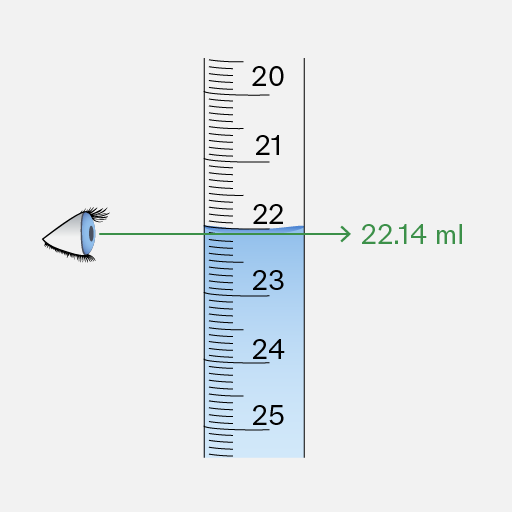
An illustration showing a measuring cylinder with a scale marked from 20 to 25 ml. An eye is depicted on the left side, and a green arrow points to the measurement of 22.14 ml.
Do

Read the burette at eye level and record to

A measurement scale showing values from 20 to 25 ml. Two eyes are illustrated, one pointing to 22.26 ml and the other to 22.02 ml, with red arrows indicating the measurements.
Don't

Read from above or below – this leads to incorrect readings due to parallax error.

Add to favourites

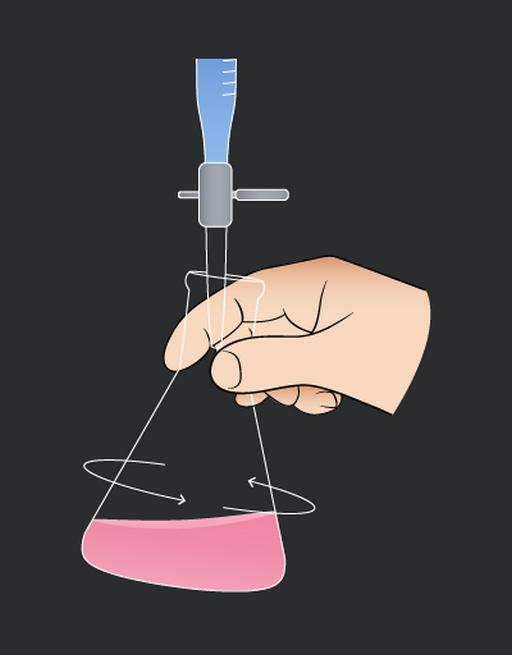
Keep the titration mixture well mixed.
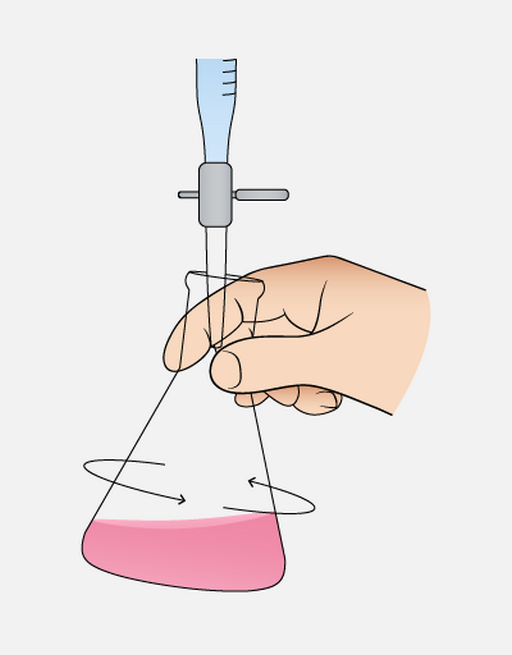
A hand holding a conical flask containing a pink liquid, with arrows indicating swirling motion, and a dropper above the flask.
Do

Swirl the conical flask gently and consistently during titration to ensure complete contact between reactants.

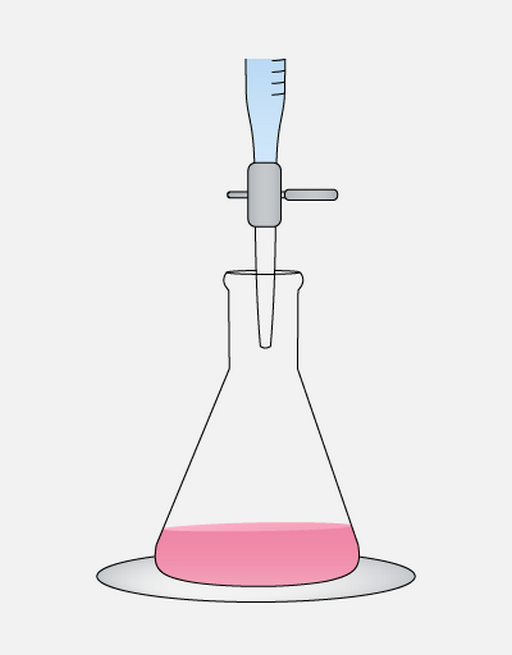
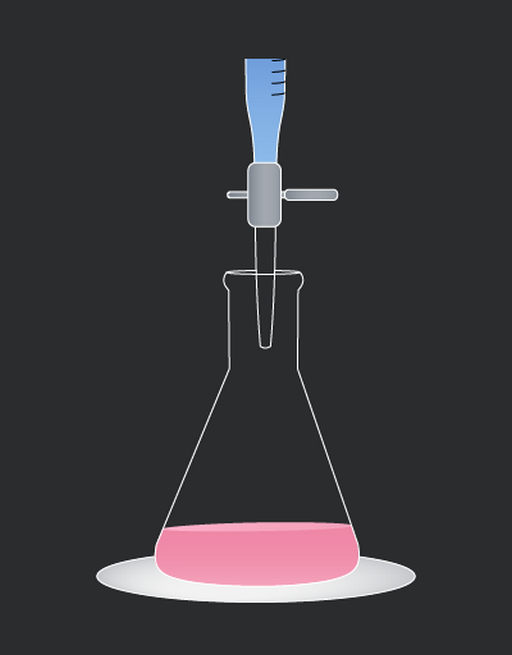
A laboratory setup featuring a conical flask with a pink liquid inside, topped with a pipette holder and a blue pipette.
Don't

Leave the flask still during titration – without swirling, the acid and alkali will not mix properly, leading to an inaccurate endpoint.

Add to favourites

For a weak acid at neutralisation volume,

The pH found in the experiment can be used to calculate the using the equation

The larger the value of the stronger the acid.

Add to favourites