
CP 4 - Investigation of the rates of hydrolysis of halogenoalkanes
On this page
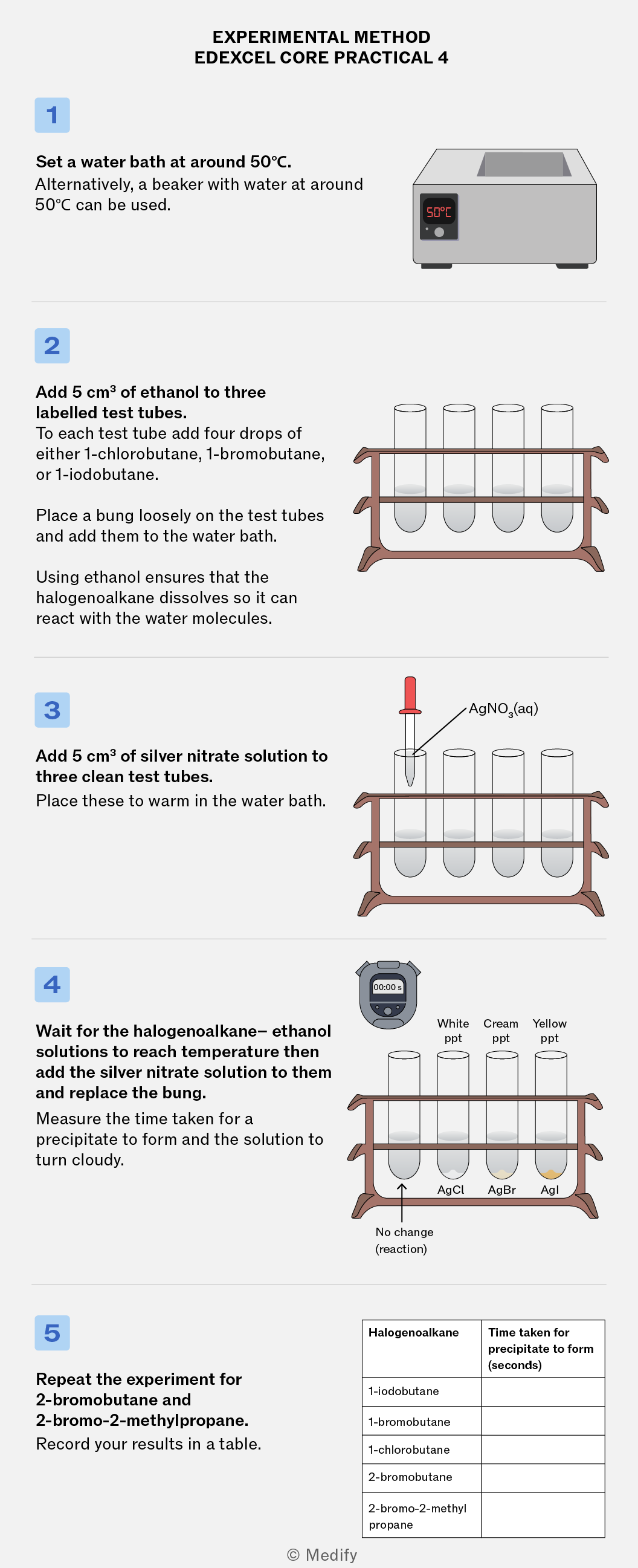
In Edexcel Core Practical 4: Investigation of the rates of hydrolysis of halogenoalkanes the rates are determined for primary, secondary and tertiary halogenoalkanes along with chloro-, bromo-, and iodoalkanes
The time taken for the precipitate to appear is recorded and used to compare the reactivity of different halogenoalkanes.
In Edexcel core practical 4: Investigate the hydrolysis of halogenoalkanes, there are several important safety requirements to be aware of (beyond normal lab practice such as wearing goggles).
- Halogenoalkanes are flammable and harmful.
- Ethanol is flammable – avoid naked flames.
- Silver nitrate is corrosive.
Experimental method for Edexcel Chemistry Core Practical 4
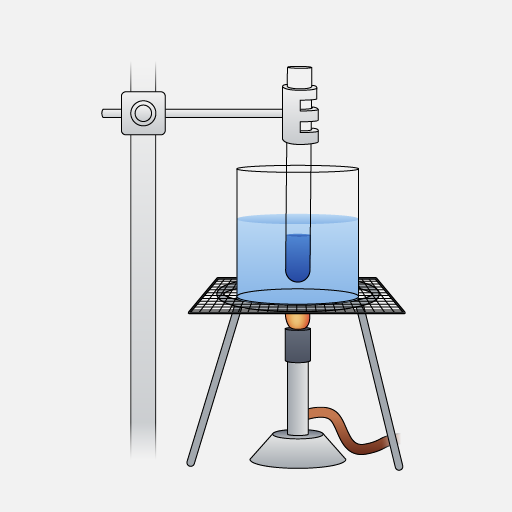
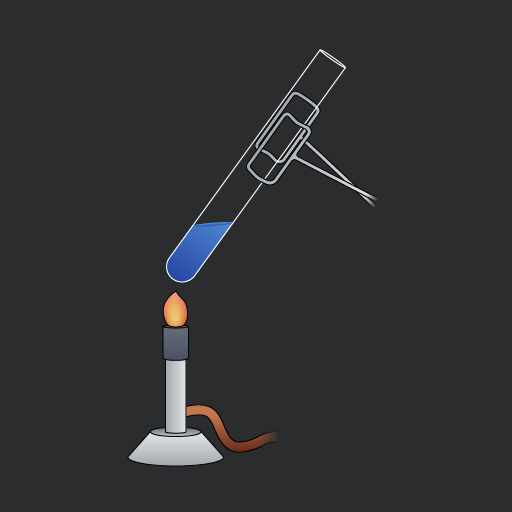
Be sure to heat the test tubes carefully when the contents are temperature sensitive.
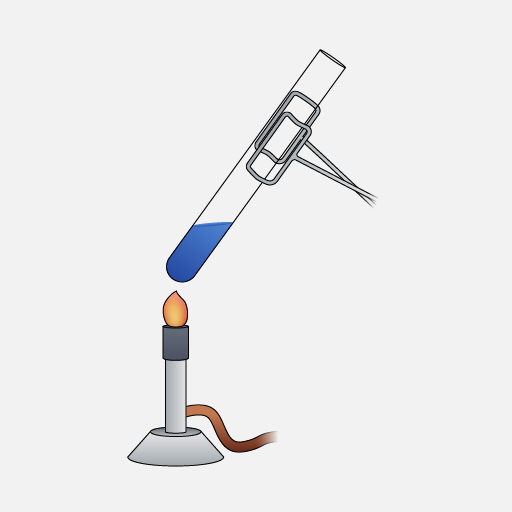
The rate of hydrolysis of the halogenoalkane relates to the strength of the carbon-halide bond. The stronger the bond, the slower the rate of the reaction.
The quicker the formation of the precipitate, the faster the substitution reaction occurs.
Therefore, it is possible to determine the order of carbon-halide bond strength by comparing the times obtained in the experiment.