Practical chemistry for exams›CP 2 - Preparation of a standard solution from a solid acid

CP 2 - Preparation of a standard solution from a solid acid

An overview of CP 2 - Preparation of a standard solution from a solid acid
4 min

In Edexce l Core Practical 2: Preparation of a standard solution from a solid acid, a standard solution of sulfamic acid is produced and titrated against sodium hydroxide to determine the concentration of the alkali.

The equation for this reaction is:

Add to favourites

In Edexcel core practical 2: Find the concentration of a solution of sodium hydroxide, there are several important safety requirements to be aware of (beyond normal lab practice such as wearing goggles).

  • Sulfamic acid is toxic if ingested.
  • Ensure burettes are filled when the top of the burette is below eye level.
Add to favourites

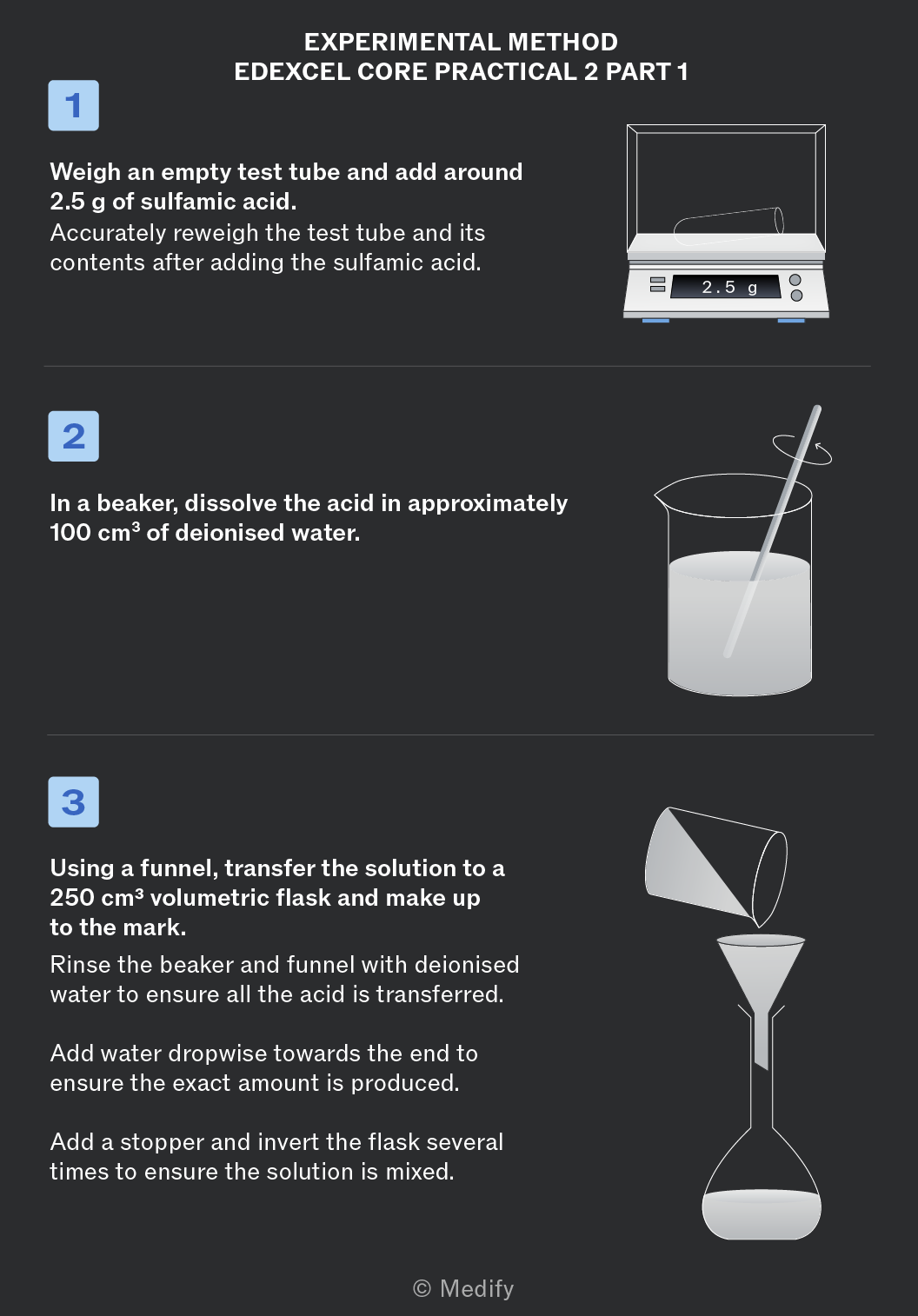
Experimental method for Edexcel Chemistry Core Practical 2 Part 1: Preparing a standard solution from an acid.
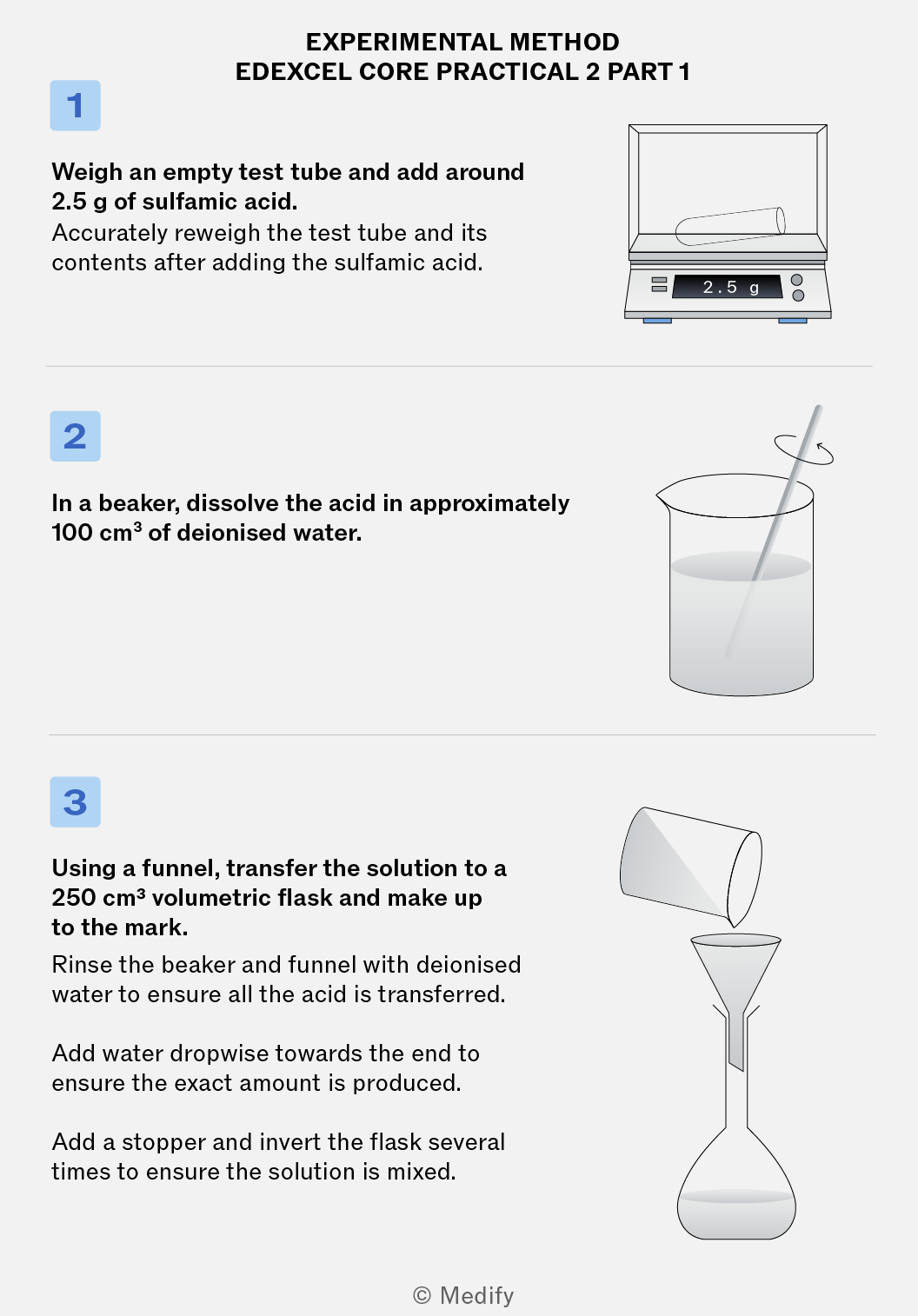
Three-step experimental method titled 'EDEXCEL CORE PRACTICAL 2 PART 1'. Step 1: Weigh an empty test tube and add around 2.5 g of sulfamic acid. Reweigh the test tube and contents. An image of a balance showing 2.5 g with a test tube on it. Step 2: In a beaker, dissolve the acid in approximately 100 cm³ of deionised water. An image of a beaker with a stirring rod. Step 3: Using a funnel, transfer the solution to a 250 cm³ volumetric flask and make up to the mark. Rinse beaker and funnel with deionised water. Add water dropwise to ensure the exact amount. Add a stopper and invert the flask to mix. An image of a funnel and flask setup. © Medify.
Add to favourites

Experimental method for Edexcel Chemistry Core Practical 2 Part 2: Titration of an unknown concentration of sodium hydroxide.
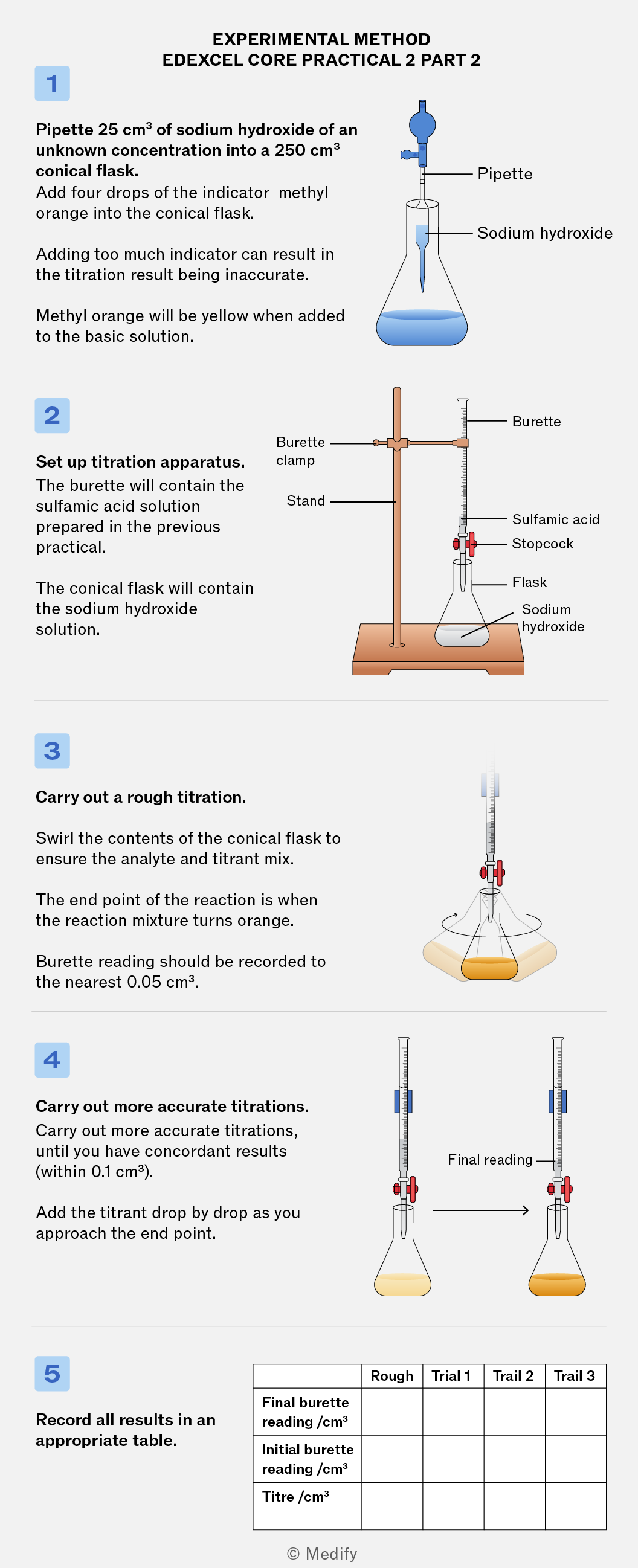
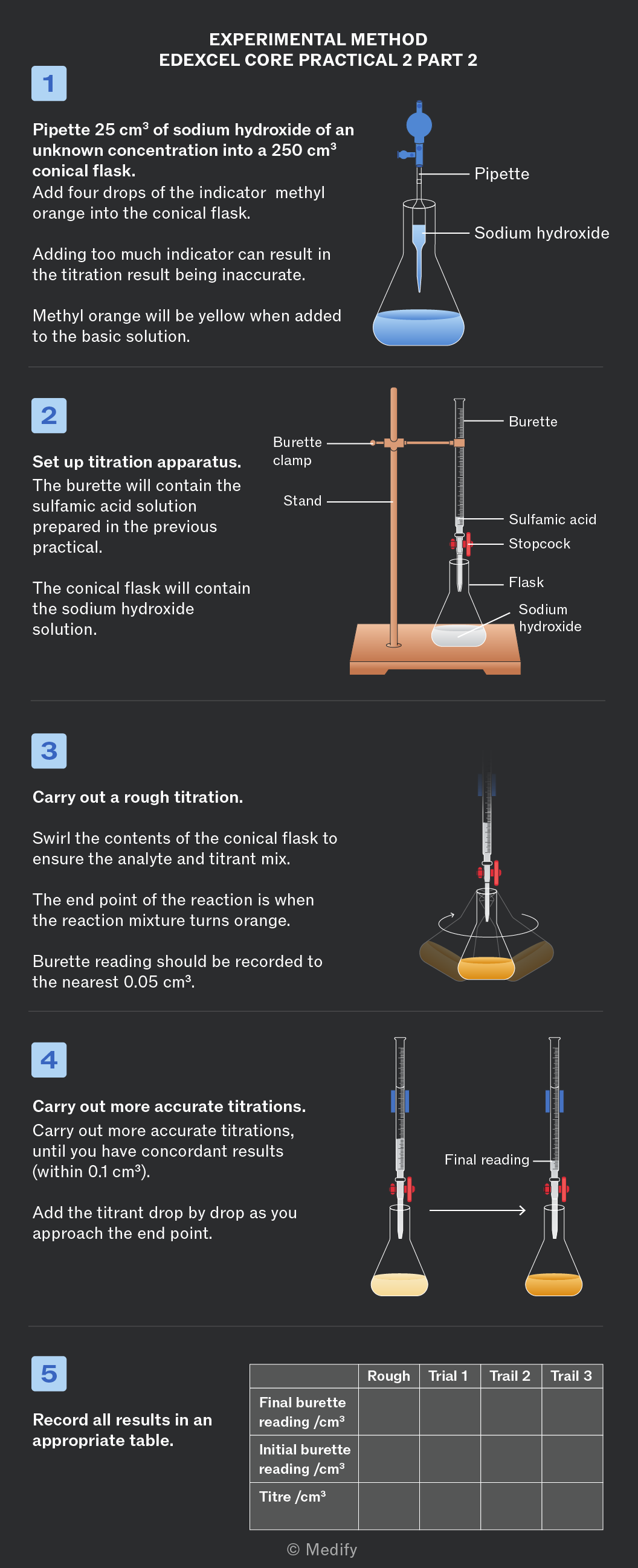
A step-by-step guide for an experimental method titled 'Edexcel Core Practical 2 Part 2'. Step 1: 'Pipette 25 cm³ of sodium hydroxide of an unknown concentration into a 250 cm³ conical flask.' A pipette with a bulb is shown transferring sodium hydroxide into a flask. Text notes to add four drops of methyl orange indicator, which will be yellow in the basic solution. Step 2: 'Set up titration apparatus.' A burette is attached to a stand using a burette clamp, containing sulfamic acid. The conical flask contains sodium hydroxide. Step 3: 'Carry out a rough titration.' Swirl the flask to mix, noting the endpoint when the solution turns orange. Record the burette reading to the nearest 0.05 cm³. Step 4: 'Carry out more accurate titrations.' Repeat until results are concordant within 0.1 cm³, adding titrant drop by drop. An image shows the final burette reading. Step 5: 'Record all results in an appropriate table.' A table with columns for 'Rough', 'Trial 1', 'Trial 2', and 'Trial 3', and rows for 'Final burette reading /cm³', 'Initial burette reading /cm³', and 'Titre /cm³'.
Add to favourites

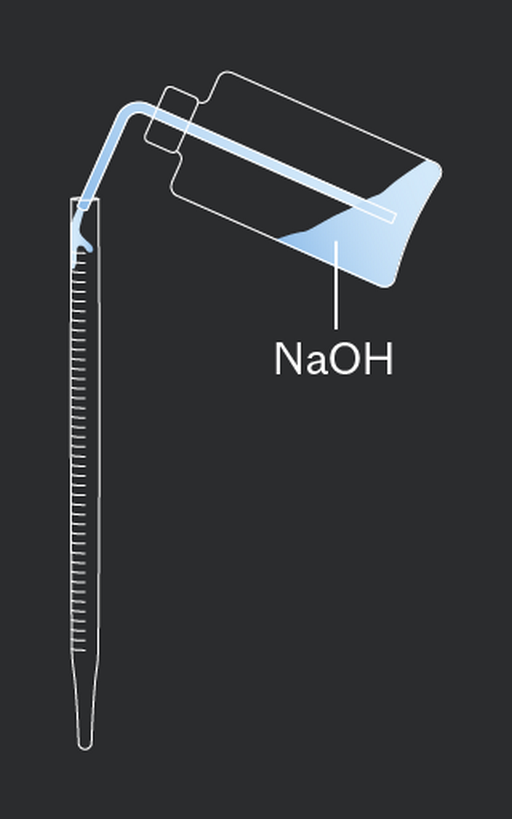
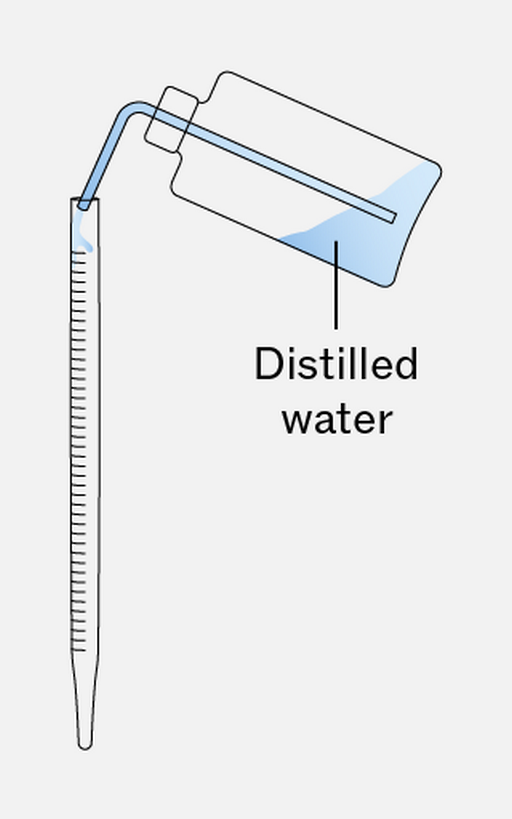
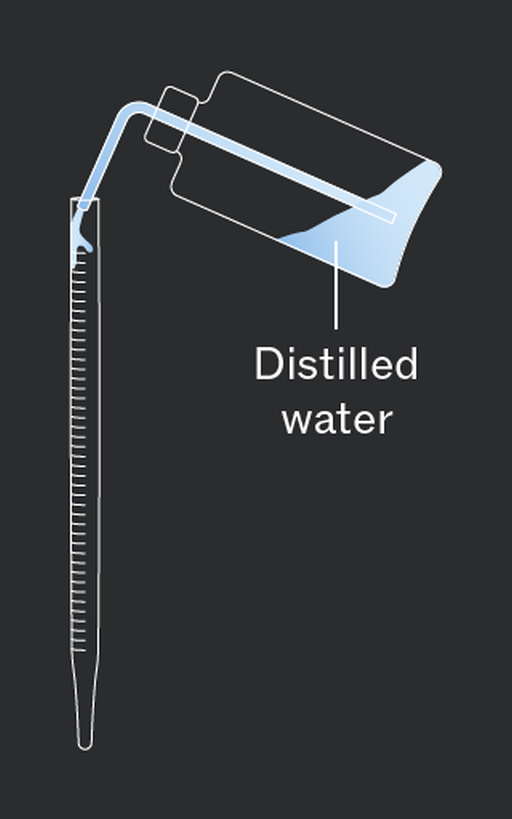
Avoid unintentional dilution of solutions.
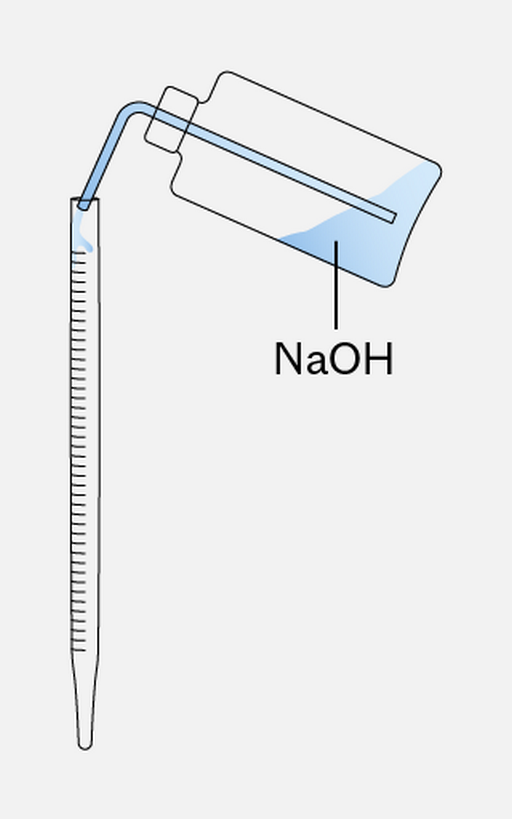
A laboratory pipette with a graduated scale on the side, positioned next to a container labeled NaOH, indicating the presence of sodium hydroxide.
Do

Rinse all glassware used for accurately measuring solution volumes with the solution itself.

A pipette is shown with a container above it labeled 'Distilled water'.
Don't

Rinse precision glassware with water immediately before use – leftover water will dilute the solution.

Add to favourites

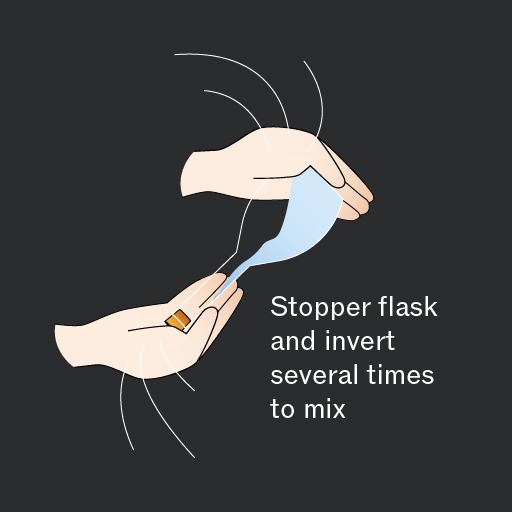
Ensure your standard solution is fully mixed.
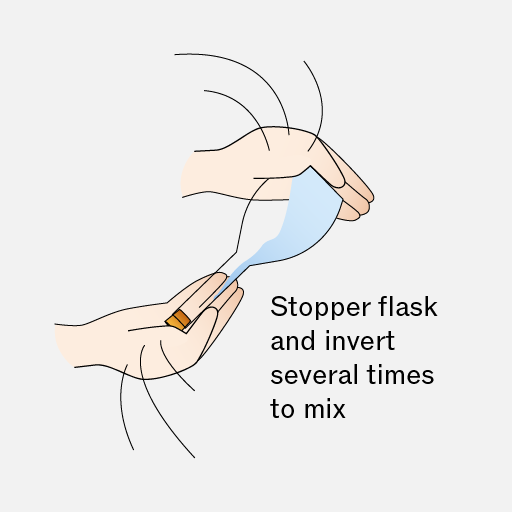
Hands holding a stopper flask, with the instruction 'Stopper flask and invert several times to mix' displayed beside it.
Do

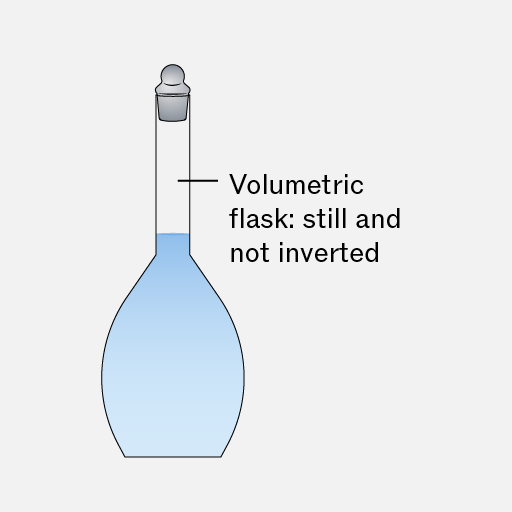
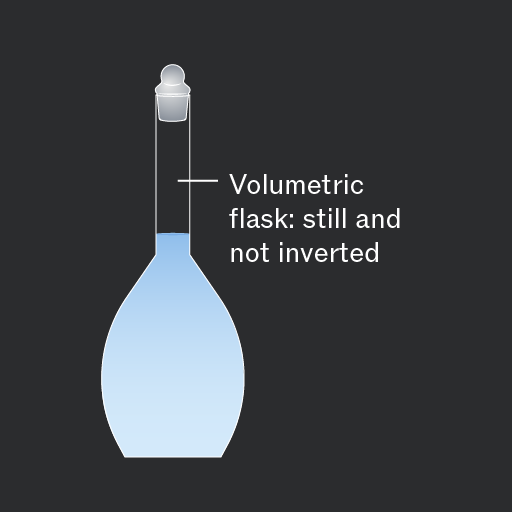
Invert the volumetric flask several times after filling to the graduation mark.

A volumetric flask filled with blue liquid, labeled 'Volumetric flask: still and not inverted.'
Don't

Use the standard solution without inversion – The top of the solution may be less concentrated than the bottom. Even small concentration differences can affect the accuracy of your results.

Add to favourites

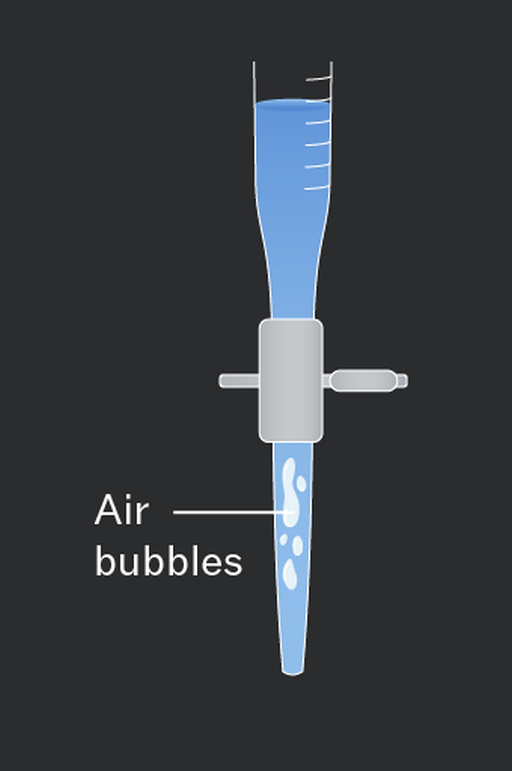
Ensure the burette is free from air bubbles.
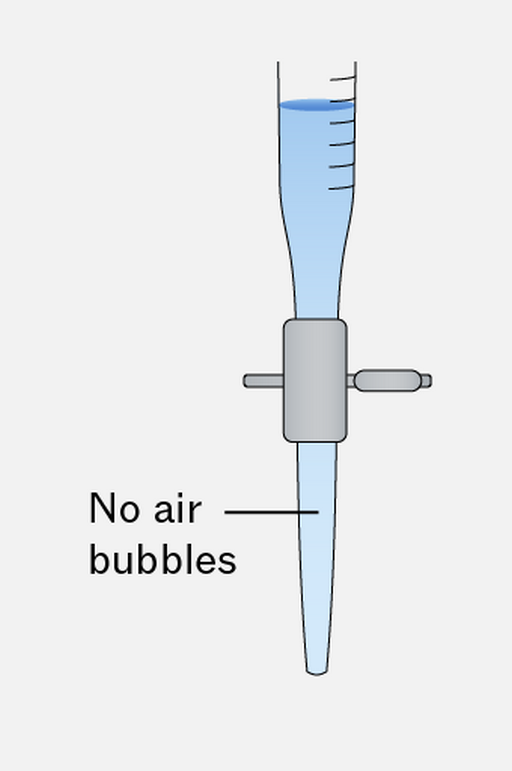
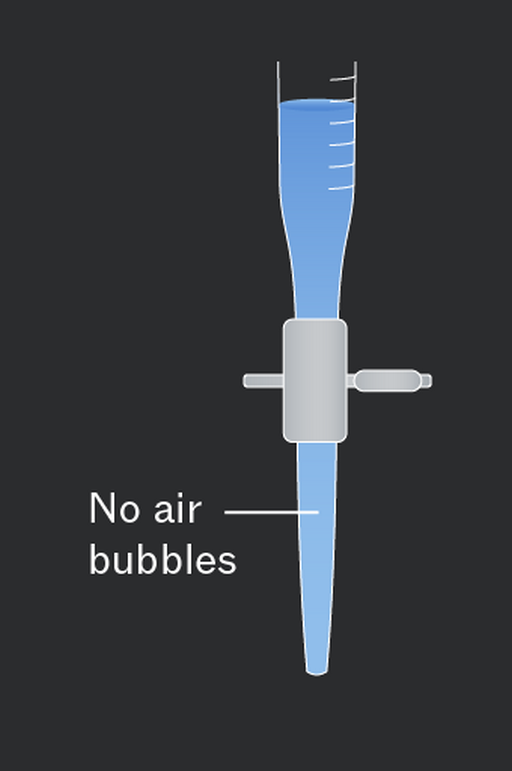
A laboratory apparatus showing a graduated pipette filled with liquid, indicating 'No air bubbles' next to the pipette.
Do

Check the burette for air bubbles and remove them by running some solution through the tap before starting the titration.

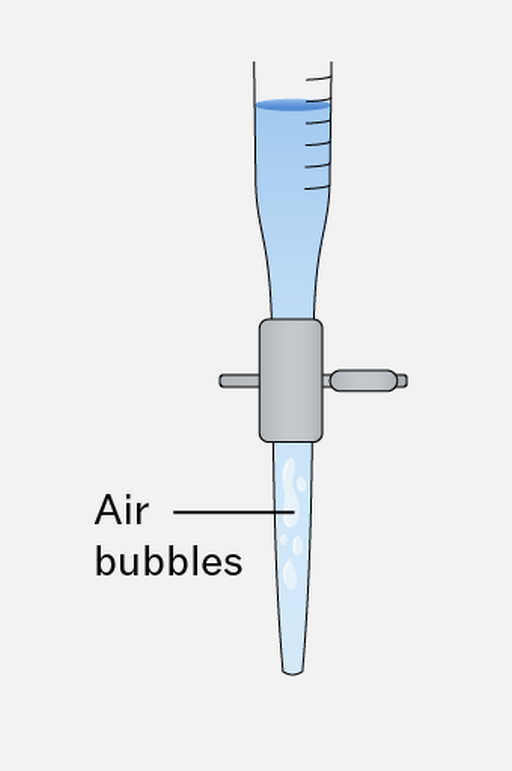
A diagram of a pipette filled with blue liquid, showing air bubbles at the tip. The pipette has measurement markings on the side and is connected to a gray stopcock.
Don't

Start titrating with air bubbles in the burette – The volume occupied by the bubble will be taken into your volume reading. Less solution will actually be transferred than is recorded.

Add to favourites

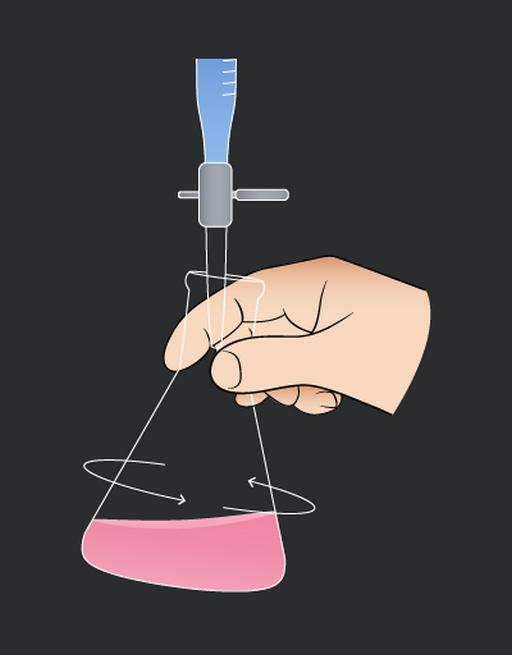
Keep the titration mixture well mixed.
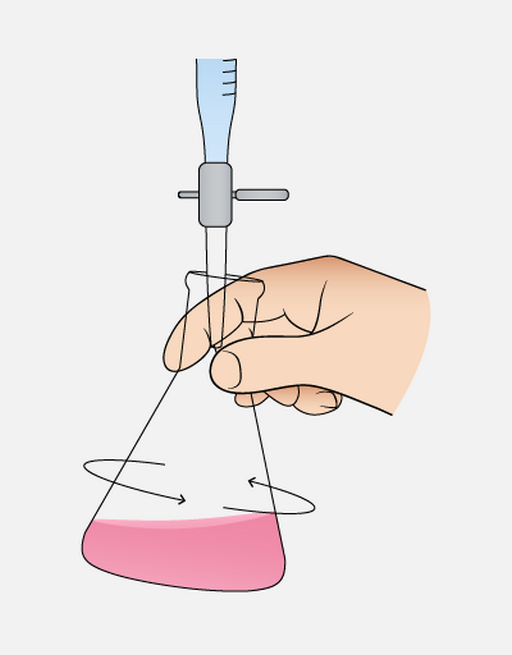
A hand holding a conical flask containing a pink liquid, with arrows indicating swirling motion, and a dropper above the flask.
Do

Swirl the conical flask gently and consistently during titration to ensure complete contact between reactants.

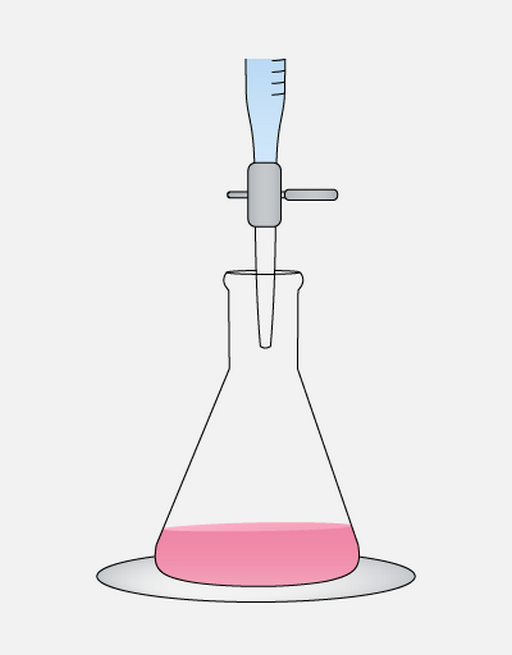
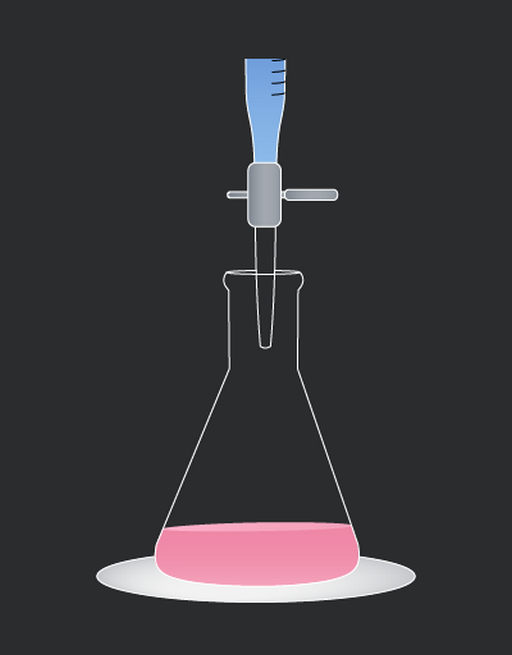
A laboratory setup featuring a conical flask with a pink liquid inside, topped with a pipette holder and a blue pipette.
Don't

Leave the flask still during titration – without swirling, the acid and alkali will not mix properly, leading to an inaccurate endpoint.

Add to favourites

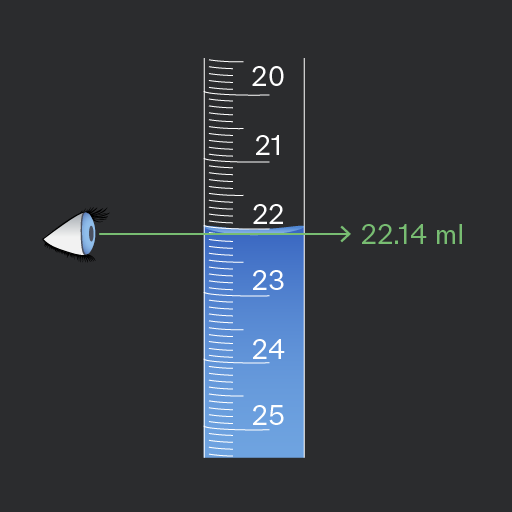
Prevent parallax errors when reading volumes.
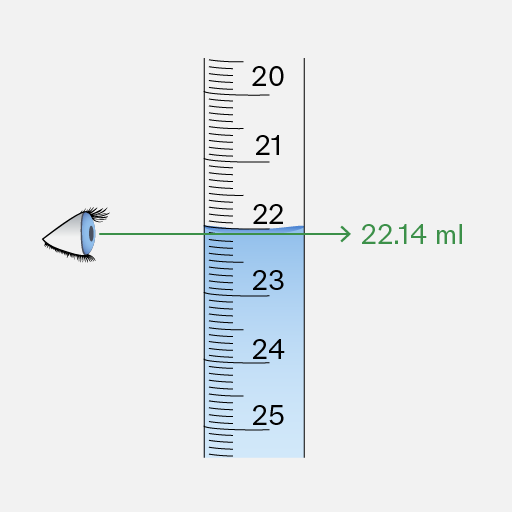
An illustration showing a measuring cylinder with a scale marked from 20 to 25 ml. An eye is depicted on the left side, and a green arrow points to the measurement of 22.14 ml.
Do

Read the burette at eye level and record to

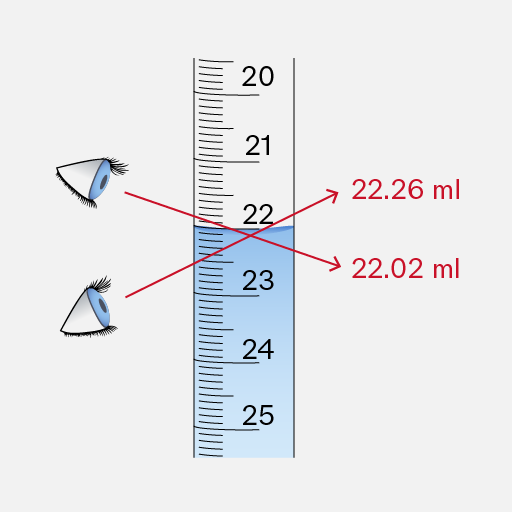
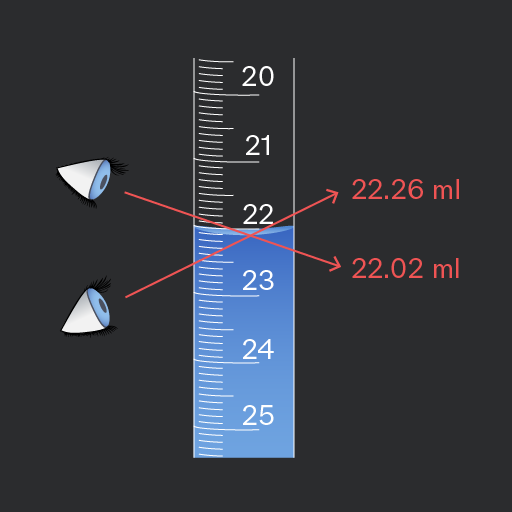
A measurement scale showing values from 20 to 25 ml. Two eyes are illustrated, one pointing to 22.26 ml and the other to 22.02 ml, with red arrows indicating the measurements.
Don't

Read from above or below – this leads to incorrect readings due to parallax error.

Add to favourites

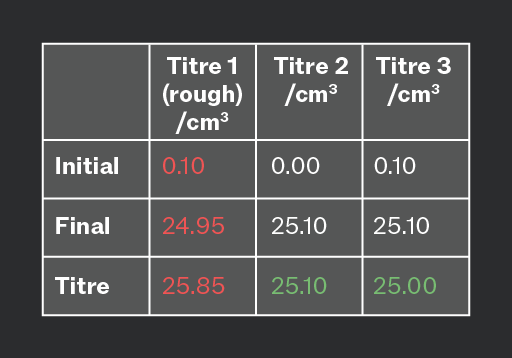
Only use reliable titres in calculations.
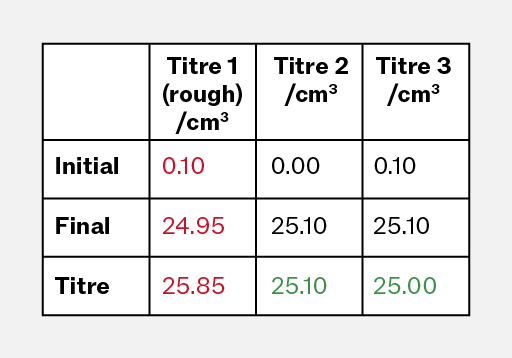
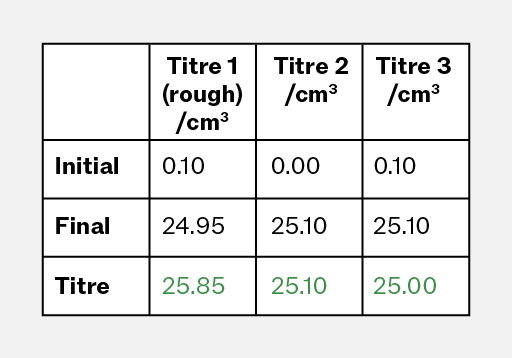
A table displaying titration data with three columns labeled 'Titre 1 (rough) /cm³', 'Titre 2 /cm³', and 'Titre 3 /cm³'. The rows include 'Initial' with values 0.10, 0.00, and 0.10; 'Final' with values 24.95 (in red), 25.10, and 25.10; and 'Titre' with values 25.85, 25.10, and 25.00 (in green).
Do

Use concordant titres (within 0.10 ) to calculate your mean.

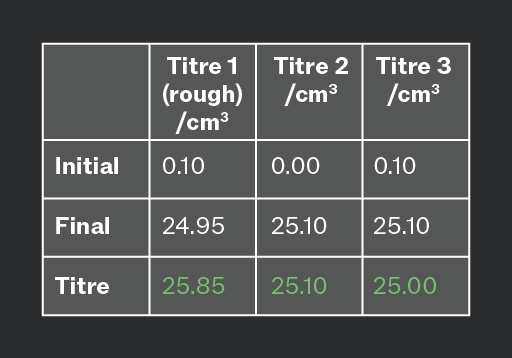
A table displaying data with three columns labeled 'Titre 1 (rough) /cm³', 'Titre 2 /cm³', and 'Titre 3 /cm³'. The rows are labeled 'Initial', 'Final', and 'Titre'. The values in the table are: Initial - 0.10, 0.00, 0.10; Final - 24.95, 25.10, 25.10; Titre - 25.85, 25.10, 25.00.
Don't

Include your rough titre or anomalous results – they’ll make your mean calculation less accurate.

Add to favourites

The mean titre should be calculated using only concordant results.

Then calculate the number of moles of sulfamic acid using the equation:

Then, using the balanced equation and stoichiometry, the ratio of sulfamic acid:sodium hydroxide is 1:1.
The concentration of sodium hydroxide can be calculated using:

Add to favourites