Module 1: Practical chemistry for exams›PAG 4.3 - Identifying unknowns 3

PAG 4.3 - Identifying unknowns 3

An overview of PAG 4.3 - Identifying unknowns 3
2 min

In OCR Chemistry Required Practical 4 (PAG 4.3), qualitative analysis is used to identify five unknown solutions.

The given solutions are:

  • Dilute nitric acid
  • Sodium carbonate solution
  • Silver nitrate solution
  • Potassium chloride solution
  • Potassium iodide solution

These are provided in dropping bottles in any order and labelled A,B, C, D, and E.

Add to favourites

In OCR PAG 4.3: Identifying unknowns 3, there are several important safety requirements to be aware of (beyond normal lab practice such as wearing goggles).

  • Unknown solutions should always be treated as irritants.
Add to favourites

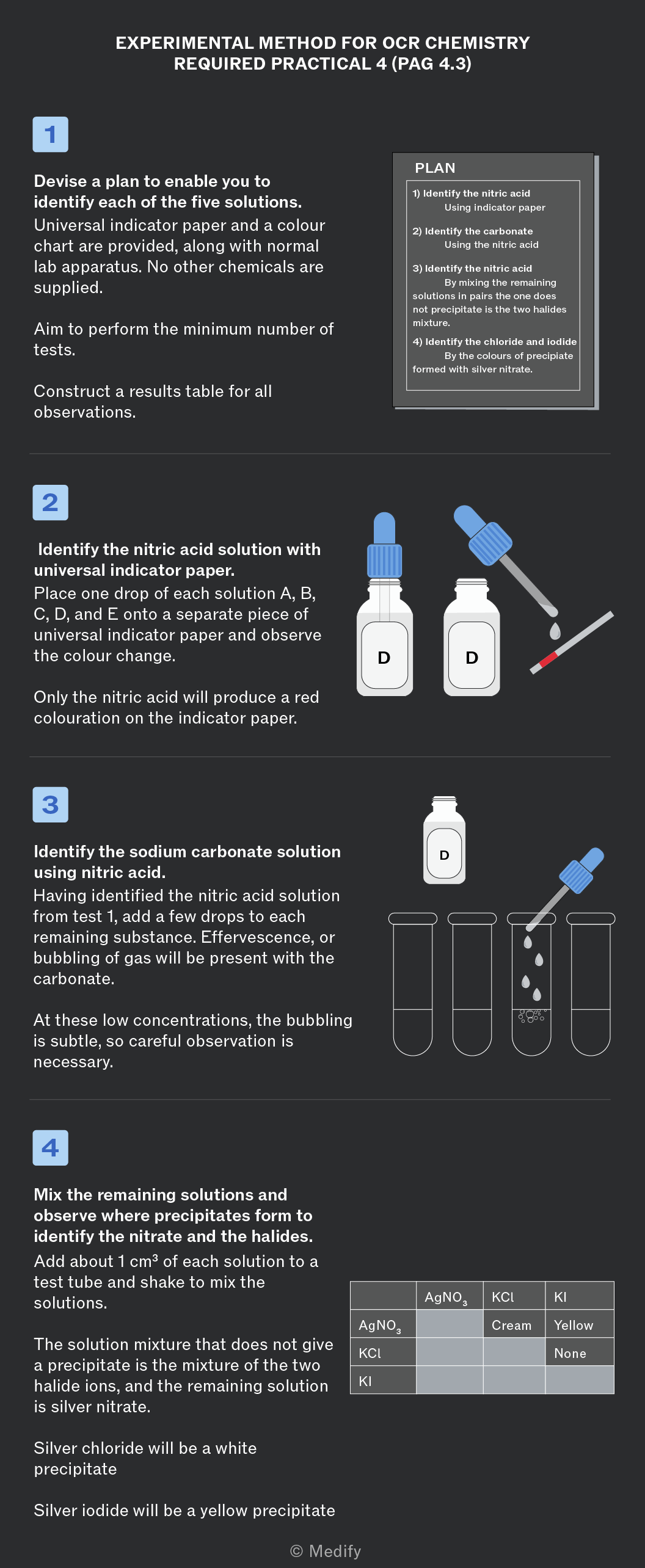
Experimental method for OCR Chemistry Required Practical 4 (PAG 4.3)
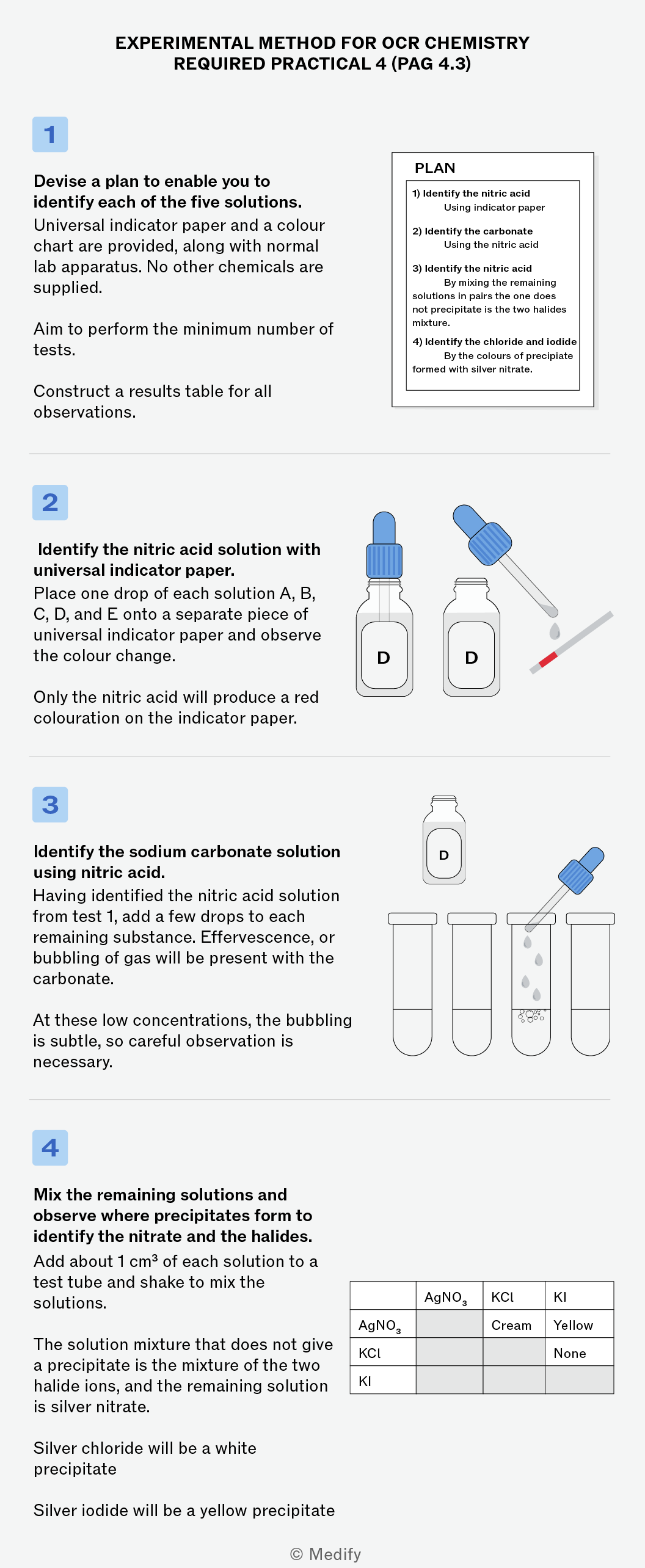
A detailed instructional guide for an OCR Chemistry practical experiment, outlining steps to identify five solutions using universal indicator paper and various chemical reactions. The guide includes a plan for testing, observations for identifying nitric acid, sodium carbonate, and the formation of precipitates with silver nitrate, along with a results table for recording observations.
Add to favourites

Wearing the appropriate personal protective equipment is essential to avoid direct contact with harmful chemicals and to ensure safety throughout the experiment.


A simple illustration of a pair of goggles and gloves.
Do

Wear goggles and gloves when handling any chemicals, particularly concentrated acids, ammonia, and metal salts, as they can be corrosive or irritating to the skin and eyes.

A person wearing no goggles or gloves whilst handling chemicals.
Don't

Skip protective equipment just because ‘it’s only a few drops’.

Add to favourites

It is crucial to use clean and dry glassware when performing analytical tests.

Five test tubes arranged in a row, with varying heights and shapes.
Do

Ensure all glassware is clean and dry before use to avoid contamination and ensure accurate results.

A test tube with a white body and brownish stains or markings on its surface.
Don't

Reuse glassware that has not been properly cleaned and dried, as this could lead to inaccurate readings or unintended chemical reactions.

Add to favourites

Proper disposal of chemicals is essential to avoid environmental damage and ensure safe laboratory practices. Always follow disposal guidelines.
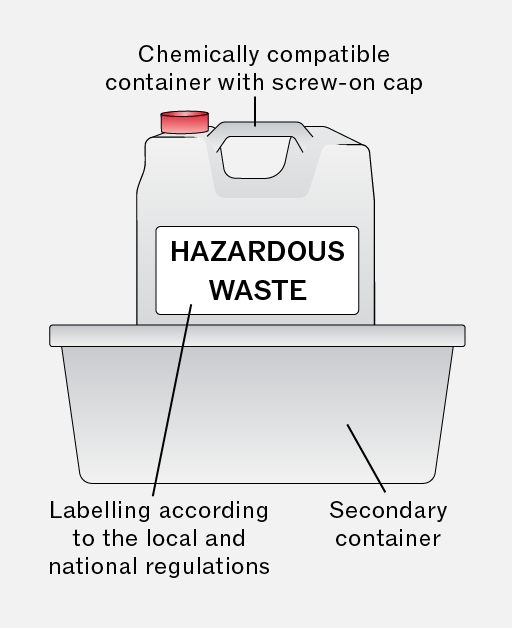
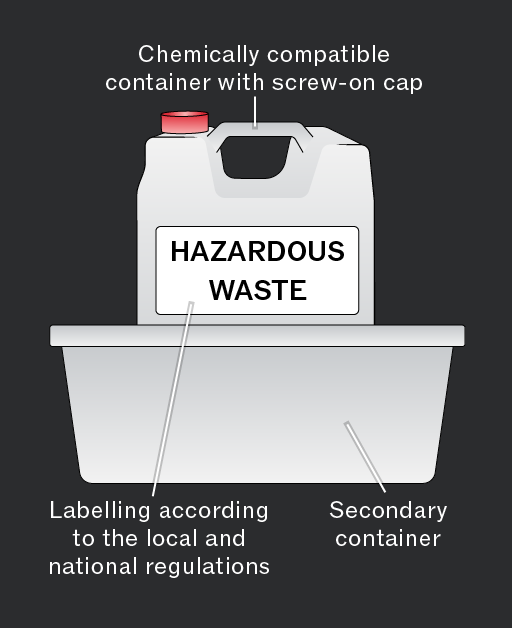
A diagram showing a chemically compatible container with screw-on cap labeled 'HAZARDOUS WASTE' placed inside a secondary container. There are labels indicating 'Labelling according to the local and national regulations'.
Do

Dispose of chemicals safely after testing by placing them in the designated waste containers. Always follow your teacher’s instructions for disposal.

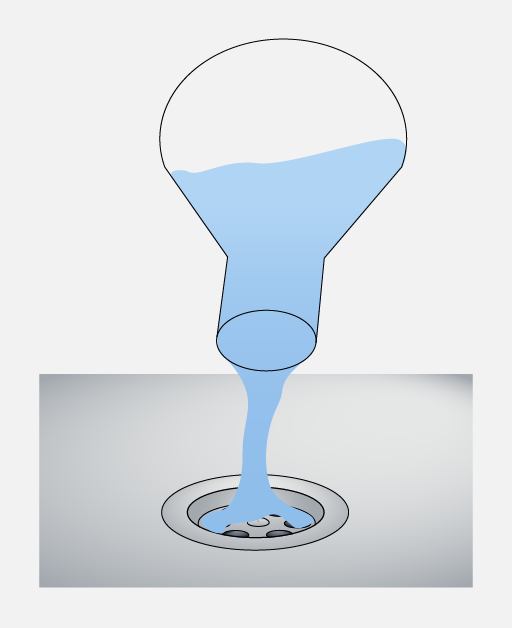
A funnel pouring blue liquid into a drain.
Don't

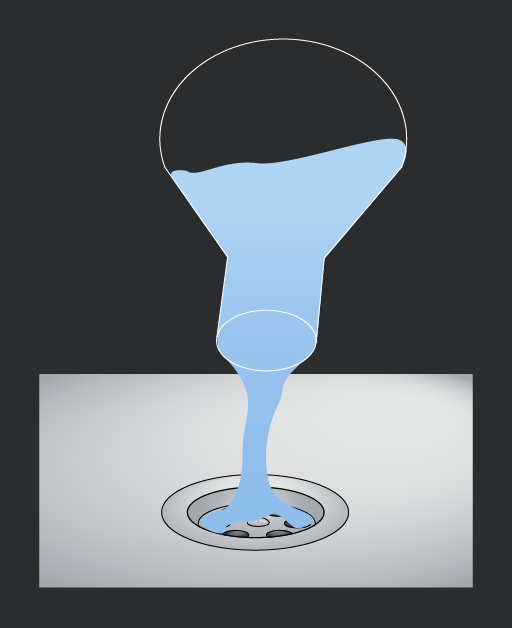
Pour chemicals down the drain unless specifically directed to do so, as some chemicals may cause harmful reactions in the plumbing or be harmful to aquatic organisms.

Add to favourites

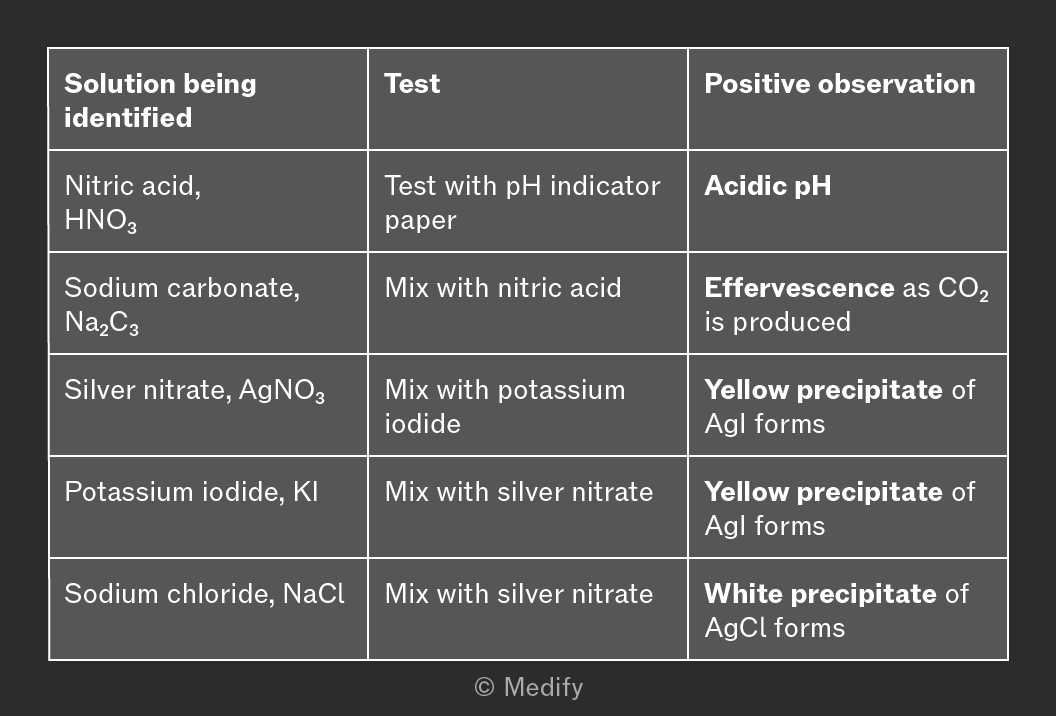
Below is a summary of results for the tests from this PAG-
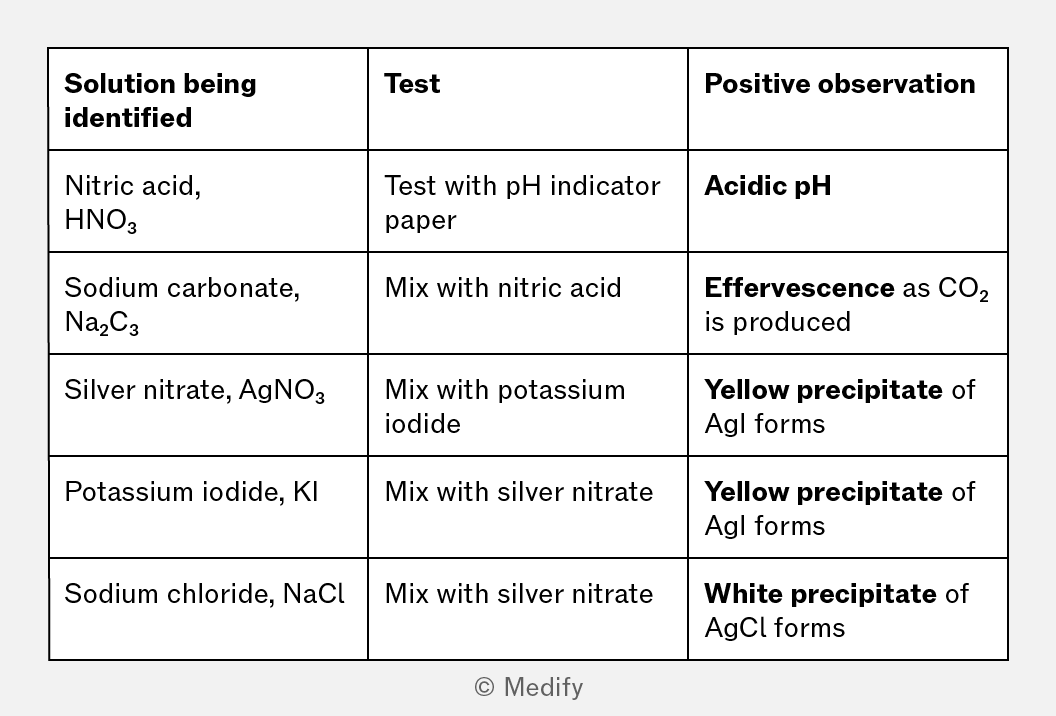
A table with three columns titled 'Solution being identified', 'Test', and 'Positive observation'. Rows detail tests and results for various solutions: 1. Nitric acid, HNO3: Test with pH indicator paper, Positive observation: Acidic pH. 2. Sodium carbonate, Na2CO3: Mix with nitric acid, Positive observation: Effervescence as CO2 is produced. 3. Silver nitrate, AgNO3: Mix with potassium iodide, Positive observation: Yellow precipitate of AgI forms. 4. Potassium iodide, KI: Mix with silver nitrate, Positive observation: Yellow precipitate of AgI forms. 5. Sodium chloride, NaCl: Mix with silver nitrate, Positive observation: White precipitate of AgCl forms.
Add to favourites