
PAG 5.3 - Oxidation of ethanol
On this page
In OCR Chemistry Required Practical 5 (PAG 5.3), ethanol is oxidised to ethanal, and then ethanoic acid, through heating with acidified sodium dichromate solution.
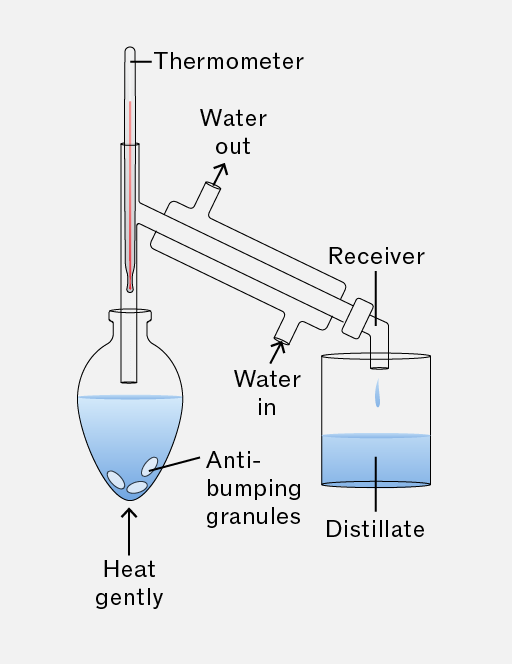
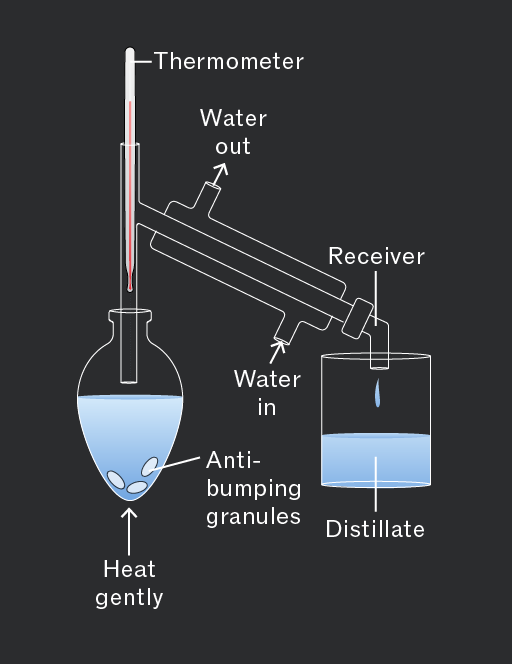
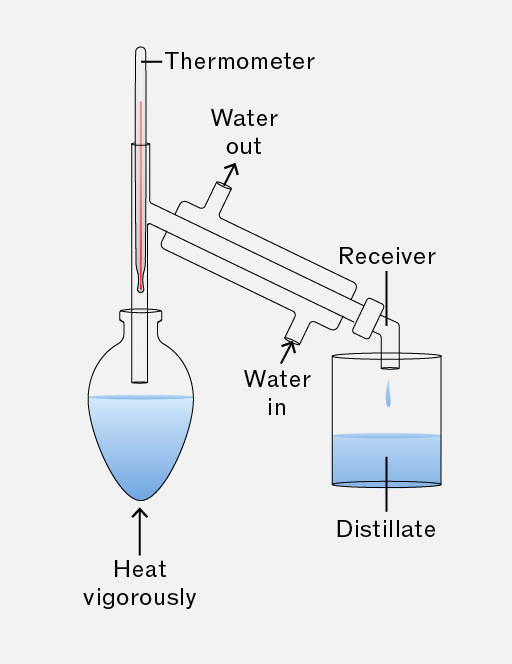
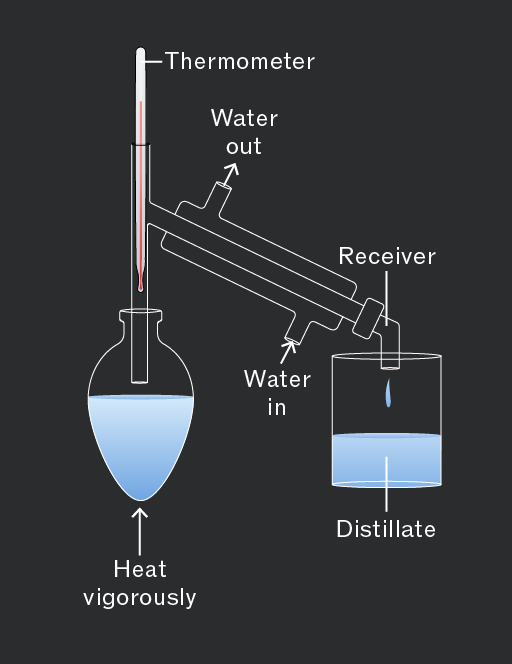
Initially, complete oxidation to ethanoic acid is carried out under reflux. In a separate experiment, ethanol is partially oxidised to ethanal under distillation.
In OCR PAG 5.3: Oxidation of ethanol, there are several important safety requirements to be aware of (beyond normal lab practice such as wearing goggles).
- Addition of the ethanol to the acidified sodium dichromate(VI) solution should be carried out dropwise and kept cool in an ice water bath.
- After distillation, cool the reaction flask in a beaker of cold water for 30 seconds. Pour the green reaction mixture into a large bowl/bucket of water in a fume hood.
Experimental method for OCR Chemistry Required Practical 5 (PAG 5.3)
Part 1 – Reflux to form ethanoic acid.
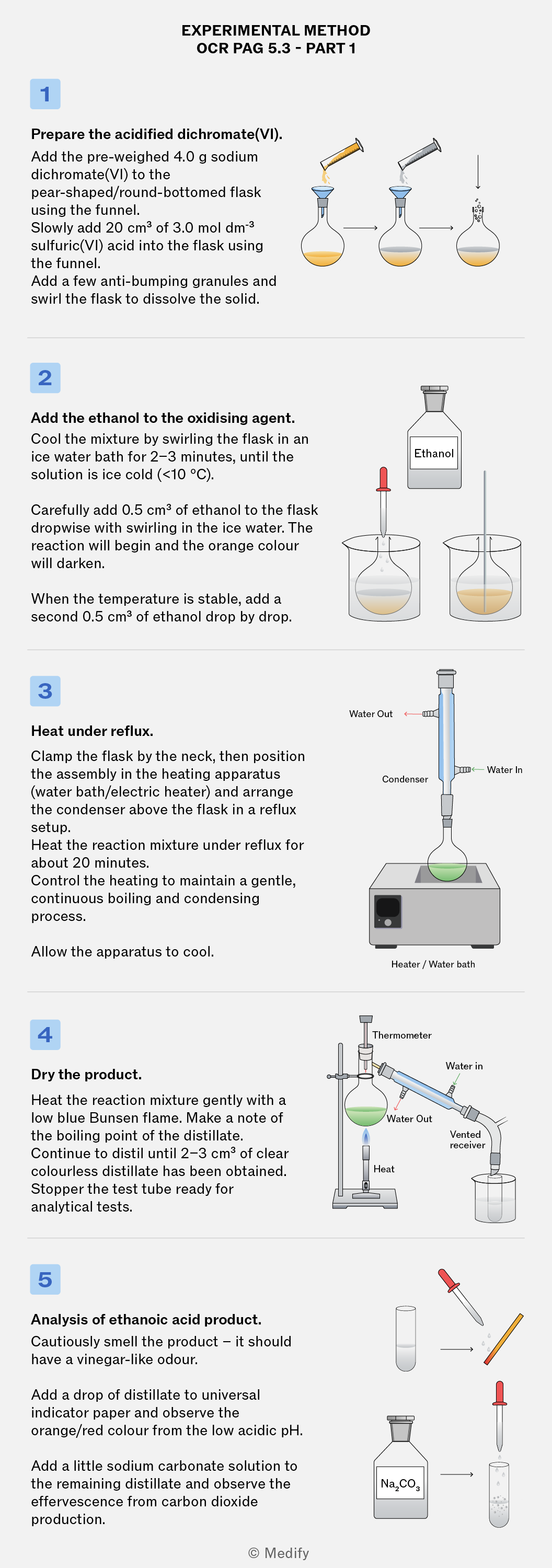
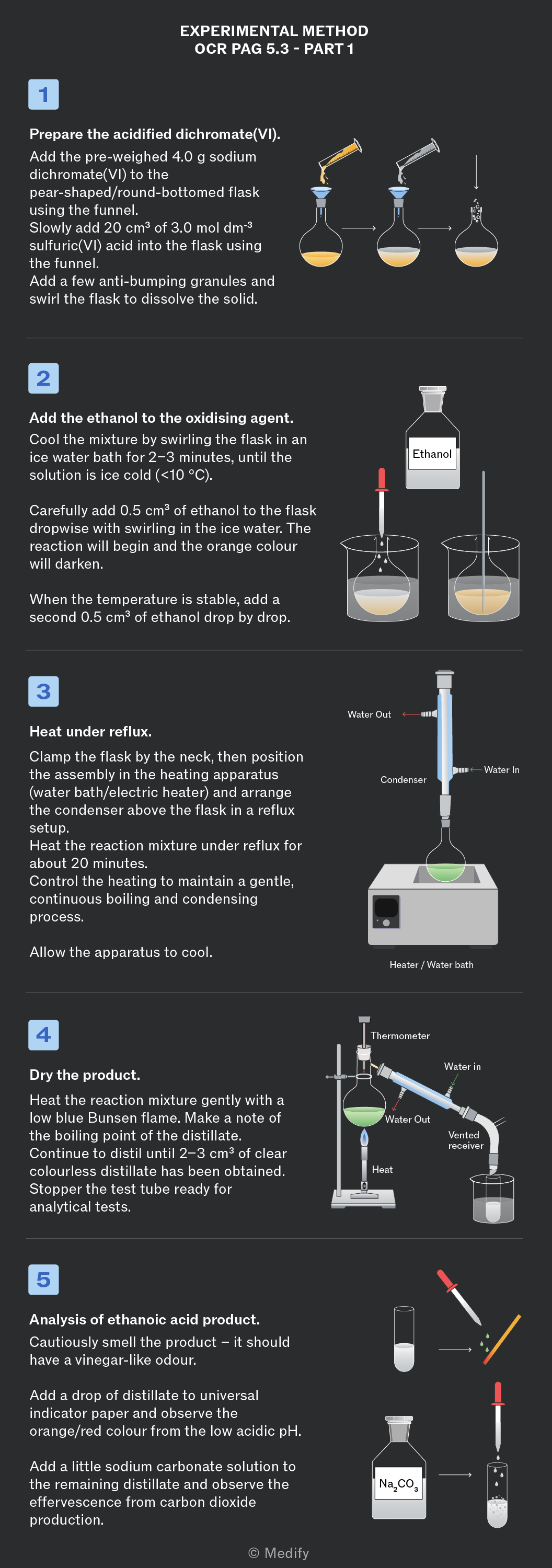
Experimental method for OCR Chemistry Required Practical 5 (PAG 5.3)
Part 2 – Distillation to form ethanoic acid.
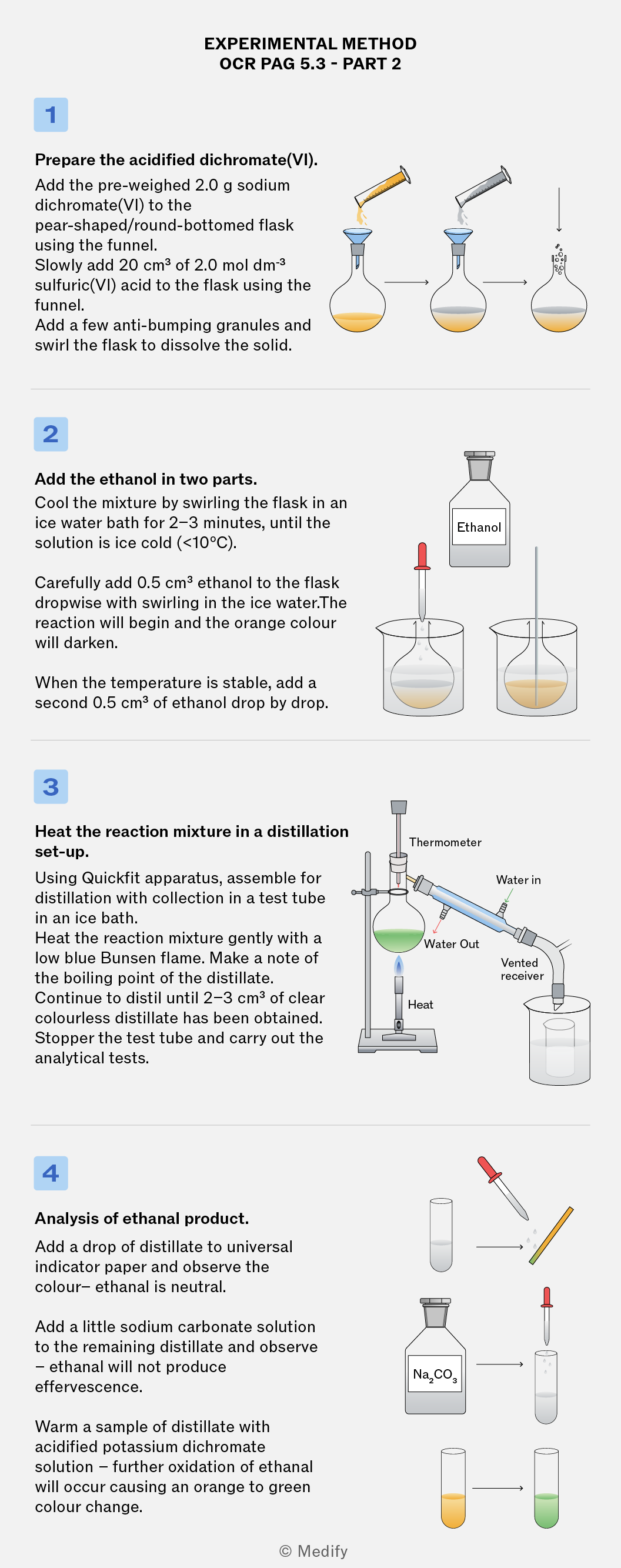
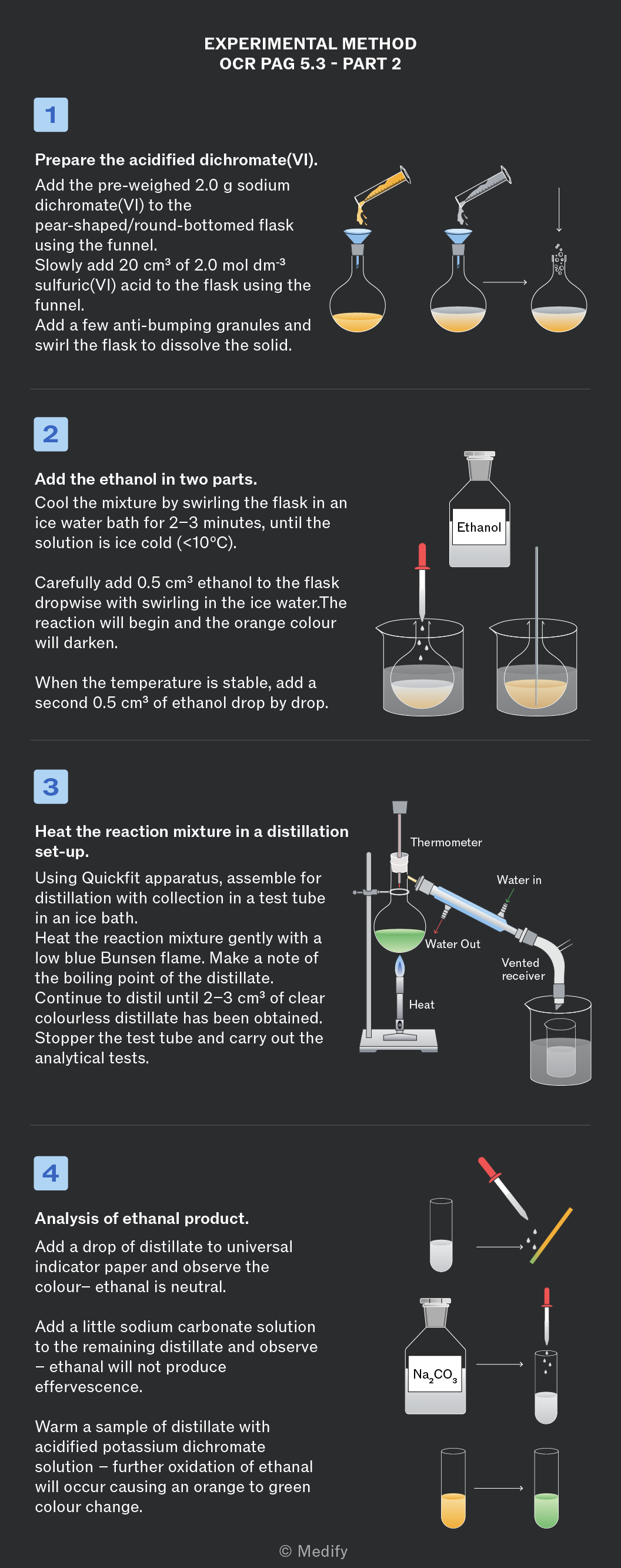
The distillation process requires careful setup to avoid loss of product or accidents.
Ethanol can be oxidised to ethanal or ethanoic acid depending on the reaction conditions. The orange dichromate(VI) solution turns green, showing that oxidation has occurred.
During partial oxidation, ethanal is distilled from the reaction mixture before it can be further oxidised. The colourless distillate can be tested with acidified dichromate(VI), which changes from orange to green as the ethanal is oxidised further.
During complete oxidation, the mixture is heated under reflux to form ethanoic acid. The product is acidic and reacts with sodium carbonate, producing effervescence.