Module 1: Practical chemistry for exams›PAG 5.2 - Preparation of cyclohexene

PAG 5.2 - Preparation of cyclohexene

An overview of PAG 5.2 - Preparation of cyclohexene
3 min

In OCR Chemistry Required Practical 5 (PAG 5.2), the organic liquid cyclohexene is produced by the acid-catalysed dehydration (elimination of water) of cyclohexanol.

The synthesis involves the use of Quickfit glassware for heating under reflux and distillation. Product recovery and purification is carried out with a separating funnel.

Add to favourites

In OCR PAG 5.2: Preparation of cyclohexene, there are several important safety requirements to be aware of (beyond normal lab practice such as wearing goggles).

  • Concentrated phosphoric acid causes severe skin burns – wear chemical-resistant gloves.
  • Cyclohexene has a strong odour and is highly flammable – ensure the laboratory is well ventilated.
Add to favourites

Experimental method for OCR Chemistry Required Practical 5 (PAG 5.2)

Part 1 – The synthesis of cyclohexene.
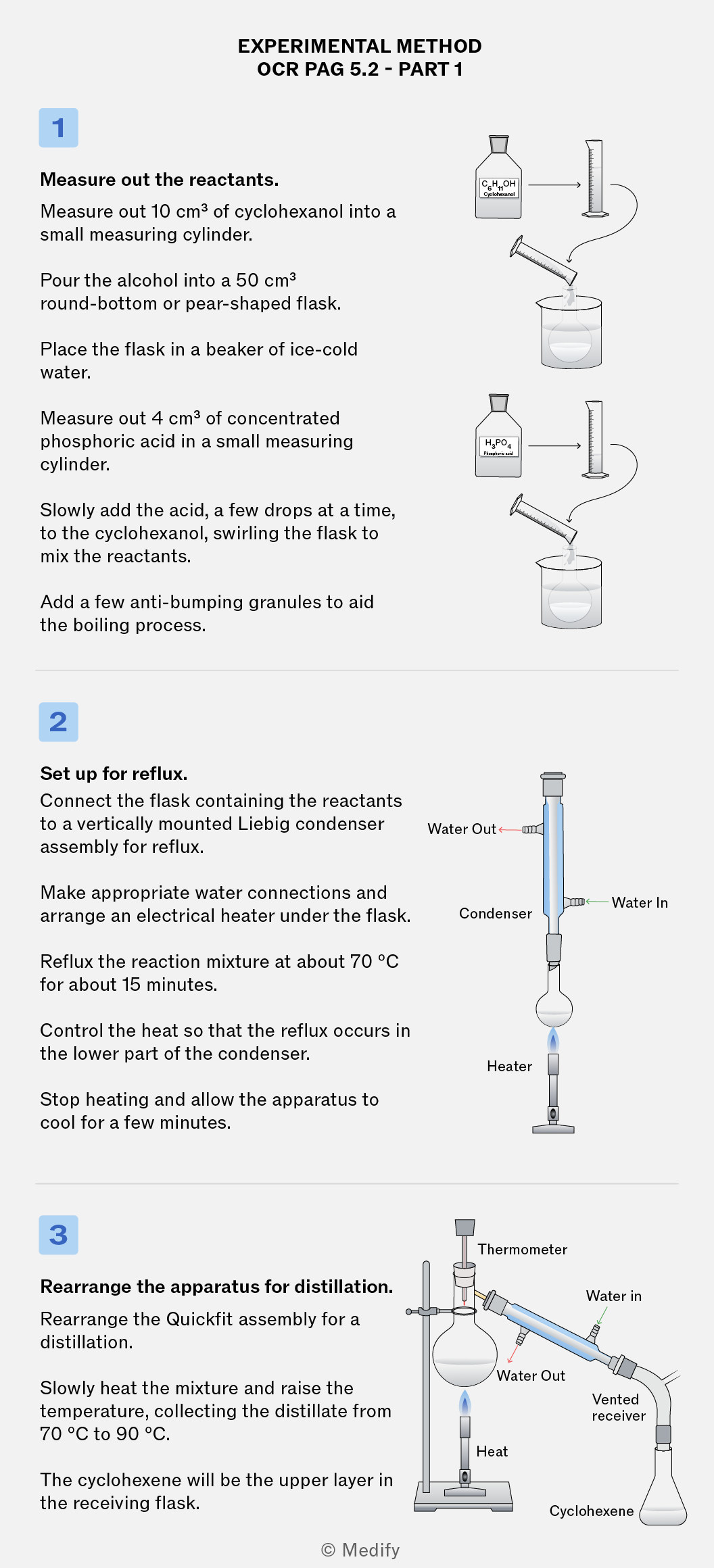
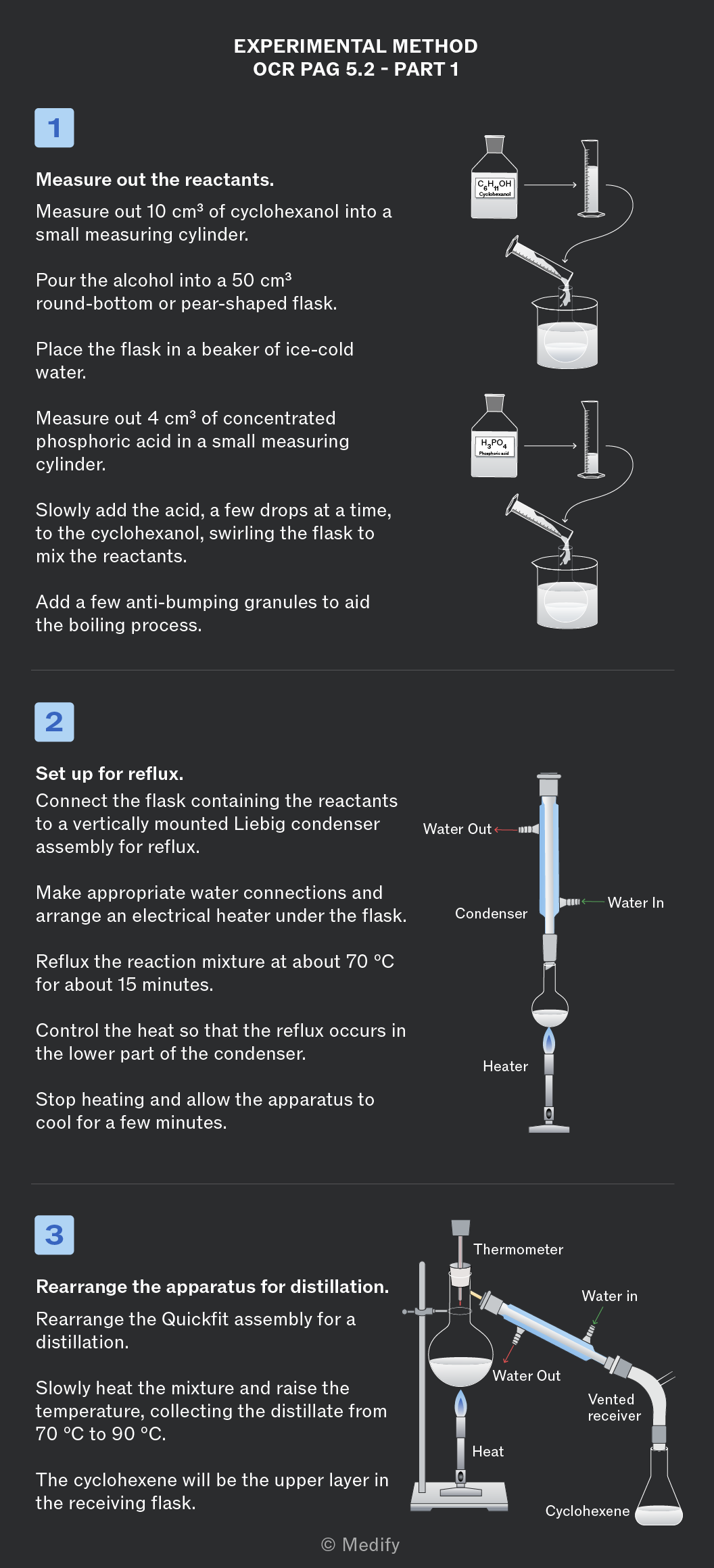
EXPERIMENTAL METHOD OCR PAG 5.2 - PART 1. 1. Measure out the reactants. Measure out 10 cm³ of cyclohexanol into a small measuring cylinder. Pour the alcohol into a 50 cm³ round-bottom or pear-shaped flask. Place the flask in a beaker of ice-cold water. Measure out 4 cm³ of concentrated phosphoric acid in a small measuring cylinder. Slowly add the acid, a few drops at a time, to the cyclohexanol, swirling the flask to mix the reactants. Add a few anti-bumping granules to aid the boiling process. 2. Set up for reflux. Connect the flask containing the reactants to a vertically mounted Liebig condenser assembly for reflux. Make appropriate water connections and arrange an electrical heater under the flask. Reflux the reaction mixture at about 70 °C for about 15 minutes. Control the heat so that the reflux occurs in the lower part of the condenser. Stop heating and allow the apparatus to cool for a few minutes. 3. Rearrange the apparatus for distillation. Rearrange the Quickfit assembly for a distillation. Slowly heat the mixture and raise the temperature, collecting the distillate from 70 °C to 90 °C. The cyclohexene will be the upper layer in the receiving flask.
Add to favourites

Experimental method for OCR Chemistry Required Practical 5 (PAG 5.2)

Part 2 – The purification.
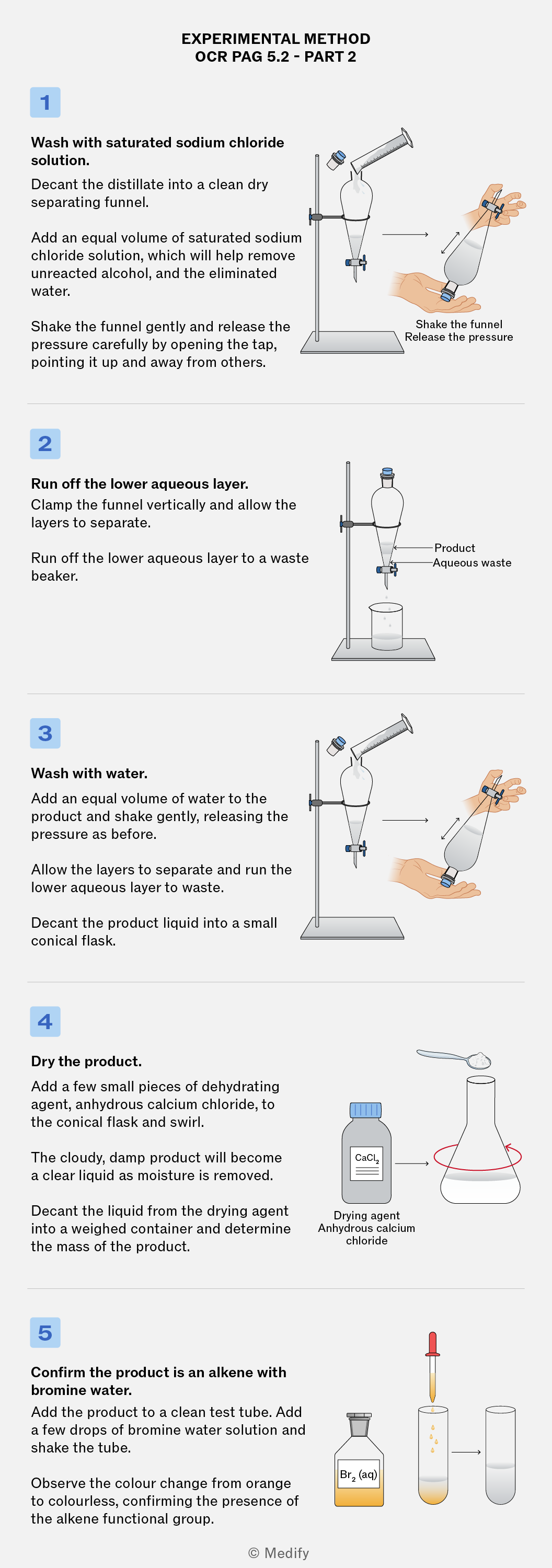
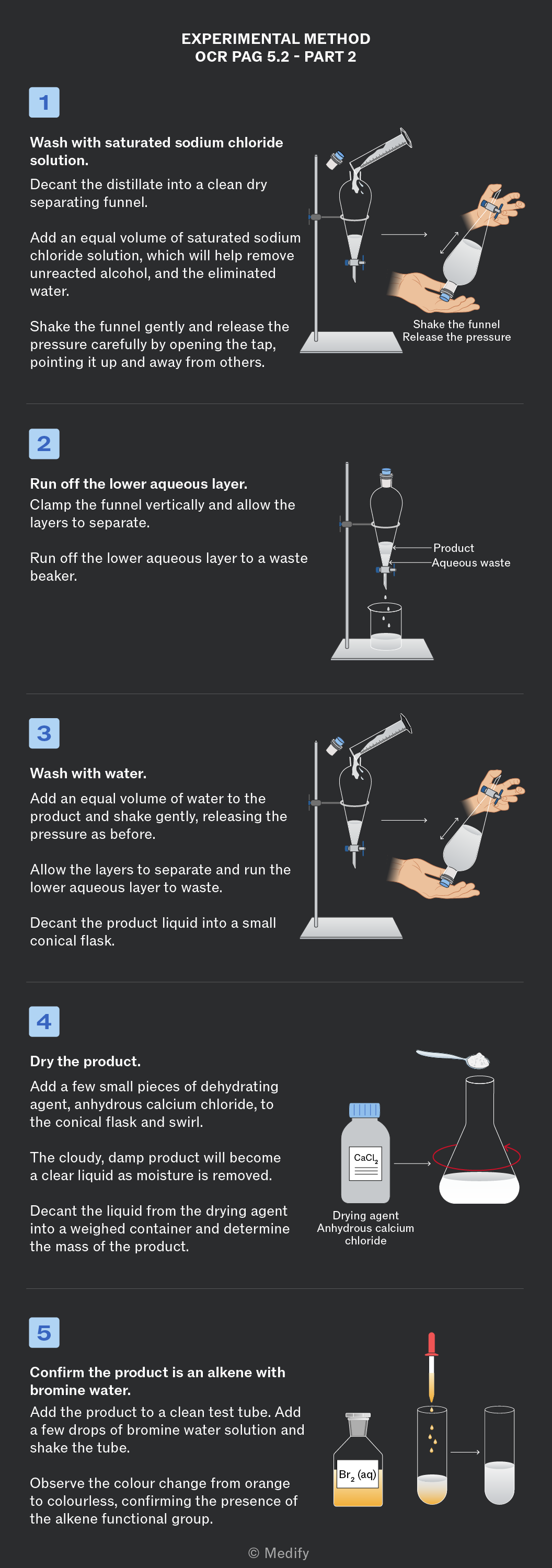
EXPERIMENTAL METHOD OCR PAG 5.2 - PART 2. 1. Wash with saturated sodium chloride solution. Decant the distillate into a clean dry separating funnel. Add an equal volume of saturated sodium chloride solution, which will help remove unreacted alcohol, and the eliminated water. Shake the funnel gently and release the pressure carefully by opening the tap, pointing it up and away from others. 2. Run off the lower aqueous layer. Clamp the funnel vertically and allow the layers to separate. Run off the lower aqueous layer to a waste beaker. 3. Wash with water. Add an equal volume of water to the product and shake gently, releasing the pressure as before. Allow the layers to separate and run the lower aqueous layer to waste. Decant the product liquid into a small conical flask. 4. Dry the product. Add a few small pieces of dehydrating agent, anhydrous calcium chloride, to the conical flask and swirl. The cloudy, damp product will become a clear liquid as moisture is removed. Decant the liquid from the drying agent into a weighed container and determine the mass of the product. 5. Confirm the product is an alkene with bromine water. Add the product to a clean test tube. Add a few drops of bromine water solution and shake the tube. Observe the colour change from orange to colourless, confirming the presence of the alkene functional group.
Add to favourites

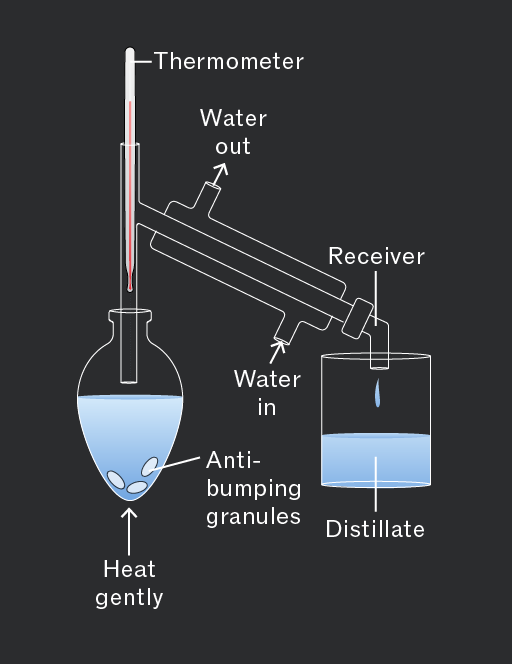
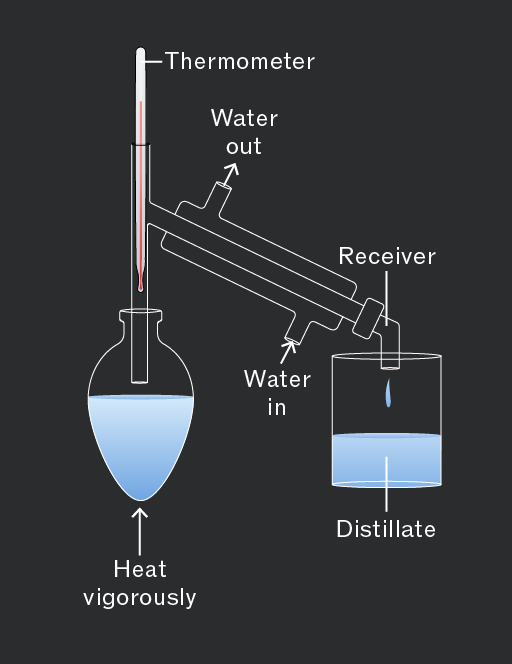
The distillation process requires careful setup to avoid loss of product or accidents.
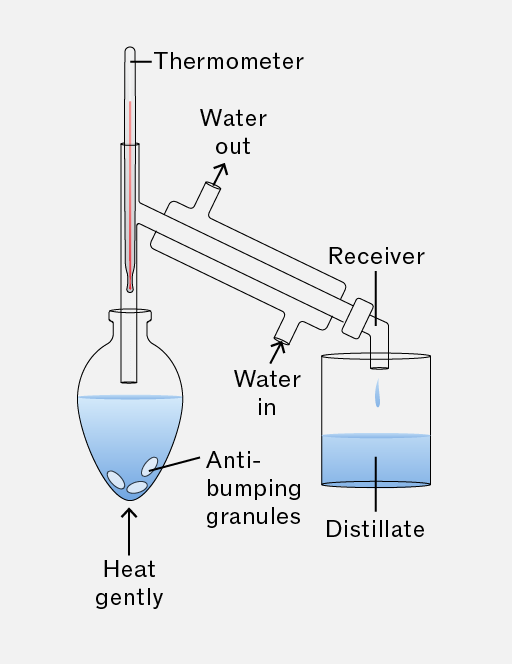
An illustration of a distillation apparatus showing a thermometer, water out, receiver, water in, anti-bumping granules, and distillate. The flask is labeled to heat gently.
Do

Use anti-bumping granules and heat the mixture gently during distillation.

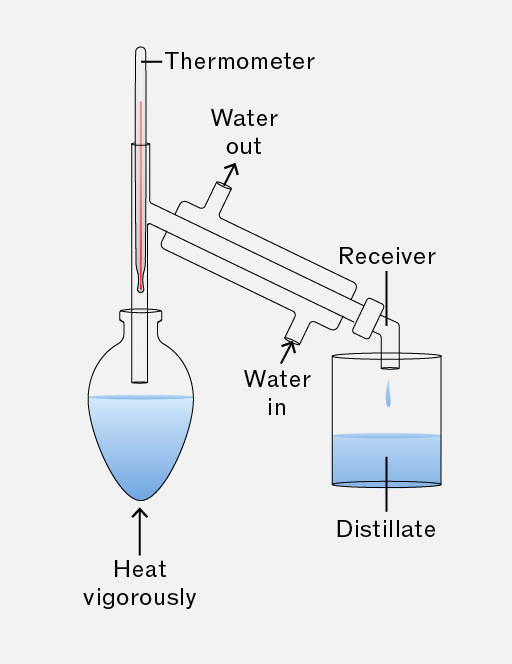
A diagram illustrating a distillation setup. It includes a thermometer, a flask labeled 'Heat vigorously', a receiver, and arrows indicating 'Water in' and 'Water out'. The flask contains blue liquid, and the receiver is labeled 'Distillate'.
Don't

Allow the mixture to boil violently or heat it without anti-bumping granules – this can cause dangerous splashing or bumping.

Add to favourites

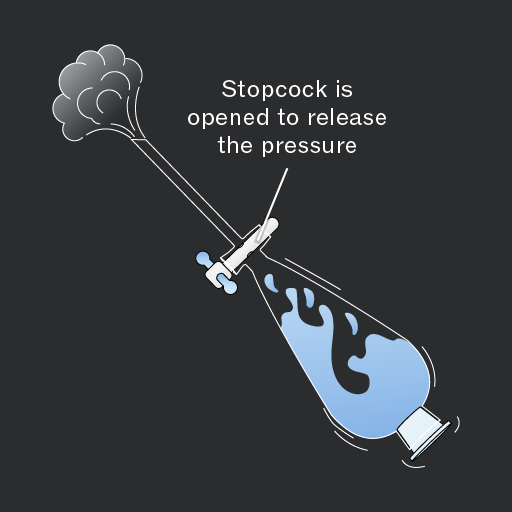
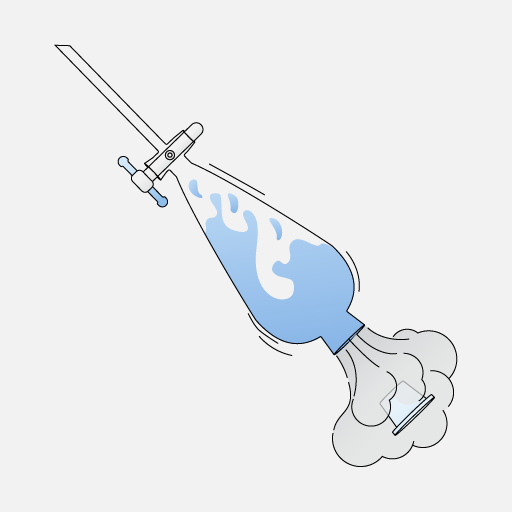
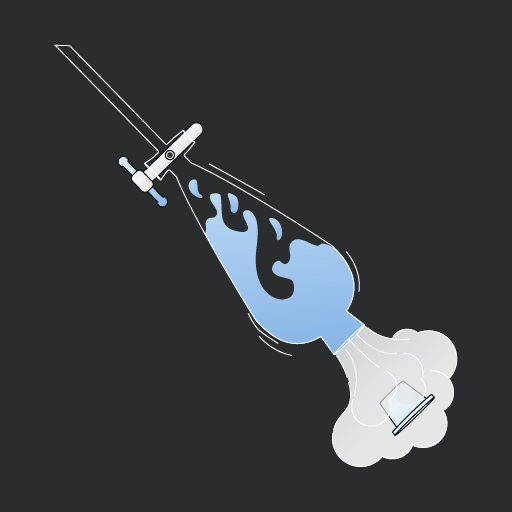
Vapour can be produced when volatile substances are mixed in a separating funnel.
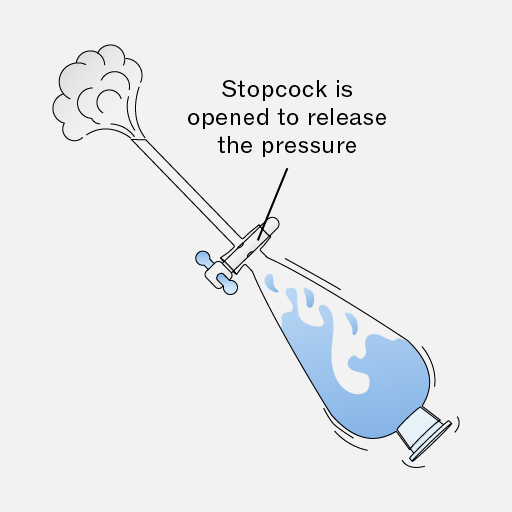
A laboratory setup showing a stopcock that is opened to release the pressure, with steam coming out and a flask containing a blue liquid.
Do

Vent the separating funnel periodically. This allows the release of any gas produced.

A laboratory apparatus with a blue liquid and steam coming out of a flask, held by a clamp.
Don't

Shake the separating funnel with the stopper in place without venting – pressure can build up and cause the stopper to fly off.

Add to favourites

Use the equation for dehydration of cyclohexanol to cyclohexene to calculate the theoretical yield, then calculate percentage yield using:

Product loss during separation, transfer, and distillation lowers the yield.

Add to favourites