Module 1: Practical chemistry for exams›PAG 9. 3 - The rate of reaction of magnesium and hydrochloric acid

PAG 9. 3 - The rate of reaction of magnesium and hydrochloric acid

An overview of PAG 9. 3 - The rate of reaction of magnesium and hydrochloric acid
2 min

In OCR Chemistry Required Practical 9 (PAG 9.3 ), the rate of a reaction is determined using the continuous monitoring method.

This experiment measures the rate of reaction between magnesium and different concentrations of The rate is monitored by measuring the volume of hydrogen gas produced over time using a gas syringe.

Add to favourites

In OCR PAG 9.3: The rate of reaction of magnesium and hydrochloric acid, normal lab practice such as wearing goggles is adequate when carrying out the practical steps.

Add to favourites

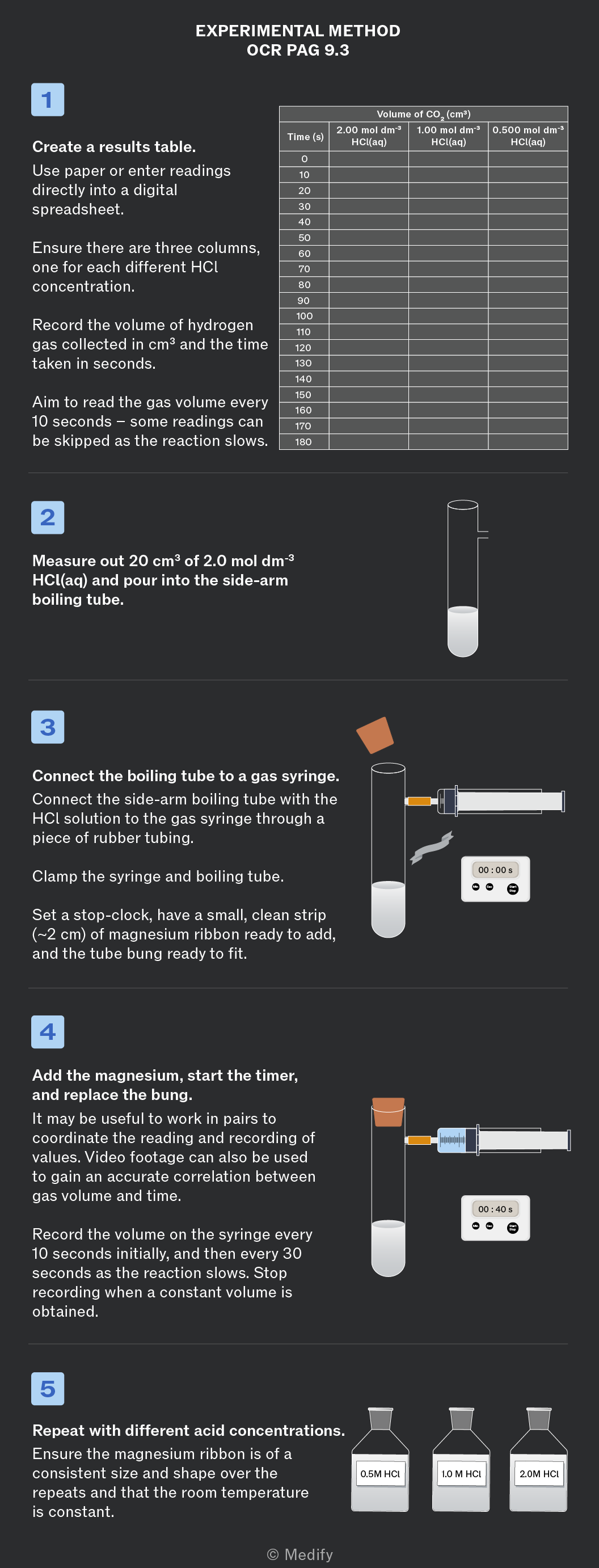
Experimental method for OCR Chemistry Required Practical 9 (PAG 9.3)
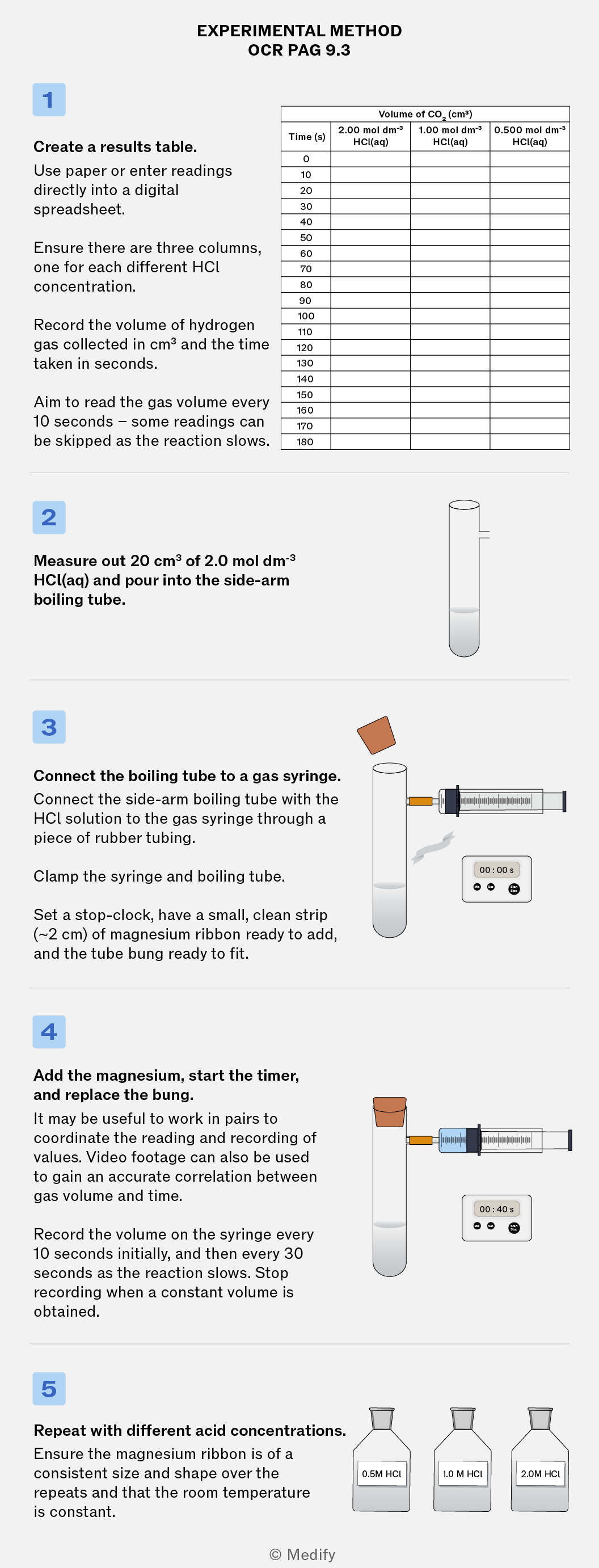
An instructional image detailing an experimental method for measuring gas volume in a chemistry experiment. The image includes a results table with columns for time in seconds and volume of CO2 in cm³ for three different HCl concentrations: 2.00 mol dm⁻³, 1.00 mol dm⁻³, and 0.500 mol dm⁻³. Steps include creating a results table, measuring HCl, connecting a boiling tube to a gas syringe, adding magnesium, and repeating with different acid concentrations. The image is labeled 'EXPERIMENTAL METHOD OCR PAG 9.3' and includes a timer display.
Add to favourites

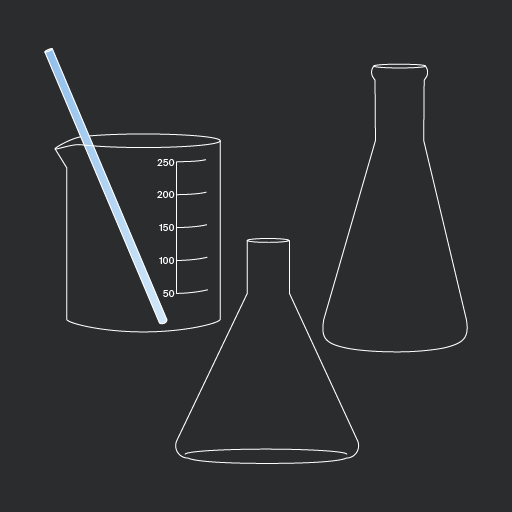
Clean, dry glassware should always be used in any experiment where concentration is important.
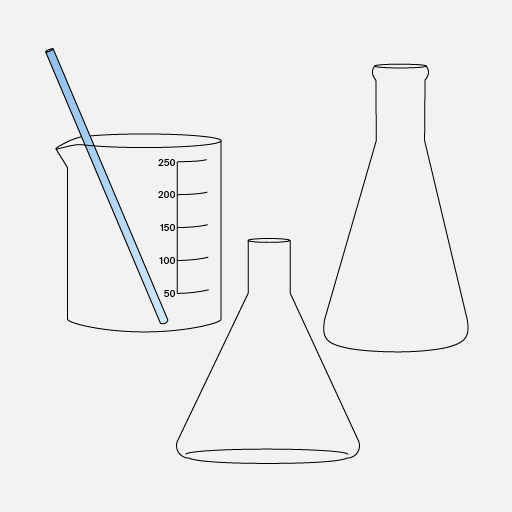
An illustration showing a graduated beaker with a blue stirring rod, a round-bottom flask, and a conical flask.
Do

Ensure glassware is clean and dry before use to prevent dilution or unwanted reactions.

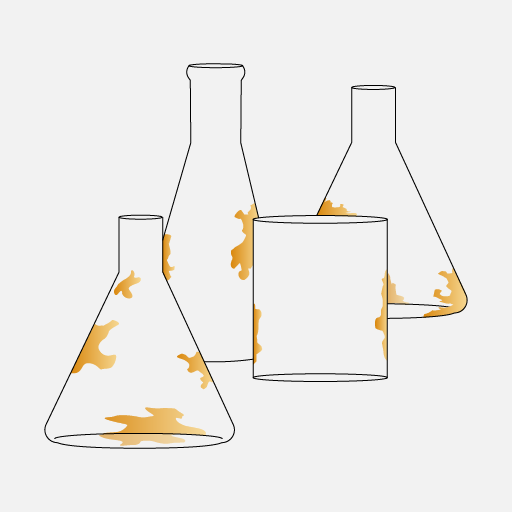
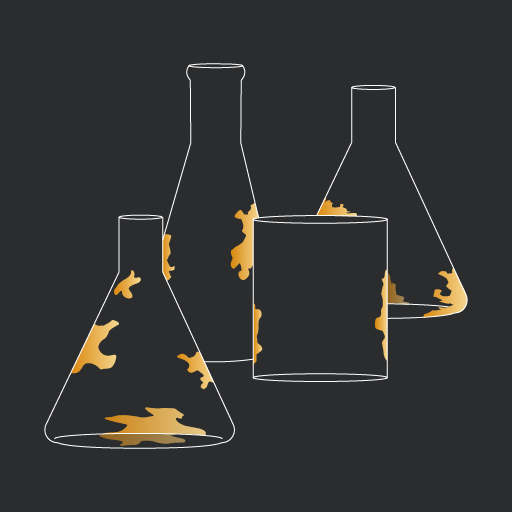
Four laboratory glassware pieces, including two conical flasks, one round-bottom flask, and one beaker, all featuring orange stains.
Don't

Use wet or contaminated glassware – this can affect concentrations and skew results. Rinsing with distilled water directly prior to use is not appropriate here.

Add to favourites

Accurately measuring time is essential in rate investigations.
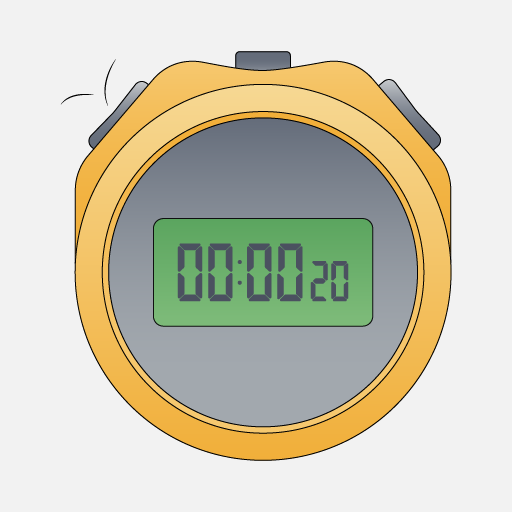
A round yellow stopwatch displaying the time 00:00:20 on a green digital screen.
Do

Start timing immediately after mixing reagents to ensure an accurate measurement of the reaction rate.

A round yellow stopwatch displaying the word 'ERROR' in large green letters on its screen.
Don't

Stop the timer to take measurements. The reaction hasn’t stopped, so neither should the timer.

Add to favourites

Plot volume against time for each concentration and calculate each initial rate from the gradient of a tangent at
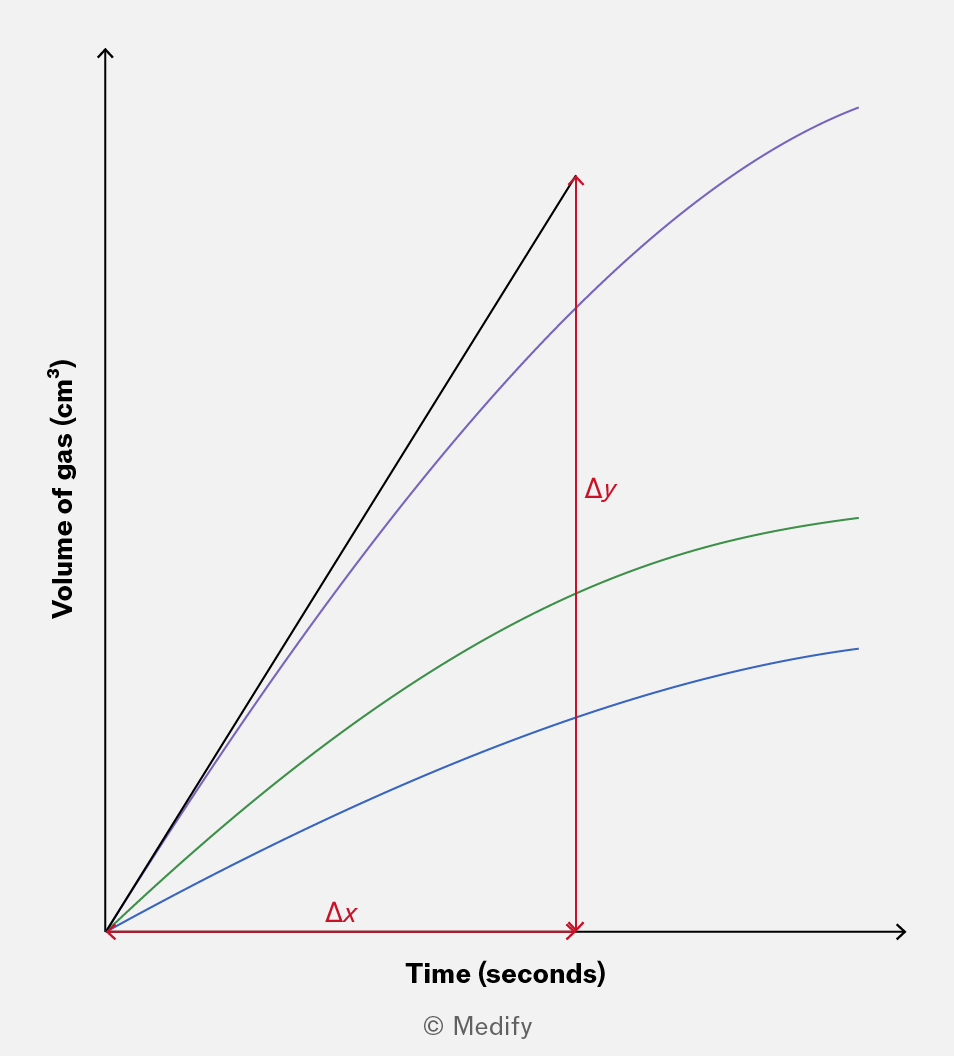
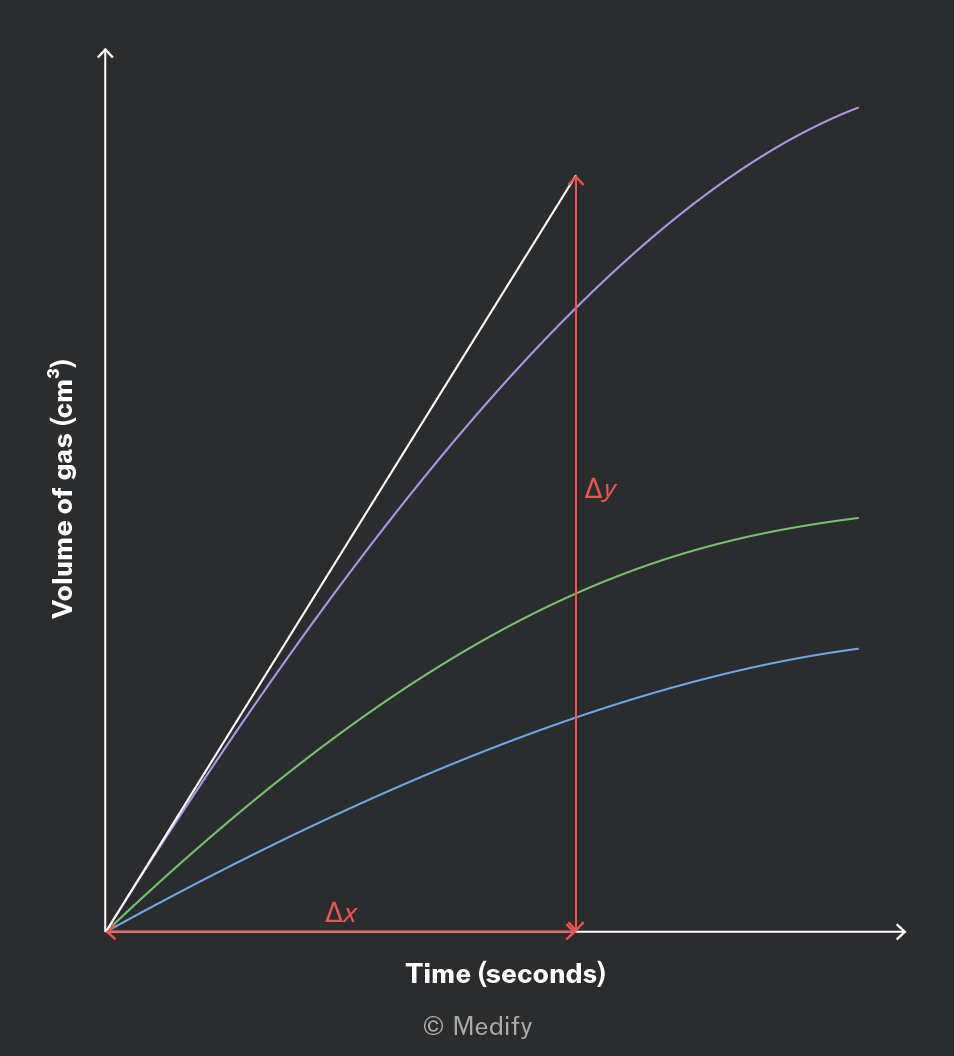
A graph showing three curved lines and one straight line. The x-axis is labeled 'Time (seconds)' and the y-axis is labeled 'Volume of gas (cm³)'. The three curves are colored blue, green, and purple, ascending from bottom to top. The straight line intersects all three curves, originating from the origin. Red arrows labeled 'Δx' and 'Δy' represent changes along the x-axis and y-axis, respectively. The graph is © Medify.

For compare the initial rate with to determine the order and hence the rate equation. If doubling approximately doubles the initial rate, the reaction is first order in : rate = k.

Add to favourites