Module 1: Practical chemistry for exams›PAG 6.3 - Preparation of methyl 3-nitrobenzoate

PAG 6.3 - Preparation of methyl 3-nitrobenzoate

An overview of PAG 6.3 - Preparation of methyl 3-nitrobenzoate
3 min

In OCR Chemistry Required Practical 6 (PAG 6.3), the organic solid methyl 3-nitrobenzoate is prepared and purified.

The liquid methyl benzoate is nitrated using a mixture of concentrated nitric and sulfuric acids.

The reaction is summarised by the equations:

Add to favourites

In OCR PAG 6.3: Preparation of methyl 3-nitrobenzoate, there are several important safety requirements to be aware of (beyond normal lab practice such as wearing goggles).

  • Several chemicals are harmful if inhaled – complete the practical in a well-ventilated area.
  • Concentrated nitric acid causes severe skin burns – wear chemical-resistant gloves.
  • Immediately clean up any spills of acid or alkali.
Add to favourites

Experimental method for OCR Chemistry Required Practical 6 (PAG 6.3)
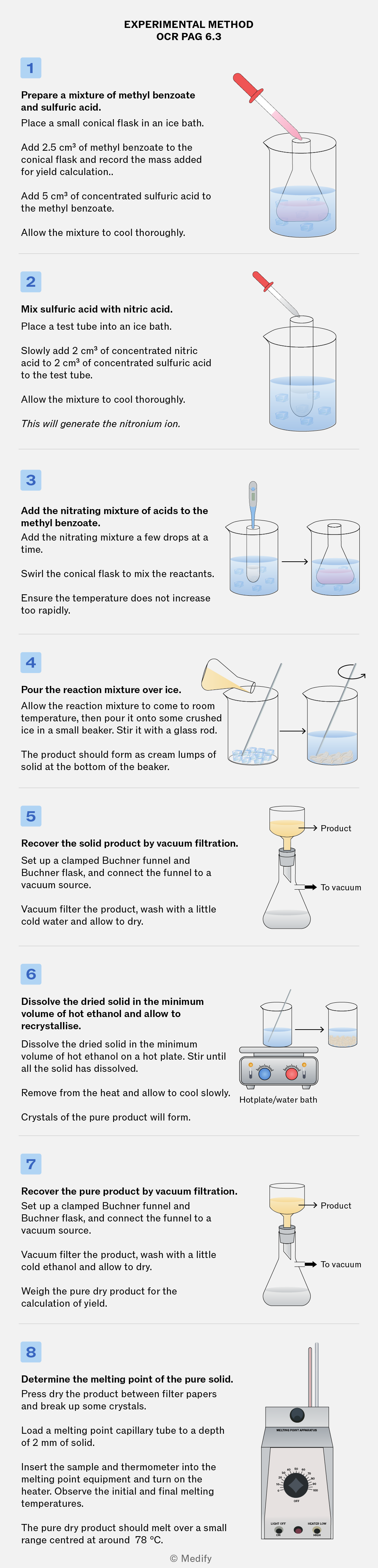
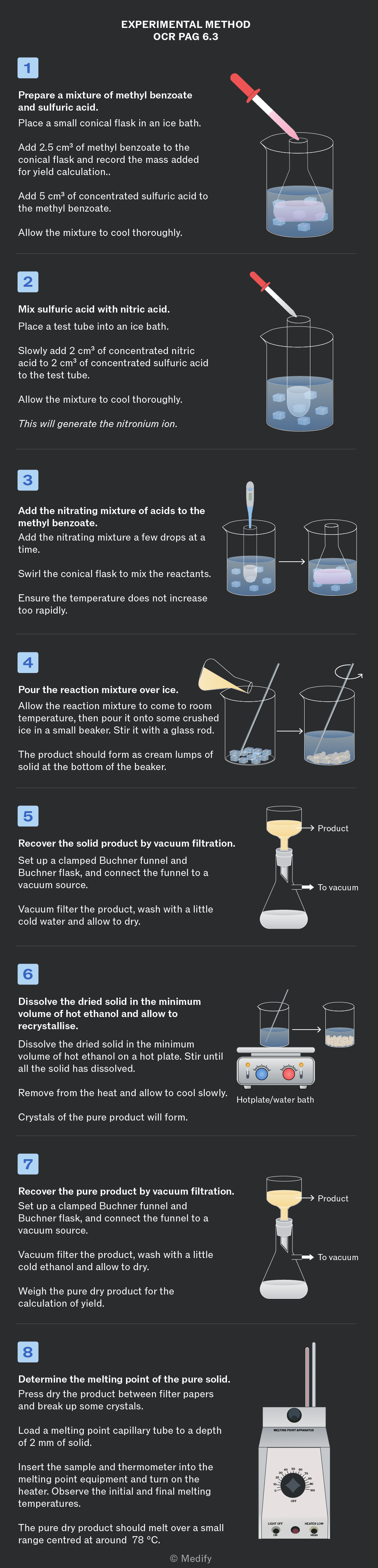
EXPERIMENTAL METHOD OCR PAG 6.3. 1 Prepare a mixture of methyl benzoate and sulfuric acid. Place a small conical flask in an ice bath. Add 2.5 cm3 of methyl benzoate to the conical flask and record the mass added for yield calculation. Allow 5 cm3 of concentrated sulfuric acid to the methyl benzoate. Allow the mixture to cool thoroughly. 2 Mix sulfuric acid with nitric acid. Place a test tube into an ice bath. Slowly add 2 cm3 of concentrated nitric acid to 2 cm3 of concentrated sulfuric acid in the test tube. Allow the mixture to cool thoroughly. This will generate the nitronium ion. 3 Add the nitrating mixture of acids to the methyl benzoate. Add the nitrating mixture a few drops at a time. Swirl the conical flask to mix the reactants. Ensure the temperature does not increase too rapidly. 4 Pour the reaction mixture over ice. Allow the reaction mixture to come to room temperature, then pour it onto some crushed ice in a small beaker. Stir it with a glass rod. The product should form as cream lumps of solid at the bottom of the beaker. 5 Recover the solid product by vacuum filtration. Set up a clamped Buchner funnel and Buchner flask, and connect the funnel to a vacuum source. Vacuum filter the product, wash with a little cold water and allow to dry. 6 Dissolve the dried solid in the minimum volume of hot ethanol and allow to recrystallise. Dissolve the dried solid in the minimum volume of hot ethanol on a hot plate. Stir until all the solid has dissolved. Remove from the heat and allow to cool slowly. Crystals of the pure product will form. 7 Recover the pure product by vacuum filtration. Set up a clamped Buchner funnel and Buchner flask, and connect the funnel to a vacuum source. Vacuum filter the product, wash with a little cold ethanol and allow to dry. Weigh the pure dry product for the calculation of yield. 8 Determine the melting point of the pure solid. Press dry the product between filter papers and break up some crystals. Load a melting point capillary tube to a depth of 2 mm of solid. Insert the sample and thermometer into the melting point equipment and turn on the heater. Observe the initial and final melting temperatures. The pure dry product should melt over a small range centred at around 78 °C.
Add to favourites

Temperature control in the preparation of aspirin is essential.
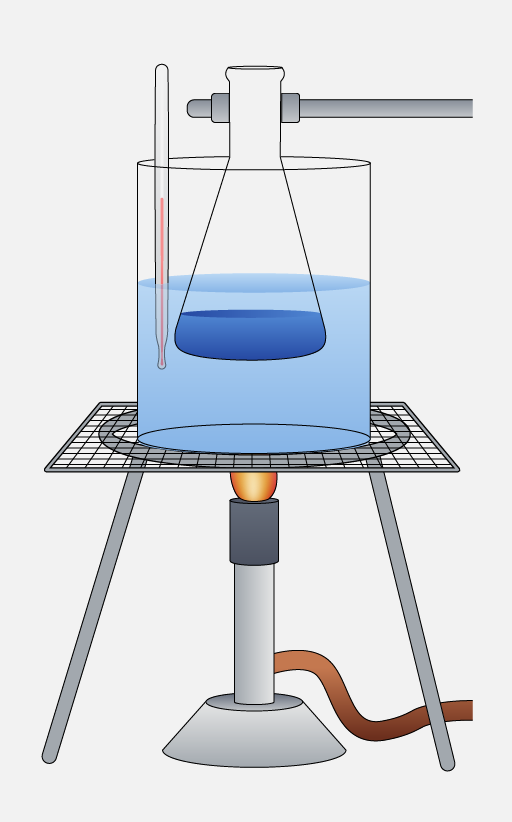
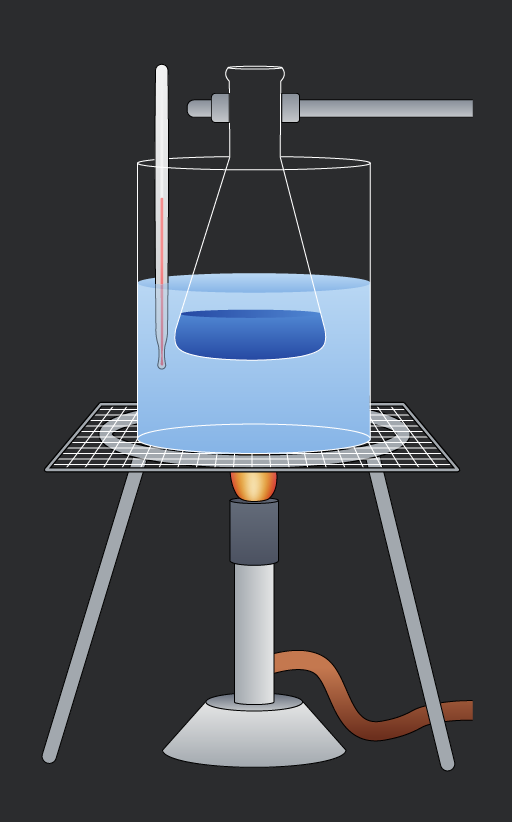
A laboratory setup featuring a beaker filled with blue liquid, a thermometer inserted into the beaker, and a Bunsen burner underneath the beaker, all resting on a wire mesh support.
Do

Monitor the temperature carefully, using a water bath and ensuring it does not exceed 65 °C to avoid decomposing

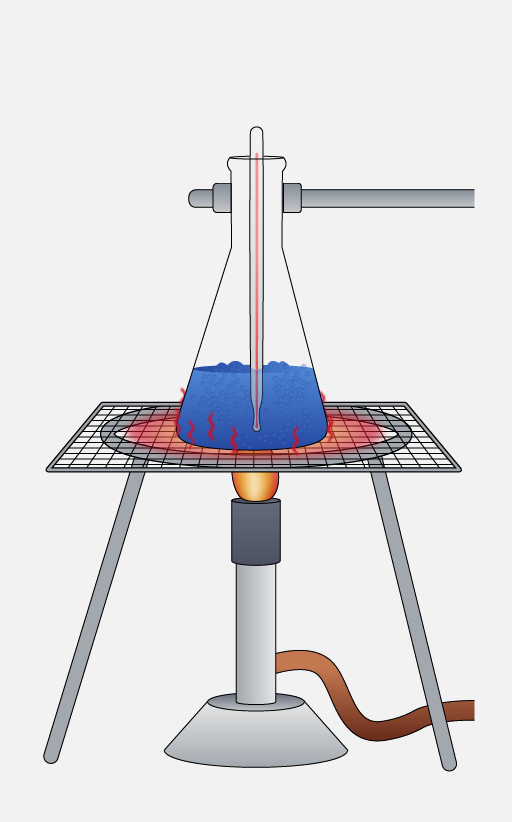
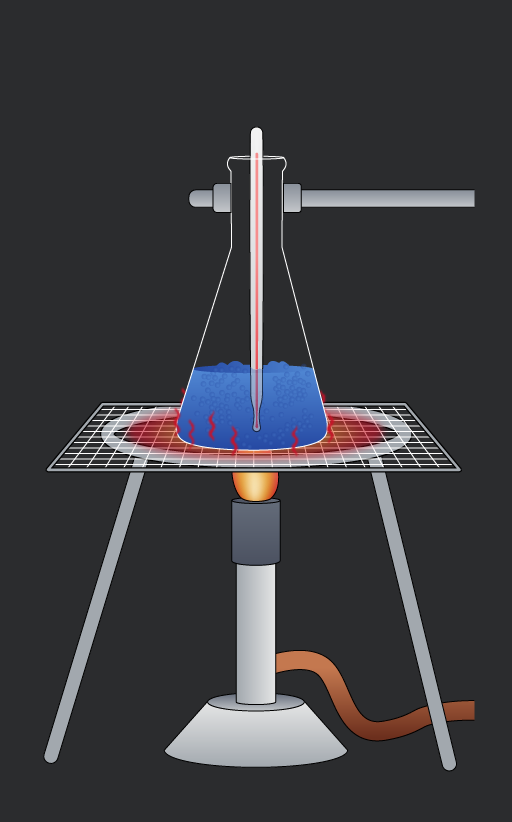
A laboratory setup showing a conical flask containing blue liquid, placed on a wire mesh over a Bunsen burner. The burner is lit, producing a flame underneath the flask, and there are red wavy lines indicating heat.
Don't

Allow the temperature to rise above 65 °C – overheating may degrade the aspirin product.

Add to favourites

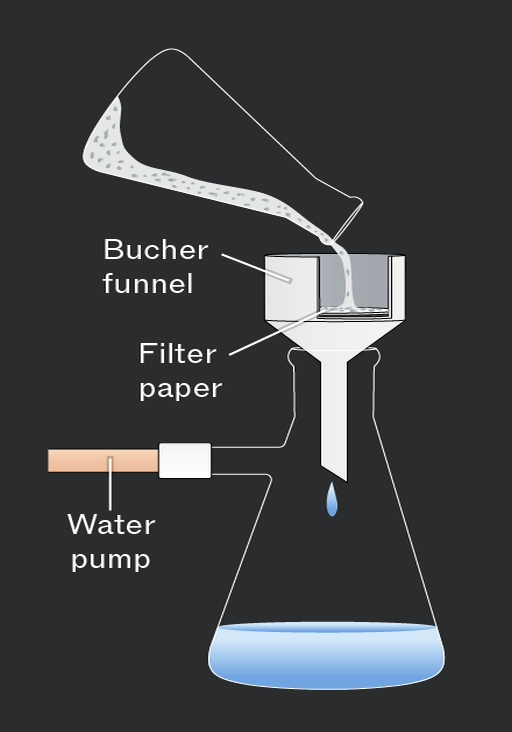
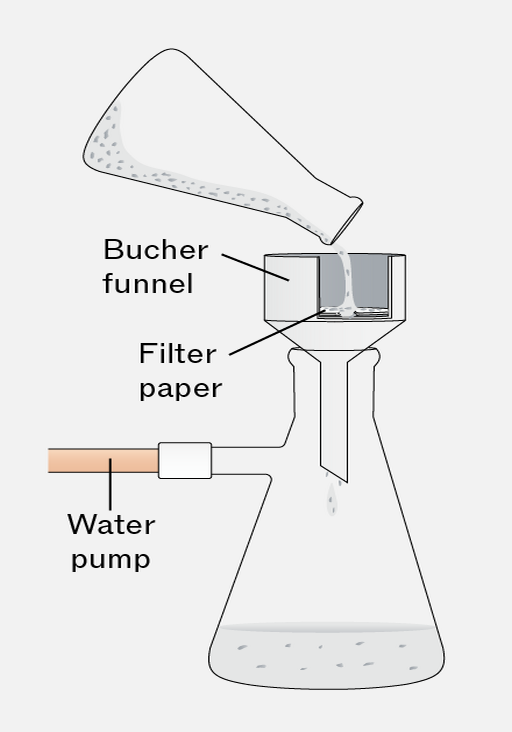
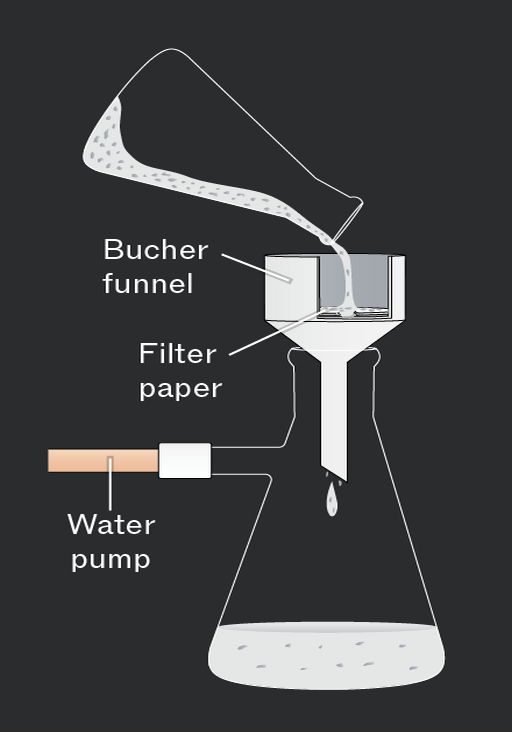
Take care when filtering the aspirin product under reduced pressure.
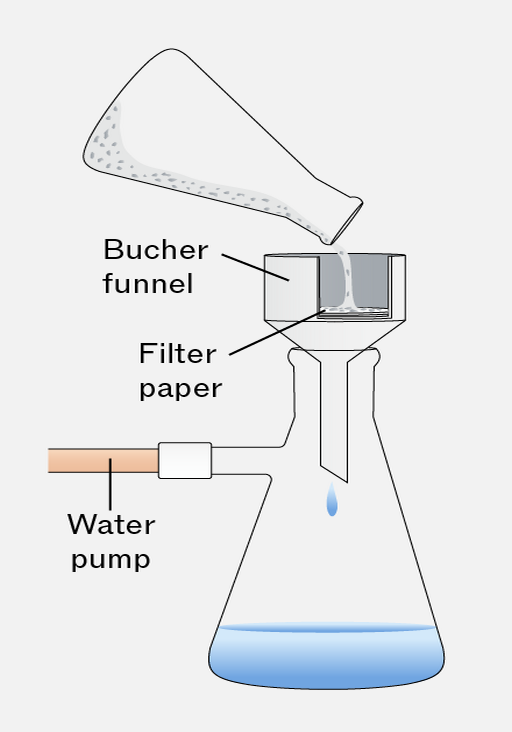
A diagram illustrating a Bucher funnel setup. The image includes a Bucher funnel at the top, with filter paper inside it. Below, a flask is connected to a water pump, and a drop of liquid is shown falling from the funnel into the flask.
Do

Filter the aspirin gently under reduced pressure to collect the solid efficiently. Dampening the filter paper and starting the suction before adding the reaction mixture creates a good seal.

A diagram illustrating a Bucher funnel setup, with labeled components including a Bucher funnel, filter paper, and a water pump connected to a flask.
Don't

Apply excessive force during filtration – this could cause the filter paper to tear and the solid to be sucked through to the collection vessel.

Add to favourites

Calculate the mass of methyl benzoate using:

Then calculate the theoretical yield of methyl 3-nitrobenzoate from the balanced equation, using:

Then calculate the percentage yield:

Compare the melting point with the literature value and calculate:

Compare the TLC results to sample values by calculating the value using:

Add to favourites