Module 1: Practical chemistry for exams›PAG 7.3 - Identifying organic unknowns 3

PAG 7.3 - Identifying organic unknowns 3

An overview of PAG 7.3 - Identifying organic unknowns 3
5 min

In OCR Chemistry Required Practical 7 (PAG 7.3), a series of qualitative tests are used on substances that have one or more different functional groups in their structure.

In Part 1, you will attempt to confirm the presence of functional group(s) in six naturally occurring organic compounds by carrying out small scale test-tube tests.

In Part 2, you will attempt to identify the amino acids in a mixture using chromatography.

Add to favourites

In OCR PAG 7.3: Identifying organic unknowns 3, there are several important safety requirements to be aware of (beyond normal lab practice such as wearing goggles).

  • Take care when handling hot apparatus.
  • Flammable reagents are used in this practical – ensure that there are no naked flames/sources of ignition
  • Chemical vapours can be harmful – ensure that the laboratory is well ventilated.
  • Dispose of chemicals as directed by your teacher – take particular care with disposing of organic chemicals.
  • Aqueous potassium dichromate(VI) causes severe skin burns – wear chemical-resistant gloves.
Add to favourites

Experimental method for OCR Chemistry Required Practical 7 (PAG 7.3)

Part 1: Qualitative tests for organic functional groups
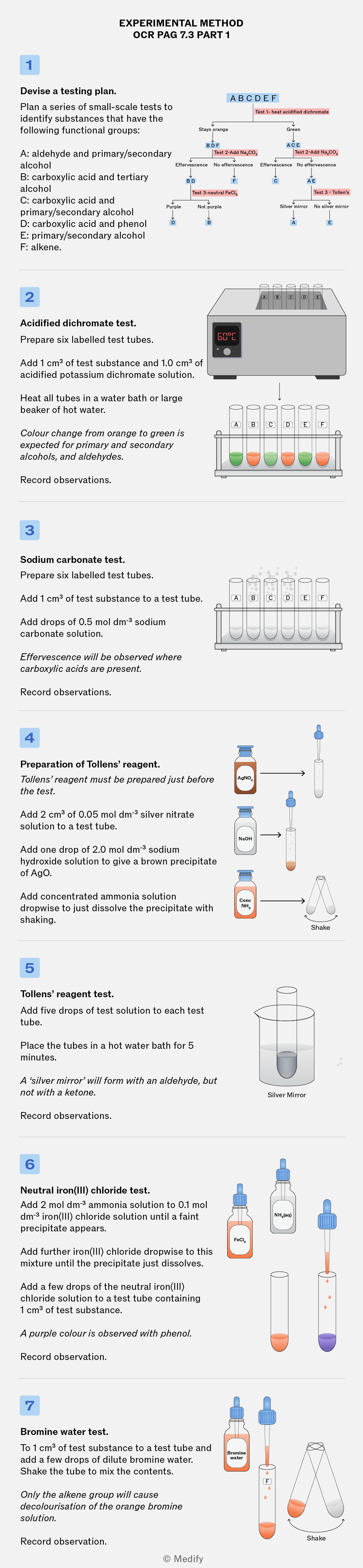
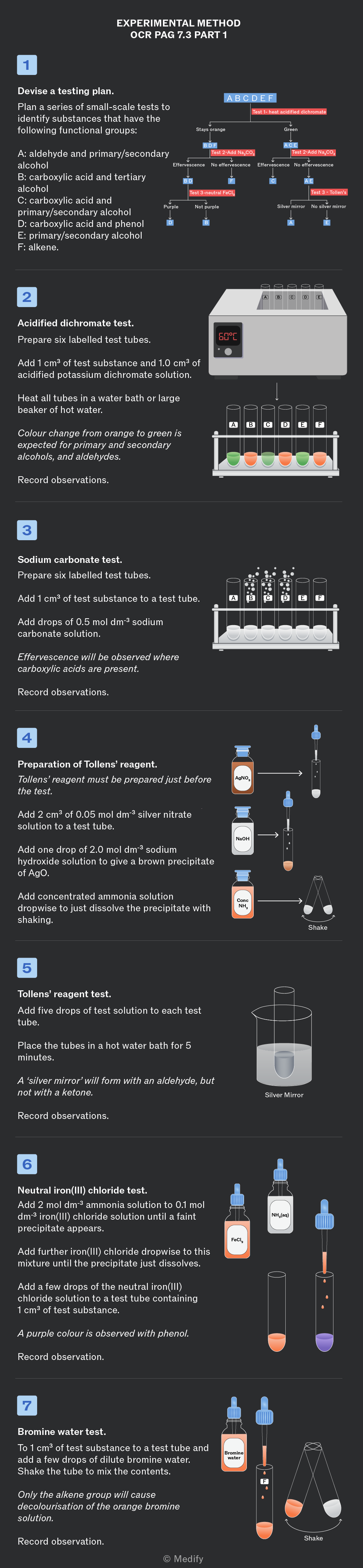
EXPERIMENTAL METHOD OCR PAG 7.3 PART 1. 1. Devise a testing plan. Plan a series of small-scale tests to identify substances that have the following functional groups: A: aldehyde and primary/secondary alcohol B: carboxylic acid and tertiary alcohol C: carboxylic acid and primary/secondary alcohol D: carboxylic acid and phenol E: primary/secondary alcohol F: alkene. 2. Acidified dichromate test. Prepare six labelled test tubes. Add 1 cm³ of test substance and 1.0 cm³ of acidified potassium dichromate solution. Heat all tubes in a water bath or large beaker of hot water. Colour change from orange to green is expected for primary and secondary alcohols, and aldehydes. Record observations. 3. Sodium carbonate test. Prepare six labelled test tubes. Add 1 cm³ of test substance to a test tube. Add drops of 0.5 mol dm⁻³ sodium carbonate solution. Effervescence will be observed where carboxylic acids are present. Record observations. 4. Preparation of Tollens’ reagent. Tollens’ reagent must be prepared just before the test. Add 2 cm³ of 0.05 mol dm⁻³ silver nitrate solution to a test tube. Add one drop of 2.0 mol dm⁻³ sodium hydroxide solution to give a brown precipitate of Ag₂O. Add concentrated ammonia solution dropwise to just dissolve the precipitate with shaking. 5. Tollens’ reagent test. Add five drops of test solution to each test tube. Place the tubes in a hot water bath for 5 minutes. A ‘silver mirror’ will form with an aldehyde, but not with a ketone. Record observations. 6. Neutral iron(III) chloride test. Add 2 mol dm⁻³ ammonia solution to 0.1 mol dm⁻³ iron(III) chloride solution until a faint precipitate appears. Add further iron(III) chloride dropwise to this mixture until the precipitate just dissolves. Add a few drops of the neutral iron(III) chloride solution to a test tube containing 1 cm³ of test substance. A purple colour is observed with phenol. Record observation. 7. Bromine water test. To 1 cm³ of test substance in a test tube and add a few drops of dilute bromine water. Shake the tube to mix the contents. Only the alkene group will cause decolourisation of the orange bromine solution. Record observation.
Add to favourites

Experimental method for OCR Chemistry Required Practical 7 (PAG 7.3)

Part 2: Identification of amino acids via TLC
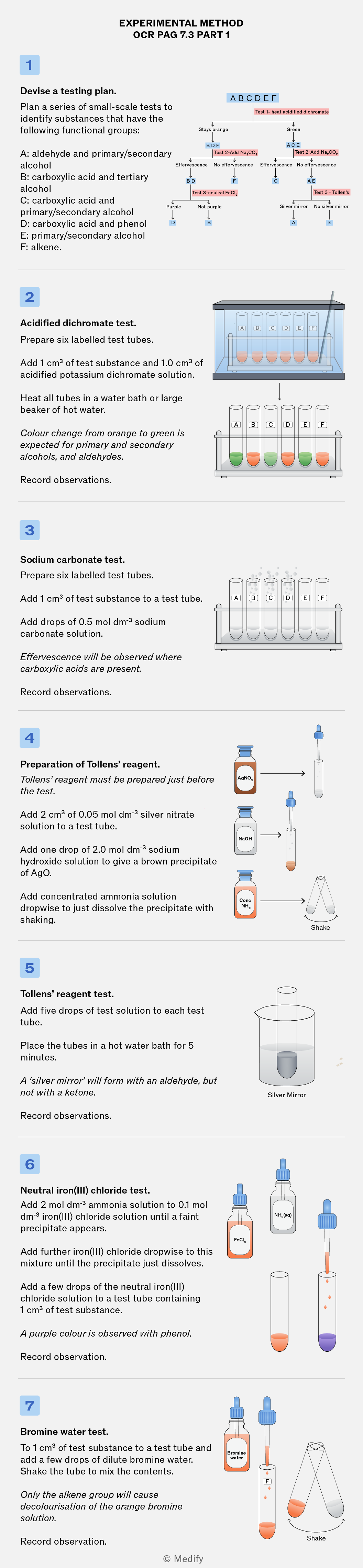
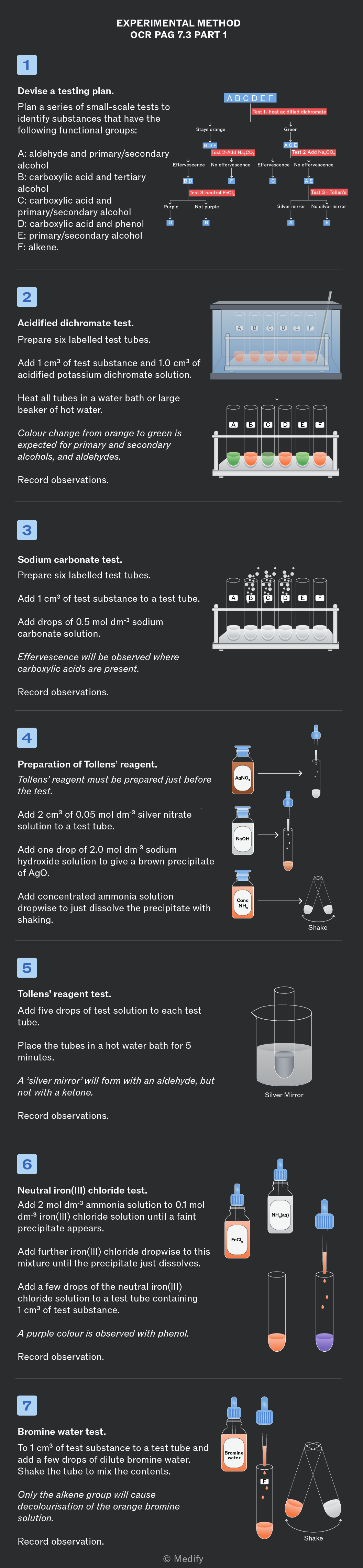
EXPERIMENTAL METHOD OCR PAG 7.3 PART 1. 1. Devise a testing plan. Plan a series of small-scale tests to identify substances that have the following functional groups: A: aldehyde and primary/secondary alcohol, B: carboxylic acid and tertiary alcohol, C: carboxylic acid and primary/secondary alcohol, D: carboxylic acid and phenol, E: primary/secondary alcohol, F: alkene. 2. Acidified dichromate test. Prepare six labelled test tubes. Add 1 cm³ of test substance and 1.0 cm³ of acidified potassium dichromate solution. Heat all tubes in a water bath or large beaker of hot water. Colour change from orange to green is expected for primary and secondary alcohols, and aldehydes. Record observations. 3. Sodium carbonate test. Prepare six labelled test tubes. Add 1 cm³ of test substance to a test tube. Add drops of 0.5 mol dm⁻³ sodium carbonate solution. Effervescence will be observed where carboxylic acids are present. Record observations. 4. Preparation of Tollens’ reagent. Tollens’ reagent must be prepared just before the test. Add 2 cm³ of 0.05 mol dm⁻³ silver nitrate solution to a test tube. Add one drop of 2.0 mol dm⁻³ sodium hydroxide solution to give a brown precipitate of Ag₂O. Add concentrated ammonia solution dropwise to just dissolve the precipitate with shaking. 5. Tollens’ reagent test. Add five drops of test solution to each test tube. Place the tubes in a hot water bath for 5 minutes. A ‘silver mirror’ will form with an aldehyde, but not with a ketone. Record observations. 6. Neutral iron(III) chloride test. Add 2 mol dm⁻³ ammonia solution to 0.1 mol dm⁻³ iron(III) chloride solution until a faint precipitate appears. Add further iron(III) chloride dropwise to this mixture until the precipitate just dissolves. Add a few drops of the neutral iron(III) chloride solution to a test tube containing 1 cm³ of test substance. A purple colour is observed with phenol. Record observation. 7. Bromine water test. To 1 cm³ of test substance in a test tube and add a few drops of dilute bromine water. Shake the tube to mix the contents. Only the alkene group will cause decolourisation of the orange bromine solution. Record observation.
Add to favourites

Wearing the appropriate personal protective equipment is essential to avoid direct contact with harmful chemicals and to ensure safety throughout the experiment.
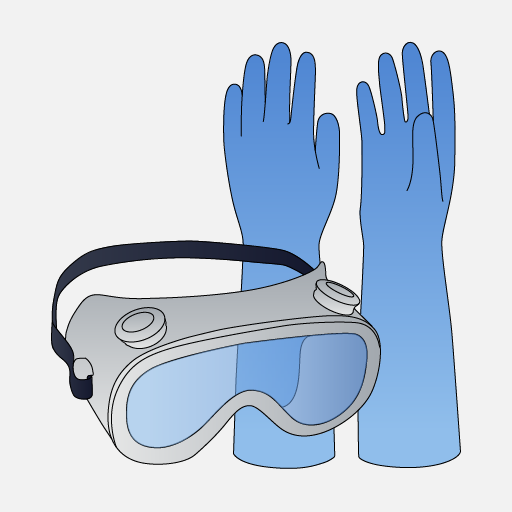
A simple illustration of a pair of goggles and gloves.
Do

Wear goggles and gloves when handling any chemicals, particularly concentrated acids, ammonia, and metal salts, as they can be corrosive or irritating to the skin and eyes.

A person wearing no goggles or gloves whilst handling chemicals.
Don't

Skip protective equipment just because ‘it’s only a few drops’.

Add to favourites

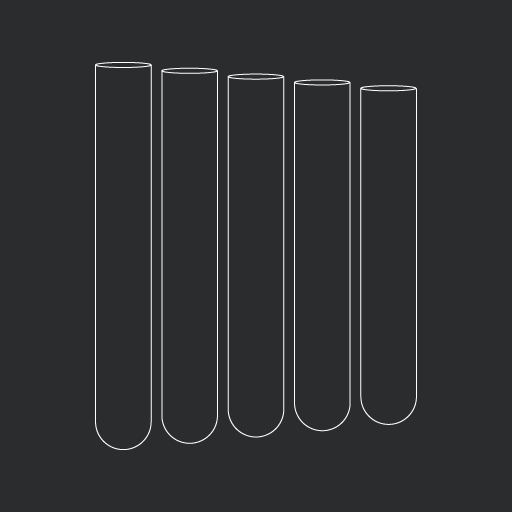
It is crucial to use clean and dry glassware when performing analytical tests.
Five test tubes arranged in a row, with varying heights and shapes.
Do

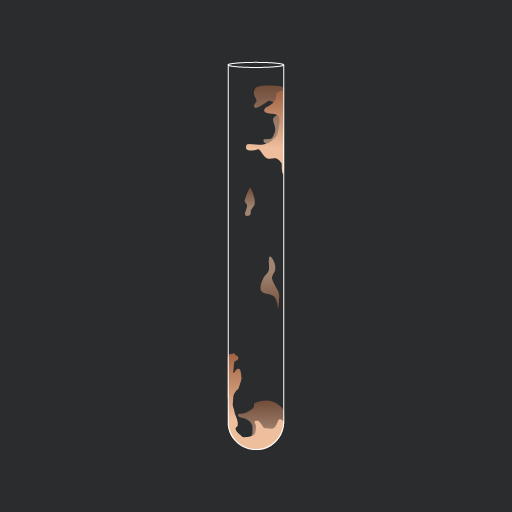
Ensure all glassware is clean and dry before use to avoid contamination and ensure accurate results.

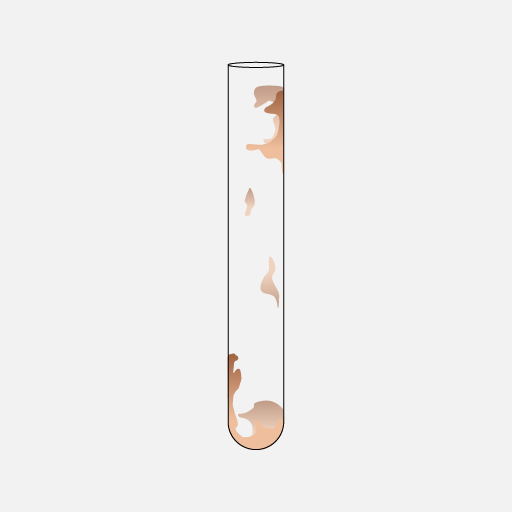
A test tube with a white body and brownish stains or markings on its surface.
Don't

Reuse glassware that has not been properly cleaned and dried, as this could lead to inaccurate readings or unintended chemical reactions.

Add to favourites

Make sure to handle the bromine water safely.
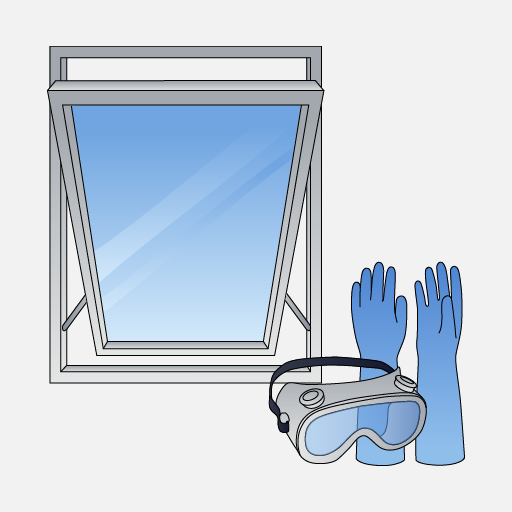
A window with a blue sky reflection, accompanied by a pair of blue gloves and a protective goggles.
Do

Ensure good ventilation, and use gloves and eye protection when working with bromine water. Bromine is toxic and corrosive, and its fumes can be harmful if inhaled. Proper ventilation reduces the risk of exposure.

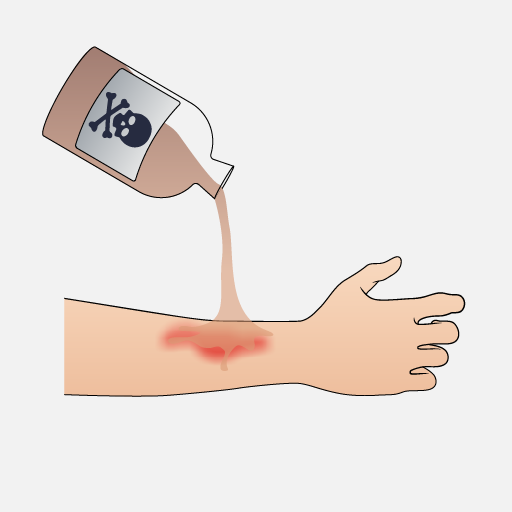
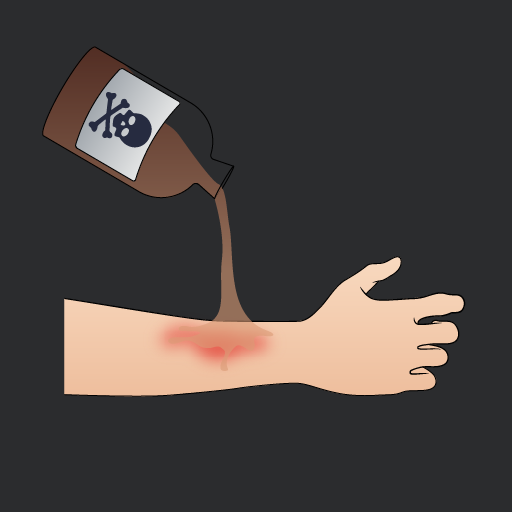
A hand is shown with a wound on the wrist, and a bottle labeled with a skull and crossbones is pouring a brown liquid onto the wound.
Don't

Let bromine water come into contact with skin or eyes, or use in enclosed spaces. Bromine can cause severe irritation and burns. Its fumes are harmful if inhaled.

Add to favourites

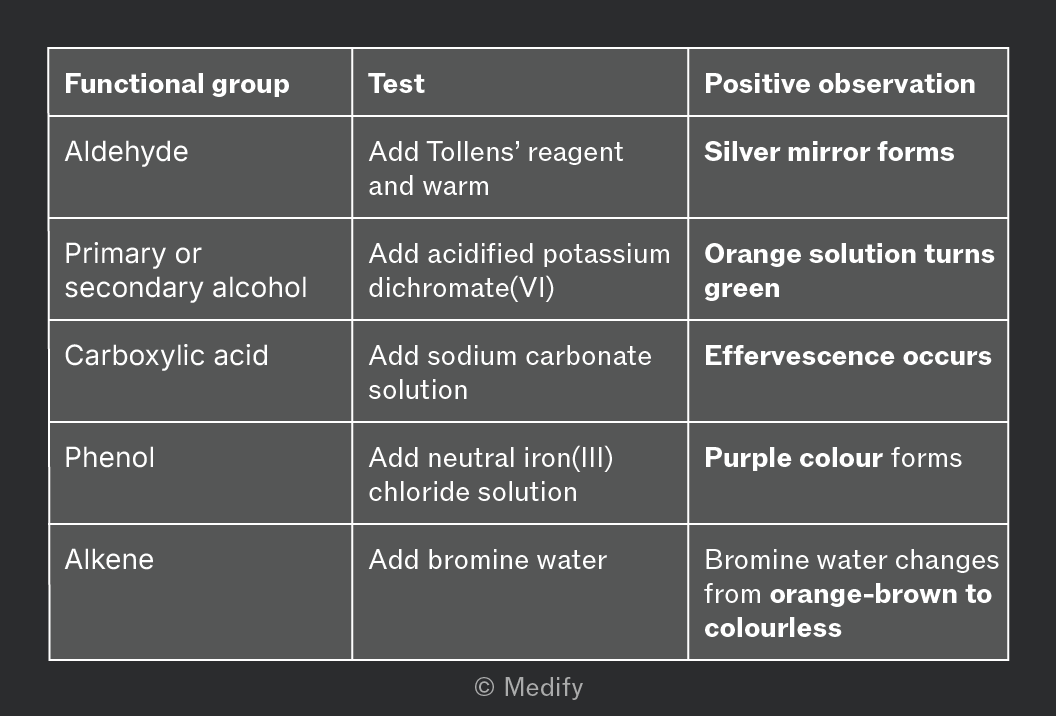
Below is a summary of functional group tests from PAG 7.3:
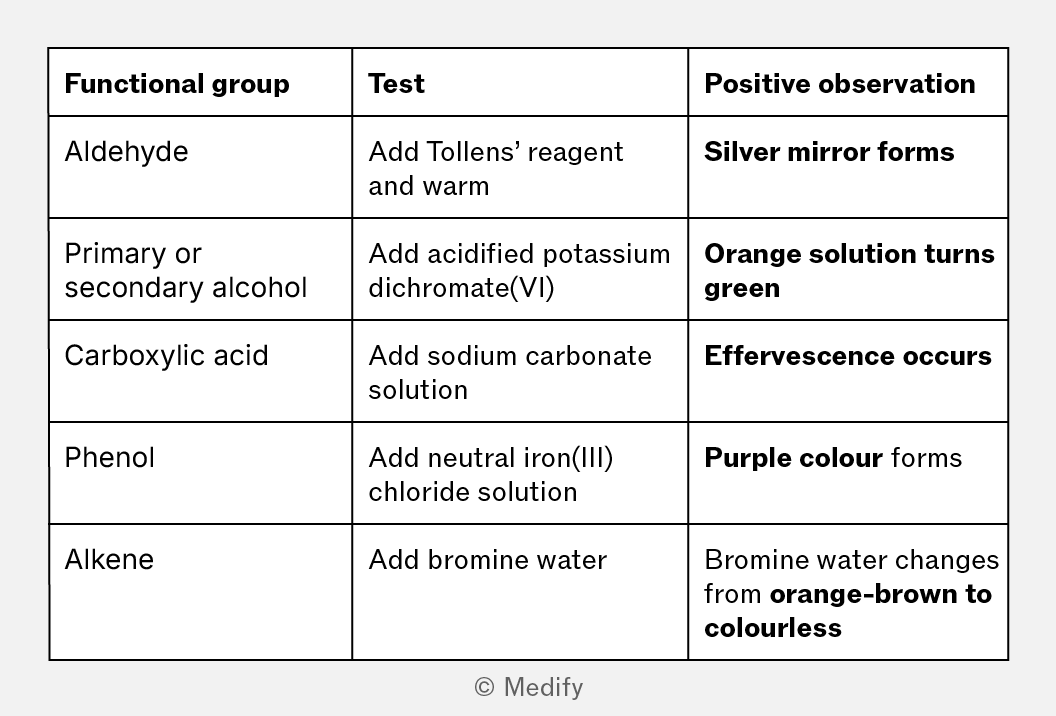
A table with three columns titled 'Functional group', 'Test', and 'Positive observation'. Rows are as follows: 1. Aldehyde: Add Tollens’ reagent and warm, Positive observation: Silver mirror forms. 2. Primary or secondary alcohol: Add acidified potassium dichromate(VI), Positive observation: Orange solution turns green. 3. Carboxylic acid: Add sodium carbonate solution, Positive observation: Effervescence occurs. 4. Phenol: Add neutral iron(III) chloride solution, Positive observation: Purple colour forms. 5. Alkene: Add bromine water, Positive observation: Bromine water changes from orange-brown to colourless.

Use the qualitative-test observations to determine which functional groups are present in compounds A–F and use these conclusions to support their identification.

Add to favourites

For the amino-acid mixture calculate the value using:

Compare the spots with leucine, lysine, and aspartic acid standards to identify the two amino acids present. Compare experimental values with researched values where appropriate.

Add to favourites